1stDibs Publishing Tracker
1stDibs Publishing Tracker
100%
E5
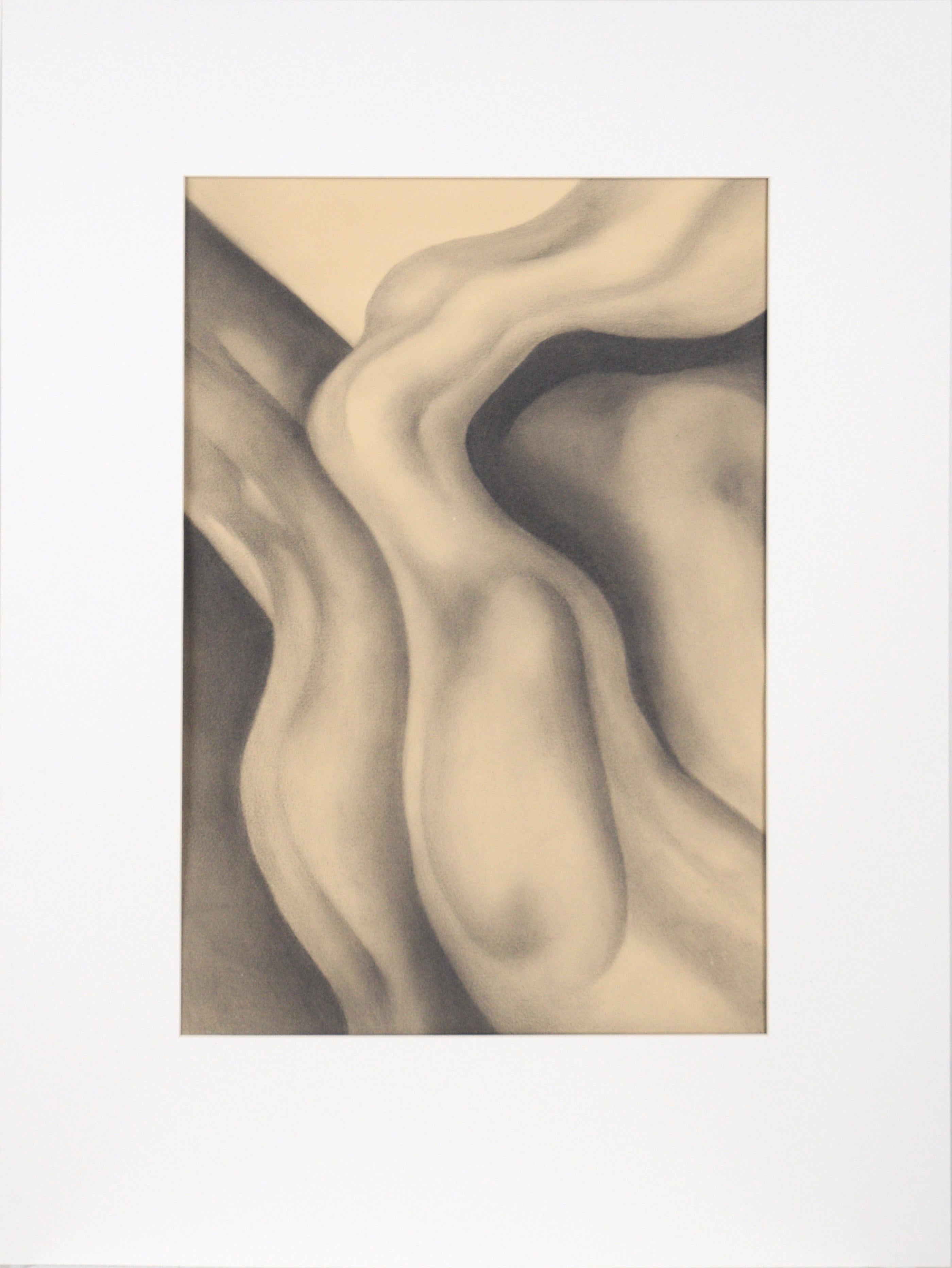
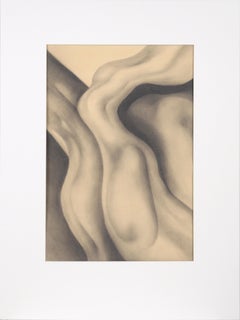
Tilde
8.0 x 5.0 x 0.1, 3.0 lbs
Graphite on paper
Hand signed by artist
Artist's Commentary:
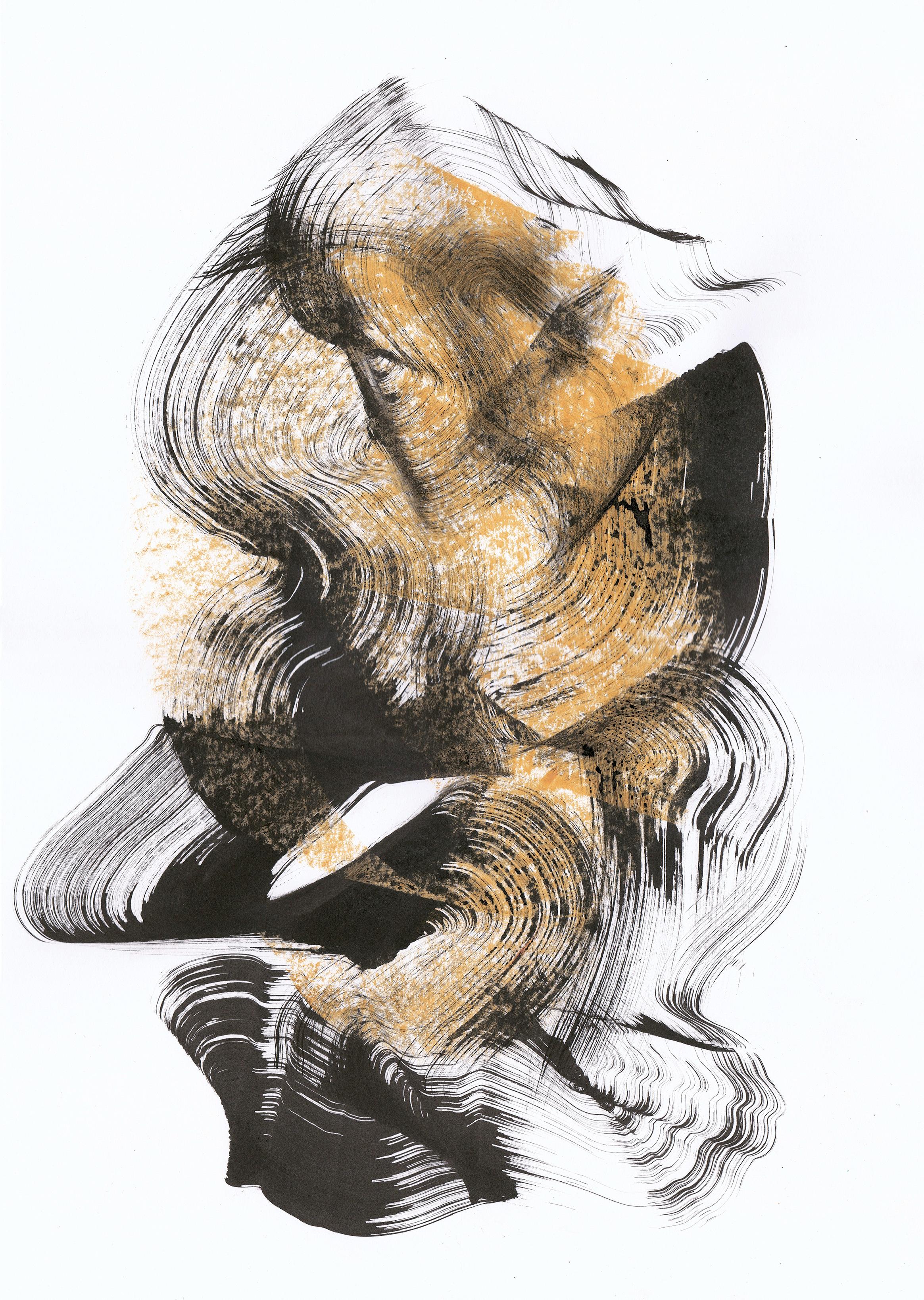
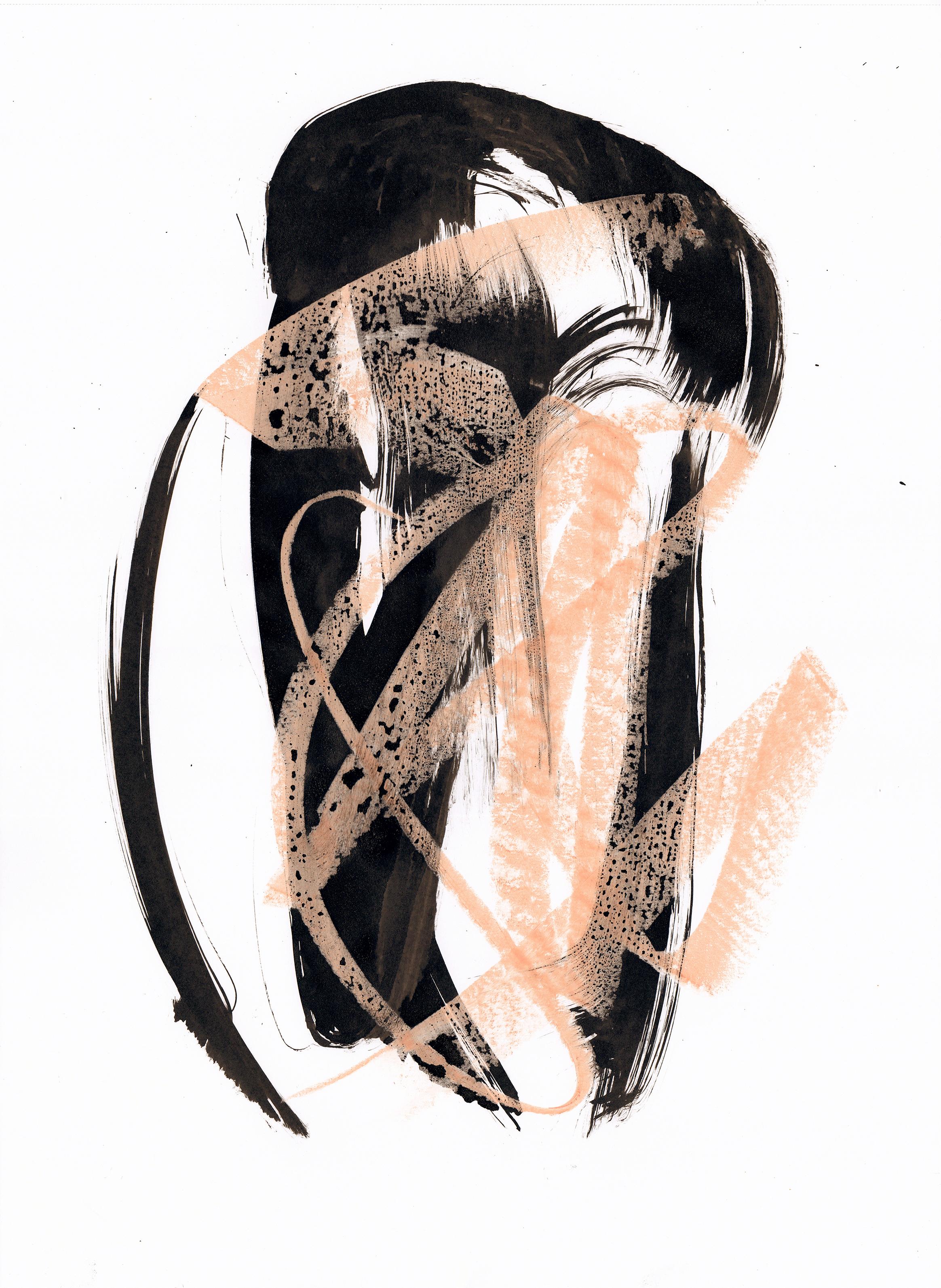
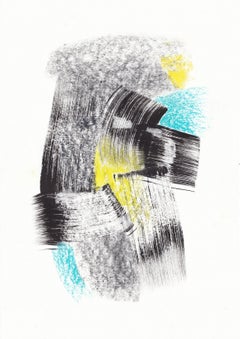
"Tilde - is from a series of graphite works depicting forms cast in iron. The sculpture rests in a field, wallowing in peace and serenity. This is one of many conceptual studies for art in public places. As a sculptor I love to draw. Drawing can sometimes be like stone carving. I lay down a block of graphite then using a eraser like a chisel to carve away to reveal the form."
About the Artist:
The early work of de Musée in film and photography was influenced by the Dadaist and Surrealists before shifting his artistic practice to sculpture. de Musée began studying the walls of ancient ruins. "The stones of these ruins began to have such a pull on me that I felt their vibrations. They seemed to be energy batteries that could transfer information to me". At this point, de Musée began to carve stone. The majority of these stone carvings were figurative and archaic in style and reference. After some time, de Musée's interest in site specific sculpture began. The emphasis shifted from the sculpture as a free standing object to that of the delineation of the exterior environment. de Musée received a commission from the City of Santa Monica, California for the large scale site-specific sculpture La Vecchia Mura. This work was the merging of two elements: the Freschetti and his studies of ancient ruins. While on fellowship at Fundacion Valparaiso in Almeria, Spain, de Musée constructed a large-scale sculpture made of local stone and river silt, Passeggio Moresco .The piece was to erode from wind and water and return itself to the river. At the beginning of the new century de Musée began to question all of the theories of his past work, asking what ideas were his own and what were those of the overpowering influences of past artists. To redefine the work, de Musée chose to return to the basics of the visual and sculptural languages and to remove all narrative and historical references in pursuit of pure form in sculpture. Without the facilities to carve stone at that time, de Musée concentrated on drawing and experimenting with other materials to use for sculpture. The 2006 Art Odyssey was a sojourn that began in California over land to New York followed by a Trans-Atlantic crossing by ship, to the United Kingdom, then onto the final destination of Spain by way of France. The Odyssey was a series of site-specific ephemeral sculptures that covered 10,000 miles, 2 continents, 4 countries and a very large body of water. LeafPond, a site-specific ephemeral sculpture was created in the middle of the Atlantic Ocean, sponsored by the Cunard Lines, while onboard the Queen Mary II
Tilde
8.0 x 5.0 x 0.1, 3.0 lbs
Graphite on paper
Hand signed by artist
Artist's Commentary:
"Tilde - is from a series of graphite works depicting forms cast in iron. The sculpture rests in a field, wallowing in peace and serenity. This is one of many conceptual studies for art in public places. As a sculptor I love to draw. Drawing can sometimes be like stone carving. I lay down a block of graphite then using a eraser like a chisel to carve away to reveal the form."
About the Artist:
The early work of de Musée in film and photography was influenced by the Dadaist and Surrealists before shifting his artistic practice to sculpture. de Musée began studying the walls of ancient ruins. "The stones of these ruins began to have such a pull on me that I felt their vibrations. They seemed to be energy batteries that could transfer information to me". At this point, de Musée began to carve stone. The majority of these stone carvings were figurative and archaic in style and reference. After some time, de Musée's interest in site specific sculpture began. The emphasis shifted from the sculpture as a free standing object to that of the delineation of the exterior environment. de Musée received a commission from the City of Santa Monica, California for the large scale site-specific sculpture La Vecchia Mura. This work was the merging of two elements: the Freschetti and his studies of ancient ruins. While on fellowship at Fundacion Valparaiso in Almeria, Spain, de Musée constructed a large-scale sculpture made of local stone and river silt, Passeggio Moresco .The piece was to erode from wind and water and return itself to the river. At the beginning of the new century de Musée began to question all of the theories of his past work, asking what ideas were his own and what were those of the overpowering influences of past artists. To redefine the work, de Musée chose to return to the basics of the visual and sculptural languages and to remove all narrative and historical references in pursuit of pure form in sculpture. Without the facilities to carve stone at that time, de Musée concentrated on drawing and experimenting with other materials to use for sculpture. The 2006 Art Odyssey was a sojourn that began in California over land to New York followed by a Trans-Atlantic crossing by ship, to the United Kingdom, then onto the final destination of Spain by way of France. The Odyssey was a series of site-specific ephemeral sculptures that covered 10,000 miles, 2 continents, 4 countries and a very large body of water. LeafPond, a site-specific ephemeral sculpture was created in the middle of the Atlantic Ocean, sponsored by the Cunard Lines, while onboard the Queen Mary II
Turn on screen reader support
To enable screen reader support, press ⌘+Option+Z To learn about keyboard shortcuts, press ⌘slash"Optimized" listing (good description, tags in title)