Paul Jenkins
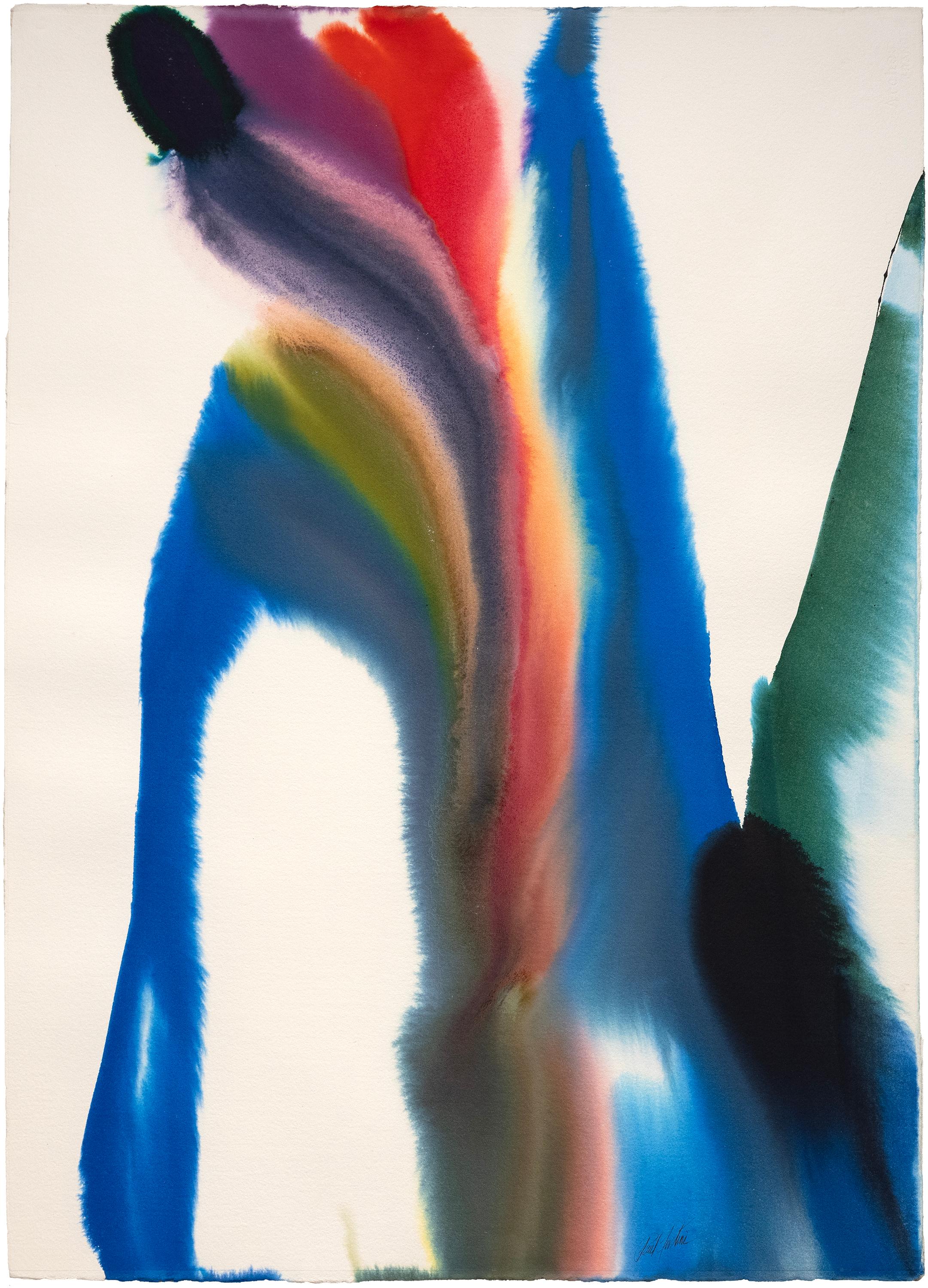
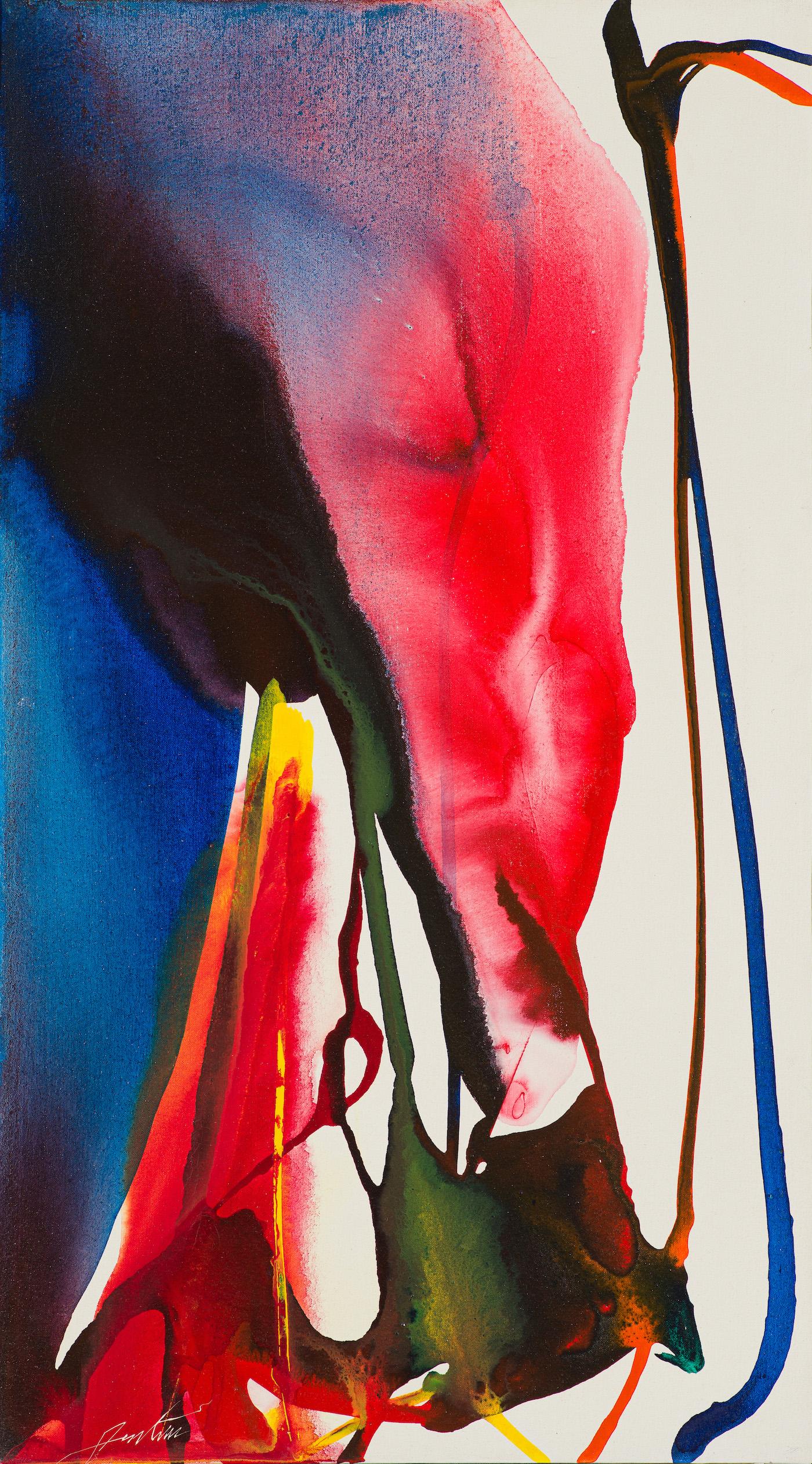
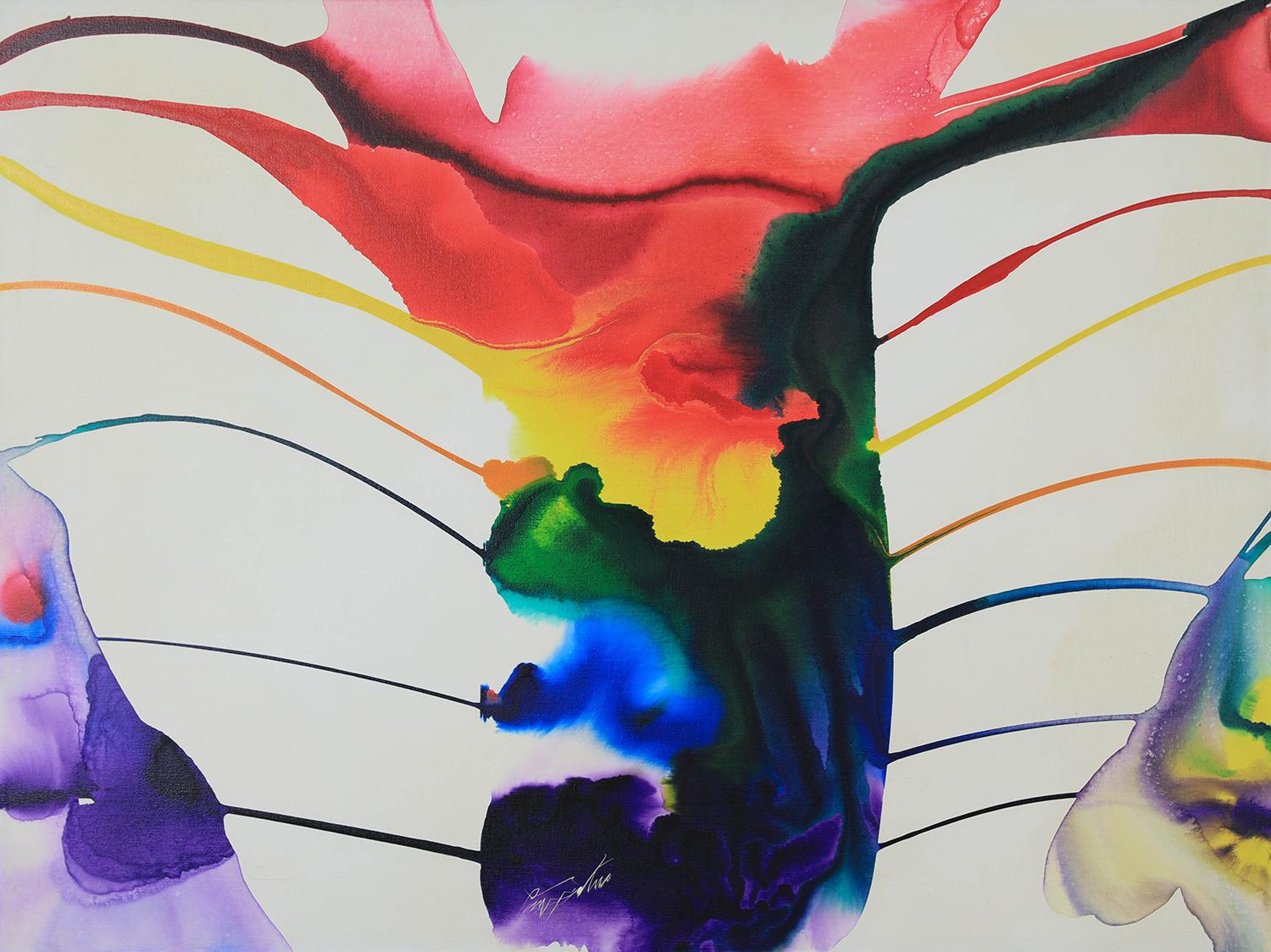
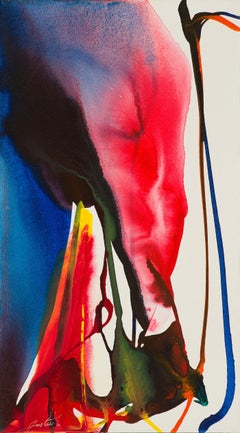
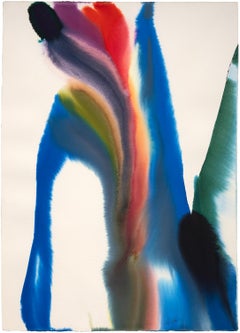
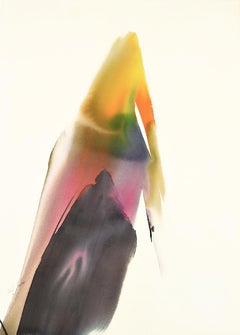
Phenomenon Phoenix Plume, 1975
Signed, titled and dated on the reverse
Watercolor on paper
30 x 22 1/2 inches
Provenance
Samuel Stein Fine Arts, Ltd., Chicago
Private Collection (acquired from the above in 1989)
Private Collection, Rye, New York
Paul Jenkins was born in 1923 in Kansas City, Missouri, where he was raised. He met Frank Lloyd Wright who was commissioned by the artist's great-uncle, the Rev. Burris Jenkins to rebuild his church in Kansas City, Missouri after a fire. The young Jenkins also visited Thomas Hart Benton and confided his intention to become a painter. The Eastern art collection of the Nelson-Atkins Museum (then, the William Rockhill Nelson Art Gallery) had an early influence on him.
In his teenage years, Jenkins moved to Struthers, Ohio to live with his mother, Nadyne Herrick, and stepfather, who both ran the local newspaper, the Hometown Journal. After graduating from Struthers High School, he served in the U.S. Maritime Service and entered the U.S. Naval Air Corps during World War II. In 1948, he moved to New York City where, on the G.I. Bill, he studied at the Art Students League of New York with Yasuo Kuniyoshi for four years, and with Morris Kantor. During that time, he met Mark Rothko, Jackson Pollock, Lee Krasner, and Barnett Newman. In 1953, he traveled to Europe, working for three months in Taormina in Sicily before settling in Paris, France. From 1955 on, the artist shared his time between New York and Paris.
Sculpture, already present in the artist's life in the 1950s, comes to the forefront with a series of works. In 1971, invited by Philip Pavia to participate in the Sculptors' Symposium held at the Cooper-Hewitt Museum in New York, Jenkins carves a 2-ton block of French limestone currently in the collection of the Hofstra Museum Sculpture Garden in Hempstead, New York. In this decade, the artist creates the first drawing for Meditation Mandala, a sculpture project for a park. Meditation Mandala is then cast in bronze, together with the sculptures Shakti Samothrace, Excalibur and Echo Chamber.
Collages, a little known aspect of the artist's work, begin to come into view. Prior to publication of Anatomy of a Cloud in 1983 by Harry N. Abrams, the artist's collages were largely unknown. A notable exception is the 1978 exhibition at the Gimpel Weitzenhoffer Gallery in New York, which integrated sculptural elements with collage. Yet, as early as the mid-fifties, visitors to the artist's Paris studio could see abstract collaged interior doors, as well as an inner wall later called Hokusai Arch, consisting of collaged Japanese woodcuts.
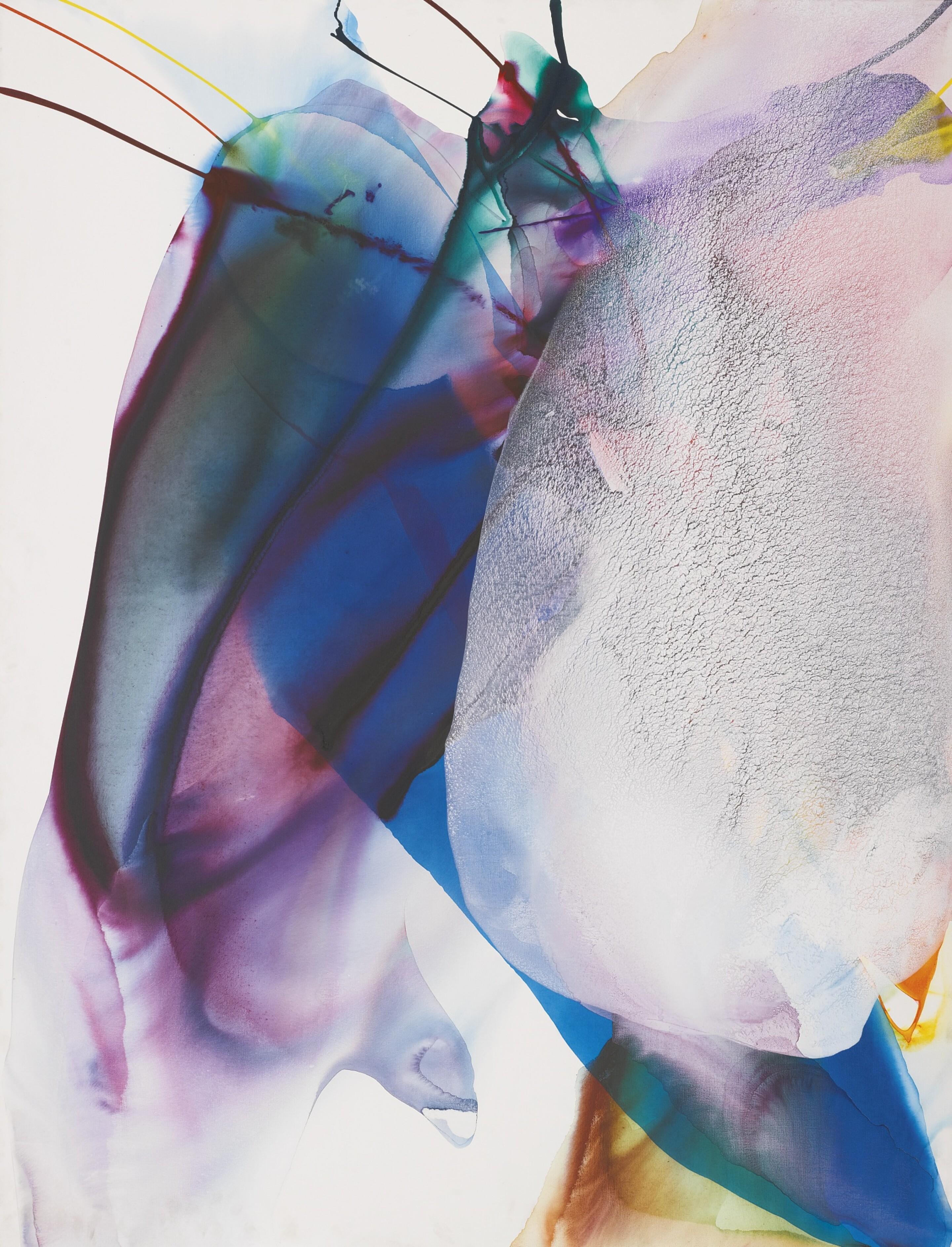
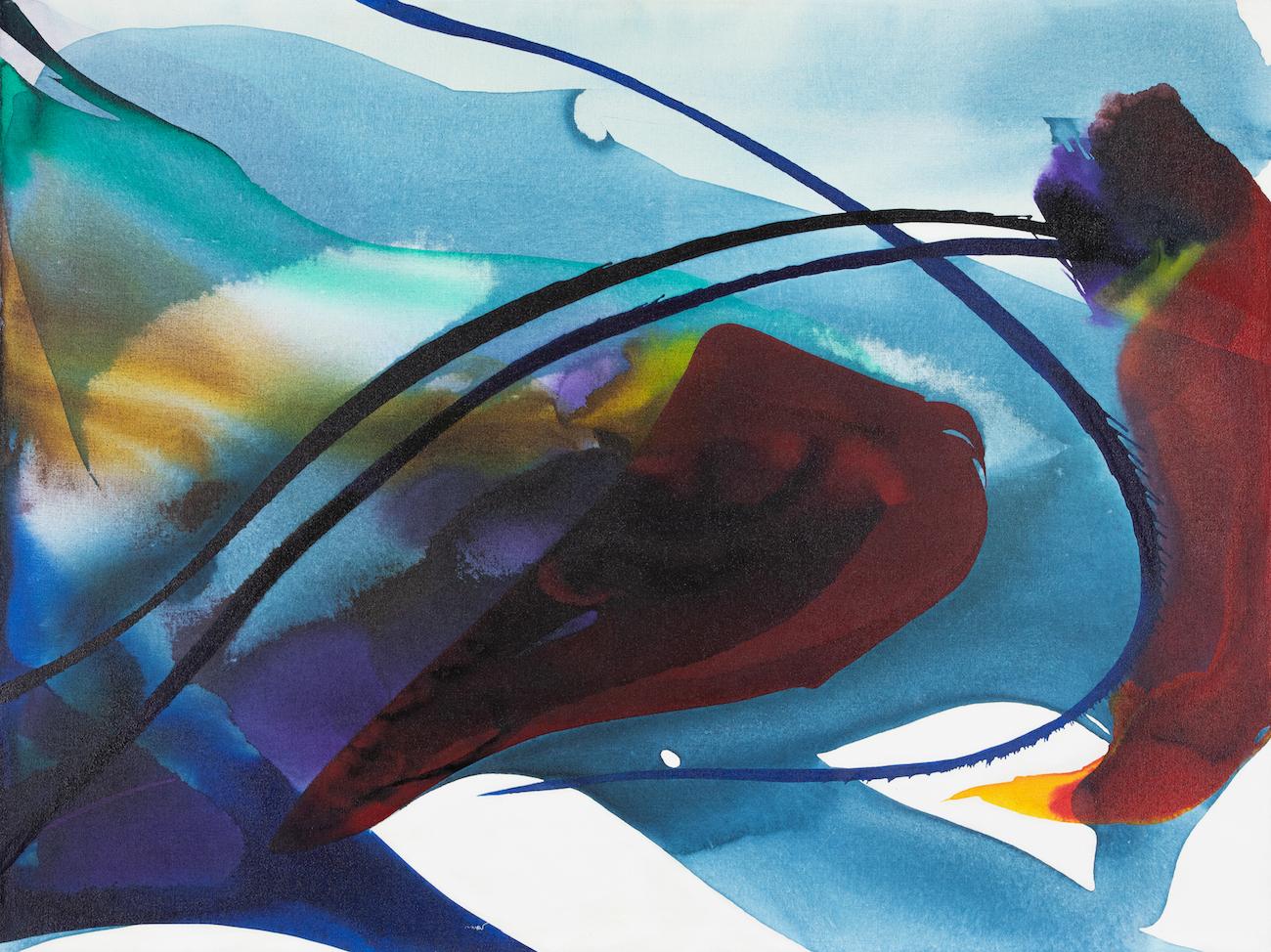
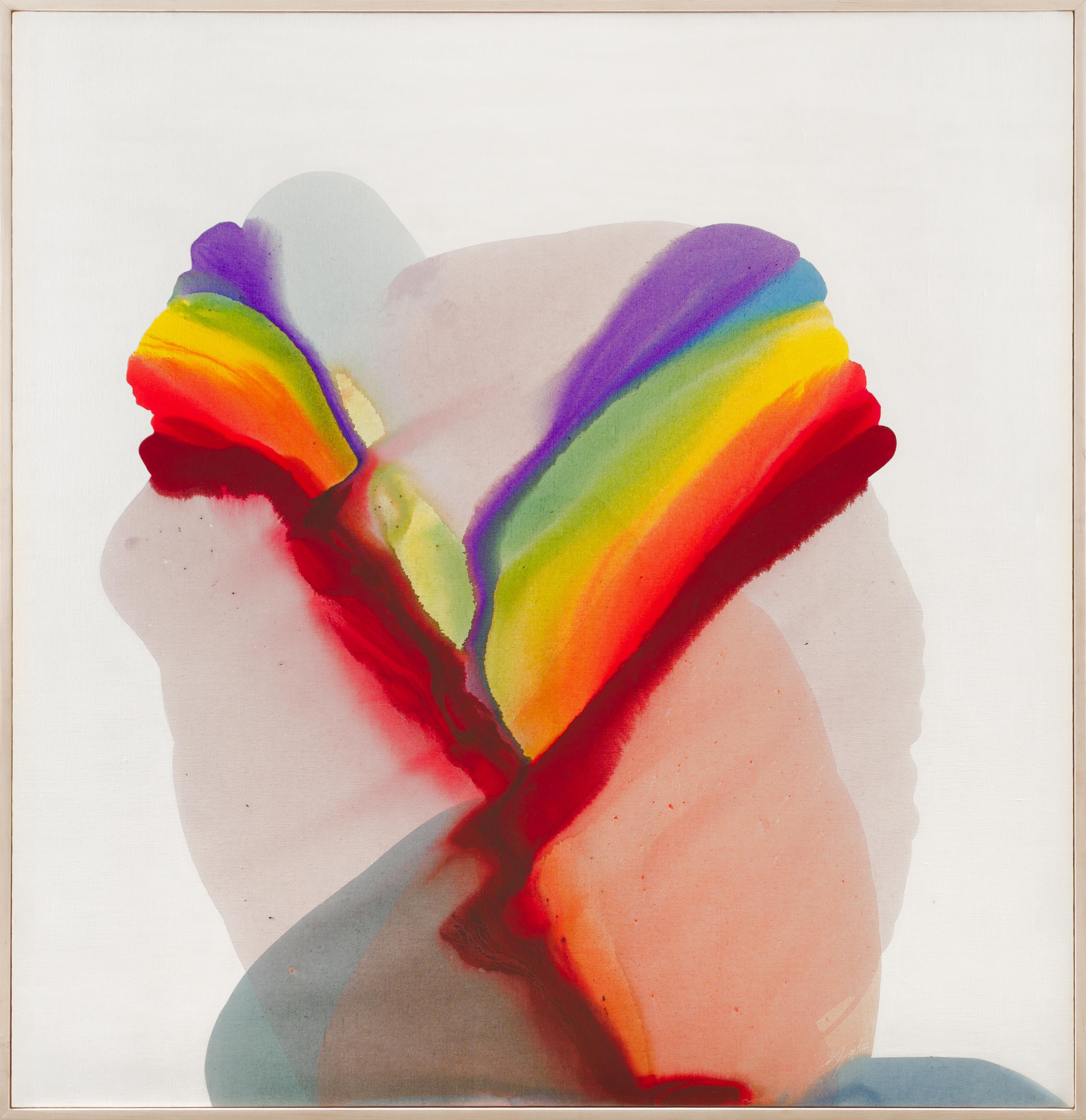
Paul Jenkins became known for his "controlled pouring" technique, where he poured thinned acrylic or oil paint onto a primed, tilted canvas. He used a long-handled ivory knife to guide the, flowing pigments, creating luminous, transparent veils of color and dynamic, pooling effects without visible brushstroke. He used an ivory knife (a long-handled, thin, dull blade) to guide the paint, which allowed him to control the flow, unlike the inkblot-like effect of staining or painting on unprimed canvas.
In 1971-1972 a retrospective of works on canvas organized by Gerald Nordland and Philippe de Montebello took place at the Houston Museum of Fine Arts and the San Francisco Museum of Art. The Corcoran Gallery of Art in Washington, D.C., initiated an exhibition of his watercolors which traveled across the US for two years.
Paul Jenkins' works are held in the collections of major museums worldwide, including The Museum of Modern Art (MoMA), the Whitney Museum of American Art, the Solomon R. Guggenheim Museum, New York, the Tate, London, Centre Pompidou, Paris, and the Smithsonian American Art Museum, Washington, D.C, and many more.