Want more images or videos?
Request additional images or videos from the seller
1 of 11

Egron Lundgren
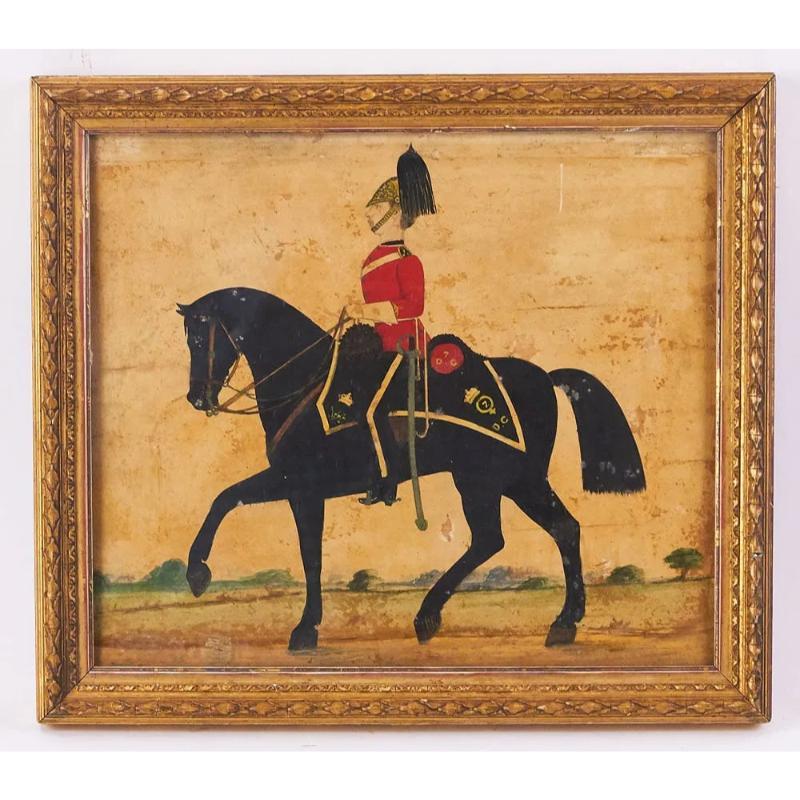
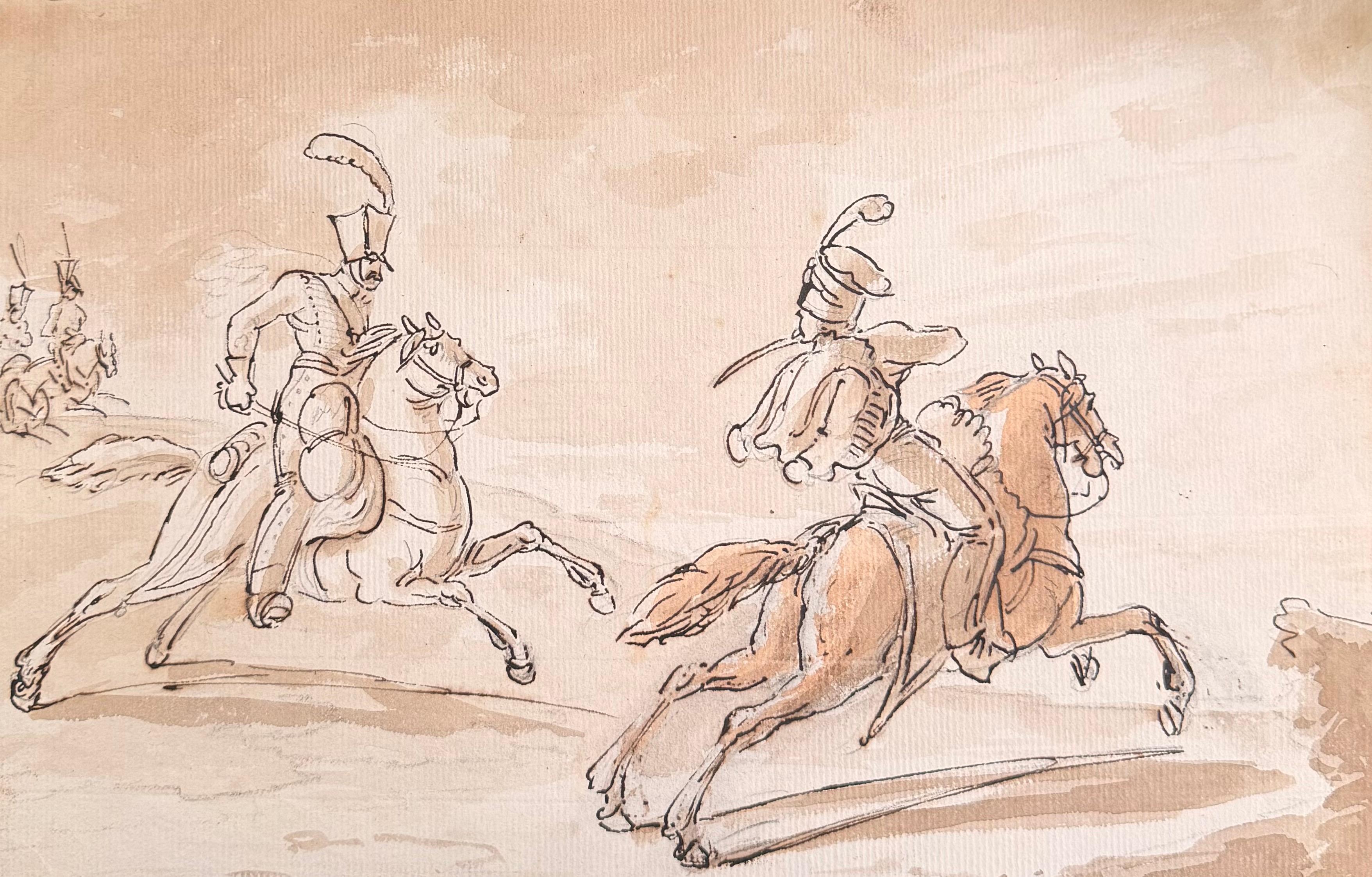
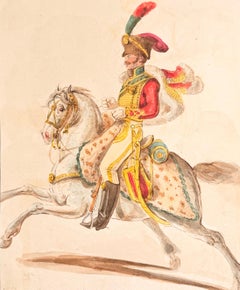
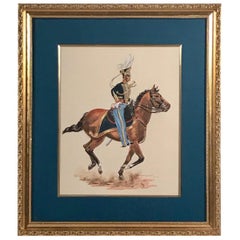
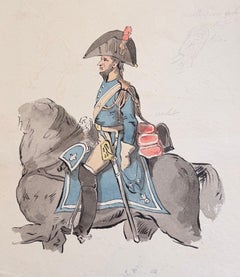
Cavalry Officer on Horse, Watercolor, Mid-19th Century, Framed

ca. 1850

$1,500
£1,130.87
€1,316.37VAT Included
CA$2,110.27
A$2,122.62
CHF 1,236.79
MX$25,861.05
NOK 14,223.93
SEK 14,590.90
DKK 9,838.98

About the Item

A finely worked watercolour on paper depicts a mounted cavalry officer—formal in bearing and costume—painted with the delicate clarity for which Egron Lundgren is best known. The sheet is signed in ink “E. L.”, mounted acid-free with a passe-partout and presented in a gilded frame, a conservation-minded treatment that preserves the paper support and the subtle luminosity of the washes. Some glass reflections are unfortunately visible in the photos. Egron Sellif Lundgren was born in Stockholm on 18 December 1815. After initial technical studies, he followed his artistic interests to the Royal Swedish Academy of Fine Arts (enrolling in 1835) and then to Paris, where he copied in the Louvre and took studio training with Léon Cogniet. During the 1840s Lundgren lived for long periods in Italy and Spain, where he turned away from ambitions as a history painter and concentrated on genre scenes and topographical watercolors—subjects that would become his hallmark. London, India and mature career From about 1850 Lundgren based himself largely in London, where he worked as a portraitist and illustrator and took commissions recording ceremonial life at court and stage scenes. In 1857–1858 he was commissioned by an English firm to travel to India to document the events of the Indian Rebellion (Sepoy Mutiny). Traveling under the protection of senior British commanders (he spent time attached to Lord Clyde’s forces), he produced hundreds of sketches and watercolours of military scenes, camp life, street subjects and local people—works that significantly broadened his reputation. He was later elected a member of the Royal Watercolour Society. Lundgren’s technique exemplifies nineteenth-century watercolour mastery: economical pen or pencil drawing combined with transparent, carefully layered washes, attentive handling of costume and facial type, and an eye for telling anecdote. Although he began with ambitions in history painting, his lasting achievement is in genre portraiture, travel scenes and military topography—subjects rendered with documentary sensitivity and pictorial refinement. Many observers praise his ability to retain freshness and immediacy even in finished studio watercolors. While living in Britain Lundgren exhibited widely and worked for periodicals and patrons in both private and official circles; he also kept publishing and circulating his travel notes and sketches. Later in life he returned to Sweden and published collections of his letters and diaries (compiled as En målares anteckningar), which provide invaluable first-hand testimony about his travels and working methods. Examples of Lundgren’s watercolors and drawings are held in major public collections in Britain and Sweden and elsewhere. Notable institutional holdings include the British Museum, the Nationalmuseum (Stockholm) and Göteborgs konstmuseum, among other regional collections and repositories that preserve his travel and India material. These holdings reflect both his documentary importance and his status as a leading nineteenth-century watercolorist. Egron Lundgren is remembered as one of the most accomplished Swedish watercolorists of the nineteenth century—a cosmopolitan artist who combined continental training, wide travels and a practiced eye for social detail. His Indian sketches in particular remain important historical documents as well as works of art, and his diaries and letters have been used by historians and curators to illuminate both his working practice and the wider context of nineteenth-century travel painting.
  • Creator:
    Egron Lundgren (1815 - 1875, Swedish)
  • Creation Year:
    ca. 1850
  • Dimensions:
    Height: 15.56 in (39.5 cm)Width: 12.21 in (31 cm)Depth: 0.79 in (2 cm)
  • Medium:
  • Period:
  • Condition:
    In a nice condition with good colors.
  • Gallery Location:
    Stockholm, SE
  • Reference Number:
    1stDibs: LU2608216862772

More From This Seller

View All
Village Celebration, 19th Century Watercolor, English School, Signed

Village Celebration, 19th Century Watercolor, English School, Signed

Located in Stockholm, Stockholm

A painted watercolor of joyous village festivity with music playing and dancing people by Walter Goodall, signed and dated 1862. In the foreground, a young girl in a white dress danc...

Category

1860s English School Figurative Drawings and Watercolors

Materials

Paper, Watercolor

Two Figures in a Small Boat, Signed Watercolor Coastal Landscape, 1842

Two Figures in a Small Boat, Signed Watercolor Coastal Landscape, 1842

Located in Stockholm, Stockholm

A serene, wind‑still sunset scene in watercolor: a woman and a man in a small boat moored to a wooden pier both with their backs to the viewer as they tend to their fishing nets. The...

Category

1840s Other Art Style Landscape Drawings and Watercolors

Materials

Paper, Watercolor

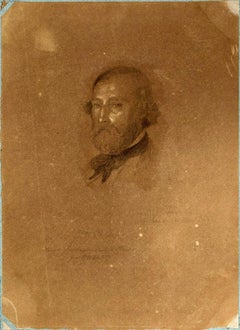
19th Century Portrait of Gustaf Wilhelm Palm in Pencil and Pastel

19th Century Portrait of Gustaf Wilhelm Palm in Pencil and Pastel

Located in Stockholm, Stockholm

Portrait of Gustaf Wilhelm Palm (1810–1890) by Lorenz Frølich (1820-1908) Signed with monogram and dated May 1849. Pencil and pastel on paper. 29.5 × 21 cm. This portrait of the Swed...

Category

1840s Naturalistic Portrait Drawings and Watercolors

Materials

Paper, Pastel, Carbon Pencil

Summer Landscape with Farmhouse and Horses, Impressionist Drawing

Summer Landscape with Farmhouse and Horses, Impressionist Drawing

Located in Stockholm, Stockholm

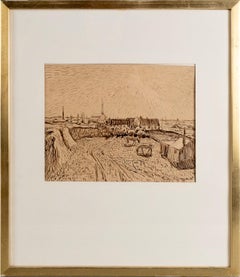
This summer landscape with horses grazing in a paddock under the rays of the sun beside a rural farmstead is a finely executed drawing in brown, signed lower right by Swedish female artist Ester Almqvist (1869-1934). A winding path leads the viewer into the composition, where buildings, fences, and vegetation define a cultivated countryside. Two horses stand quietly within the enclosed field, their forms rendered with spare yet assured lines. Above them, the sun shines from a clear sky, its rays spreading outward in rhythmic, hand-drawn strokes that cover all of the sky. The composition is built through a lively and vibrating pen line, where hatching and linear repetition create both texture and luminosity. The warm sepia tone unifies the scene, while the expressive draughtsmanship conveys a sense of immediacy and presence. The motif is elevated through a distinctly personal interpretation of landscape and light. Ester Dorothea Almqvist was born in 1869 in Bromma, Stockholm and died in 1934 in Lund, south Sweden. She emerged as a significant figure in Swedish art at the turn of the twentieth century, initially associated with the National Romantic movement, before later contributing to the introduction of modernist tendencies in Sweden through a highly individual synthesis of Neo Impressionist and Expressionist elements. Her early life was shaped by a religious and intellectually engaged environment. Almqvist lived her entire life with a physical disability caused by a spinal deformity, which limited her mobility but did not prevent her from pursuing an artistic career. Following her mother’s death, Almqvist broke with her earlier environment and relocated to Skåne, where she would spend the greater part of her professional life. The landscapes of southern Sweden became central to her artistic production and provided the basis for many of her most characteristic works. Her artistic education began at Tekniska skolan in Stockholm (1888–1891), where she received foundational training in drawing and design. She continued her studies through private lessons with the history painter Gustaf Cederström, but chose not to apply to the Royal Academy of Fine Arts. Instead, she pursued further training at Valand Art School in Gothenburg, where instruction was led by prominent artists such as Carl Larsson and Richard Bergh. She also studied for a period at the Konstnärsförbundet’s school (Artists' Association), under the guidance of Per Hasselberg and Bruno Liljefors...

Category

Early 20th Century Impressionist Landscape Drawings and Watercolors
Materials

Paper, Ink

You May Also Like

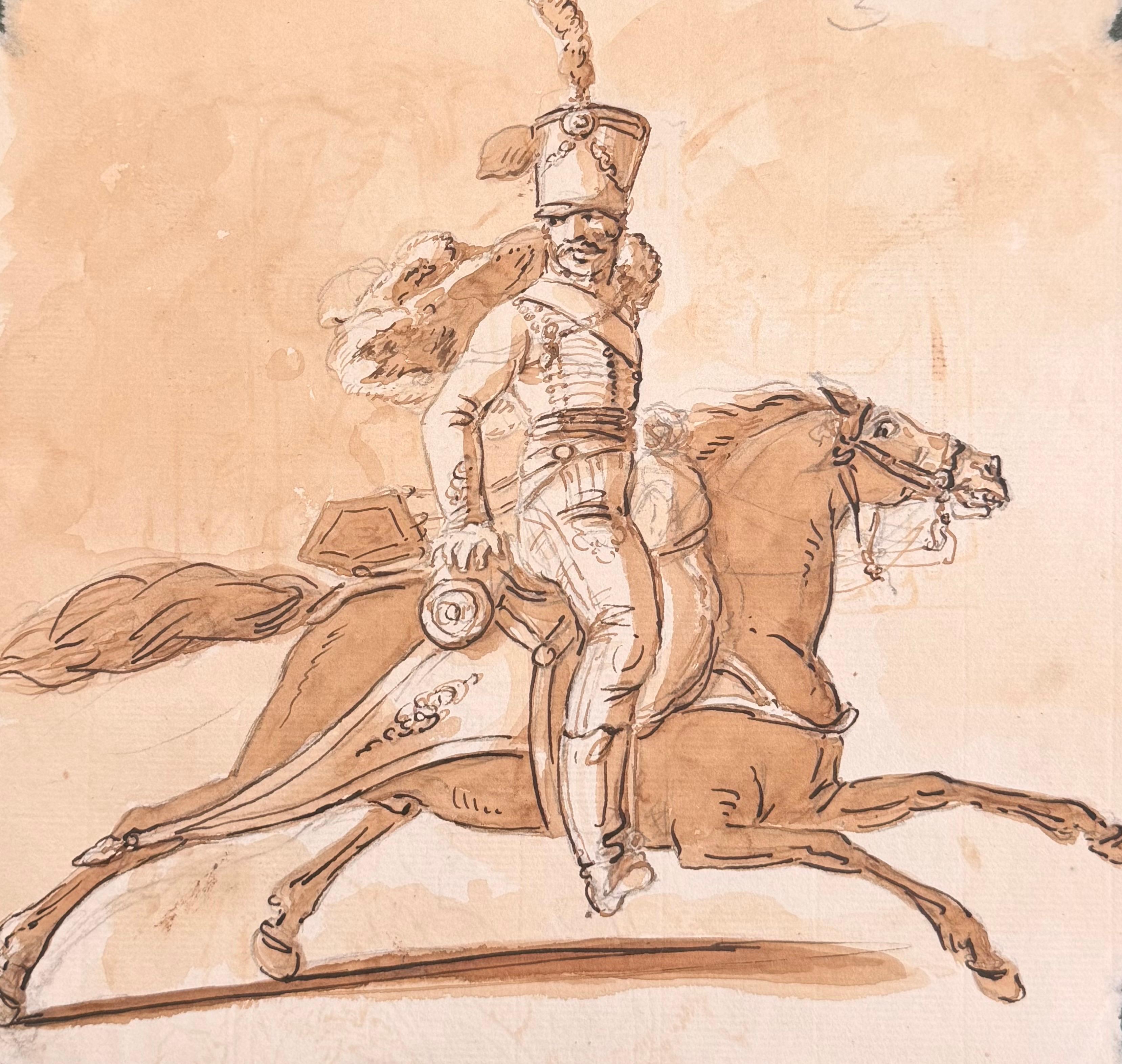
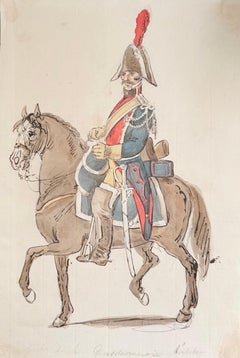
Fine English School Ink & Watercolor Mounted Cavalry Officer Equestrian Study

Fine English School Ink & Watercolor Mounted Cavalry Officer Equestrian Study

Located in Cirencester, Gloucestershire

Fine English School Ink & Watercolor Mounted Cavalry Officer Equestrian Study Late 18th / Early 19th Century English School circa 1780–1800 ink and watercolour on artist paper, unfra...

Category

Mid-20th Century English School Figurative Paintings

Materials

Ink, Watercolor

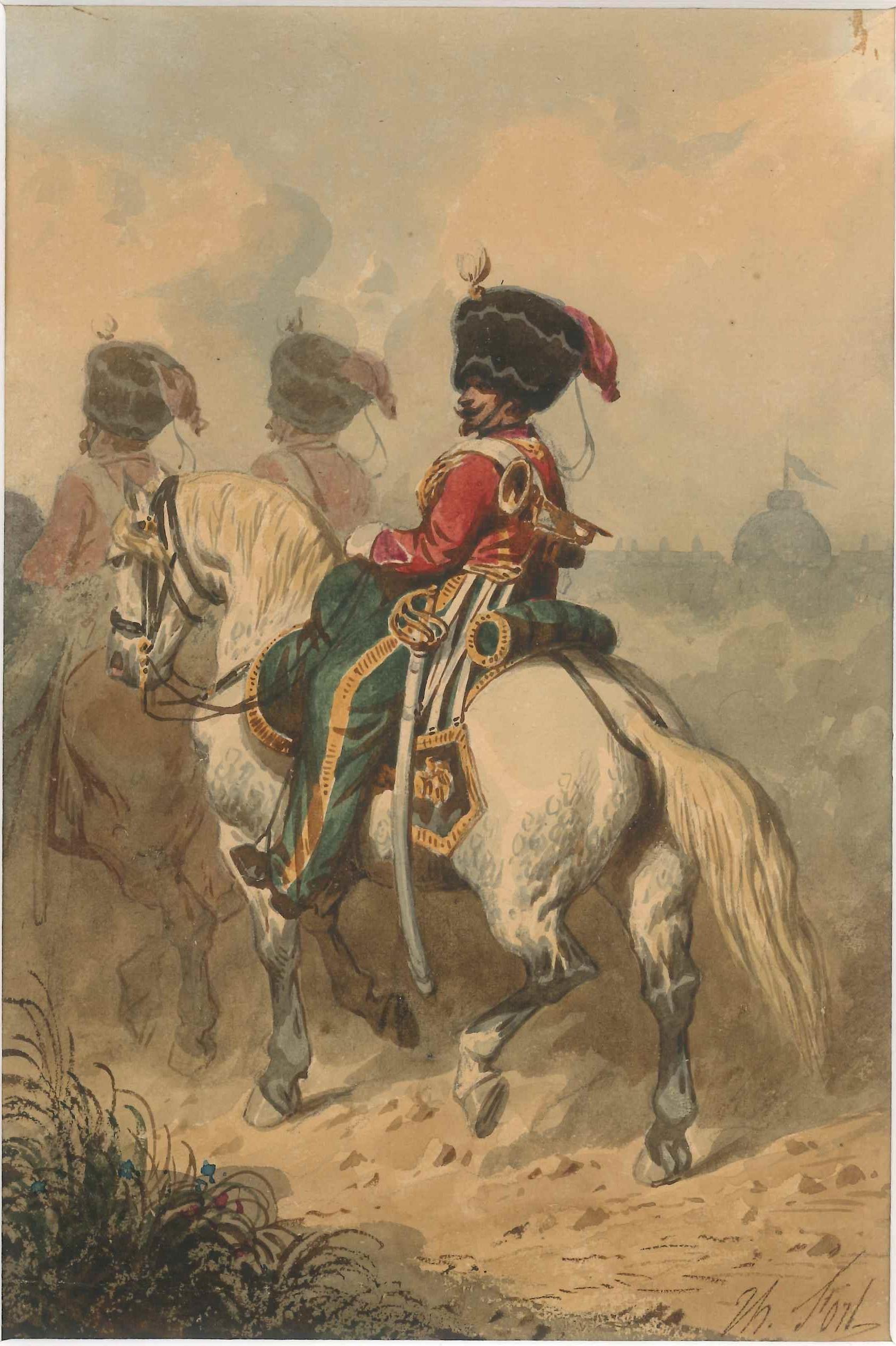
Watercolor Painting of Cavalry Soldier on Galloping Horse, Monogramed

Watercolor Painting of Cavalry Soldier on Galloping Horse, Monogramed

Located in Vero Beach, FL

Watercolor painting of cavalry soldier on galloping horse, monogramed. This watercolor painting is executed in a masterful technique. The finest details and bright colors make this artwork a treasure. A military cavalry...

Category

Antique Late 19th Century English Victorian Paintings

Materials

Paper

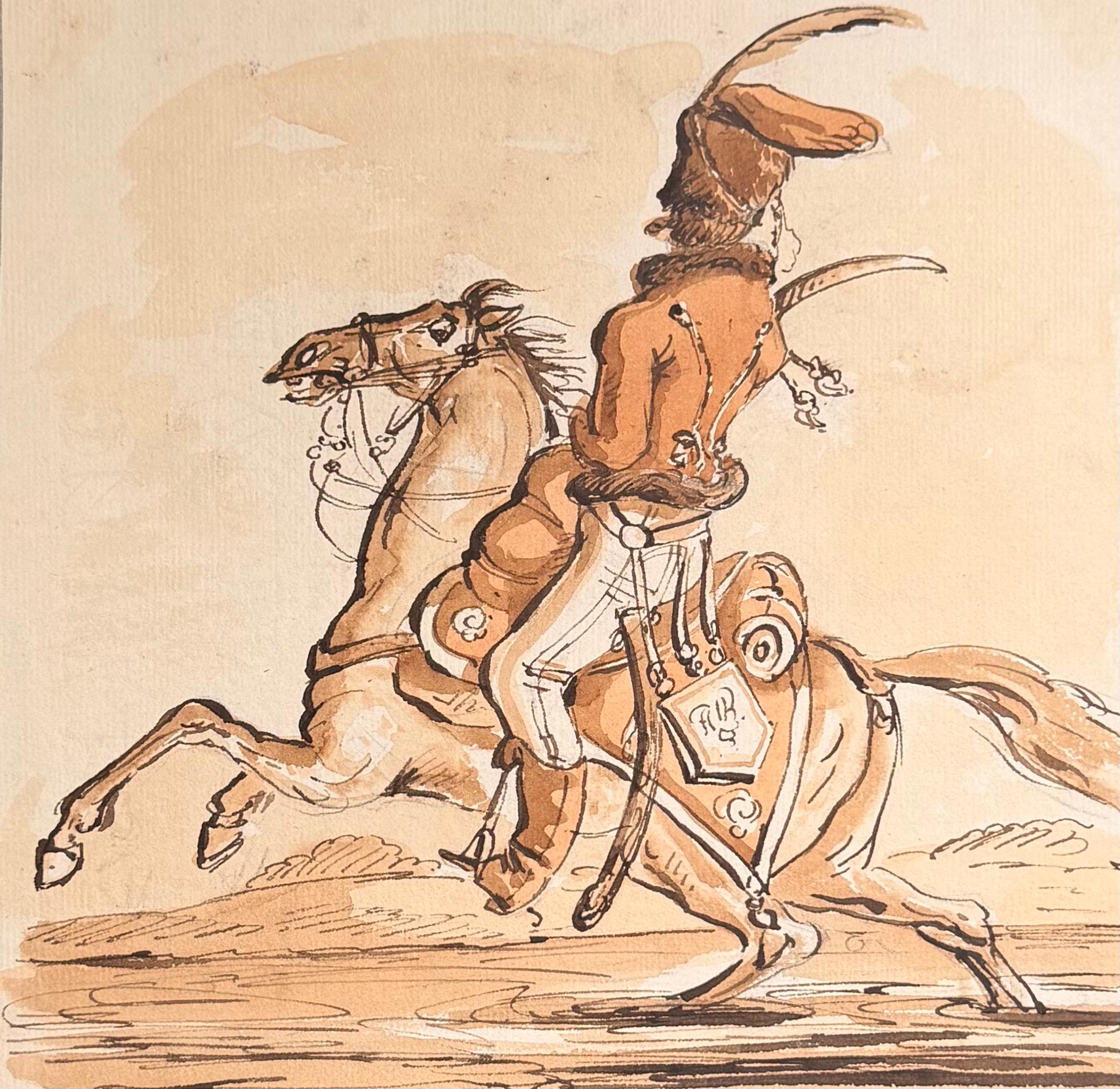
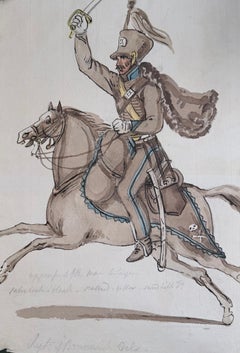
Fine English School Ink & Watercolor Cavalry Trooper on Horseback Raised Sabre

Fine English School Ink & Watercolor Cavalry Trooper on Horseback Raised Sabre

Located in Cirencester, Gloucestershire

Fine English School Ink & Watercolor Cavalry Trooper on Horseback with Raised Sabre Late 18th / Early 19th Century English School circa 1780–1800 ink drawing with watercolour was...

Category

Mid-20th Century English School Figurative Paintings

Materials

Ink, Watercolor

Fine English School Ink & Watercolor Cavalry Officer on Horseback Study

Fine English School Ink & Watercolor Cavalry Officer on Horseback Study

Located in Cirencester, Gloucestershire

Fine English School Ink & Watercolor Cavalry Officer on Horseback Study Late 18th / Early 19th Century English School circa 1780–1800 ink drawing with watercolour wash on artist pape...

Category

Mid-20th Century English School Figurative Paintings

Materials

Ink, Watercolor

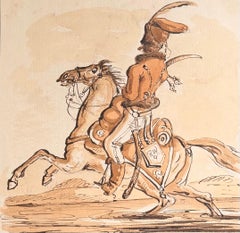
Fine English School Ink & Watercolor Mounted Cavalry Officer Equestrian Study

Fine English School Ink & Watercolor Mounted Cavalry Officer Equestrian Study

Located in Cirencester, Gloucestershire

Fine English School Ink & Watercolor Cavalry Officer on Galloping Horse Study Late 18th / Early 19th Century English School circa 1780–1800 ink drawing with watercolour wash on artis...

Category

Mid-20th Century English School Figurative Paintings

Materials

Ink, Watercolor

Fine English School Ink & Watercolor Cavalry Officer on Horse In Plumed Helmet

Fine English School Ink & Watercolor Cavalry Officer on Horse In Plumed Helmet

Located in Cirencester, Gloucestershire

1780's-1800 Fine English School Ink & Watercolor Cavalry Officer in Plumed Helmet on Horse Study Late 18th / Early 19th Century English School circa 1780–1800 ink drawing with waterc...

Category

Mid-20th Century English School Figurative Paintings

Materials

Ink, Watercolor