
Cream of Wheat Ad
By James Montgomery Flagg
Located in Fort Washington, PA
Signed Lower Left
Category
1910s Figurative Drawings and Watercolors
Materials
Watercolor, Board
1908
Cream of Wheat Ad
By James Montgomery Flagg
Located in Fort Washington, PA
Signed Lower Left
Watercolor, Board
Cream of Wheat Advertisement, Saturday Evening Post, May 5, 1920
By Edward Vincent Brewer
Located in Fort Washington, PA
Original Cream Of Wheat Advertisement Illustration for Saturday Evening Post's May 5th issue, 1920. Oil on canvas. Ex: Kraft Food Collection / Mort...
Canvas, Oil
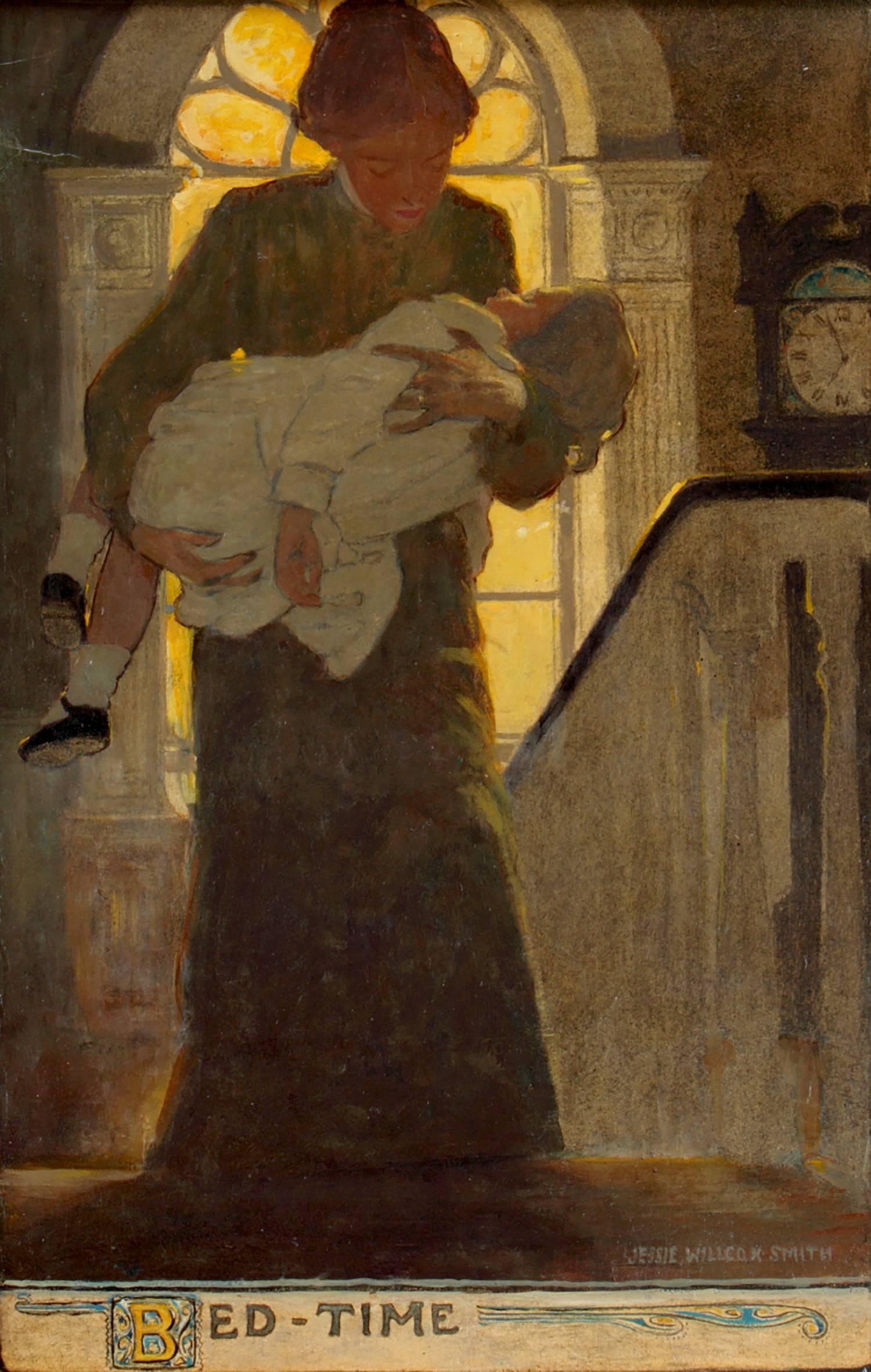
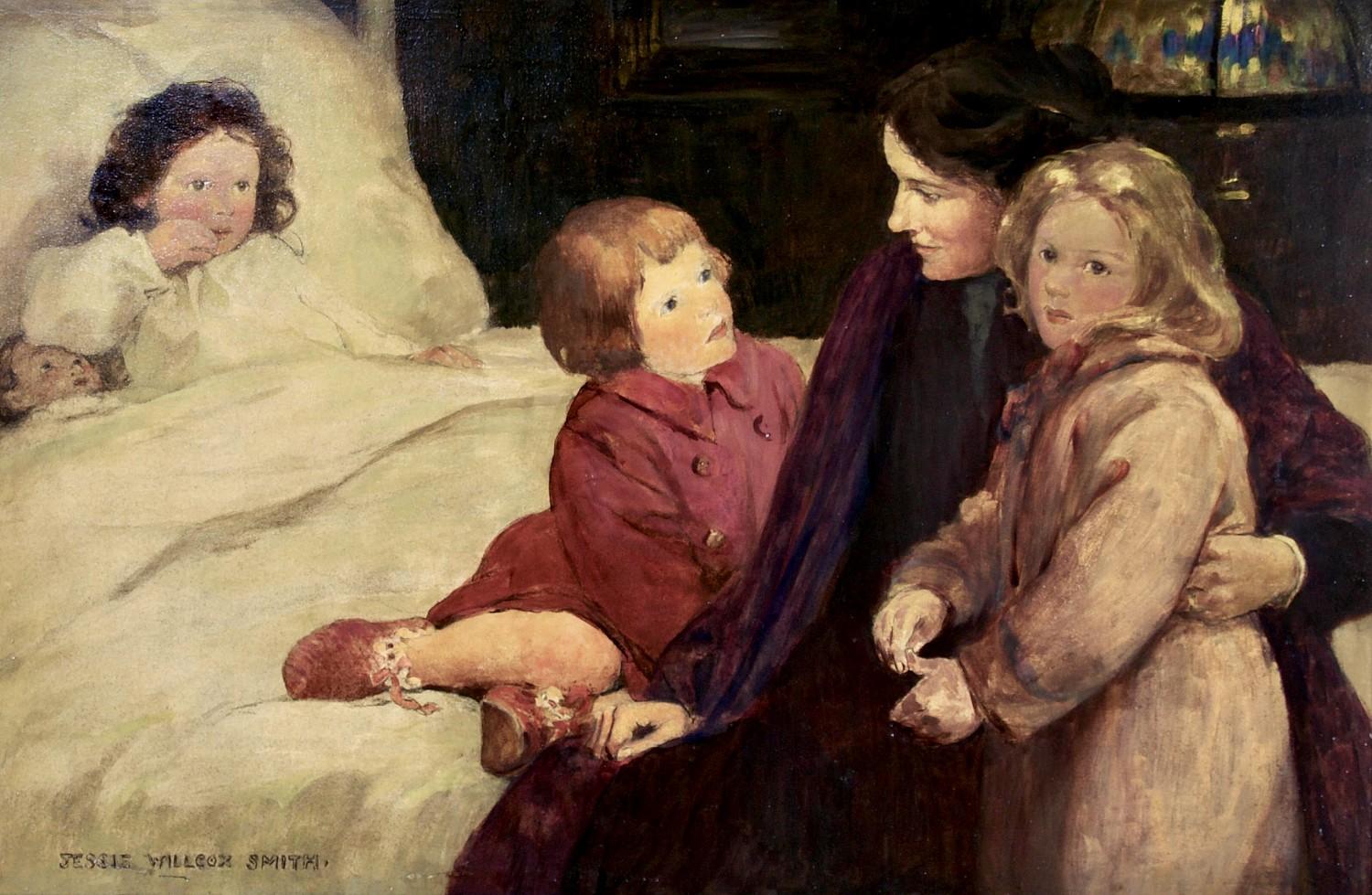
I Know That Man, Advertisement for Cream of Wheat
By Jessie Willcox Smith
Located in Fort Washington, PA
Original advertisement for Cream of Wheat, published 1909. Literature Dave Stivers, Nabisco Brands Collection of Cream of Wheat Advertising...
Charcoal, Watercolor
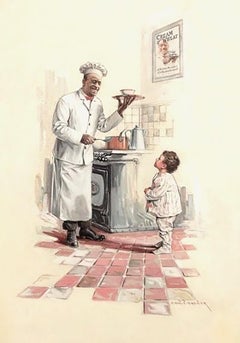
Cream of Wheat Advertisement
By Edward Vincent Brewer
Located in Fort Washington, PA
Signature: Signed Lower Right Original Cream Of Wheat illustration. Artist applied face. Oil on canvas. Ex: Kraft Food Collection / Morton Grove Ill..
Canvas, Oil
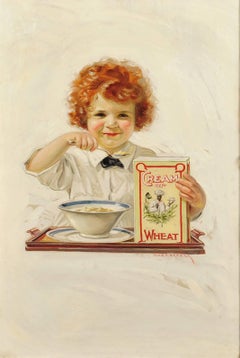
"Little Indian Sioux" Cream of Wheat Ad, Saturday Evening Post, 1920
By Edward Vincent Brewer
Located in Fort Washington, PA
Date: 1920 Medium: Oil on Canvas Dimensions: 24.00" x 16.00" Signature: Signed Lower Right Cream of Wheat advertisement for the Saturday Evening Post, June 5, 1920. In 1980, Dave Stivers, a new archivist for the Nabisco Brands Company was taking a tour of the Cream of Wheat plant in Minneapolis, Minnesota when he encountered a large room with metal lockers that had not been opened for over 30 years. These lockers contained a treasure trove of 1600 advertising paintings...
Canvas, Oil
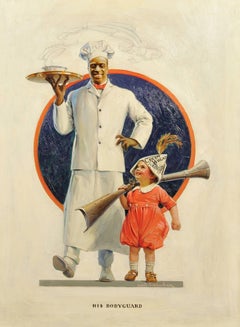
"His Bodyguard, " Cream of Wheat Advertisement, Saturday Evening Post, 1921
By Edward Vincent Brewer
Located in Fort Washington, PA
"His Bodyguard," Cream of Wheat Advertisement, Saturday Evening Post, November 19, 1921 Date: 1921 Medium: Oil on Canvas Dimensions: 29.00" x 21.00" Signature: Signed Lower Right ...
Canvas, Oil
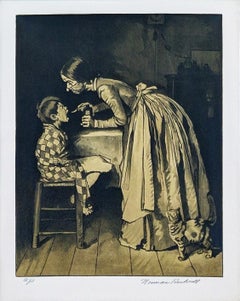
Medicine (Sepia) Lithograph Print, American Impressionist, Signed AP Edition
By Norman Rockwell
Located in Aventura, FL
Hand signed and numbered by the artist. From Tom Sawyer Portfolio. Sheet size 25.5 x 19.5 inches. Image size approx 17 x 13 inches. Frame size approx 28 x 24 inches. AP edition. ...
Paper, Lithograph
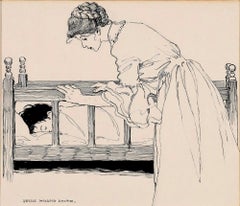
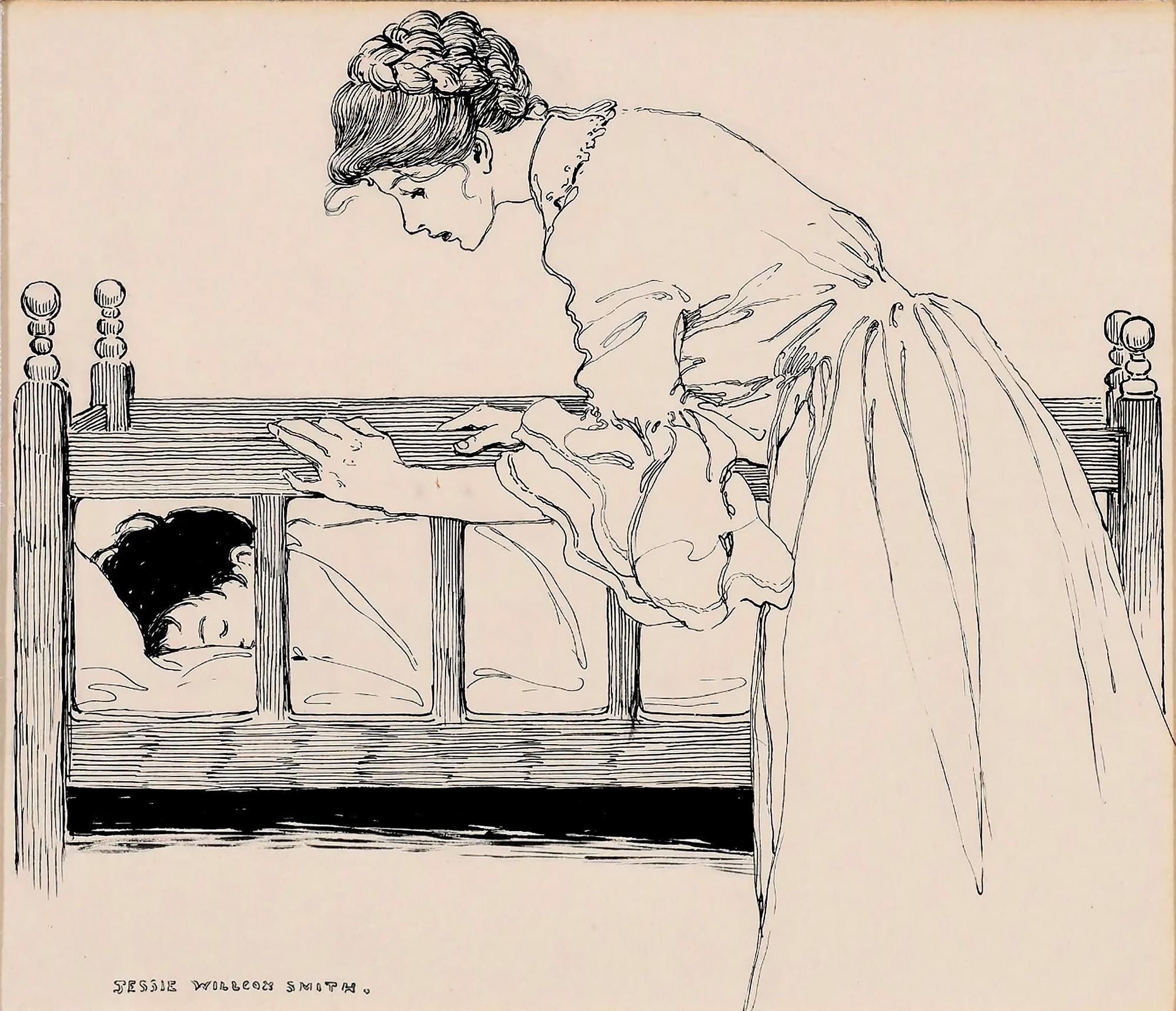
Mother and Child, Golden Age of Illustration
By Jessie Willcox Smith
Located in Miami, FL
America's greatest female illustrator draws a heartwarming picture of a mother putting to bed her child. Motherly love towards their children is the artist's most iconic theme. This ...
Ink, Illustration Board, Pen
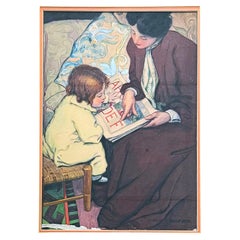
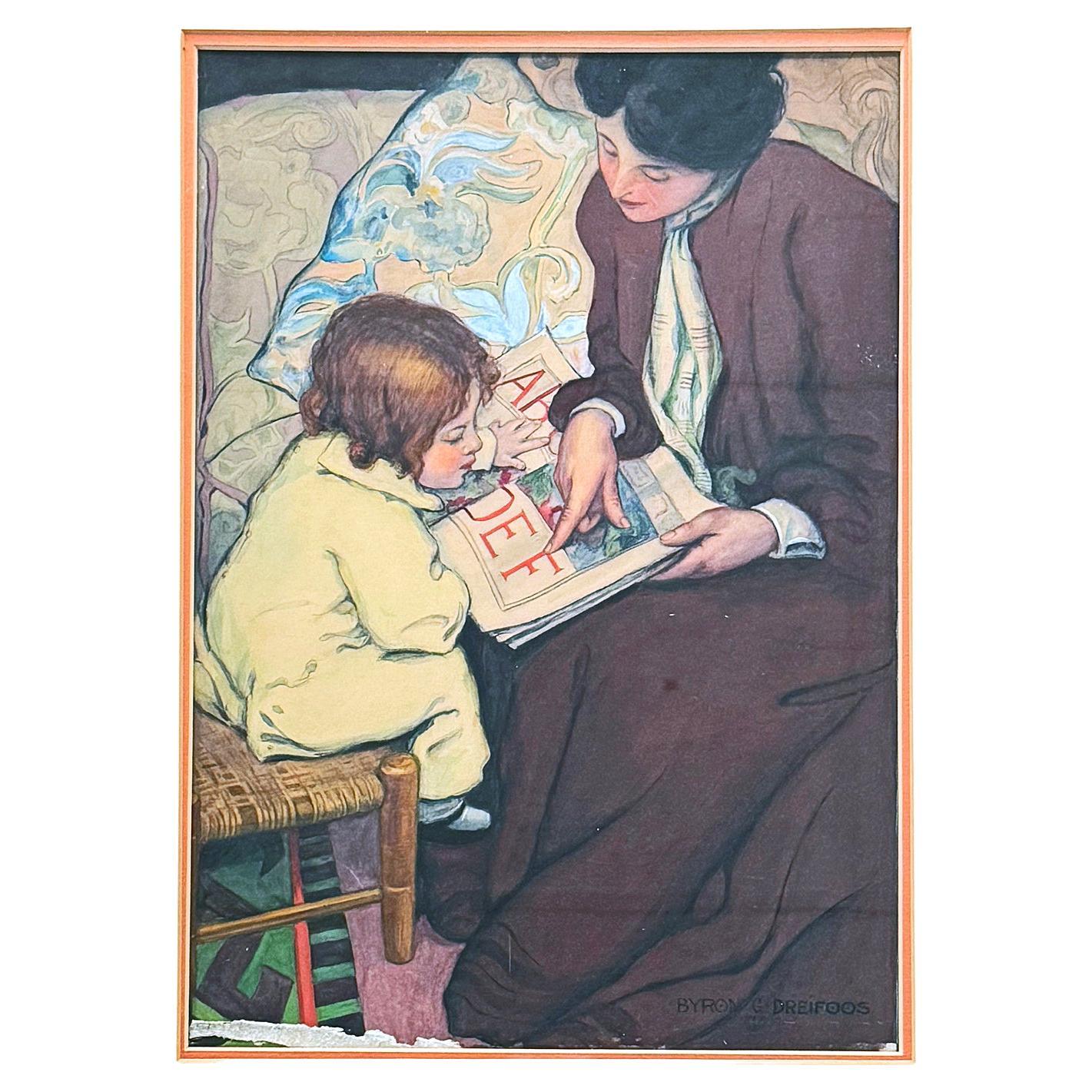
"Mother and Chid Reading", Close Variant of Jessie Wilcox Smith Ptg, Dreifoos
Located in Philadelphia, PA
This quiet and lovely depiction of a mother and child reading an alphabet book is charming for good reason -- it is a close variant of a well-known circa 1905 painting entitled "The ...
Paint
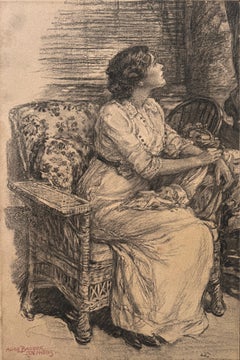
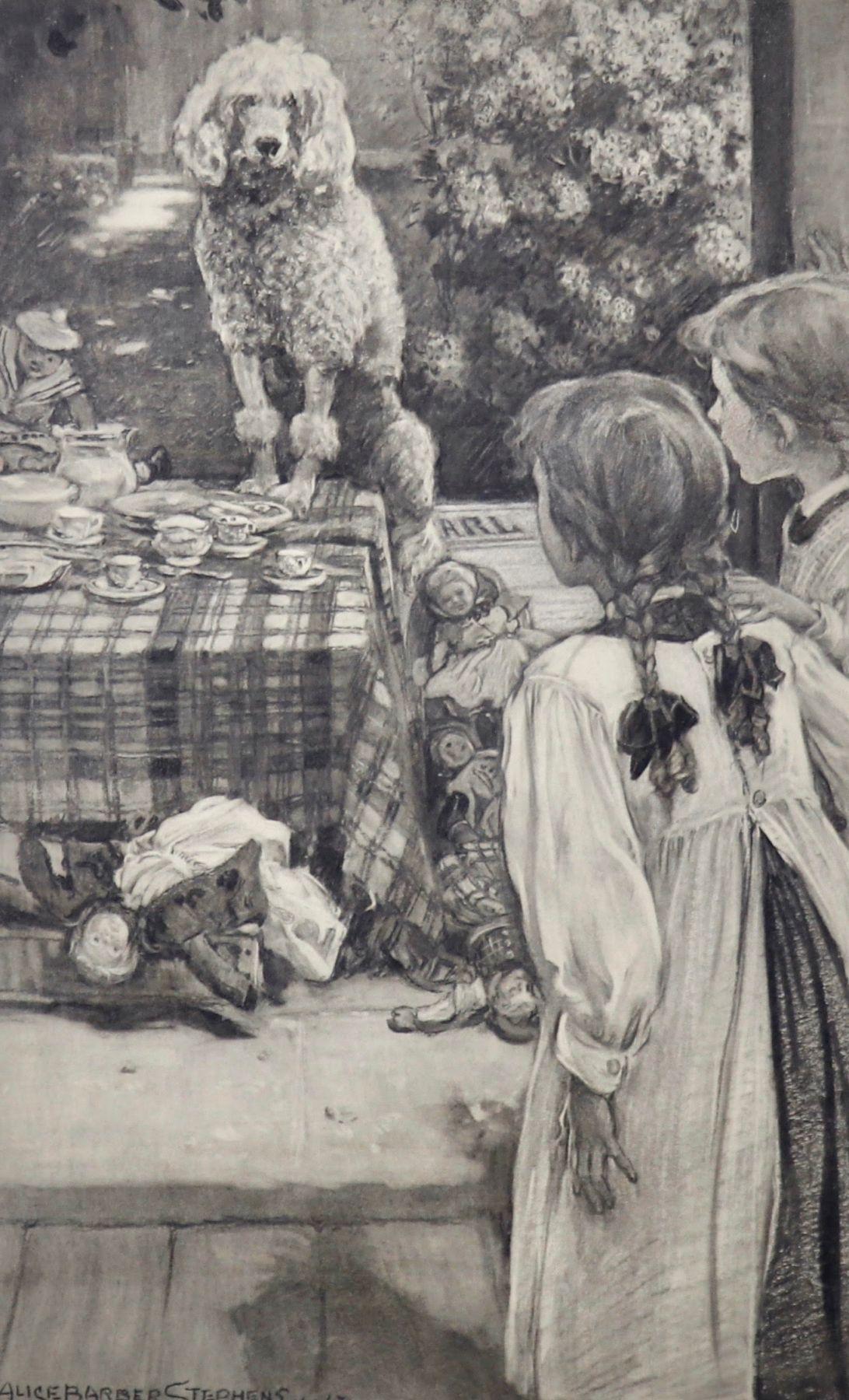
Attractive Young Woman Sitting in Chair and Looking Upwards in Domestic Setting
By Alice Barber Stephens
Located in Miami, FL
Female Illustrator of the Golden Age Alice Barber Stephens renders in an academic style and women sitting in a chair and responding to something outside of the frame. Signed lower left. Most likely done for a major newsstand magazine like Harper's, Century or Scribner's Monthly. Work is framed under glass in a simple black wood frame. Perhaps period. Matt is new. Frame size: 20.5 x 14.5 From: Wikipedia Alice Barber Stephens (July 1, 1858 – July 13, 1932) was an American painter and engraver, best remembered for her illustrations. Her work regularly appeared in magazines such as Scribner's Monthly, Harper's Weekly, and The Ladies Home Journal. Early life and education Alice Barber was born near Salem, New Jersey. She was the eighth of nine children born to Samuel Clayton Barber and Mary Owen, who were Quakers. She attended local schools until she and her family moved to Philadelphia, Pennsylvania. At age 15 she became a student at the Philadelphia School of Design for Women (now Moore College of Art & Design), where she studied wood engraving. The Women's Life Class (1879), Pennsylvania Academy of the Fine Arts, Philadelphia, Pennsylvania. She was admitted to the Pennsylvania Academy of the Fine Arts in 1876 (the first year women were admitted), studying under Thomas Eakins. Among her fellow students at the Academy were Susan MacDowell, Frank Stephens, David Wilson Jordan, Lavinia Ebbinghausen, Thomas Anshutz, and Charles H. Stephens (whom she would marry). During this time, at the academy, she began to work with a variety of media, including black-and-white oils, ink washes, charcoal, full-color oils, and watercolors. In 1879, Eakins chose Stephens to illustrate an Academy classroom scene for Scribner's Monthly. The resulting work, Women's Life Class, was Stephens' first illustration credit. New Woman As educational opportunities were made more available in the nineteenth century, women artists became part of professional enterprises, including founding their own art associations. Artwork made by women was considered to be inferior by the art world, and to help overcome that stereotype women became "increasingly vocal and confident" in promoting women's work, and thus became part of the emerging image of the educated, modern and freer "New Woman". Artists then, "played crucial roles in representing the New Woman, both by drawing images of the icon and exemplifying this emerging type through their own lives." Alice Barber Stephens, The Women Business, oil, 1897, Brandywine River Museum, Chadds Ford, Pennsylvania One example of overcoming women stereotypes was Stephens' Woman in Business from 1897, which showed how women could focus not only in the home, but also in the economic world.[8] As women began to work, their career choices broadened and illustration became a commendable occupation. People's ideas about education and art started to merge, and the outcome of a certain sensitivity to the arts began to be seen as uplifting and educational. By using illustration as a means to further their practices, women were able to fit the traditional gender role while still being active in their pursuits for the "New Woman". According to Rena Robey of Art Times, "The early feminists began to leave the home to participate in clubs as moral and cultural guardians, focused on cleaning up cities and helping African Americans, impoverished women, working children, immigrants, and other previously ignored groups." Stephens took advantage of the explosion of illustration opportunities, including the opportunity to work from home. Women's education Edwin Forrest House, formerly the home of the Philadelphia School of Design for Women. Throughout the period before the civil war, textile and other decorative work became acceptable occupations for those who aspired to be in the middle class. The Philadelphia School of Design for Women, founded in 1848 by Sarah Worthington Peter was first among a group of women's design schools established in the 1850s and 1860s; others appeared in Boston, New York, Pittsburgh, and Cincinnati. It began as a charitable effort to train needy and deserving young women in textile and wallpaper design, wood engraving, and other salable artistic skills, providing a means for training women who needed wage work. The Pennsylvania Academy of the Fine Arts (PAFA) was established in 1805 by painter and scientist Charles Willson Peale, sculptor William Rush...
Charcoal, Board
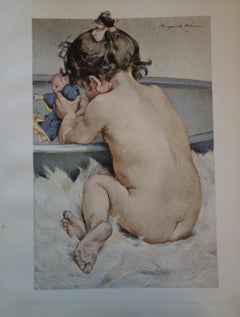
Young Girl Playing with a Doll - Original Lithograph 1899
Located in Paris, IDF
Marguerite DELORME (1876-1946) Young Girl Playing with a Doll, 1899 Original lithograph (Champenois workshop) Printed signature in the plate On vellum, 40 x 31 cm (c. 16 x 12 in) I...
Lithograph
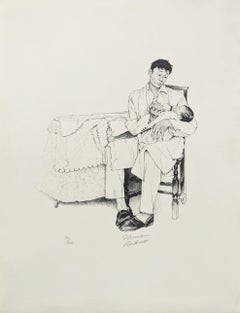
Two O'Clock Feeding Lithograph Print, Signed American Impressionist
By Norman Rockwell
Located in Aventura, FL
From the 'American Family' portfolio. Hand signed and numbered by the artist. Lithograph on arches paper. Printed by Atelier Mourlot, Paris. Published by Raymond & Raymond, Inc....
Paper, Lithograph