Want more images or videos?
Request additional images or videos from the seller
1 of 9

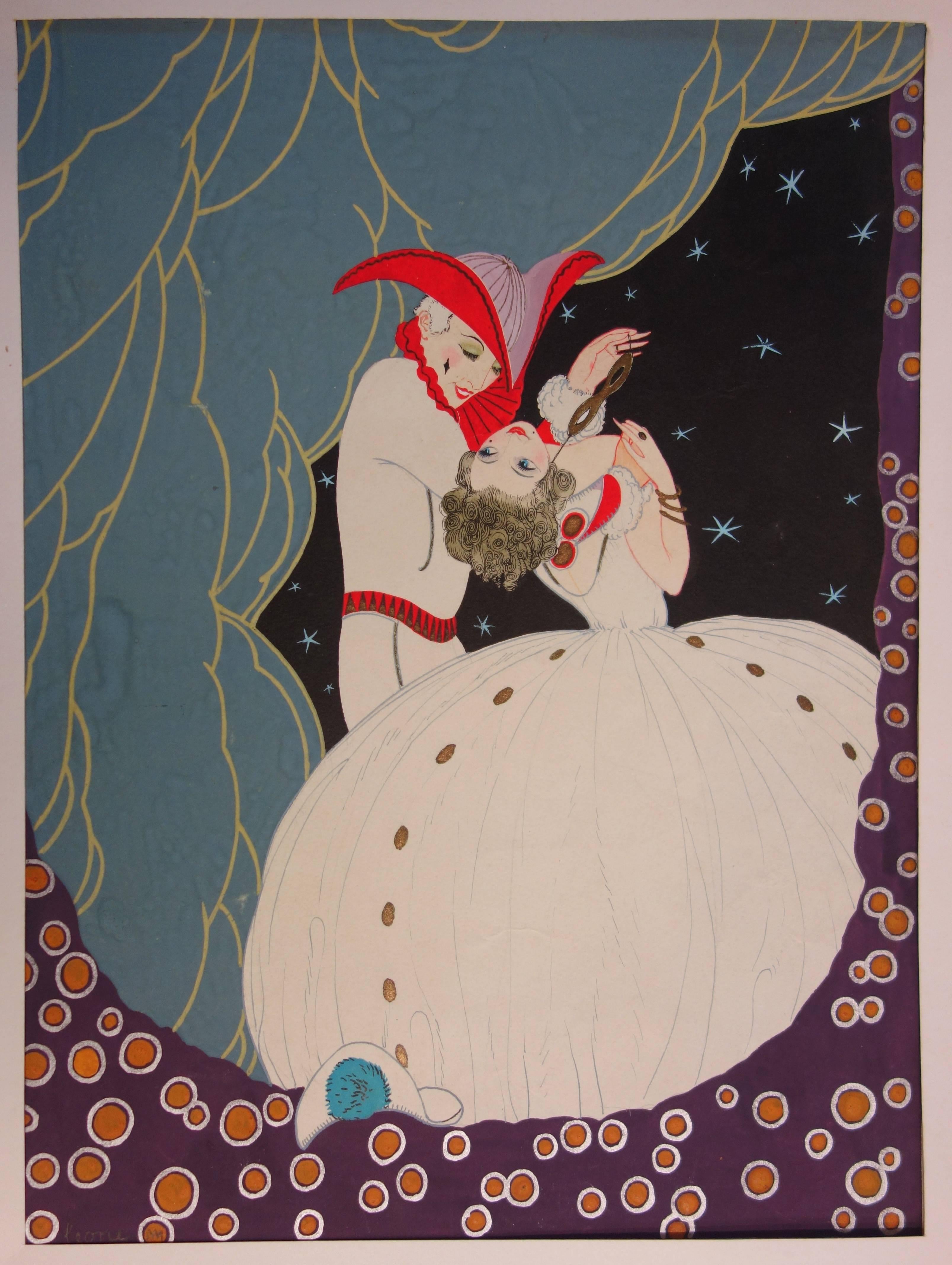
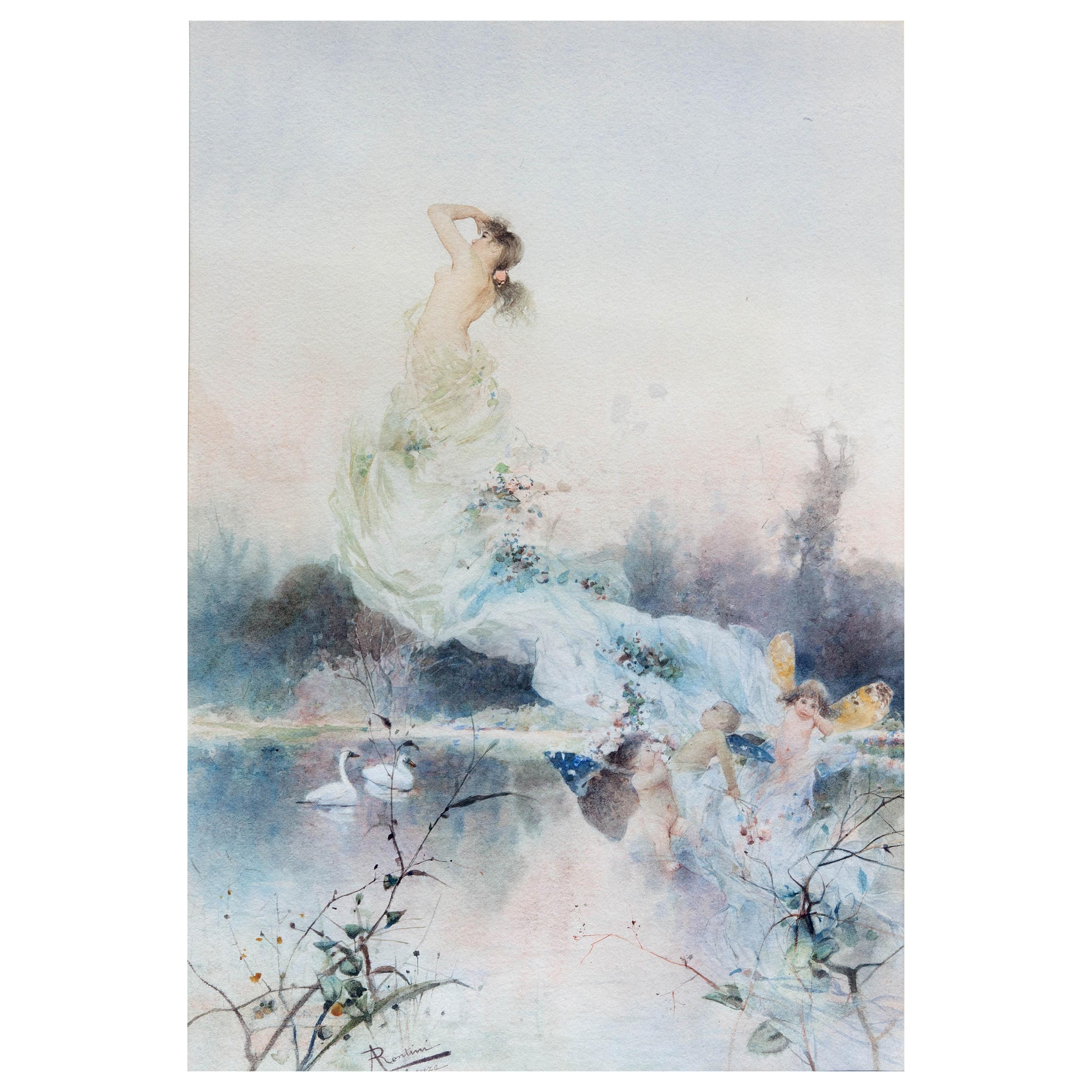
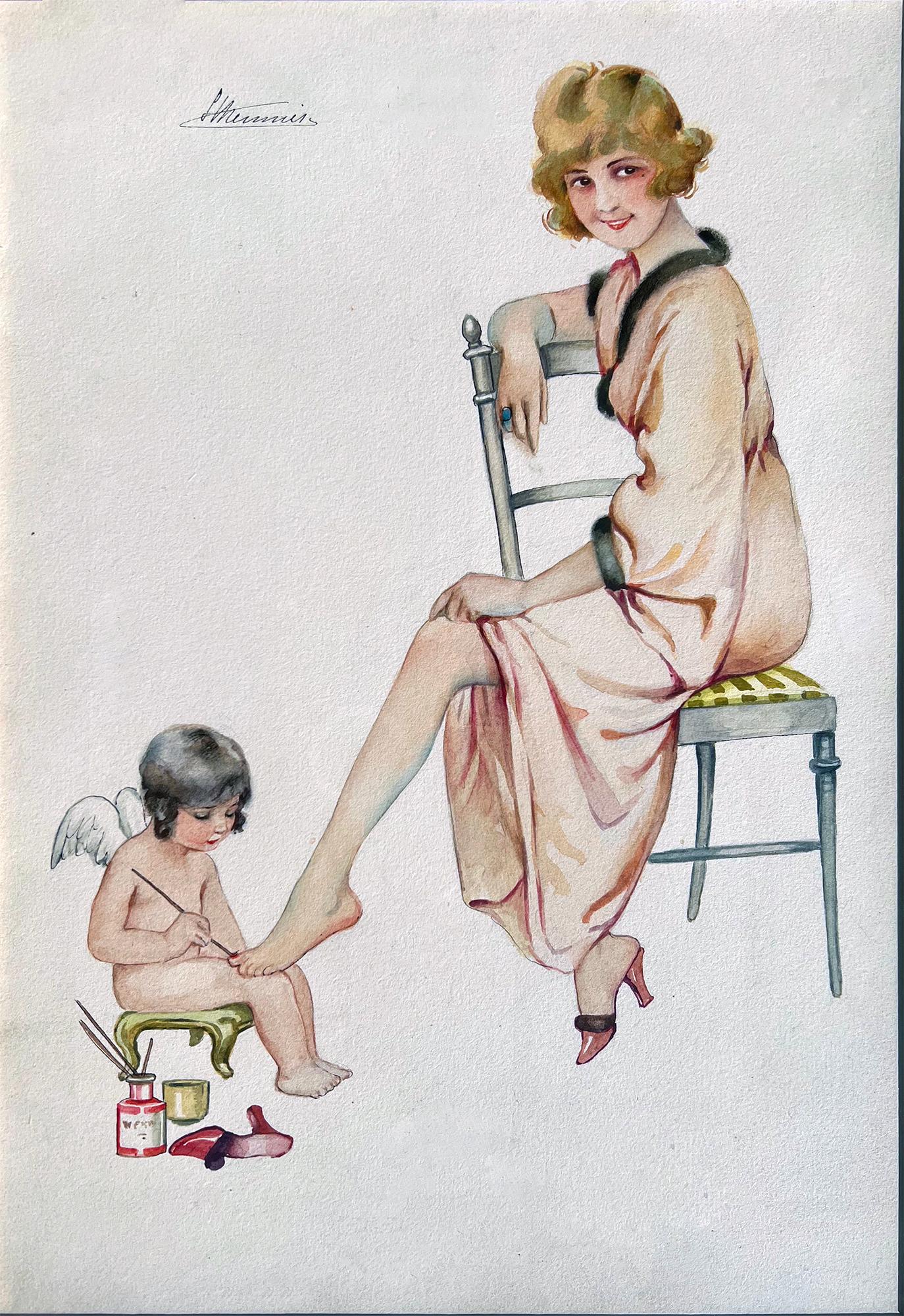
Georges Grellet
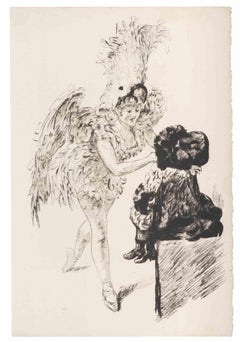
Ballarina having make up applied by Cupid

c. 1905

$1,250
£940.83
€1,100.71
CA$1,767.85
A$1,795.59
CHF 1,034.75
MX$21,679.14
NOK 12,019.59
SEK 12,119.88
DKK 8,228.15

About the Item

Ballarina having make up applied by Cupid Watercolor and gouache on heavy wove paper, c. 1905 Signed in ink lower right Titled in pencil, verso Condition: Aging to sheet Colors fresh and vibrant Image size: 19 5/8 x 12 3/4 inches Grellet was a noted French Art Deco designer François Georges Grellet (1869-1959) was a French painter , engraver and illustrator . Biography Born on October 9, 1869 in Tours , Georges Grellet came from a family originally from Saumur. A student at the Beaux-Arts in Paris from 1890, he began to produce drawings for the press, titles such as Paris-Joyeux (1894), Le Journal pour tous , La Caricature (1895-1902), Gil Blas illustré , Fin de siècle , Le Rire , La Vie pour rire (1900), L'Album comique de la famille (1903), L'Indiscret , Le Sourire (1917-1921), Ridendo (1934-1940), Scaramouche (1936). He signed some of his compositions "Géogrell" and was a member of the Humoristes. In 1905, in Boulogne (Hauts-de-Seine), he married a young artist, Hortense Vuischard, cousin of the painter Jules-Charles Aviat, to whom Georges was related . During the First World War , he made many drawings of the front. Concerning the mosaic located in the apse of the Notre-Dame de Brebières basilica , it was designed from the drawings of a namesake, Alexandre Grellet. This mosaic was destroyed during the conflict, then restored. Grellet produced lithographed advertising posters such as À la Place Clichy and Au Bon Marché (1900). He designed the character of "Doctor Valda" for the pastilles of the same name. In the 1920s, he collaborated on the albums of the "L'Estampe moderne" company directed by Octave Bernard , including numerous original color etchings and stencil illuminations, which depict elegant young women in a "boudoir" style . Grellet was also an illustrator for literary works such as La Cousine Bette by Balzac, or La Route solitaire by Claude Du Val (1937). He died on March 30, 1959 in the 18th arrondissement of Paris.
  • Creator:
    Georges Grellet (1870 - 1959, French)
  • Creation Year:
    c. 1905
  • Dimensions:
    Height: 19.63 in (49.87 cm)Width: 12.75 in (32.39 cm)
  • Medium:
  • Movement & Style:
  • Period:
  • Condition:
  • Gallery Location:
    Fairlawn, OH
  • Reference Number:
    Seller: FA56331stDibs: LU14015513142

More From This Seller

View All
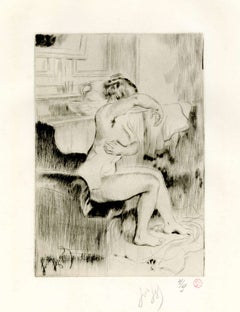
La Toilette

La Toilette

By Louis Legrand

Located in Fairlawn, OH

La Toilette Drypoint, 1908 Signed and numbered in pencil by the artist (see photos) Edition: 65 this state (35/65) Published by Gustave Pellet (1859-1919),...

Category

Early 1900s Art Nouveau Figurative Prints

Materials

Drypoint

L'heure de Berger (Hour of the Shepherd)

L'heure de Berger (Hour of the Shepherd)

By Hans Christiansen (b.1866)

Located in Fairlawn, OH

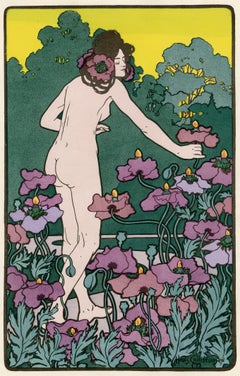
L'heure de Berger (Hour of the Shepherd) Color lithograph, 1898 Signed in the stone lower right As published in L'Estampe Moderne, Paris, March, 1898 Edition: 2000 (there was also a ...

Category

1890s Art Nouveau Nude Prints

Materials

Lithograph

Moto-Flirt

Moto-Flirt

By Georges Meunier

Located in Fairlawn, OH

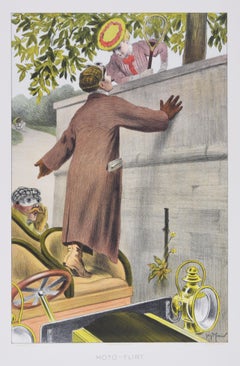
Moto-Flirt Color lithograph, c. 1902 Signed in the stone lower right (see photo) Published by Edmund Sagot (1857-1917), Paris Printed by Atelier Chaix, Paris Large edition with title...

Category

Early 1900s Art Nouveau Figurative Prints

Materials

Lithograph

En passant (Passing by)

En passant (Passing by)

By Louis Legrand

Located in Fairlawn, OH

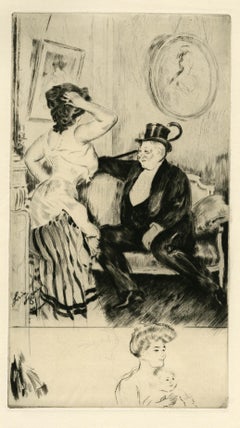
En passant (Passing by) Drypoint, 1909 Unsigned (as issued in the deluxe portfolio) From the album "Les Bars" (8 plates plus cover illustration) Edition: 30, this state with remarque Published by Gustav Pellet, Paris A very rich impression wwith burr Condition: Excellent Image/Plate size: 9 7/8 x 6 3/8 inches Reference: Arwas 391a (remarque) Exteens 277 i/II IFF 148 (portfolio) Louis Auguste Mathieu Legrand (29 September 1863 – 1951) was a French artist, known especially for his aquatint engravings, which were sometimes erotic. He was awarded the Légion d'honneur for his work in 1906. Life Legrand was born in the city of Dijon in the east of France. He worked as a bank clerk before deciding to study art part-time at Dijon's Ecole des Beaux-Arts. He won the Devosge prize at the school in 1883.[2] In 1884 Legrand studied engraving under the Belgian printmaker Félicien Rops. Legrand's artworks include etchings, graphic art and paintings. His paintings featured Parisian social life. Many were of prostitutes, dancers and bar scenes, which featured a sense of eroticism. According to the Hope Gallery, "Louis Legrand is simply one of France's finest early twentieth century masters of etching." His black and white etchings especially provide a sense of decadence; they have been compared to those of Henri de Toulouse-Lautrec, though his drawings of the Moulin Rouge, the can-can dance and the young women of Montmartre preceded Toulouse-Lautrec's paintings of similar scenes. He made over three hundred prints of the night life of Paris. They demonstrate "his remarkable powers of observation and are executed with great skill, delicacy, and an ironic sense of humor that pervades them all." Two of his satirical artworks caused him to be tried for obscenity. The first, "Prostitution" was a symbolic drawing which depicted a naked girl being grasped by a dark monster which had the face of an old woman and claws on its hands; the second, "Naturalism", showed the French novelist Émile Zola minutely studying the thighs of a woman with a magnifying glass. Defended by his friend the lawyer Eugène Rodrigues-Henriques (1853–1928), he was found not guilty in the lower court, but was convicted in the appeal court and then given a short prison sentence for refusing to pay his fine. Legrand was made famous by his colour illustrations for Gil Blas magazine's coverage of the can-can, with text by Rodrigues (who wrote under the pseudonym Erastene Ramiro). It was a tremendous success, with the exceptional quantity of 60,000 copies of the magazine being printed and instantly sold out in 1891. In 1892, at the instigation of the publishing house Dentu, Legrand made a set of etchings of his Gil Blas illustrations. The etchings were published in a book, Le Cours de Danse Fin de Siecle (The End of the Century Dance Classes). Legrand took a holiday in Brittany, which inspired him to engrave a set of fourteen lithographs of simple country life called Au Cap de la Chevre (On Goat Promontory). It was published by Gustave Pellet who became a close friend of Legrand's. Pellet eventually published a total of 300 etchings by Legrand, who was his first artist; he also published Toulouse-Lautrec and Félicien Rops among others. He did not only work in graphics; he exhibited paintings at the Paris salon of the Société Nationale des Beaux-Arts starting in 1902. In 1906 he was made a chevalier of the Légion d'honneur. Legrand died in obscurity in 1951. A retrospective exhibition was held at the Félicien Rops museum in Namur, Belgium in 2006 to celebrate his graphic art. The art collector Victor Arwas published a catalogue raisonné for the occasion. Books illustrated de Maupassant, Guy: Cinq Contes Parisiens, 1905. Poe, Edgar Alan: Quinze Histoires d'Edgar Poe...

Category

Early 1900s Art Nouveau Interior Prints

Materials

Drypoint

L'Aieule (The Grandmother)

L'Aieule (The Grandmother)

By Louis Legrand

Located in Fairlawn, OH

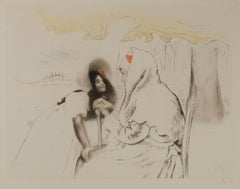
L'Aieule (The Grandmother) Etching and aquatint printed in colors, 1904 Signed with the red stamp of the publisher, Gustave Pellet, Lugt 1193 and numbered (see photo) Edition: 100 (81/100) Reference: Arwas 202 iv/IV IFF 98 Condition: Excellent, the sheet aged as usual Image size: 14 1/4 x 18 5/8" Sheet size: 16 15/16 x 24 1/4" Louis Auguste Mathieu Legrand (29 September 1863 – 1951) was a French artist, known especially for his aquatint engravings, which were sometimes erotic. He was awarded the Légion d'honneur for his work in 1906. Life Legrand was born in the city of Dijon in the east of France. He worked as a bank clerk before deciding to study art part-time at Dijon's Ecole des Beaux-Arts. He won the Devosge prize at the school in 1883.[2] In 1884 Legrand studied engraving under the Belgian printmaker Félicien Rops. Legrand's artworks include etchings, graphic art and paintings. His paintings featured Parisian social life. Many were of prostitutes, dancers and bar scenes, which featured a sense of eroticism. According to the Hope Gallery, "Louis Legrand is simply one of France's finest early twentieth century masters of etching." His black and white etchings especially provide a sense of decadence; they have been compared to those of Henri de Toulouse-Lautrec, though his drawings of the Moulin Rouge, the can-can dance and the young women of Montmartre preceded Toulouse-Lautrec's paintings of similar scenes. He made over three hundred prints of the night life of Paris. They demonstrate "his remarkable powers of observation and are executed with great skill, delicacy, and an ironic sense of humor that pervades them all." Two of his satirical artworks caused him to be tried for obscenity. The first, "Prostitution" was a symbolic drawing which depicted a naked girl being grasped by a dark monster which had the face of an old woman and claws on its hands; the second, "Naturalism", showed the French novelist Émile Zola minutely studying the thighs of a woman with a magnifying glass. Defended by his friend the lawyer Eugène Rodrigues-Henriques (1853–1928), he was found not guilty in the lower court, but was convicted in the appeal court and then given a short prison sentence for refusing to pay his fine. Legrand was made famous by his colour illustrations for Gil Blas magazine's coverage of the can-can, with text by Rodrigues (who wrote under the pseudonym Erastene Ramiro). It was a tremendous success, with the exceptional quantity of 60,000 copies of the magazine being printed and instantly sold out in 1891. In 1892, at the instigation of the publishing house Dentu, Legrand made a set of etchings of his Gil Blas illustrations. The etchings were published in a book, Le Cours de Danse Fin de Siecle (The End of the Century Dance Classes). Legrand took a holiday in Brittany, which inspired him to engrave a set of fourteen lithographs of simple country life called Au Cap de la Chevre (On Goat Promontory). It was published by Gustave Pellet who became a close friend of Legrand's. Pellet eventually published a total of 300 etchings by Legrand, who was his first artist; he also published Toulouse-Lautrec and Félicien Rops among others. He did not only work in graphics; he exhibited paintings at the Paris salon of the Société Nationale des Beaux-Arts starting in 1902. In 1906 he was made a chevalier of the Légion d'honneur. Legrand died in obscurity in 1951. A retrospective exhibition was held at the Félicien Rops museum in Namur, Belgium in 2006 to celebrate his graphic art. The art collector Victor Arwas published a catalogue raisonné for the occasion. Books illustrated de Maupassant, Guy: Cinq Contes Parisiens, 1905. Poe, Edgar Alan: Quinze Histoires d'Edgar Poe...

Category

Early 1900s Art Nouveau Figurative Prints
Materials

Aquatint

Pierre-Georges Jeanniot, Actress, Paris, c. 1900

Pierre-Georges Jeanniot, Actress, Paris, c. 1900

By Pierre Georges Jeanniot

Located in Fairlawn, OH

Pierre-Georges Jeanniot (1848-1934) Seated Woman in Theatrical or Historical Costume Charcoal and colored red and white pencils on blue-green paper c. 1890-1910 Signed by the artist ...

Category

Early 1900s French School Figurative Drawings and Watercolors

Materials

Chalk

You May Also Like

Dancer Combing Hair - Lithograph by L. B. Saint-André - Early 20th Century

Dancer Combing Hair - Lithograph by L. B. Saint-André - Early 20th Century

By Louis Berthomme Saint-Andre

Located in Roma, IT

Dancer Combing her Hair is an original lithograph realized by Louis Berthomme Saint-André in the 20th Century. Hand-signed in pencil on the lower right corner. Numbered on the lowe...

Category

Early 20th Century Contemporary Figurative Drawings and Watercolors

Materials

Lithograph

Before the Ballet - Original lithograph - 1897

Before the Ballet - Original lithograph - 1897

By Charles Paul Renouard

Located in Paris, IDF

Paul RENOUARD Before the Ballet Original lithograph Printed signature in the plate 1897/98 On vellum 40 x 31 cm (c. 16 x 12") INFORMATION : Published by 'Estampe Moderne, Paris, 18...

Category

1890s Art Nouveau Figurative Prints
Materials

Lithograph

Undressing from La Dame aux Camelias, Art Nouveau Etching after Louis Icart

Undressing from La Dame aux Camelias, Art Nouveau Etching after Louis Icart

By Louis Icart

Located in Long Island City, NY

Louis Icart, After, French (1888 - 1950) - Undressing from La Dame aux Camelias, Year: 1938, Medium: Hand-colored Etching, Image Size: 7.5 x 5.25 inches, Size: 11 x 8.75 in. (27...

Category

1930s Art Nouveau Figurative Prints
Materials

Etching