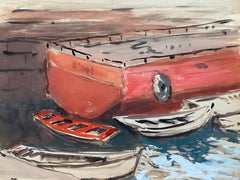
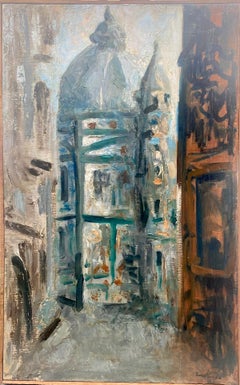
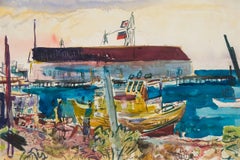
Jean Carzou
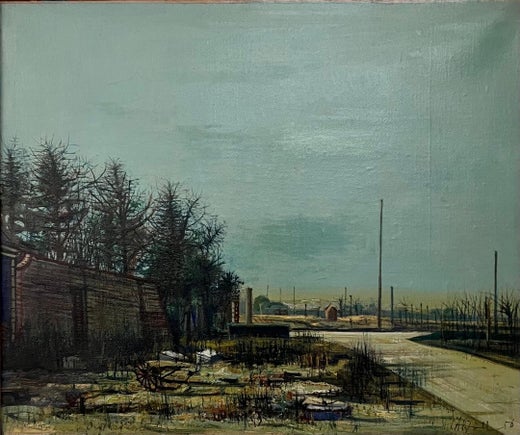
LIST OF MUSEUMS WITH WORKS BY JEAN CARZOU Musée National d’Art Moderne, Centre Georges Pompidou, Paris Musée d’Art Moderne de la Ville de Paris Musée de I’lle-de-France Musée d’Albi, France Musée de Cagnes Musée de Lyon Musée de Rouen Musée Cantini, Marseilles Musée d’Aix-en-Provence Musée des Baux-de-Provence Musée du Havre Bibliothèque Nationale, Paris State hermitage Museum, Leningrad Art Gallery of South Australia, Adelaide Municipal Museum, Dimona, Israel Djakarta Museum, Indonesia His work is also part of public collections in Cairo, Alexandria, Egypt; Kansas City, U.S.A.; Sofia, Bulgaria; Moscow, U.S.S.R. Upon graduation from the Lycée. Carzou devoted himself to studying painting in Montparnasse studios. He first showed his work at the Salon des Indépendents in 1930. Then he took part in various Salons, notably the Surindépendents, Salon d’Automne, Ecole de Paris, “Painters, Witnesses to their Times,” Comparaisons, etc. His first one-man show was held in a Rue de Seine gallery in 1939. Since then there have been more than one hundred one-man shows in Paris and elsewhere in France and abroad. He has been part of most official state exhibitions outside Paris and abroad: Biennials of Venice, São Paulo, Genoa: and exhibitions of French art in Yugoslavia, The Netherlands, Italy, Switzerland, Japan, Norway, and Australia. Caraou has won numerous prizes in painting, among them: the Hallmark Prize (three consecutive times in 1949, 1952 and 1955); Grand Prix de I’lle-de-France in 1954; Grand Prize for National Education, Tokyo, 1955; and the Grand Prix “Europe” at the first Bruges Biennial in 1958. He is an officer of Arts and Lettres and the Légion d’Honneur. In 1950, he traveled to Egypt and Lebanon for several exhibitions. In 1953, his exhibition devoted entirely to Venice was a huge success. The same year, a poll of museum-goers named Carzou’s The Lovers’ Lane their favorite painting. In 1955, a referendum organized by the magazine “Connaissance des Arts” placed him among the ten best painters of the post-war generation.