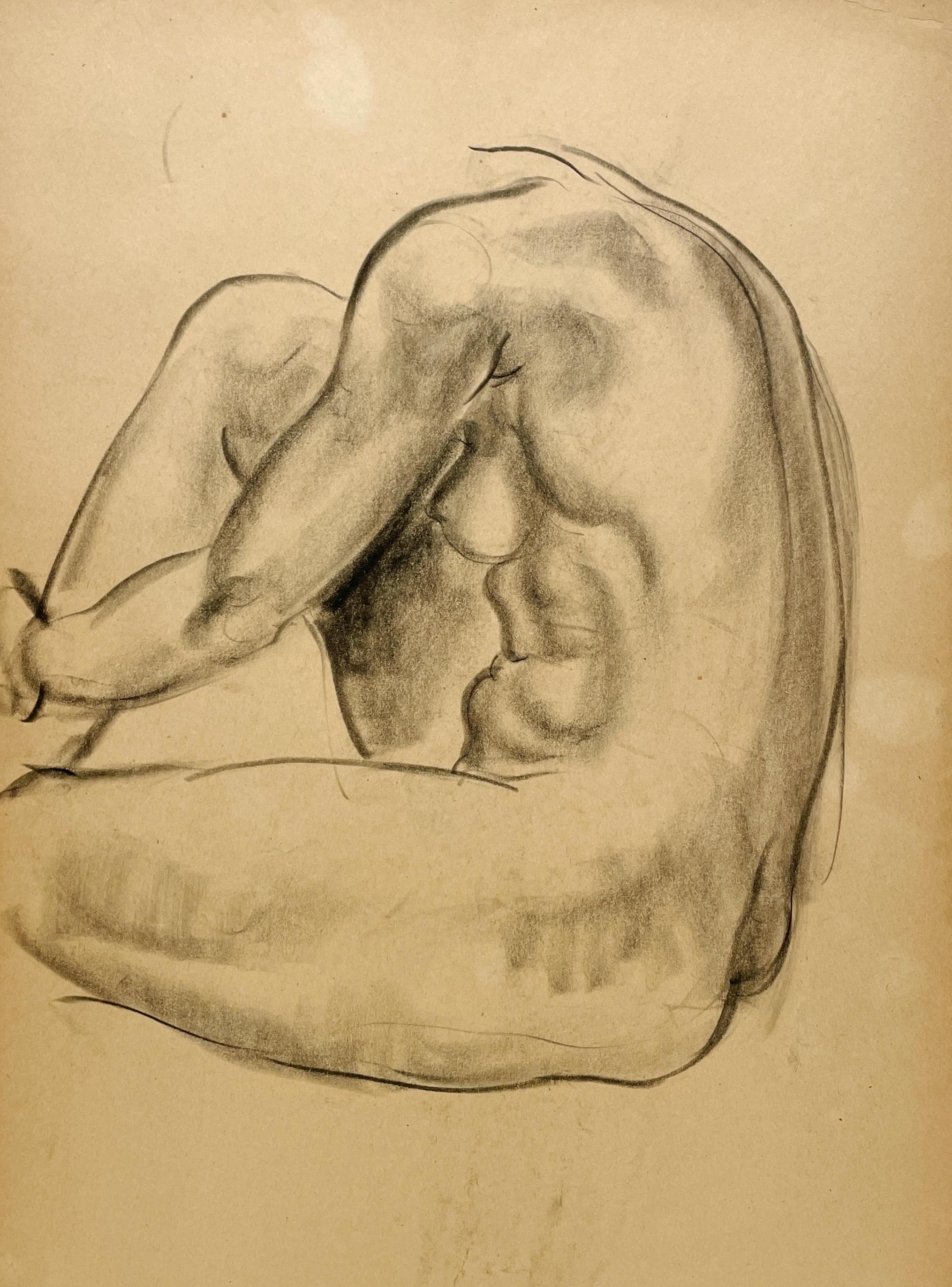
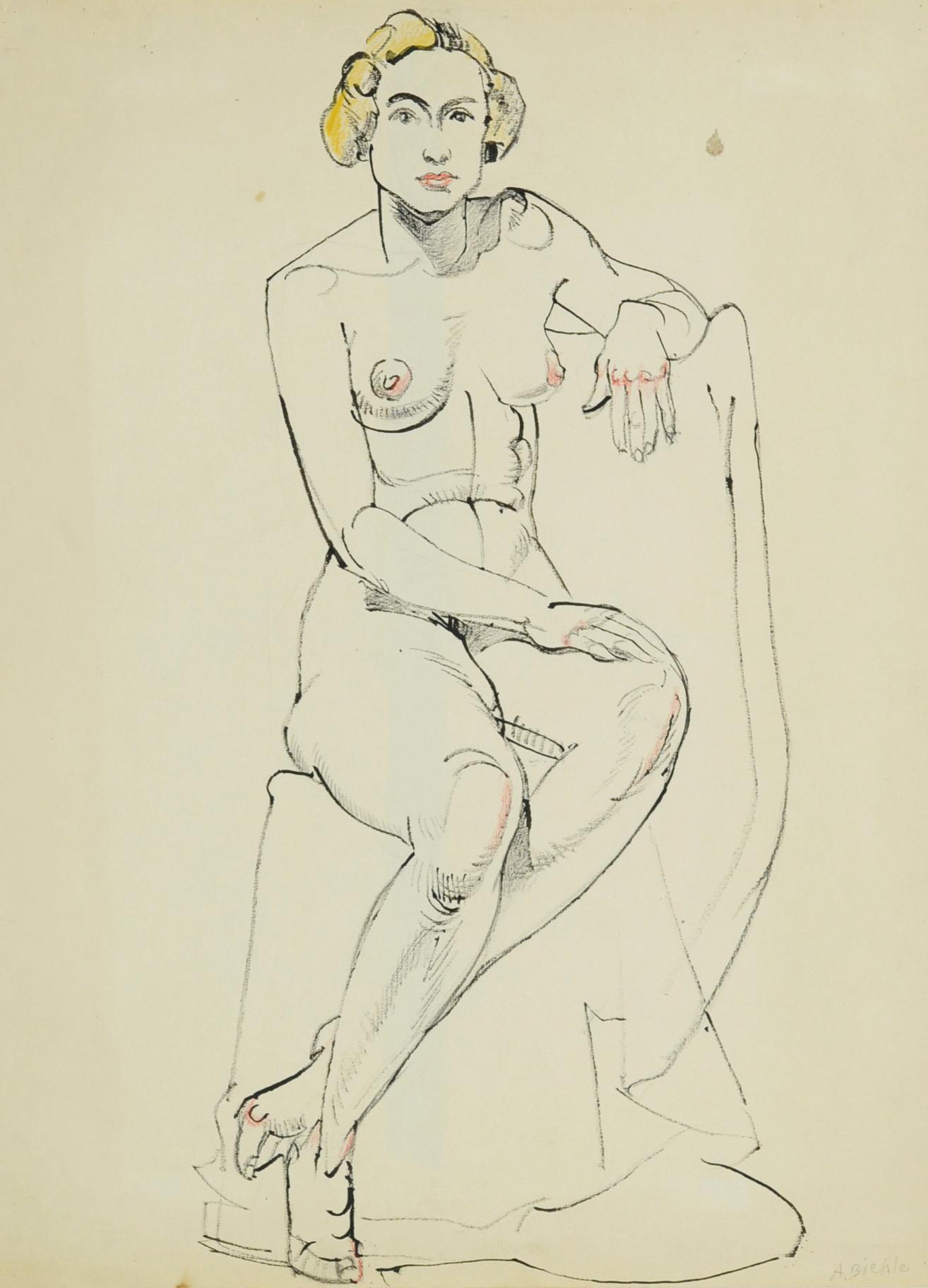
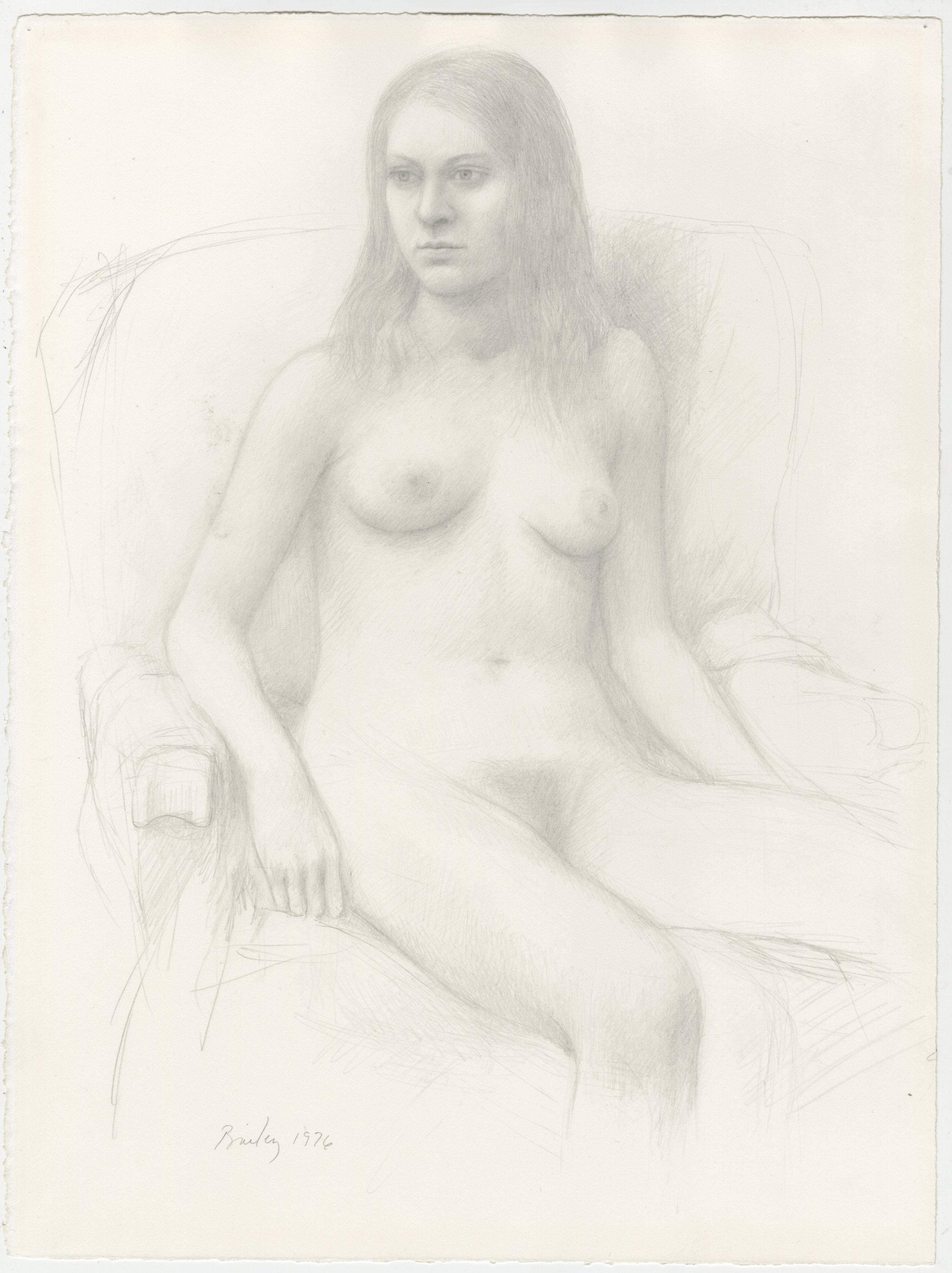
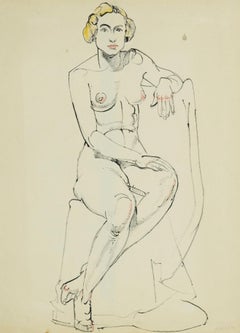
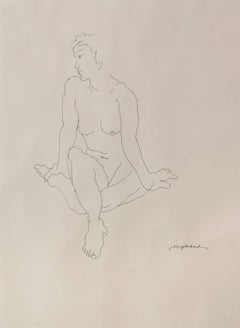
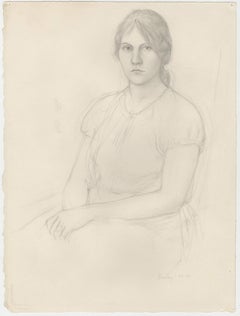
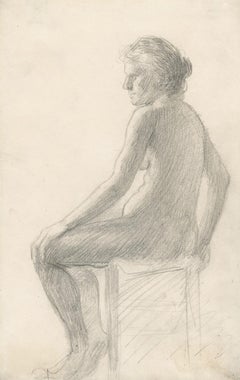
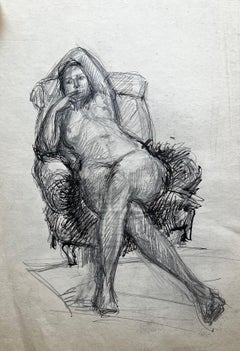
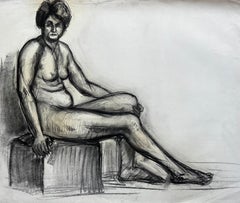
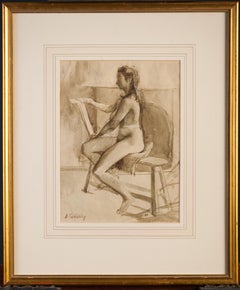
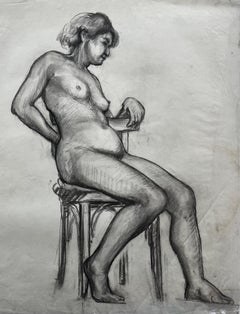
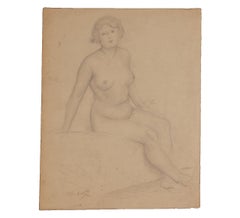
Academic Study of Female Nude, Seated Facing Right
Charcoal on L.Berville/Lalanne watermark laid paper, April 11, 1890
Unsigned
Dated in pencil: "April 11 '90"
Holman was born on Prince Edward Island in 1866 and moved to Boston in 1889 to study art at Cowles Art School, where he studied with painter Charles Woodbury. Cowles played an important role in Boston’s art scene in the late 19th century and was associated with artists connected to the Boston School, including Dennis Miller Bunker, Lila Caboit Perry, William McGregor Paxton, and Elizabeth Okie Paxton.
Condition: Small tears and folds as usual for academic art school drawings kept in a portfolio.
Stain upper left corner
Repaired tear in upper right corner
Folds along the left sheet edge
Folds in the upper and lower right corners
Image/Sheet size: 24 1/4 x 19 inches
Provenance: William Greenbaum, noted Massachussetts art dealer
Louis Arthur Holman (1866-1939)
Louis Arthur Holman (1866–1939) was a Canadian born American illustrator, writer, and print and book dealer who was active in the Boston art world and is best understood artistically as an illustrator, print scholar, and explainer of graphic processes rather than as a studio painter.
Training and artistic role
• Holman was born on Prince Edward Island in 1866 and moved to Boston in 1889 to study art at Cowles Art School, where he studied with painter Charles Woodbury. Cowles played an important role in Boston’s art scene in the late 19th century and was associated with artists connected to the Boston School, including Dennis Miller Bunker, Lila Caboit Perry, William McGregor Paxton, and Elizabeth Okie Paxton.
• He worked as an illustrator and art editor for illustrated magazines such as New England Magazine and The Youth’s Companion, contributing both images and articles, which positioned him within the late 19th/early 20th century illustration milieu rather than the fine art exhibition circuit.
Artistic production and publications
• Holman produced illustrations for books, including M. A. DeWolfe Howe’s “Boston: The Place and the People” (1903), and other historical and topographical volumes, combining image and text in a documentary mode.
• As an artist author, he is especially noted for “The Graphic Processes: Intaglio, Relief, Planographic, A Series of Actual Prints” (1926), a book he wrote and illustrated to demonstrate printmaking techniques; the Metropolitan Museum of Art holds an example in its Drawings and Prints department.
• His work and writing often focused on etching, engraving, and antique maps, and he authored books and exhibition catalogues about printmakers from Rembrandt and Dürer to contemporaries like George C. Wales and Arthur Heintzelman, blurring the line between practitioner and historian.
Position in the Boston print scene
• While he did make and publish his own images, Holman’s artistic identity is tightly bound to his role as a taste maker and educator through Goodspeed’s Book Shop and later Holman’s Print Shop, where he curated and interpreted prints and maps for collectors. The import of Goodspeed’s Book Shop cannot be understated. They brought world class offerings to the Boston cultural community. The works they sold later enhanced the collections of the Museum of Fine Arts, Boston and the Boston Public Library. That continued once Holman succeeded Goodspeed’s under the name Holman’s Print Shop.
• His reputation in art historical reference sources is thus dual: an artist illustrator whose works and didactic books appear in museum and library collections, and a key intermediary who shaped how early 20th century New England audiences understood printmaking as an art form.
If you’d like, I can next focus on identifying specific illustrated books or graphic works by Holman that are closest to “fine art” prints for exhibition or collecting purposes.
Louis A. Holman (1866-1939)
________________________________________
Louis A. Holman (1866–1939) was a Canadian-born illustrator, author, and influential print dealer based in Boston. After moving from Prince Edward Island to Boston in 1889, he studied art at the Cowles Art School under Charles Woodbury. Cowles Art School was a Boston art school founded in 1883 at 145 Dartmouth Street, near the Boston Public Garden/Back Bay area. It was one of the city’s larger art schools and closed after merging with the New England Conservatory in 1900. Homan began contributing illustrations and editorial content to publications like New England Magazine and The Youth’s Companion. In 1915, he launched the print department at Goodspeed’s Book Shop, later establishing his own business, Holman’s Print Shop, which became a prominent destination for collectors and scholars through the mid-20th century. A recognized authority on printmaking and the life of the poet John Keats, he authored and curated numerous books and exhibitions on etching, engraving, and antique maps. Holman remained active as a writer, lecturer, and print scholar until his death in 1939, and his son Richard continued the print shop until 1977.