Want more images or videos?
Request additional images or videos from the seller
1 of 8

Alexander Raymond Katz
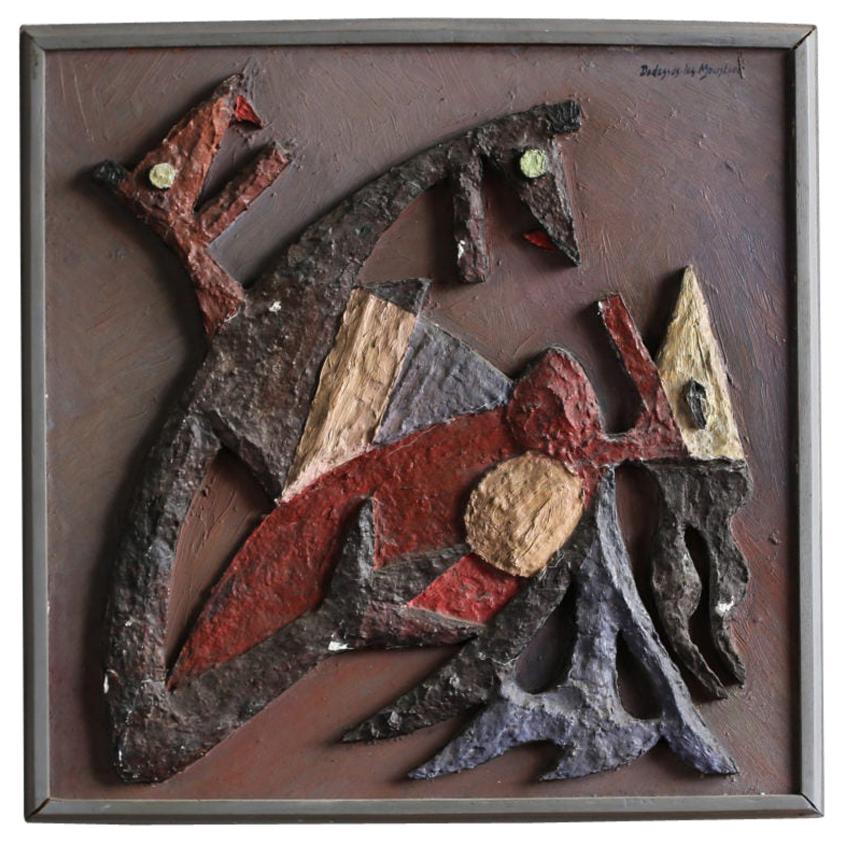
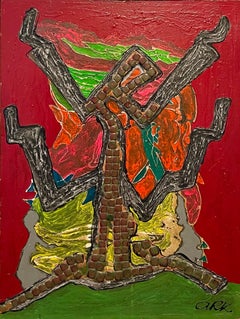
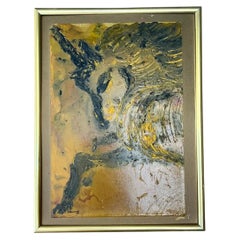
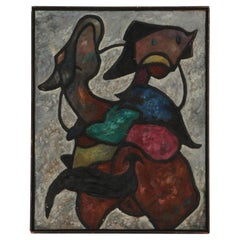
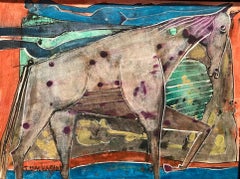
Mixed Media Sculptural Painting "Unicorn" Chicago Jewish Modernist

$4,000
£3,014.41
€3,522.40
CA$5,676.30
A$5,693.55
CHF 3,302.58
MX$69,500.76
NOK 38,253.26
SEK 39,149.64
DKK 26,329.87

About the Item

Genre: Modern Subject: Abstract Medium: Mixed Media Surface: Board Dimensions: 28.75 X 24 (size includes frame. signed with initials and bearing a label verso. Reminiscent of the Art Brut work of french master Jean Dubuffet this Boy with balls is a wonderful mixed media piece with stypol, copper resin, concrete all in a great colorful composition. Alexander Raymond Katz, Hungarian / American (1895 – 1974) Alexander Raymond Katz was born in Kassa, Hungary, and came to the United States in 1909. He studied at the Art Institute of Chicago and the Chicago Academy of Fine Arts. In the late 1920s, he worked as a director of the Poster Department at Paramount Studios. He was appointed the Director of Posters for the Chicago Civic Opera in 1930. During the Great Depression, notable architect Frank Lloyd Wright urged Katz to become a muralist. In 1933, he was commissioned to paint a mural for the Century of Progress exposition in Chicago. In 1936, he painted the mural History of the Immigrant for the Madison, Ill., post office. Katz’s works were included in various exhibitions and now are part of several museum collections, including those of the Art Institute of Chicago; Corcoran Gallery of Art, Washington, D.C.; and the Jewish Museum, New York. His murals, bas-reliefs and stained glass designs adorn more than 200 Jewish synagogues in the United States. Katz and other Jewish artists in Chicago who expressed Jewish and Biblical themes were inspired by the artist Abel Pann (1883-1963). Pann, who is regarded as the leading painter of the Land of Israel, exhibited in the Art Institute of Chicago in 1920. Early in his career, Katz began to explore the artistic possibilities inherent in the characters of the Hebrew alphabet. He developed aesthetic and philosophical interpretations of each letter and became the leading innovator and pioneer in the field of Hebraic art. Katz applies this concept in the woodcut Moses and the Burning Bush. Hebrew letters appears in Moses’ head, his cane and inside the flame. The initial of Moses’ name crowns his head. The letter in the flame is the first letter of the name of God. A combination of images and Hebrew letters appeared commonly in illustrations of the scene Moses and the Burning Bush in the Haggadah, the book of Passover. The symbolism of the burning bush corresponds to the motifs of A Gift to Biro-Bidjan. The miracle of the burning bush occurred in the desert when Moses led the Jews from Egypt to the Holy Land. The flame represents tribulation, and the survival of the bush represents eternity. The Jewish people endured persecution and pogroms on their final destination to the Promised Land. Katz uses the white silhouette method of woodcut production to enhance the miraculous atmosphere. In complete darkness, the pattern of the flame is repeated throughout the composition — in the sky, the desert dunes and even in Moses’ gown. This approach resembles Munch’s The Scream (1893), where the sound waves echo in the entire image, or Abraham Weiner’s Milk and Honey, where the shape of the rake is replicated throughout the composition. Among his positions in Chicago was serving on the art staff of the "Chicagoan Magazine" and creating posters for the Chicago Civic Opera. He also created posters for the Century of Progress exhibitions, 1933 to 1934. Katz received much acclaim for his murals at the Century of Progress World's Fair and for other WPA projects during the 1930s. His murals are at the Butler Institute of American Art; the Evansville, Indiana Museum' Madison Illinois Post Office and the Oak Park Illinois Jewish Temple.
  • Creator:
    Alexander Raymond Katz (1895-1974, Hungarian)
  • Dimensions:
    Height: 28.75 in (73.03 cm)Width: 24 in (60.96 cm)
  • Medium:
  • Movement & Style:
  • Period:
  • Condition:
    size includes frame. frame has wear. pice has minor wear commensurate with technique and age.
  • Gallery Location:
    Surfside, FL
  • Reference Number:
    1stDibs: LU38218269322

More From This Seller

View All
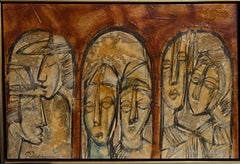
Mixed Media Sculptural Painting "Juggler" Modernist

Mixed Media Sculptural Painting "Juggler" Modernist

By Alexander Raymond Katz

Located in Surfside, FL

Genre: Modern Subject: Abstract Medium: Mixed Media Surface: Board Dimensions: 15 1/2" x 19 1/2" Reminiscent of the Art Brut work of french master Jean Dubuffet this Boy with balls i...

Category

Mid-20th Century Modern Mixed Media

Materials

Mixed Media

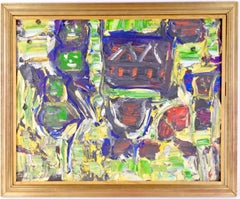
Mixed Media Neo Expressionist Collage Assemblage Painting Sculpture Art Brut

Mixed Media Neo Expressionist Collage Assemblage Painting Sculpture Art Brut

By Loren Munk

Located in Surfside, FL

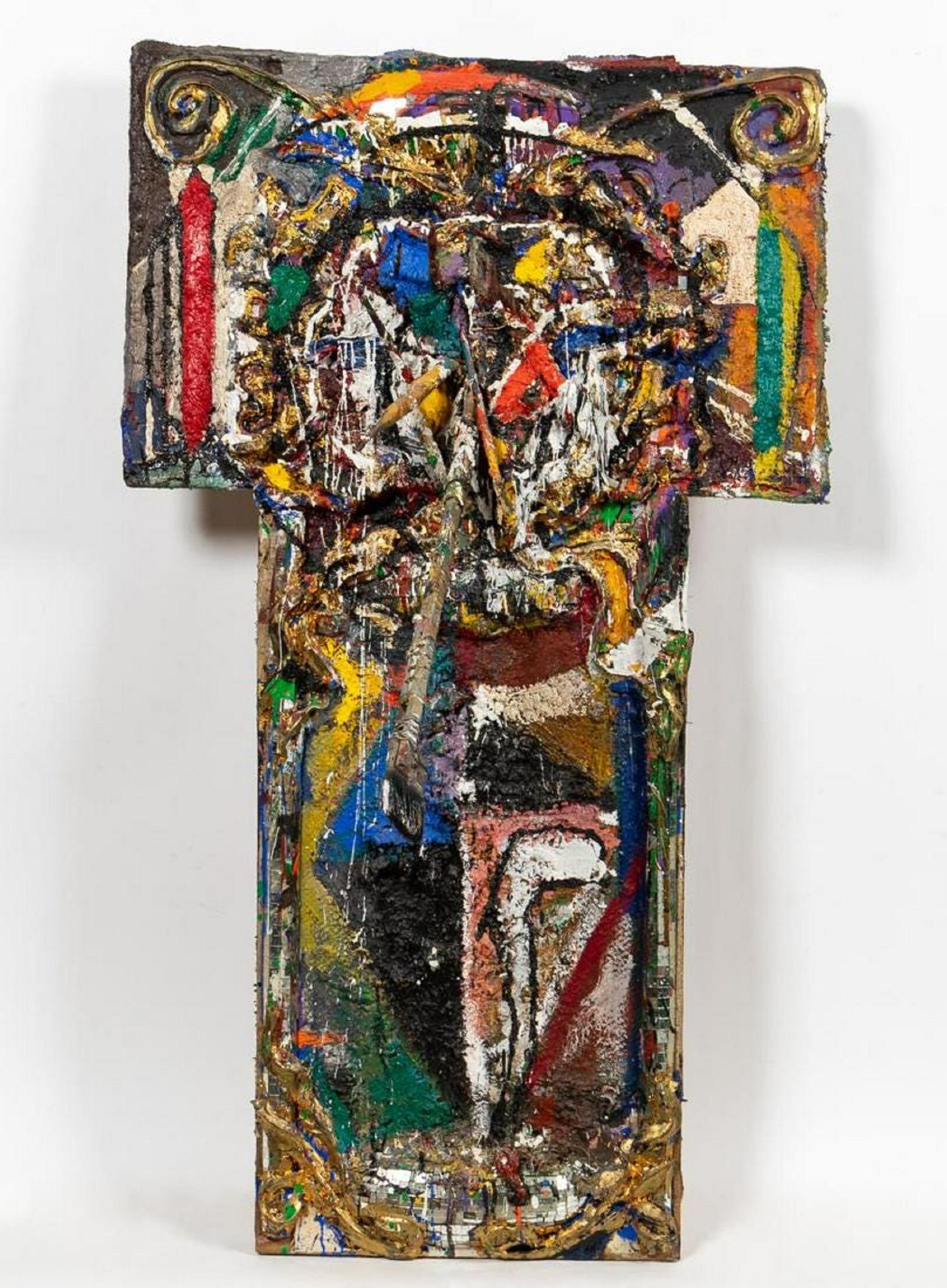
LOREN MUNK (american b. 1951) MUNKEY BUSINESS Signed and dated 'Munk 84' verso, mixed media construction with paint brushes, mirrored mosaic tile, gold leaf and oil paint 57 x 33 x 23 in. (144.8 x 83.8 x 58.4cm) Provenance: Malcolm Forbes collection The artist Loren Munk (born 1951) is primarily known for his YouTube nickname James Kalm as an uploader of videos about New York exhibitions, amongst others. He presents himself as a maker of contemporary paintings for several decades and of cubist paintings of urban imagery. Munk has received accolades for his drawings and mosaics. He differs from traditional mosaic artists by the manner in which he incorporates glass into his decorative paintings. His unique and innovative use of materials such as mirror, gold-leaf and glass mosaic affirmed him as a founding force of Kitsch Art and a leading member of New York Neo-Expressionism. Munk's work debuted in SoHo in 1981 with a double show at J. Fields Gallery and Gabrielle Bryers. Since then, he has overseen an international career. In addition to exhibiting in Brazil, France, Germany and the United States, Munk has received national and overseas, public and private commissions. He is well represented in important collections throughout Europe, South and North America and the Middle East. Most recently, Munk has been producing a series of paintings which tackle the subject of art itself through a historical and diagrammatic lens. Munk documents the New York art world in YouTube videos, using the name James Kalm. Timeline: 1979 Attended Art Students League, New York 1973-75 Attended University of Maryland at Ramstein, Germany while in US Army 1969-72 Attended Idaho State University, Pocatello, Idaho 1951 Born, Salt Lake City, Utah Select Group Exhibitions 2018 “Under Erasure” curated by Heather and Raphael Rubinstein at Pierogi Gallery New York 2016 "It Was Never Linear: Recent Painting" at the Sheldon Museum of Art Lincoln Neb. with: Robert Bordo, Dawn Clements...

Category

1980s Neo-Expressionist Mixed Media

Materials

Gold Leaf

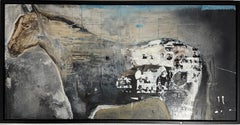
Modernist Israeli Judaica Jewish Rabbi Mixed Media Collage Painting Moshe Katz

Modernist Israeli Judaica Jewish Rabbi Mixed Media Collage Painting Moshe Katz

By Moshe Katz

Located in Surfside, FL

Rabbis, Jewish Scholars over collaged Hebrew text Dimensions: framed 37.5 X 25.25 canvas 24 X 36 inches Moshe Katz ( Romanian, Israeli ) Moshe Katz was born March 2 1937 in Buchar...

Category

20th Century Modern Portrait Paintings

Materials

Canvas, Mixed Media, Acrylic

Vibrant Abstract Rhino Horn Jay Milder Figurative Expressionist Art Oil Painting

Vibrant Abstract Rhino Horn Jay Milder Figurative Expressionist Art Oil Painting

By Jay Milder

Located in Surfside, FL

Jay Milder (1934-2026) Genre: Modern Subject: Abstract Medium: Oil Surface: Canvas Dimensions: 30 X 24 Dimensions with Frame: 31 X 25 Hand signed lower right and hand signed and dated verso Jay Milder (born 1934) is an American artist and a figurative expressionist painter of the second generation New York School. Old Testament themes such as Jacob's Ladder and Noah’s Ark, and the Jewish mystical beliefs of the Kabbalah, are recurring themes in Milder’s paintings which are presented as archetypal images that recur in the basic karma, make-up and need of human nature. Internationally exhibited, Milder is included in the collections of many national and international museums. He has been the subject of two, recent retrospectives in Brazil in 2007 at the National Museum Brasilia and, in 2006, at the Museum of Modern Art, in Rio de Janeiro. He is renowned in Sao Paulo, one of the major international centers for street and public art, as a seminal influence on graffiti artists. Jay Milder was born in Omaha, Nebraska, in 1934. His grandparents, who came from the Ukraine, were descendants of the Hasidic mystic, Rabbi Nachman. As he listened to family stories his interest in spiritualism and mysticism increased, and became an important influence on his philosophy of life and art. Later, when he arrived in New York, he was drawn to the Theosophical Society and the teaching of Helena Blavatsky. In 1954 Milder visited Europe where he studied painting with André L’Hote, and sculpture with Ossip Zadkine. He spent much time studying at the Louvre Museum, and at the studio of Stanley Hayter. During his Paris years the paintings of the Jewish painter Chaim Soutine, primarily influenced him. Milder returned to the United States in 1956, and he began studying painting at the Chicago Art Institute. He exhibited with the Momentum Group, an alliance of artists who were particularly dedicated to the progression of figurative art and its global origins. In 1957, Milder spent the summer in Mexico for a summer where he exhibited in Puebla. That year he received the Mexican Government’s Honor Award for artists. In the summer of 1958, Milder studied with Hans Hofmann in Provincetown, Massachusetts. He exhibited his work at the Sun Gallery, with his contemporaries, including Mary Frank, Red Grooms, Bob Thompson, Lester Johnson, Emilio Cruz and Alex Katz, among others. During this period his painting began to incorporate iconography of birds, animals, humans and animal/human hybrids. In 1958, Milder, Bob Thompson and Red Grooms, founded the City Gallery in the Chelsea section of New York City. The gallery moved downtown and became the Delancey Street Museum and an early site for ‘Happenings’,which Milder participated in. He showed his first major series called Subway Runners in 1960 at the Martha Jackson Gallery in New York City. Milder began a group of smaller paintings, entitled “Messiah Series”, in the late 1960s. These were fully expressionistic earth toned pictures, and he completed around 250 paintings in the series, based on biblical themes from the Old Testament. When 40 of these paintings were shown in a traveling exhibition premiering at the Richard Green Gallery in New York City, in 1987, art critic Donald Kuspit wrote in ArtForum Magazine: “after Nolde’s biblical pictures, these are the best and most integral group of biblical pictures in the 20th century.” During the 1970s, Milder co-founded a collective group called Rhino Horn with Peter Passuntino, Peter Dean, Benny Andrews, Nicholas Sperakis, Michael Fauerbach, Ken Bowman, Leonel Gongora, and Bill Barrell. Rhino Horn continued a style promoting politically and socially driven American Figurative Expressionism, when many people in the art world and society were focused on Pop Art and Minimalism. From the 1970s to today, much of Milder's artworks have been centered around interpretations and the visual energy of the Kabbalah. Milder's art has been the subject of two retrospectives in Brazil in 2007 at the National Museum Brasilia and, in 2006, at the Museum of Modern Art, in Rio de Janeiro. In Summer of 2009 he was in Brazil where at this time he painted a commissioned mural alongside Brazilian street artist, Eduardo Kobra in Sao Paulo. Jay Milder’s paintings have undergone various stylistic changes since the 1950s. However the most common and important consistency has been his organic form of Expressionism. Biblical references have always played an important role in Milder’s work. For Milder the Kabbalah underlies all aspects of reality including not only the way a painting is conceived and executed, but also its impact on the visual environment around us. Jay Milder's work is in the permanent collection of many galleries and museums throughout the world, including The Tel-Aviv Museum of Art in Tel-Aviv, Israel, The Provincetown Art Association and Museum in Provincetown, Massachusetts, The Chrysler Museum of Art in Norfolk, Virginia, and the Dayton Art Institute in Dayton, Ohio. He has been awarded the Mexican Government’s Honor Award for artists in 1957, a Rainbow Arts Foundation Award at Exhibition Museum, Guadalajara, Mexico in 1965, he was honored as Professor Emeritus at City College of New York in 1991, and in 1999 he was the Cultural Exchange representative between America and Brazil at Belles Artes Museum, Rio de Janeiro, Brazil. Jay Milder American Figurative Expressionist Painter of the Second Generation New York School Jay Milder (1934–2026) was an American figurative expressionist painter associated with the second generation of the New York School. Born in Omaha, Nebraska, Milder drew on a deep well of influences — from Hasidic mysticism and the Kabbalah to the jazz clubs of North Omaha and the painterly traditions of European modernism — to forge a body of work centered on archetypal, biblically rooted imagery, most notably Jacob's Ladder and Noah's Ark. Early Training and European Influence In the early 1950s, Milder traveled to Paris to study at La Grande Chaumière and the Sorbonne, taking painting classes with André Lhote and sculpture instruction with Ossip Zadkine. There he encountered the work of Chaim Soutine, whose expressive, gestural approach to form left a lasting imprint on Milder's painterly style. He returned to the United States in 1956 and continued his studies at the Art Institute of Chicago, where he was introduced to Hans Hofmann's push/pull compositional theory — a foundational concept of Abstract Expressionism. New York School and the City Gallery In 1958, Milder co-founded the artist-run City Gallery in a shared Flatiron District loft with Red Grooms, giving early exhibition space to artists including Claes Oldenburg and Jim Dine. Alongside contemporaries Bob Thompson, Lester Johnson, Emilio Cruz, and Alex Katz, Milder exhibited at the influential Sun Gallery, developing a figurative vocabulary populated by birds, animals, and human/animal hybrid forms. His breakthrough "Subway Runners" series debuted at Martha Jackson Gallery in New York in 1964 — dense, impasto oil paintings depicting commuters in motion through the city's transit system. Rhino Horn and Mature Style During the 1970s, Milder co-founded the Rhino Horn collective alongside Peter Passuntino, Peter Dean, Benny Andrews, and others, furthering a commitment to figurative expressionism against the prevailing tides of Minimalism and Pop Art. Throughout his career, biblical and Kabbalistic themes remained central to his practice, which art historian George Nelson Preston described as "trance-like" in a 1976 Arts magazine profile. Museum Collections and Legacy Milder's work is held in the permanent collections of the Brooklyn Museum, the New Museum, the Chrysler Museum of Art, the Tel Aviv Museum of Art, the Provincetown Art Association and Museum, and the Museo Nacional Centro de Arte Reina Sofía in Madrid, among others. He was the subject of major retrospectives in Brazil, including at the Museum of Modern Art, Rio de Janeiro (2006) and the National Museum, Brasília (2007), and in 2009 painted a commissioned mural in São Paulo alongside Brazilian street artist Eduardo Kobra. He is represented by Eric Firestone Gallery, which mounted the solo exhibition Jay Milder: Broadway Nonstop, Subway Paintings from the 1950s and '60s in 2022. Milder died on May 27, 2026, at the age of 92, leaving behind a singular body of work bridging Abstract Expressionism, Jewish mysticism, and the raw energy of postwar New York City. Keywords: Jay Milder, figurative expressionism, second generation New York School, Subway Runners series, Kabbalah painting...

Category

1970s Neo-Expressionist Abstract Paintings
Materials

Canvas, Oil

You May Also Like

Vintage Original Acrylic Oil Painting of Unicorn

Vintage Original Acrylic Oil Painting of Unicorn

Located in West Palm Beach, FL

This evocative original painting by artist J. Harvey captures the mythical grace of a unicorn through a bold, expressionist lens. The work is characterized by heavy, sculptural impas...

Category

Late 20th Century American Modern Paintings

Materials

Metal

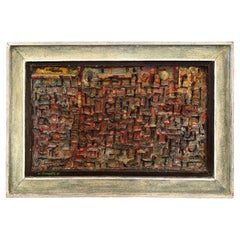
George Dergalis 1961 Mixed Media Construction High Relief Abstract

George Dergalis 1961 Mixed Media Construction High Relief Abstract

By George Dergalis

Located in Palm Springs, CA

A wonderful mixed media construction by the noted artist George Dergalis. This construction is dated 1961. It contains multiple elements and heavy impasto paint on board. Please loo...

Category

Vintage 1960s American Wall-mounted Sculptures

Materials

Wood, Paint

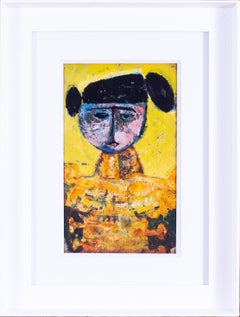
1953 mixed media work by German / Australian artist Inge King 'Toreador'

1953 mixed media work by German / Australian artist Inge King 'Toreador'

Located in Petworth, West Sussex

A rare and expressive early work by pioneering modernist sculptor Inge King, Toreador (1953) captures the artist’s dynamic approach to form, movement, and abstraction at a formative ...

Category

20th Century Modern Mixed Media

Materials

Mixed Media

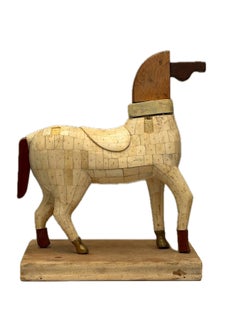
Caballo III - 21st Century, Contemporary Sculpture, Figurative, Recycling

Caballo III - 21st Century, Contemporary Sculpture, Figurative, Recycling

By Miquel Aparici

Located in Barcelona, Catalonia

"Caballo III" is 2.5kg Aparici's work is characterized by simplicity, since most of his pieces bring together few elements, resulting in very elegant compositions with simple lines,...

Category

21st Century and Contemporary Contemporary Figurative Sculptures

Materials

Found Objects