Grégoire Mathias
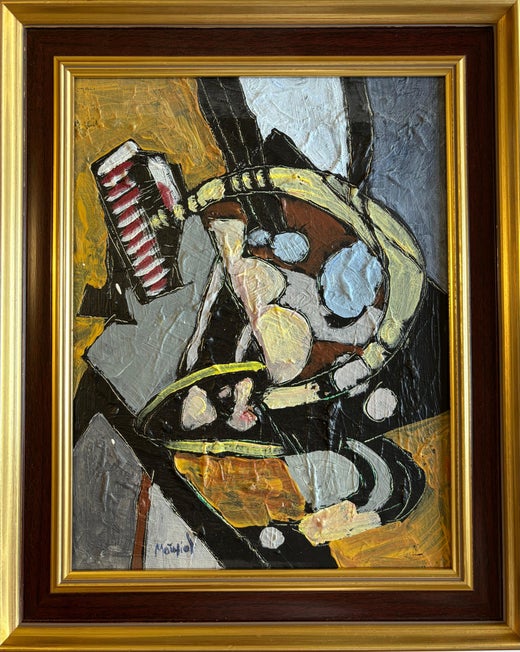
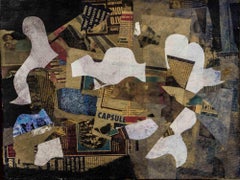
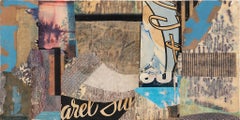
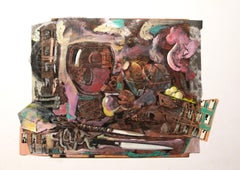
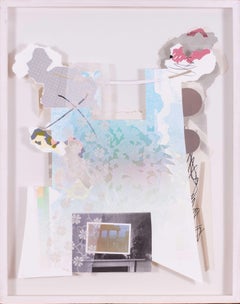
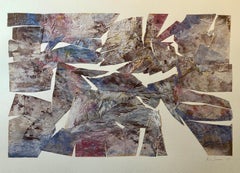
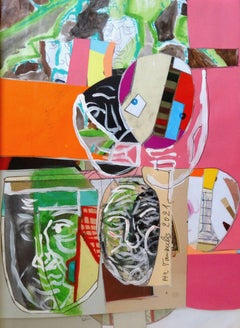
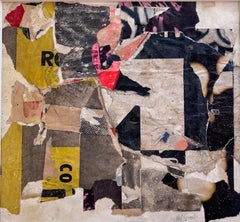
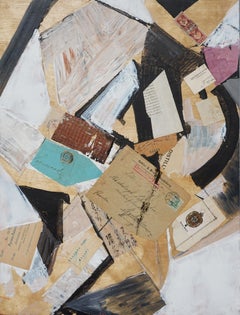
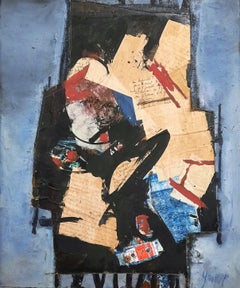
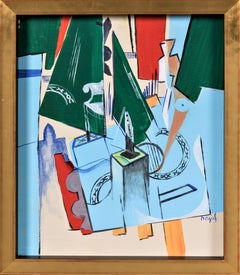
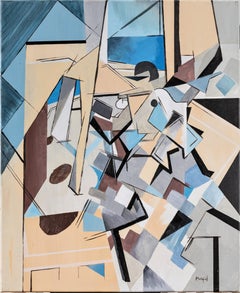
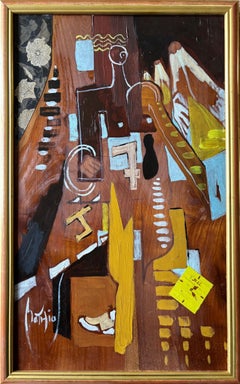
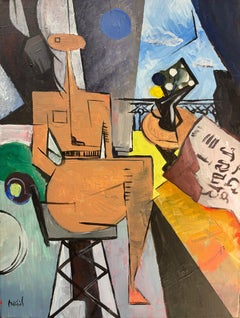
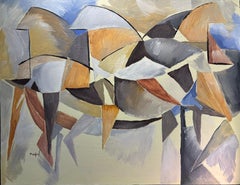
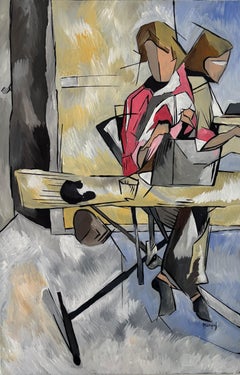
Greg Mathias, born on January 22, 1967, in Périgueux, Dordogne, was steeped in an artistic atmosphere from a young age. His father, a pioneering antiquarian bookseller, introduced vintage posters to the American market, and his mother was a bookbinder, instilling in Mathias a deep appreciation for art and literature. This rich environment laid the foundation for his creative journey. Early in his education, Mathias attended workshops with renowned artists Bertrand Piéchaud in Bordeaux and Jean Pierre Métout in Limoges. In 1985, he moved to Paris and became a guest student at the prestigious École Nationale Supérieure des Beaux-Arts (ENSBA), studying under Claude Augereau. By 1986, he had officially enrolled at ENSBA and joined Augereau’s workshop, which was influenced by the cubist master Jean Metzinger. Mathias’ artistic trajectory took a significant turn in 1987 when he participated in a sculpture internship with Claude Bogratchew, contributing to the "Totem AXA" sculpture. This period marked the beginning of a lasting professional relationship with Bogratchew. Following the death of Claude Augereau in 1988, Mathias continued his studies under Pierre Buraglio. His first major exhibition in 1989 at the Galerie de la Maison des Beaux-Arts displayed abstract paintings inspired by Willem de Kooning, though it was initially met with indifference. Despite early challenges, Mathias received commendation for his diploma in 1990, which led to a prestigious exhibition at the ENSBA premises. Later that year, he received a commission from Jack Rennert to paint a large fresco in New York, which further fueled his artistic evolution. During his time in Manhattan, he developed "diachronic cubism," a unique style capturing subjects from various temporal perspectives in a single artwork. Mathias’ career gained momentum in the 1990s. He exhibited extensively in France and the United States, with significant retrospectives and commissions. His diachronic cubism style matured, characterized by its focus on representing the passage of time within a single piece. Notable works included murals for hotels and restaurants in Bordeaux and exhibitions in prominent galleries. In 2001, Mathias served as an expert in posters for Tajan, a leading French auction house, before returning fully to his art practice in 2005. His partnership with the Morateur Gallery in Los Angeles played a pivotal role in establishing his international presence. By 2011, Mathias had created several murals for various establishments, and in 2018, he showcased his creative process in an exhibition titled "L'atelier Grégoire Mathias" at the Castelet d'Excideuil. In 2020, Mathias was commissioned by the World Federation of United Nations Associations (WFUNA) to create a poster for United Nations Day, solidifying his role as the official artist for WFUNA. Most recently, Mathias’ exploration of diachronic cubism led him to Ireland, where he exhibited his work in Dublin this year. His connection to Ireland deepened through his homage to James Joyce, culminating in the donation of his Joyce's "Portrait aux Horloges" to the James Joyce Museum. Today, Mathias' work is exhibited in several galleries in France, New York and Dublin.