Want more images or videos?
Request additional images or videos from the seller
1 of 11

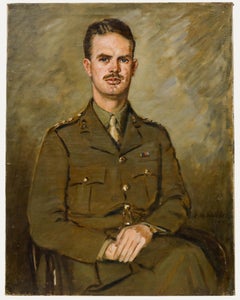
William Dring
WW11 Pilots

Mid 20th Century

$2,499.75
£1,820
€2,185.22
CA$3,508.74
A$3,580.01
CHF 2,022.10
MX$43,586.39
NOK 24,209.49
SEK 24,150.33
DKK 16,336.39

About the Item

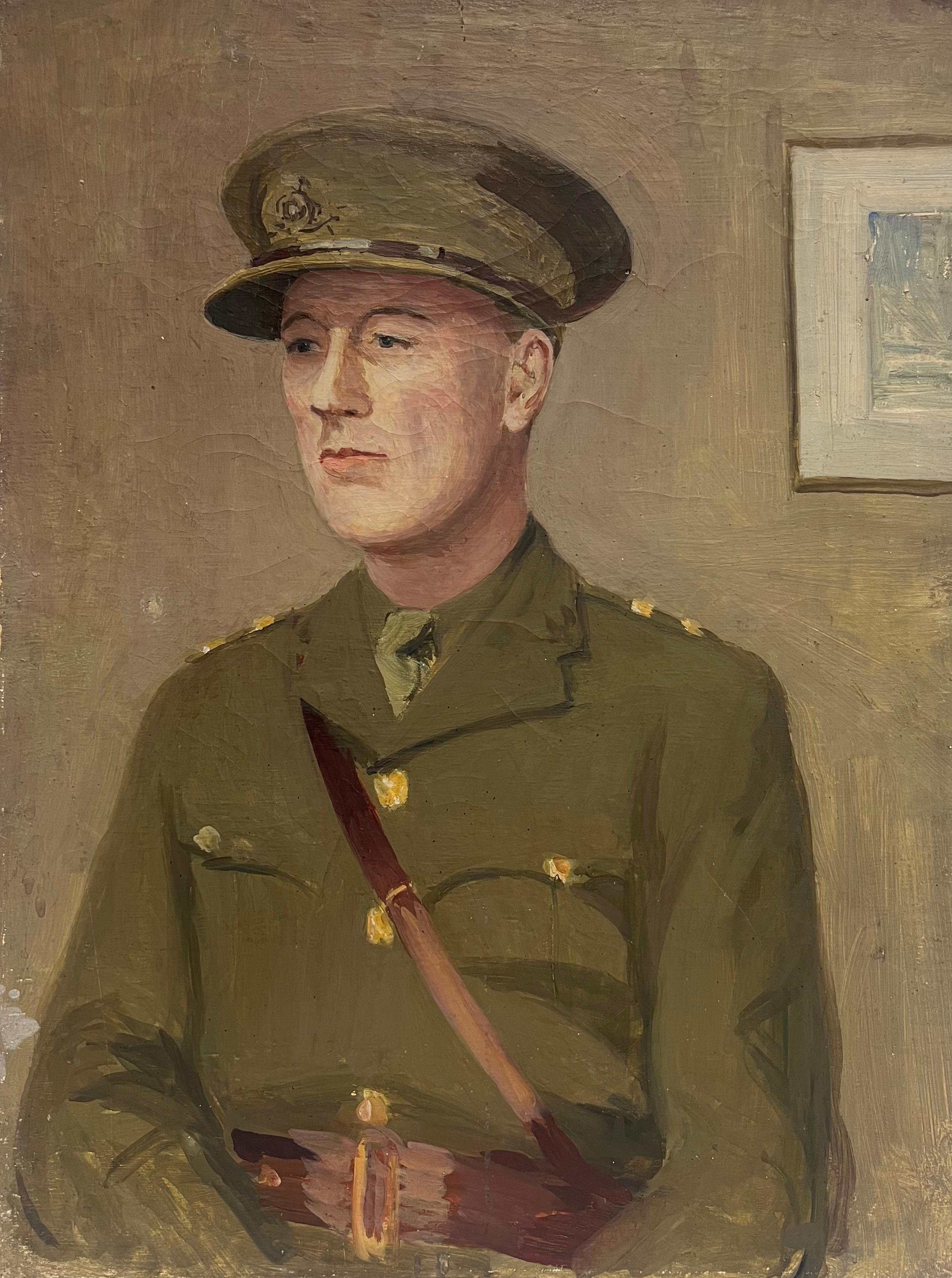
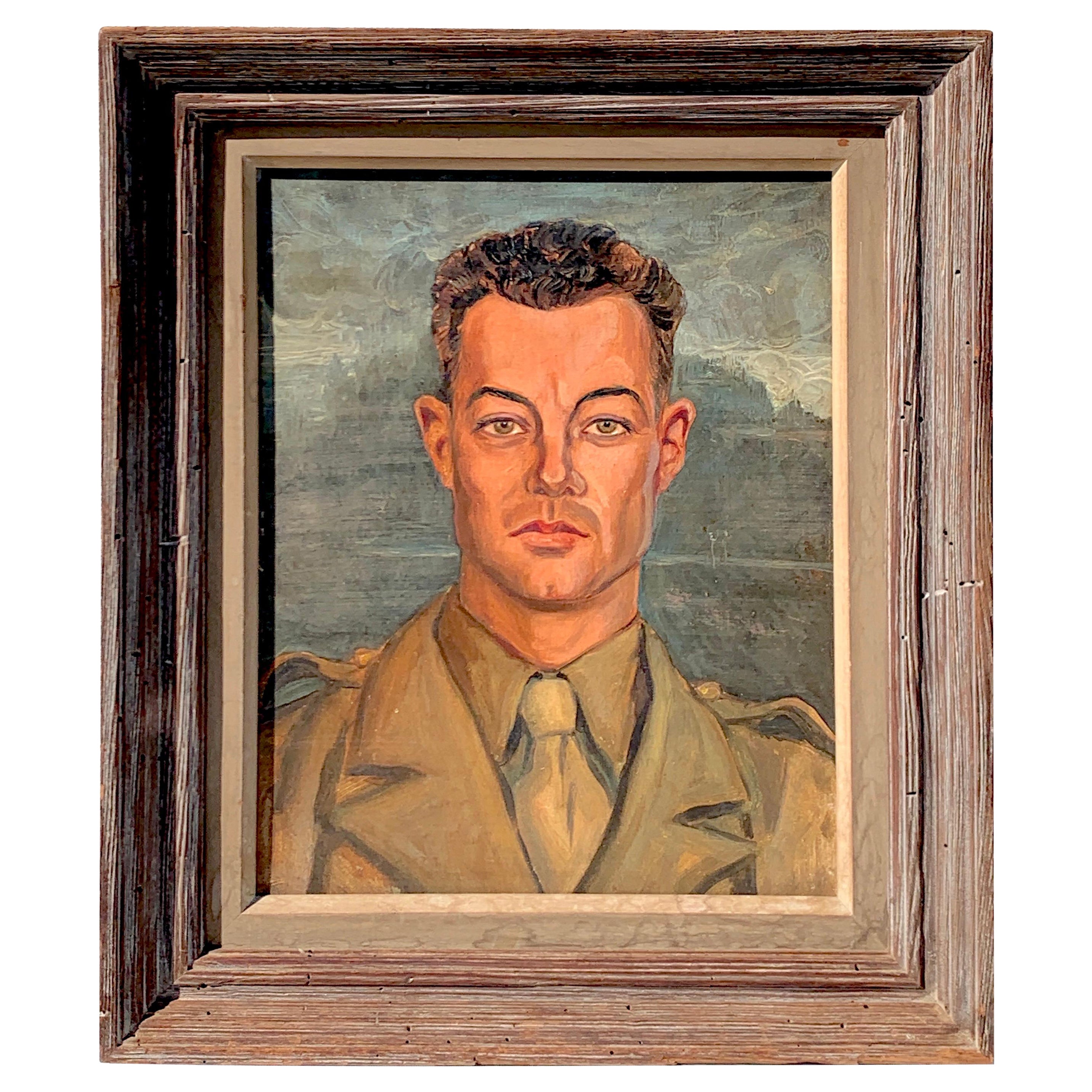
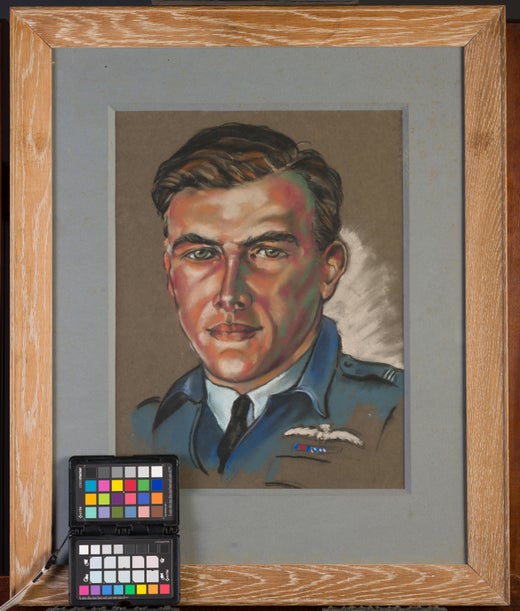
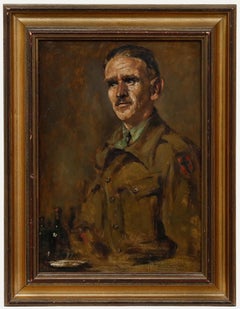
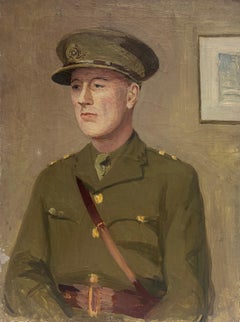
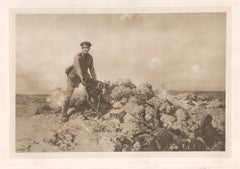
Denis William Dring R.A. 1904 - 1990, was an English artist who served in the second World War as an official War Artist recording portraits of serving soldiers. There are 3 portraits in this one lot. Dring trained at the Slade School of Art and taught at the Southampton School of art, and in the 1920's he was commissioned by Edwin Lutyens to paint murals. He travelled extensively throughout the UK painting for the War Artists Committee, painting portraits for the Admiralty. These 3 portraits were drawn between 1944 and 1945 and are Royal Air Force pilots almost certainly Mediterranean serving officers. The 3 portraits are offered here as one lot and it will be noticed they are unsigned as this was standard procedure for artists working under contract for the War Artists Commission. The artists were not allowed to display any identification of the sitter or the location, however it may be noticed that one of the sitters is a Wing Commander, one of the 3 portraits has been exhibited at the Royal Academy Exhibition in 1957 . I have included a further scholarly biography of the artist for your information. Dennis William Dring (born 26 January 1904, Streatham, London – 29 September 1990, Compton, Hampshire) was a British portrait painter and draughtsman whose work exemplifies the continuity of British academic realism through the mid-20th century. Known professionally as William Dring, he became one of the most respected official war artists of the Second World War and later a leading portraitist of post-war Britain. Early Life and Education Dring was born in Streatham, South London, into a family that would produce several artists, including his younger brother, James Dring. He began his formal artistic education at the Slade School of Fine Art from 1922 to 1925, studying under Henry Tonks, the influential teacher and former surgeon whose rigorous training emphasized draughtsmanship, anatomy, and observational acuity. At the Slade, Dring won multiple scholarships and prizes, distinguishing himself for technical precision and sensitivity of observation. Early Career and Teaching Following his graduation, Dring established himself as a skilled draughtsman and portrait painter. In the late 1920s and 1930s he executed a range of commissions, including murals for architectural projects, and began to exhibit his work publicly. He took up a post as a teacher of drawing and painting at the Southampton School of Art, where he taught until 1942, passing on the Slade’s disciplined methods to a new generation of students. World War II and Official War Artist Dring’s artistic direction was profoundly shaped by the outbreak of the Second World War. Initially undertaking individual portrait commissions for the War Artists’ Advisory Committee (WAAC), his early wartime drawings impressed the Committee, leading to his appointment on a full-time contract in 1942. His first contract focused on the Admiralty, and during this period he traveled extensively throughout Britain recording naval personnel and operations. His primary medium was pastel, which allowed him to work quickly while capturing nuanced expressions and character in often difficult conditions. In 1943 he secured a second full contract that broadened his remit beyond naval subjects, and by 1944–45 he was working under full commission to the Air Ministry, producing portraits of airmen and other service personnel. His war work is notable for its immediacy, psychological insight, and technical prowess. A large body of these works—especially pastel portraits—is held today by major national repositories, including some 60–plus pastels and several oil paintings at the Imperial War Museum, and further works at the National Maritime Museum. Post-War Career and Mature Work Following the war, Dring’s career as a portraitist flourished. He produced portraits of notable public figures—including academics, civic leaders, and members of the British Royal Family—and documented civic ceremonies such as the presentation of the Freedom of the City of London to Princess Elizabeth in 1947. His commissions extended to institutional portraits, including a series for Lincoln’s Inn featuring eminent legal and political figures such as Margaret Thatcher and Lord Hailsham. Dring was a frequent exhibitor at the Royal Watercolour Society and the Royal Academy of Arts. He was elected Associate Member of the RA in 1944 and elevated to full Academician in 1955, reflecting his stature within the British art establishment. His work also encompasses landscapes and domestic subjects, showing a range that extends beyond formal portraiture into more personal and lyrical modes of representation. Artistic Style and Legacy Dring’s artistic style is rooted in the British academic tradition: technically rigorous, figuratively grounded, and committed to a naturalistic representation of the human subject. His draughtsmanship—refined under Henry Tonks—remains a hallmark of his work, and his mastery of pastel and watercolour allowed both psychological depth and formal clarity. While Dring worked during an era increasingly dominated by modernism and abstraction, his sustained dedication to figurative realism positioned him as a principal chronicler of British identity in the mid-20th century. His war portraits, in particular, offer invaluable insight into the lived experience of military service and the social fabric of wartime Britain. Personal Life Dring married Grace Elizabeth Rothwell, a painter whom he met at the Slade; their long partnership underscores the interconnected world of British art education and practice in the interwar period. They lived at Compton near Winchester. Their daughter, Melissa Dring, also became an artist and developed a career in forensic facial reconstruction.
  • Creator:
    William Dring (1904 - 1990, British)
  • Creation Year:
    Mid 20th Century
  • Dimensions:
    Height: 27 in (68.58 cm)Width: 24 in (60.96 cm)Depth: 3 in (7.62 cm)
  • Medium:
  • Period:
  • Condition:
  • Gallery Location:
    Douglas, GB
  • Reference Number:
    Seller: No. 871stDibs: LU2373216729712

More From This Seller

View All
Proffesor Nevill Coghill

Proffesor Nevill Coghill

Located in Douglas, Isle of Man

Albert Rutherston 1881-1953, was an English artist, who painted portraits, landscapes, illustrated books and designed stage sets. Two of his brothers were Sir William Rothenstein and...

Category

1940s Portrait Drawings and Watercolors

Materials

Pencil

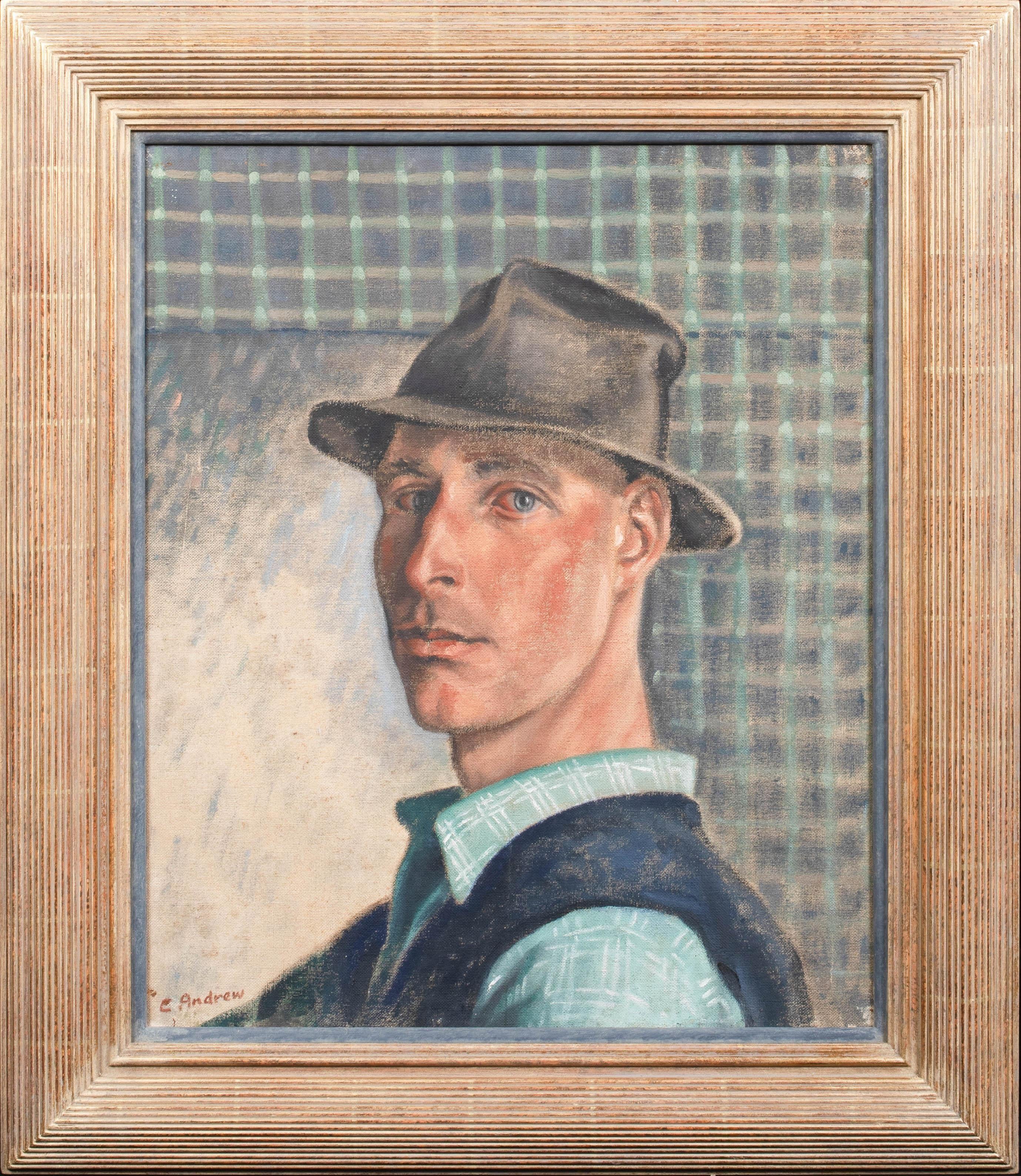
Self Portrait

Self Portrait

Located in Douglas, Isle of Man

Robert Buhler R.A. 1916-1989, was a Swiss landscape and portrait painter born in England, lived in Chelsea and painted cityscapes and the portraits of a number famous painters, and ...

Category

1940s Portrait Paintings

Materials

Oil, Canvas

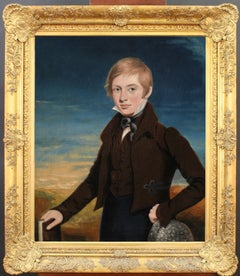
Henry Wyndham Phillips

Henry Wyndham Phillips

By Thomas Phillips

Located in Douglas, Isle of Man

Thomas Phillips R.A. 1770-1845, was an English portrait painter and he painted many of the greatest people of the day including , artists, poets, writers, scientists and many other p...

Category

Mid-19th Century Portrait Paintings

Materials

Canvas, Oil

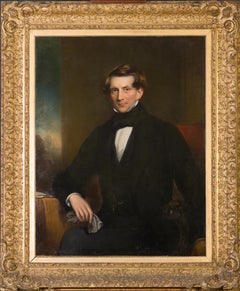
George Byng Later 7th Viscount Torrington

George Byng Later 7th Viscount Torrington

Located in Douglas, Isle of Man

Robert Frain active 1829-1877, was a Scottish painter. There is very little biographical information regarding Frain, however he was active in the first quarter to the third quarter ...

Category

1820s Portrait Paintings

Materials

Canvas, Oil

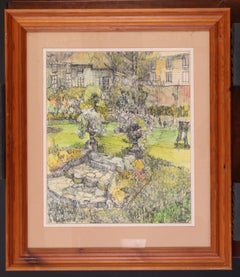
Garden

Garden

By David Gentleman

Located in Douglas, Isle of Man

David Gentleman 1930- R.D.I. , is an English artist born in London, attended Royal College of Art. His works frequently compose of London urban landscapes and this picture seems...

Category

1960s Landscape Paintings

Materials

Watercolor, Paper

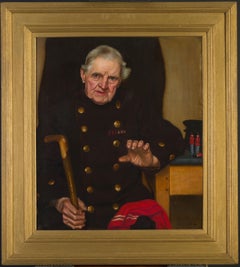
The Chelsea Pensioner

The Chelsea Pensioner

Located in Douglas, Isle of Man

Anne Marjorie Robinson 1858 - 1924, was a British painter in oil and watercolour of portraits and miniatures. Annie as she was sometimes known was born in Belfast Northern Ireland and moved to London in 1907, there she studied miniature portrait painting under the best miniature painter of the time Alyn Williams. Annie exhibited at the Royal Academy, the National Gallery in Ireland, the Belfast Museum, the Walker Art Gallery in Liverpool and the Royal Hibernian Academy, and others. She was a well known and much admired painter in Northern Ireland and a number of her works are held in the Ulster Museum. This picture is of a old soldier who resided with the Chelsea Pensioners and he is known a such. He looks as if he is wearing the coat of an officer of the Royal Marines Light Infantry and the medals he is wearing and the ribbons are for the Indian Mutiny issued between 1857 - 1859, he is also wearing the General Indian Service Medal which was issued between 1852 -1859. As an officer he would have worn this darker, and more expensive coat but the general service infantry would have worn red simply because it was cheaper to produce in mass production methods during the 19th Century. Visibility did not seem to be considered an issue then as the troops would have marched directly towards the enemy firing and bayonetting away without the later consideration of camouflage and personal survival. The advantage of camouflage did not come into force until WW1. The buttons on the coat are most interesting as they are dated back to the Duke of Wellington's time, and reflect the imitation of Royal and upper class serviceman's fashion in general. The frame appears to be original to the painting and the labels show that it was exhibited almost certainly at the Royal Academy, and the other label with the London address shows the home of what was once the home of James McNeil Whistler. I am extremely thankful to Jonathon Russell, from the Annie Swynnerton website, for his help in catalouging this painting and the help he received from the National Army Museum Experience Team. I have included a further biography here for your interest :- Annie Marjorie Robinson (1858–1924) was a Belfast-born Irish artist known for her portraits and miniature paintings, as well as for her sculptures. Education and early career Early training: Robinson trained as an illuminator and attended the Belfast Government School of Design. Move to London: In 1907, she relocated to London to focus on portraiture, studying under Alyn Williams of the Royal Society of Miniature Painters. While there, she also studied modelling. Return to Belfast: She returned to Belfast in 1914 after the outbreak of World War I. Exhibitions and memberships Robinson was a frequent exhibitor throughout her career: Royal Academy: She exhibited nine works at the Royal Academy in London between 1914 and 1923. Royal Hibernian Academy: Her work was regularly shown at the Royal Hibernian Academy in Dublin. Other venues: She also exhibited at the Walker Art Gallery in Liverpool and with the Belfast Arts Society. Arts & Crafts Society: In 1917, she displayed two decorative panels at the 5th exhibition of the Arts & Crafts Society in Dublin. Robinson was an active member of the artistic community and held several prestigious memberships: Associate of the Royal Miniature Society (ARMS), elected in 1912. Associate of the Society of Women Artists (ASWA), elected in 1918. Member of the Belfast Ramblers' Sketching Club (1886–1890) and the Belfast Arts Society (1895–1924). Artworks and legacy Subject matter: A regular subject in Robinson's work was Saint Brigid of Kildare. Paintings exploring this theme, including It Was Brigit Wove the First Cloth in Ireland, are now part of a triptych in the Ulster Museum. Legacy at Ulster Museum: After her death on October 22, 1924, her brother John B. Robinson donated 22 miniature portraits, as well as sculptures, watercolours, and an oil-on-canvas self-portrait, to the Ulster Museum. Other posthumous tributes Memorial exhibition: In 1925, the Belfast Municipal Art Gallery held an exhibition of Robinson's oil paintings...

Category

1890s Portrait Paintings
Materials

Canvas, Oil

You May Also Like

Framed 1945 Oil - Portrait of a Second World War Soldier

Framed 1945 Oil - Portrait of a Second World War Soldier

Located in Corsham, GB

A portrait of a Second World War soldier. He wears a badge on his shoulder, possibly that of the 21st Army Group, a British headquarters formation established in 1943. The work is da...

Category

Mid-20th Century Portrait Paintings

Materials

Oil

Portrait of WW11 British Army Officer Soldier Antique English Oil Painting

Portrait of WW11 British Army Officer Soldier Antique English Oil Painting

Located in Cirencester, Gloucestershire

The Army Officer *see notes below by Kathleen Emily Temple-Bird (British 1879 - 1962) oil painting on canvas , unframed canvas: 24 x 18 inches condition: very good, minor surface scu...

Category

1930s English School Portrait Paintings

Materials

Oil, Canvas

World War 1 Plane

World War 1 Plane

Located in Fort Washington, PA

Medium: Watercolor Painting Signature: Unsigned World War 1 Plane, 1920.

Category

1920s Figurative Drawings and Watercolors

Materials

Watercolor

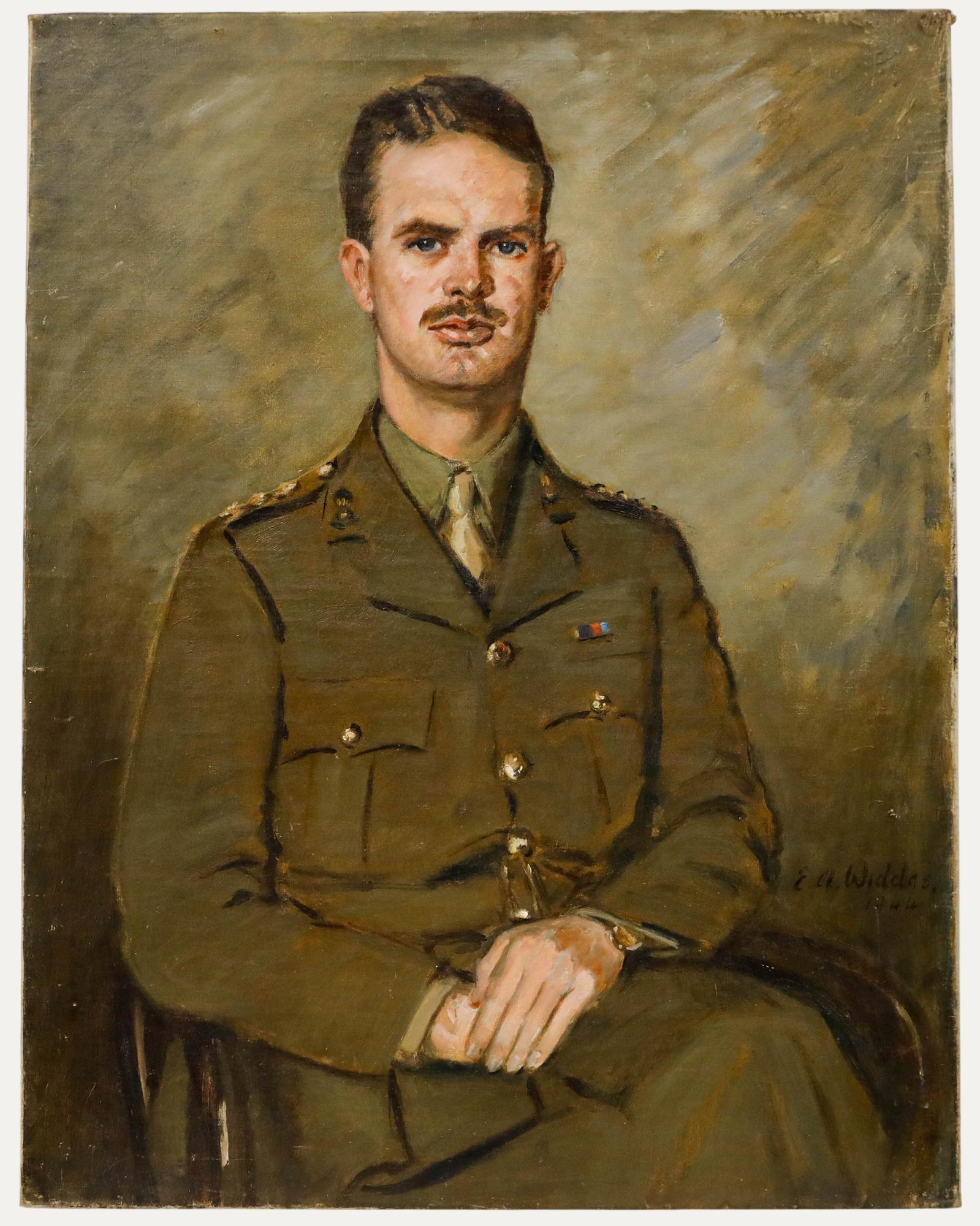
Ernest Alfred Widdas (1879-1960)-English School 1944 Oil, Portrait of an Officer

Ernest Alfred Widdas (1879-1960)-English School 1944 Oil, Portrait of an Officer

Located in Corsham, GB

A striking mid 20th century portrait of a British military officer by the artist Ernest Alfred Widdas (1879-1960). Signed and dated. On canvas on stretchers. Image size: 91 x 71cm.

Category

Mid-20th Century Portrait Paintings

Materials

Oil

Lieutenant JRN Graham, World War I, military photogravure after Lucy Kemp-Welch

Lieutenant JRN Graham, World War I, military photogravure after Lucy Kemp-Welch

By Lucy Kemp Welch

Located in Melbourne, Victoria

Lieutenant J.R.N. Graham Photogravure after Lucy Kemp-Welch (1869-1958). C1920. 330mm by 505mm (image) 470mm by 630mm (sheet). Lieutenant J.R.N. Graham (1882-1980), 9th Battalion Argyle & Sutherland Highlanders, was attached to 136 Company Machine Gun Corps...

Category

1920s Other Art Style Portrait Prints

Materials

Lithograph