Want more images or videos?
Request additional images or videos from the seller
1 of 5

Unknown
Framed Hmong Appliqué Textile Fragment

Mid-20th Century

$2,280
£1,748.86
€2,044.59
CA$3,282.92
A$3,331.38
CHF 1,904.24
MX$40,600.79
NOK 22,485.40
SEK 22,613.23
DKK 15,283.68

About the Item

Dating to the mid-20th century, this colorful Hmong textile is a classic example of the appliqué technique used for the traditional cloth known as paj ntaub. Appliqué is the process by which patches of fabric are sewn onto a different piece of fabric to form a new pattern. Paj ntaub is an integral part of Hmong culture and fashion, in particular a source of great pride to Hmong women. The brightly colored embellishments, often on darker fabric, were a staple for clothing used in traditional celebrations including marriages, births, holidays and other important events. Through periods of persecution, Hmong women began preserving their language through imagery, stitching secret messages onto their clothes as they migrated from village to village. The paj ntaub quickly became a way to hold onto the identity and culture of the Hmong people, even going so far as evolving into story clothes depicting scenes, events, and narratives from their oral history. This framed paj ntaub fragment is comprised of intricate appliqué patterns enclosed by a black border with white and pink stars (hnub qub). At the center of the textile are four squares with various ancient Hmong symbols. Each has a central coil (lub qwj yees) symbolizing family growth and interrelatedness. Surrounding the spiral are eight snails (qab qwj) which represent the union of two families and can also symbolize the spinning motion used in many spiritual chants. Lining each square is a step motif (theem ntaiv), which can be interpreted to represent the nomad lifestyle of the Hmong people. Lastly, there is a border with a repeating triangle pattern surrounding all four squares representing mountains (rooj), believed to embody strength. While some of the traditional meaning of paj ntaub imagery has been lost with various interpretations, the art remains alive, preserving connections with a lost homeland. From the collection of Frances and Gary Comer.
  • Creation Year:
    Mid-20th Century
  • Dimensions:
    Height: 18.5 in (46.99 cm)Width: 34.5 in (87.63 cm)Depth: 1.5 in (3.81 cm)
  • Medium:
  • Movement & Style:
  • Period:
  • Condition:
  • Gallery Location:
    Chicago, IL
  • Reference Number:
    Seller: CFC2851stDibs: LU1036312985552

More From This Seller

View All
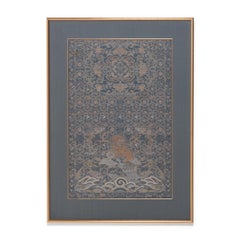
Embroidered Miao Baby Carrier Textile

Embroidered Miao Baby Carrier Textile

Located in Chicago, IL

The connection between love and embroidery is nowhere stronger than among the minority peoples of China. Hand-stitched by a mother herself or gifted by the women in her family, the t...

Category

Early 20th Century Folk Art Mixed Media

Materials

Cotton, Silk, Thread
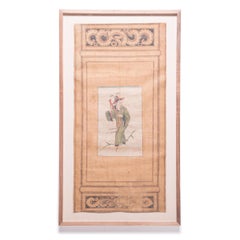
Chinese Mythical Immortal Screen Painting, c. 1850

Chinese Mythical Immortal Screen Painting, c. 1850

Located in Chicago, IL

Since the 12th century, people in China have used folding screens and doors to partition and decorate their homes - the vivid scenes backing the screens added life and color to a roo...

Category

Mid-19th Century Figurative Paintings

Materials

Fabric, Ink, Pigment

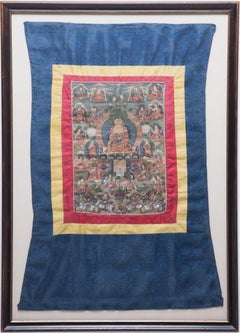
Tibetan Thangka of Sakyamuni, c. 1880

Tibetan Thangka of Sakyamuni, c. 1880

Located in Chicago, IL

Historically in Buddhist Tibet, patrons and monks commissioned thangka art, or sacred painting, to focus their meditations and prayers. This 19th-century Tibetan Thangka, painted in rich red, green, and blue pigments, still maintains incredible vibrancy. The central figure is the Sakyamuni Buddha, seated in the diamond position with alms bowl...

Category

19th Century Figurative Paintings

Materials

Linen, Silk, Pigment

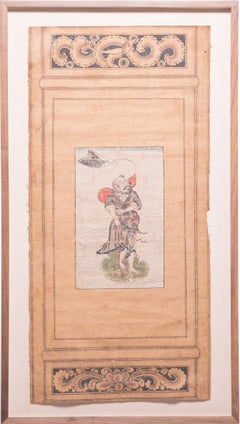
Chinese Mythical Immortal Screen Painting, c. 1850

Chinese Mythical Immortal Screen Painting, c. 1850

Located in Chicago, IL

Since the 12th century, people in China have used folding screens and doors to partition and decorate their homes - the vivid scenes backing the screens added life and color to a roo...

Category

Mid-19th Century Figurative Paintings

Materials

Fabric, Ink, Pigment

You May Also Like

Framed Hmong Appliqué Textile Fragment

Framed Hmong Appliqué Textile Fragment

Located in Chicago, IL

Dating to the mid-20th century, this colorful Hmong textile is a classic example of the appliqué technique used for the traditional cloth known as paj n...

Category

20th Century Southeast Asian Folk Art Tapestries

Materials

Fabric

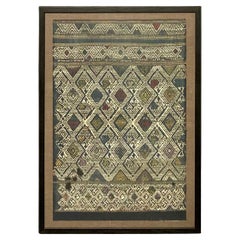
Framed Antique Guiqzou Province Textile

Framed Antique Guiqzou Province Textile

Located in Kent, Dover

A Chinese, traditional hand-woven textile from the southwestern Guiqzou Province. Framed behind glass, against a raw linen background.

Category

Antique Early 1900s Chinese Tapestries

Materials

Cotton, Linen, Silk, Cut Glass, Beech

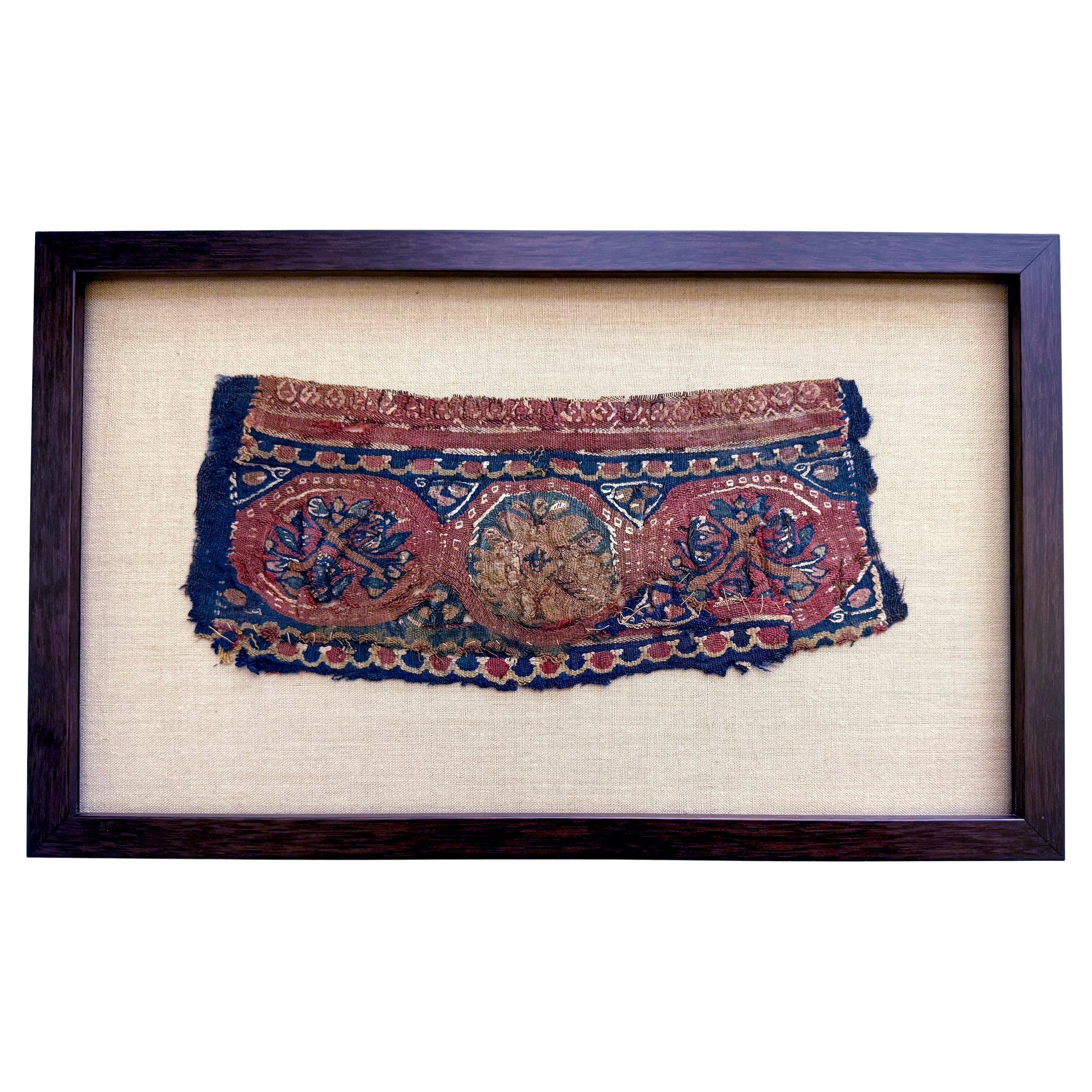
Framed Antique Coptic Textile Fragment from Byzantine North Africa

Framed Antique Coptic Textile Fragment from Byzantine North Africa

Located in Atlanta, GA

A small piece of antique Coptic textile woven as a horizontal band with two linear scallop borders flanking three central medallion design. Each medallion has a concentric pattern wi...

Category

Antique 15th Century and Earlier Egyptian Archaistic Shadow Boxes

Materials

Wood, Wool

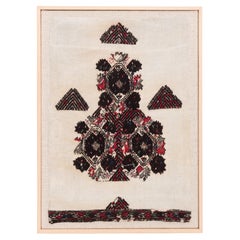
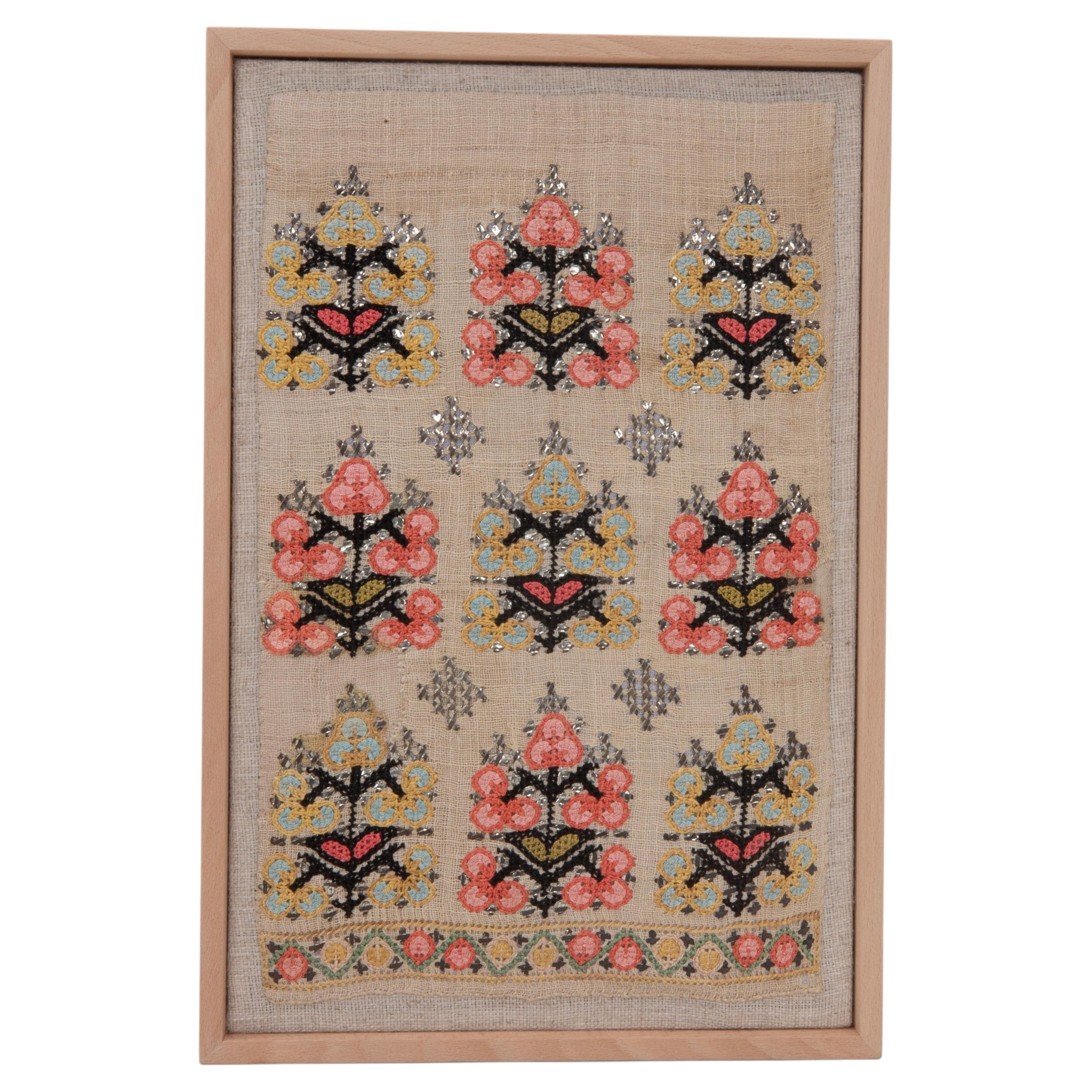
Framed Antique Eastern European Embroidery Fragment , Early 20th Century.

Framed Antique Eastern European Embroidery Fragment , Early 20th Century.

Located in Istanbul, TR

First the fragment has been hand backed on a linen fabric, then stretched over a wooden stretcher and finished with a wooden frame. Early 20th Century. Bulgaria Ready to go on a wall...

Category

Early 20th Century Bulgarian Folk Art Decorative Art

Materials

Wool

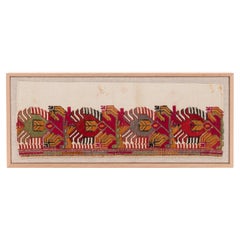
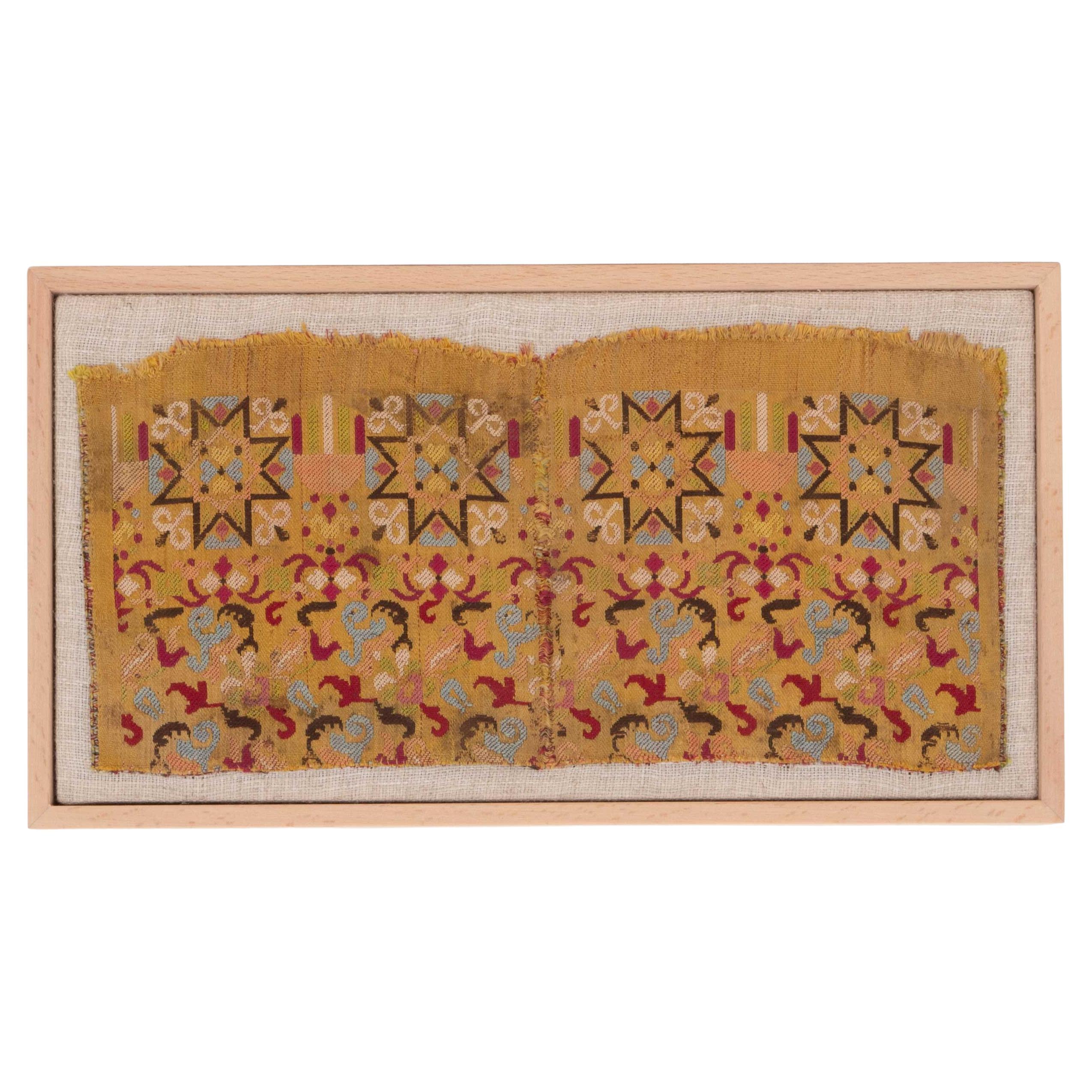
Professionally Framed Moroccan Belt Fragment, Early 20th C.

Professionally Framed Moroccan Belt Fragment, Early 20th C.

Located in Istanbul, TR

First the fragment has been hand backed on a linen fabric, then stretched over a wooden stretcher and finished with a wooden frame. Early 20th C.. Morocco Ready to go on a wall.

Category

Early 20th Century Moroccan Folk Art Pillows and Throws

Materials

Silk

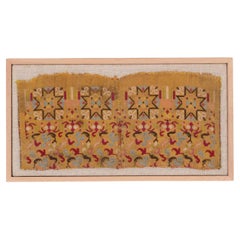
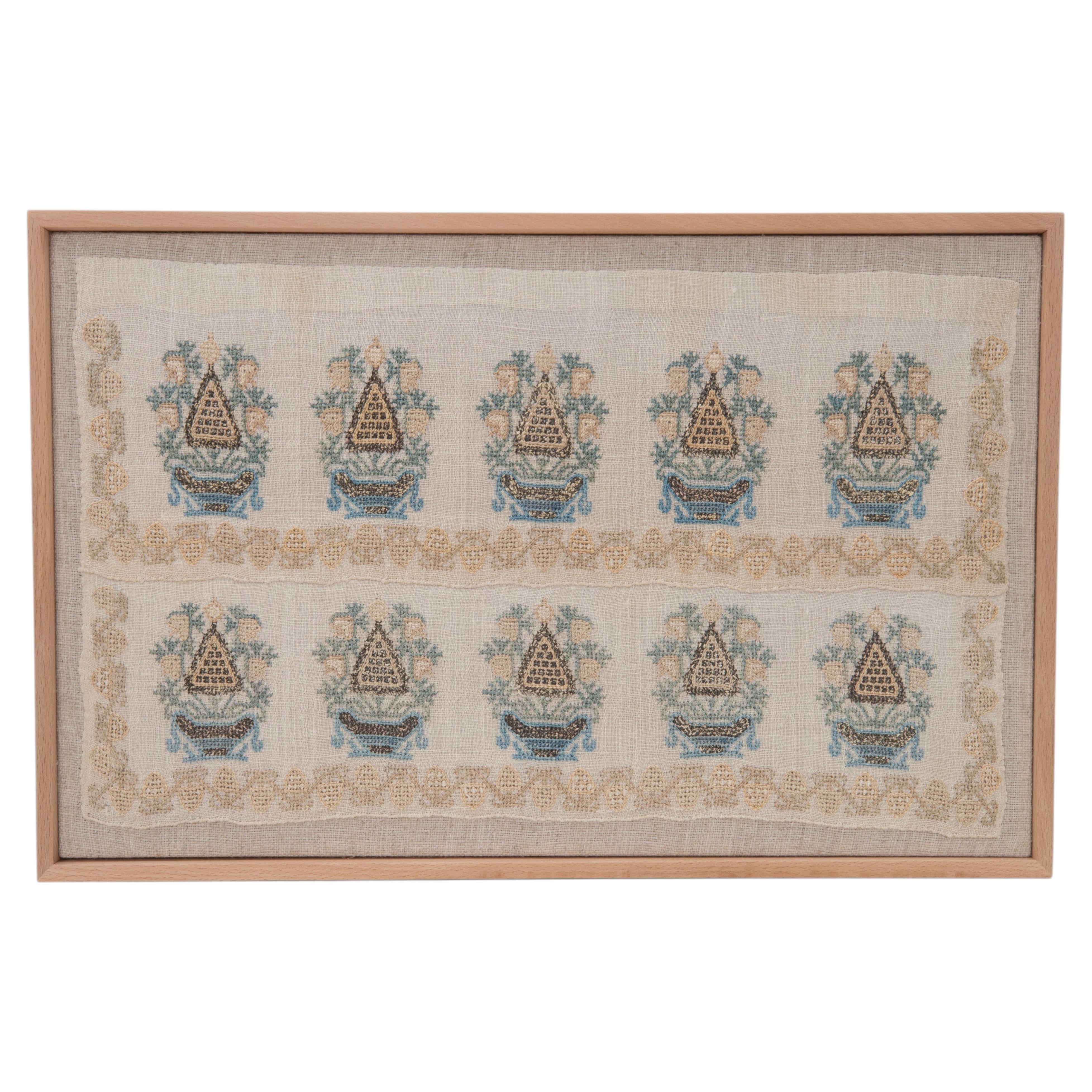
Professionally Framed Greek Embroidered Chemise Hem Fragment, 19th C.

Professionally Framed Greek Embroidered Chemise Hem Fragment, 19th C.

Located in Istanbul, TR

First the fragment has been hand backed on a linen fabric, then stretched over a wooden stretcher and finished with a wooden frame. Late 19th C. Greece. Ready to go on a wall. Frame...

Category

Antique 19th Century Greek Folk Art Decorative Art

Materials

Silk