Want more images or videos?
Request additional images or videos from the seller
1 of 6

Unknown
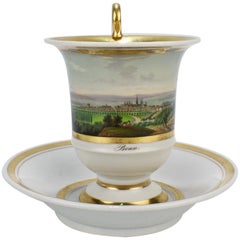
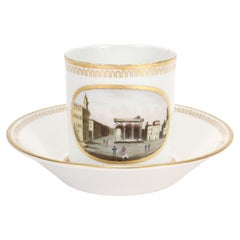
KPM View cup with the Altes Museum, c. 1830 / - The birth of the Spree-Athens -

c. 1830

$602.91
£447.18
€512.36VAT Included
CA$845.97
A$859.57
CHF 486.97
MX$10,458.91
NOK 5,710.18
SEK 5,741.29
DKK 3,909.40

About the Item

Königliche Porzellan-Manufaktur (KPM), View cup with Berlin veduta of the Altes Museum, circa 1830. Bell-shaped cup with raised handle ending in a shell palmette. The front with gold-framed polychrome fine painting with flanking tendrils. 10 cm high, 8.5 cm diameter. Without painter's mark, inscribed “Das Museum in Berlin” under the base and with the sceptre signet of the 1830s. - Some rubbing to the gold staffage, laminated hairline crack to the side, minimal chip to the upper edge of the cup, fine painting in excellent condition. - The birth of the Spree-Athens - With the completion of the first building on Berlin's Museum Island, now known as the Altes Museum, in 1830, the palace, now rebuilt, was given a civic counterpart. The Pleasure Garden, also designed by Karl Friedrich Schinkel, extends between the Palace and the Temple of the Muses. Inspired by the Greek agora, it was designed as a place for contemplative strolls. Accordingly, the veduta shows strolling people in contemporary top hats and frock coats, behind which the newly opened museum unfolds in all its neoclassical splendor. The Dioscuri, crowning the Temple of the Muses, are silhouetted against the blue sky. The meticulously detailed painting of this unique work is not only an outstanding historical document of Berlin from the period immediately after the opening of the museum, but the finest strokes resemble Schinkel's own drawings and congenially depict his architectural masterpiece. GERMAN VERSION Königliche Porzellan-Manufaktur (KPM) Ansichtentasse mit Berlin-Vedute des Alten Museums, um 1830. Glockenbecherform mit hochgezogenem in Muschelpalmette auslaufendem Henkel. Schauseitig goldgerahmte polychrome Feinmalerei mit flankierendem Rankenwerk. 10 cm Höhe, 8,5 cm Durchmesser. Ohne Malermarke, unter dem Boden mit „Das Museum in Berlin“ bezeichnet und dem Zeptersignet der 1830er Jahre versehen. - Goldstaffage mitunter berieben, kaschierter seitlicher Haarriss, minimaler Chip an der Becheroberkante, Feinmalerei in ausgezeichnetem Zustand. - Die Geburt von Spree-Athen - Mit der Fertigstellung des heute als „Altes Museum“ bezeichneten Initialbaus der Berliner Museumsinsel im Jahre 1830 erhielt das inzwischen wiederrichtete Schloss ein bürgerliches Pendant. Zwischen dem Schloss und dem von Karl Friedrich Schinkel erbauten Musentempel erstreckt sich der ebenfalls vom Architekten entworfene Lustgarten. An die griechische Agora angelehnt, ist er als Ort des besinnlichen Lustwandels konzipiert. Dementsprechend zeigt die Vedute flanierende zeitgenössisch mit Zylinder und Gehrock gekleidete Personen, hinter denen sich das neu eröffneten Museum in seiner ganzen klassizistischen Pracht entfaltet. Die den Musentempel bekrönenden Dioskuren heben sich wie Silhouetten vor dem blauen Himmel ab. Die akkurate Feinmalerei des Unikats ist nicht einzig ein herausragendes berlinhistorisches Dokument aus der Zeit unmittelbar nach der Eröffnung des Museums, die feinsten Strichlagen ähneln Schinkels eigenen Zeichnungen und bringen sein architektonisches Meisterwerk kongenial zur Darstellung.
  • Creation Year:
    c. 1830
  • Dimensions:
    Height: 3.94 in (10 cm)Width: 3.35 in (8.5 cm)Depth: 3.35 in (8.5 cm)
  • Medium:
  • Movement & Style:
  • Period:
  • Condition:
  • Gallery Location:
    Berlin, DE
  • Reference Number:
    1stDibs: LU2438215522202

More From This Seller

View All
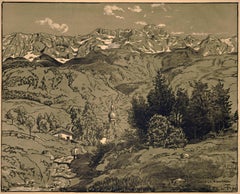
S. Anton Patenkirchen / - The Home of the Landscape -

S. Anton Patenkirchen / - The Home of the Landscape -

Located in Berlin, DE

Hans Thoma (1839 Bernau - 1924 Karlsruhe), S. Anton Patenkirchen, 1895. Algraph on strong wove paper, published by Breitkopf und Härtel in Leipzig as ‘Zeitgenössisches Kunstblatt Nr....

Category

1890s Realist Figurative Prints

Materials

Paper

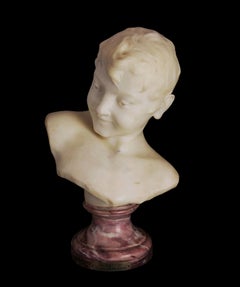
Scherzo / - The nature of the scherzo -

Scherzo / - The nature of the scherzo -

Located in Berlin, DE

Emile Jespers (1862 Deurne - 1918 Antwerp), Scherzo, circa 1890. Marble bust on marble base with title plaque, 42.5 cm (total height) x 28 cm (width) x 18 cm (depth), signed “E.[mile...

Category

1890s Realist Figurative Sculptures

Materials

Marble

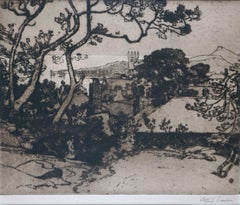
View of a coastal town / - The Pilgrim's View -

View of a coastal town / - The Pilgrim's View -

Located in Berlin, DE

Albert Ernst (1909 Fronhofen - 1996 Hamburg), View of a Coastal Town, etching, 30 x 37 cm (picture), 45 x 50.5 cm (frame), signed in pencil lower right "Albert Ernst", framed under g...

Category

Mid-20th Century Realist Landscape Prints

Materials

Etching

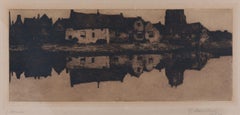
Evening - The depth of the visible -

Evening - The depth of the visible -

Located in Berlin, DE

Max Clarenbach (1880 Neuss - Cologne 1952), Evening. Etching, 18 x 41 cm (platemark), 33.5 x 57 cm (frame), inscribed "Abend" in pencil at lower left, signed and dated "M. Clarenbach. 28.III.[19]09". Framed and mounted under glass. - Somewhat browned and slightly foxed. About the artwork The horizontally elongated etching depicts the panoramic view of a small town as seen from the other side of the river. There are gabled houses on the left and a mighty church spire on the right. The bourgeois houses and the large religious building indicate the urban character. These buildings are rendered in dark tones to emphasise the lighter row of houses in the centre of the picture, closer to the water. The chiaroscuro contrast creates two parallel planes that open up a space for the imagination of what the city could be. The imagination is stimulated by the almost entirely dark, barely recognisable buildings, while the arm of the river leading into the city further stimulates the imagination. However, as the silhouette of the city as a whole is reflected in the water, the parallel planes are perceived as a band of houses that stretches across the entire horizontality of the etching and seems to continue beyond the borders of the picture. The reflection has almost the same intensity as the houses themselves, so that the band of buildings merges with their reflection to form the dominant formal unit of the picture. Only the parallel horizontal hatching creates the convincing impression of seeing water, demonstrating Max Clarenbach's mastery of the etching needle. The water is completely motionless, the reflection unclouded by the slightest movement of the waves, creating a symmetry within the formal unity of the cityscape and its reflection that goes beyond the motif of a mere cityscape. A pictorial order is established that integrates everything in the picture and has a metaphysical character as a structure of order that transcends the individual things. This pictorial order is not only relevant in the pictorial world, but the picture itself reveals the order of the reality it depicts. Revealing the metaphysical order of reality in the structures of its visibility is what drives Clarenbach as an artist and motivates him to return to the same circle of motifs. The symmetry described is at the same time inherent an asymmetry that is a reflection on art: While the real cityscape is cut off at the top of the picture, two chimneys and above all the church tower are not visible, the reflection illustrates reality in its entirety. The reflection occupies a much larger space in the picture than reality itself. Since antiquity, art has been understood primarily as a reflection of reality, but here Clarenbach makes it clear that art is not a mere appearance, which can at best be a reflection of reality, but that art has the potential to reveal reality itself. The revealed structure of order is by no means purely formalistic; it appears at the same time as the mood of the landscape. The picture is filled with an almost sacred silence. Nothing in the picture evokes a sound, and there is complete stillness. There are no people in Clarenbach's landscape paintings to bring action into the picture. Not even we ourselves are assigned a viewing position in the picture, so that we do not become thematic subjects of action. Clarenbach also refrains from depicting technical achievements. The absence of man and technology creates an atmosphere of timelessness. Even if the specific date proves that Clarenbach is depicting something that happened before his eyes, without the date we would not be able to say which decade, or even which century, we are in. The motionless stillness, then, does not result in time being frozen in the picture, but rather in a timeless eternity that is nevertheless, as the title "Abend" (evening), added by Clarenbach himself, makes clear, a phenomenon of transition. The landscape of the stalls is about to be completely plunged into darkness, the buildings behind it only faintly discernible. The slightly darkened state of the sheet is in keeping with this transitional quality, which also lends the scene a sepia quality that underlines its timelessness. And yet the depiction is tied to a very specific time. Clarenbach dates the picture to the evening of 28 March 1909, which does not refer to the making of the etching, but to the capture of the landscape's essence in the landscape itself. If the real landscape is thus in a state of transition, and therefore something ephemeral, art reveals its true nature in that reality, subject to the flow of phenomena, is transferred to an eternal moment, subject to a supra-temporal structure of order - revealed by art. Despite this supratemporality, the picture also shows the harbingers of night as the coming darkening of the world, which gives the picture a deeply melancholy quality, enhanced by the browning of the leaf. It is the philosophical content and the lyrical-melancholic effect of the graphic that give it its enchanting power. Once we are immersed in the image, it literally takes a jerk to disengage from it. This etching, so characteristic of Max Clarenbach's art, is - not least because of its dimensions - a major work in his graphic oeuvre. About the artist Born into poverty and orphaned at an early age, the artistically gifted young Max Clarenbach was discovered by Andreas Achenbach and admitted to the Düsseldorf Art Academy at the age of 13. "Completely penniless, I worked for an uncle in a cardboard factory in the evenings to pay for my studies.” - Max Clarenbach At the academy he studied under Arthur Kampf, among others, and in 1897 was accepted into Eugen Dücker...

Category

Early 1900s Realist Landscape Prints
Materials

Etching

You May Also Like

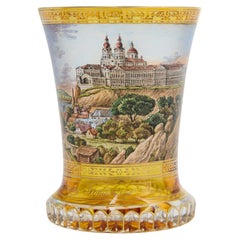
Fine Viennese Enamelled and Gilt Glass Beaker, Melk Abbey, c.1830

Fine Viennese Enamelled and Gilt Glass Beaker, Melk Abbey, c.1830

Located in London, GB

Fine Viennese Enamelled and Gilt Glass Beaker, Melk Abbey, c.1830 Austrian, c. 1830 Height 11.5cm, diameter 8.5cm This radiant Viennese beaker is a fine example of Biedermeier ename...

Category

Antique Early 19th Century Austrian Biedermeier Glass

Materials

Glass

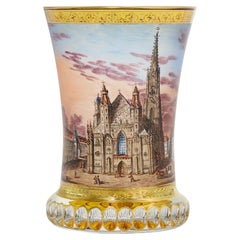
Fine Viennese Enamelled and Gilt Glass Beaker, Stephansdom, c.1830

Fine Viennese Enamelled and Gilt Glass Beaker, Stephansdom, c.1830

Located in London, GB

Fine Viennese Enamelled and Gilt Glass Beaker, Stephansdom, c.1830 Austrian, c. 1830 Height 12cm, diameter 8.5cm This refined Viennese beaker is a fine example of Biedermeier enamel...

Category

Antique Early 19th Century Austrian Biedermeier Glass

Materials

Glass

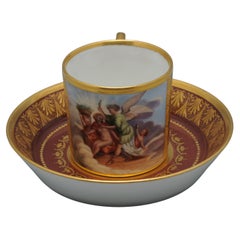
Vienna porcelain - Cup and Saucer, early 19th century

Vienna porcelain - Cup and Saucer, early 19th century

By Imperial Vienna Porcelain

Located in DELFT, NL

This fine cup and saucer set was produced by the Wiener Porzellanmanufaktur, also known as the Kaiserlich privilegierte Porzellan-Fabrik, established in 1718. Founded by Claudius Inn...

Category

Antique Early 19th Century Austrian Biedermeier Porcelain

Materials

Porcelain

18th c. George III Derby Porcelain Bough Pot Vase Named View Dalton, Lancashire

18th c. George III Derby Porcelain Bough Pot Vase Named View Dalton, Lancashire

By Derby Porcelain

Located in Litchfield, CT

Antique 18th century George III Derby porcelain cachepot decorated with a titled topographical scene "Near Dalton, Lancashire" on a bright pink salmon ground enhanced by rich gilding...

Category

Antique Late 18th Century English George III Planters, Cachepots and Jar...

Materials

Porcelain