Want more images or videos?
Request additional images or videos from the seller
1 of 7

Unknown
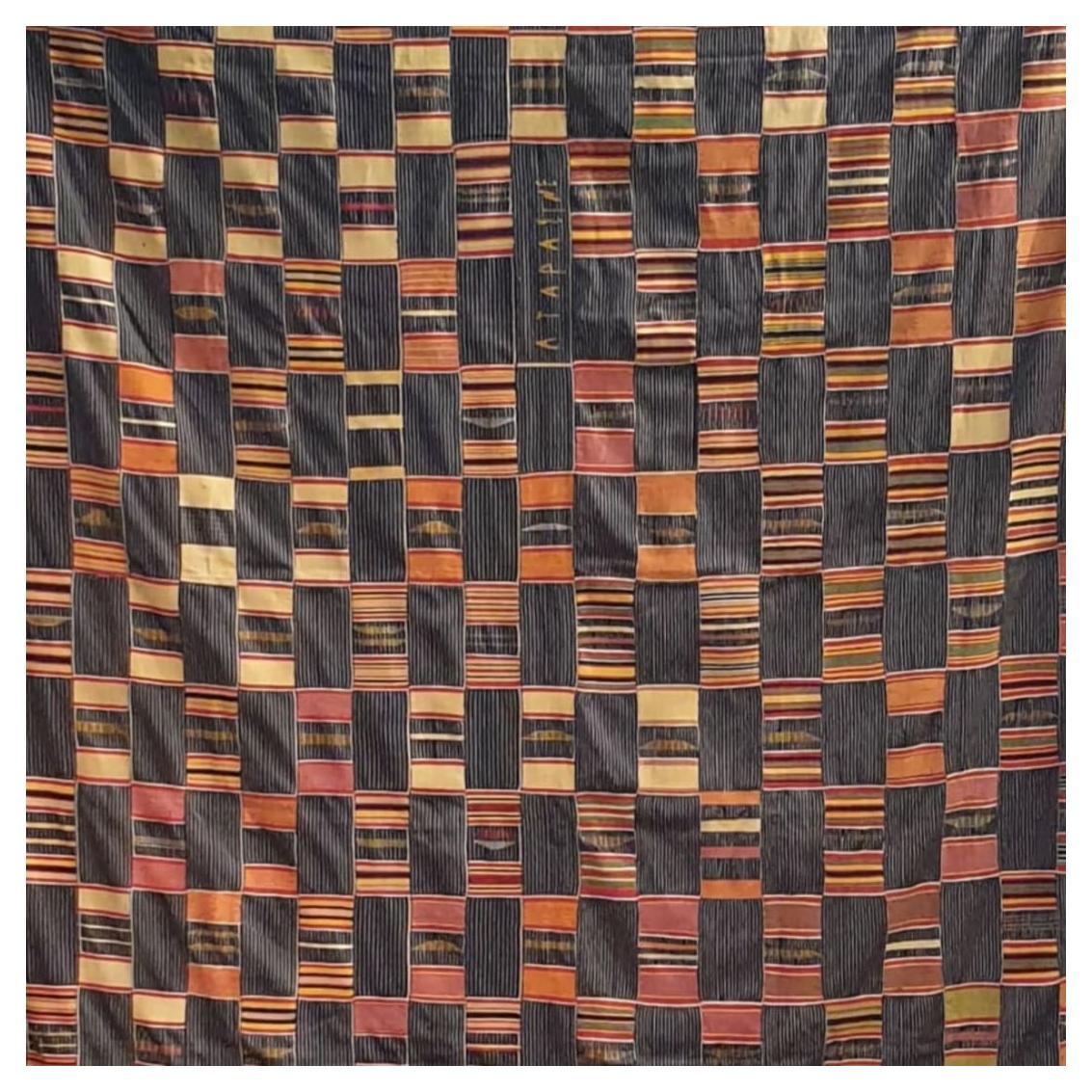
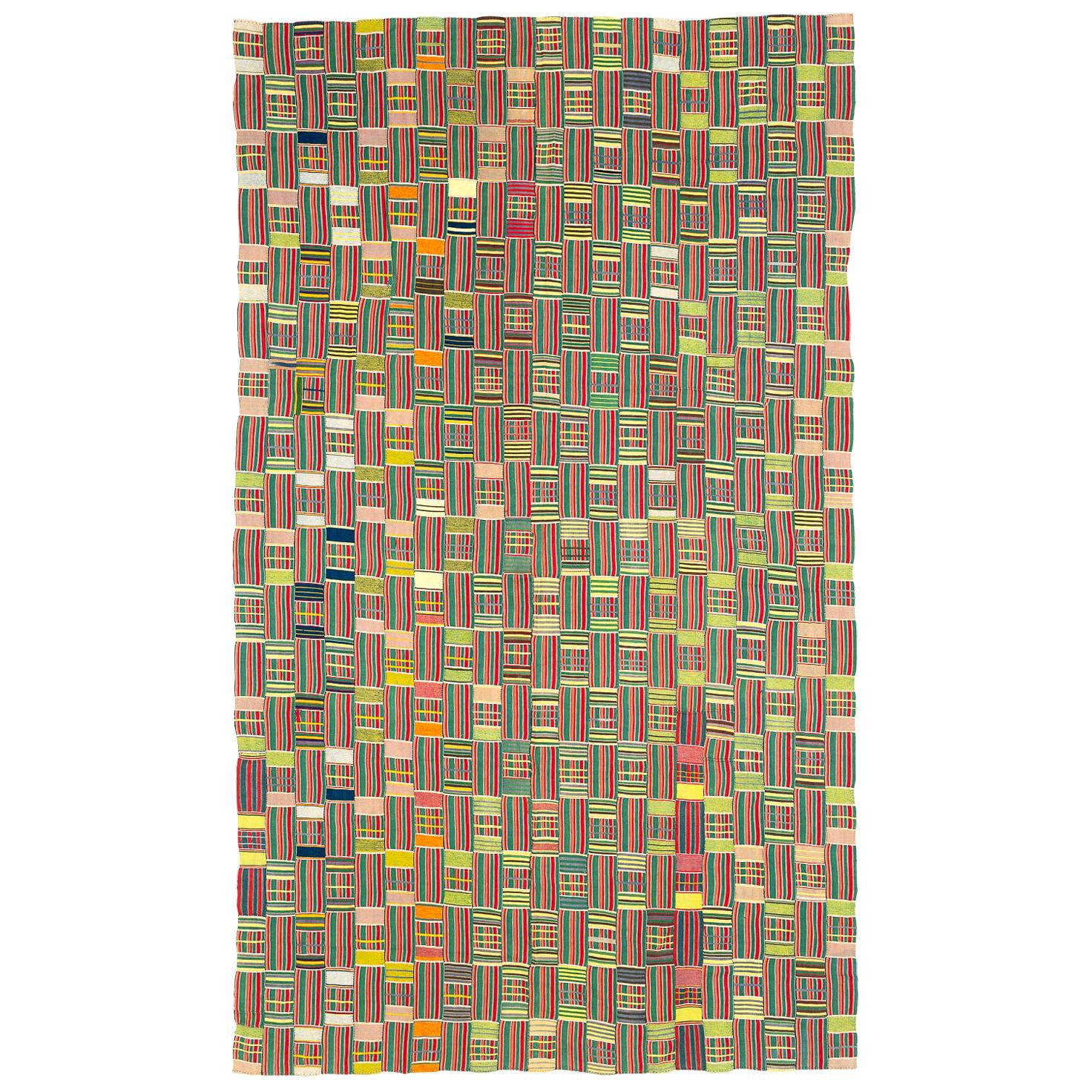
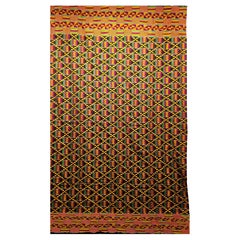
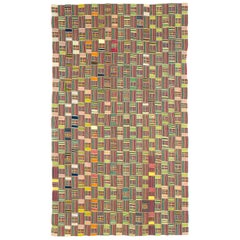
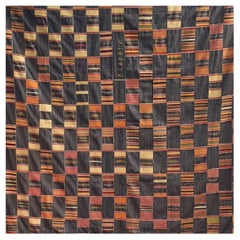
"Tribal Cloth, Ewe Ghana, " Multicolored Cotton Textile created circa 1965

circa 1965

$6,525
£4,946.20
€5,768.59
CA$9,365.17
A$9,441.90
CHF 5,376.33
MX$114,770.24
NOK 63,465.02
SEK 63,282.82
DKK 43,119.57

About the Item

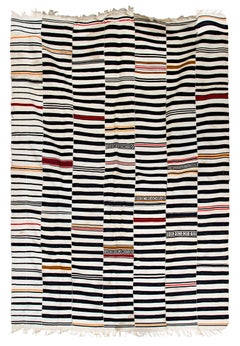
The Ewe people from Ghana are master weavers. People of means commission cloths called adanudo ("skilled/wise cloths"). Ewe adanudo textiles often display a tweed effect by twisting together different colored threads in many of the warps. Two things distinguish traditional Ewe weaving from Asante weaving: 1) the use of cotton rather than silk or rayon; and 2) the introduction of floating weft patterns of a figurative nature into some of the warp-faced sections of a strip. Today, however, much of the weaving is done with rayon (although the featured cloth is cotton). The textiles, unlike those of the Asante, may also incorporate pictorial symbols and figural motifs or people, plants, animals, and objects. Motifs include knives, hands (what we have we hold), keys (to the castle), chiefs' fly whisks, and musical instruments. Significantly, each motif has a proverbial meaning. Like the Asante, Ewe weavers us the same type of loom, and the weaving and sewing are also done by men.
  • Creation Year:
    circa 1965
  • Dimensions:
    Height: 49 in (124.46 cm)Width: 65 in (165.1 cm)
  • Medium:
  • Movement & Style:
  • Period:
  • Condition:
  • Gallery Location:
    Milwaukee, WI
  • Reference Number:
    Seller: D2177d1stDibs: LU605312805562

More From This Seller

View All
"Fabric - Ashanti Tribal Cloth, " Silk Weaving from Africa circa 1930

"Fabric - Ashanti Tribal Cloth, " Silk Weaving from Africa circa 1930

Located in Milwaukee, WI

Among the most well-known West African textiles is kente cloth, woven by the Ewe and Asante peoples of Ghana. The word kente is not used by the Asante people; it may be derived from ...

Category

1930s Folk Art More Art

Materials

Silk

"Kente Cloth Ashanti Tribe, Ghana, " Silk and Cotton Weaving created circa 1970

"Kente Cloth Ashanti Tribe, Ghana, " Silk and Cotton Weaving created circa 1970

Located in Milwaukee, WI

This silk and cotton fabric was made by an unknown Ashanti artist. It features green and orange accents. The Ashanti are a major ethnic group of the Akans in Ghana, a fairly new nation, barely more than 50 years old. Ghana, previously the Gold Coast, was a British colony until 1957. It is now politically separated into four main parts. Ashanti is in the center and Kumasi is the capital. The Ashanti have a wide variety of arts. Bark cloth was used for clothing before weaving was introduced. With weaving, there is cotton and silk. Women may pick cotton...

Category

1970s Folk Art More Art

Materials

Cotton, Silk

"Kente Cloth, Ashanti Tribe Ghana, " Cotton Weaving created circa 1970

"Kente Cloth, Ashanti Tribe Ghana, " Cotton Weaving created circa 1970

Located in Milwaukee, WI

This cotton fabric was made by an unknown Ashanti artist. It is mostly black and white. The Ashanti are a major ethnic group of the Akans in Ghana, a fairly new nation, barely more than 50 years old. Ghana, previously the Gold Coast, was a British colony until 1957. It is now politically separated into four main parts. Ashanti is in the center and Kumasi is the capital. The Ashanti have a wide variety of arts. Bark cloth was used for clothing before weaving was introduced. With weaving, there is cotton and silk. Women may pick cotton...

Category

1970s Folk Art More Art

Materials

Cotton

Kilim Rug, Hand-Woven Wool Textile, Geometric Design, Mid-20th Century

Kilim Rug, Hand-Woven Wool Textile, Geometric Design, Mid-20th Century

Located in Milwaukee, WI

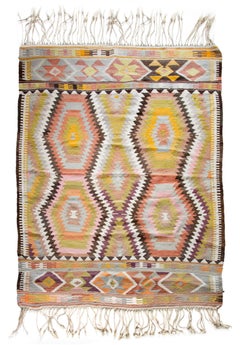
This Kilim rug was hand woven in Turkey, circa mid-20th century. It features patterns in yellow, gray, white, brown, and pink in a beautiful geometric design. Priced under $4500, this rug is sure to be enjoyed with several design schemes as it works in both modern and antique settings. Lovers of carpets will appreciate the wool under their feet as they keep their interior both stylish and comfortable. Kilim rugs are a pileless rug woven using just one of numerous flat weaving techniques that originated in parts of Turkey. Other geographical areas producing kilim style rug weaving include Iran, North Africa, Afghanistan, Pakistan, China, the Balkans, Central Asia, and the Caucasus. Perfect for the design lovers sale...

Category

Mid-20th Century Folk Art More Art

Materials

Wool, Textile, Organic Material

"Ceremonial Hunting Shirt - Yoruba, Nigeria, " Glass Beads, Shells, & Cloth

"Ceremonial Hunting Shirt - Yoruba, Nigeria, " Glass Beads, Shells, & Cloth

Located in Milwaukee, WI

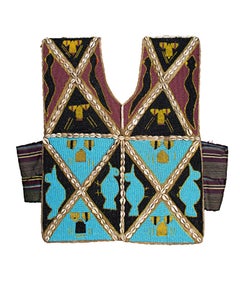
For the Yoruba people of Nigeria, beads and shells are applied to ceremonial garments and headdresses. Beads are an important part of Yoruba culture. henry John Drewal has written th...

Category

1940s Folk Art More Art

Materials

Fabric, Glass, Found Objects

You May Also Like

Hand-Woven Ewe Kente Cloth, Silk and Cotton, Ghana, Late 20th Century

Hand-Woven Ewe Kente Cloth, Silk and Cotton, Ghana, Late 20th Century

Located in Barrington, IL

This vibrant hand-woven Kente cloth is an authentic West African textile created within the esteemed Ewe–Asante (Ashanti) weaving tradition of Ghana, one of Africa’s most celebrated and historically significant textile arts. Woven from a luxurious blend of silk and cotton, this piece reflects generations of master craftsmanship and cultural storytelling. The design features a dynamic palette of magenta, green, golden yellow, and deep black, arranged in rhythmic geometric bands that are both visually powerful and symbolically rich. In traditional Kente language, these colors represent vitality, growth, prosperity, and spiritual strength, making the textile not only decorative but deeply meaningful. Kente cloths were historically worn by royalty and nobility and used in ceremonial and important social occasions, symbolizing status, wisdom, and cultural identity. Today, authentic Kente is highly sought after by collectors and interior designers for its bold graphic presence and refined hand-woven texture. Dimensions: 80” x 135” Date of Manufacture: 3rd Quarter of the 1900s Place of Origin: Ghana, Africa Material: Silk, Cotton Condition: Good The Persian Knot Gallery, SKU: 2323 African Kente Cloth, Ewe Kente Textile, Ashanti Kente, Hand Woven African Textile, Ghanaian Kente Cloth, Silk And Cotton Kente, African Wall Hanging, Tribal Textile Art, Vintage African Fabric, Ghana Textile...

Category

Late 20th Century Ghanaian Rugs
Materials

Cotton, Silk

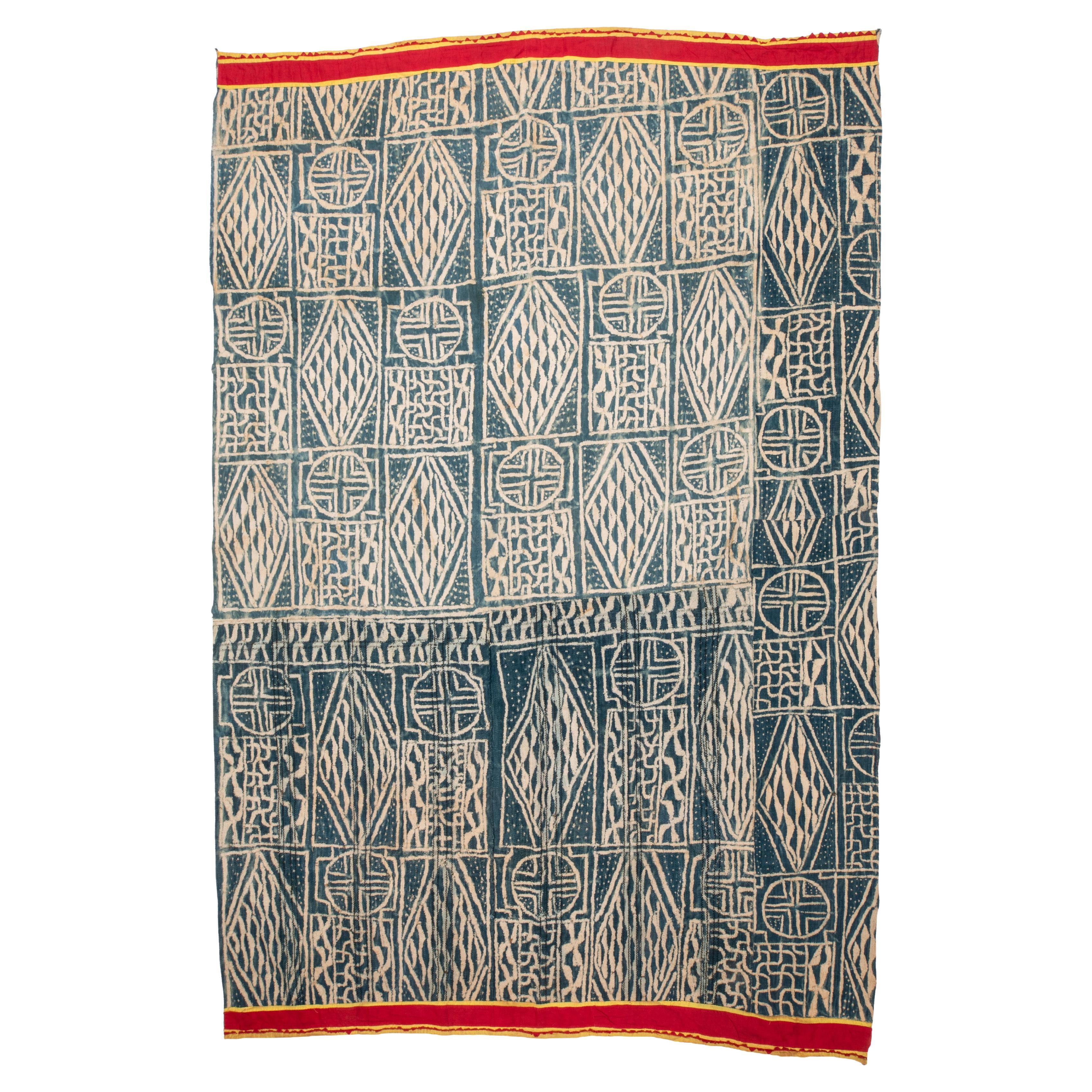
Ndop Cloth, Bamileke of Cameroon, 1960s

Ndop Cloth, Bamileke of Cameroon, 1960s

Located in Istanbul, TR

Ndop Cloth is a resist dyed indigo cloth used for rituals and ceremonies.

Category

Mid-20th Century Cameroonian Tribal Pillows and Throws

Materials

Cotton

Togolese Ewe Textile

Togolese Ewe Textile

By Ewe People

Located in Glasgow, GB

This is a pair of very fine Royal Robes from the Ewe people of Togo in West Africa. These textiles will be worn at Royal ceremonies such as Weddings and the birth of Royal children ....

Category

Antique Late 19th Century Togolese Tribal Tribal Art

Materials

Cotton

19th century Ewe Kente

19th century Ewe Kente

By Ewe People

Located in Glasgow, GB

This is a stunning piece of late 19th century Ewe textile from the Volta region of Ghana. All handspun heavier weight cotton and all natural dyes . This piece would have been woven ...

Category

Antique Late 19th Century Ghanaian Tribal Pillows and Throws

Materials

Cotton

Ewe Kente

Ewe Kente

By Ewe People

Located in Glasgow, GB

This is a fine piecevof Kente Textile from the Ewe people of the Volta region of Ghana. Woven from handspun cotton and natural dyes. This is a prestige cloth worn by a high ranking Elder of the Ewe people. The pattern denotes the individuals high status within the community with the dark blue background indicating the wisdom and knowledge of the owner. This piece will date from the 1930's and is in very fine condition. Ewe Kente...

Category

Vintage 1930s Ghanaian Tribal Tribal Art

Materials

Cotton