Video Loading
Want more images or videos?
Request additional images or videos from the seller
1 of 10

Daniel Walbidi
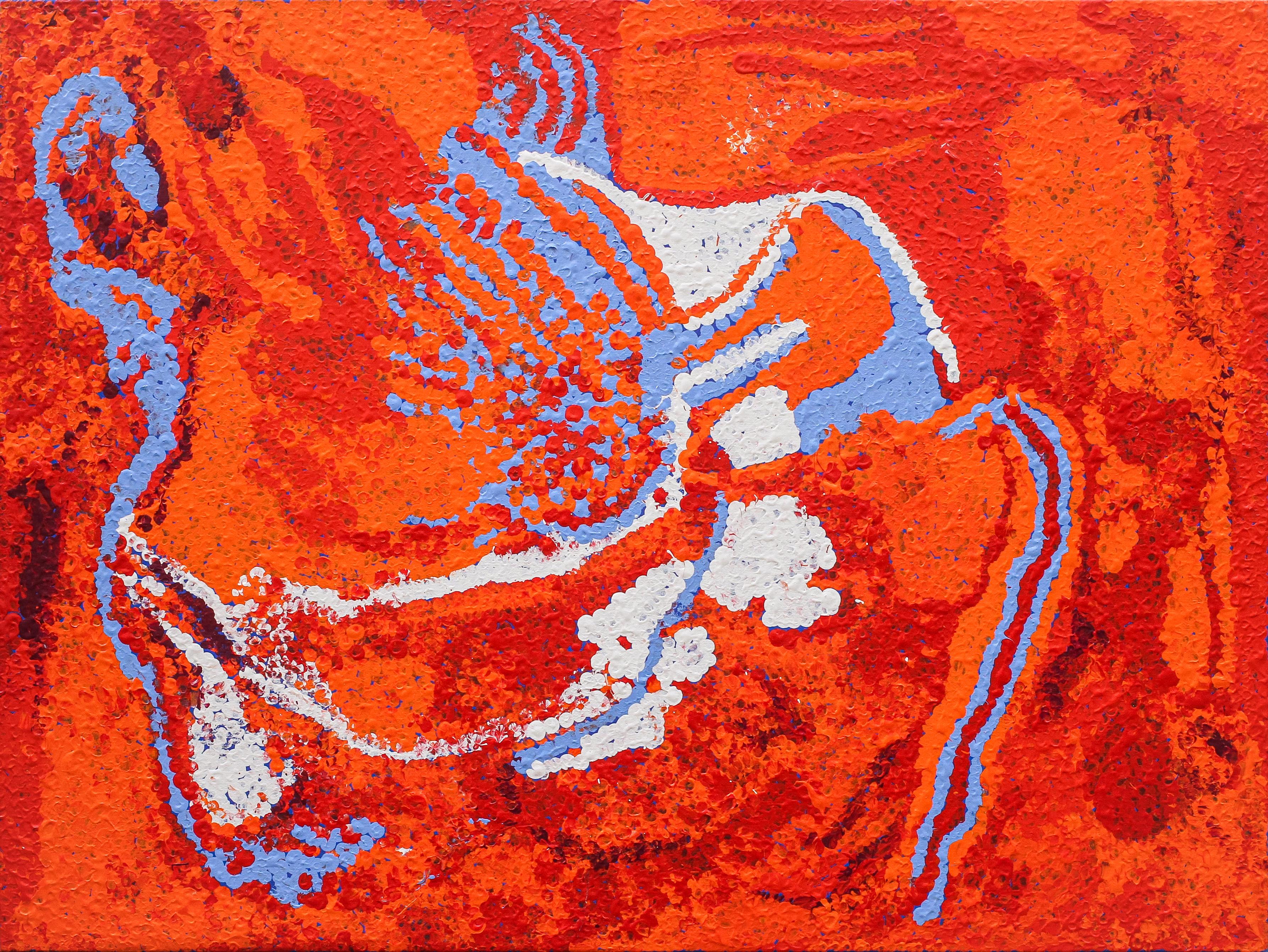
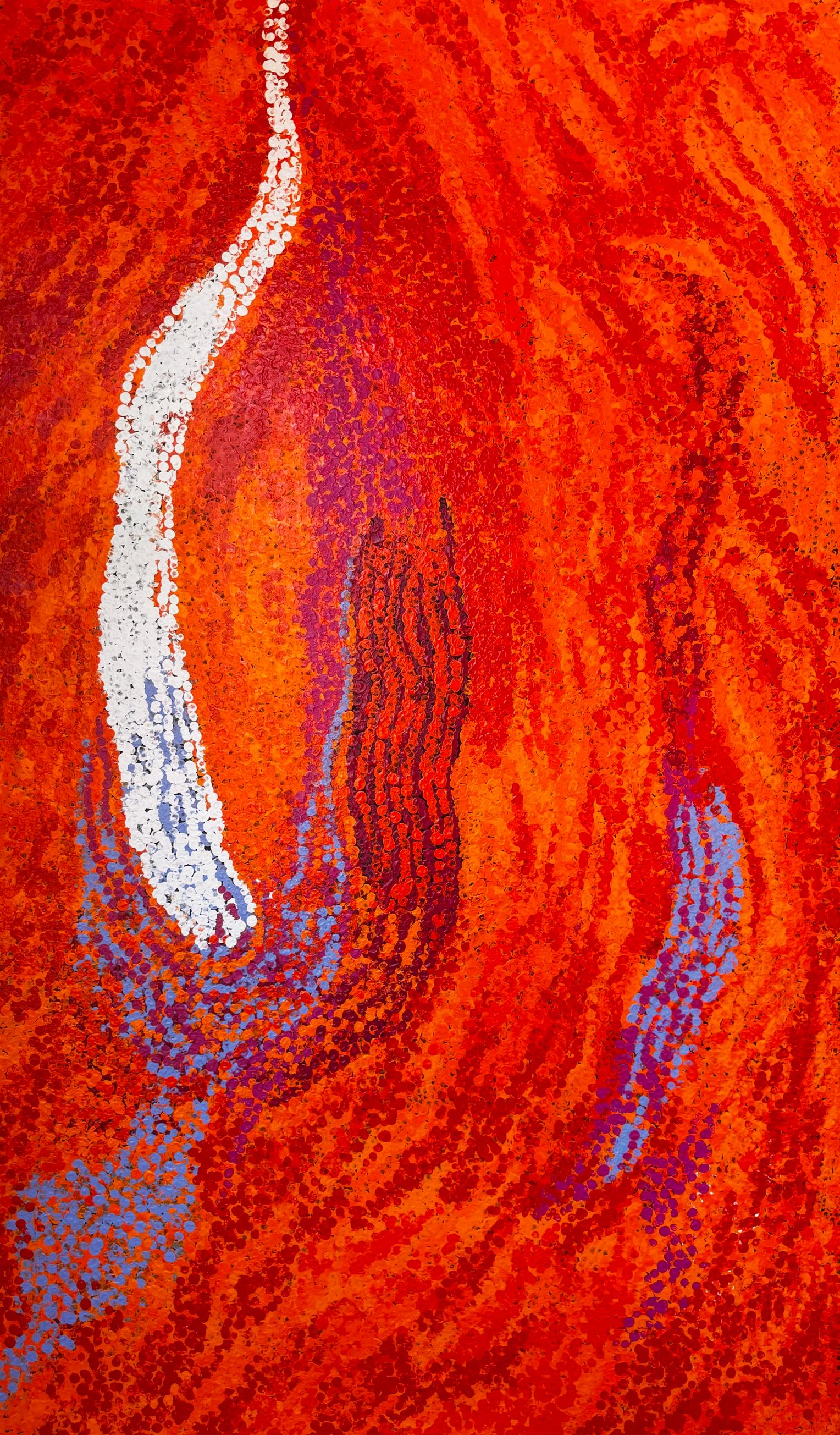
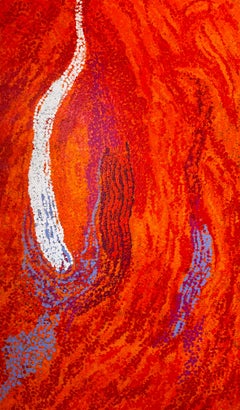
Daniel Walbidi, Polymer Paint on Linen, 2009

2009

$50,000
£37,804.62
€44,261.12
CA$71,137.61
A$72,359.92
CHF 41,527.21
MX$869,851.16
NOK 484,413.30
SEK 488,973.62
DKK 330,892.08

About the Item

Daniel Walbidi comes from a small coastal community 250km south of Broome called Bidyadanga which is the traditional homeland of the Karrajarri people. Formerly La Grange Mission, it is where people were brought into from the desert to help build the cattle stations there. This is how Daniel's desert parents came to live at the coast. Bidyadanga has five tribes living within the community. Daniel says "We all speak and understand each other's languages and live together as one big family." At the age of 16 Daniel actively sought to exhibit his work. He was painting on wood board, old doors, off cuts and anything he could find to express himself. He urged the elderly people in the community to start painting so that he could learn about his people's history and cultural background. He has since become initiated and continues to paint and exhibit his work around Australia. He has been collected by some important institutions and is driven to keep painting. A documentary has been made about his work and the story of his people called Desert Heart which screened on the ABC in March 2008. He continues to display a complex understanding of his traditional country in the Great Sandy Desert of Western Australia. Daniel Walbidi was awarded the painting prize at the National Indigenous Art Awards at the Museum and Art Gallery of Northern Territory in 2014. He was named among the Top 50 of Australia's Most Collectable Artists in Australian Art Collector for 2011. His work has been exhibited around the world including the Metropolitan Museum in New York. In 2019, he exhibited the signature piece an installation and video at the Art Gallery of Western Australia, Desert, River, Sea exhibition. Provenance: Short St Gallery, Broome WA Cat No. 26449 Artwork story: Daniel describes this painting as a tribute to his ancestral Country: "Kiriwirri is my grandfather's and grandmother's country. That is where they brought up all of their kids. And where my father was brought up. It is like their family home, their roots. There is a big claypan at this place. It is an important place for our family. Our clan is also named Kirriwirri, and the individual members of our clan are called Kirriwirri." Kirriwirri is a jila (living water) near Well 33 on the Canning Stock Route in the Great Sandy Desert, Western Australia. Daniel’s painting captures the intricate patterns of this desert landscape, a place teeming with life and color. The white areas represent salt lakes, while the sweeping forms depict talis (sandhills) covered with rich desert vegetation, conveying both the beauty and vitality of his family’s Country.
  • Creator:
    Daniel Walbidi (1983, Aboriginal Australian)
  • Creation Year:
    2009
  • Dimensions:
    Height: 46.86 in (119 cm)Width: 34.65 in (88 cm)
  • Medium:
  • Movement & Style:
  • Period:
  • Condition:
  • Gallery Location:
    Miami, FL
  • Reference Number:
    1stDibs: LU13617623172

More From This Seller

View All
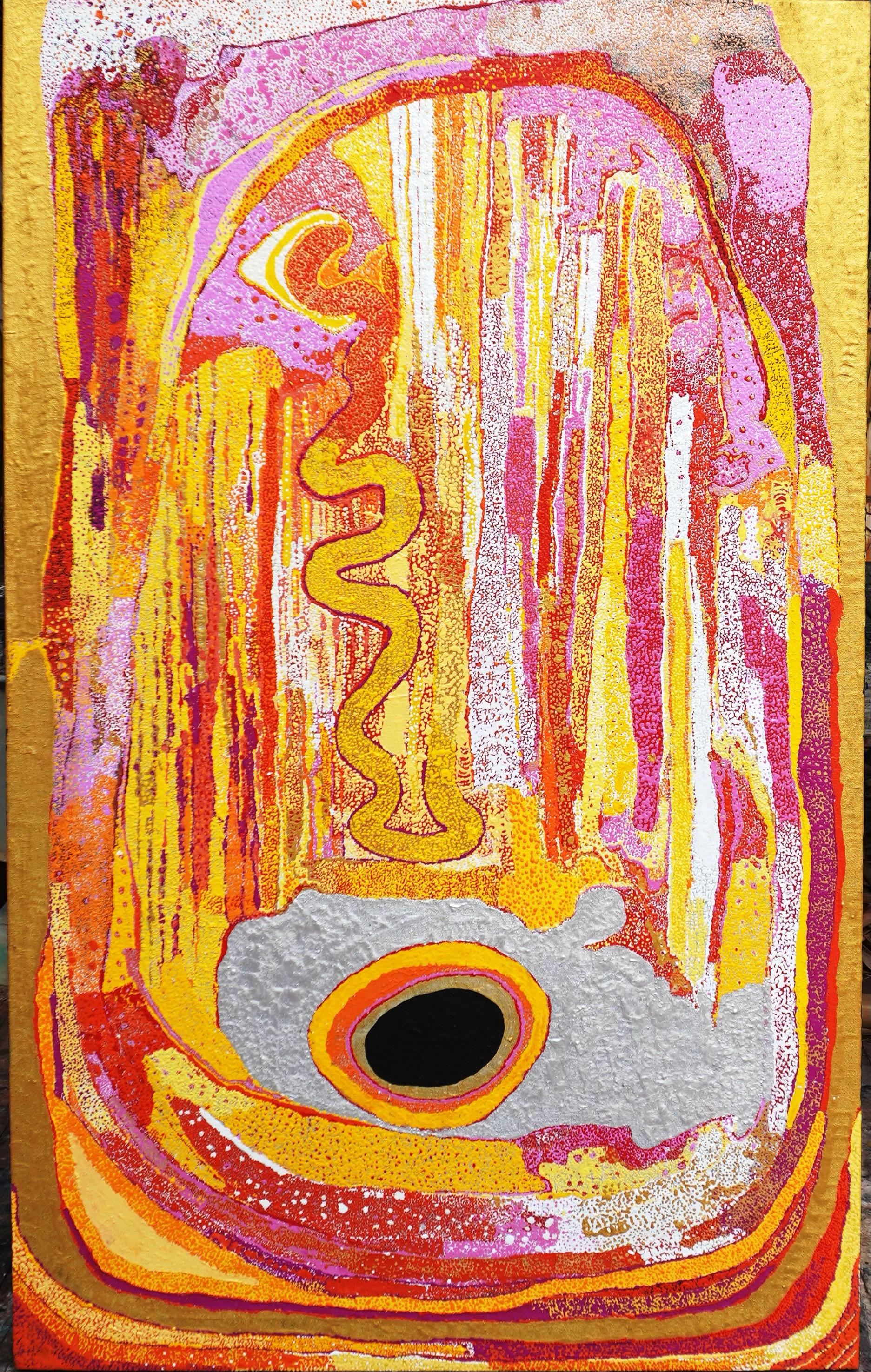
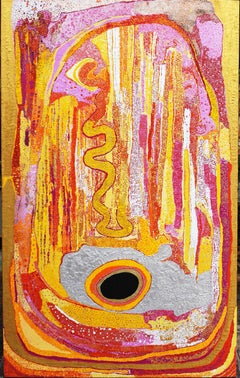
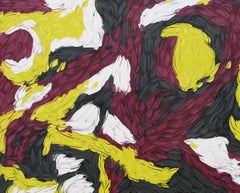
Daniel Walbidi, Abstract Painting on Linen, 2025

Daniel Walbidi, Abstract Painting on Linen, 2025

Located in Miami, FL

Daniel Walbidi comes from a small coastal community 250km south of Broome called Bidyadanga which is the traditional homeland of the Karrajarri people. Formerly La Grange Mission, it...

Category

2010s Abstract Abstract Paintings

Materials

Linen, Polymer

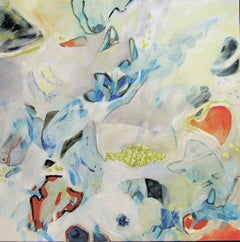
Ngayuku Kgura (My Country) Acrylic Painting on Linen, Contemporary Art

Ngayuku Kgura (My Country) Acrylic Painting on Linen, Contemporary Art

By Yannima Tommy Watson

Located in Miami, FL

Yannima Tommy Watson is a Pitjantjatjara artist born around the 1930s, in the bush some 44km west of the small isolated community of Irrunytju. Not yet very well known to the French public, despite his participation in the architectural project of the Musée du Quai Branly, Tommy Watson is nevertheless often considered the greatest living Aboriginal artist. Like many aborigines of his generation, he lived a traditional, nomadic or semi-nomadic life before his contact with Western civilization; then he will occupy the only jobs that the Aborigines find: herdsmen (until Yuendumu), laborers for the construction of infrastructures in the desert. Throughout this period he became familiar with his "country", a harsh region, and deepened his knowledge, both profane and sacred, relating to Dreams and Dreamtimes, to the connections between sacred sites and the Ancestors. He will even work in Papunya, where the artistic movement started. But the Pijantjarra are intransigent with tradition…no question at this time of revealing the motives and the secret stories. The North of South Australia, the region where he is from, was touched by the pictorial movement only at the very beginning of the 2000s. In 2001, Tommy began his career as an artist in Irrunytju (Wingellina). He is a young artist… He learns by observing other painters and draws on the experiences of a long life and on the exceptional knowledge he has stored up. But quickly he will find his way, a radically new style where color plays a major role. Very quickly, the iconography now well known by the artists of Yuendumu, or the Western Desert, Balgo or Lajamanu disappeared. The symbols are no longer there. As Rover Thomas, Emily Kame or Paddy Bedford had done before him, this is a real artistic revolution. For Tommy, it is not a question of describing his Dream (Caterpillar), the routes taken by the Ancestors. He concentrates on a site, a story, sometimes very profane, the memory of a meeting, of a hunting party, tries to condense his memories, the information of which he is the depositary, to add a poetic touch to it, sometimes melancholy, and this gives a painting with a very abstract aspect. It is a painting where the emotion is very present, undoubtedly less cerebral than the art of the neighbors of the north the Pintupi, like Ronnie Tjampitjinpa, George...

Category

2010s Contemporary Abstract Paintings

Materials

Linen, Cotton Canvas, Acrylic
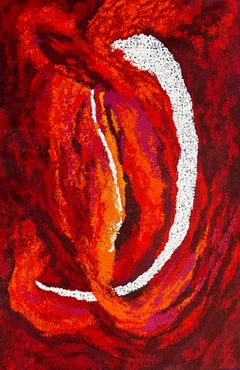
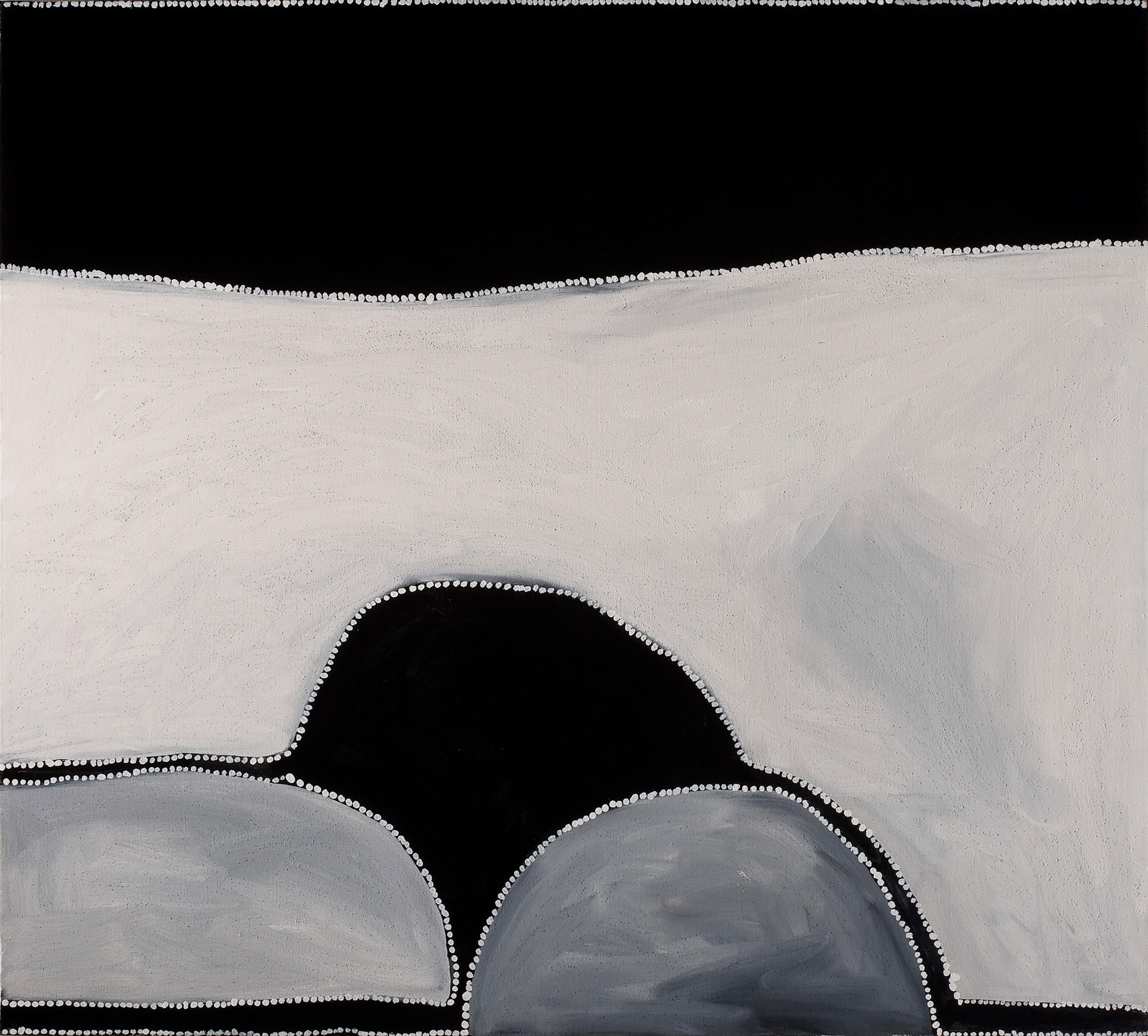
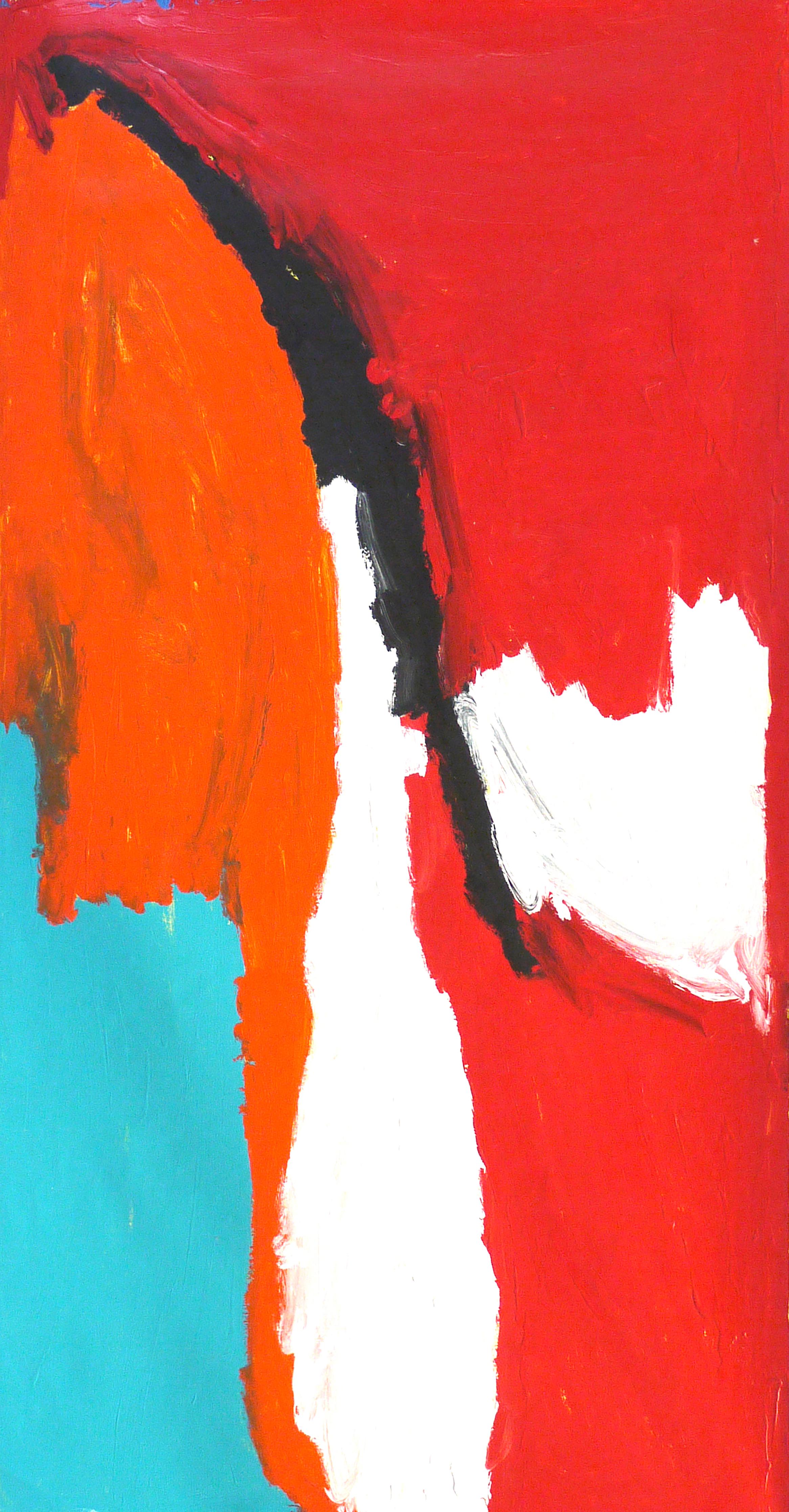
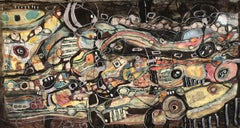
Paddy Bedford, Polymer Paint on Linen, 2006

Paddy Bedford, Polymer Paint on Linen, 2006

By Paddy Bedford

Located in Miami, FL

An important figure in the contemporary East Kimberley painting movement, artist Paddy Nyunkuny Bedford was born on Bedford Downs Station where he worked as a stockman. As an Elder o...

Category

Early 2000s Contemporary Abstract Paintings

Materials

Linen, Polymer, Canvas

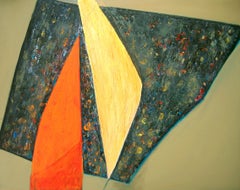
Pikarli - My Country, Contemporary Acrylic on Cotton Canvas, 2010+

Pikarli - My Country, Contemporary Acrylic on Cotton Canvas, 2010+

By Yannima Tommy Watson

Located in Miami, FL

Yannima Tommy Watson is a Pitjantjatjara artist born around the 1930s, in the bush some 44km west of the small isolated community of Irrunytju. Not yet very well known to the French public, despite his participation in the architectural project of the Musée du Quai Branly, Tommy Watson is nevertheless often considered the greatest living Aboriginal artist. Like many aborigines of his generation, he lived a traditional, nomadic or semi-nomadic life before his contact with Western civilization; then he will occupy the only jobs that the Aborigines find: herdsmen (until Yuendumu), laborers for the construction of infrastructures in the desert. Throughout this period he became familiar with his "country", a harsh region, and deepened his knowledge, both profane and sacred, relating to Dreams and Dreamtimes, to the connections between sacred sites and the Ancestors. He will even work in Papunya, where the artistic movement started. But the Pijantjarra are intransigent with tradition…no question at this time of revealing the motives and the secret stories. The North of South Australia, the region where he is from, was touched by the pictorial movement only at the very beginning of the 2000s. In 2001, Tommy began his career as an artist in Irrunytju (Wingellina). He is a young artist… He learns by observing other painters and draws on the experiences of a long life and on the exceptional knowledge he has stored up. But quickly he will find his way, a radically new style where color plays a major role. Very quickly, the iconography now well known by the artists of Yuendumu, or the Western Desert, Balgo or Lajamanu disappeared. The symbols are no longer there. As Rover Thomas, Emily Kame or Paddy Bedford had done before him, this is a real artistic revolution. For Tommy, it is not a question of describing his Dream (Caterpillar), the routes taken by the Ancestors. He concentrates on a site, a story, sometimes very profane, the memory of a meeting, of a hunting party, tries to condense his memories, the information of which he is the depositary, to add a poetic touch to it, sometimes melancholy, and this gives a painting with a very abstract aspect. It is a painting where the emotion is very present, undoubtedly less cerebral than the art of the neighbors of the north the Pintupi, like Ronnie Tjampitjinpa, George...

Category

2010s Contemporary Abstract Paintings

Materials

Cotton Canvas, Acrylic, Linen

Tjintjintjin Painting, Contemporary Acrylic on Linen Canvas, 2010+

Tjintjintjin Painting, Contemporary Acrylic on Linen Canvas, 2010+

By Walangkura Napanangka

Located in Miami, FL

As one of the last generation to remember a childhood lived in the desert hunting and gathering with her family, Walangkura Napanangka's paintings recall the stories of country and the location of specific sites in her traditional homeland west of the salt lake of Karrkurutinjinya (Lake Macdonald). Born around 1946, at Tjitururrnga west of Kintore, in the remote and arid country between the Northern Territory and Western Australia, she lived with her father Rantji Tjapangati and mother Inyuwa Nampitjinpa and later, while still a teenager, travelled by foot with her family over the hundreds of kilometres from their remote desert home eventually joining Uta Uta Tjangala's group as they walked in to the settlements of Haasts Bluff and then Papunya. The lure of settlement life with its promise of plentiful food and water belied the harsh conversion they would make to an alien lifestyle with its many problems and unfamiliar demands. The upheaval however, was ameliorated to some degree by the proximity of her immediate family including her mother Inyuwa, adoptive father Tutuma Tjapangati, and sister Pirrmangka Napanangka (now deceased) all of whom became artists. Relocated to the community of Kintore in 1981 when the outstation movement began, Walangkura participated in the historic women's collaborative painting project (1994) that was initiated by the older women as a means of re-affirming their own spiritual and ancestral roots. It was a time of specifically female singing, ceremony and painting, away from the gaze of outsiders and men folk. The huge and colourful canvases that emerged from the women's camp were 'alive with the ritual excitement and narrative intensity of the occasion' (Johnson 2000: 197). Within a year, Papunya Tula Artists, now established at Kintore, had taken on many of these women as full-time artists, revitalising the company after the deaths of many of the original 'painting men'. While individual women forged their own stylistic trajectory, these paintings were immediately distinguishable from the men's more cerebral and symmetrical style. They radiated an exuberant and vibrant energy, the felt heart-beat of women's affinity to country and spirit. Walangkura's early works, created from 1996 onward, are characterized by masses of small markings and motifs covering large areas of canvas. Her favorite colour, a deep sandy orange predominates, accentuated against more somber blacks and reds and dusky greens or yellows. More recent works show a gestural quality though still tightly packed with an intensity of geometric line work representing sandhills. In a sense this provides a strong visual and contextual link to the men's linear style as exemplified by the works of George Tjungurrayi...

Category

2010s Contemporary Abstract Paintings

Materials

Linen, Cotton Canvas, Acrylic
You May Also Like

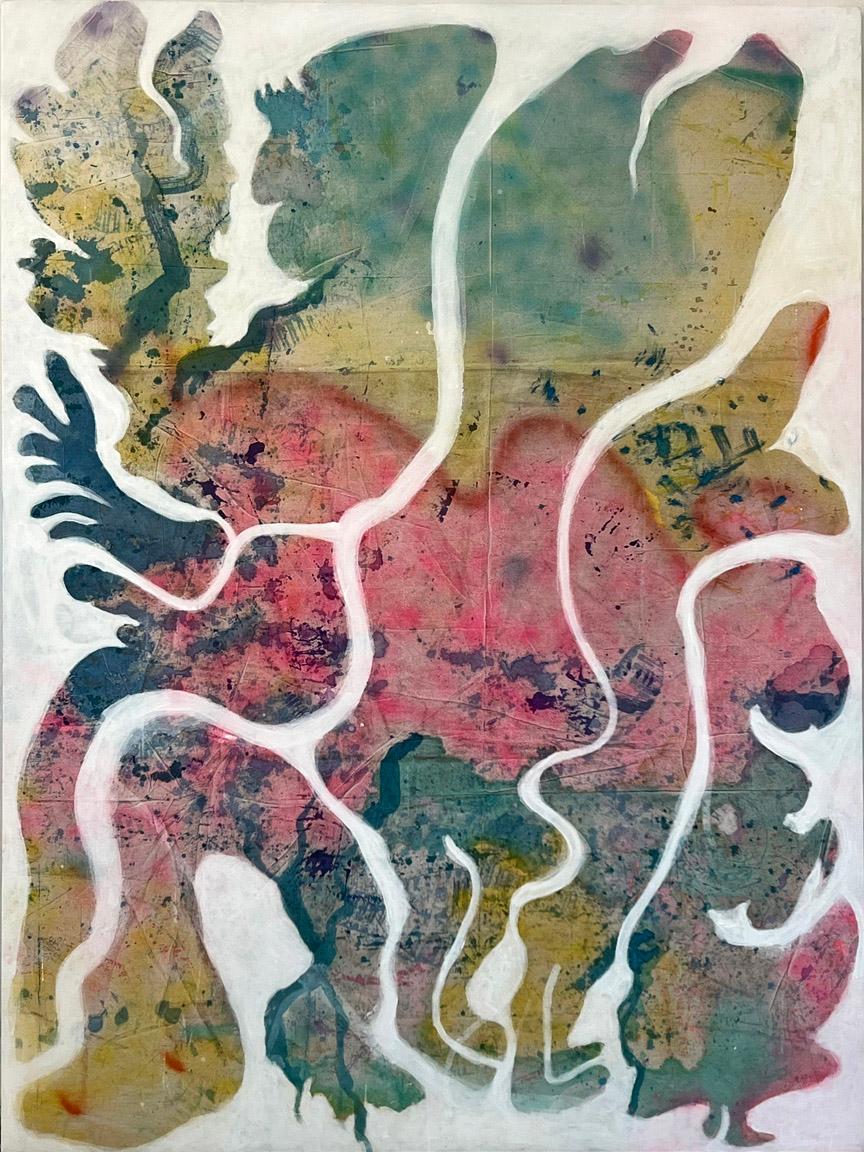
Oil on Canvas: 'Untitled'

Oil on Canvas: 'Untitled'

By Carol John

Located in New York, NY

Carol John's art reflects her encounters with mainstream modern artists-showing the obvious influence of Guston and other individualists like Marsden Hartley and Alfred Julio Jensen-...

Category

2010s Contemporary Abstract Paintings

Materials

Canvas, Oil

DISJOINTED, Painting, Oil on Canvas

DISJOINTED, Painting, Oil on Canvas

By Bill Stone

Located in Yardley, PA

Thick, vibrant, oils on canvas influenced by the color, movement and texture found in the natural world around us. :: Painting :: Abstract :: This piece comes with an official certif...

Category

2010s Abstract Abstract Paintings

Materials

Oil

Wabana, Painting, Acrylic on Canvas

Wabana, Painting, Acrylic on Canvas

By Eliane Saheurs

Located in Yardley, PA

Inspired of structures in Pyrite and Quartz found in Wabana, Newfoundland :: Painting :: Abstract :: This piece comes with an official certificate of authenticity signed by the artis...

Category

2010s Abstract Abstract Paintings

Materials

Acrylic

Untitled, Painting, Acrylic on Canvas

Untitled, Painting, Acrylic on Canvas

By Eliane Saheurs

Located in Yardley, PA

abstract :: Painting :: Abstract :: This piece comes with an official certificate of authenticity signed by the artist :: Ready to Hang: Yes :: Signed: Yes :: Signature Location: bac...

Category

Early 2000s Abstract Abstract Paintings

Materials

Acrylic