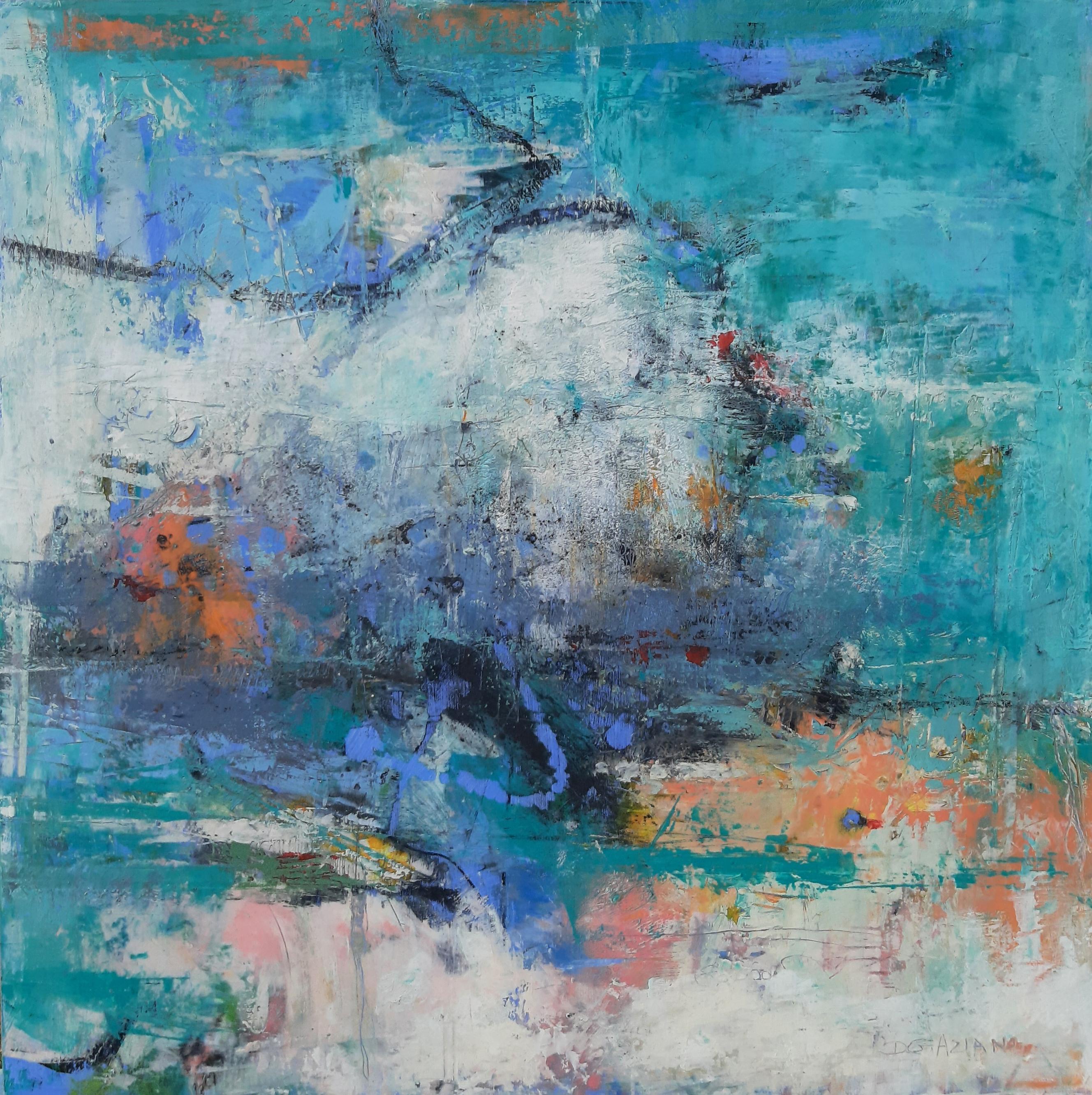
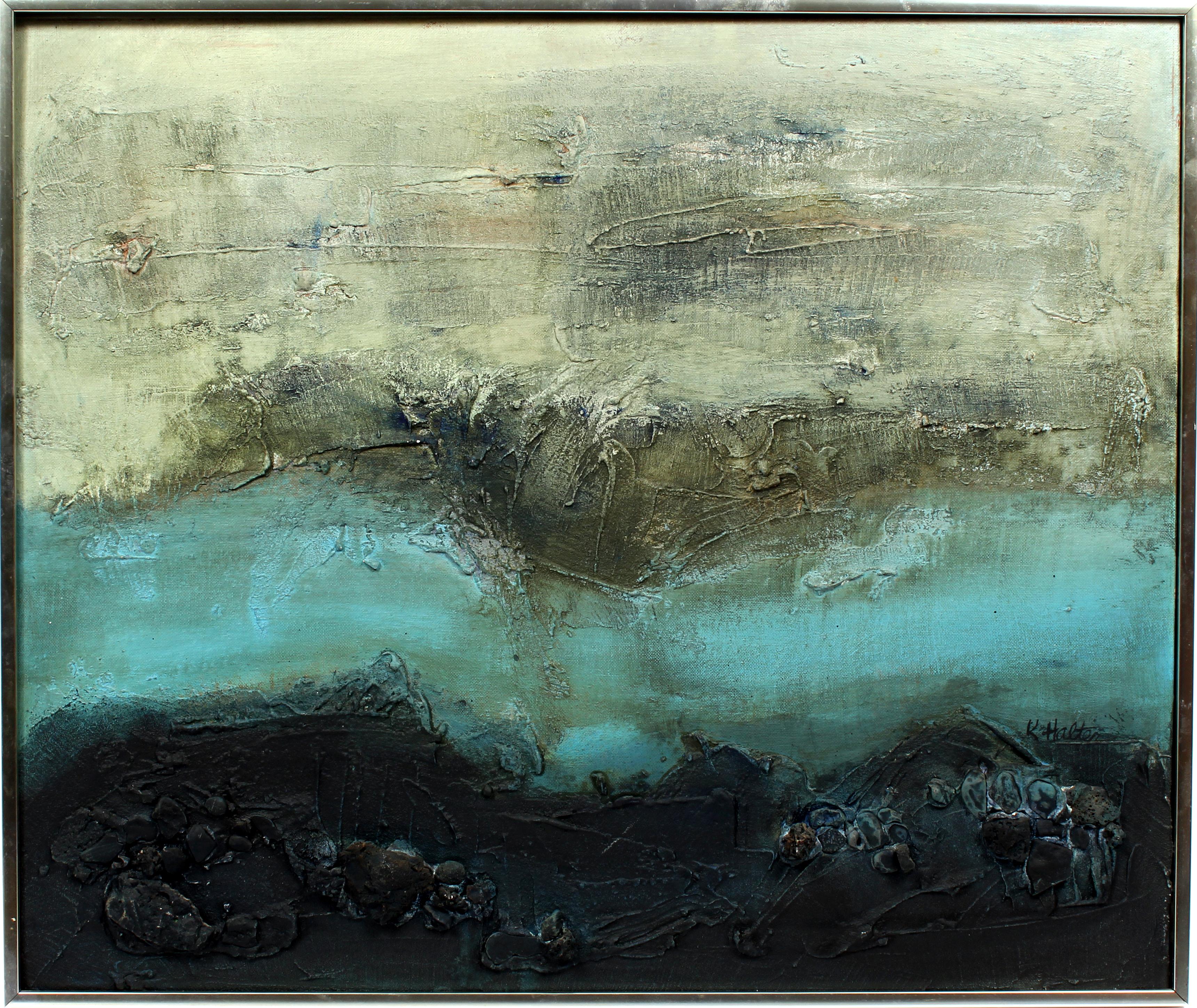
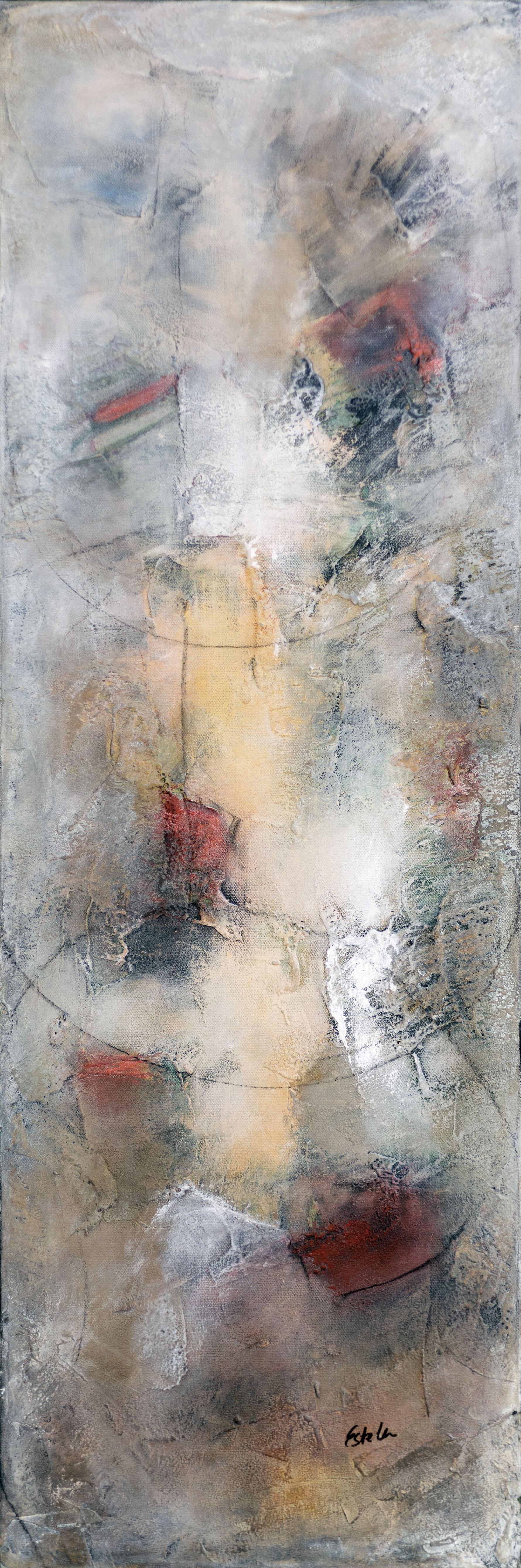
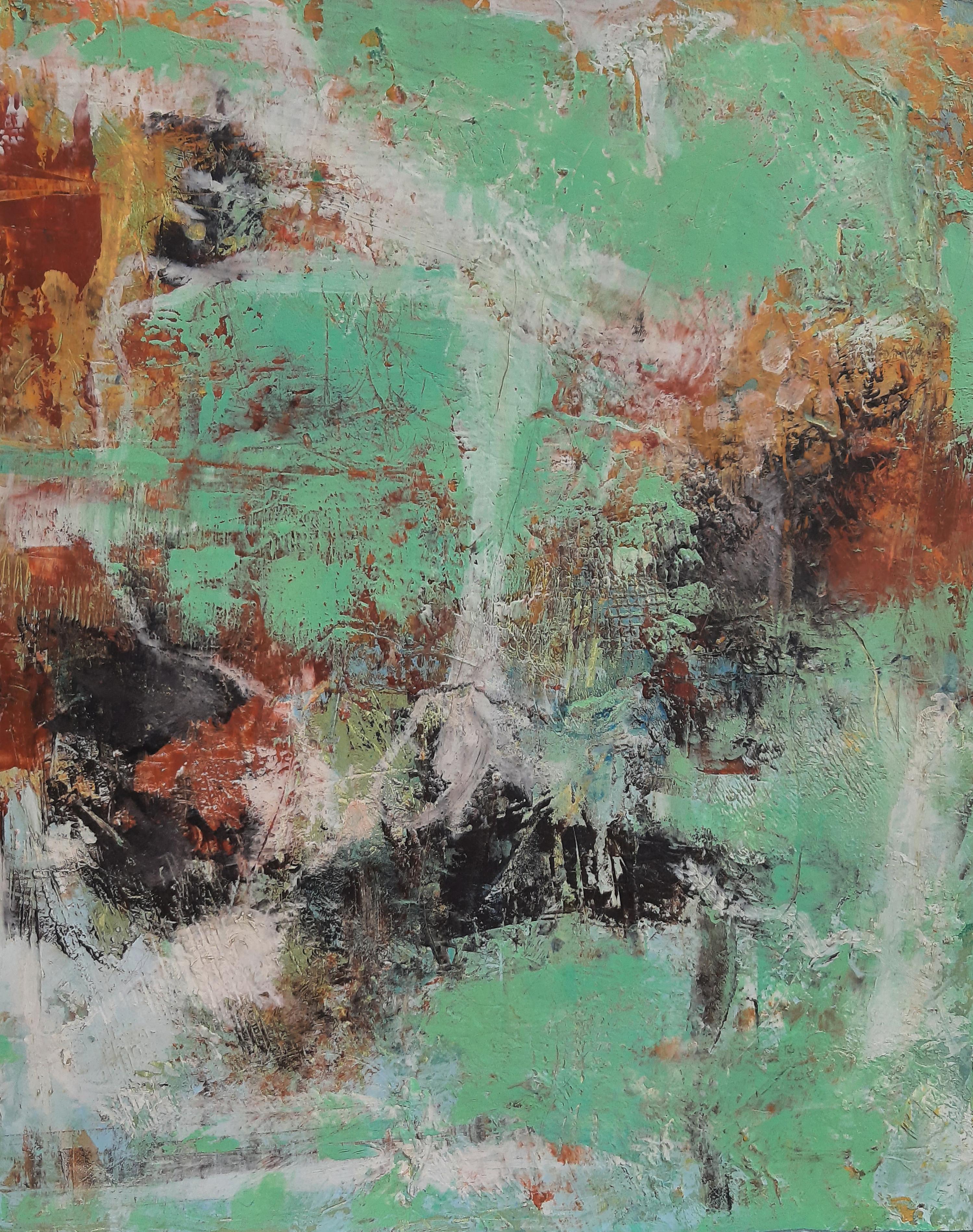
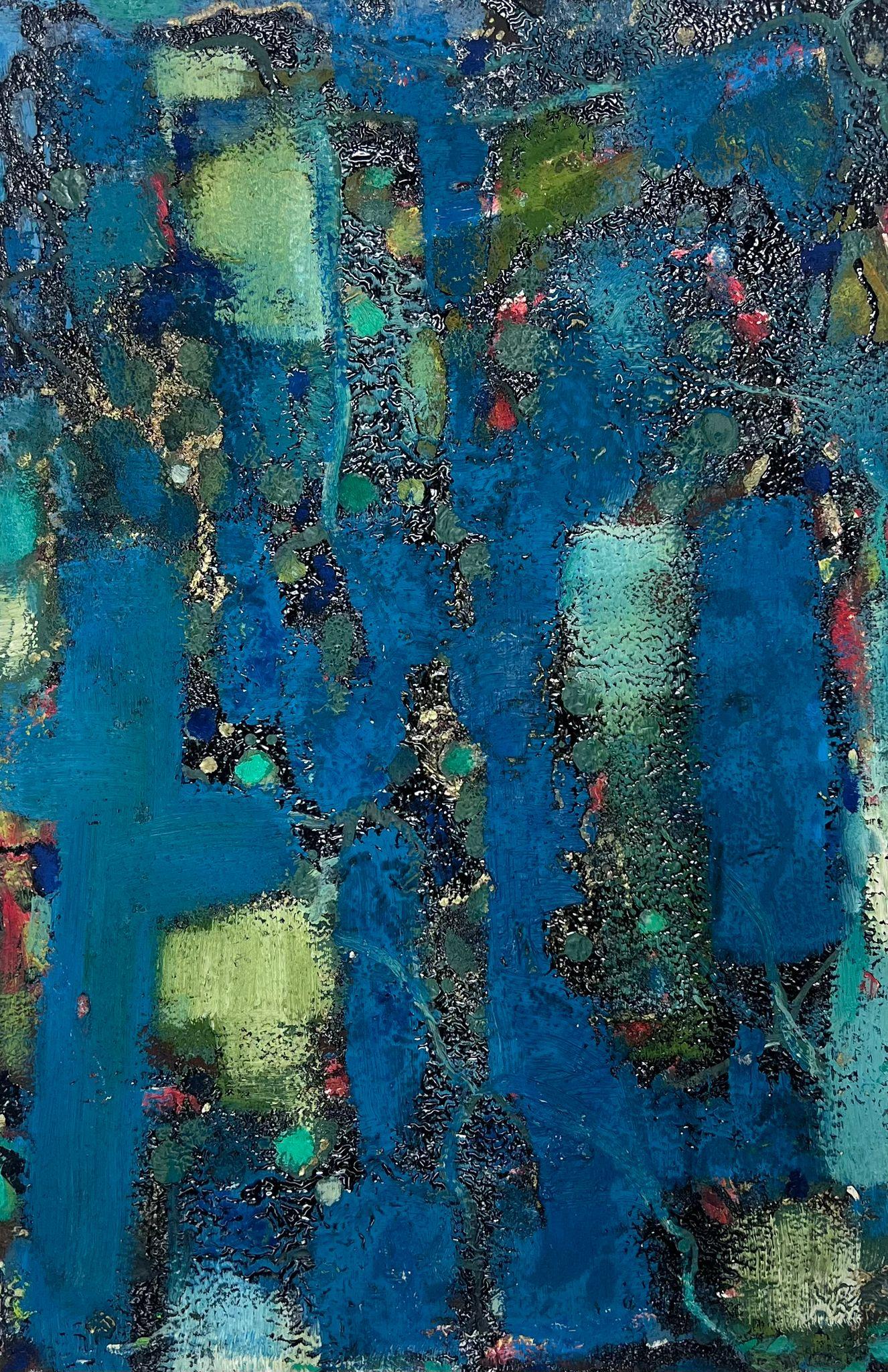
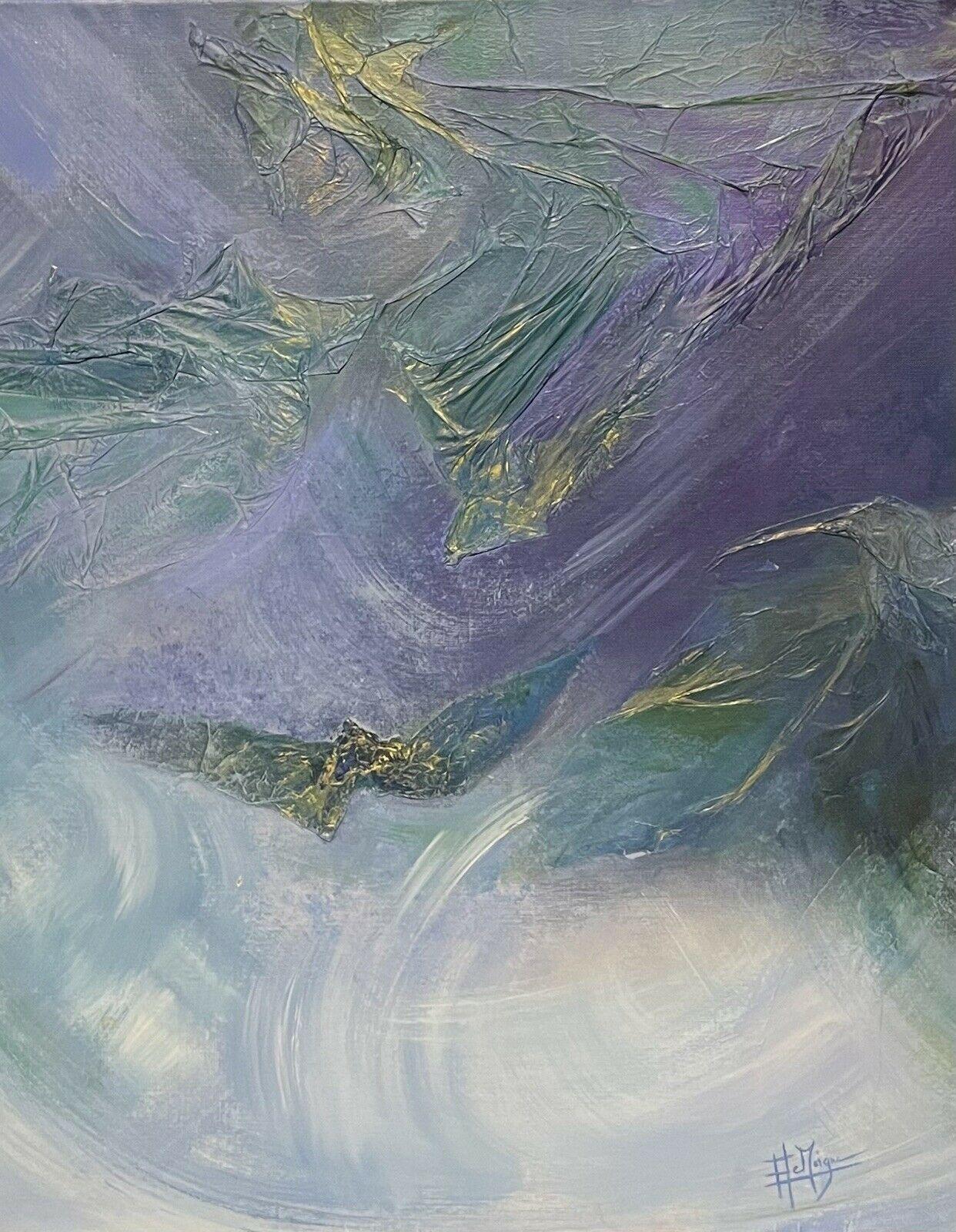
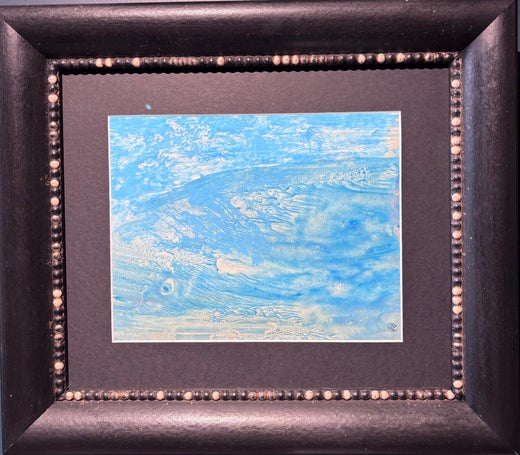
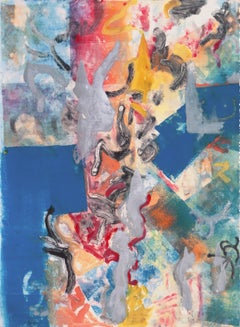
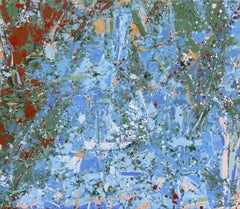
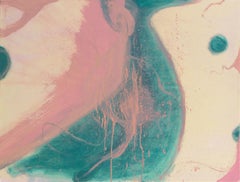
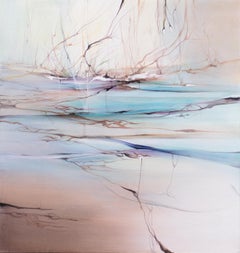
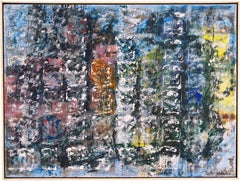
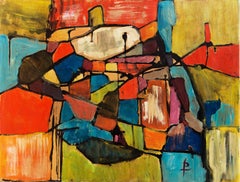
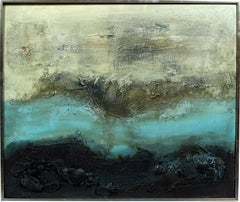
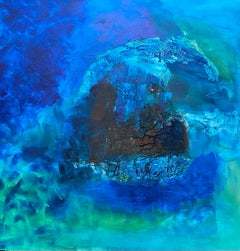
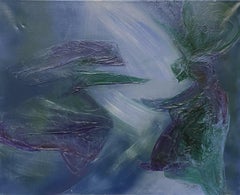
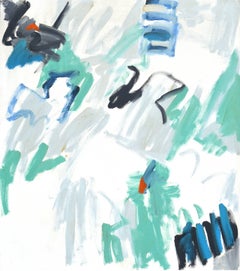
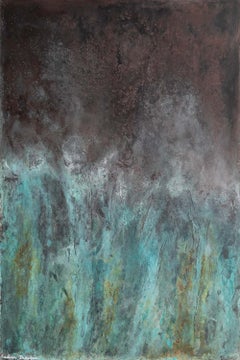
'Abstract, Turquoise and Gray' by Dora Maar.
Paris, Picasso, Andre L'Hote, Guernica, Benezit
-----
Signed verso with artist monogram 'DM' for Dora Maar (Argentine-French, 1907-1997); additionally impressed, upper left, with Dora Maar Estate stamp, Maison de la Chimie sale, Paris; October, 1998.
In addition to her central role as Picasso's model and lover, Dora Maar served as his constant muse during the period of his creation of Guernica for which she also served as model for the lantern-holder, appearing at upper right. Prior to embarking on her two-year relationship with Picasso, Maar had already produced a widely-respected body of work and was celebrated as an influential and cutting-edge photographer. Nevertheless, it is her high-profile relationship with Picasso and her own personality- both in publications about Picasso and in those dedicated to her own life and work- that have acquired particular significance in art-historical literature.
Maar's close link to the Surrealists, however, derived from her personal radiance and enigmatic personality as well as to the conscious and politically-informed artistic perspective that underlay her cutting-edge photomontages of the 1930s. Her increasingly radical political views during this period reinforced Picasso's own awareness of the deteriorating international political situation and of the civil war in his homeland. This heightened awareness culminated in the creation of "Guernica', his supreme artistic and political statement of the 1930's.
Born in 1907, Henrietta Theodora Markovitch adopted the pen name of Dora Maar during the first years of her photography career. Growing up in Buenos Aires and Paris, she learned to speak French, Spanish and English fluently and, from 1927 on, attended the Art Academy of Andre L'Hote in Montparnasse. At the Academy, she studied painting but, by the end of the 1920s, she had transferred to the Ecole de Photographie de la Ville de Paris. In the early 1930s, she founded a photographic studio together with Pierre Kfer, who was later to make a career as stage designer. Numerous fashion and advertising photography shoots resulted from this collaboration and these were soon followed by her first Paris exhibitions.
Dora Maar's photographic style during the 1930s show clear, surrealist characteristics. In her photographs and photomontages, she frequently played with shifting proportions, thus echoing an important feature of surrealist pictures. This tendency was augmented by the combination of disparate objects, which robs the photographs of their character of reflecting extreme reality, converting them to expressions of inner visions and psychic states. In parallel to these surreal photographs, Dora Maar produced sobering documentary photographs of her urban environments in Paris, London or Barcelona. Repeatedly, she records, in her photographs, the underprivileged, the unemployed and homeless, the socially disadvantaged and the physically deformed. It was precisely the simplicity of these photos that enabled Dora Maar to give the day-to-day and the ugly a magnificent monstrosity in which the beautiful and the horrible blend into one another. This recorded reality is thus accompanied by a level of inner associations, fears and visions.
This present work, painted in the 1930's, remained in Dora Maar's possession until the end of her life, and shows her early interest in abstraction and her preoccupation with the complex inter-relationships of color and form.
This painting is accompanied by a first edition copy of 'Picasso's Weeping Woman: The Life and Art of Dora Maar' by Mary Ann Caws, Bulfinch Press, 2000.
Reference:
E. Benezit, Dictionnaire des Peintres, Sculpteurs, Dessinateurs, et Graveurs, Jacques Busse, 1999 Nouvelle Édition, Gründ 1911, Vol. 8, p. 899; et al.