Want more images or videos?
Request additional images or videos from the seller
1 of 11

Ellsworth Augustus Ausby
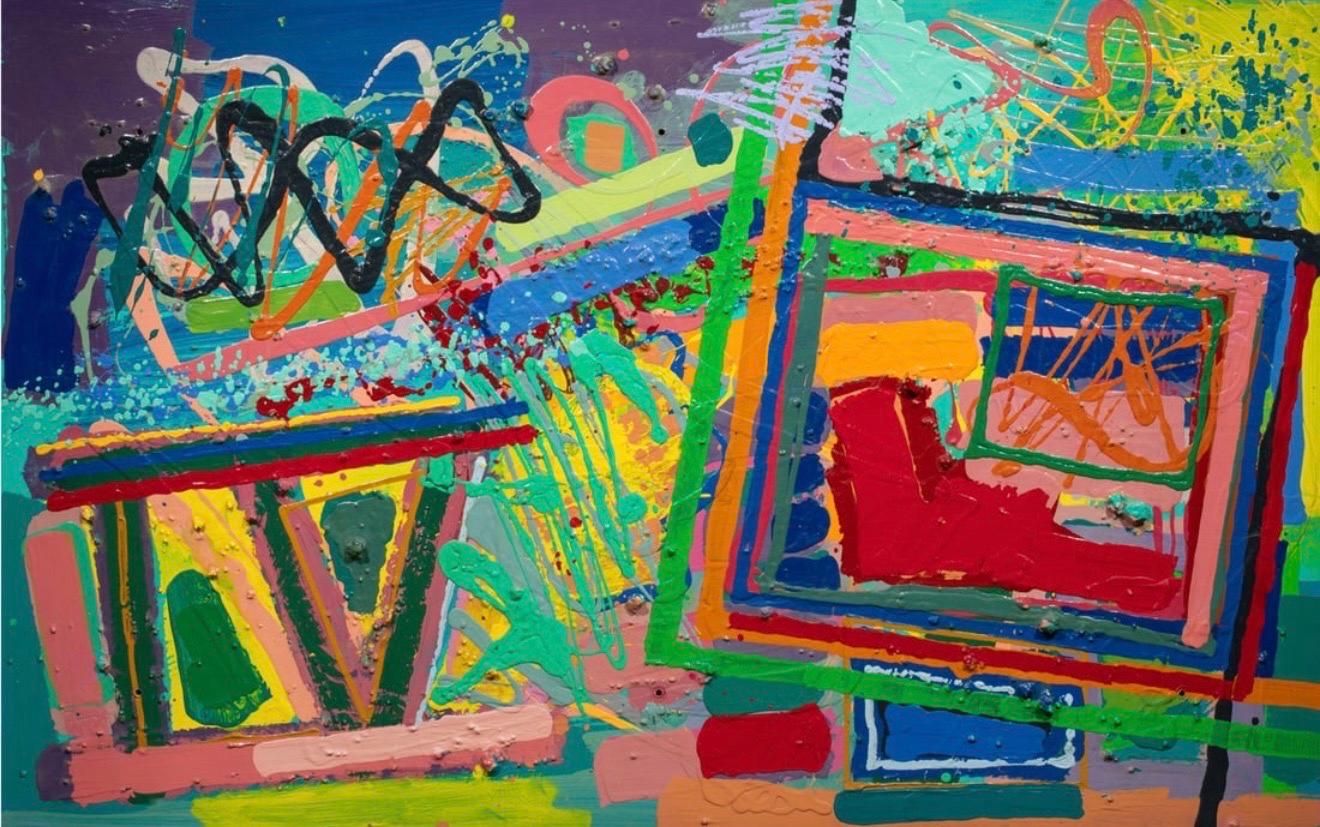
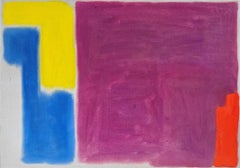
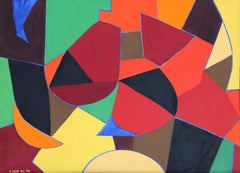
"Abstraction" Ellsworth Augustus Ausby, Geometric Abstraction, Colorful

1998

$5,500
£4,111.23
€4,803.14
CA$7,737.05
A$7,830.49
CHF 4,489.79
MX$94,974.13
NOK 52,214.44
SEK 53,149.25
DKK 35,905.22

About the Item

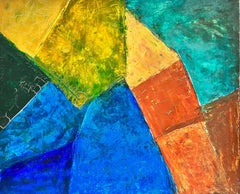
Ellsworth Augustus Ausby Abstraction, 1998 Signed and dated lower right Oil on card 7 x 20 1/2 inches Ellsworth Ausby was an artist committed to embodying a profound African aesthetic and cultural tradition. In one of his first exhibitions, he stated, “Blackness is the origin of colors, which is the Light.” Early in his career, Ausby participated in notable museum exhibitions exhibiting African-American art: New Black Artists (1969), Brooklyn Museum of Art; Afro-American Artists, New York and Boston (1970), Museum of Fine Arts, Boston; Some American History (1970), commissioned by the Menil Foundation and organized by Larry Rivers for the Rice University Institute of the Arts; and Contemporary Black Artists in America (1971), Whitney Museum of American Art, New York. Ausby’s artwork from the late 1960s blends stylized biomorphic and figurative aspects with geometric forms and patterns. Ausby’s inaugural solo exhibition of totemic artwork featuring bright colored planes took place in 1970 at the Cinque Gallery. Cinque was established in 1969 by Romare Bearden, Ernest Crichlow, and Norman Lewis to showcase the art of both emerging and renowned African-American artists. The gallery was named in honor of Joseph Cinqué, the captain of the Amistad slave ship rebellion in the 1830s. In 1972, the Peale House Galleries at the Pennsylvania Academy of the Fine Arts hosted a joint exhibition featuring Ausby and James Phillips. At this point, Ausby was creating unstretched canvases that were mounted straight onto the wall. These pieces employ vibrant colors and evoke sound patterns and rhythms; the titles draw inspiration from 1970s African American slang. In the late 1970s, Ausby was hired by the Cultural Council Foundation as an artist through the CETA program to deliver arts initiatives and projects to underprivileged communities. Between 1978 and 1979, Ausby was awarded CETA artist grants that enabled him to produce significant public artworks. One of these was InnerSpace/OuterSpace, a multimedia performance created and directed by Ausby that featured dance, poetry, music, and drama, along with lights and images of Ausby’s artwork and sculptures. It took place at the Museum of Natural History in New York. A sculptural piece from this era was recently featured in the 2024 exhibition Edges of Ailey at the Whitney Museum of American Art. Ausby wed artist Jamillah Jennings in 1974. The two artists participated in the significant exhibition Afro-American Abstraction, curated by April Kingsley at P.S.1 in 1980. In 2005, the MTA commissioned Ausby to create the stained-glass mural Space Odyssey at the Marcy Avenue subway station located in Williamsburg, Brooklyn. Ausby instructed painting at the School of Visual Arts from 1979 until he passed away in 2011. His artwork is included in the Menil Collection in Houston, TX, and The Saint Louis Art Museum in MO, as well as other collections
  • Creator:
    Ellsworth Augustus Ausby (1942 - 2011, American)
  • Creation Year:
    1998
  • Dimensions:
    Height: 13.5 in (34.29 cm)Width: 27.5 in (69.85 cm)
  • Medium:
  • Movement & Style:
  • Period:
  • Condition:
  • Gallery Location:
    New York, NY
  • Reference Number:
    1stDibs: LU1841217489942

More From This Seller

View All
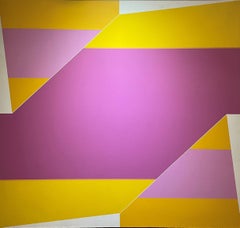
"Jean Jean" Larry Zox, Color Field, Geometric Abstraction, Hard-Edge, Yellow

"Jean Jean" Larry Zox, Color Field, Geometric Abstraction, Hard-Edge, Yellow

By Larry Zox

Located in New York, NY

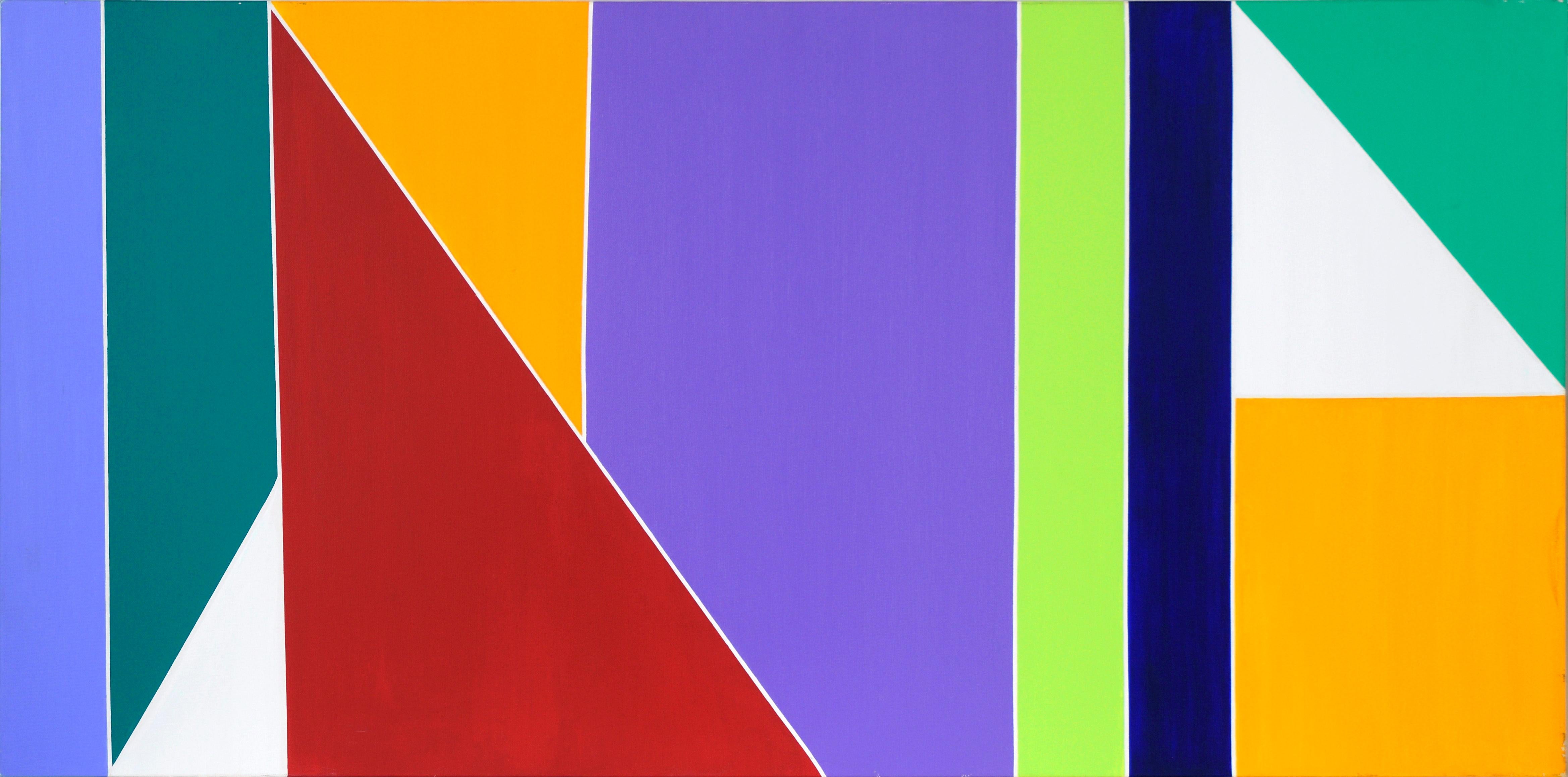
Larry Zox Jean Jean, 1964 Signed, dated, and titled on the stretcher Liquitex on canvas 58 x 62 inches Provenance: Solomon & Co., New York Private Collection, NJ Estate of the above, 2023 Committed to abstraction throughout his career, Larry Zox played a central role in the Color Field discourse of the 1960s and 1970s. His work of the time, consisting of brilliantly colored geometric shapes in dynamic juxtapositions, demonstrated that hard-edge painting was neither cold nor formalistic. He reused certain motifs, but he did so less to explore their aspects than to “get at the specific character and quality of each painting in and for itself,” as James Monte stated in his essay for Zox’s solo exhibition at the Whitney Museum of American Art in 1973. By the 1970s, Zox was using a freer, more emotive method, while maintaining the autonomy of color, which increasingly became more important to him than structure in his late years. Zox began to receive attention in the 1960s, when he was included in several groundbreaking exhibitions of Color Field and Minimalist art, including Shape and Structure (1965), organized by Henry Geldzahler for the Gallery of Modern Art, New York, and Systemic Painting (1966), organized by Lawrence Alloway for the Guggenheim Museum. In 1973, the Whitney’s solo exhibition of Zox’s work gave recognition to his significance in the art scene of the preceding decade. In the following year, Zox was represented in the inaugural exhibition of the Hirshhorn Museum, which owns fourteen of his works. Zox was born in Des Moines, Iowa. He attended the University of Oklahoma and Drake University. While studying at the Des Moines Art Center, he was mentored by George Grosz, who despite his own figurative approach encouraged Zox’s forays into abstraction. In 1958, Zox moved to New York, joining the downtown art scene. His studio on 20th Street became a gathering place for artists, jazz musicians, bikers, and boxers. He occasionally sparred with the visiting fighters. He later established a studio in East Hampton, where he painted and fished including using a helicopter to spot fish. In the 1950s and early 1960s, Zox’s works were collages consisting of painted pieces of paper stapled onto sheets of plywood. He then produced paintings that were illusions of collages, including both torn- and trued-edged forms, to which he added a wide range of intense hues that created ambiguous surfaces. Next, he omitted the collage aspect of his work and applied flat color areas to create more complete statements of pure color and shape. From 1962 to 1965, he produced his Rotation Series, at first creating plywood and Plexiglas reliefs, which turned squares into dynamic polygons. He used these shapes in his paintings as well, employing white as a foil between colors to produce negative spaces that suggest that the colored shapes had only been cut out and laid down instead of painted. The New York Times noted in 1964: “The artist is hip, cool, adventurous, not content to stay with the mere exercise of sensibility that one sees in smaller works.” In 1965, he began the Scissors Jack...

Category

1960s Abstract Geometric Abstract Paintings
Materials

Canvas, Acrylic

"Untiled" Edward Zutrau, 1963 Intense Color Abstract Expressionist Painting

"Untiled" Edward Zutrau, 1963 Intense Color Abstract Expressionist Painting

By Edward Zutrau

Located in New York, NY

Edward Zutrau Untiled, 4/1963 Signed and dated on stretcher bar Oil on linen 35 1/2 x 51 inches Edward Zutrau is among the American artists who worked within the whirlwind of diver...

Category

1960s Abstract Expressionist Abstract Paintings

Materials

Canvas, Oil

You May Also Like

Contest 1

Contest 1

By Charles Miesmer

Located in Fairfield, CT

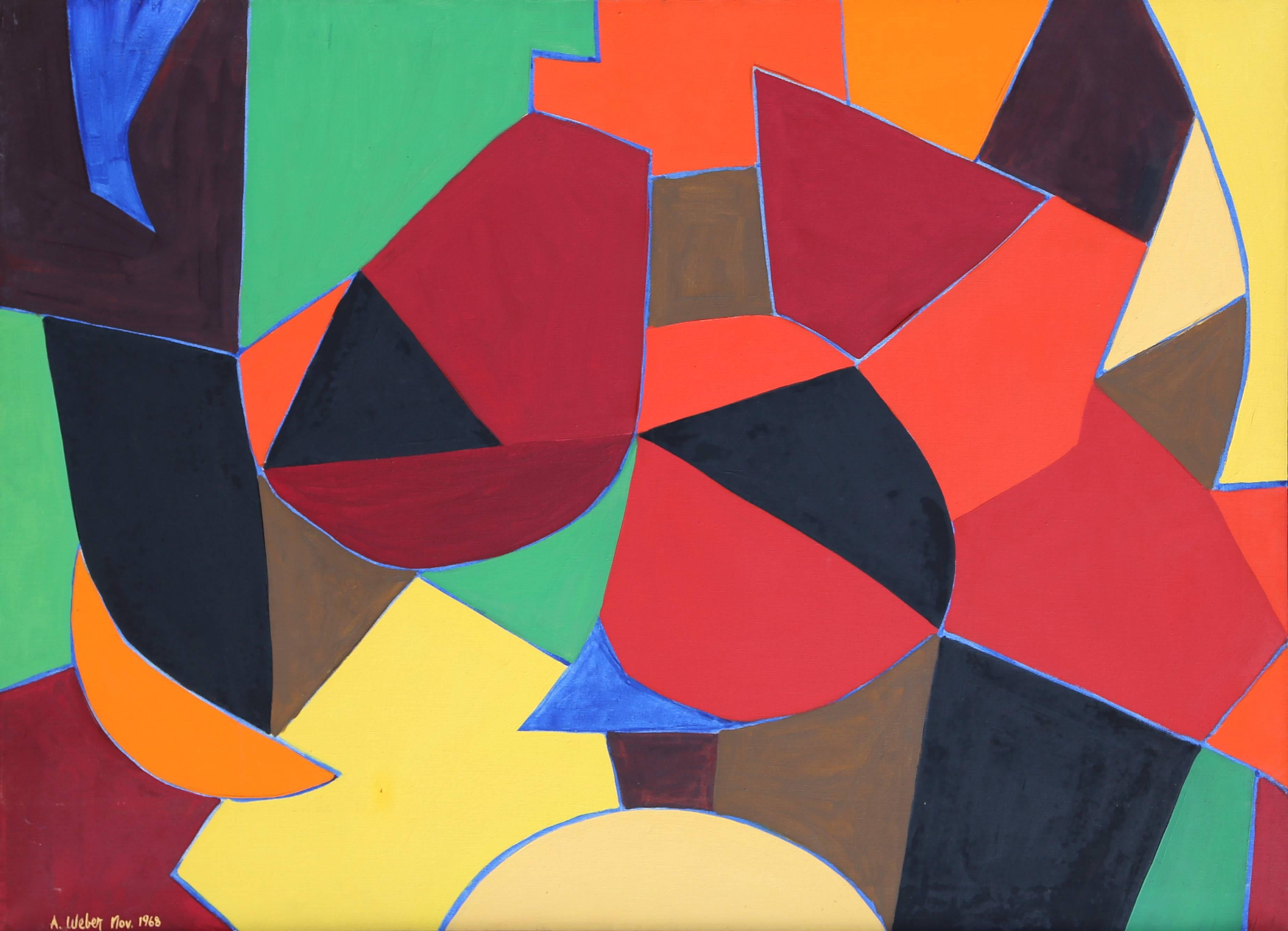
Miesmer began painting in the open air during the summers in Nantucket.  Using a pad of Arches paper as an easel and working out of the back of his pickup truck, the quietude and pea...

Category

21st Century and Contemporary Abstract Geometric Abstract Paintings
Materials

Acrylic, Canvas

Abstract Geometric Composition

Abstract Geometric Composition

By Nick O'Connor

Located in Soquel, CA

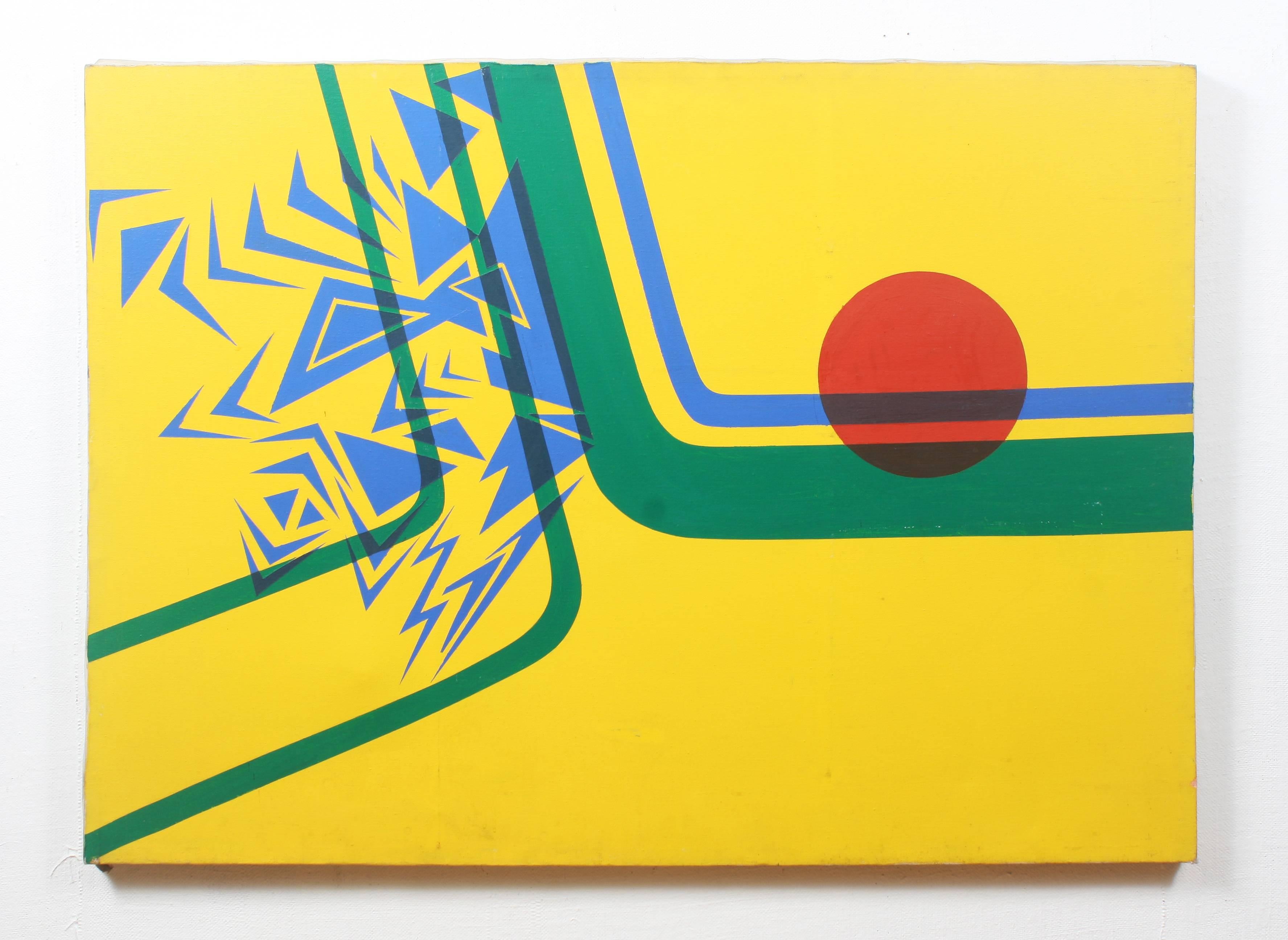
Bold geometric abstract painting by Nick O'Connor (American, late-20th Century). Signed, numbered, and dated "#1 Nick O'Connor 2002" on verso, with an inscription that reads "Hinduis...

Category

Early 2000s Abstract Geometric Abstract Paintings
Materials

Canvas, Oil, Spray Paint

Colorful Abstract painting by Arnold Weber 1968

Colorful Abstract painting by Arnold Weber 1968

By Arnold Weber

Located in Long Island City, NY

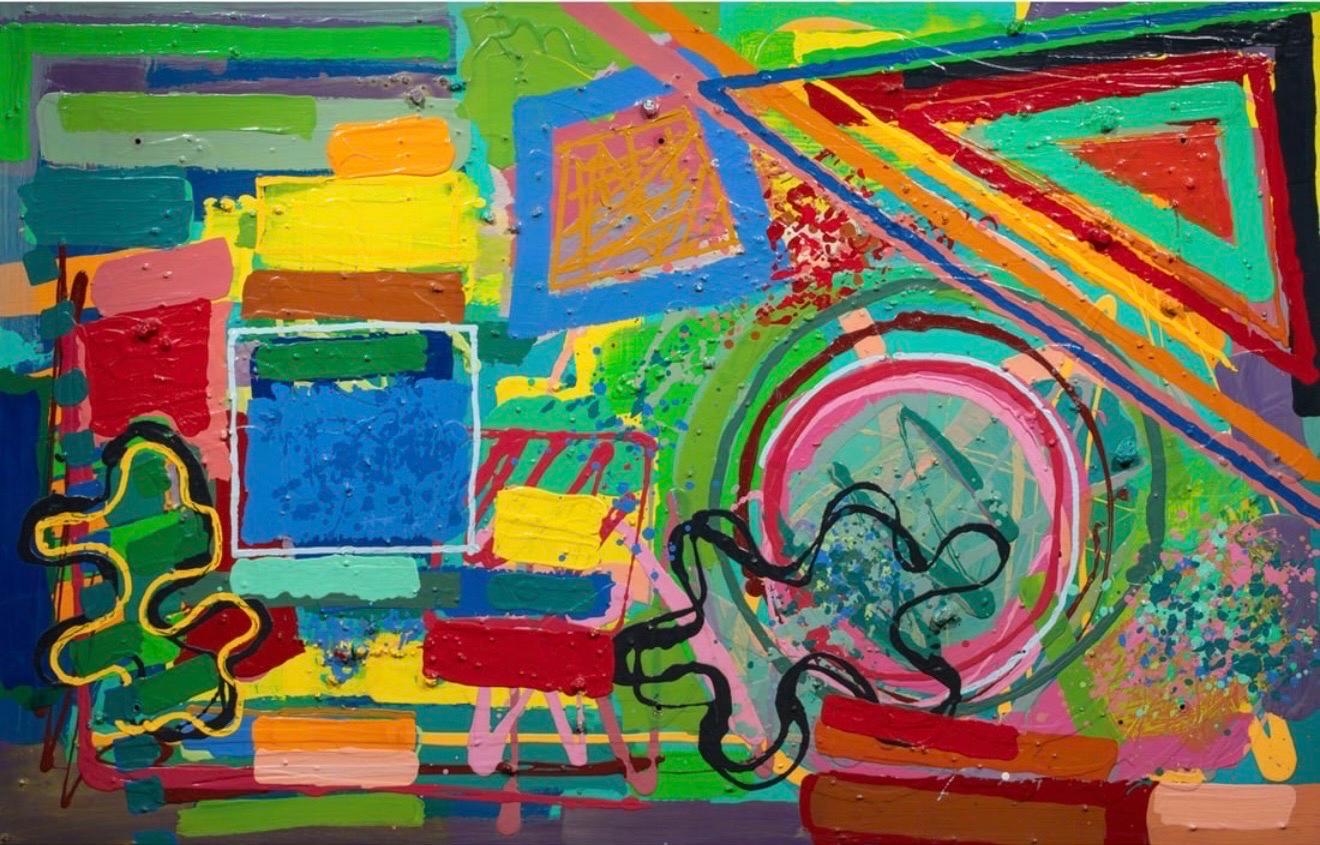
Artist: Arnold Weber, American (1931 - 2010) Title: Colorful Abstract Year: 1968 Medium: Oil on Canvas, Signed, titled and dated l.l. Size: 32 x 44 in. (81.28 x 111.76 cm)

Category

1960s Abstract Geometric Abstract Paintings
Materials

Oil

Dynamic Primary Geometric Abstract

Dynamic Primary Geometric Abstract

By Ross H. Pollette

Located in Soquel, CA

Dynamic Primary Geometric Abstract in Oil on Canvas Colorful and dynamic oil abstracted geometric composition by Ross H. Pollette (American, b. 1948). Bright colors are arranges in ...

Category

1980s Abstract Expressionist Abstract Paintings

Materials

Canvas, Oil