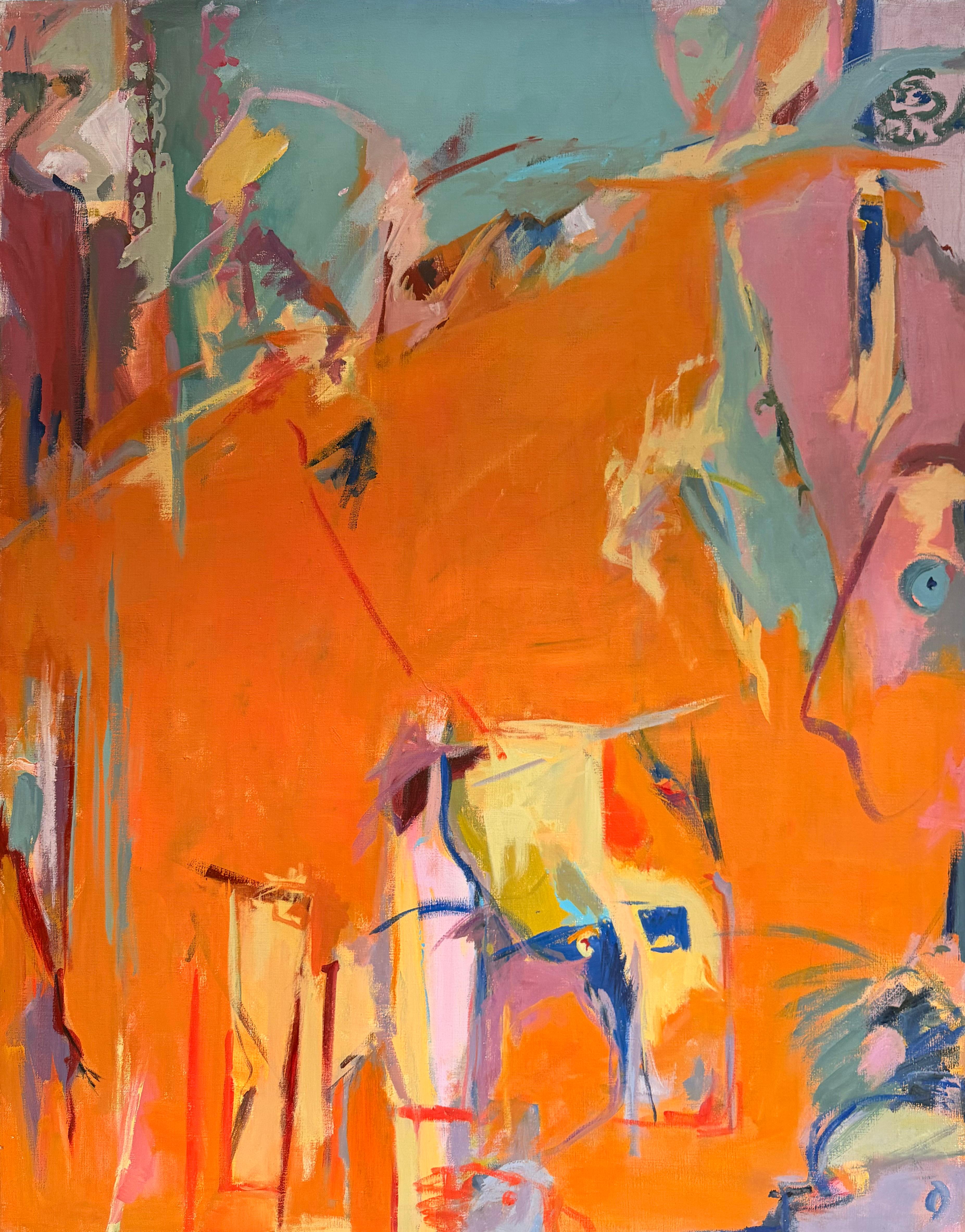
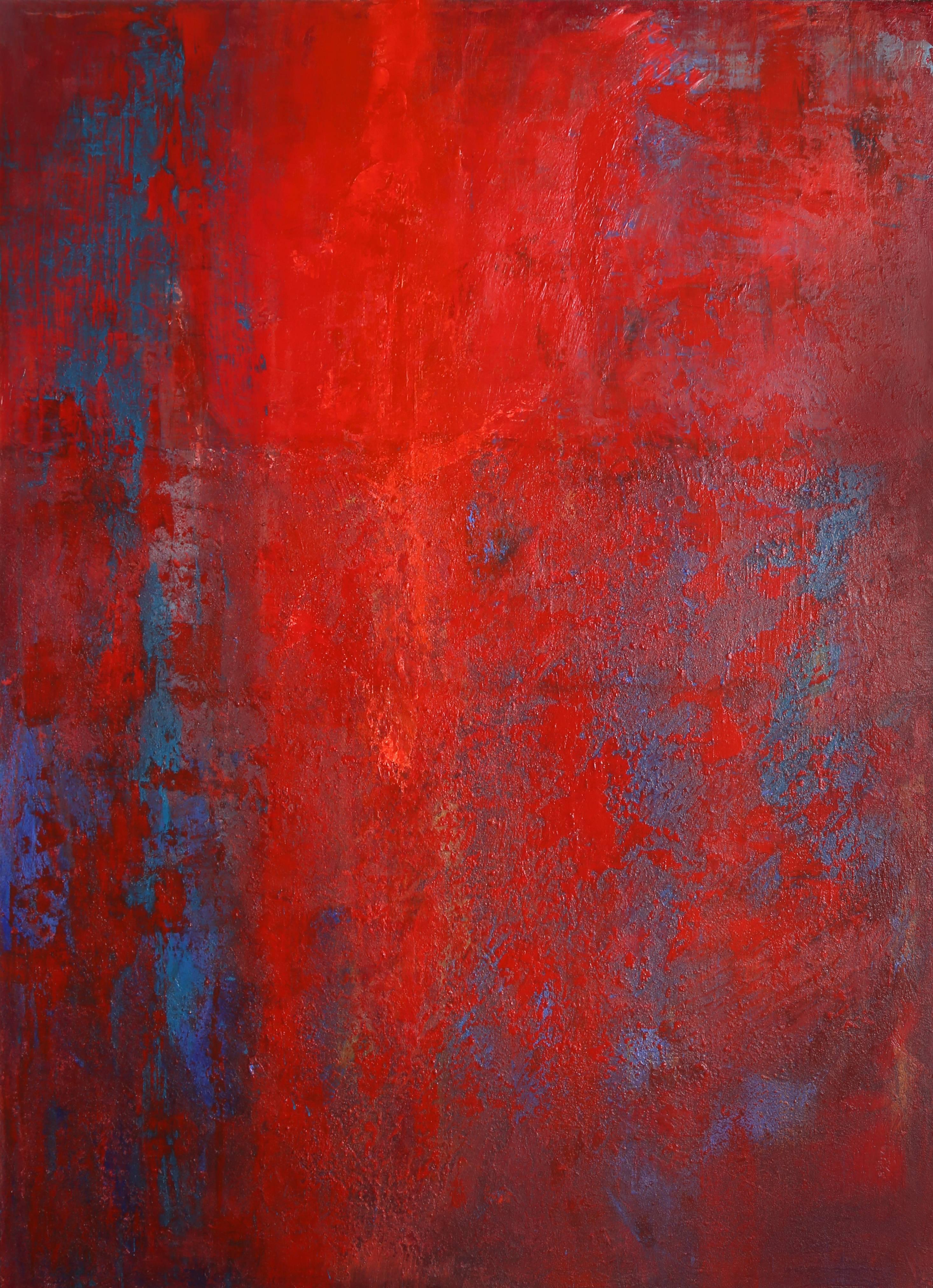
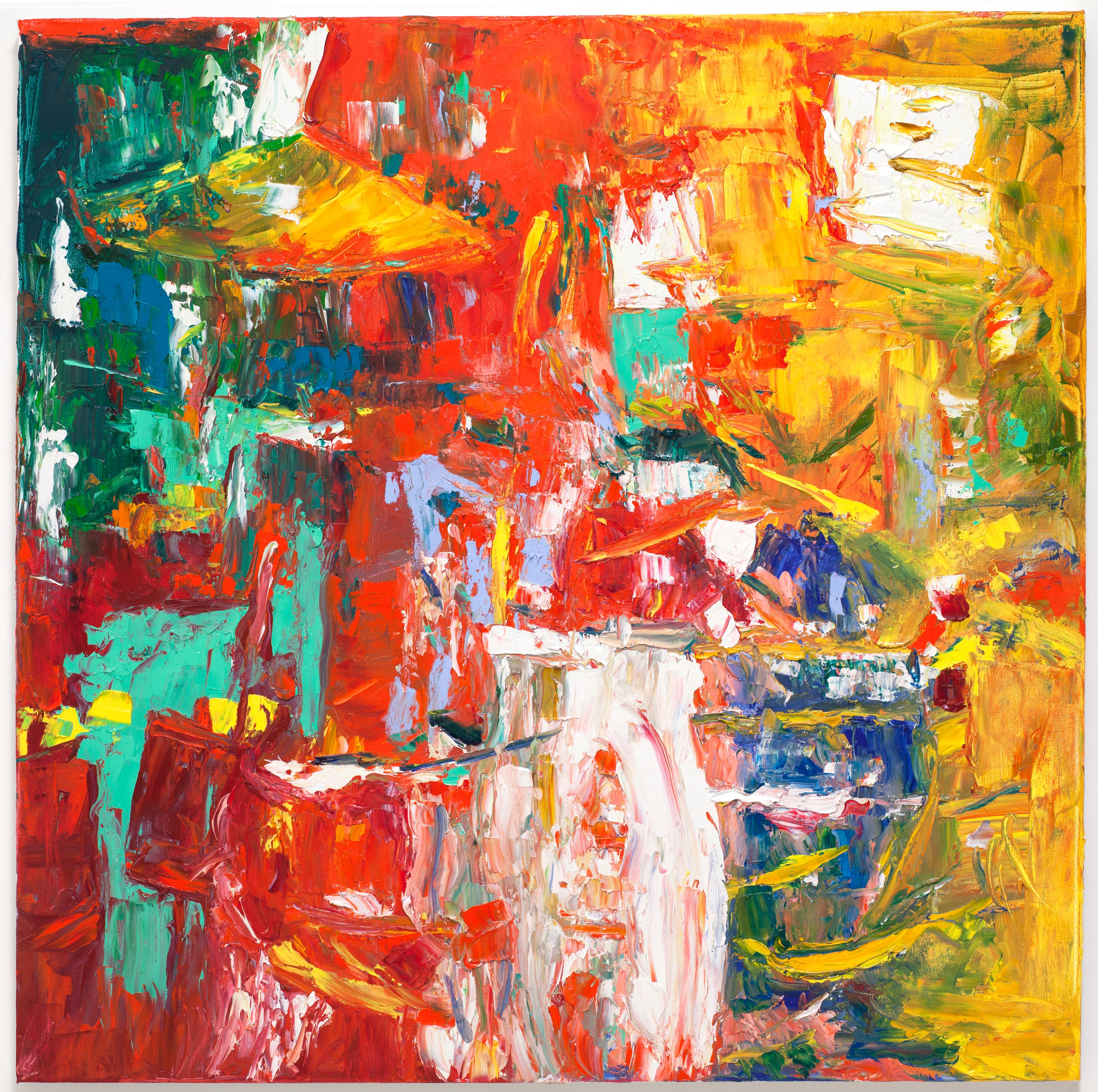
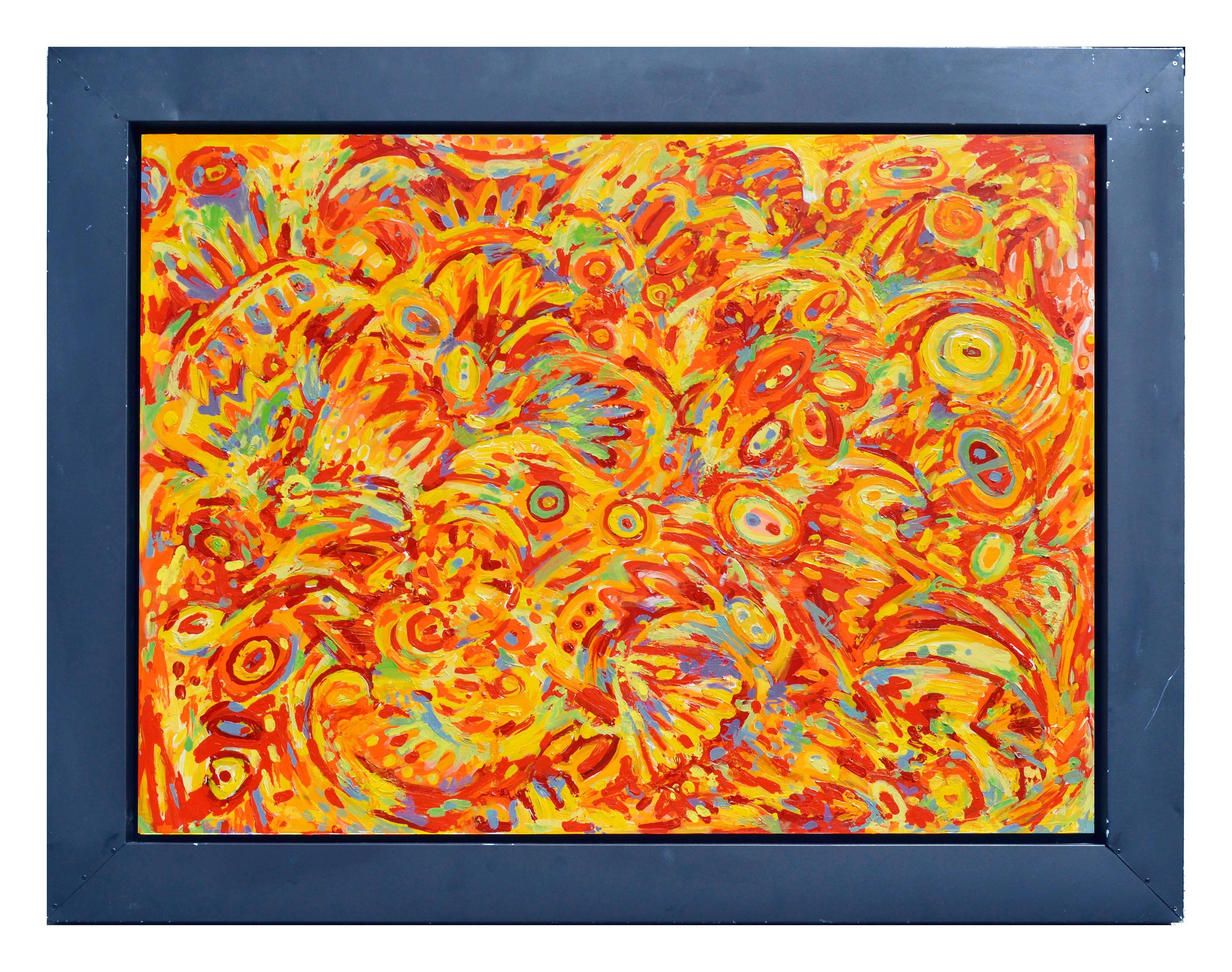
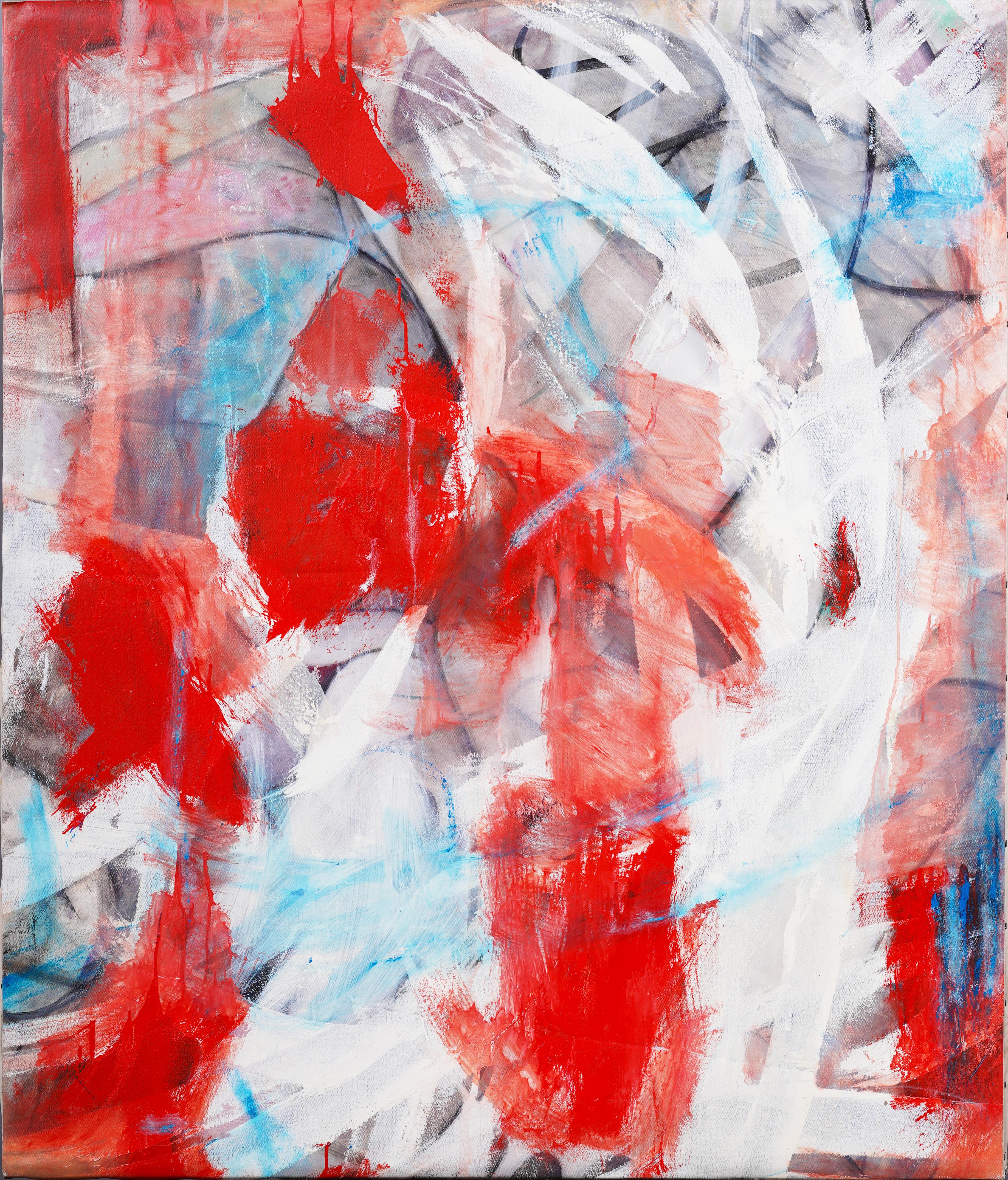
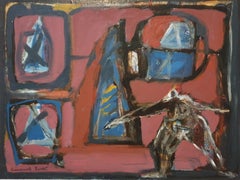
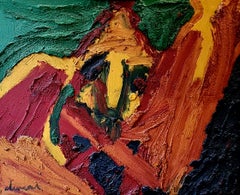
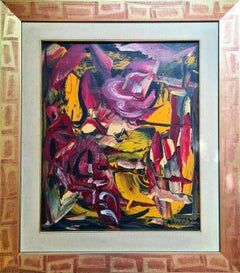
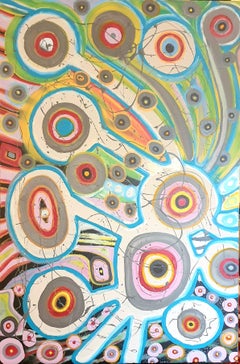
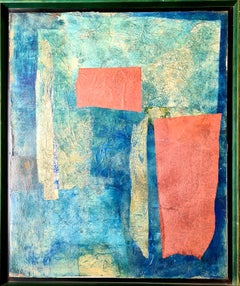
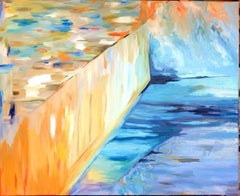
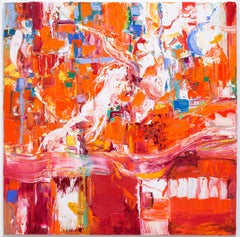
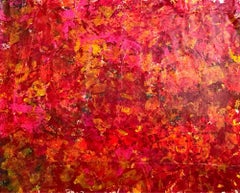
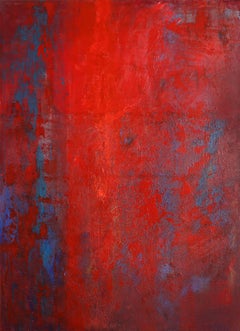
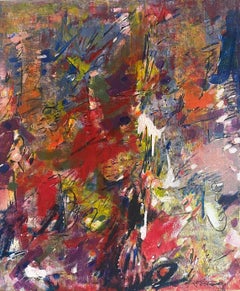
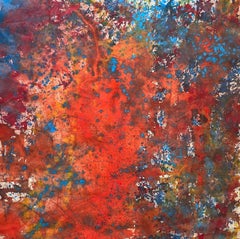
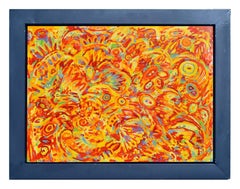
A large Mid Century Abstract Expressionist oil on canvas by noted Belgian artist Ernest Engel-Pak. The painting is signed bottom left. Presented in black and silver modern frame.
A powerful explosion of colour and texture, Engel-Pak has used a juxtaposition of colours and forms yet creates out of them a wonderful unified whole. The spirals used throughout the painting are especially intriguing. A truly magnificent painting that would grace any interior or collection.
In his later years Engel-Pak’s Abstract Expressionism evolved to break the confines of his earlier, more contained compositions. His explosive and intense paintings showed total freedom of expression -blurred soft backgrounds contrasted by powerful deep black strokes and pure light. Heavy layers of oil superimposed with more texture and conflicting colour. Dark ink and charcoal worked in impulsive gestures, enabling subconscious discoveries through unbridled exploration. His work was bold, and expressed a new gestural freedom of expression, witnessed in contemporaries like Jackson Pollock and Pierre Soulages. In these years, Engel-Pak exhibited more and featured both solo, and with contemporaries such as Hans Hartung among others. Through a solo show at the Galerie Ravenstein in Brussels, he became recognized as a pioneer of abstract art in the 20th century.
Ernest Engel-Pak was born in 1885 in Spa and around 1900 he started his artistic career by taking drawing classes.
He travelled extensively in Europe and at this time painted under the name of Engel-Rozier.
In 1924, he moved to Paris where he exhibited for the first time in 1926 at the Galerie Vignol, portraits, views of Corsica and popular scenes, including the paintings: The Phenomenon, The Men in the Café, The Newsagent, In the Metro and The Lost. He was in contact with Torres-Garcia, whom he met in 1928 and who was also a friend of Jean Hélion and Marcel Duchamp. In 1934, he moved to Provence. After the war, his work was the subject of group exhibitions by abstract artists, notably at the Salon des Réalités Nouvelles between 1947 and 1956. He had a number of solo exhibitions in Spain, France, Holland and Belgium and a retrospective exhibition of his work was held in Aix-en-Provence in 1966.
Influenced by the cubism of Torres-Garcia, from 1926 onwards his paintings became more monumental and more structured. Following his discovery of Surrealism in 1929, he turned to lyrical and abstract art. He exhibited with the Surindépendants in Paris. In 1931 in Brussels, he was one of the founders of the Journal des poètes. Settled in Sanary in 1934, for ten years he led a retired life as a painter and farmer. From 1943, he signed Engel-Pak. In 1946, he joined the group of New Realities and illustrated Paul Eluard's text Objects of Words and Images.
Abstract Expressionism, also known as Action Painting or Colour Field Painting, exploded onto the art scene after World War II with its characteristic messiness and extremely energetic applications of paint.
Abstract Expressionism is also referred to as gestural abstraction because its brush strokes revealed the artist's process. This process is the subject of the art itself. As Harold Rosenberg explained: the work of art becomes an "event." For this reason, he referred to this movement as Action Painting.
Many modern-day art historians believe that his emphasis on action leaves out another side of Abstract Expressionism: control vs. chance. Historians posit that Abstract Expressionism comes from three major sources: Kandinsky's abstraction, the Dadaist's reliance on chance, and the Surrealist's endorsement of Freudian theory that embraces the relevance of dreams, sexual drives ( libido) and the authenticity of ego (unfiltered self-centeredness, known as narcissism), which this art expresses through "action."
Despite the paintings' apparent lack of cohesion to the uneducated eye, these artists cultivated the interplay of skill and unplanned occurrences to determine the painting's final outcome.
( Thanks to Beth Gersh-Nesic )