Want more images or videos?
Request additional images or videos from the seller
1 of 6

Gordon House
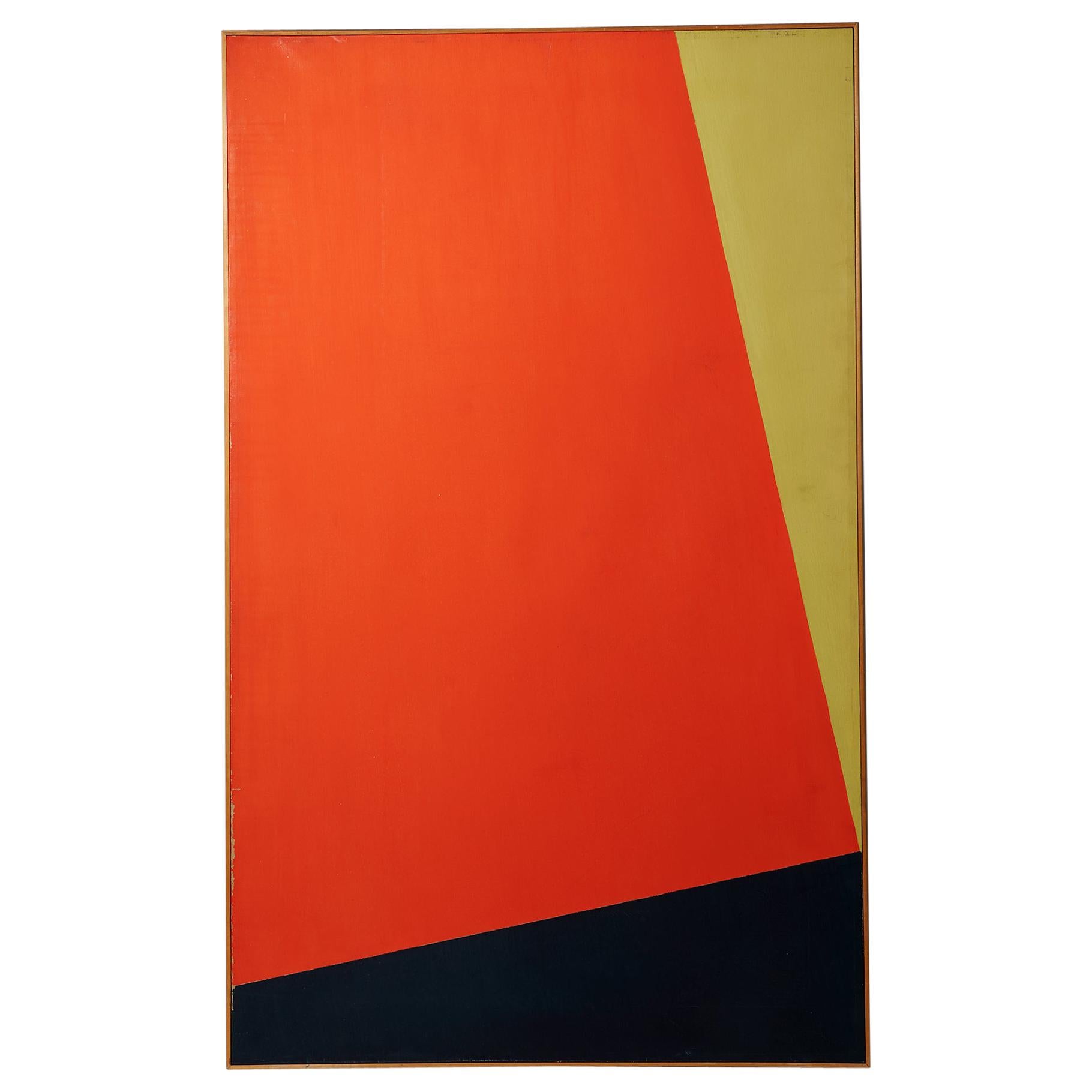
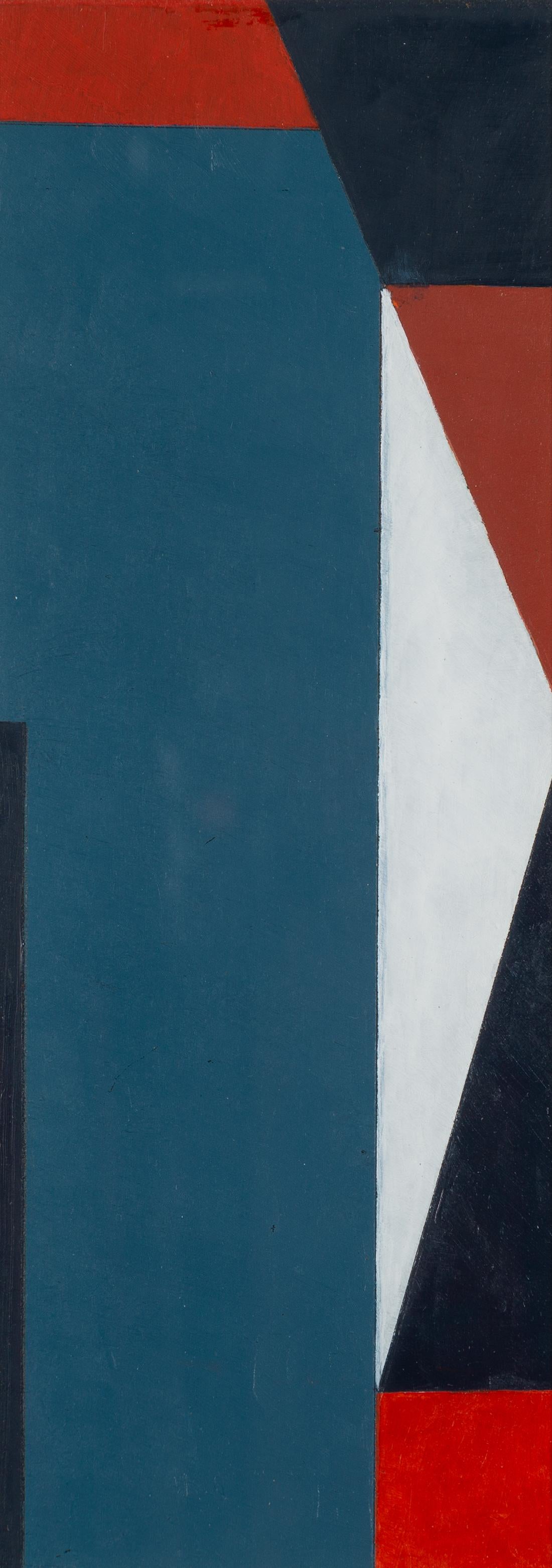
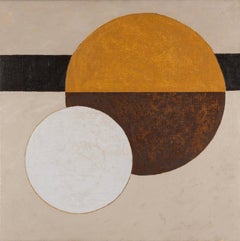
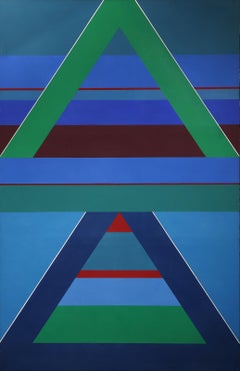
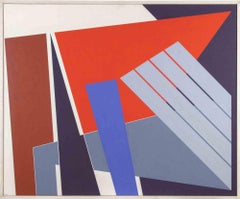
Double Red Triangle, 1974 - Geometric Abstract Acrylic Painting

1974

$19,953.94
£14,500VAT Included
€17,265.67
CA$27,836.74
A$28,235.38
CHF 16,123.18
MX$341,939.69
NOK 189,809.26
SEK 189,179.31
DKK 129,062.08

About the Item

Gordon House was born in 1932 in Pontardawe, South Wales. Early exposure to art on trips to the Glynn Vivian Art Gallery as a young boy inspired House towards creative endeavors and at the age of fourteen he was awarded a grant to enter art school which he accepted. From 1947 to 1950 he studied at Luton School of Art, Bedfordshire, and St. Albans School of Art, Hertfordshire. House's contemporaries included Richard Smith and John Plumb with whom he remained close. During the early fifties, after finishing art school, House began work as assistant to the ecclesiastical sculptor Theodore Kern. He also spent time at an advertising studio where he honed his burgeoning skills in typography and graphic design. In 1952 House was offered the position of designer for Imperial Chemical Industries Plastics Division where he stayed until 1959. This was followed by two years spent as graphic designer for the Kynoch Press in London. In 1961 House set out on his own as a self-employed designer and typographer. Initially this was supplemented by part-time teaching at art schools in and around London but by 1964 House was able to devote himself entirely to his design work which freed up valuable time to concentrate on his own artistic output in the studio. In the late fifties, informed by the new art emerging from America and that of his contemporaries in England, House began to create large-scale abstract works which he was invited to show in 1959 at Dennis Bowen's legendary New Vision Centre in Marble Arch. House was an active participant in the vibrant London art scene of the sixties, regularly attending lectures, exhibitions and discussions. In 1960 he exhibited in 'Situation' the key abstract exhibition of the decade held at the RBA Galleries. Other participating artists included Robyn Denny, Bernard and Harold Cohen, Gillian Ayres, John Hoyland, Richard Smith and William Turnbull among others. These artists, united by a common admiration for American Abstract Expressionism, were frustrated by the lack of exposure given to large-scale abstract works in commercial galleries so they organised their own exhibition. The name was derived from the participants' idea that an abstract painting that occupied the whole field of vision would involve the spectator in an 'event' or 'situation'. This exhibition was followed by 'New London Situation' in 1961 and a nationwide touring Arts Council presentation in recognition of the significance of the two earlier shows. In 1961 House began producing his first prints at the Kelpra Studio, run by Chris and Rose Prater, where he made the earliest fine art screenprint ever to be produced in Britain. Artists such as Paolozzi and Hamilton followed in his footsteps and together they started a printmaking revolution in Britain. They cemented the medium of the screenprint in the world of fine art as opposed to the commercial sphere and secured the reputation of Kelpra in the process. Later, together with Cliff White, House set up the White Ink (Ltd.) print studio in London, where he produced etchings and wood engravings on a series of magnificent antique printing presses he had collected. White Ink soon gained a reputation for innovative and high quality printmaking, attracting artists such as R. B. Kitaj, Richard Smith, Joe Tilson, Sidney Nolan, Victor Pasmore, Eduardo Paolozzi, Bernard Cohen and Elizabeth Frink. Printmaking was to remain a key part of House's oeuvre throughout the rest of his career, whether in the medium of screenprint, etching, woodcut, linocut or lithograph. In 1981 a retrospective exhibition of his graphic works opened at the Carnegie Institute, Pittsburgh, and in 1982 this travelled to the Brooklyn Museum, New York. These shows were instrumental in bringing House's prints to the attention of a wider American audience.
  • Creator:
    Gordon House (1932, British)
  • Creation Year:
    1974
  • Dimensions:
    Height: 18 in (45.7 cm)Width: 34.49 in (87.6 cm)
  • Medium:
  • Period:
  • Condition:
  • Gallery Location:
    Kingsclere, GB
  • Reference Number:
    1stDibs: LU2718215410962

More From This Seller

View All
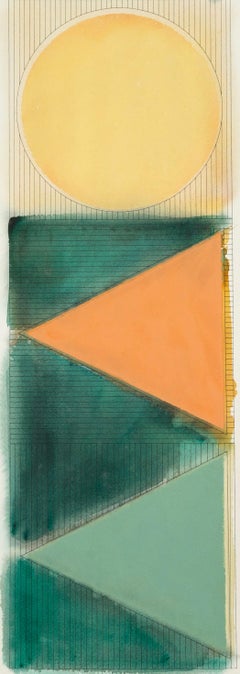
Red/Green, from Study for Larger Tri Motif Series, 1977 - Gouache, Watercolour

Red/Green, from Study for Larger Tri Motif Series, 1977 - Gouache, Watercolour

By Gordon House

Located in Kingsclere, GB

Gordon House was born in 1932 in Pontardawe, South Wales. Early exposure to art on trips to the Glynn Vivian Art Gallery as a young boy inspired House towards creative endeavors and at the age of fourteen he was awarded a grant to enter art school which he accepted. From 1947 to 1950 he studied at Luton School of Art, Bedfordshire, and St. Albans School of Art, Hertfordshire. House's contemporaries included Richard Smith and John Plumb with whom he remained close. During the early fifties, after finishing art school, House began work as assistant to the ecclesiastical sculptor Theodore Kern. He also spent time at an advertising studio where he honed his burgeoning skills in typography and graphic design. In 1952 House was offered the position of designer for Imperial Chemical Industries Plastics Division where he stayed until 1959. This was followed by two years spent as graphic designer for the Kynoch Press in London. In 1961 House set out on his own as a self-employed designer and typographer. Initially this was supplemented by part-time teaching at art schools in and around London but by 1964 House was able to devote himself entirely to his design work which freed up valuable time to concentrate on his own artistic output in the studio. In the late fifties, informed by the new art emerging from America and that of his contemporaries in England, House began to create large-scale abstract works which he was invited to show in 1959 at Dennis Bowen's legendary New Vision Centre in Marble Arch. House was an active participant in the vibrant London art scene of the sixties, regularly attending lectures, exhibitions and discussions. In 1960 he exhibited in 'Situation' the key abstract exhibition of the decade held at the RBA Galleries. Other participating artists included Robyn Denny, Bernard and Harold Cohen, Gillian Ayres, John Hoyland, Richard Smith and William Turnbull among others. These artists, united by a common admiration for American Abstract Expressionism, were frustrated by the lack of exposure given to large-scale abstract works in commercial galleries so they organised their own exhibition. The name was derived from the participants' idea that an abstract painting that occupied the whole field of vision would involve the spectator in an 'event' or 'situation'. This exhibition was followed by 'New London Situation' in 1961 and a nationwide touring Arts Council presentation in recognition of the significance of the two earlier shows. In 1961 House began producing his first prints at the Kelpra Studio, run by Chris and Rose Prater, where he made the earliest fine art screenprint ever to be produced in Britain. Artists such as Paolozzi and Hamilton followed in his footsteps and together they started a printmaking revolution in Britain. They cemented the medium of the screenprint in the world of fine art as opposed to the commercial sphere and secured the reputation of Kelpra in the process. Later, together with Cliff White, House set up the White Ink (Ltd.) print studio in London, where he produced etchings and wood engravings on a series of magnificent antique printing presses...

Category

20th Century Abstract Paintings

Materials

Ink, Watercolor, Gouache

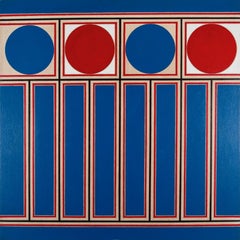
Blue/Red Ornament Frieze II, 1976-77 - Large Bold, Bright Abstract Painting

Blue/Red Ornament Frieze II, 1976-77 - Large Bold, Bright Abstract Painting

By Gordon House

Located in Kingsclere, GB

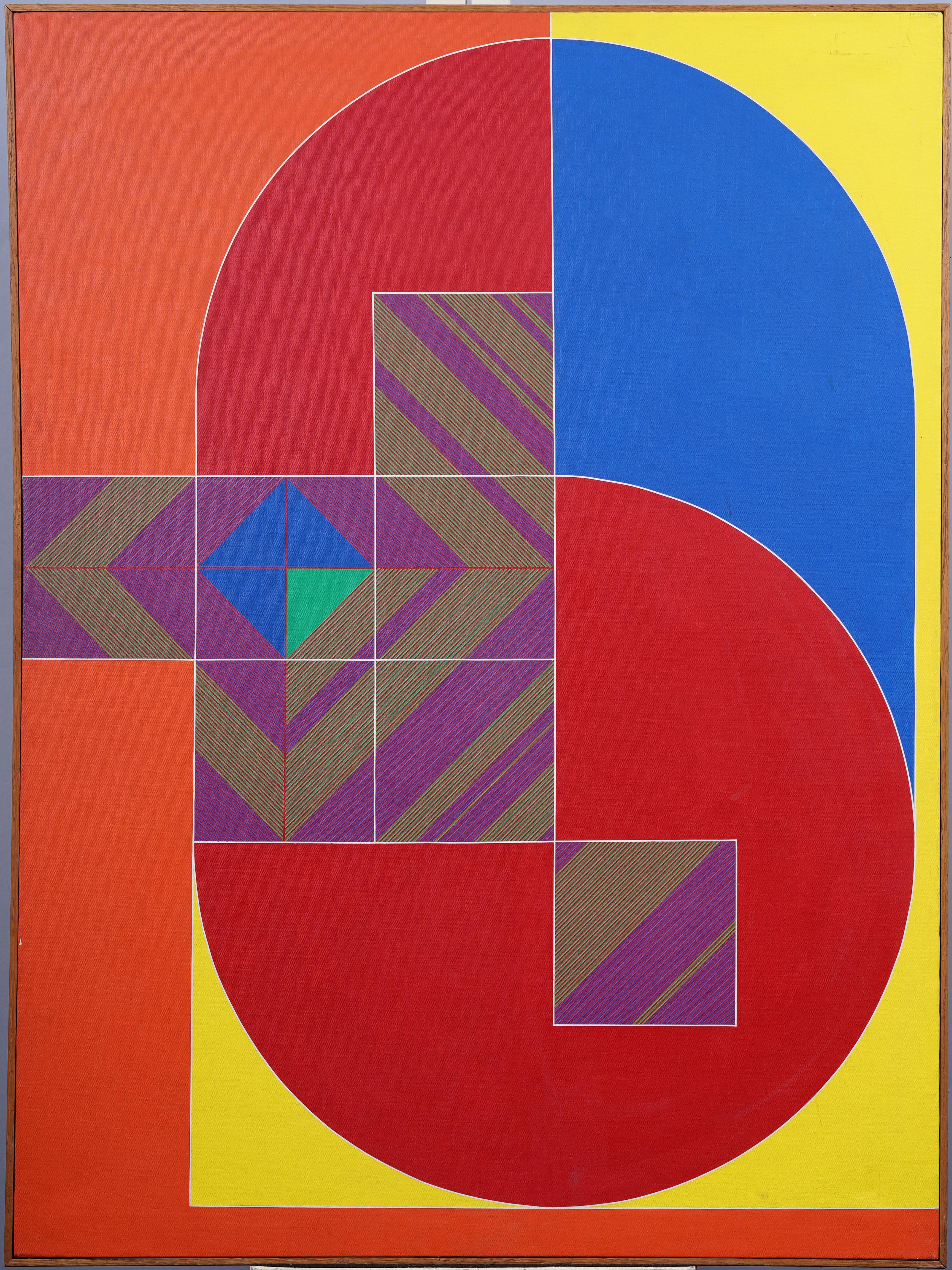
Gordon House 1932-2004 Blue/Red Ornament Frieze II, 1976-1977 with Artist's label attached to the stretcher bar acrylic on canvas 91 x 91 cm 35 7/8 x 35 7/8 in Gordon House was born in 1932 in Pontardawe, South Wales. Early exposure to art on trips to the Glynn Vivian Art Gallery as a young boy inspired House towards creative endeavors and at the age of fourteen he was awarded a grant to enter art school which he accepted. From 1947 to 1950 he studied at Luton School of Art, Bedfordshire, and St. Albans School of Art, Hertfordshire. House's contemporaries included Richard Smith and John Plumb with whom he remained close. During the early fifties, after finishing art school, House began work as assistant to the ecclesiastical sculptor Theodore Kern. He also spent time at an advertising studio where he honed his burgeoning skills in typography and graphic design. In 1952 House was offered the position of designer for Imperial Chemical Industries Plastics Division where he stayed until 1959. This was followed by two years spent as graphic designer for the Kynoch Press in London. In 1961 House set out on his own as a self-employed designer and typographer. Initially this was supplemented by part-time teaching at art schools in and around London but by 1964 House was able to devote himself entirely to his design work which freed up valuable time to concentrate on his own artistic output in the studio. In the late fifties, informed by the new art emerging from America and that of his contemporaries in England, House began to create large-scale abstract works which he was invited to show in 1959 at Dennis Bowen's legendary New Vision Centre in Marble Arch. House was an active participant in the vibrant London art scene of the sixties, regularly attending lectures, exhibitions and discussions. In 1960 he exhibited in 'Situation' the key abstract exhibition of the decade held at the RBA Galleries. Other participating artists included Robyn Denny, Bernard and Harold Cohen, Gillian Ayres, John Hoyland, Richard Smith and William Turnbull among others. These artists, united by a common admiration for American Abstract Expressionism, were frustrated by the lack of exposure given to large-scale abstract works in commercial galleries so they organised their own exhibition. The name was derived from the participants' idea that an abstract painting that occupied the whole field of vision would involve the spectator in an 'event' or 'situation'. This exhibition was followed by 'New London Situation' in 1961 and a nationwide touring Arts Council presentation in recognition of the significance of the two earlier shows. In 1961 House began producing his first prints at the Kelpra Studio, run by Chris and Rose Prater, where he made the earliest fine art screenprint ever to be produced in Britain. Artists such as Paolozzi and Hamilton followed in his footsteps and together they started a printmaking revolution in Britain. They cemented the medium of the screenprint in the world of fine art as opposed to the commercial sphere and secured the reputation of Kelpra in the process. Later, together with Cliff White, House set up the White Ink (Ltd.) print studio in London, where he produced etchings and wood engravings on a series of magnificent antique printing...

Category

20th Century Abstract Geometric Paintings
Materials

Canvas, Acrylic

III, from Tri Motifs, 1977 - Bold Shapes, Orange, Green, Gouache and Watercolour

III, from Tri Motifs, 1977 - Bold Shapes, Orange, Green, Gouache and Watercolour

By Gordon House

Located in Kingsclere, GB

Gordon House was born in 1932 in Pontardawe, South Wales. Early exposure to art on trips to the Glynn Vivian Art Gallery as a young boy inspired House towards creative endeavors and ...

Category

20th Century Abstract Paintings

Materials

Ink, Watercolor, Gouache

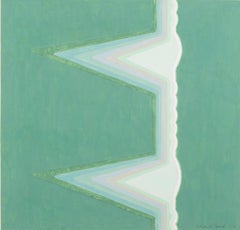
Geometric Breaking Waves, Acrylic Painting by Thomas Nathaniel Davies, 1970

Geometric Breaking Waves, Acrylic Painting by Thomas Nathaniel Davies, 1970

Located in Kingsclere, GB

Geometric Breaking Waves, Acrylic Painting by Thomas Nathaniel Davies, 1970 Additional information: Medium: Acrylic 50.8 x 50.8 cm 20 x 20 in Signed and dated Nathaniel Davies was born in Dowlais, Merthyr Tydfil, and studied at the Cardiff School of Art, where he was taught by Ceri Richards. In 1942 his studies were put on hold as he was called up for war service. After demobilisation, Davies completed his studies at Cardiff and, with a letter of recommendation from Ceri Richards, was awarded a teaching post at Newton Abbot Art School. He married in 1958, bought a house with a studio, had four children and made paintings, sculptures, constructions and prints. His studio work and teaching kept him busy in Devon, though a number of artists visited Davies including Terry Frost, Patrick Heron...

Category

20th Century Abstract Paintings

Materials

Acrylic

You May Also Like

Richard Huntington 1970s Geometric Abstraction Large Mid Century Modern Triangle

Richard Huntington 1970s Geometric Abstraction Large Mid Century Modern Triangle

By Richard Huntington

Located in Buffalo, NY

A mid-century modern geometric abstract painting titled Beacon by American artist Richard Huntington. This work features bold colors and incredible texture. Richard Huntington (b. ...

Category

1970s Abstract Geometric Abstract Paintings

Materials

Oil, Spray Paint, Acrylic

Zig - Field D Acrylic Painting on Canvas, Abstract Geometric, 1969

Zig - Field D Acrylic Painting on Canvas, Abstract Geometric, 1969

By Paul Reed

Located in New York, NY

Paul Reed Zig - Field D, 1969 Acrylic On Canvas 28 x 96in Signature and title on reverse stretcher Paul Reed ( 1919 - 2015 ) was a member of the " Washington Color School " an art ...

Category

Late 20th Century Abstract Geometric Abstract Paintings

Materials

Canvas, Acrylic

EQUIVALENCE 92- Tint and Acrylic on cut Linen - Red Abstract Geometric Painting

EQUIVALENCE 92- Tint and Acrylic on cut Linen - Red Abstract Geometric Painting

By Linda King Ferguson

Located in Signal Mountain, TN

This painting on cut linen canvas by Linda King Ferguson depicts a diamond shape that is halved horizontally by a color break. The top triangular section on the diamond is a brown ca...

Category

2010s Abstract Geometric Abstract Paintings

Materials

Linen, Spray Paint, Acrylic