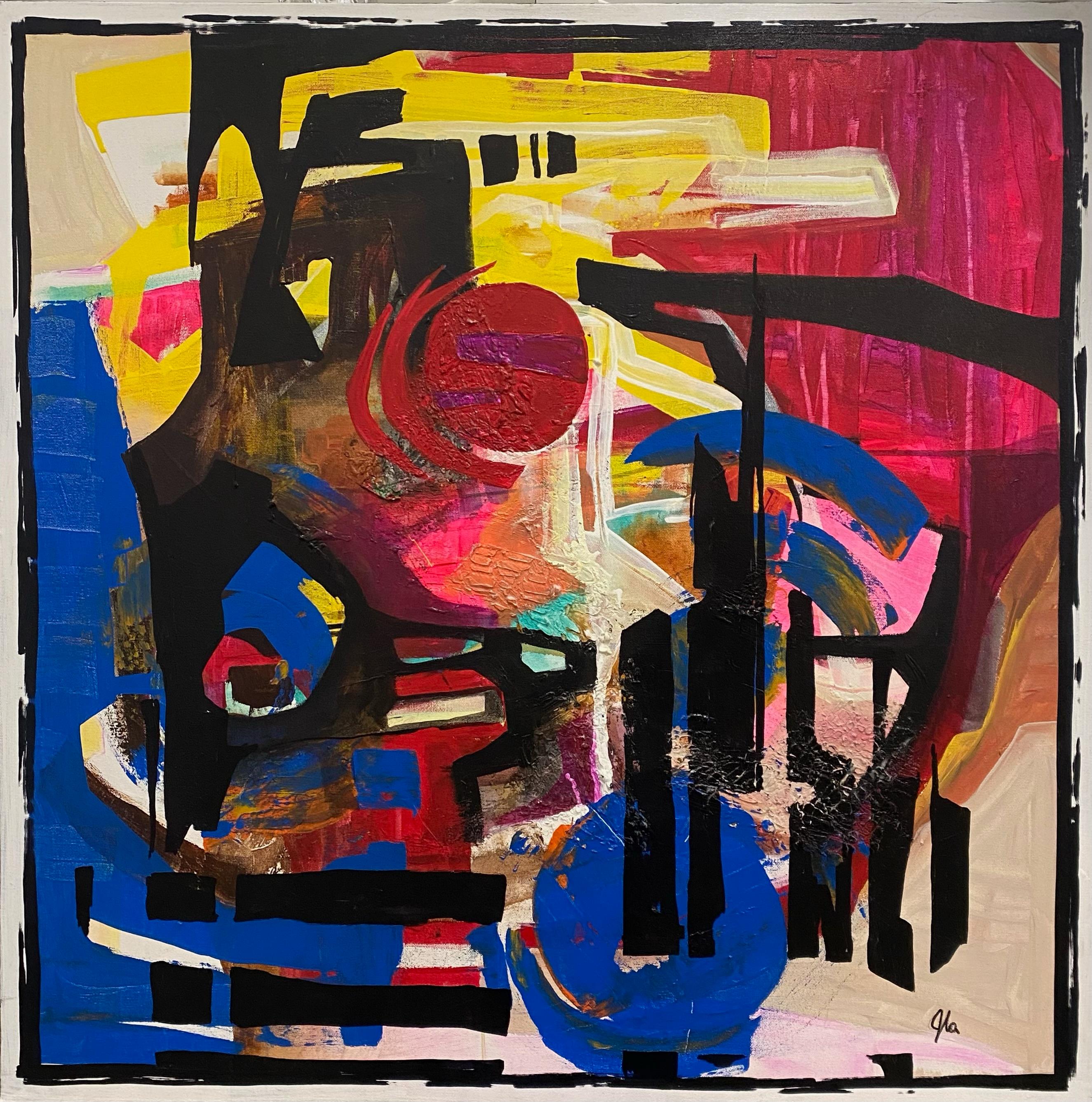
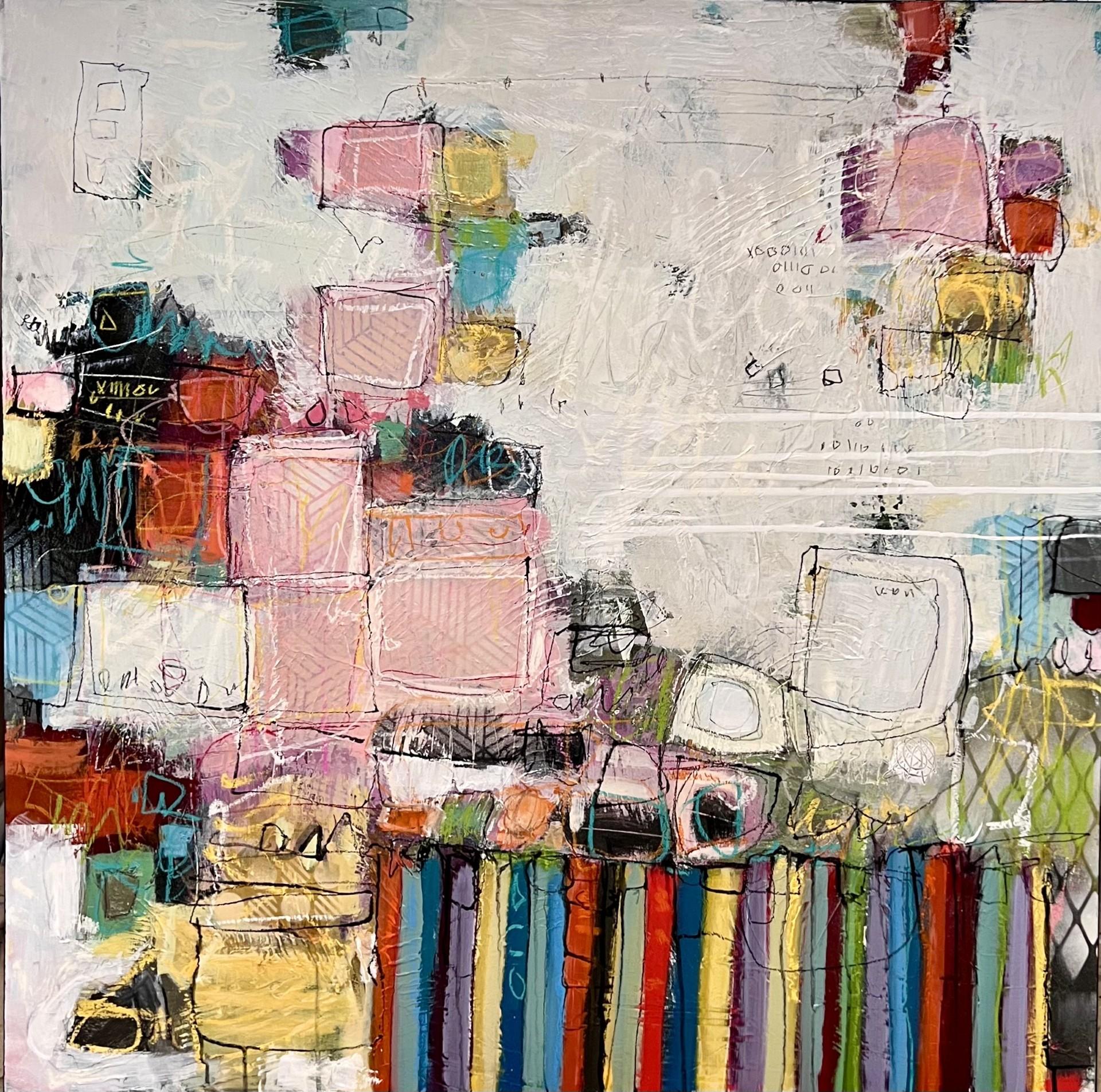
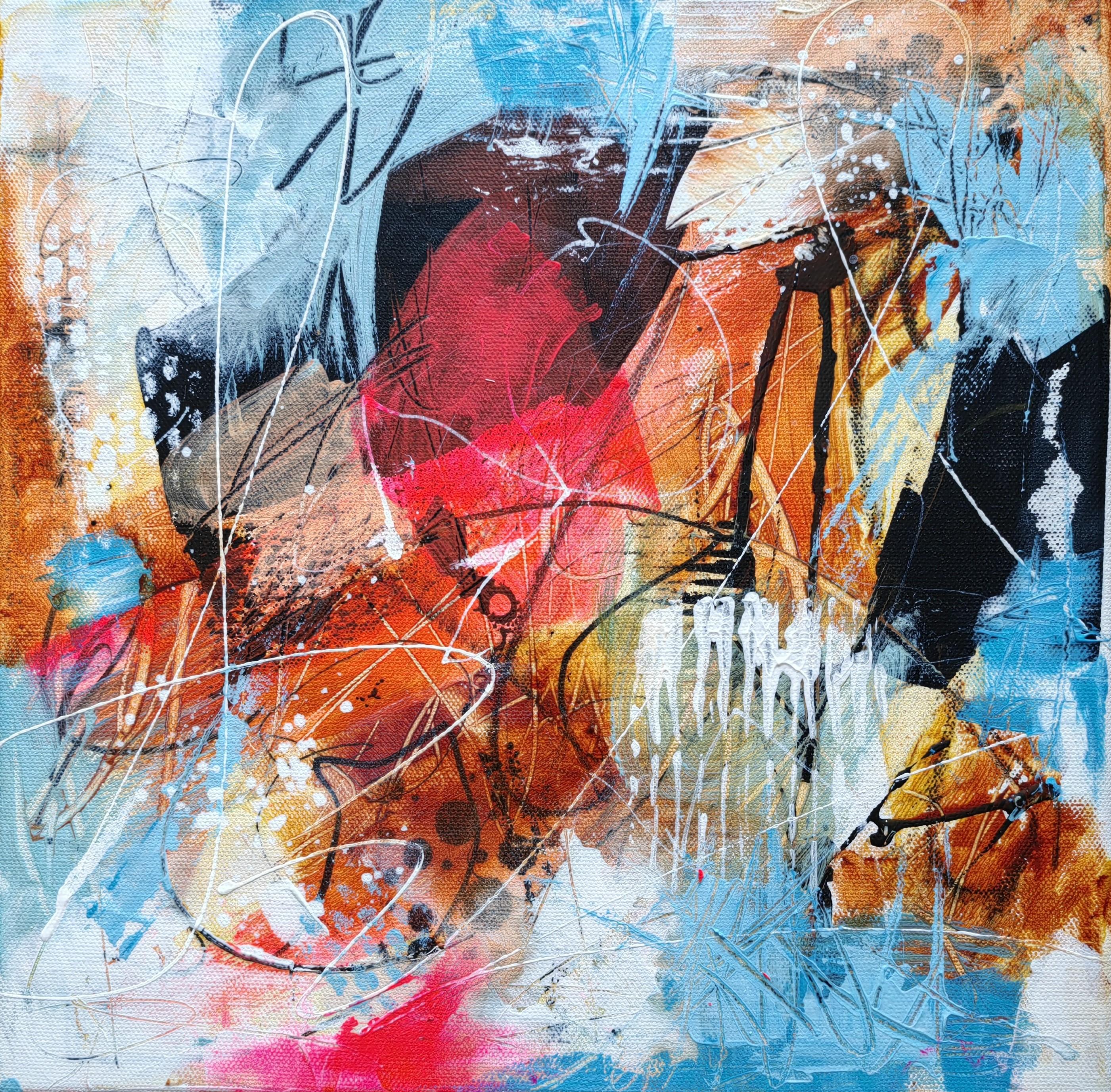
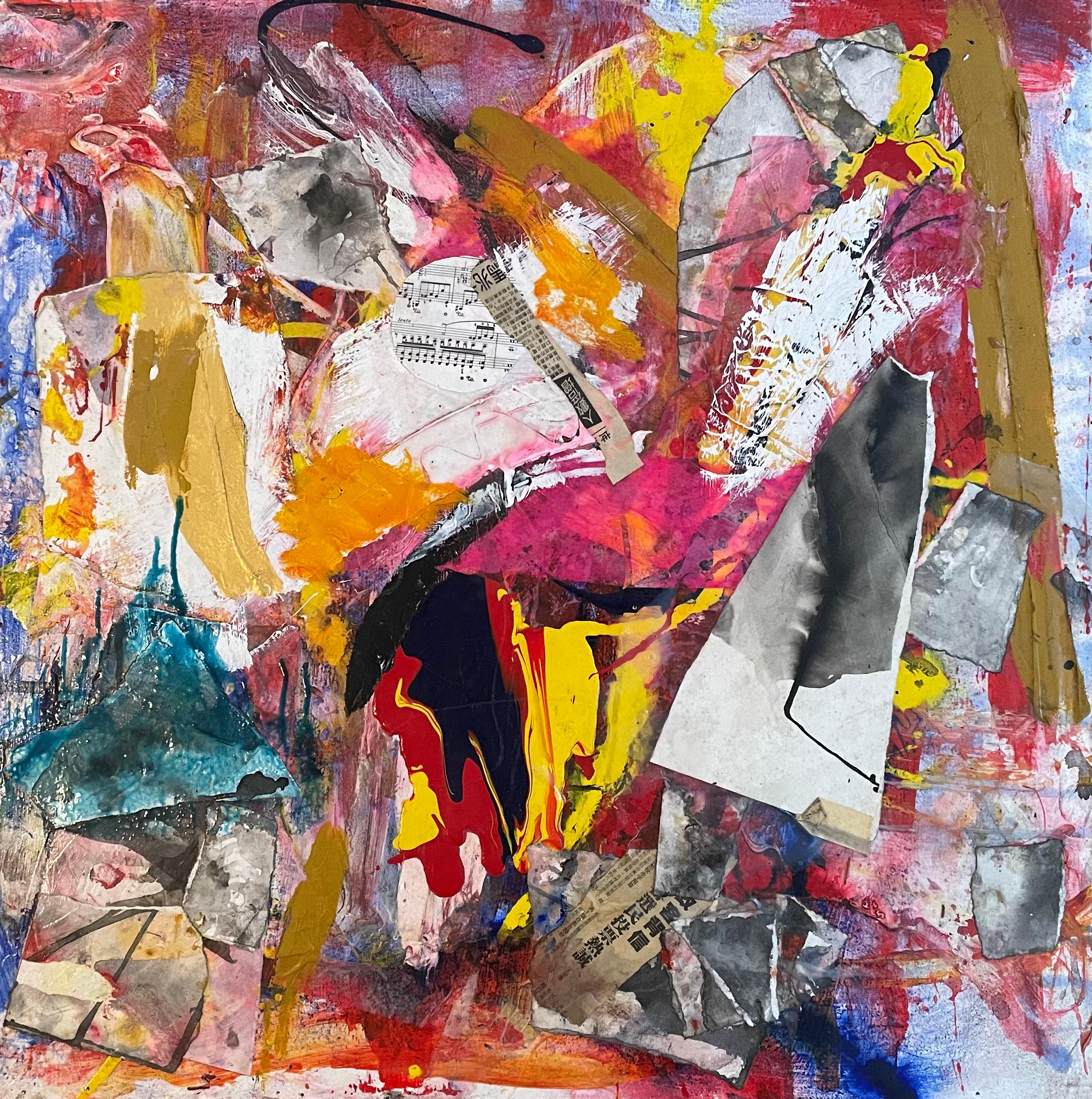
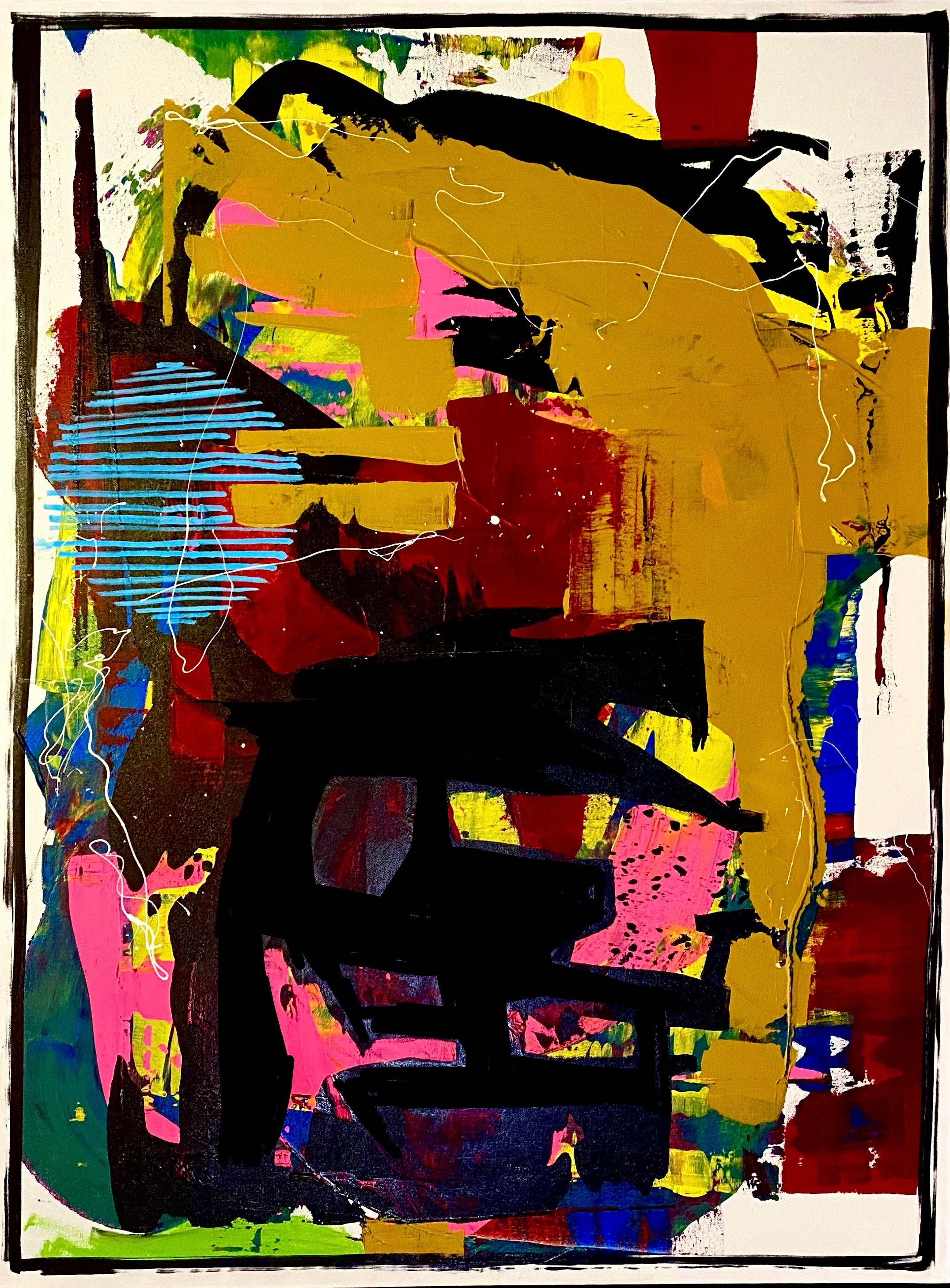
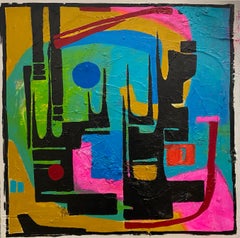
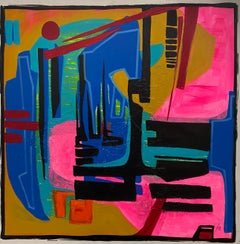
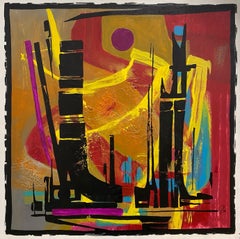
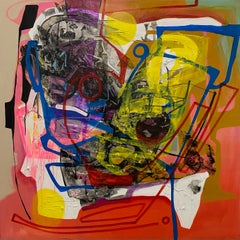
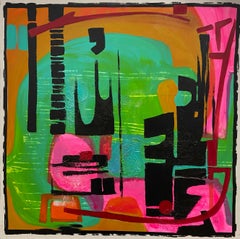
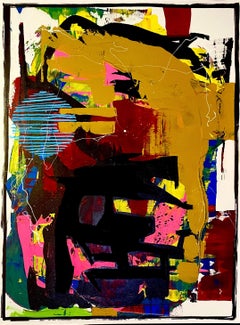
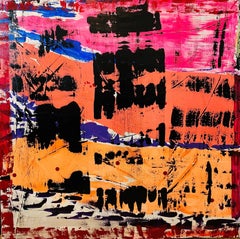
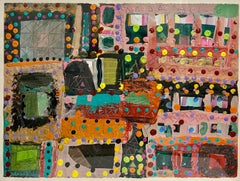
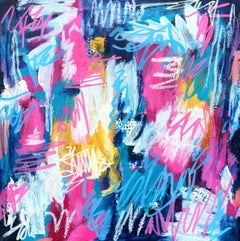
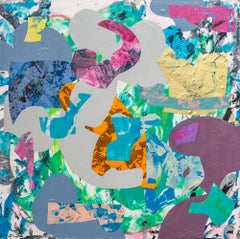
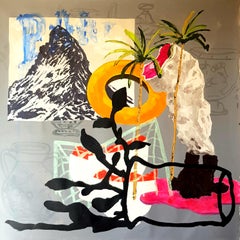
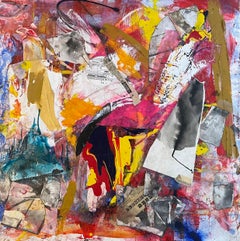
"Miami" is an original, handmade mixed media painting, by Jennifer Bobola, that presents colorful abstract expressionism.
Artist Statement:
Let’s be honest, understanding abstract art can seem like an art unto itself, a thing requiring a manual or a guru, a mind-reader, even. Often it’s something viewers approach sideways, brows furrowed, arms folded, wondering: What exactly am I looking at?
“For me,” explained Denver abstract expressionist, Jennifer Bobola, “I see abstraction as being the same as realism—it’s all real; it’s just shapes.”
Make sense? Clear as…mud? Well, here’s another way to relate: Think music, then take a look at Bobola’s flowing lines and lush shapes melding into almost-objects, and consider that she sees painting as a kind of visual music—Jazz, mostly.
Take, for example, the painting, “Chains of Love,” a subtle play of earthy tones set off by deep, rich darker hues. The only realistic aspect in this painting is a set of stairs swirling up to the right, into the light, and the harmonious chains weaving throughout: pale blue, white, gray and golden interlocking bands of color. This painting was conceived over the course of several days, first, with layers of torn paper affixed to the canvas and left to dry, then with washes of color, and, finally, finished with those defining gestural shapes. Each day, working on this painting, Bobola listened to the Jazz, Soul and Blues inspired electronica music of Massive Attack, particularly the song, “What Your Soul Sings.”
“When I’m working on a painting, I’ll put on music,” she said. “Sometimes I’ll put on one song a bunch of times so that when I go back to work the next day and hear that song, it’s like going home; the song sets the tone.”
While lots of artists listen to music while painting, Bobola’s connection is more concrete: she’s been playing the saxophone since the age of 10, studied it in college, and currently performs with two bands. For her, the connection between music and painting is, in fact, so intertwined that she believes there isn’t much of a difference between the two; it’s the same language: notes, rhythms, and progressions equal design, color, shapes, and lines.