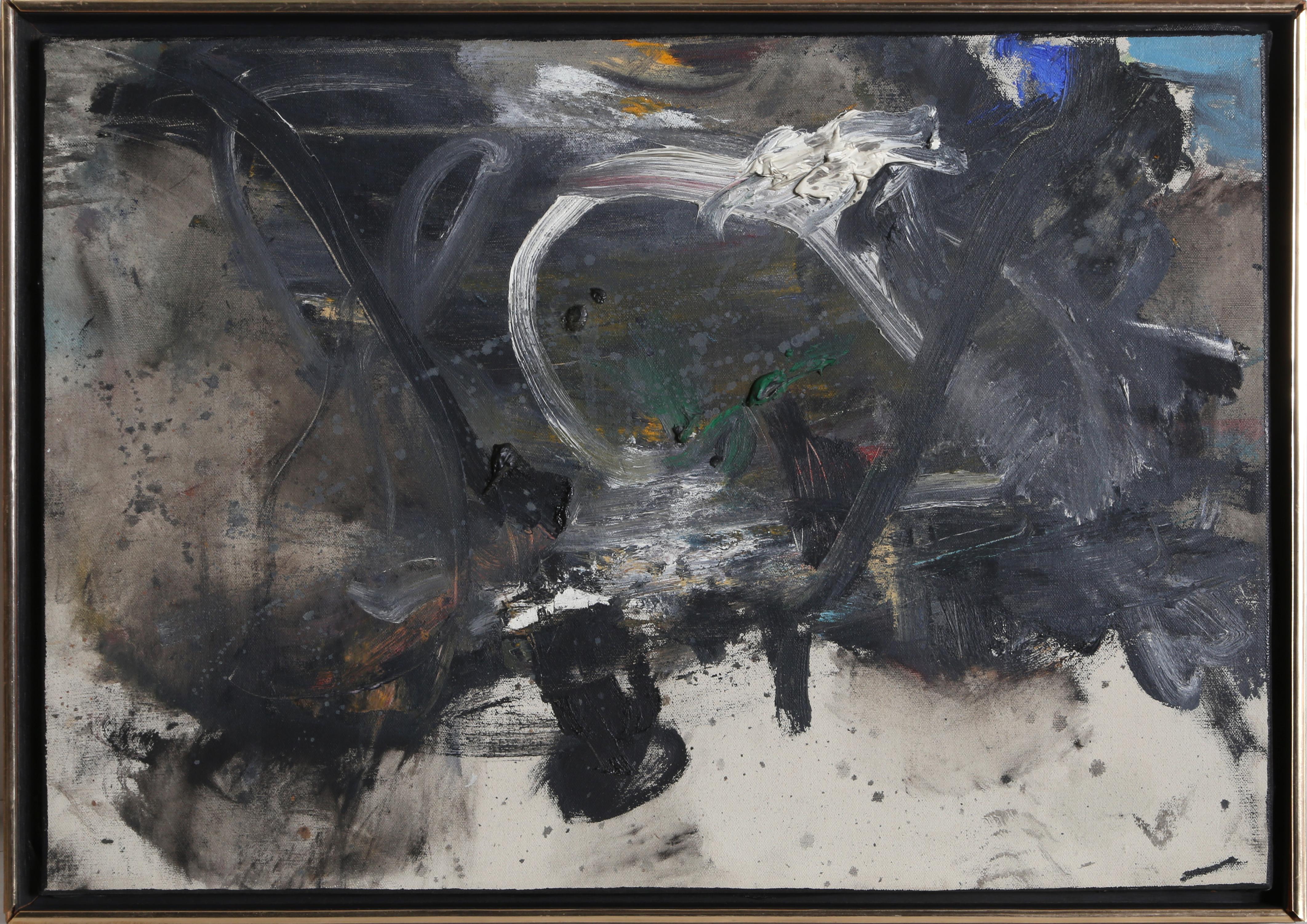
Grey & Tan Abstract Expressionist Textural Mid-Century Abstract by Peter Witwer
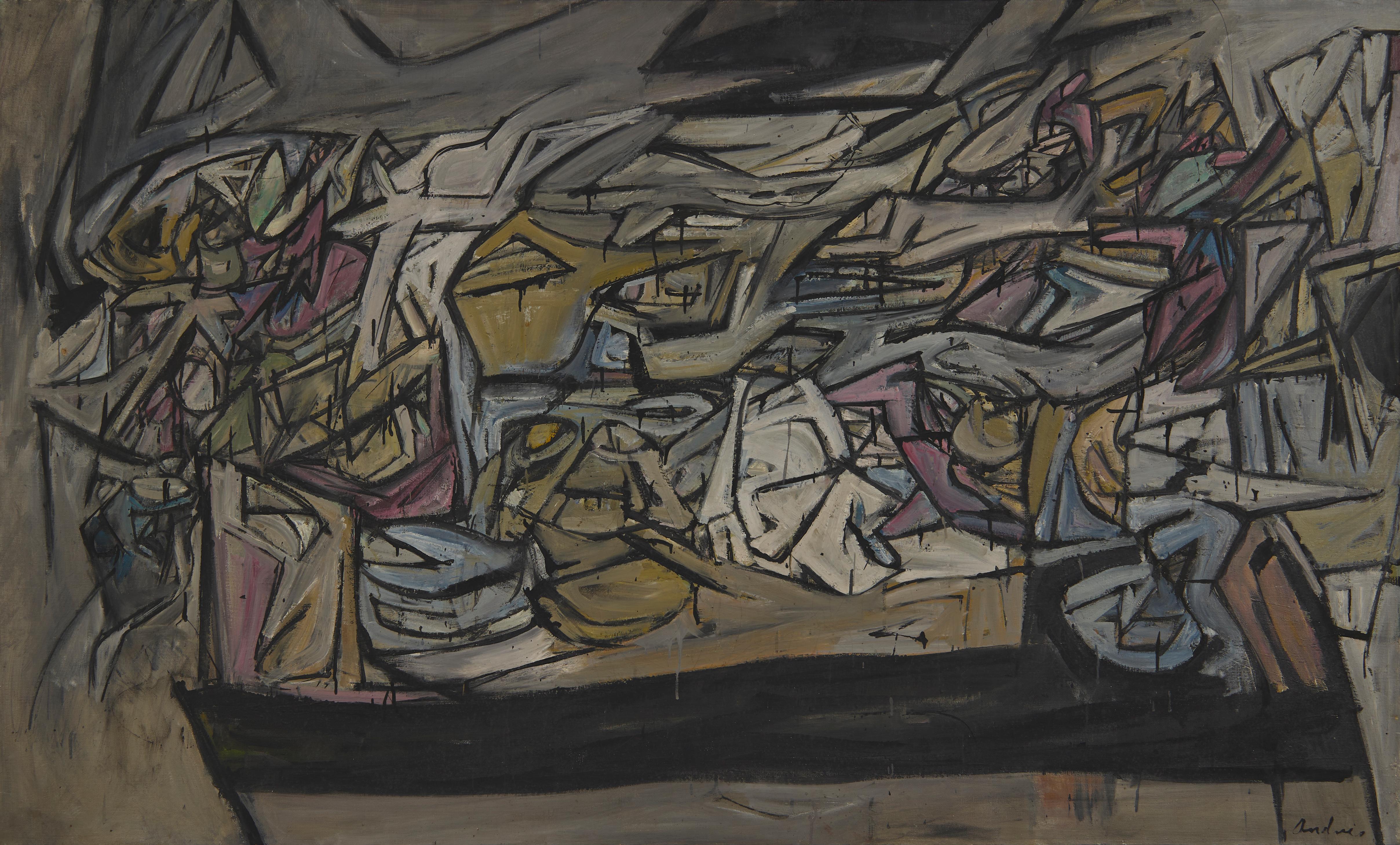
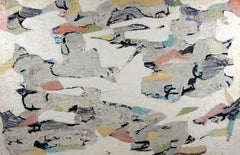
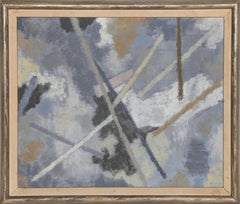
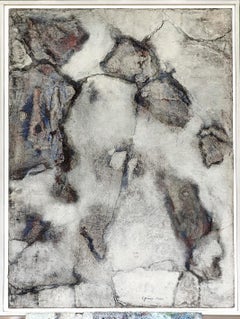
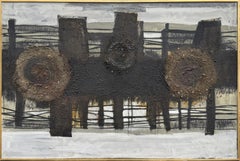
Heavily textured, expressive composition by Peter Witwer (American, 1928-1968). Over the top of a heavy base layer of plaster, Witwer has added various layers of oil paint, creating a massive amount of depth and texture. Sections of red peek out from underneath various shades of tan, grey, and black. Spots of blue and purple are used sparingly, hidden in the composition.
Presented in a wood frame.
Canvas size: 20"H x 40"W
Frame size: 26.63"H x 46.63"W
Unsigned, but was acquired with a collection of the artist's work.
Provenance: Without a will and a family that had little interest in his art, nearly all of his possessions and close to 100 paintings were turned over to SF’s Conservators Office. His friend, Albert Richard Lasker, purchased all of Peter’s possessions (including the art) and has taken care of them until this day, always sensing there was something remarkable about the collection. Wanting Peter’s work to finally be seen, Richard came to Lost Art Salon with Peter’s story after reading about the new gallery in a July, 2005 issue of the SF Chronicle.
Born George Peter Witwer on September 6th, 1928, Peter was the son of a prominent real estate developer in Cedar Rapids, Iowa. He attended school in New York City in the late 1940s and moved West in 1958. Part of San Francisco’s emerging gay scene, Witwer was walking home from the original Stud Bar on Folsom Street when he was brutally shot in the head without an apparent motive in 1968. The police report shows that the cash in his pocket was not removed, leading friends to believe that this may have been a hate crime.
While living in New York from 1945-1958, Witwer was a contemporary of Jackson Pollock, Willem de Kooning and Hans Hoffman and witnessed their massive influence on Post WWII painting first hand. Shortly after Witwer’s arrival to San Francisco in 1958, he exhibited alongside David Park and Elmer Bischoff in the 1959 California Painters’ Annual at the Oakland Art Museum, where the first exhibition of Bay Area Figurative painting took place in 1957. The 1957 show, entitled “Contemporary Bay Area Figurative Painting” also included seminal works by Richard Diebenkorn, James Weeks, Bruce McGaw and Paul Wonner.
Peter Witwer would never achieve the recognition of the aforementioned artists. In fact, he spent his life in relative obscurity, working during the day at the Rincon Post Office and City of Paris department store, and painting at night in the studio of his apartment on Waller Street in the Haight. In spite of this, his recently uncovered body of work brilliantly reflects two of the most important art movements of the last 60 years. The collection showcases a newly-discovered artist working on the leading edge of contemporary painting during his time.
Within the Witwer collection, several distinct art movements can be seen. Works from 1961-1963 period show a strong tendency towards the New York school of Abstract Expressionism (Hans Hoffman, Jackson Pollock and others). Highly textured Colour-Field pieces from this early 60s period also reflect the influence of the European Decollage artists that tore into built-up surfaces to reveal the shreds of paper below. Witwer experimented with plaster-like compounds for sculpting under the surface of paintings; house paints; textile and found object collage; and large-scale canvases. As his work progressed through the 1960s, the paintings take-on distinct qualities of the Bay Area Figurative movement. These works merge the human form with painterly abstraction, drawing strong comparisons to the art of his contemporaries, David Park, Elmer Bischoff, Manuel Neri and Nathan Oliveira.
In the Fall of 1968 Peter Witwer was shot dead as he walked home through his Haight Ashbury neighborhood. Since then, his life’s work of nearly a hundred finished paintings has been in hiding for four decades. Reflecting the dynamic evolution of American Mid-Century painting from the Abstract Expressionism of the 1940s/50s into the Bay Area Figurative movement of the 1950s/60s Witwer’s work is a spectacular timeline of the Bay Area art scene.
Lost Art Salon Biography from the one man show:
In the Fall of 1968 Peter Witwer was shot dead as he walked home through his Haight Ashbury neighborhood. Since then, his life’s work of nearly a hundred finished paintings has been in hiding for four decades. Reflecting the dynamic evolution of American Mid-Century painting from the Abstract Expressionism of the 1940s/50s into the Bay Area Figurative movement of the 1950s/60s, the Witwer collection is a spectacular timeline of the Bay Area art scene. Lost Art Salon will host Peter Witwer’s first ever one-man, showcasing his work and personal story.
While living in New York from 1945-1958, Witwer was a contemporary of Jackson Pollock, Willem de Kooning and Hans Hoffman and witnessed their massive influence on Post WWII painting first hand. Shortly after Witwer’s arrival to San Francisco in 1958, he exhibited alongside David Park and Elmer Bischoff in the 1959 California Painters’ Annual at the Oakland Art Museum, where the first exhibition of Bay Area Figurative painting took place in 1957. The 1957 show, entitled “Contemporary Bay Area Figurative Painting” also included seminal works by Richard Diebenkorn, James Weeks, Bruce McGaw and Paul Wonner.
Peter Witwer would never achieve the recognition of the aforementioned artists. In fact, he spent his life in relative obscurity, working during the day at the Rincon Post Office and City of Paris department store, and painting at night in the studio of his apartment on Waller Street in the Haight. In spite of this, his recently uncovered body of work brilliantly reflects two of the most important art movements of the last 60 years. The collection showcases a newly-discovered artist working on the leading edge of contemporary painting during his time.
Within the Witwer collection, several distinct art movements can be seen. Works from 1961-1963 period show a strong tendency towards the New York school of Abstract Expressionism (Hans Hoffman, Jackson Pollock and others). Highly textured Colour-Field pieces from this early 60s period also reflect the influence of the European Decollage artists that tore into built-up surfaces to reveal the shreds of paper below. Witwer experimented with plaster-like compounds for sculpting under the surface of paintings; house paints; textile and found object collage; and large-scale canvases. As his work progressed through the 1960s, the paintings take-on distinct qualities of the Bay Area Figurative movement. These works merge the human form with painterly abstraction, drawing strong comparisons to the art of his contemporaries, David Park, Elmer Bischoff, Manuel Neri and Nathan Oliveira.
Born George Peter Witwer on September 6th, 1928, Peter was the son of a prominent real estate developer in Cedar Rapids, Iowa. He attended school in New York City in the late 1940s and moved West in 1958. Part of San Francisco’s emerging gay scene, Witwer was walking home from the original Stud Bar on Folsom Street when he was brutally shot in the head without an apparent motive. The police report shows that the cash in his pocket was not removed, leading friends to believe that this may have been a hate crime.
Without a will and a family that had little interest in his art, nearly all of his possessions and close to 100 paintings were turned over to SF’s Conservators Office. His friend, Albert Richard Lasker, purchased all of Peter’s possessions (including the art) and has taken care of them until this day, always sensing there was something remarkable about the collection. Wanting Peter’s work to finally be seen, Richard came to Lost Art Salon with Peter’s story after reading about the new gallery in a July, 2005 issue of the SF Chronicle.
![Untitled 012 [Remains of the Remains 012]- Abstract, Gray, Organic, Contemporary](https://a.1stdibscdn.com/zsolt-berszan-paintings-untitled-012-remains-of-the-remains-012-abstract-gray-organic-contemporary-for-sale/a_6863/1643147210049/Untitled_12_oil_on_canvas_200x140cm_2019_master.jpg?width=240)