Video Loading
Want more images or videos?
Request additional images or videos from the seller
1 of 17

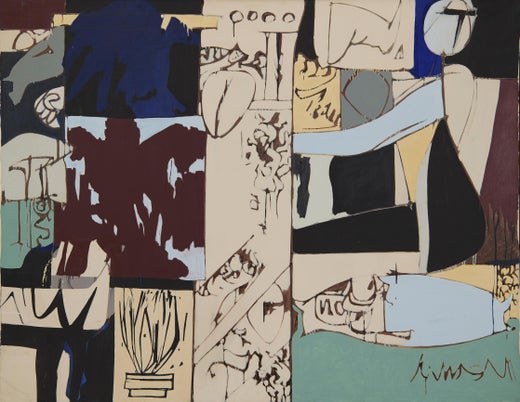
Richard Andres
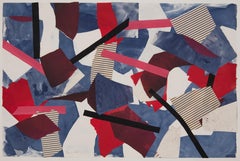
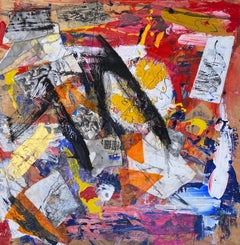
Pieces Collage, vibrant mid-century abstract expressionist black, pink & red

c. 1965

$2,280
$2,85020% Off
£1,721.34
£2,160.4120% Off
€2,014.71
€2,519.6220% Off
CA$3,239.88
CA$4,090.5320% Off
A$3,295.27
A$4,124.0520% Off
CHF 1,884.29
CHF 2,348.2820% Off
MX$39,858.95
MX$50,129.5320% Off
NOK 22,077.58
NOK 27,720.3520% Off
SEK 22,072.28
SEK 27,640.7720% Off
DKK 15,061.10
DKK 18,833.8320% Off

About the Item

Richard Andres (American, 1927-2013) Pieces Collage, c. 1965 collage on paper 14 x 18 inches Richard Andres was born in Buffalo, New York in 1927. A graduate of the Cleveland Institute of Art in 1950, he was immediately drafted and served for two years in the army as a mural painter. He received his Master of Arts from Kent State in 1961. A frequent exhibitor at galleries and museums and winner of multiple May Show prizes, Andres taught art in the Cleveland Public Schools for 28 years, as well as teaching the University of Buffalo, the Cleveland Institute of Art and the Western Reserve University. Very little in Richard Andres’ childhood would have predicted his love of classical music, mid-century-modern architecture and certainly not his lifelong passion for art and in particular abstract art. Richard’s father, Raymond, had no more than a third-grade education, and his mother, Clara, was one of thirteen children – only three of whom lived into adulthood and none of whom attended high school. They lived, when Richard was a boy, in a dingy area of Buffalo, NY in a walk-up apartment situated above a tavern. Raymond and Clara supplemented the income from their factory jobs in the bar downstairs with Raymond playing ragtime on the piano and Clara serving drinks. This often left Richard and his two older brothers at home alone to fend for themselves. The two older boys, Raymond and Russell, were - unlike Richard- rather rough and tumble and entertained themselves with stickball, boxing and the like. Richard, on the other hand, from a very young age liked to draw, or better yet even, to paint with the small set of watercolors he received for Christmas one year. Paper, however, at the height of the depression, was hard to come by. Luckily, Clara used paper doilies as decoration for the apartment and Richard would contentedly paint and then cut up doilies, gluing the pieces together to create collages. At eight-years-old, he discovered the Albright-Knox Museum (then known as the Albright Art Gallery) and spent several hours a week there studying the paintings. He was particularly fond of Charles Burchfield‘s landscapes, enamored with their ‘messiness’ and thinking that they somehow captured more ‘feeling’ than works he was previously familiar with. For his tenth Christmas, he asked for and received a ‘how-to’ paint book by Elliot O’Hare. Through this self-teaching, he assembled the portfolio needed for acceptance to Buffalo Technical High School where he studied Advertising Arts. In his Junior year, he was encouraged to enter a watercolor painting, “Two Barns,” in the national 1944-45 Ingersoll Art Award Contest and was one of twelve grand prize winners – each one winning one hundred dollars. More importantly the painting was exhibited at the Carnegie Institute Galleries, which resulted in his winning a national scholarship to the Cleveland School of Art (The Cleveland Art Institute). He flourished at the art school under the tutelage of faculty members such as Carl Gaertner, as well as that of visiting artists such as William Sommer and Henry George Keller. He would say in later years that Gaertner, in particular, influenced his attitude toward life as well as art. “Gaertner,” Andres said, “believed that there was no need to be a ‘tortured artist’, that an artist should rather enjoy beauty, family, and life in general.” Free to spend his days as he chose, he wandered the Cleveland Art Museum for most of the hours he was not attending classes or painting; the remaining time was spent drinking coffee at a local hangout with art school friends – which is where he met fellow Henry Keller scholarship winner, Avis Johnson. Richard was immediately smitten with Avis, but being rather shy, it took him the entire summer of 1948 to build up his courage to ask her out. Over that summer he ‘thought about Avis’ and worked in a diner to save money. He also used the hundred-dollar prize money won in High School to visit the first Max Beckmann retrospective in the United States at the City Art Museum in St. Louis. Over a half century later he spoke of that exhibit with a reverence usually reserved for spiritual matters, “I walked in and it was like nothing I had ever seen before... the color...It just glowed.” Returning to campus in the Fall, the first thing he did was go to the coffee shop in hopes of finding Avis. He did, and she, upon seeing him, realized that she was also smitten with him. They quickly became known as ‘the couple’ on campus, and a year later, with Richard being drafted for the Korean war, they were quickly married by a Justice of the Peace, celebrating after with family at Avis’s Cleveland home. As a gift, faculty member John Paul Miller designed and made the simple gold wedding ring Avis wore for their 65 years of marriage. During those 65 years neither wavered in their mutual love, nor in the respect they shared for one another’s art. The couple lived in a converted chicken coop in Missouri while Richard was in boot camp. At the camp, he would volunteer for any job offered and one of those jobs ended up being painting road signs. His commander noticed how quickly and neatly he worked and gave him more painting work to do - eventually recommending him for a position painting murals for Army offices in Panama. Until her dying day, Avis remained angry that “The army got to keep those fabulous murals and they probably didn’t even know how wonderful they were.” In Panama, their first son, Mark, was born. After Richard’s discharge in 1953, they moved back to the Cleveland area and used the GI bill to attend Kent State gaining his BA in education. The small family then moved briefly to Buffalo, where Richard taught at the Albright Art School and the University of Buffalo – and their second son, Peter, was born. Richard had exhibited work in the Cleveland May Show and the Butler Art Museum during his art school years, and during the years in Buffalo, his work was exhibited at the gallery he had so loved as a child, the Albright Art Gallery. In 1956, the family moved back to the Cleveland area and Richard began teaching art at Lincoln West High School during the day while working toward his MA in art at Kent State in the evenings. Avis and Richard, with the help of an architect, designed their first home - a saltbox style house in Hudson, Ohio, and in 1958, their third son, Max (after Max Beckmann) was born. Richard enjoyed the consistency of teaching high school as well as the time it gave him to paint on the weekends and during the summer months. In 1961, he received his MA and his daughter, Claire, was born. With a fourth child, the house was much too small, and Avis and Richard began designing their second home. An admirer of MCM architecture, Richard’s favorite example of the style was the Farnsworth house – he often spoke of how the concepts behind this architectural style, particularly that of Mies van der Rohe, influenced his painting. Andres described himself as a 1950’s painter, not fully accepting the designation of ‘Abstract Expressionist’ or ‘Abstract’ he saw his work as an extension of those styles, but rooted in the wider mid-century architectural concept of immersing the individual with nature, and the breakdown of the barrier between interior and exterior spaces. The house Avis and Richard built in 1967, with its open concept, and large glass curtainless windows reflected that concept, and the influence of living in that type of space can be seen in his later works. As Avis liked to say, “The idea is to have the walls be glass, but you need some real walls to have somewhere to hang paintings.” In this house, Richard developed a style of painting that harkened back to his early years. In his studio, a room in the house with a large window, he would roll out large thin paper - the type used for architectural blueprints on the floor and paint on it. The large rolls of paintings would then be cut into pieces and then glued onto canvas, creating that ‘glow’ of color he admired in Beckmann’s exhibit. These paintings, often with titles such as “Windows” or “Gardens” have transparency that reflects the breaking of interior/exterior boundaries of mid-century architecture as well as a joy realized in those early words of Carl Gaertner. In his late life Andres was fond of saying, “I am the wealthiest man in the world, look around, I have everything anybody could want. Look at my wife, my house, and all this art.”
  • Creator:
    Richard Andres (1927 - 2013, American)
  • Creation Year:
    c. 1965
  • Dimensions:
    Height: 14 in (35.56 cm)Width: 18 in (45.72 cm)
  • Medium:
  • Movement & Style:
  • Period:
  • Condition:
  • Gallery Location:
    Beachwood, OH
  • Reference Number:
    1stDibs: LU1768210398892

More From This Seller

View All
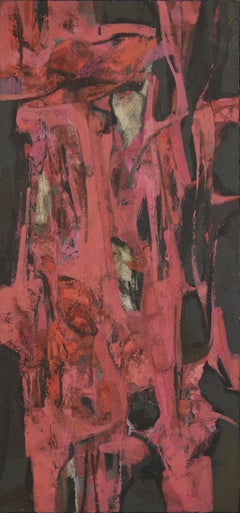
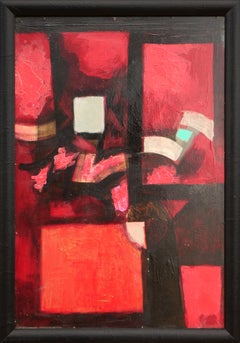
Pink & Black Abstract Painting by Cleveland School Artist

Pink & Black Abstract Painting by Cleveland School Artist

By John Teyral

Located in Beachwood, OH

John Teyral (American, 1912-1999) Untitled Oil on canvas Signed Teyral upper right 26 x 12.5 inches 28 x 14 inches, framed John Teyral was one of Cleveland's most acclaimed artists....

Category

Mid-20th Century Abstract Abstract Paintings

Materials

Oil

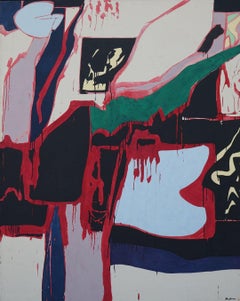
Shore V, large colorful red, black & blue mid-century abstract expressionist

Shore V, large colorful red, black & blue mid-century abstract expressionist

By Richard Andres

Located in Beachwood, OH

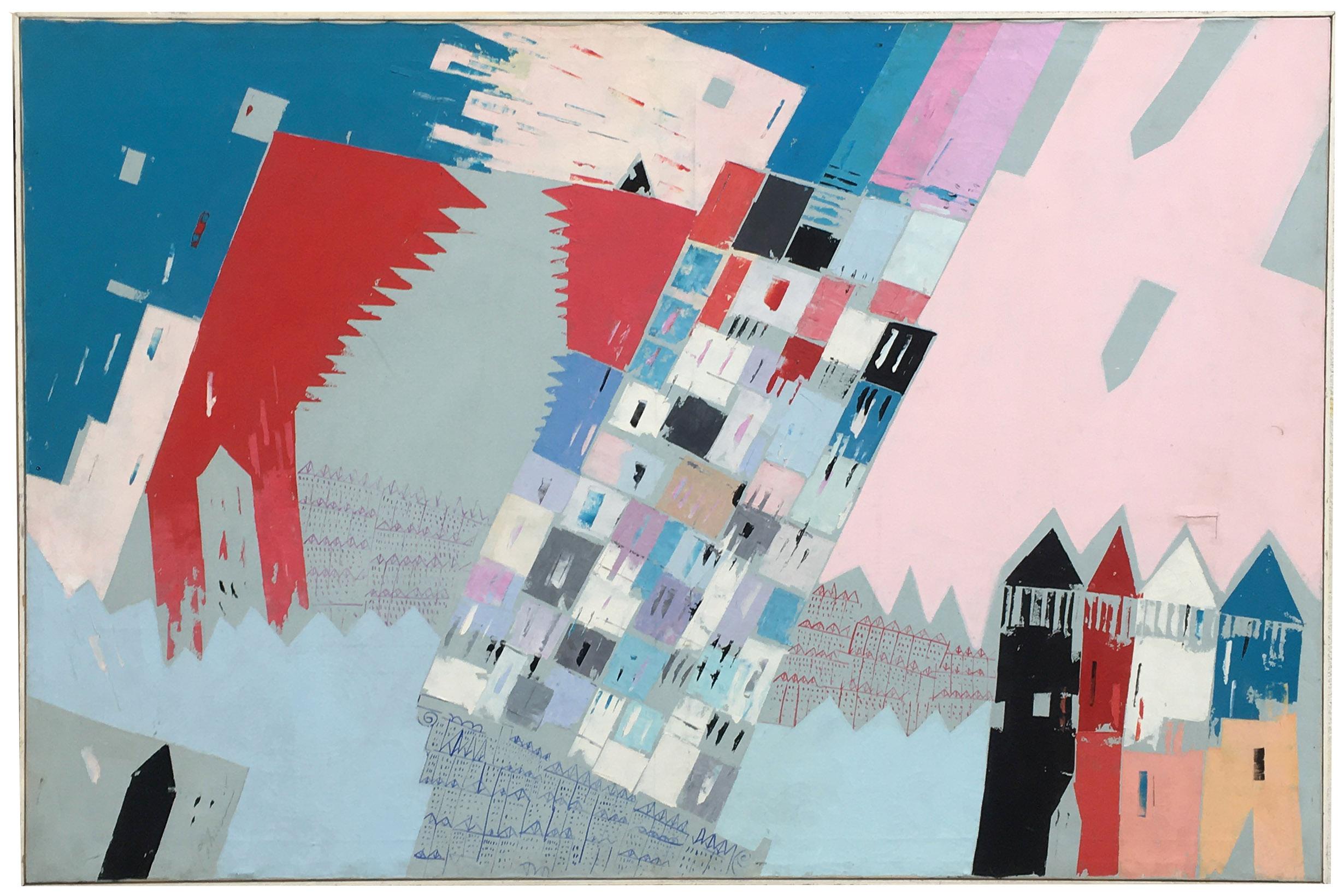
Richard Andres (American, 1927-2013) Shore V, c. 1964 acrylic on canvas signed lower right, signed and titled verso 54 x 44 inches Richard Andres was born in Buffalo, New York in 1927. A graduate of the Cleveland Institute of Art in 1950, he was immediately drafted and served for two years in the army as a mural painter. He received his Master of Arts from Kent State in 1961. A frequent exhibitor at galleries and museums and winner of multiple May Show prizes, Andres taught art in the Cleveland Public Schools for 28 years, as well as teaching the University of Buffalo, the Cleveland Institute of Art and the Western Reserve University. Very little in Richard Andres’ childhood would have predicted his love of classical music, mid-century-modern architecture and certainly not his lifelong passion for art and in particular abstract art. Richard’s father, Raymond, had no more than a third-grade education, and his mother, Clara, was one of thirteen children – only three of whom lived into adulthood and none of whom attended high school. They lived, when Richard was a boy, in a dingy area of Buffalo, NY in a walk-up apartment situated above a tavern. Raymond and Clara supplemented the income from their factory jobs in the bar downstairs with Raymond playing ragtime on the piano and Clara serving drinks. This often left Richard and his two older brothers at home alone to fend for themselves. The two older boys, Raymond and Russell, were - unlike Richard- rather rough and tumble and entertained themselves with stickball, boxing and the like. Richard, on the other hand, from a very young age liked to draw, or better yet even, to paint with the small set of watercolors he received for Christmas one year. Paper, however, at the height of the depression, was hard to come by. Luckily, Clara used paper doilies as decoration for the apartment and Richard would contentedly paint and then cut up doilies, gluing the pieces together to create collages. At eight-years-old, he discovered the Albright-Knox Museum (then known as the Albright Art Gallery) and spent several hours a week there studying the paintings. He was particularly fond of Charles Burchfield‘s landscapes, enamored with their ‘messiness’ and thinking that they somehow captured more ‘feeling’ than works he was previously familiar with. For his tenth Christmas, he asked for and received a ‘how-to’ paint book by Elliot O’Hare. Through this self-teaching, he assembled the portfolio needed for acceptance to Buffalo Technical High School where he studied Advertising Arts. In his Junior year, he was encouraged to enter a watercolor painting, “Two Barns,” in the national 1944-45 Ingersoll Art Award Contest and was one of twelve grand prize winners – each one winning one hundred dollars. More importantly the painting was exhibited at the Carnegie Institute Galleries, which resulted in his winning a national scholarship to the Cleveland School of Art (The Cleveland Art Institute). He flourished at the art school under the tutelage of faculty members such as Carl Gaertner, as well as that of visiting artists such as William Sommer and Henry George Keller. He would say in later years that Gaertner, in particular, influenced his attitude toward life as well as art. “Gaertner,” Andres said, “believed that there was no need to be a ‘tortured artist’, that an artist should rather enjoy beauty, family, and life in general.” Free to spend his days as he chose, he wandered the Cleveland Art Museum for most of the hours he was not attending classes or painting; the remaining time was spent drinking coffee at a local hangout with art school friends – which is where he met fellow Henry Keller scholarship winner, Avis Johnson. Richard was immediately smitten with Avis, but being rather shy, it took him the entire summer of 1948 to build up his courage to ask her out. Over that summer he ‘thought about Avis’ and worked in a diner to save money. He also used the hundred-dollar prize money won in High School to visit the first Max Beckmann retrospective in the United States at the City Art Museum in St. Louis. Over a half century later he spoke of that exhibit with a reverence usually reserved for spiritual matters, “I walked in and it was like nothing I had ever seen before... the color...It just glowed.” Returning to campus in the Fall, the first thing he did was go to the coffee shop in hopes of finding Avis. He did, and she, upon seeing him, realized that she was also smitten with him. They quickly became known as ‘the couple’ on campus, and a year later, with Richard being drafted for the Korean war, they were quickly married by a Justice of the Peace, celebrating after with family at Avis’s Cleveland home. As a gift, faculty member John Paul Miller...

Category

1960s Abstract Expressionist Abstract Paintings
Materials

Acrylic

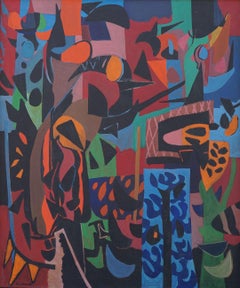
Colorful abstract acrylic collage 20th century painting, New York artist

Colorful abstract acrylic collage 20th century painting, New York artist

By Joseph Glasco

Located in Beachwood, OH

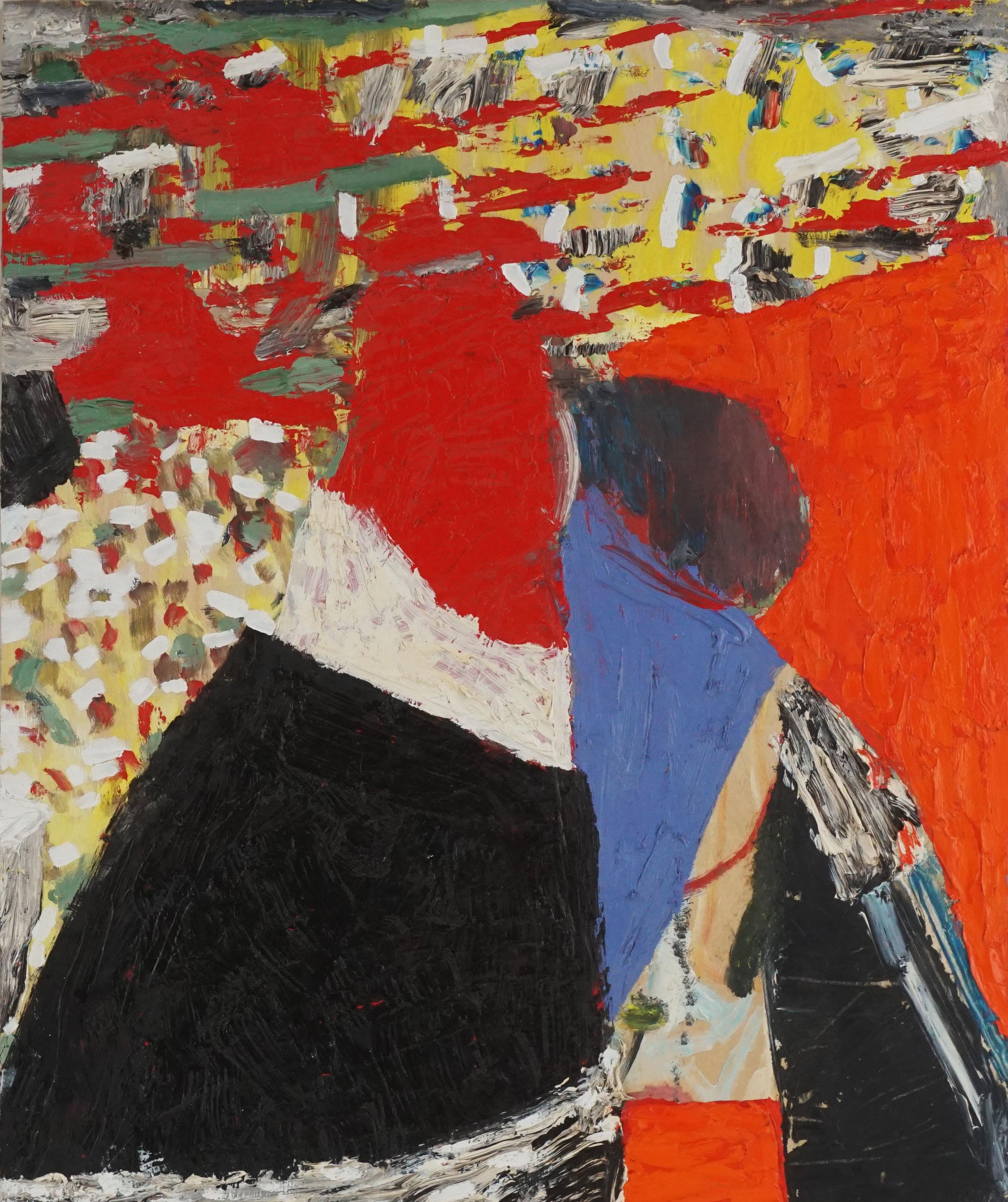
Joseph Glasco (American, 1925-1996) Untitled 1978-81 Acrylic on canvas collage initialed verso and dated ‘81 48 x 51 inches Joseph Glasco was born in Paul’s Valley, Oklahoma and gre...

Category

1980s Abstract Expressionist Abstract Paintings
Materials

Acrylic

Lanzorate, Large Abstract Collage, New York Artist

Lanzorate, Large Abstract Collage, New York Artist

By Joseph Glasco

Located in Beachwood, OH

Joseph Glasco (American, 1925-1996) Lanzorate, 1985 Monotype with fabric collage and mixed media on paper Signed and dated lower right, 1/1, titled lower left 31.5 x 48 inches 37 x 5...

Category

1980s Abstract Mixed Media

Materials

Fabric, Paper, Monotype

20th century abstract expressionist oil painting by Cleveland School artist

20th century abstract expressionist oil painting by Cleveland School artist

By Richard Andres

Located in Beachwood, OH

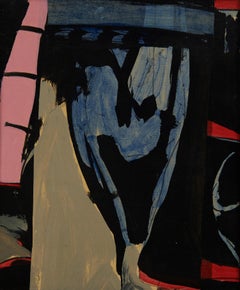
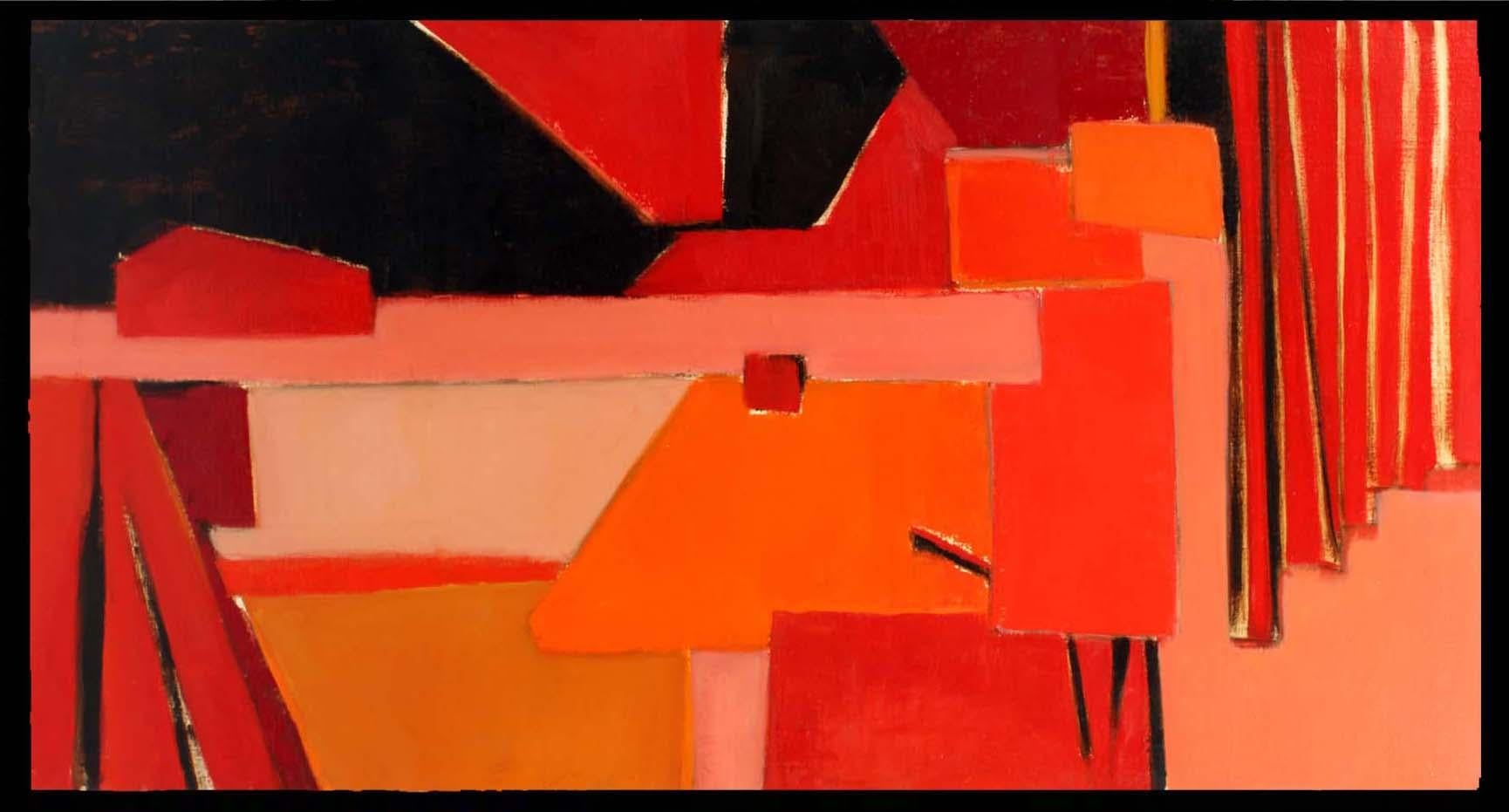
Richard Andres American, 1927-2013 acrylic and ink on paper mounted on canvas 12 x 10 inches Note: Small dent in canvas. See pictures for details. Richard Andres was born in Buffal...

Category

1980s Abstract Expressionist Abstract Paintings
Materials

Ink, Acrylic

You May Also Like

Mid-Century Modern American Oil Painting Abstract Female artist Museum red pink

Mid-Century Modern American Oil Painting Abstract Female artist Museum red pink

By Anita Johnson

Located in Buffalo, NY

Anita Johnson Untitled (Red Theater), c. late 1960s Oil on canvas Framed dimensions: 21 in. H × 41 in. W Contemporary black floater frame With its cinematic horizontality and comman...

Category

Mid-20th Century Abstract Geometric Abstract Paintings

Materials

Canvas, Oil

3 Red Blocks With 1 Black Shape - modern, contemporary, abstract, on canvas

3 Red Blocks With 1 Black Shape - modern, contemporary, abstract, on canvas

By Aron Hill

Located in Bloomfield, ON

A striking black archway draws the viewer into a world of vivid colour in this abstract composition by Aron Hill. Pure acrylic ink washes in red, pale orange, green, bright yellow, p...

Category

2010s Contemporary Abstract Paintings

Materials

Canvas, Ink, Acrylic

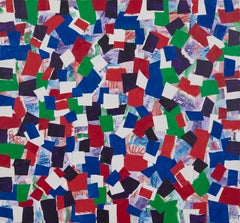
"Fusion" - Original Abstract Collage with Red, Blue, and Black - Oil on Wood

"Fusion" - Original Abstract Collage with Red, Blue, and Black - Oil on Wood

By Steven H. Rehfeld

Located in Carmel, CA

Steven H. Rehfeld (American, born 1954) "Fusion" 2019 Oil paint, paper, newsprint, glue, mixed media, on cradled wood panel The artist signed the back of the painting. "Fusion," a s...

Category

2010s Abstract Abstract Paintings

Materials

Oil, Paper, Glue, Mixed Media, Wood Panel, Newsprint, Stretcher Bars

"Red and Black Cubist with White" Modern Red-Toned Abstract Geometric Painting

"Red and Black Cubist with White" Modern Red-Toned Abstract Geometric Painting

Located in Houston, TX

Warm toned modern cubist abstract painting by Houston, TX artist David Adickes. The work features red, white, and aqua geometric shapes set against a black background. Currently hung in a black floating frame. Dimensions Without Frame: H 20.5 in. x W 14 in. Artist Biography: Born (1927) and raised in Huntsville, TX, David Adickes is an artist whose art and heart are closely aligned with Paris, France. After studying art at the Atelier F. Leger in the late 40s, Adickes burst onto the art scene in Houston and elsewhere in the early 50s and has been a prominent member of Houston’s art community ever since. While his most visible works are his giant sculptures, from the Virtuoso in downtown Houston...

Category

20th Century Modern Abstract Paintings

Materials

Acrylic

Large Abstract Black and Red Original Abstract Painting Dichotomy Michael Moon

Large Abstract Black and Red Original Abstract Painting Dichotomy Michael Moon

By Michael Moon

Located in Miami, FL

A very sophisticated contemporary abstract work by this well known California artist is a good example of emotive abstract painting. Divided by white and black, this painting swirls...

Category

2010s Abstract Abstract Paintings

Materials

Cotton Canvas, Acrylic

Black Composition, Abstract Expressionist Collage by Al Loving

Black Composition, Abstract Expressionist Collage by Al Loving

By Al Loving

Located in Long Island City, NY

Untitled (Black Composition) Alvin Loving, American (1935–2005) Date: Circa 1980 Acrylic, Pastel and collage on Paper Size: 22.25 x 29.5 in. (56.52 x 74.93 cm)

Category

1980s Abstract Expressionist Abstract Drawings and Watercolors

Materials

Pastel, Acrylic