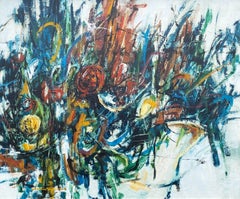
Robert Steven Koffler (1938-2022).
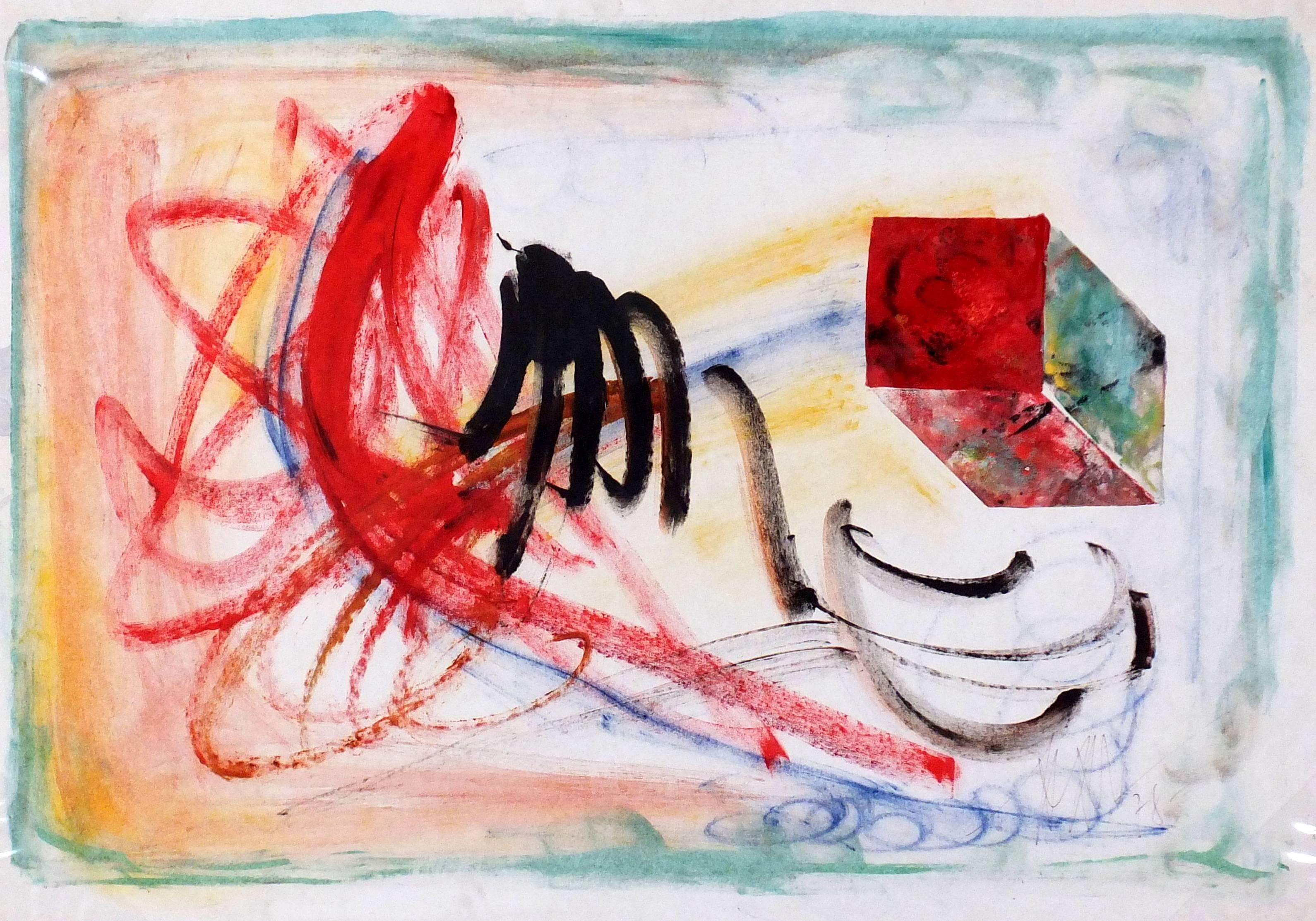
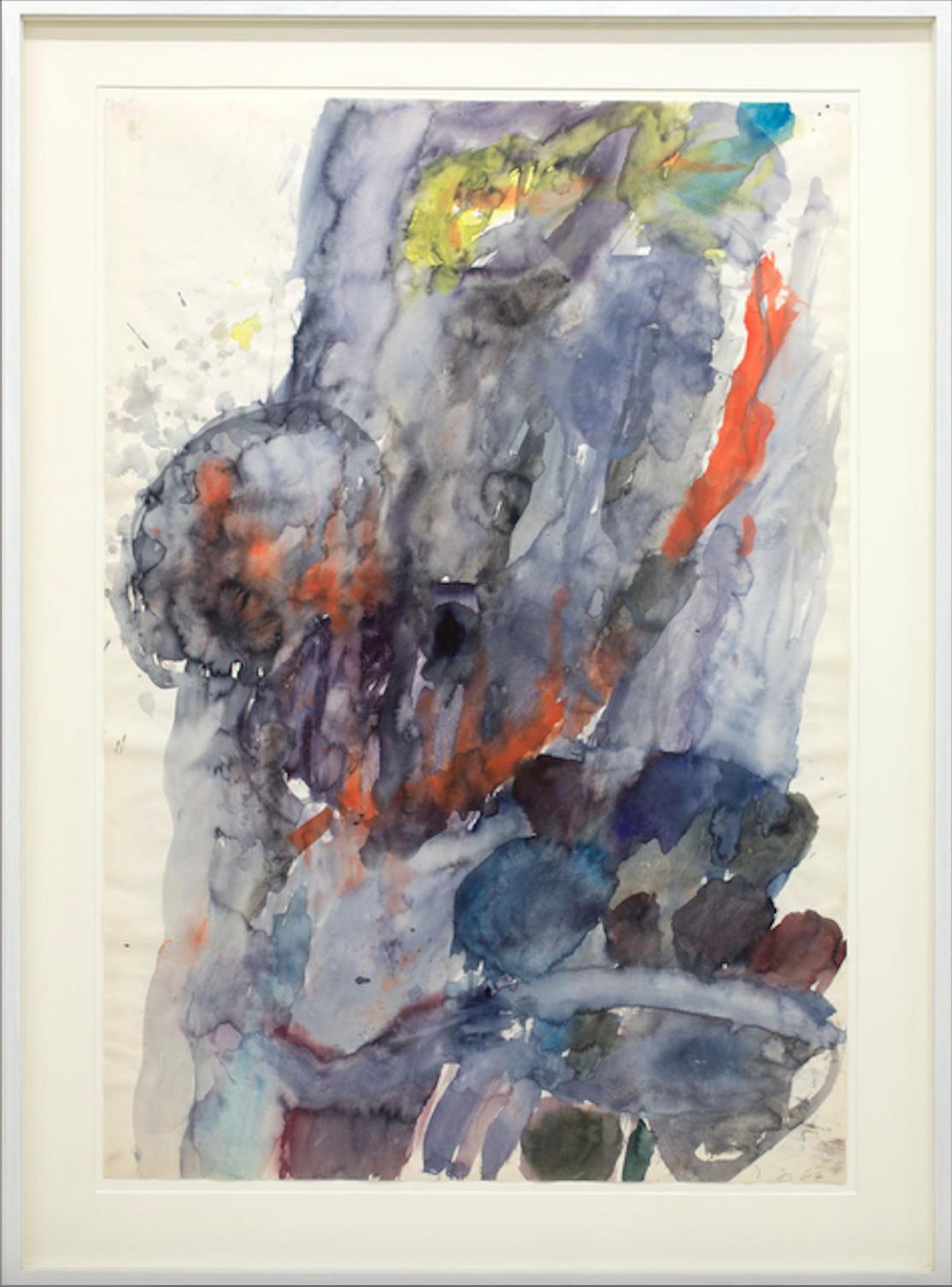
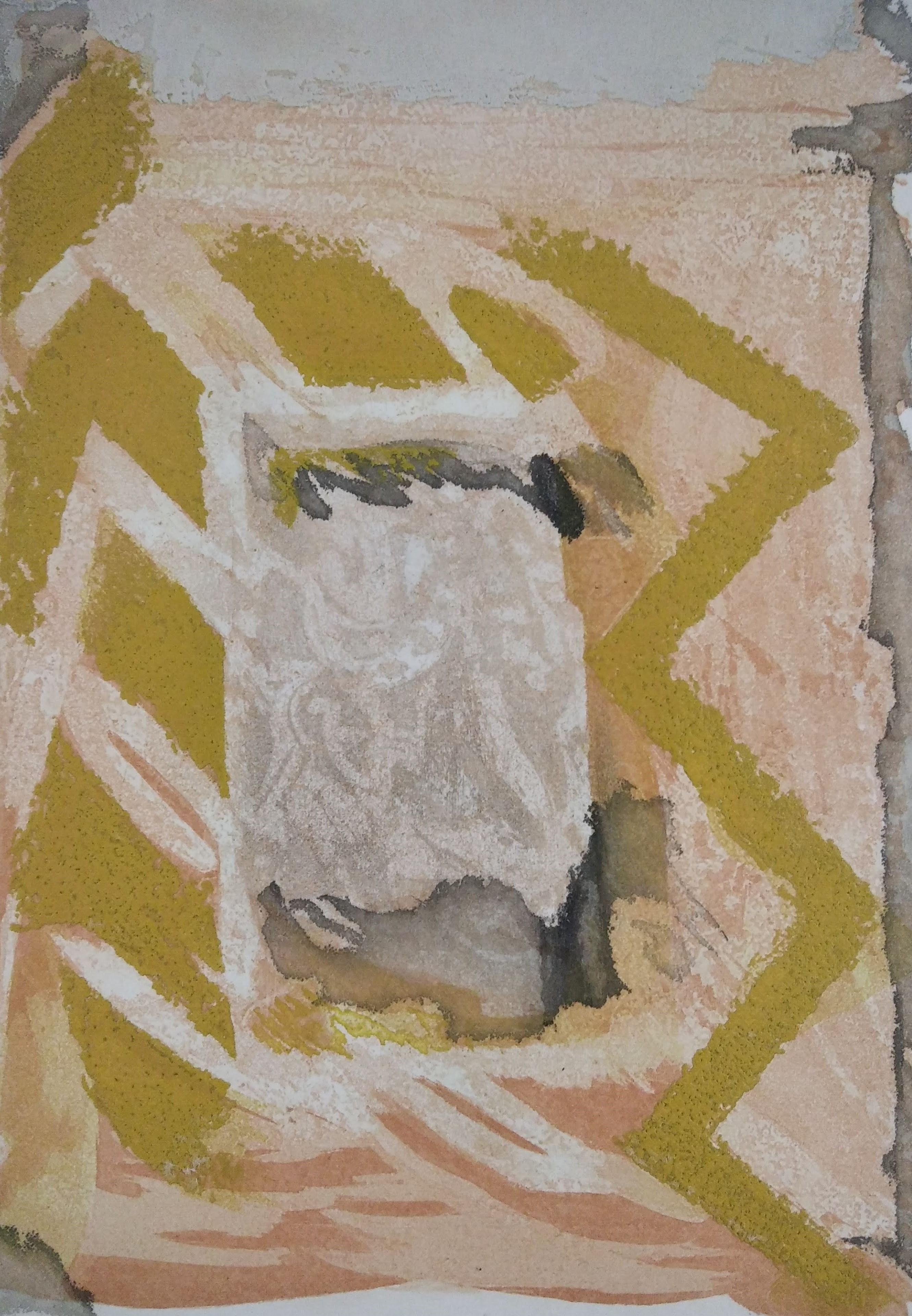
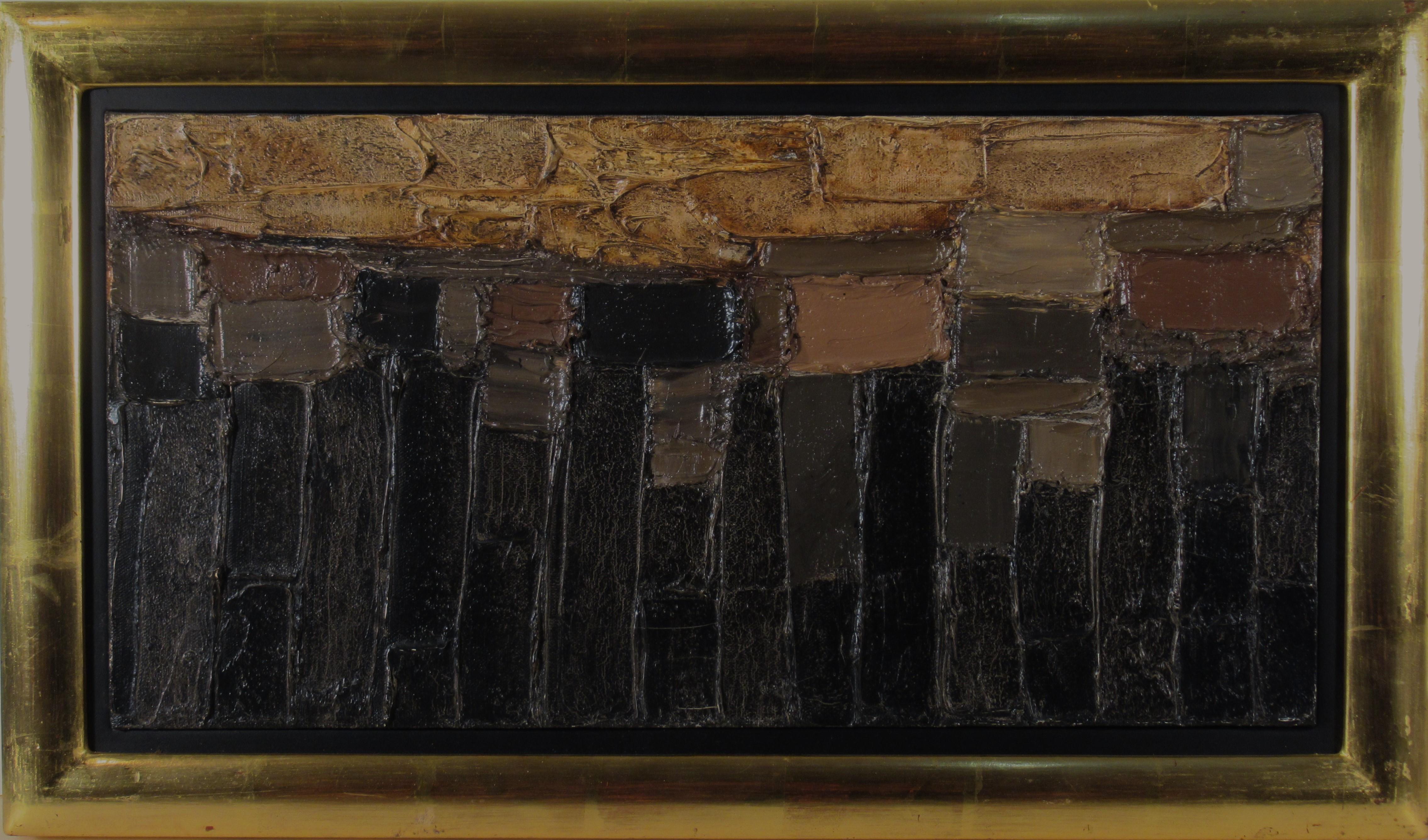
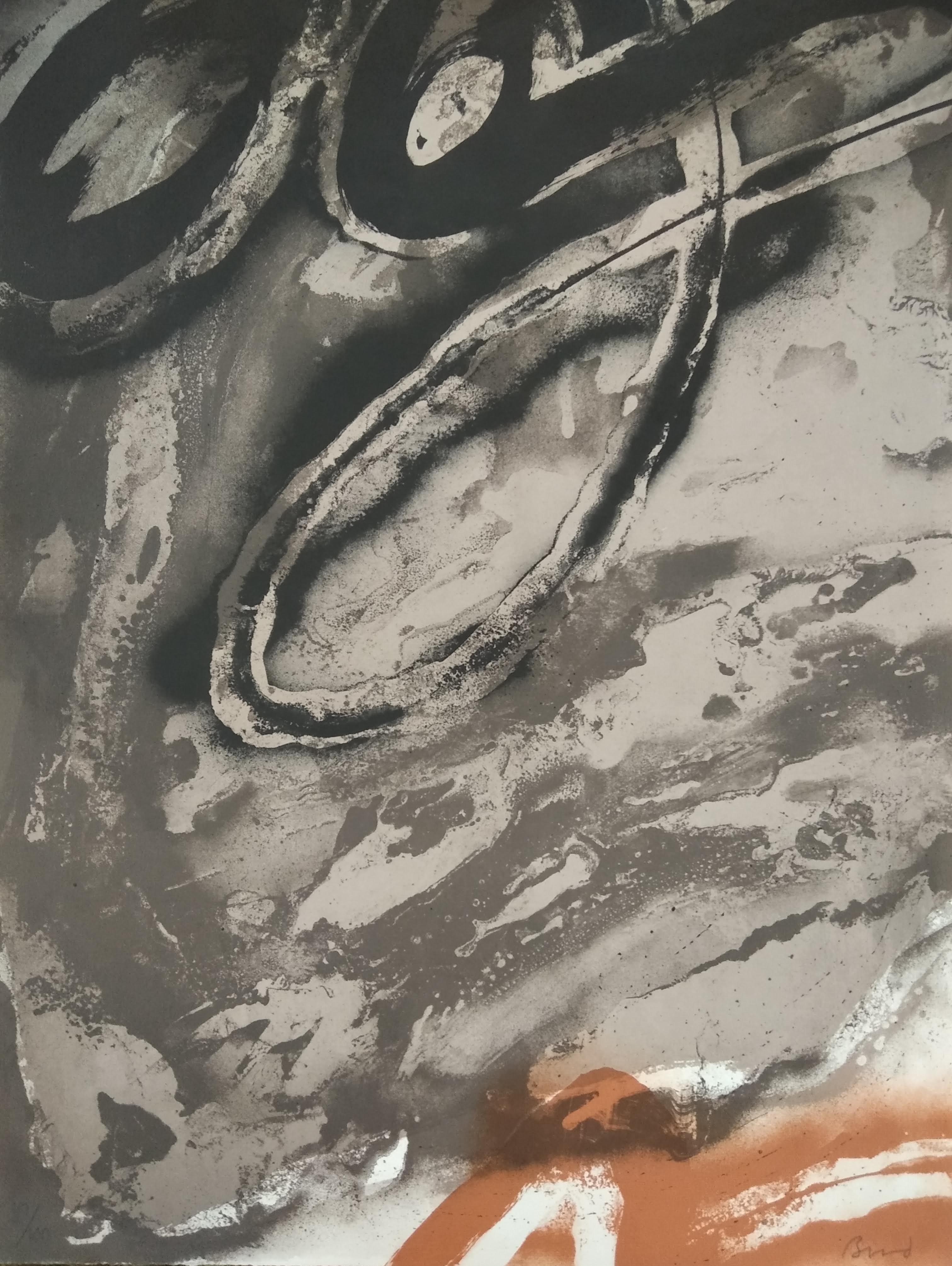
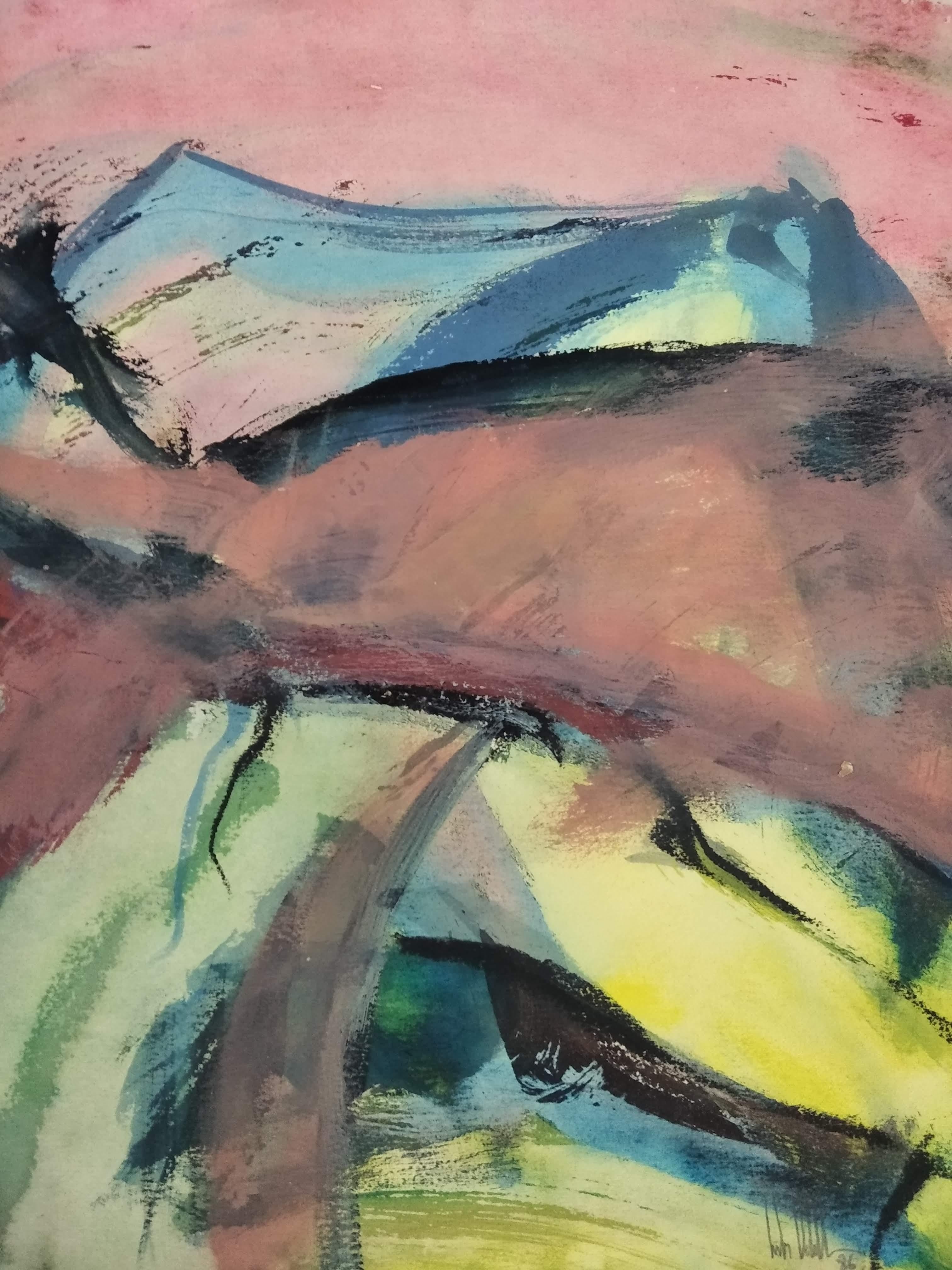
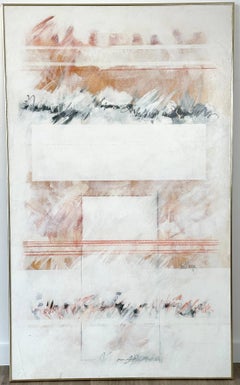
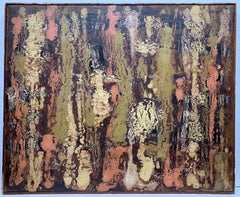
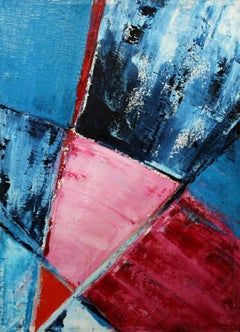
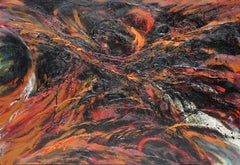
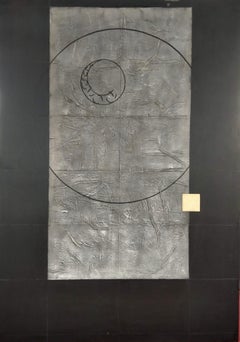
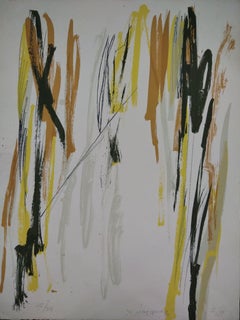
Untitled, 1963
Oil on masonite panel, 36 x 48 inches.
Total measurement with wood frame: 38 x 50 inches.
Signed and dated by artist, lower right.
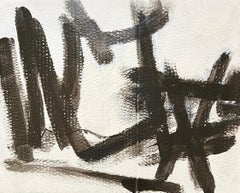
Small area of cracking and lifted paint about 3 inches long as depicted in detail image.
Robert Steven Koffler went to Syracuse University on a scholarship (9/56-12/59) earning a BFA with honors in Painting, minoring in Printmaking and Sculpture. His intention was to study with Ivan Mestrovic, of Rodin’s studio. Having been equally a painter and sculptor in terms of skills, Koffler chose the more active painting program when Mastrovic left for Notre Dame. In the Summer of 1959 Koffler worked with Reed Kay from Boston University while at Skowhegan (summer) School. Skowhegan gave the young artist a chance to meet such people as Kenneth Callahan and Ben Shahn. He received a scholarship to study traditional underpainting with Kay. After gaining what he could from Kay, Koffler rented a studio an began a teaching career as a substitute in the Philadelphia Public Schools for the period from 1960-63 after spending some months in Taxco, Mexico. He shared a printmaking studio with Carlos Pape his friend and landlord. From this time he created a small group of etchings and paintings: The Mexican Series. Koffler signed up for an MFA (1962), in Painting at the University of Pennsylvania for the fall of 1961, spending that summer touring Europe, Crete and Greece
This gave him the opportunity to actually study the great Spanish and Italian Renaissance and Baroque painters gaining from the underpainting studies and impacting on the work which was to be started at Penn and for the years beyond. Before mentioning specific work initiated at Penn, Koffler tribute to some of the people he worked with in that special time at the Graduate School of Art and Architecture. He worked iwith Angelo Savelli in studio and the lectures and seminars of men like Louis Kahn, Romolo Guirgolo, Robert Venturi as well as Dore Ashton, Kathrine Kuh, David Smith and Barnett Newman. Years later he told a slightly younger architect of the time at Penn. Oh, the architect said, You were there in the “golden years.” The dominant themes works of the period included “Seated and Special Figures,” “The Flight of Icarus,” (five mural panels plus separate paintings and studies), and the five by eight foot “St. Paul with an Vision of St. Peter,” (after Zurbaran), in two locking panels. The last series of this period, living in an unheated barn in the Olney section of Philadelphia was “The Death of Manolete.”
The strongest of the works coming out of nearly two years of living in Venice and Rome (1963-64), are drawings of “Venetian Angels” and a large group of works on paper interpreting Andrea Mantegna’s “Corpo Christo.” Koffler had come initially to Venice with a teaching grant from the Cini Foundation. He married Anny Peiffer in Venice and their first child, Nathaniel, was born in Rome in 1964. A parenthetic note, in Rome the Kofflers were to make enduring friendships with such other young expatriots as the writer William Melvin Kelley and his wife, painter Karen-Aiki, artist Wolf Kahn, Emily Mason and the poet Charles Wright. He was affiliated with “Galleria 88″ during the period.
Returning to Philadelphia Koffler began a group of archetypes; semi-abstract figures, mostly female. The figures within and interacting with the space containing them on the page. Some of this imagery translated into small bronzes, mostly as deep, wall relief’s. In pastels, and “white paintings” moving from Japanese print-influenced figures and finally figures and American flags, protesting the Vietnam War.
In the early 1970′s he continued pastels on such themes as the War, the Vermeer Series (two years), and images from the American Civil War. He also began rehabbing houses as a second job beyond teaching at Moore College of Art (1965-78), and began painting architectonic abstractions. They were first formatted on a horizontal-vertical form, later turned on axis into a triangular design within a rectangle. Eventually the collage quality implying doors and windows became simply triangles in space. By the late 1970′s the triangle was blurring out into the “Thales Series” breaking down form into the Greek Philosopher’s four categories: Earth, Air, Fire and Water. Koffler affiliated with Allan Stone Gallery in New York and Hall Barnett in New Orleans. These abstract oils, hundreds of them on oil and linen evolved into memory landscapes into the mid 1990′s and the purchase and rebuilding of an ancient log cabin on a stream and waterfall in the Central Berkshires. The last decade’s landscapes come out of the studio which he constructed out of a shed overlooking the stream.
EDUCATION
University of Pennsylvania, MFA, 1962
Boston University, Graduate Studies, Underpainting, 1960
Syracuse University, BFA, Honors, 1959
Skowhegan School of Painting and Sculpture, Summer, 1959
Temple University, Gratz College University of Perugia, Post Grad
TEACHING
Art Institute of Philadelphia, Senior Faculty, 1981-2014
Kendall School, College of Design, Academic Dean, 1978-79
Moore College of Art, Full Professor, 1965-78
Pennsylvania Academy of the Fine Arts, Critic, Lecturer, 1981-84
Cini Foundation, Venice, Italy Residence, Critic-1963
LECTURER
Bezalel Academy of Fine Arts, Jerusalem
University of North Carolina, Chapel Hill
Goddard College, Vermont
University of Houston
Temple University
Haystact School of Crafts, Deer Isle, ME
DESIGN
Herman Miller, Inc., Headed Showroom Design Nationally, 1979-80
SOLO EXHIBITIONS
Carrie Haddad Gallery, Hudson, NY, July 2009
Sidetracks Gallery, New Hope, PA, March 2008
Elizabethtown College, PA, Fall 2000
Salon Des Amis Gallery, Malverne, PA, 1999
Art Institute of Philadelphia, Four Decades of Studies, 1999
Goforth Rittenhouse Gallery, Philadelphia, PA, 1992
Alan Stone Gallery, NYC, 1987
Art Institute of Philadelphia, 1986
Villanova University, Retrospective, 1979
Siena Heights College, Adrian, MI, 1979
American Institute of Architects, Philadelphia, PA, 1977
Lehigh University, 1978
St. Joseph’s University, Philadelphia, PA, 1976
Temple University, Philadelphia, PA, 1970
Portico Gallery, Philadelphia, PA, 1970
GROUP SHOWS
Anthony Nordoff Gallery, Great Barrington, PA
Salon Des Amis Gallery, Malverne, PA
Alan Stone Gallery, NYC
Art Institute of Philadelphia
Hall-Barnett Gallery, New Orleans, LA
William Traver Gallery, Seattle, WA
Philadelphia Museum of Art
Princeton Fine Arts Gallery
Pennsylvania Fine Arts Gallery
Pennsylvania Academy of the Fine Arts
WilliamPenn Art Museum, Harrisburg, PA
Cheltenham Center for the Arts, Cheltenham, PA
Saganaw Art Museum
Miriam Perlman Gallery, Chicago, IL & Flint, MI
Brooks Jacks Iolas Gallery, NYC
Moore College of Art, Philadelphia, PA
Makler Gallery, Philadelphia, PA
Miriam Locks Gallery, Philadelphia, PA
Vanderlip Gallery, Philadelphia, PA
Nordness Gallery, NYC
Far Gallery, NYC
National Academy of Design, NYC
Museo Des Bellas Artes, Ponce, PR (Three man show)
Galleria 88, Rome, Italy
ACA Gallery, Rome, Italy
PUBLIC AND COLLECTIONS
Smithsonian Institutions, Washington, D.C.
National Archives, Washington, D.C.
Museum of Modern Art, NYC
Ahavis Israel Synagogue, Grand Rapids, MI (Mural)
Grand Rapids Museum, Grand Rapids, MI
Hazlett Foundation, MI
Lasalle University, Philadelphia, PA (20 ft mural)
Dupont Collection, Wilmington, DE
Steelcase Corporation, Atlanta, GA
Dietrich Fondation, Philadelphia, PA
Kunkin Steel Corporation, Souderton, PA (38 ft mural)
Pinemere Health Facility, Brodheadsville, PA (85 ft mural)
Villanova University, Villanova, PA
Federal Government Building, Philadelphia, PA
Ben Bernstein Collection, Philadelphia, PA
Elizabethtown College, PA
AWARDS & HONORS
Cheltenham Centre for the Arts: Cope Award
Tau Sigma Delta – National Art/Architecture Honorary Society
International prizewinner, sculpture, Buffalo, NY Arts Festival
Distinguished Leadership/American Biographical Institute
Ford Foundation —Sculpture
Fulbright —Runner Up —Selected as critic, Fundazione Cini, Venice, Italy
Wechsler Foundation Grant: Nepal
Reviewed Internationally
Published, New York Art Review
Extensive Radio and TV Interviews, NYC, Philadelphia
Reader: National Endowment of the Humanities