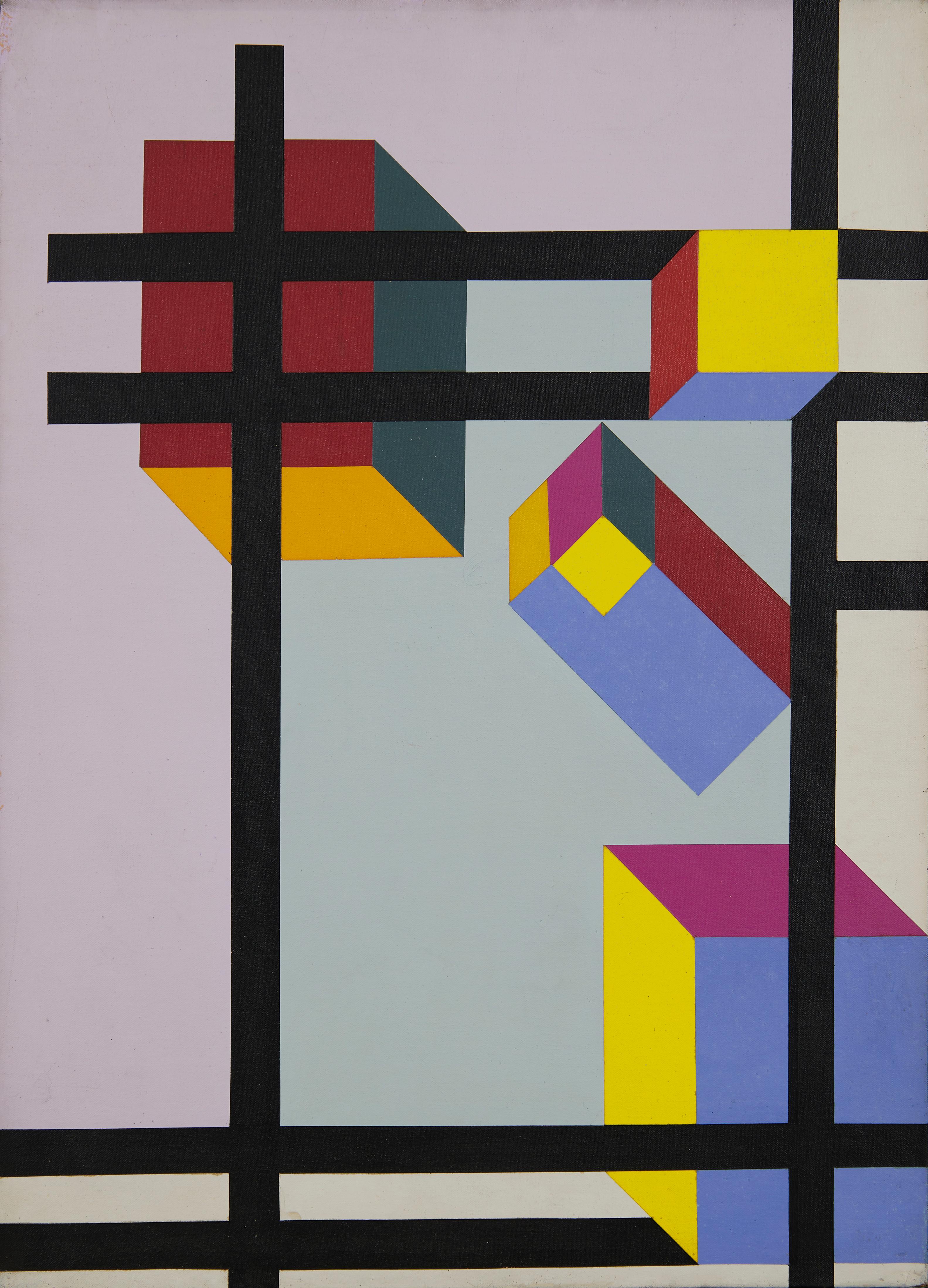
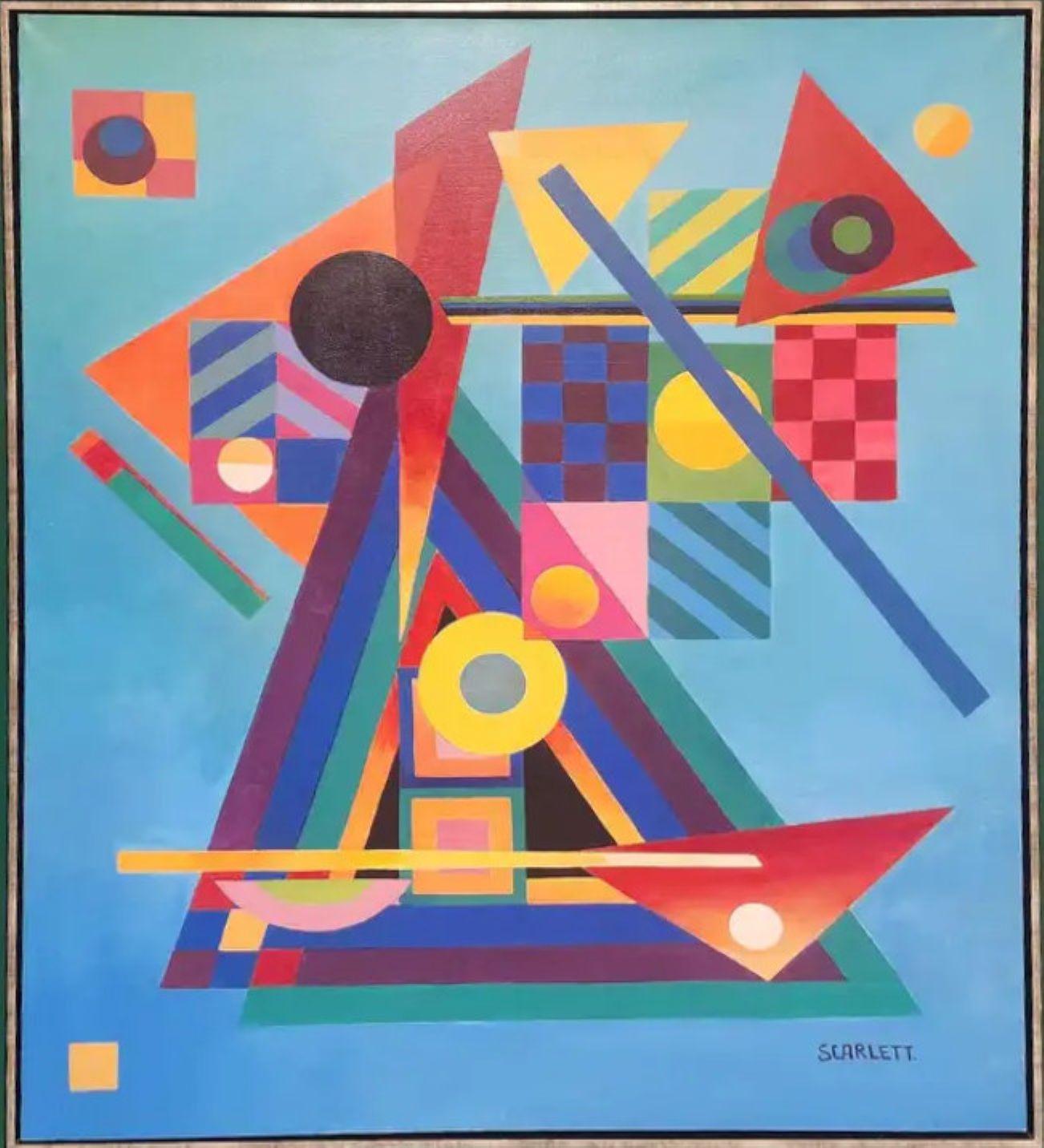
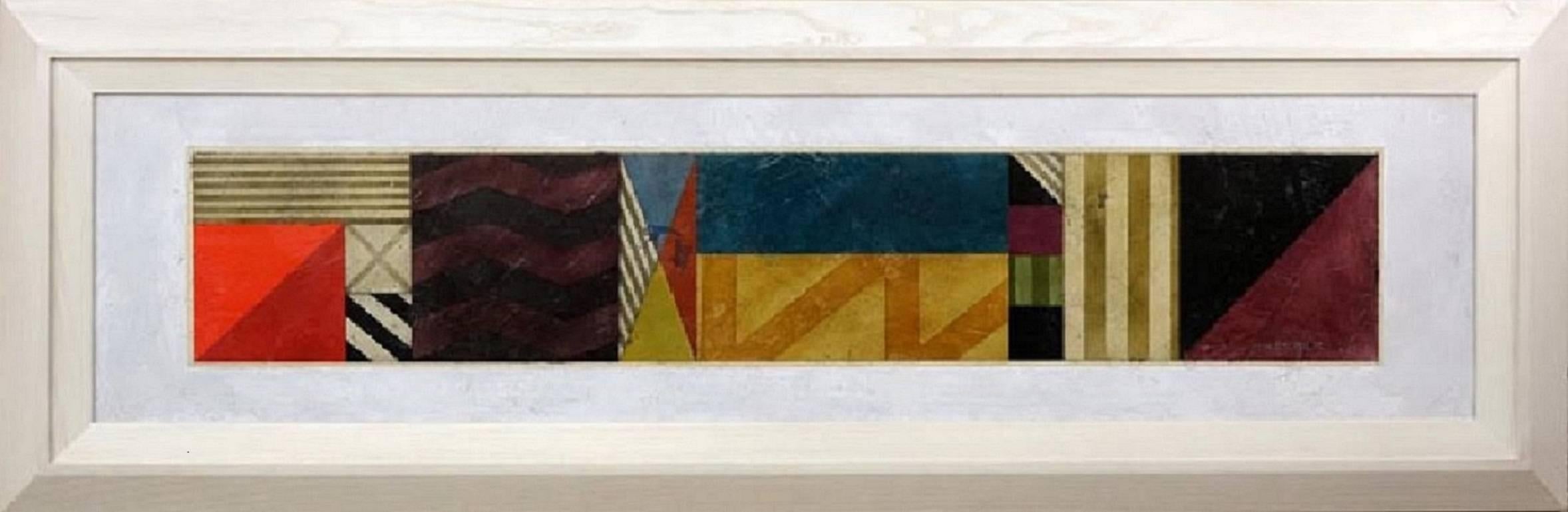
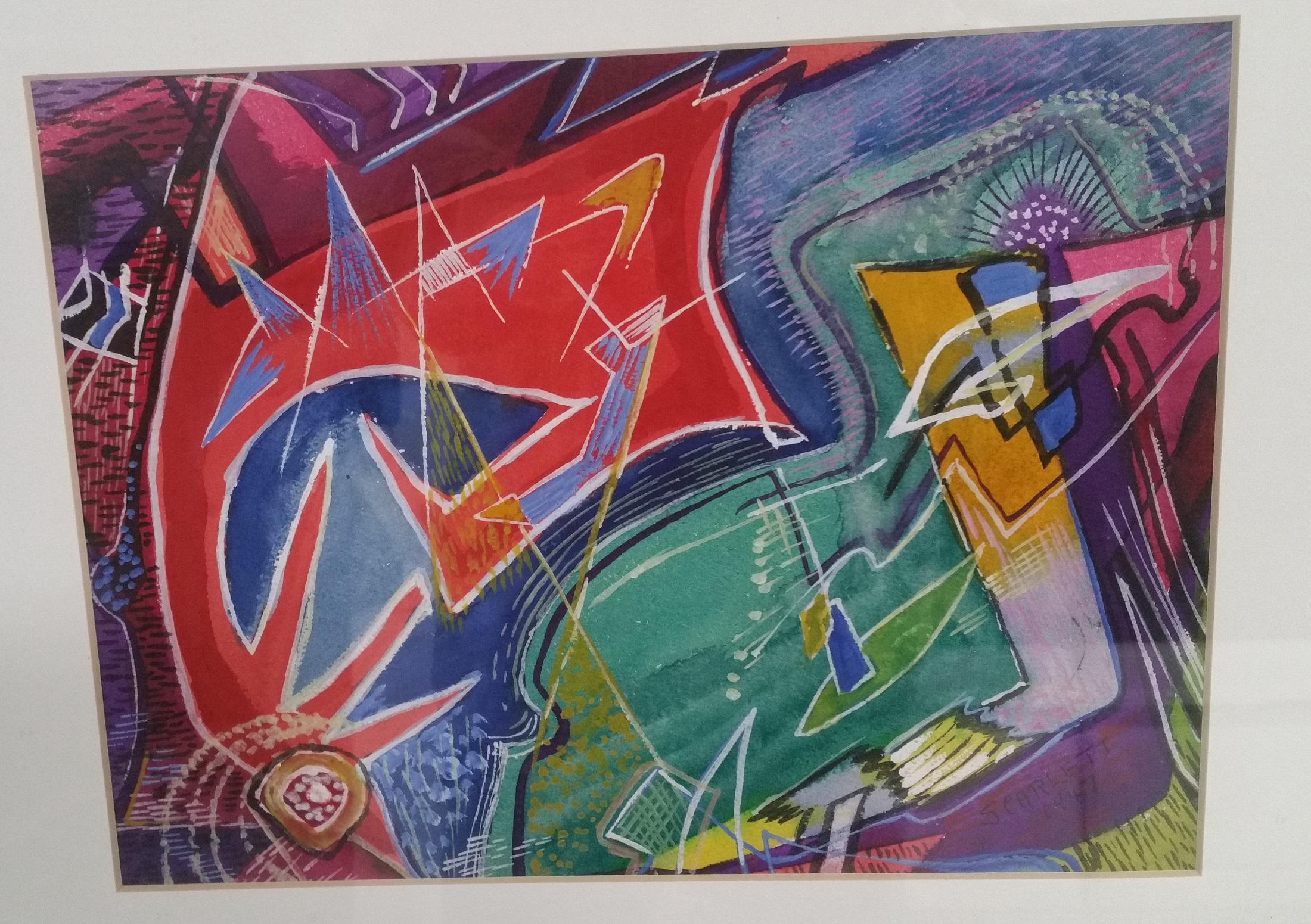
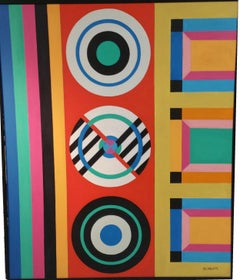
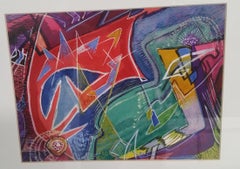
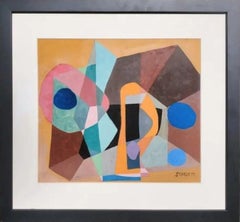
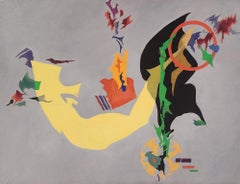
Rolph Scarlett (Canadian/American, 1889 - 1984)
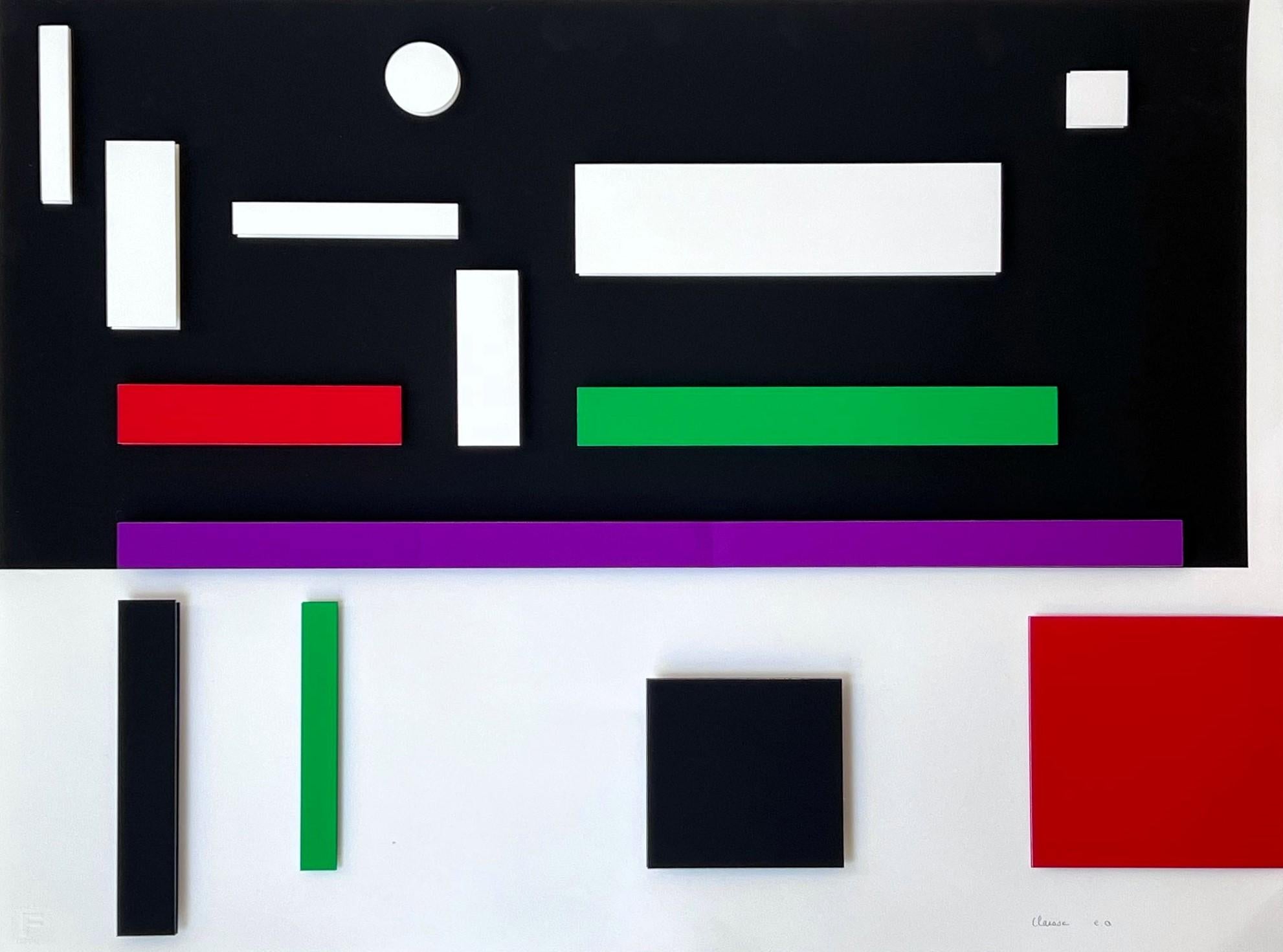
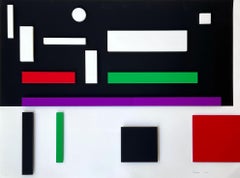
“Geometric Composition”
Signed lower right, circa late 1930’s early 1940’s
19 ½ x 26 inches
Mixed media, Price on request
About
Rolph Scarlett was a painter of geometric and linear forms, an industrial designer, and a pioneer in helping establish non-objective art as an aesthetic in America. He also worked in an abstract art style during the American avant-garde movement which extended into the 1940s. He was born in Guelph, Ontario, Canada and travelled to New York City as an 18-year-old. By 1924 he made New York City his home.
In 1939, Scarlett was one of the founding members and forces which steered the development of the Museum of Non-Objective Painting in New York. (later, the Solomon R. Guggenheim Museum). Guggenheim was the sponsor behind the Avant Garde and pioneering, philosophy of Baroness Hilla Rebay who founded the early museum. She was both the founding curator and director of the museum, as well as an abstract artist. She encouraged and worked with Scarlett in the early museum years, together promoting the concepts of non-objective painting. In Scarlett’s aesthetic these where geometric elements intuitively placed in non-descript flat and three-dimensional space.
Any discussion of the history of the Guggenheim Museum must include four key figures: Hilla Rebay (1890-1967), Wassily Kandinsky (1866-1944), Rudolf Bauer (1889-1953), and Rolf Scarlett (1889-1984). The museum collected and showed numerous works by Kandinsky and Klee (who Scarlett met in Geneva in 1923, and who encouraged him toward Modernism). Bauer and Scarlett works constituted many of the early exhibitions. Scarlett being the only American among the initial group.
Scarlett’s work represented the third most in the museum’s collection, with 60 pieces. By the 1940’s Scarlett’s role had increased to become the museums chief speaker and expert on non-objective art, as well as a central artist in exhibitions. His geometric style flourished. Uniquely, the approach differed from other abstract styles. It was abstraction based on geometric forms.
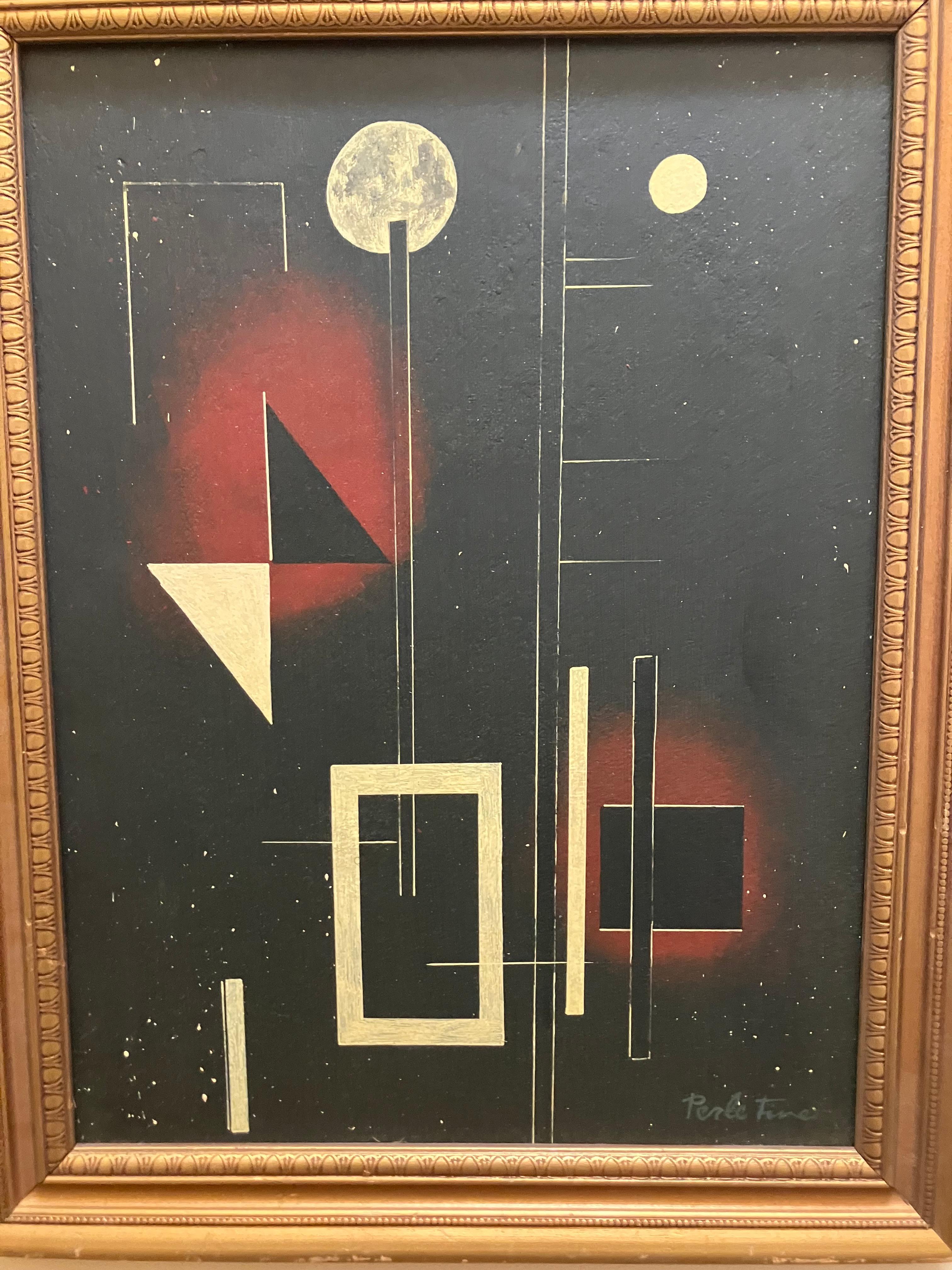
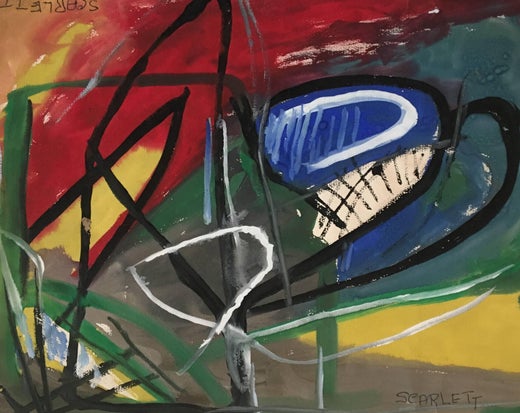
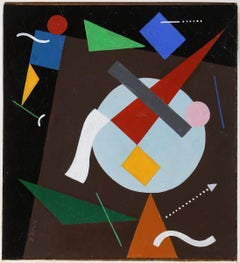
Unlike Kandinsky, who influenced Scarlett’s classic, non-objective, art, Scarlett focus was on the forms, shapes and the intuitive rhythms of geometry and the balance of color - with no abstract reference to the real natural world.
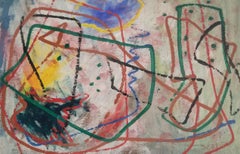
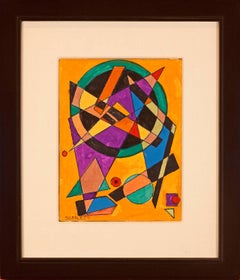
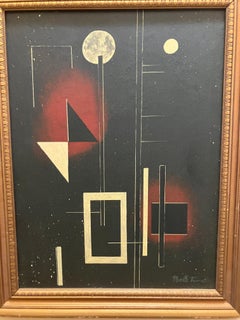
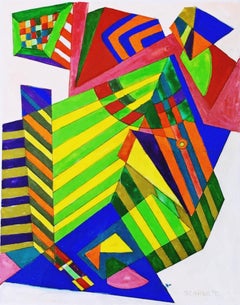
This makes the work pictured “Geometric Composition” special in Scarlett’s oeuvre. With this work, Scarlett transforms circles, shapes, and lines within an idea of two- and three-dimensional space. “Geometric Composition”, like many of his best geometric examples’ balances with rhythm the geometric shapes, while balancing precisely layered detail for the viewer to observe. The viewers experience becomes both enchanting and magical, as observation entices the viewer with layers of detailed geometric design and an edgy harmony (Sources: askart Art & Antiques Magazine, “Objective: Non-Objectivity” January 2107, wikipedia Hilla_von_Rebay)