Want more images or videos?
Request additional images or videos from the seller
1 of 13

Stanley Bate
"Stele, " 1960s Modern Abstract Painting

circa 1960

$17,300
£13,114.07
€15,294.51
CA$24,830.25
A$25,033.69
CHF 14,254.49
MX$304,295.04
NOK 168,267.40
SEK 167,784.34
DKK 114,324.68

About the Item

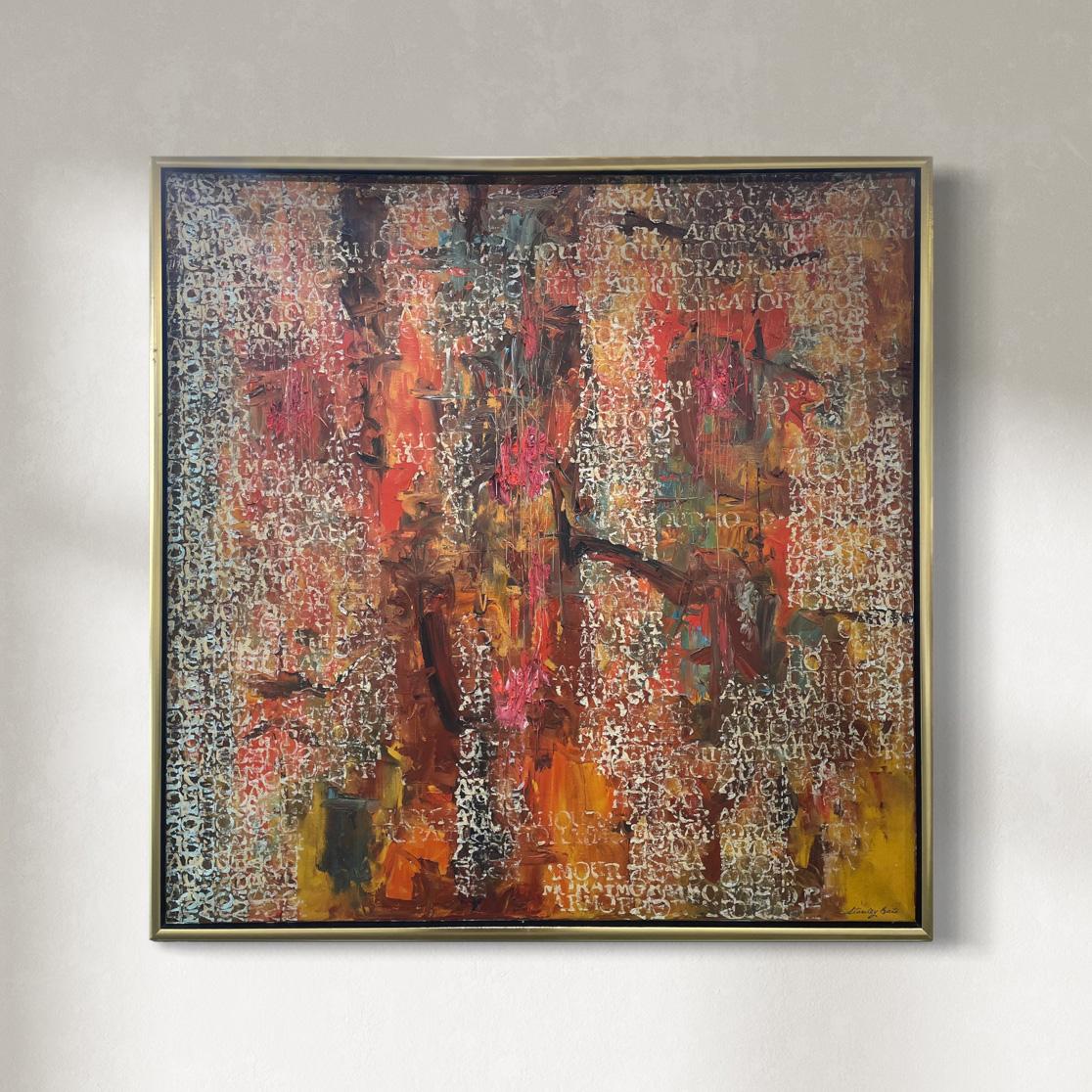
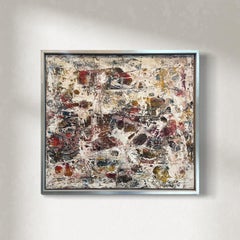
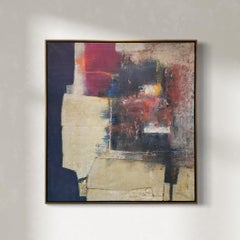
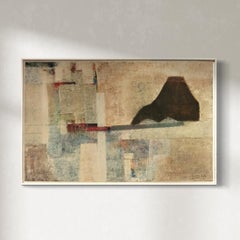
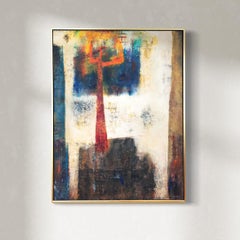
"Stele" by Modernist painter Stanley Bate is a bold painting with a dark grey and umber border and large, central rectangles, the left in a warm red and orange and the right in a light white and creme. Energetic, black strokes of paint are also crosshatched throughout the entire composition. The artist was inspired by his peer, Mark Rothko which is reflected in the large, deeply saturated geometric shapes of this piece. It measures 34" x 48" framed, and is framed in a gold-hued floater frame. It arrives wired and ready to hang. Stanley Bate was born on March 26, 1903 in Nashville, Tennessee. The Bates were an established Tennessee family, in fact, Henry’s brother William Bate was the governor of Tennessee from 1883-1887 and a United States Senator from 1887-1905. Stanley studied art at the Watkins Institute in Nashville. In the 1920’s Bate moved to New York City to study at the Art Students League under Frederick Bridgman. He soon landed a job with Encyclopedia Britannica, and from 1927-1929 served as art editor. From 1929 until his death in 1972, Stanley was a self-employed artist. He taught art classes at both the Art Students League and the Albany Institute of History and Art and brought in extra income by making illustrations for magazines such as “Outdoor Life” and “Popular Science”. On January 27, 1934 Stanley married Emilie Rossel. Emilie had emigrated from Switzerland to New York in 1923. She found work as a governess to Alfred Vanderbilt and later as an executive secretary for Wall Street investment brokers Kahn, Loeb and Co. Emilie met Stanley in New York in the early 1930’s when she attended one of his art exhibitions with a friend. The couple, who had no children, lived on 34th Street in Manhattan. During this period, Bate was producing and exhibiting his art and joined several artists groups. Stanley and Emilie became part of the New York art scene, dining weekly at the Society of Illustrators Clubhouse. Stanley Bate’s time in New York was pivotal in the formation of his painting style. He lived in New York during the inception of one of the most important Modern Art movements, one that helped New York replace Paris as the center of avant-garde art. This movement, which was called the New York School of artists, was later known as Abstract Expressionism. It was comprised of a loosely associated group of vanguard artists working in New York City during the 1940s and 1950s. The New York School was not defined by a specific style, but instead reflected a fusion of European Modernism and American social relevancy that was depicted in many individual styles. Influences of Surrealism, Cubism, and Modernism can be found in their work, along with an interest in experimenting with non-traditional materials and methods. American art was in the forefront of international avant-garde for the first time. Stanley Bate was undoubtedly exposed to the varied styles and techniques that were emerging during the formative years of the New York School. Mark Rothko and Robert Motherwell were formulating their versions of color field paintings. Joseph Cornell was experimenting with assemblages, collage and the use of different types of textured paints. Jackson Pollock was adhering objects such as buttons and coins into his early works, while Louise Nevelson was using found objects. Helen Frankenthaler added sand to her early paintings. The New York School artists were undermining traditional fine art by using mixed media and non-traditional methods. Stanley Bate absorbed these varied influences and soon his early realistic landscapes and still-lifes were replaced with something entirely new. The influence of Cubism, notably the flat shallow space of the picture plane, is obvious in many of Bate’s paintings. Surrealism is evident in Bate’s use of subjects from myth, primitive art and antiquity, along with the Automatism-like line work in his more linear images. The unfettered experimentation of the New York School is everywhere in Stanley Bate’s work. We see nods to color field, collage, the mixing of textures into paint, mixed media, the inclusion of found objects and thick, luscious impasto. Bate was prolific and experimented in various media including oil, watercolor, lithography, silk screen, wood cut, drawing, collage, ceramics and sculpture. Bate is considered a true Modernist. His work is largely abstract, but sometimes figures and buildings are discernable. He frequently mixed paint, sand and glue together to achieve a textured surface, and then scraped and scratched through this layer to expose some of the underpainting below. His sculpture, which is often whimsical, also reflects the non-traditional methods of the New York School. Bate pioneered the use of enamel and copper in his work. The sculptures are not carved or modeled as was done in the past, but instead are built using mixed media and new materials. In addition to the New York School influence, many of Bate’s works exhibit a strong connection to the Spanish school, especially the work of Antonio Tapies and Modesto Cuixart. These artists were both part of an avant-garde group known as Art Informel, the Spanish equivalent of Abstract Expressionism. These artists likewise worked in mixed media and introduced objects and texture into their work. Many of Bate’s subjects and titles relate to Spanish locations and words. It is likely that Stanley spent time in Spain and found inspiration there. By the early 1940s, Stanley and Emilie had started spending weekends in a barn they purchased in Craryville, New York, a few hours north of Manhattan. The barn had no electricity or plumbing, but when the Bates eventually decided to leave New York and live full time in Craryville, they remodeled the barn, putting a gallery downstairs and a studio and living quarters upstairs. Although the Bates moved out of New York City, Stanley remained part of the New York art scene, exhibiting in New York and elsewhere throughout the 50s and 60s. During his lifetime he was represented by the New York galleries Knoedler and Company, Kennedy Galleries, Rose Fried Gallery and Key Gallery, along with Tyringham Gallery located in Tyringham, Massachusetts. Craryville was Stanley’s home until his death on August 21, 1972. Emilie died 1984. Her obituary requested that any donations to be made to the Albany Institute of History and Art. The Institute held a retrospective exhibition of Bate’s work in 1973. Since his death, Stanley Bate’s artwork has been exhibited widely and placed in numerous collections.
  • Creator:
    Stanley Bate (1903 - 1972, American)
  • Creation Year:
    circa 1960
  • Dimensions:
    Height: 46 in (116.84 cm)Width: 32 in (81.28 cm)Depth: 1.5 in (3.81 cm)
  • Medium:
  • Movement & Style:
  • Period:
  • Condition:
    Professionally framed in a gold hued floater frame with brown sides. Dimensions with frame are 47.25 x 33.25 inches.
  • Gallery Location:
    Westport, CT
  • Reference Number:
    Seller: SBA0291stDibs: LU5441911703

More From This Seller

View All
"Morat, " 1960s Modern Abstract Painting

"Morat, " 1960s Modern Abstract Painting

By Stanley Bate

Located in Westport, CT

This abstract painting by Modernist artist Stanley Bate combines deep, textured red with creme and dark blue and grey. Geometric shapes throughout the painting are softened by the en...

Category

1960s Modern Abstract Paintings

Materials

Canvas, Oil

"Untitled #128, " 1960s Modern Abstract Painting

"Untitled #128, " 1960s Modern Abstract Painting

By Stanley Bate

Located in Westport, CT

This Modern Abstract Expressionist painting by Stanley Bate is made with gouache on paper. It features a dark palette, with dark charcoal black tones contrasted by yellow and red accents throughout, and large brush strokes. The painting itself is 16" x 54" and measures 17" x 56" x 2" framed. The paper is mounted on board, framed in a black frame under glass. It is not signed by the artist, but has been authenticated by his estate, and is stamped with the estate seal on the back of the painting, and on the back of the frame. It is ready to hang. Stanley Bate was born on March 26, 1903 in Nashville, Tennessee. The Bates were an established Tennessee family, in fact, Henry’s brother William Bate was the governor of Tennessee from 1883-1887 and a United States Senator from 1887-1905. Stanley studied art at the Watkins Institute in Nashville. In the 1920’s Bate moved to New York City to study at the Art Students League under Frederick Bridgman. He soon landed a job with Encyclopedia Britannica, and from 1927-1929 served as art editor. From 1929 until his death in 1972, Stanley was a self-employed artist. He taught art classes at both the Art Students League and the Albany Institute of History and Art and brought in extra income by making illustrations for magazines such as “Outdoor Life” and “Popular Science”. On January 27, 1934 Stanley married Emilie Rossel. Emilie had emigrated from Switzerland to New York in 1923. She found work as a governess to Alfred Vanderbilt and later as an executive secretary for Wall Street investment brokers Kahn, Loeb and Co. Emilie met Stanley in New York in the early 1930’s when she attended one of his art exhibitions with a friend. The couple, who had no children, lived on 34th Street in Manhattan. During this period, Bate was producing and exhibiting his art and joined several artists groups. Stanley and Emilie became part of the New York art scene, dining weekly at the Society of Illustrators Clubhouse. Stanley Bate’s time in New York was pivotal in the formation of his painting style. He lived in New York during the inception of one of the most important Modern Art movements, one that helped New York replace Paris as the center of avant-garde art. This movement, which was called the New York School of artists, was later known as Abstract Expressionism. It was comprised of a loosely associated group of vanguard artists working in New York City during the 1940s and 1950s. The New York School was not defined by a specific style, but instead reflected a fusion of European Modernism and American social relevancy that was depicted in many individual styles. Influences of Surrealism, Cubism, and Modernism can be found in their work, along with an interest in experimenting with non-traditional materials and methods. American art was in the forefront of international avant-garde for the first time. Stanley Bate was undoubtedly exposed to the varied styles and techniques that were emerging during the formative years of the New York School. Mark Rothko and Robert Motherwell were formulating their versions of color field paintings. Joseph Cornell was experimenting with assemblages, collage and the use of different types of textured paints. Jackson Pollock was adhering objects such as buttons and coins into his early works, while Louise Nevelson was using found objects. Helen Frankenthaler added sand to her early paintings. The New York School artists were undermining traditional fine art by using mixed media and non-traditional methods. Stanley Bate absorbed these varied influences and soon his early realistic landscapes and still-lifes were replaced with something entirely new. The influence of Cubism, notably the flat shallow space of the picture plane, is obvious in many of Bate’s paintings. Surrealism is evident in Bate’s use of subjects from myth, primitive art and antiquity, along with the Automatism-like line work in his more linear images. The unfettered experimentation of the New York School is everywhere in Stanley Bate’s work. We see nods to color field, collage, the mixing of textures into paint, mixed media, the inclusion of found objects and thick, luscious impasto. Bate was prolific and experimented in various media including oil, watercolor, lithography, silk screen, wood cut, drawing, collage, ceramics and sculpture. Bate is considered a true Modernist. His work is largely abstract, but sometimes figures and buildings are discernable. He frequently mixed paint, sand and glue together to achieve a textured surface, and then scraped and scratched through this layer to expose some of the underpainting below. His sculpture, which is often whimsical, also reflects the non-traditional methods of the New York School. Bate pioneered the use of enamel and copper in his work. The sculptures are not carved or modeled as was done in the past, but instead are built using mixed media and new materials. In addition to the New York School influence, many of Bate’s works exhibit a strong connection to the Spanish school, especially the work of Antonio Tapies and Modesto Cuixart. These artists were both part of an avant-garde group known as Art Informel, the Spanish equivalent of Abstract Expressionism. These artists likewise worked in mixed media and introduced objects and texture into their work. Many of Bate’s subjects and titles relate to Spanish locations and words. It is likely that Stanley spent time in Spain and found inspiration there. By the early 1940s, Stanley and Emilie had started spending weekends in a barn they purchased in Craryville, New York, a few hours north of Manhattan. The barn had no electricity or plumbing, but when the Bates eventually decided to leave New York and live full time in Craryville, they remodeled the barn, putting a gallery downstairs and a studio and living quarters upstairs. Although the Bates moved out of New York City, Stanley remained part of the New York art scene, exhibiting in New York and elsewhere throughout the 50s and 60s. During his lifetime he was represented by the New York galleries Knoedler and Company, Kennedy Galleries, Rose Fried Gallery and Key Gallery, along with Tyringham Gallery located in Tyringham, Massachusetts. Craryville was Stanley’s home until his death on August 21, 1972. Emilie died 1984...

Category

1960s Modern Abstract Paintings
Materials

Paper, Gouache

"Untitled #144, " 1960s Modern Abstract Painting

"Untitled #144, " 1960s Modern Abstract Painting

By Stanley Bate

Located in Westport, CT

This Modern painting by Abstract Expressionist Stanley Bate was made with oil on canvas circa 1960. In it, layers of red, yellow, white, and umber paint are expressively applied over...

Category

1960s Modern Abstract Paintings
Materials

Canvas, Oil

"Untitled #296 (Modern), " 1960s Modern Abstract Painting

"Untitled #296 (Modern), " 1960s Modern Abstract Painting

By Stanley Bate

Located in Westport, CT

This Modern painting by Abstract Expressionist painter Stanley Bate features a textured aesthetic and a deep, colorful palette. Deep blue and red is contrasted by a brighter accents ...

Category

1960s Modern Abstract Paintings
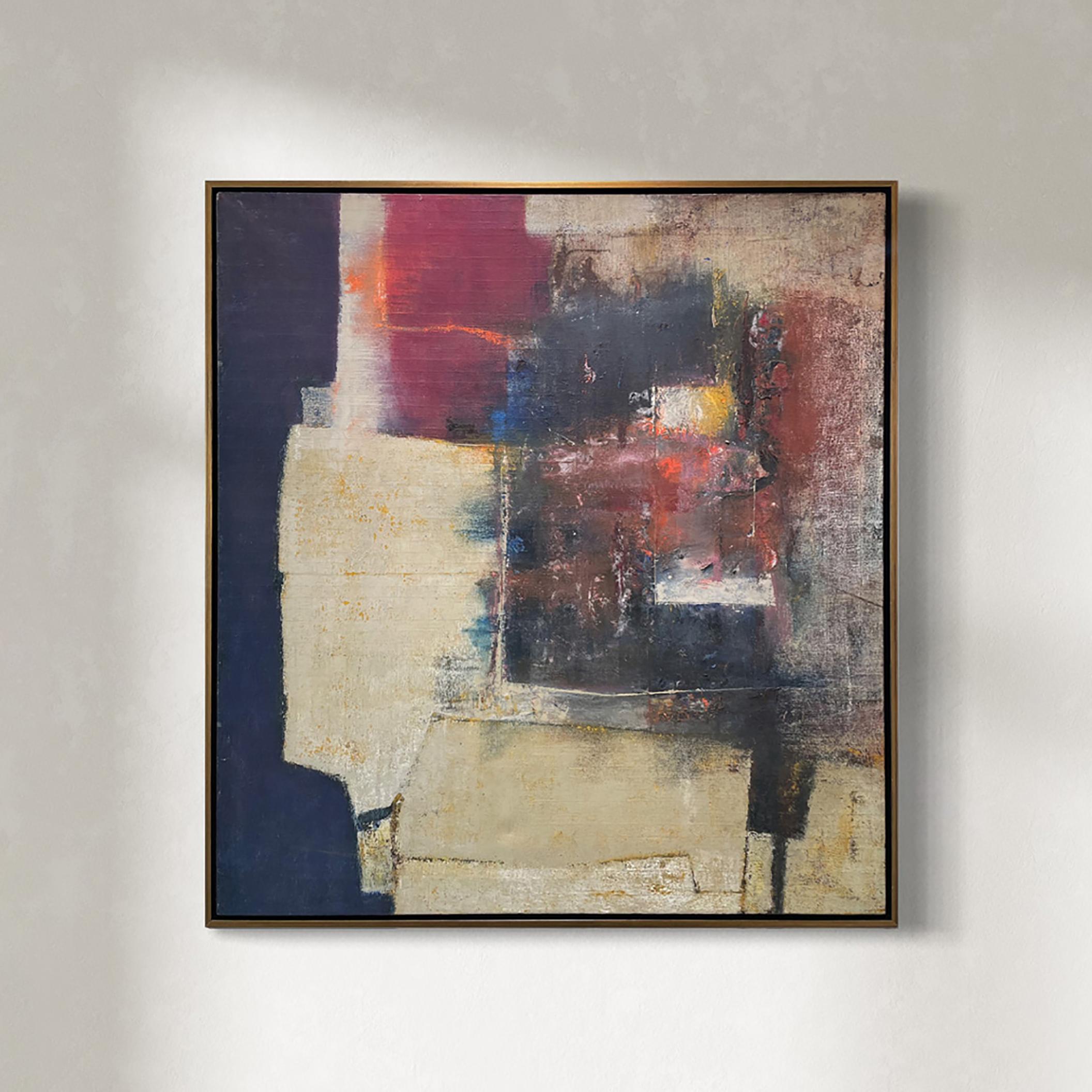
Materials

Canvas, Oil

"Untitled, " 1960s Modern Abstract Painting

"Untitled, " 1960s Modern Abstract Painting

By Stanley Bate

Located in Westport, CT

This untitled artwork by Stanley Bate was created circa 1960. It is a Modern abstract oil painting on canvas, featuring an earthy palette of sandy brown and umber, light blue, muted ...

Category

1960s Modern Abstract Paintings

Materials

Canvas, Oil

"Helvetic Landscape, " 1960s Modern Abstract Painting

"Helvetic Landscape, " 1960s Modern Abstract Painting

By Stanley Bate

Located in Westport, CT

This abstract painting by Modernist artist Stanley Bate is an abstract oil painting on canvas featuring a bright red geometric shape at the center of the composition and deep grey, b...

Category

1960s Modern Abstract Paintings
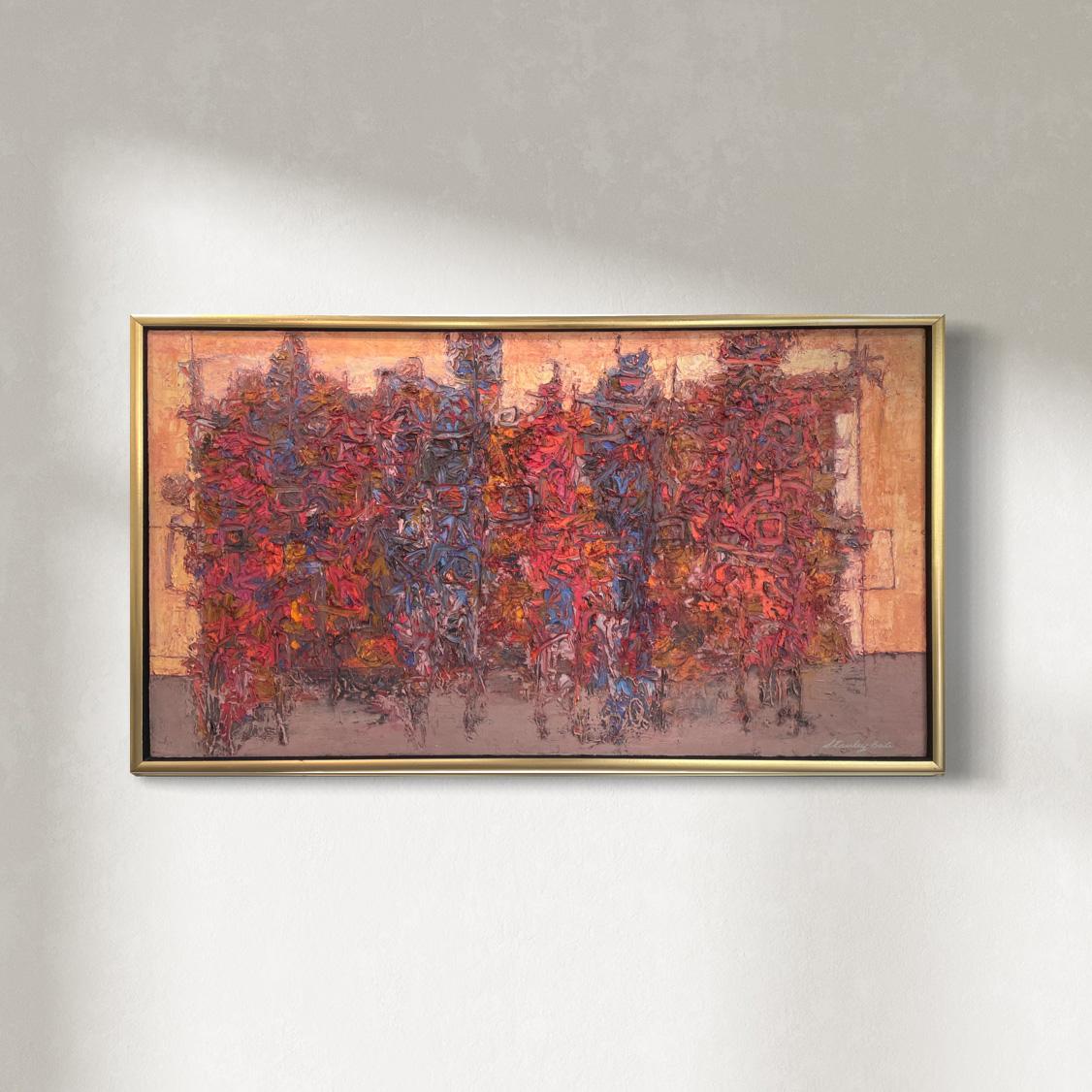
Materials

Canvas, Oil

You May Also Like

Vintage Lee Reynolds Abstract Painting

Vintage Lee Reynolds Abstract Painting

By Lee Reynolds

Located in Medina, OH

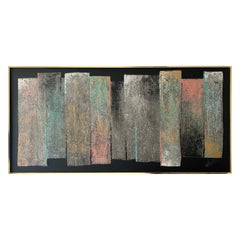
Large Mid-Century Modern Lee Reynolds abstract painting with a polished aluminum frame. Intricate color palette with the combination of metallic silver, turquoise, rust, gold and co...

Category

Vintage 1970s American Mid-Century Modern Contemporary Art

Materials

Canvas, Acrylic

Steven Sles Abstract 1960’s Painting on Board

Steven Sles Abstract 1960’s Painting on Board

By Steven Sles

Located in Phoenix, AZ

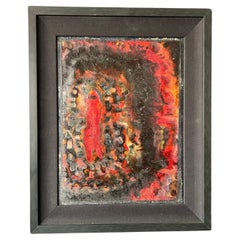
Steven Sles studied under Hans Hofmann and went on to have an illustrious career as a painter and poet. He had cerebral palsy and shook so much that he taught himself how to paint wi...

Category

Vintage 1960s American Mid-Century Modern Paintings

Materials

Paint

Mid Century Contemporary Abstract Painting on Canvas

Mid Century Contemporary Abstract Painting on Canvas

Located in W Allenhurst, NJ

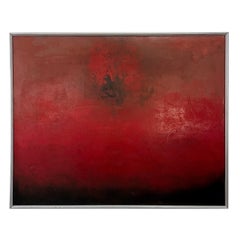
Striking, dramatic and moody oil painting on canvas and wood frame. Deep red with shades of black. Light abstract texture throughout to catch addition light and create depth. Curbsi...

Category

20th Century Unknown Mid-Century Modern Paintings

Materials

Canvas, Wood, Paint

An Abstract Expressionist Painting By Leonard Maurer, 1958

An Abstract Expressionist Painting By Leonard Maurer, 1958

By Leonard Maurer

Located in St.Petersburg, FL

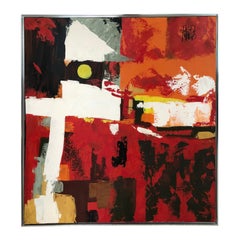
A very good example of an original Abstract Expressionist painting by Leonard Maurer, 1958. It is an oil on canvas,measuring 20x24". A real mid century jem, this work combines elemen...

Category

Vintage 1950s American Mid-Century Modern Paintings

Materials

Canvas