Want more images or videos?
Request additional images or videos from the seller
1 of 9

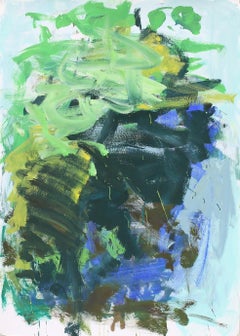
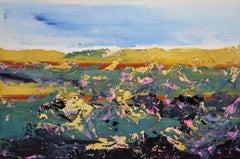
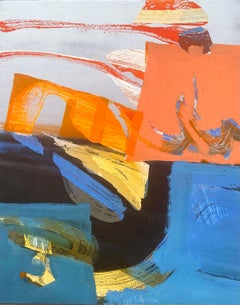
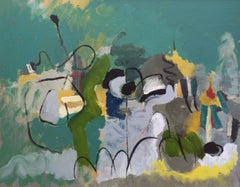
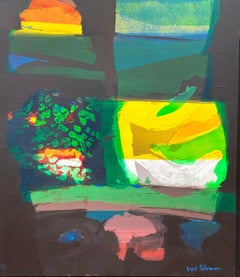
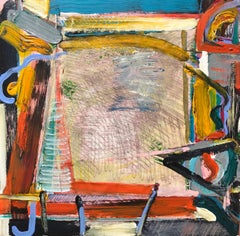
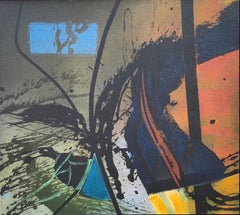
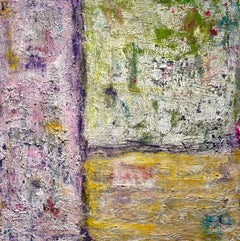
Syd Solomon
"Field"

1975

$6,000List Price

You May Also Like

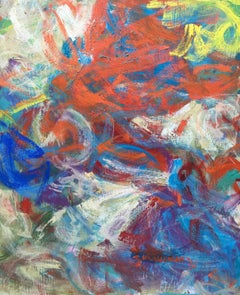
Apex

Evan Stuart MarshallApex, 2021

$600

H 20 in W 20 in D 0.75 in

Apex

By Evan Stuart Marshall

Located in Boston, MA

Artist Commentary: Brilliant oranges, violets and greens make a bold, dynamic statement that will add flair to any room or office. Colors shoot diagonally upward, suggesting movement and the setting of lofty goals. A bold splash of color for any room. Believe it or not, this piece was inspired by a Mardi Gras parade in New Orleans! Words that describe this piece: green, orange, red, abstract, bold, colorful, dynamic Details about the piece: This is a hand-painted, original acrylic painting. Professional grade acrylic paints on canvas. Wired and ready to hang. Signed on the back. Comes with a certificate of authenticity. Artist Biography: Evan Stuart Marshall is an award-winning contemporary abstract painter based in Roseland, New Jersey. Born in Boston and raised in Sharon, Massachusetts, he lives and works in Roseland, New Jersey. Largely self-taught, Evan has received numerous awards for his work, including the Mary Koether Merit Award from the West Essex (New Jersey) Art Association. His work has been featured in many juried exhibitions, both solo and group, and is held in many private collections around the world. His artwork is carried by major online retailers including Homesquare, Houzz, Kmart, Pier 1, Walmart and Wayfair. One of Evan’s paintings was recently selected by the renowned curator and art consultant Paige Powell...

Category

21st Century and Contemporary Abstract Abstract Paintings

Materials

Canvas, Acrylic

Into The Next Field

Rosie ShorrockInto The Next Field, 2021

$377

H 5.91 in W 7.88 in D 2.17 in

Into The Next Field

Located in Deddington, GB

Into The Next Field [2021] original Acrylic painting Image size: H:15 cm x W:20 cm Complete Size of Unframed Work: H:15 cm x W:20 cm x D:5.5cm Sold Unframed Please note that insitu ...

Category

2010s Abstract Abstract Paintings

Materials

Canvas, Acrylic

Summer Fields

Jordan BarkerSummer Fields, 2025

$7,800

H 48 in W 48 in D 1.5 in

Summer Fields

By Jordan Barker

Located in Brooklyn, NY

Jordan Barker is a New York City based mixed media artist. Initially inspired by found objects, his first piece was a coffee table that was created from a wooden palate found in the ...

Category

2010s Contemporary Abstract Paintings

Materials

Canvas, Mixed Media, Acrylic

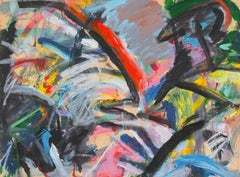
Grand Garden

Ryan CobournGrand Garden, 2015

$2,750

H 47 in W 34.5 in

Grand Garden

By Ryan Cobourn

Located in Dallas, TX

mixed media on paper artwork size: 40h x 30w framed size: 47h x 34.5

Category

2010s Abstract Abstract Paintings

Materials

Paper, Mixed Media

In The Moment

In The Moment

By Don Wunderlee

Located in Boston, MA

Artist Commentary: This painting was finished in the moment when all things in a painting come together with the right balance of form, The colors in th...

Category

21st Century and Contemporary Abstract Abstract Paintings

Materials

Canvas, Acrylic

Untitled #21

Don WunderleeUntitled #21, 2019

$500

H 22 in W 14 in D 0.1 in

Untitled #21

By Don Wunderlee

Located in Boston, MA

Artist Commentary: I consider my work to be abstract but I often journey into making a painting that directly draws inspiration from landscape Words that describe this piece: natur...

Category

21st Century and Contemporary Abstract Abstract Paintings

Materials

Paper, Acrylic

Abstraction Genesis

Serhij PotiukhAbstraction Genesis, 2023

$1,100

H 39.38 in W 33.47 in D 0.79 in

Abstraction Genesis

Located in Zofingen, AG

The abstract painting "Genesis" 2023, acrylic on canvas, reflects a rush of feelings over the boundlessness of space.

Category

2010s Modern Landscape Paintings

Materials

Canvas, Acrylic

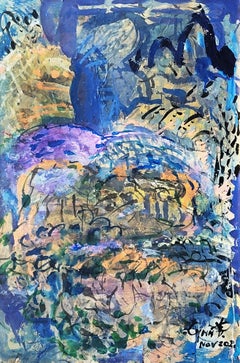
Fields of Gold I

Cymn WongFields of Gold I, 2023

$1,420

H 36 in W 24 in D 0.63 in

Fields of Gold I

By Cymn Wong

Located in Rockville, MD

Cymn Wong’s style of mixed media paintings are developed alongside with pastel, crayon, acrylic and ink. Rooted from traditional Chinese ink-brush painting to contemporary New York ...

Category

2010s Abstract Expressionist Paintings

Materials

Mixed Media, Acrylic

'Organic Abstract'

Aida Nelson'Organic Abstract'

$750

H 20.75 in W 28.75 in D 0.13 in

'Organic Abstract'

Located in Santa Cruz, CA

A substantial and vibrant American Abstract dating to circa 1975. Stamped, verso, with artist estate stamp for Aida Nelson (American, 1921-2018) and titled...

Category

1970s Abstract Abstract Paintings

Materials

Paper, Oil, Board

Abstract 2410

Alex SenchenkoAbstract 2410, 2024

$2,069Sale Price|20% Off

H 59.06 in W 39.38 in D 0.6 in

Abstract 2410

By Alex Senchenko

Located in Zofingen, AG

"There’s something ethereal, almost magical, about contemporary paintings. The incredible Expressionism bleeds through the canvas, transforming any room into an entirely new experien...

Category

2010s Abstract Abstract Paintings

Materials

Acrylic

More From This Seller

View All
"Untitled"

"Untitled"

By Sidney E. Zimmerman

Located in Southampton, NY

Sidney E.Zimmerman USA (1926-2007) studied at the Brooklyn a Museum of Art after returning from Europe during WWII. In 1950, he studied with Morris Kantor and Vaclav Vytlacil at the ...

Category

1960s Modern Abstract Paintings

Materials

Oil, Board

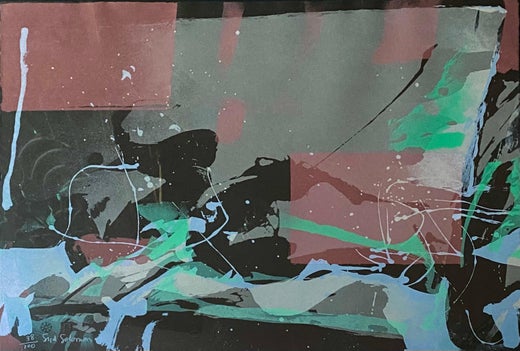
“Seagame”

“Seagame”

By Syd Solomon

Located in Southampton, NY

0riginal acrylic on panel painting by the well known American artist, Syd Solomon. Signed Syd Solomon lower center. Signed and dated Syd Solomon 1971 and inscribed as titled on the reverse. 30 × 24 inches. Condition is very good, no issues. The painting is framed in its original wood with silver reveal floating frame. Overall framed measurements are 32.5 by 26.75 inches. Provenance: A private collector. American, 1917-2004 SYD SOLOMON BIOGRAPHY: Written by Dr. Lisa Peters/Berry Campbell Gallery Syd Solomon was born near Uniontown, Pennsylvania, in 1917. He began painting in high school in Wilkes-Barre, where he was also a star football player. After high school, he worked in advertising and took classes at the Art Institute of Chicago. Before the attack on Pearl Harbor, he joined the war effort and was assigned to the First Camouflage Battalion, the 924th Engineer Aviation Regiment of the US Army. He used his artistic skills to create camouflage instruction manuals utilized throughout the Army. He married Ann Francine Cohen in late 1941. Soon thereafter, in early 1942, the couple moved to Fort Ord in California where he was sent to camouflage the coast to protect it from possible aerial bombings. Sent overseas in 1943, Solomon did aerial reconnaissance over Holland. Solomon was sent to Normandy early in the invasion where his camouflage designs provided protective concealment for the transport of supplies for men who had broken through the enemy line. Solomon was considered one of the best camoufleurs in the Army, receiving among other commendations, five bronze stars. Solomon often remarked that his camouflage experience during World War II influenced his ideas about abstract art. At the end of the War, he attended the École des Beaux-Arts in Paris. Because Solomon suffered frostbite during the Battle of the Bulge, he could not live in cold climates, so he and Annie chose to settle in Sarasota, Florida, after the War. Sarasota was home to the John and Mable Ringling Museum of Art, and soon Solomon became friends with Arthur Everett “Chick” Austin, Jr., the museum’s first Director. In the late 1940s, Solomon experimented with new synthetic media, the precursors to acrylic paints provided to him by chemist Guy Pascal, who was developing them. Victor D’Amico, the first Director of Education for the Museum of Modern Art, recognized Solomon as the first artist to use acrylic paint. His early experimentation with this medium as well as other media put him at the forefront of technical innovations in his generation. He was also one of the first artists to use aerosol sprays and combined them with resists, an innovation influenced by his camouflage experience. Solomon’s work began to be acknowledged nationally in 1952. He was included in American Watercolors, Drawings and Prints at the Metropolitan Museum of Art, New York. From 1952–1962, Solomon’s work was discovered by the cognoscenti of the art world, including the Museum of Modern Art Curators, Dorothy C. Miller and Peter Selz, and the Whitney Museum of American Art’s Director, John I. H. Baur. He had his first solo show in New York at the Associated American Artists Gallery in 1955 with “Chick” Austin, Jr. writing the essay for the exhibition. In the summer of 1955, the Solomons visited East Hampton, New York, for the first time at the invitation of fellow artist David Budd. There, Solomon met and befriended many of the artists of the New York School, including Jackson Pollock, Franz Kline, Willem de Kooning, James Brooks, Alfonso Ossorio, and Conrad Marca-Relli. By 1959, and for the next thirty-five years, the Solomons split the year between Sarasota (in the winter and spring) and the Hamptons (in the summer and fall). In 1959, Solomon began showing regularly in New York City at the Saidenberg Gallery with collector Joseph Hirshhorn buying three paintings from Solomon’s first show. At the same time, his works entered the collections of the Whitney Museum of American Art, the Solomon R. Guggenheim Museum, and the Wadsworth Athenaeum in Hartford, Connecticut, among others. Solomon also began showing at Signa Gallery in East Hampton and at the James David Gallery in Miami run by the renowned art dealer, Dorothy Blau. In 1961, the Guggenheim Museum’s H. H. Arnason bestowed to him the Silvermine Award at the 13th New England Annual. Additionally, Thomas Hess of ARTnews magazine chose Solomon as one of the ten outstanding painters of the year. At the suggestion of Alfred H. Barr, Jr., the Museum of Modern Art’s Director, the John and Mable Ringling Museum in Sarasota began its contemporary collection by purchasing Solomon’s painting, Silent World, 1961. Solomon became influential in the Hamptons and in Florida during the 1960s. In late 1964, he created the Institute of Fine Art at the New College in Sarasota. He is credited with bringing many nationally known artists to Florida to teach, including Larry Rivers, Philip Guston, James Brooks, and Conrad Marca-Relli. Later Jimmy Ernst, John Chamberlain, James Rosenquist, and Robert Rauschenberg settled near Solomon in Florida. In East Hampton, the Solomon home was the epicenter of artists and writers who spent time in the Hamptons, including Alfred Leslie, Jim Dine, Ibram Lassaw, Saul Bellow, Barney Rosset, Arthur Kopit, and Harold Rosenberg. In 1970, Solomon, along with architect Gene Leedy, one of the founders of the Sarasota School of Architecture, built an award-winning precast concrete and glass house and studio on the Gulf of Mexico near Midnight Pass in Sarasota. Because of its siting, it functioned much like Monet’s home in Giverny, France. Open to the sky, sea, and shore with inside and outside studios, Solomon was able to fully solicit all the environmental forces that influenced his work. His friend, the art critic Harold Rosenberg, said Solomon’s best work was produced in the period he lived on the beach. During 1974 and 1975, a retrospective exhibition of Solomon’s work was held at the New York Cultural Center and traveled to the John and Mable Ringling Museum in Sarasota. Writer Kurt Vonnegut, Jr. conducted an important interview with Solomon for the exhibition catalogue. The artist was close to many writers, including Harold Rosenberg, Joy Williams, John D. McDonald, Budd Schulberg, Elia Kazan, Betty Friedan...

Category

1970s Abstract Expressionist Abstract Paintings
Materials

Panel, Acrylic

"Untitled"

"Untitled"

By Clayton Mitropoulos

Located in Southampton, NY

This abstract oil on canvas painting was done in 2005 and was exhibited at RVS Fine Art the same year. In good condition and housed in a contemporary gold gilt frame. Overall size 2...

Category

21st Century and Contemporary Abstract Expressionist Abstract Paintings

Materials

Oil, Canvas

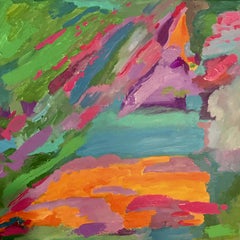
“Multishore”

“Multishore”

By Syd Solomon

Located in Southampton, NY

Original oil on canvas painting titled “Multishore” by the well known American artist, Syd Solomon. Signed Syd Solomon lower right. Signed and dated Syd Solomon 1971 on the stretcher, inscribed as titled on the reverse 30 × 26 inches. Condition is excellent. The painting is housed in its original wood with silver reveal floating frame. Overall framed measurements are 32.75 by 28.75 inches. Provenance: A private collector. Syd Solomon was born near Uniontown, Pennsylvania, in 1917. He began painting in high school in Wilkes-Barre, where he was also a star football player. After high school, he worked in advertising and took classes at the Art Institute of Chicago. Before the attack on Pearl Harbor, he joined the war effort and was assigned to the First Camouflage Battalion, the 924th Engineer Aviation Regiment of the US Army. He used his artistic skills to create camouflage instruction manuals utilized throughout the Army. He married Ann Francine Cohen in late 1941. Soon thereafter, in early 1942, the couple moved to Fort Ord in California where he was sent to camouflage the coast to protect it from possible aerial bombings. Sent overseas in 1943, Solomon did aerial reconnaissance over Holland. Solomon was sent to Normandy early in the invasion where his camouflage designs provided protective concealment for the transport of supplies for men who had broken through the enemy line. Solomon was considered one of the best camoufleurs in the Army, receiving among other commendations, five bronze stars. Solomon often remarked that his camouflage experience during World War II influenced his ideas about abstract art. At the end of the War, he attended the École des Beaux-Arts in Paris. Because Solomon suffered frostbite during the Battle of the Bulge, he could not live in cold climates, so he and Annie chose to settle in Sarasota, Florida, after the War. Sarasota was home to the John and Mable Ringling Museum of Art, and soon Solomon became friends with Arthur Everett “Chick” Austin, Jr., the museum’s first Director. In the late 1940s, Solomon experimented with new synthetic media, the precursors to acrylic paints provided to him by chemist Guy Pascal, who was developing them. Victor D’Amico, the first Director of Education for the Museum of Modern Art, recognized Solomon as the first artist to use acrylic paint. His early experimentation with this medium as well as other media put him at the forefront of technical innovations in his generation. He was also one of the first artists to use aerosol sprays and combined them with resists, an innovation influenced by his camouflage experience. Solomon’s work began to be acknowledged nationally in 1952. He was included in American Watercolors, Drawings and Prints at the Metropolitan Museum of Art, New York. From 1952–1962, Solomon’s work was discovered by the cognoscenti of the art world, including the Museum of Modern Art Curators, Dorothy C. Miller and Peter Selz, and the Whitney Museum of American Art’s Director, John I. H. Baur. He had his first solo show in New York at the Associated American Artists Gallery in 1955 with “Chick” Austin, Jr. writing the essay for the exhibition. In the summer of 1955, the Solomons visited East Hampton, New York, for the first time at the invitation of fellow artist David Budd. There, Solomon met and befriended many of the artists of the New York School, including Jackson Pollock, Franz Kline, Willem de Kooning, James Brooks, Alfonso Ossorio, and Conrad Marca-Relli. By 1959, and for the next thirty-five years, the Solomons split the year between Sarasota (in the winter and spring) and the Hamptons (in the summer and fall). In 1959, Solomon began showing regularly in New York City at the Saidenberg Gallery with collector Joseph Hirshhorn buying three paintings from Solomon’s first show. At the same time, his works entered the collections of the Whitney Museum of American Art, the Solomon R. Guggenheim Museum, and the Wadsworth Athenaeum in Hartford, Connecticut, among others. Solomon also began showing at Signa Gallery in East Hampton and at the James David Gallery in Miami run by the renowned art dealer, Dorothy Blau. In 1961, the Guggenheim Museum’s H. H. Arnason bestowed to him the Silvermine Award at the 13th New England Annual. Additionally, Thomas Hess of ARTnews magazine chose Solomon as one of the ten outstanding painters of the year. At the suggestion of Alfred H. Barr, Jr., the Museum of Modern Art’s Director, the John and Mable Ringling Museum in Sarasota began its contemporary collection by purchasing Solomon’s painting, Silent World, 1961. Solomon became influential in the Hamptons and in Florida during the 1960s. In late 1964, he created the Institute of Fine Art at the New College in Sarasota. He is credited with bringing many nationally known artists to Florida to teach, including Larry Rivers, Philip Guston, James Brooks, and Conrad Marca-Relli. Later Jimmy Ernst, John Chamberlain, James Rosenquist, and Robert Rauschenberg settled near Solomon in Florida. In East Hampton, the Solomon home was the epicenter of artists and writers who spent time in the Hamptons, including Alfred Leslie, Jim Dine, Ibram Lassaw, Saul Bellow, Barney Rosset, Arthur Kopit, and Harold Rosenberg. In 1970, Solomon, along with architect Gene Leedy, one of the founders of the Sarasota School of Architecture, built an award-winning precast concrete and glass house and studio on the Gulf of Mexico near Midnight Pass in Sarasota. Because of its siting, it functioned much like Monet’s home in Giverny, France. Open to the sky, sea, and shore with inside and outside studios, Solomon was able to fully solicit all the environmental forces that influenced his work. His friend, the art critic Harold Rosenberg, said Solomon’s best work was produced in the period he lived on the beach. During 1974 and 1975, a retrospective exhibition of Solomon’s work was held at the New York Cultural Center and traveled to the John and Mable Ringling Museum in Sarasota. Writer Kurt Vonnegut, Jr. conducted an important interview with Solomon for the exhibition catalogue. The artist was close to many writers, including Harold Rosenberg, Joy Williams, John D. McDonald, Budd Schulberg, Elia Kazan, Betty Friedan...

Category

1970s Abstract Expressionist Abstract Paintings
Materials

Canvas, Oil

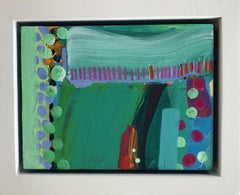
“Untitled”

“Untitled”

By Iliyan Ivanov

Located in Southampton, NY

Original acrylic on fiberboard painting by the Bulgarian/American artist, Iliyan Ivanov. Signed, and dated verso, 2012. Untitled. This painting is part of the “Memories of Unfinis...

Category

2010s Abstract Expressionist Abstract Paintings
Materials

Acrylic, Fiberboard

“Gulfside”

“Gulfside”

By Syd Solomon

Located in Southampton, NY

Original, oil paint and acrylic paint on canvas by the well known American artist, Syd Solomon. Signed bottom middle by the artist. Titled and dated verso 1983. Condition is excellent. Original gallery floating frame. Overall framed measurements are 38 by 42 inches. Provenance: A Sarasota, Florida collector. SYD SOLOMON BIOGRAPHY Written by Dr. Lisa Peters/Berry Campbell Gallery “Here, in simple English, is what Syd Solomon does: He meditates. He connects his hand and paintbrush to the deeper, quieter, more mysterious parts of his mind- and he paints pictures of what he sees and feels down there.” --Kurt Vonnegut Jr. from Palm Sunday, 1981 Syd Solomon was born near Uniontown, Pennsylvania, in 1917. He began painting in high school in Wilkes-Barre, where he was also a star football player. After high school, he worked in advertising and took classes at the Art Institute of Chicago. Before the attack on Pearl Harbor, he joined the war effort and was assigned to the First Camouflage Battalion, the 924th Engineer Aviation Regiment of the US Army. He used his artistic skills to create camouflage instruction manuals utilized throughout the Army. He married Ann Francine Cohen in late 1941. Soon thereafter, in early 1942, the couple moved to Fort Ord in California where he was sent to camouflage the coast to protect it from possible aerial bombings. Sent overseas in 1943, Solomon did aerial reconnaissance over Holland. Solomon was sent to Normandy early in the invasion where his camouflage designs provided protective concealment for the transport of supplies for men who had broken through the enemy line. Solomon was considered one of the best camoufleurs in the Army, receiving among other commendations, five bronze stars. Solomon often remarked that his camouflage experience during World War II influenced his ideas about abstract art. At the end of the War, he attended the École des Beaux-Arts in Paris. Because Solomon suffered frostbite during the Battle of the Bulge, he could not live in cold climates, so he and Annie chose to settle in Sarasota, Florida, after the War. Sarasota was home to the John and Mable Ringling Museum of Art, and soon Solomon became friends with Arthur Everett “Chick” Austin, Jr., the museum’s first Director. In the late 1940s, Solomon experimented with new synthetic media, the precursors to acrylic paints provided to him by chemist Guy Pascal, who was developing them. Victor D’Amico, the first Director of Education for the Museum of Modern Art, recognized Solomon as the first artist to use acrylic paint. His early experimentation with this medium as well as other media put him at the forefront of technical innovations in his generation. He was also one of the first artists to use aerosol sprays and combined them with resists, an innovation influenced by his camouflage experience. Solomon’s work began to be acknowledged nationally in 1952. He was included in American Watercolors, Drawings and Prints at the Metropolitan Museum of Art, New York. From 1952–1962, Solomon’s work was discovered by the cognoscenti of the art world, including the Museum of Modern Art Curators, Dorothy C. Miller and Peter Selz, and the Whitney Museum of American Art’s Director, John I. H. Baur. He had his first solo show in New York at the Associated American Artists Gallery in 1955 with “Chick” Austin, Jr. writing the essay for the exhibition. In the summer of 1955, the Solomons visited East Hampton, New York, for the first time at the invitation of fellow artist David Budd...

Category

1980s Abstract Expressionist Abstract Paintings
Materials

Canvas, Oil, Acrylic