Want more images or videos?
Request additional images or videos from the seller
1 of 9

Edward Chalmers Leavitt
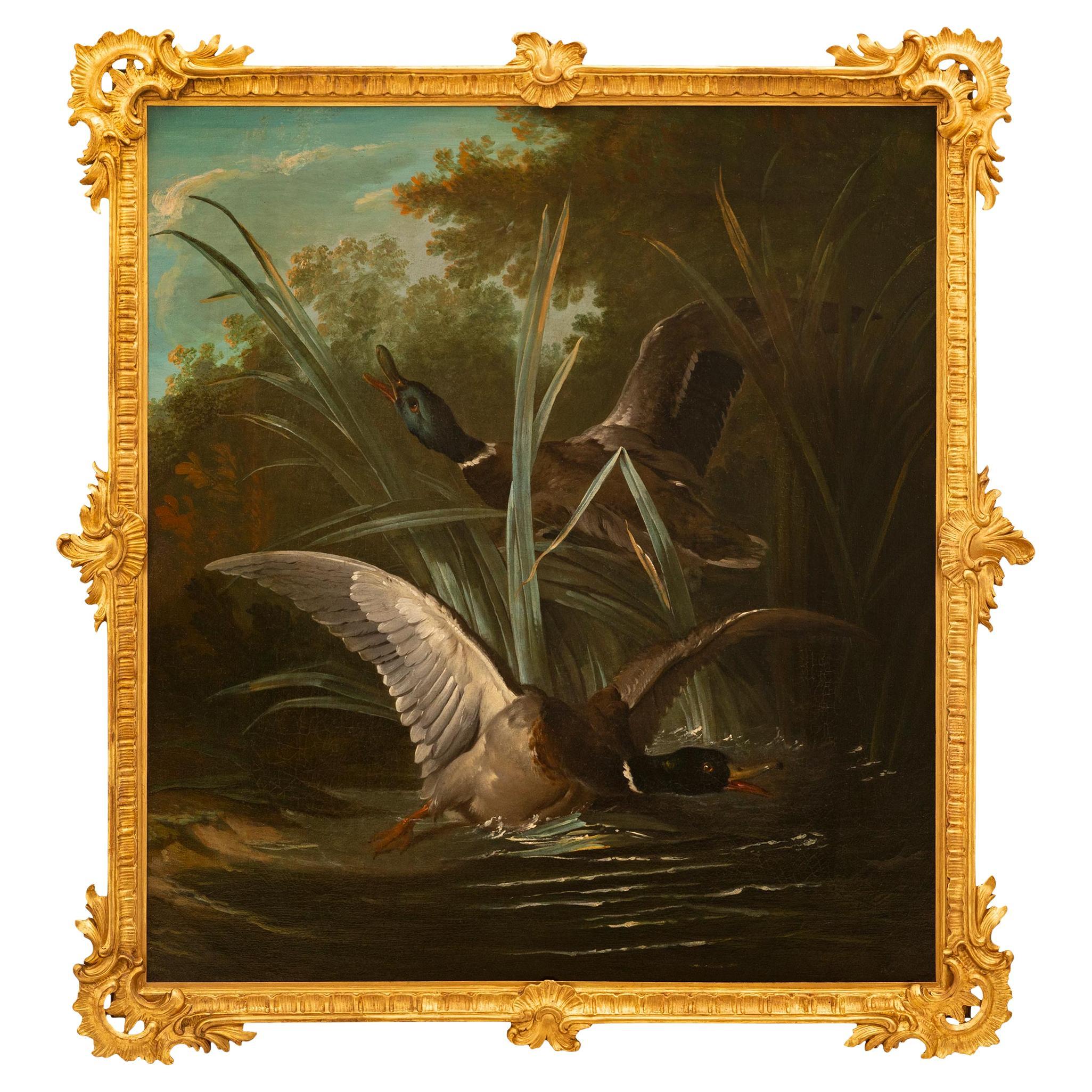
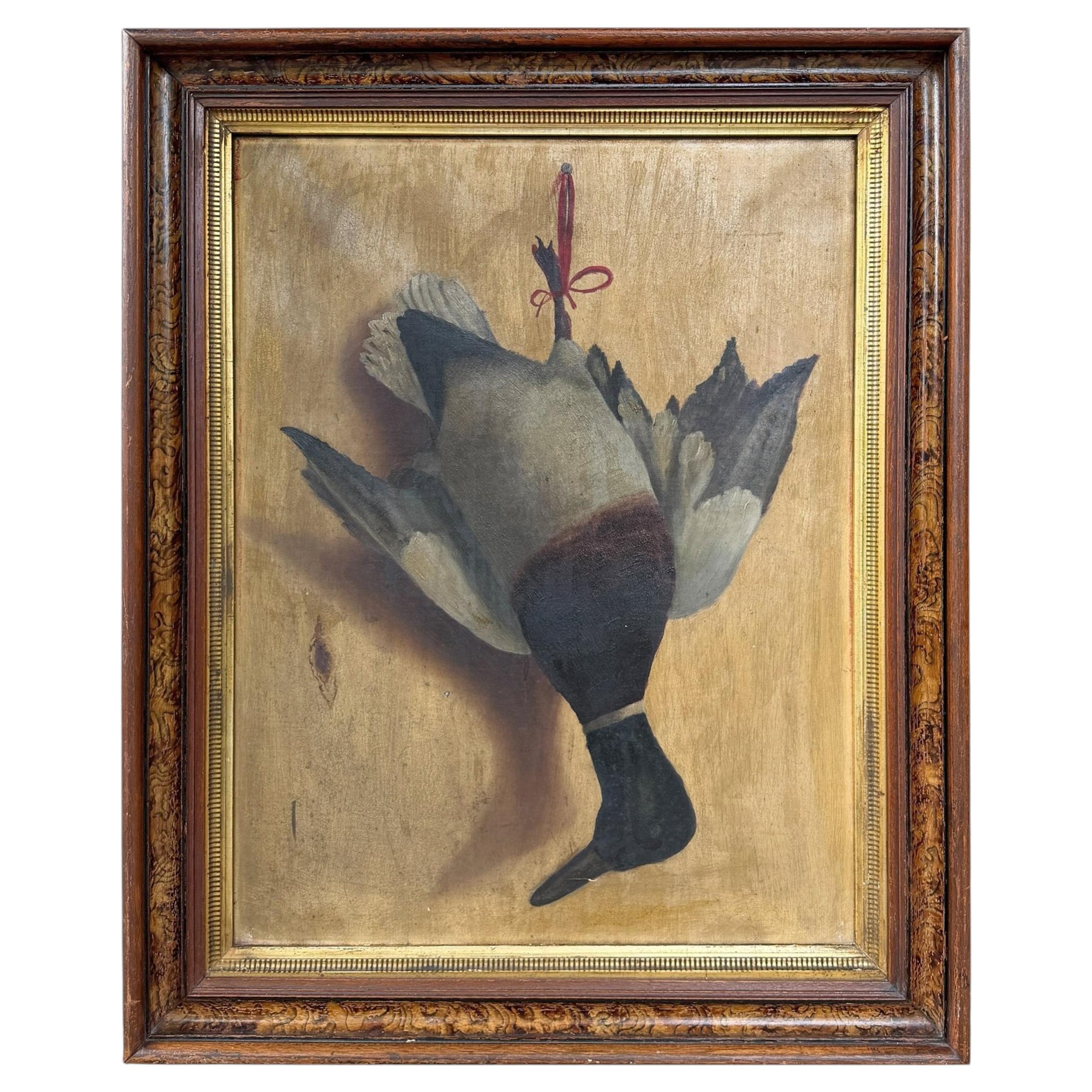
"DUCK HUNT" MERGANSERS, DUCK CALL, SHOTGUN DATED 1889 FRAME 43 X 35 NEWCOMB

1889

$11,000
£8,227.64
€9,618.81
CA$15,550.13
A$15,622.12
CHF 9,010.98
MX$190,113.40
NOK 104,675.12
SEK 106,181.59
DKK 71,906.18

About the Item

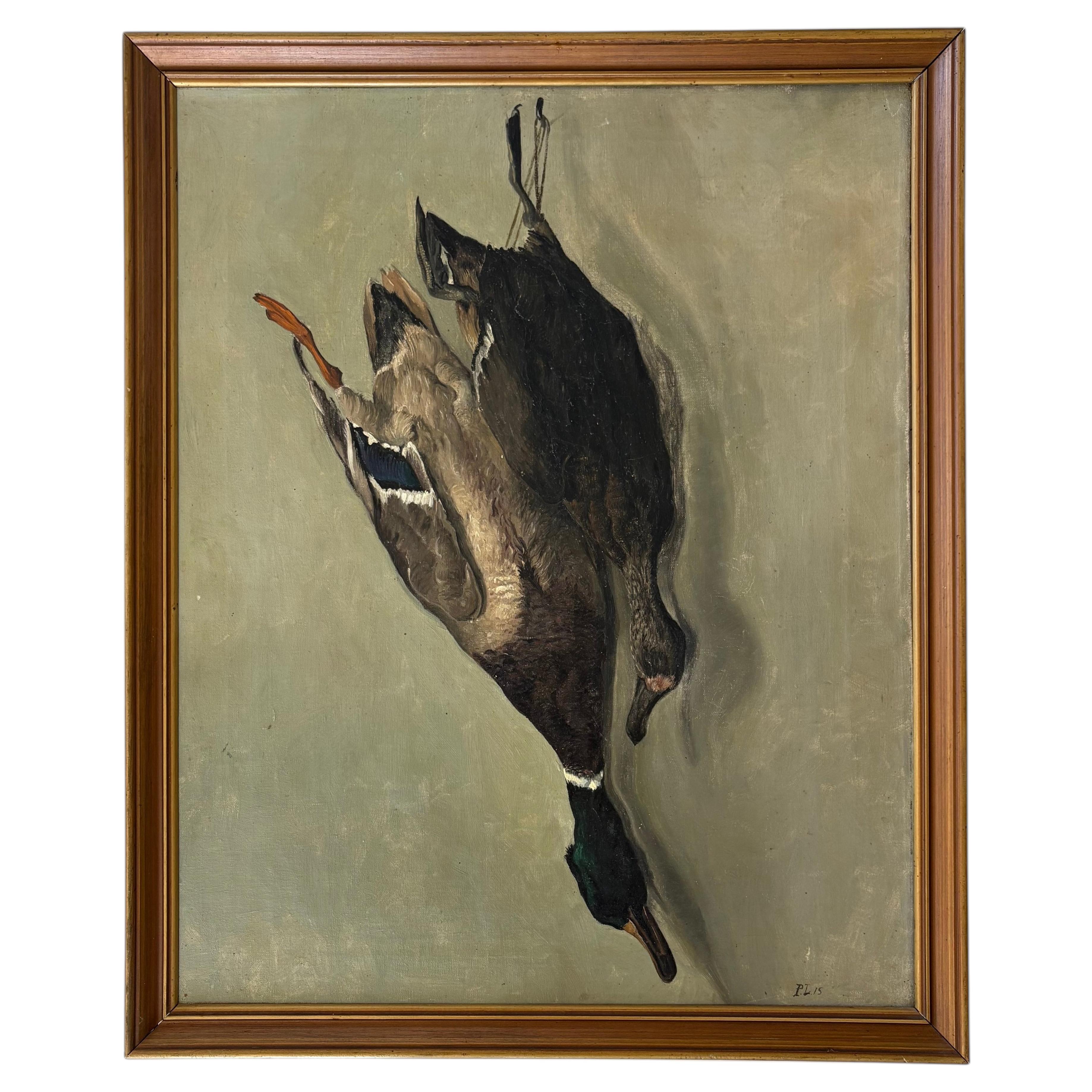
Edward Chalmers Leavitt (1842 - 1904) Rhode Island Artist Image Size: 36 x 28 Frame Size: 42.5 x 34.5 Newcomb Macklin Frame. Medium: Oil Dated 1889 "Duck Hunt" Mergansers Edward Chalmers Leavitt (1842 - 1904) Edward Chalmers Leavitt, artist, was born in Providence, Rhode Island, March 9, 1842, the son of Rev. Jonathan and Charlotte Esther (Stearns) Leavitt. His paternal ancestor was John Leavitt, who came to Massachusetts Bay in the first ship and settled in Hingham. On the maternal side, he is descended from John Alden and Priscilla Mullens, who came to Plymouth in the Mayflower. Leavitt was educated in private schools in Providence, and at Kimball Union Academy, Meriden, New Hampshire. During the Civil War in 1862 and 1863, he served in the navy on the U.S.S. Galena. In his profession of artist, Mr. Leavitt is especially noted as a painter of fruit, flowers and still life. He exhibited in the National Academy for several years and has made many successful exhibitions in Providence and Boston. He was a member of the Boston and Providence art clubs, and the Providence Press Club. He was also a member of the Grand Army of the Republic. In politics his proclivities are mainly Republican. He has been twice married: first, May 19, 1877, to Ellen M. Fuller; and second, April 22, 1880, to Elizabeth S. Chace. Submitted November 2004 by Edward Bentley, Art Collector and Researcher from Lansing, Michigan. Source is the publication "Men of Progress: Biographical Sketches and Portraits of Leaders in Business and Professional Life from the State of Rhode Island." New England magazine. 1896. Edward C. Leavitt, born in 1842, has been described as "Providence, Rhode Island's leading still-life painter" in the late 19th Century. (Zellman 324) His teacher, James Morgan Lewin, was a prominent still-life painter in Fall River, Massachusetts, a neighboring town. Leavitt, a detailed, sharp-focused, realistic painter, was in love with texture and light, and was prolific and successful, painting a variety of still life subjects including flowers, fruit and even fish and dead game animals. His objects, including costly antiques and household decorative items, were often placed on ornamental, gleaming surfaces. He was a frequent exhibitor at the National Academy of Design in the 1870s and 1890s. The artist, who died in 1904, moved from a position of success and popularity to being ignored for many years until the publication of William H. Gerdts and Russell Burke's American Still-Life Painting in 1971. It is uncertain whether this disastrous loss of respect took place because Leavitt's work declined in quality during the last decade of his life, or because he was a victim of the periodic shifts in taste and fashion that afflict the arts. Sources: Michael David Zellman, 300 Years of American Art Peter Hastings Falk, Editor, Who Was Who in American Art Biography from Roger King Fine Art Edward Leavitt was one of the leading still life artists of nineteenth century New England. He lived and worked in Providence, and studied with James Morgan Lewin, a leading painter of the Fall River School, which, in the late 19th Century, was one of the most important centers of still life painting. While Lewin branched out into other types of painting, Leavitt remained devoted to the art of the still life. His paintings are sharply focused, realistic, and carefully finished. Ornate objects such as urns, ewers, platters, cut glassware and opulent fabrics are arranged with fruit and flowers on highly polished, reflective surfaces, creating dramatic decorative effects. Prolific and highly acclaimed, Leavitt exhibited at the National Academy, Boston Art Club and the Pennsylvania Academy of Fine Arts. His work inspired other still life painters in Providence, resulting in that city's own still life tradition, including artists John Clinton Spencer, Bryant Chapin, Charles Storer and George Whitaker.
  • Creator:
    Edward Chalmers Leavitt (1842 - 1904, American)
  • Creation Year:
    1889
  • Dimensions:
    Height: 36 in (91.44 cm)Width: 28 in (71.12 cm)Depth: 3 in (7.62 cm)
  • More Editions & Sizes:
    Image Size 36 x 28 Frame Size: 42.5 x 34.5 Newcomb Macklin FramePrice: $11,000
  • Medium:
  • Movement & Style:
  • Period:
  • Framing:
    Frame Included
    Framing Options Available
  • Condition:
    Conserved years ago. Wax-Resin Liner.
  • Gallery Location:
    San Antonio, TX
  • Reference Number:
    1stDibs: LU769313846642

More From This Seller

View All
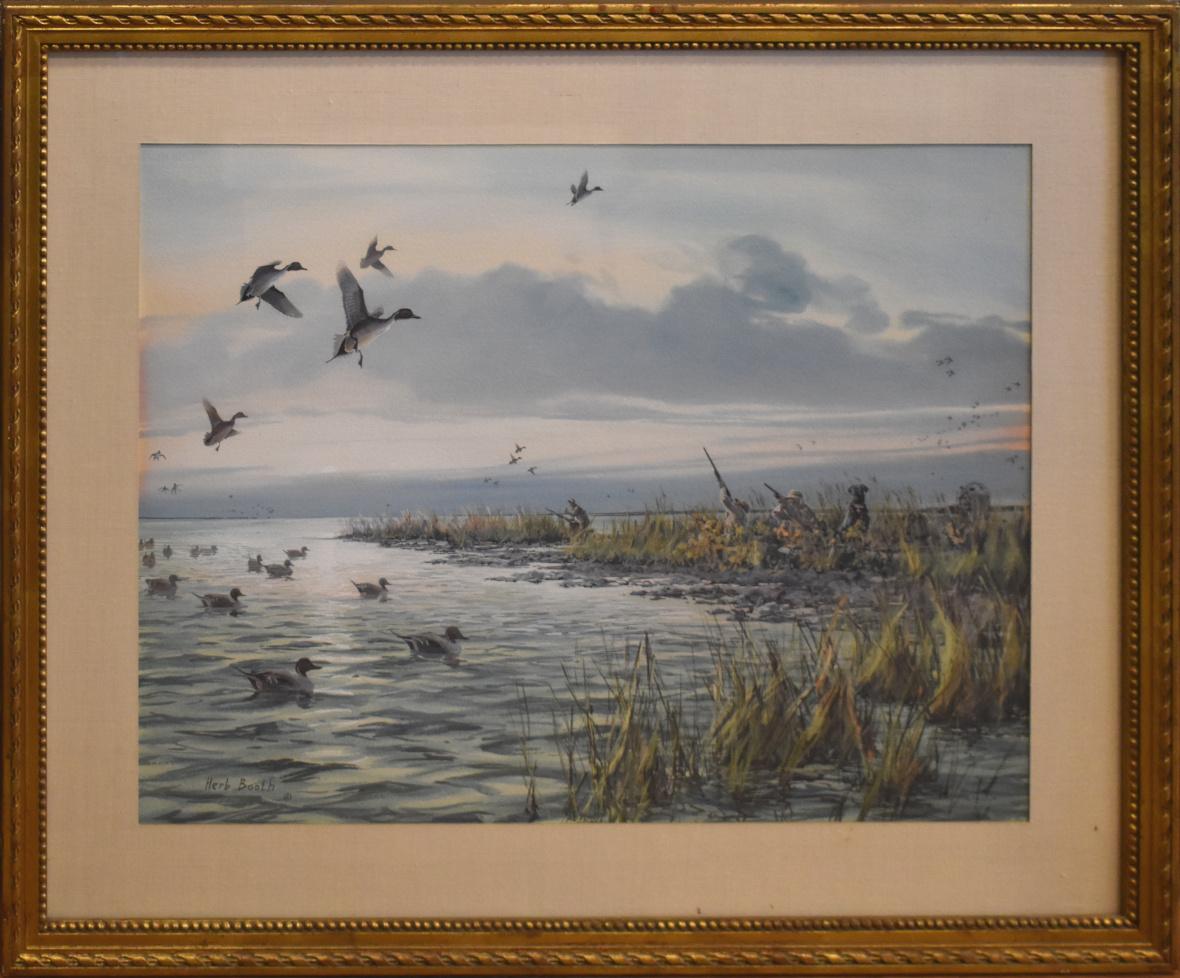
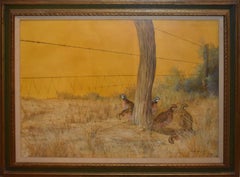
"MALLARD PASTURE" by Herb Booth Ducks, Geese in flight scene

"MALLARD PASTURE" by Herb Booth Ducks, Geese in flight scene

By Herb Booth

Located in San Antonio, TX

Herb Booth (1942 - 2014) Texas Artist Image Size: 11 x 15 Frame: 19 x 24 Medium: Watercolor on Paper "Mallard Pasture" Signed Herb Booth (1942 - 2014) Wat...

Category

21st Century and Contemporary Impressionist Animal Paintings

Materials

Oil

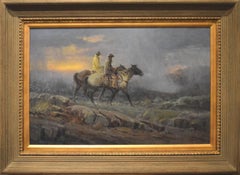
"BLOWIN' IN" WESTERN G. HARVEY PAINTING 28 X 38 FRAME SIZE DATED 1974

"BLOWIN' IN" WESTERN G. HARVEY PAINTING 28 X 38 FRAME SIZE DATED 1974

By G. Harvey

Located in San Antonio, TX

G. Harvey (Gerald Harvey Jones) (1933-2017) San Antonio, Austin, and Fredericksburg Artist Image Size: 20 x 30 Frame Size: 28 x 38 Medium: Oil on Canvas Dated 1974 "Blowin' In" Sign...

Category

1970s Impressionist Landscape Paintings

Materials

Oil

You May Also Like

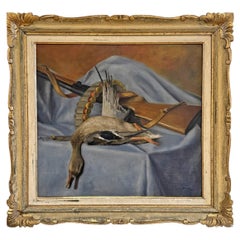
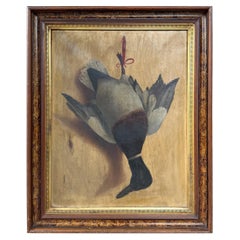
Early 20th Century Italian Duck and Shotgun Still Life Painting

Early 20th Century Italian Duck and Shotgun Still Life Painting

Located in Chicago, IL

This early 20th-century Italian oil painting on board is a striking still life, capturing the quiet aftermath of the hunt. A well-worn shotgun rests atop a blue fabric-draped platfor...

Category

Early 20th Century Italian Country Paintings

Materials

Paint

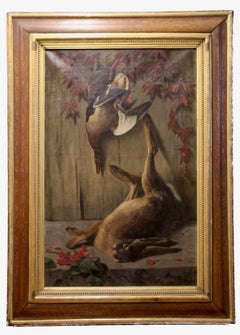
19th Century Mallard Duck Trophy Painting

19th Century Mallard Duck Trophy Painting

Located in Chicago, IL

In the closing years of the nineteenth century, American painters became infatuated with trompe l'oeil—French for "deceive the eye." It wasn't enough to paint well. The challenge was...

Category

Antique Late 19th Century American Rustic Paintings

Materials

Canvas, Paint

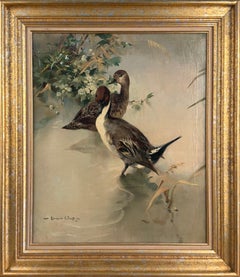
Pintails in May - Framed Oil Painting on Canvas, Mid-20th Century

Pintails in May - Framed Oil Painting on Canvas, Mid-20th Century

By Vernon Ward 1

Located in Stratford-Upon-Avon, GB

Vernon Ward British (1905-1985) Pintails in May Medium: Oil on canvas Framed size: 28 x 24 inches Unframed size: 22 x 18 inches Signed and dated 48 Provenance: Frost and Reed Gall...

Category

Mid-20th Century Animal Paintings

Materials

Oil, Canvas

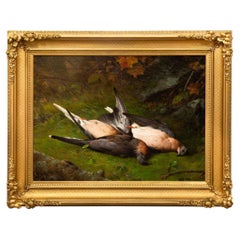
American Oil Painting "Nature Morte: Fallen Doves" (1865) by Alfred Wall

American Oil Painting "Nature Morte: Fallen Doves" (1865) by Alfred Wall

Located in Shippensburg, PA

ALFRED S. WALL United States, 1825-1896 Nature Morte: Fallen Doves (1865) Oil on canvas signed and dated lower left "Alfred Wall 1865" ref. 412APH13E 26 1/2" H x 32 1/2" W x 2 1/2" D [frame] 20 1/8" H x 26" W [canvas] Essay This finely executed still life painting captures a group of three doves laid upon a forest floor, rendered with meticulous attention to texture and natural detail. The composition follows the tradition of nature morte, a genre that captures the stillness of life through carefully arranged subjects. The artist employs a rich, earthy palette, contrasting the softness of the birds’ feathers with the dense foliage and scattered undergrowth, the colors in the foliage and fallen leaves suggesting an early fall setting for the scene. An almost ecclesiastical light falls on the doves, lighting them and showcasing the realism, drawing attention to the delicate gradations of color in the plumage and the subtle sheen of the wings. While the subject matter suggests themes of the hunt or the passage of life, the restrained execution avoids overt dramatization. Instead, the scene invites quiet contemplation, emphasizing form, texture, and atmosphere. Works of this nature were historically popular in European and American art, particularly in the 19th century, serving both as studies in naturalism and as reflections on mortality and transience. It is housed in what is almost certainly its first frame, a finely worked gilded composition that complements the painting beautifully with still-life emblems in the corners. Provenance: Private Collection, Senoia, Georgia Condition: Original stretchers in good condition, these only allowing for four keys instead of eight; linen is taut and unlined, in good condition. Ground layer is overall stable with fine age related craquelure throughout. Several losses under the frame rabbet that have associated inpainting. Areas of old overpaint on the dove chests removed during the conservation process. Our conservator removed the old varnish, inpainted the minor losses and applied a traditional Dammar varnish. Frame is likely the original frame and presents with minor losses, chips and overall discoloration to the gilding. A very fine presentation, ready to place. Biography Alfred S. Wall (1825–1896) was a central figure in the development of Pittsburgh’s artistic community during the 19th century. Born in Mount Pleasant, Pennsylvania, he was the son of English immigrants William and Lucy Wall. His father, a sculptor specializing in tombstones, instilled in him an appreciation for the arts, a legacy shared with his older brother, William Coventry Wall...

Category

Antique 19th Century American Victorian Paintings

Materials

Canvas, Paint

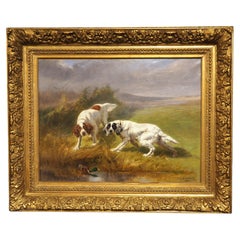
Antique French Hunt Painting of Setters and a Mallard, Oil on Canvas, 1904

Antique French Hunt Painting of Setters and a Mallard, Oil on Canvas, 1904

Located in Dallas, TX

More information coming soon… Signed and dated by the artist (Jules Bertrand Gelibert, 1904), this antique French painting depicts two French spaniels by the edge of a pond lined wi...

Category

Antique Early 1900s French Paintings

Materials

Canvas, Wood, Giltwood, Paint