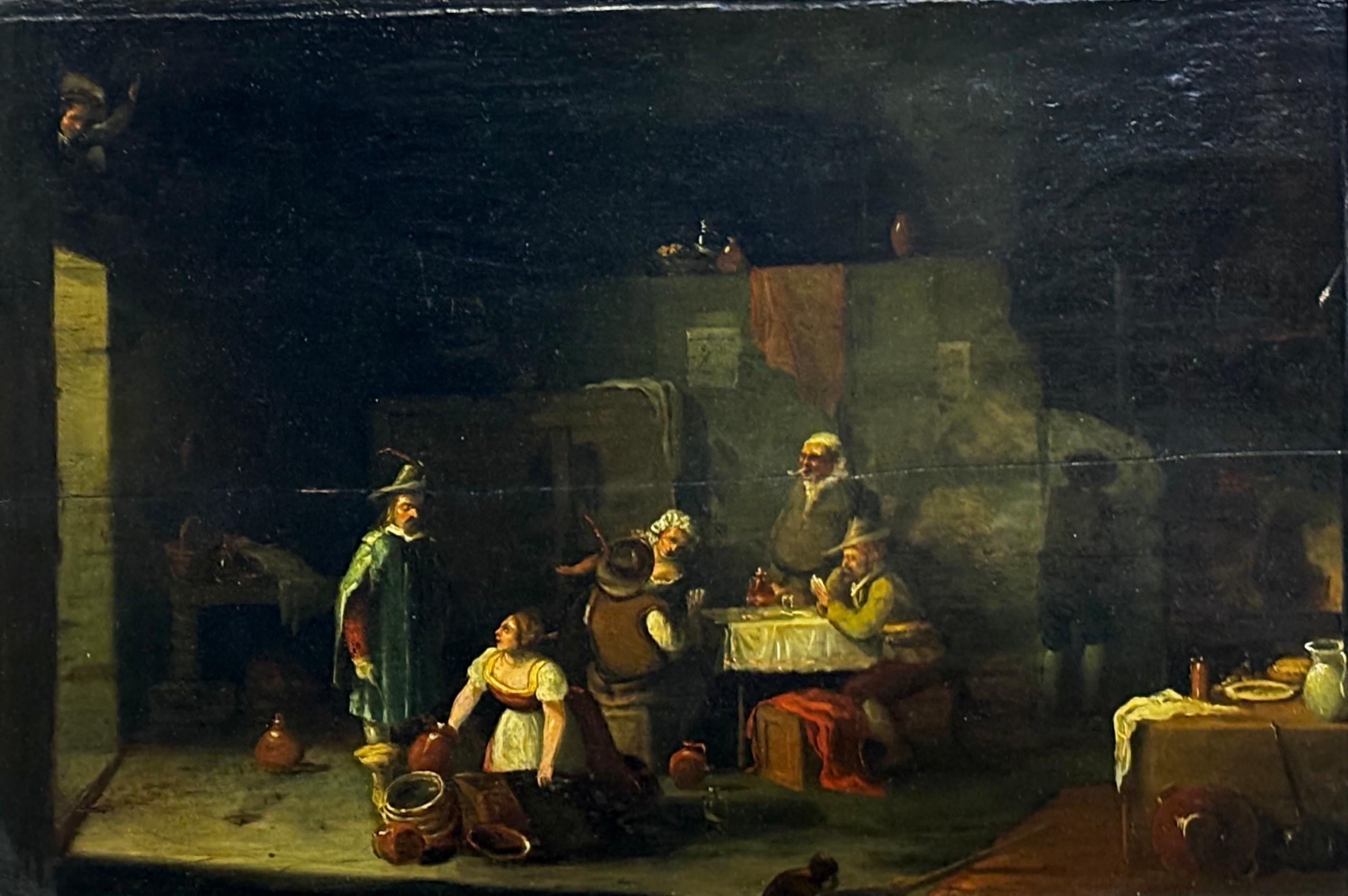
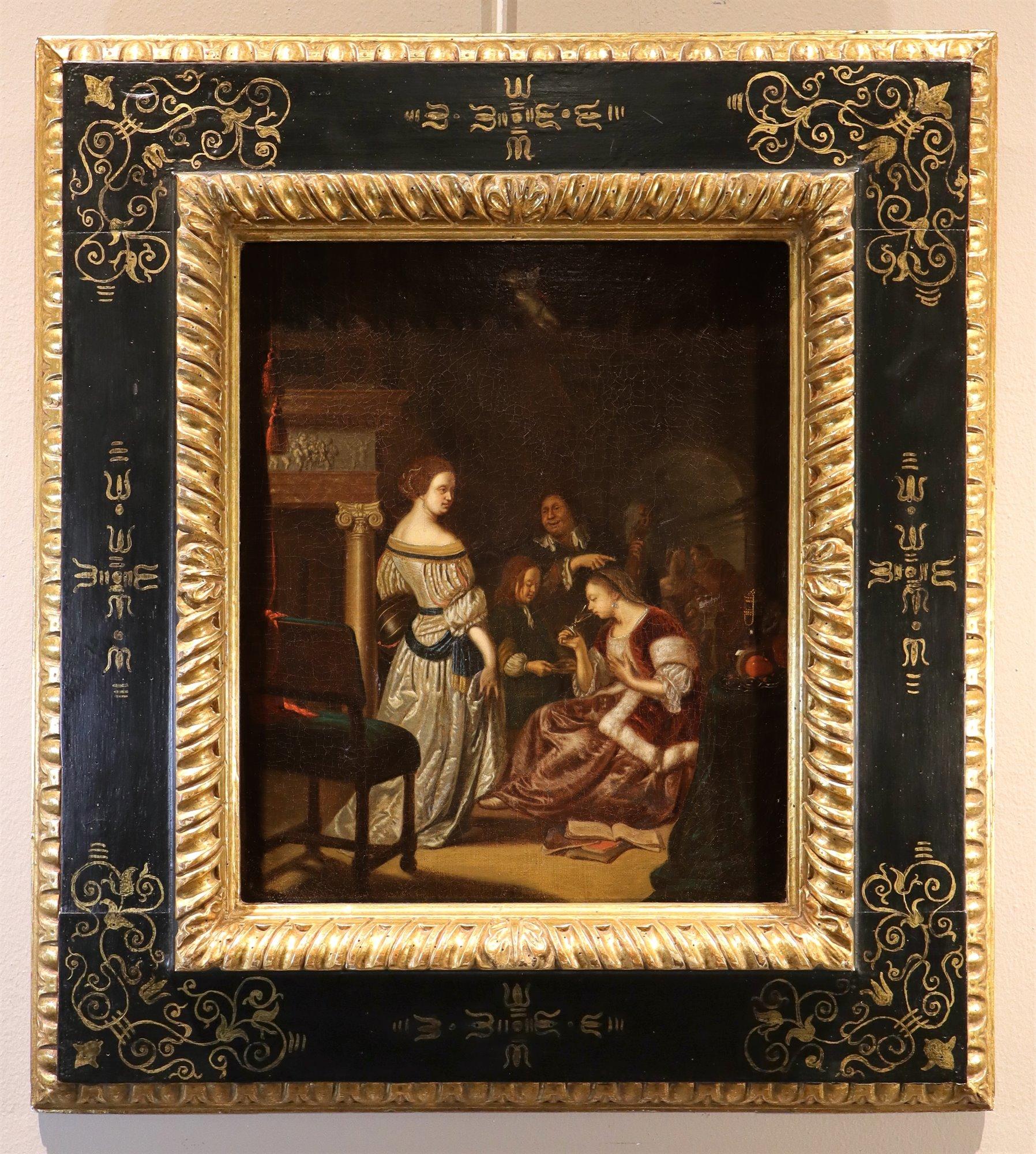
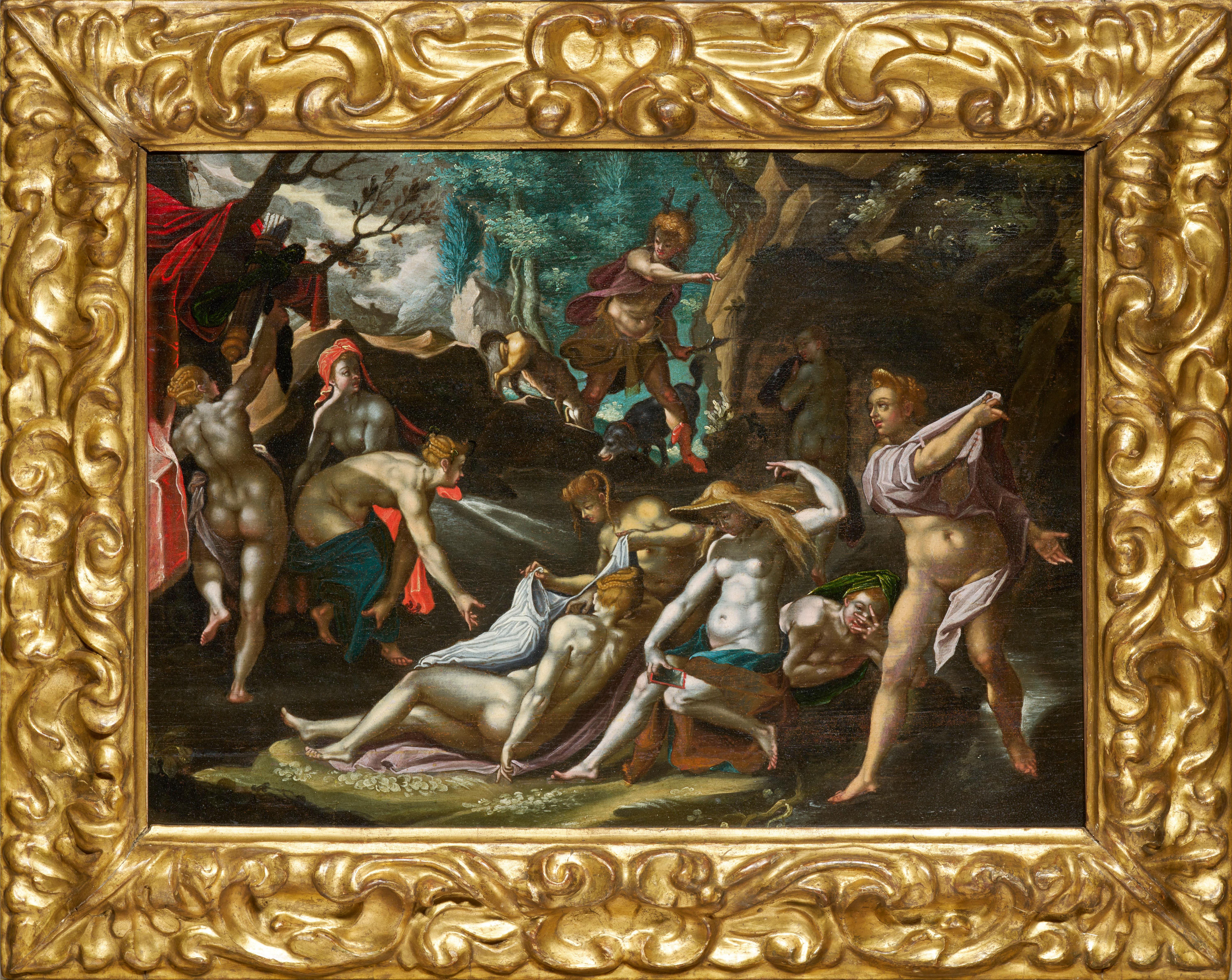
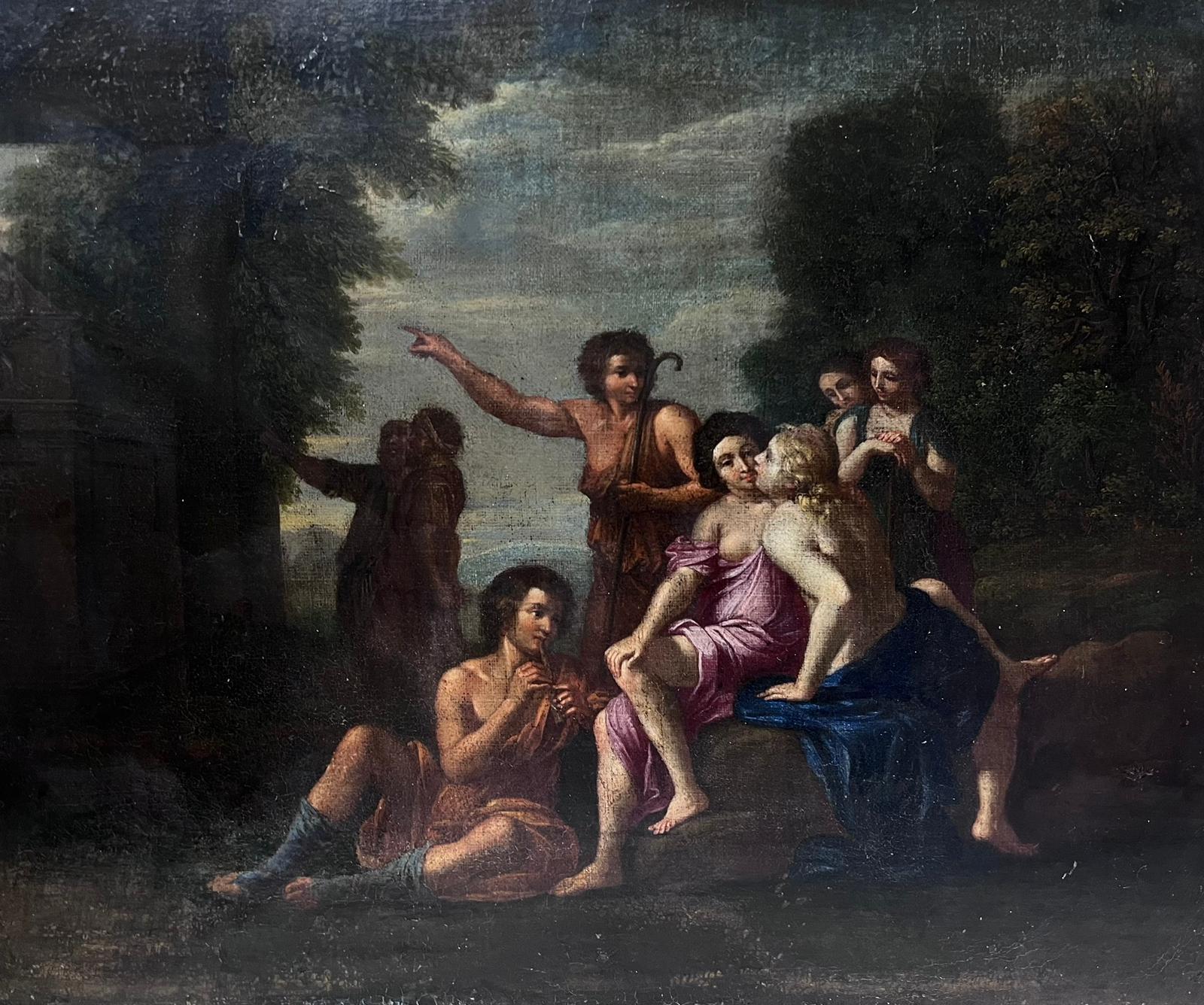
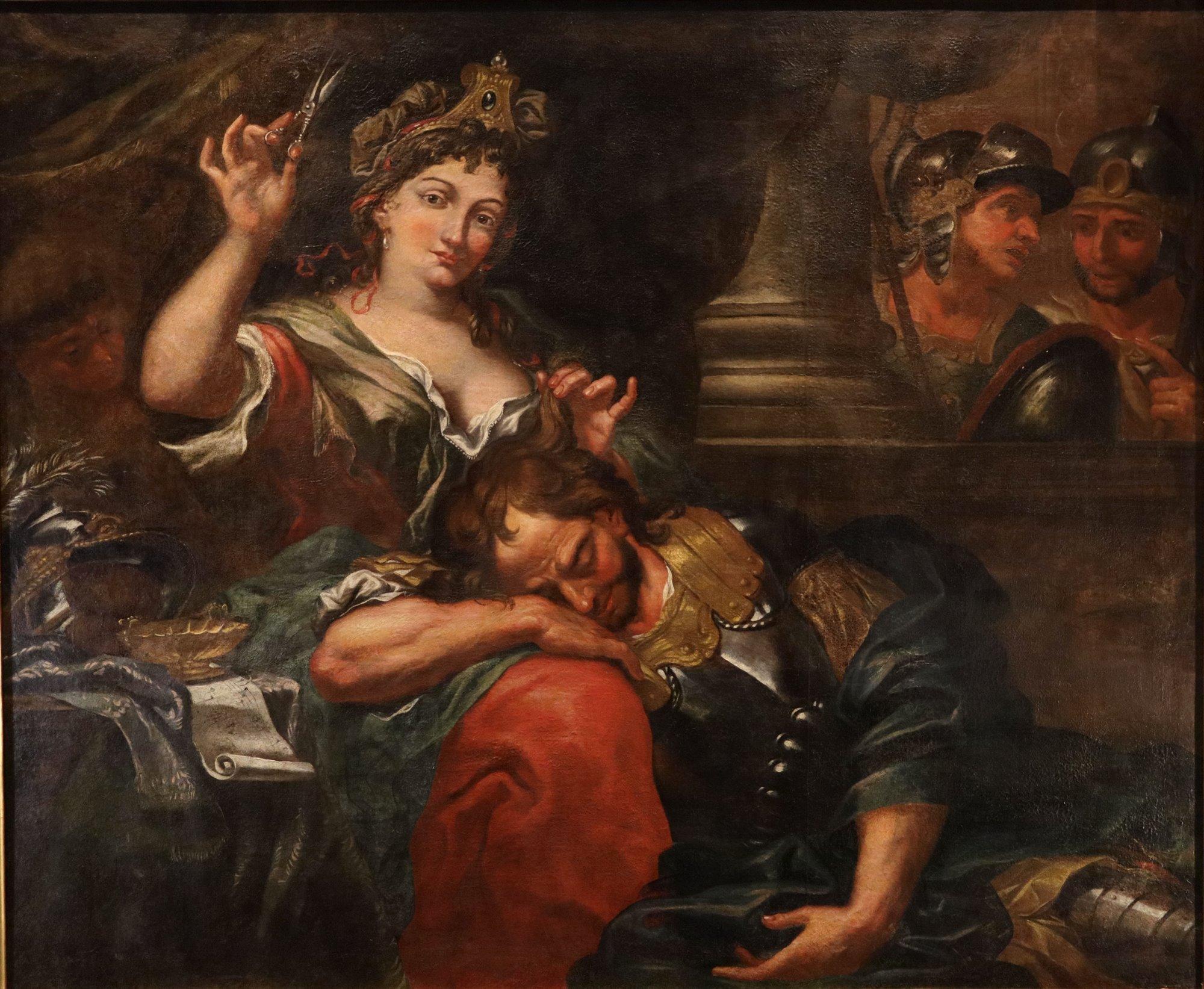
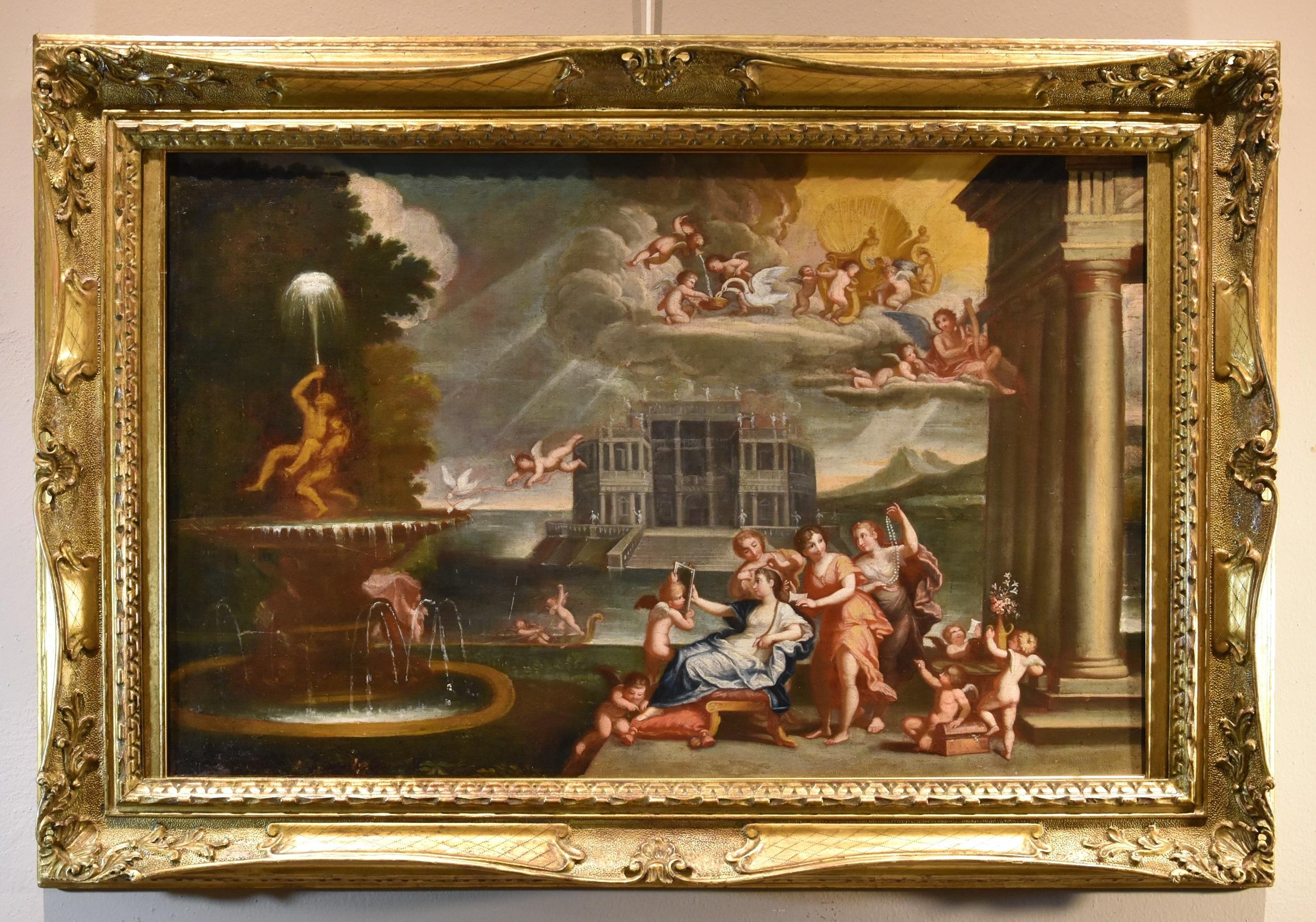
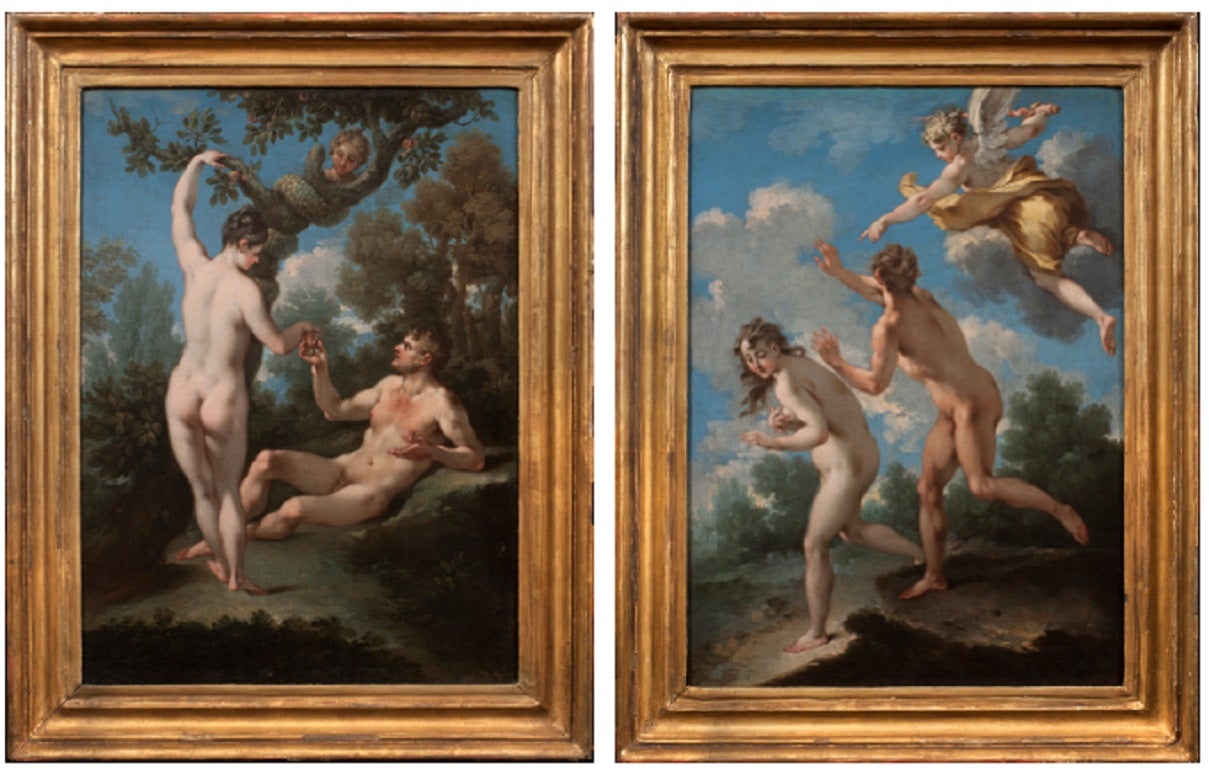
Allegory of Abundance
Located in New York, NY
Painted in collaboration with Hendrick van Balen (Antwerp, 1575 – 1632). Provenance: Private Collection, Uruguay, since the 1930s. The eldest son of Jan Br...
17th Century Old Masters Paintings
Copper


Allegory of Abundance
Located in New York, NY
Painted in collaboration with Hendrick van Balen (Antwerp, 1575 – 1632). Provenance: Private Collection, Uruguay, since the 1930s. The eldest son of Jan Br...
Copper

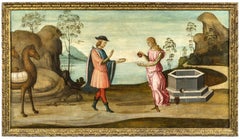
Rebecca at the Well
Located in New York, NY
Provenance: Dr. James Henry Lancashire, Manchester-by-the-Sea, Massachusetts, by 1925; probably by descent to: Private Collection, Cumberland Foreside, Maine, until 2018 This unpublished panel is a characteristic work of the Master of the Apollo and Daphne Legend, an anonymous Florentine painter in the circle of Bartolommeo di Giovanni, Domenico Ghirlandaio, and Sandro Botticelli. The artistic personality of the Master of the Apollo and Daphne Legend was independently recognized by Everett Fahy and Federico Zeri at roughly the same moment in time. Fahy originally dubbed this artist the Master of the Ryerson Panels but later adopted Zeri’s name for the artist, which derives from his eponymous works from the Samuel H. Kress collection (Figs. 1-2). Fahy posited that the artist was most likely a pupil of Ghirlandaio active from roughly 1480 to 1510, and that he may be identifiable with one of Ghirlandaio’s documented pupils to whom no works have been securely attributed, such as Niccolò Cieco, Jacopo dell’Indaco, or Baldino Baldinetti. The present painting was first attributed to this master by Everett Fahy in 1989, who became aware of its existence only after publishing his definitive studies on the artist. The surviving body of work by the Master of the Apollo and Daphne Legend is largely composed of series of panels treating the same theme. In addition to the works illustrating the legend of Apollo and Daphne, there are also series on the themes of Susanna and the Elders and the story of Saint Joseph, among others. The subject of the present panel is drawn from Genesis 24, the story of Isaac. It is possible that our painting relates to another work by the artist depicting the Sacrifice of Isaac formerly in the collection of E. A. McGuire in Dublin, Ireland (Fig. 3), and that these two panels were originally part of a decorative scheme based on the story of Isaac. Although the Master’s paintings of this type have traditionally been considered painted fronts of wedding chests, known as cassoni, the scale of these paintings and the fact that they are often part of a series indicates that they are more likely spalliera panels—paintings set into furniture or the wainscoting of a room. The biblical episode depicted in this painting centers on the theme of marriage, which suggests that this work was likely commissioned for the domestic interior of a newly married couple. The Master has transcribed into paint even the minute details of this Old Testament story, in which Abraham sends a servant to travel by camel to the land of his father and seek out a wife for his son Isaac. The servant is here shown at the well...
Oil, Tempera, Wood Panel
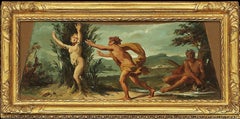
Seven Scenes from the Life of Apollo
By Jacopo Guarana
Located in New York, NY
Attributed to Jacopo Guarana (Verona 1720 – 1808 Venice) Canvas, unsigned The Deeds of Apollo Provenance: Suida-Manning Collection These seven scenes are brilliant evocations o...
Oil

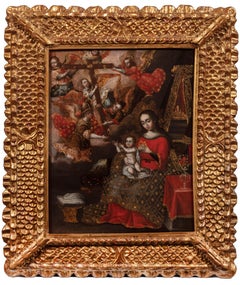
Virgin and Child with Angels Carrying the Cross (Vision of the Cross)
Located in New York, NY
Provenance: Fernandez Jimenez, Spain; part a family collection for over 80 years. Prints transported to the New World for use in missionary work and religious instruction often serv...
Canvas, Oil

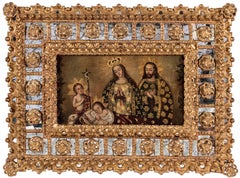
A Magnificent Gilt Wood Mirrored Frame
Located in New York, NY
Provenance: Private Collection, Argentina; there acquired by Mr. and Mrs. Ernest T. Harper, New York, by 1960; by descent to: Mr. and Mrs. Alan Harper, New York, until 2024. This extraordinary mirrored frame is an exuberant and nearly perfectly preserved example of Andean 18th-century decorative art. Pierced mirrored rosettes surrounding floral motifs are set against mirrored surrounds along a broad frieze bordered within and without by elaborate raised moldings, inlaid by small, shaped mirrors. Repeating ornamental motifs reflecting both Spanish and indigenous designs surround both the inside panel and the exterior perimeter, the four corners of which are punctuated by mirrored rosettes. Glass mirrors were unknown to the indigenous population of the Americas prior to the arrival of Europeans (obsidian mirrors...
Canvas, Mirror, Wood, Oil
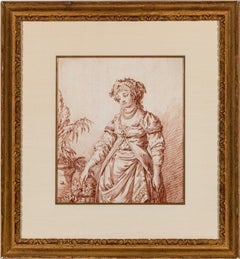
Woman in Fantasy Costume (pair)
By Jean Baptist Le Prince
Located in New York, NY
The pair consists of the present work and an engraving after it by the hand of Giles DeMarteau (Liège 1722 – 1776 Paris) titled Woman in Fantasy Costume, after Jean Baptiste Le Prince, and measuring, 10 ⅜ x 8 ⅝ inches (26.5 x 22 cm). DeMarteau's engraving is inscribed at the bottom: Le Prince inv. del. / Demarteau sc. / A Paris ches Demarteau Graveur du Roi, rue de la Pelterie à la Cloche...
Paper, Chalk, Engraving

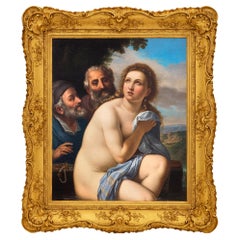
Susanna The Elders Segala Paint 17/18th Century Oil on canvas Old master Italy
Located in Riva del Garda, IT
Giovanni Segala (Venice 1663 - Murano 1720) Susanna and the Elders oil on canvas (155 x 127 cm - with frame 174 x 146 cm) This delightful, large-scale painting illustrates th...
Oil

Aristotle Phyllis Spranger 16/17th Century Paint Oil on canvas Old master
Located in Riva del Garda, IT
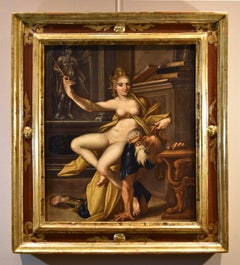
Bartholomäus Spranger (Antwerp, 1546 – Prague, 1611) workshop Aristotle and Phyllis Oil on canvas 64 x 54 cm In frame 79 x 72 cm The curious subject of this painting, quite...
Oil

Rebecca at the Well, Oil on Canvas, 18th Century, Framed, Old Masters
Located in Fredericksburg, VA
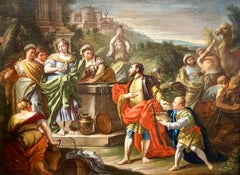
Nicola Maria Rossi masterfully captures the biblical tale of Rebecca and Eliezer at the Well, a story from the Book of Genesis. In this scene, Abraham’s servant, Eliezer, arrives at ...
Canvas, Oil

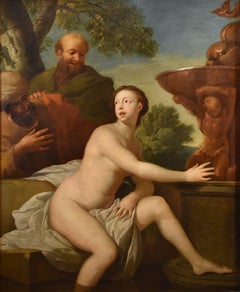
19th Century Old Master Oil on Canvas Painting Titled, “Susanna And The Elders”
Located in West Palm Beach, FL
A stunning Continental early 19th century old master oil on canvas painting titled, "Susanna and the Elders" after Giovanni Martinelli. The wonderfully executed painting is set in it...
Canvas, Giltwood

16th-17th Century By Giacomo Cavedone Susanna and the Elders Oil on Canvas
Located in Milano, Lombardia
Giacomo Cavedone (Sassuolo, Italy, 1577 - Bologna, Italy, 1660) Title: Susanna and the Elders Medium: Oil on canvas Dimensions: without frame 97 × 75 cm - with frame 123.5 x 100 cm G...
Canvas, Oil
Attributed à H. Francken II, 17th c. Anwerp - The prodigal son among courtesans
Located in PARIS, FR
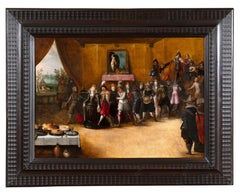
The Prodigal Son Among Courtesans Attributed to Hieronymus Francken II (Antwerp 1578-1623) Early 17th century Antwerp school Oil on oak panel, Dimensions: H. 52.5 cm (20.67 in), W. 74 cm (29.14 in) Flemish-style moulded wood frame Frame: h. 78 cm (h. 30.70 in.), w. 100 cm (39.37 in.) This artwork is sold with a certificate of authenticity guaranteeing its origin, date of execution, and attribution to the artist. At first glance, this festive and joyful painting depicts a group of elegantly dressed people dancing to the sound of an orchestra in a richly decorated interior with a wide opening onto a rural exterior. However, the real theme is cleverly concealed by the painter and is only discernible through the artifice of a small scene in the background where we see a half-naked man, in the company of the pigs next to a makeshift shelter. In fact, beyond the pleasant and apparently superficial character of the painting, it is a subject taken from the parable of the prodigal son in the Gospel. The illustrated episode is the prodigal son among courtesans. Even if the viewer's attention is drawn to the central couple (prodigal son embracing a pretty courtesan) doing the dance steps, the artist takes care in a narrative approach of all the groups and ancillary scenes in order to create a rich and varied composition. Thus the musicians seated on a raised platform are depicted with great skill, their faces animated, their clothes abundantly varied. The theme of music, which has always been associated with that of sensuality and physical love, helps to exacerbate licentious pleasures. The merry company dances "Spanish pavane", a slow court dance from the sixteenth century, danced close to the ground by couples arranged in a procession, which was probably introduced to the south of the Netherlands around 1600 during the governance of Albrecht VII and the daughter of the King of Spain Isabella Clara Eugenia in Brussels. The interior of the house is also carefully elaborated, the embossed leather dyes on the walls, the middle sideboard (typical in Francken interiors), where the rich gold and silver crockery is placed in front of the painting "Andromeda chained to the rock and Perseus arriving to rescue her". The inclusion of a contemporary and probably extant pictorial work is also one of the characteristics of the Francken family, among them Frans Francken the Younger...
Oak, Oil