Want more images or videos?
Request additional images or videos from the seller
1 of 14

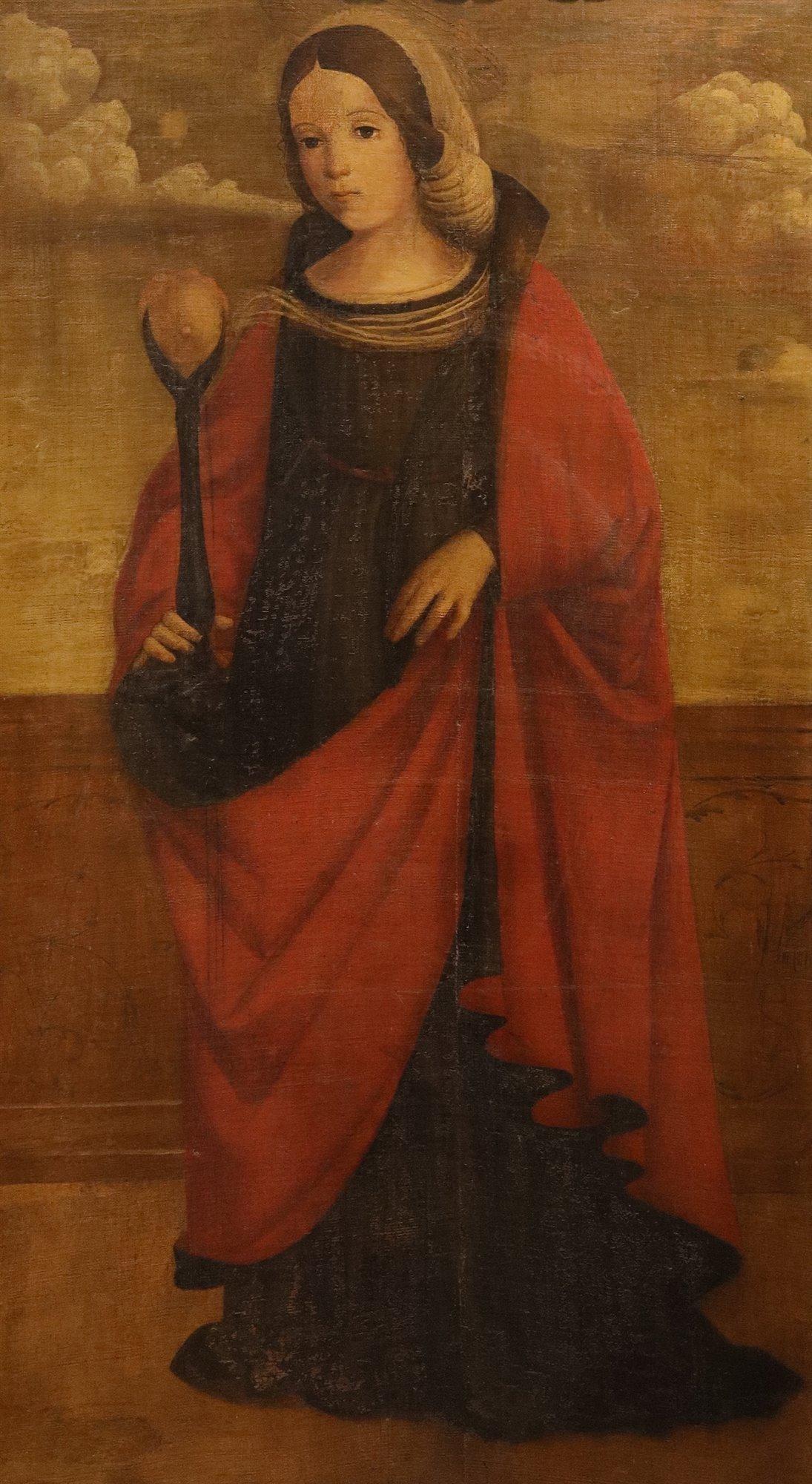
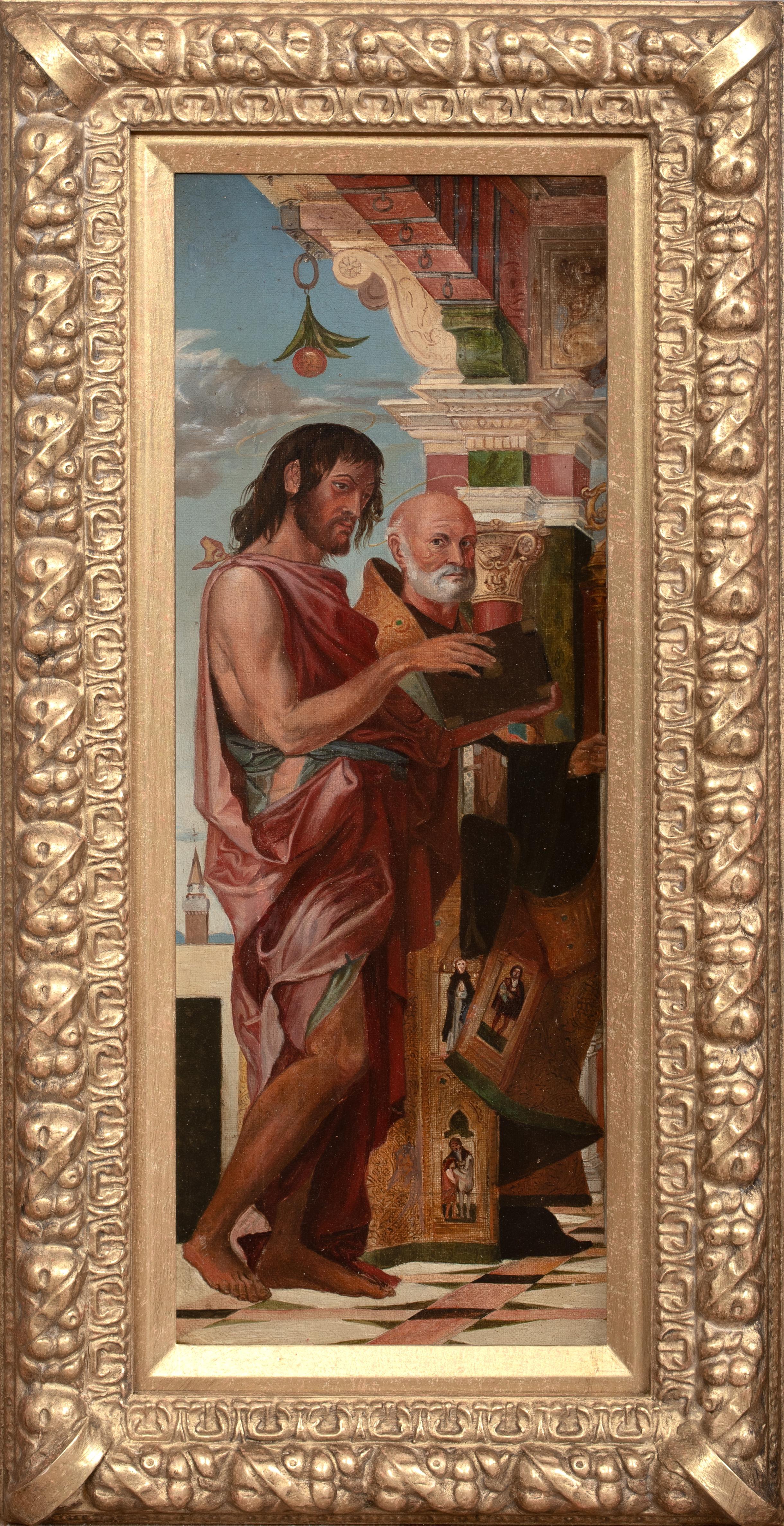
Venetian School, late 15th century, Saint Paul the Apostle

late 15th century

$13,500
£10,091.21
€11,789.53VAT Included
CA$18,990.95
A$19,220.30
CHF 11,020.39
MX$233,118.32
NOK 128,162.71
SEK 130,457.26
DKK 88,130.99

About the Item

Venetian School, late 15th century Saint Paul the Apostle oil on panel unframed 44.5 × 23.5 cm (17.5 × 9.3 in) framed 64 × 42 cm (25.2 × 16.5 in) No signature Provenance: Private collection, Sweden. Essay: This refined panel depicting Saint Paul the Apostle belongs to the artistic world of late fifteenth century Venice, a period during which painters gradually transformed the devotional traditions of the Gothic era into the more naturalistic language of the Renaissance. Stylistic comparison suggests that the painting is best understood within the circle of Antonio and Bartolomeo Vivarini, later continued by painters such as Lazzaro Bastiani and other masters active in Venice during the final decades of the fifteenth century. Saint Paul is immediately identified by the long sword, the traditional attribute referring to his martyrdom by beheading. His richly punched gilt halo reflects the enduring Byzantine influence that remained deeply rooted in Venetian painting, while his contemplative expression and subtle interaction with the surrounding landscape reveal a growing interest in natural observation. The combination of sacred symbolism and increasingly atmospheric landscape is one of the defining characteristics of Venetian painting during this important transitional period. The unusually narrow proportions strongly suggest that the panel originally formed part of a larger polyptych or altarpiece. Throughout the fifteenth century, standing saints were frequently painted on individual vertical panels flanking a central Madonna or other principal religious scene. Many such ensembles were dismantled during later centuries, allowing individual saints to survive as autonomous works of art. Today these surviving panels are appreciated not only as devotional images but also as remarkably intimate examples of early Renaissance painting. The present work possesses many qualities that distinguish Venetian painting from the schools of central Italy. The handling of light is gentle rather than sculptural, the transitions between colour are soft, and the landscape is treated not merely as a decorative background but as an active participant in the emotional atmosphere of the composition. While still preserving the hieratic dignity inherited from medieval art, the painter was clearly interested in creating a convincing sense of place, allowing Saint Paul to inhabit the natural world rather than an abstract golden space. Particularly striking is the dialogue between figure and landscape. The dense woodland behind the Apostle forms a dark architectural backdrop against which the illuminated flesh tones and vibrant green tunic emerge with remarkable clarity. His upward gaze introduces a contemplative dimension, suggesting revelation rather than narrative action. The restrained composition allows the viewer to focus entirely upon the saint's inner spiritual life. Early Italian Renaissance panel paintings have become increasingly sought after among collectors during the last decade. Their appeal lies not only in their rarity but also in their historical significance. They represent the moment when European painting moved from the symbolic language of the Middle Ages toward the observational ideals of the Renaissance. Every surviving panel bears witness to this extraordinary artistic transformation. Beyond their historical importance, these paintings possess an exceptional decorative quality. The rich mineral pigments, delicate gilding and beautifully aged surfaces create a visual presence that contrasts remarkably well with contemporary architecture. Rather than competing with modern interiors, works of this period often become their natural focal point, introducing warmth, depth and an unmistakable sense of permanence. It is precisely this dialogue between fifteenth century craftsmanship and modern design that has made early Italian panel paintings increasingly desirable among today's collectors. This panel therefore offers considerably more than an image of a single apostle. It is an authentic fragment of the Venetian Renaissance, preserving both the devotional intensity of medieval art and the emerging naturalism that would soon culminate in the achievements of Giovanni Bellini and the great masters of the High Renaissance. Condition: The painting is preserved in very good condition for its age. The surface retains a fresh palette with well preserved original modelling in the face and drapery. The panel has an old parquet support applied to the reverse, a common historic conservation measure for early Italian paintings. Minor age related wear and restoration are consistent with a work of the late fifteenth century. The painting is presented in an attractive period frame with fine historic patina.
  • Creation Year:
    late 15th century
  • Dimensions:
    Height: 25.2 in (64 cm)Width: 16.54 in (42 cm)
  • Medium:
  • Movement & Style:
  • Circle Of:
    15th Century Venetian School
  • Period:
  • Condition:
    The painting is preserved in very good condition for its age. The surface retains a fresh palette with well preserved original modelling in the face and drapery. Minor age related wear consistent with a work of the late fifteenth century.
  • Gallery Location:
    Stockholm, SE
  • Reference Number:
    1stDibs: LU1445218280902

More From This Seller

View All
Old Master Painting Called Christ at the Column

Old Master Painting Called Christ at the Column

Located in Stockholm, SE

Follower of Gerard Seghers (1591-1651) Christ at the Column oil on wood panel c. 1700s unframed 19.5 × 14 cm Provenance: Originally in the collection of Dr. Axel Munthe (1857–1949), the renowned Swedish physician and author celebrated for his philanthropic work and for founding Villa San Michele...

Category

18th Century Old Masters Figurative Paintings

Materials

Oil, Wood Panel

18th Century German Old Master Portrait of an Elderly Bearded Man

18th Century German Old Master Portrait of an Elderly Bearded Man

By Christian Wilhelm Ernst Dietrich

Located in Stockholm, SE

Circle of Christian Wilhelm Ernst Dietrich (1712–1774) Germany Head of an Elderly Bearded Man oil on panel unframed 28 × 22.5 cm (11 × 8.9 in) framed 44.5 × 38.5 cm (17.5 × 15.2 in...

Category

Late 18th Century Old Masters Portrait Paintings

Materials

Oil, Wood Panel

Portrait of an Old Bearded Man

Portrait of an Old Bearded Man

By Christian Wilhelm Ernst Dietrich

Located in Stockholm, SE

We are pleased to offer a captivating portrait, most likely painted in the late 18th century, attributed to an artist within the circle of Christian Wilhelm Ernst Dietrich. This oil ...

Category

Late 18th Century Old Masters Portrait Paintings

Materials

Oil, Wood Panel

An Apostle Painted in the Circle of Peter Paul Rubens, Oil on Canvas

An Apostle Painted in the Circle of Peter Paul Rubens, Oil on Canvas

Located in Stockholm, SE

Peter Paul Rubens (circle of) An Apostle circular 15.15 inches (38.5 cm) oil on canvas Provenance: Bukowskis Auctions, lot 725149, as "Peter Paul Rubens, circle of".

Category

17th Century Portrait Paintings

Materials

Canvas, Oil

You May Also Like

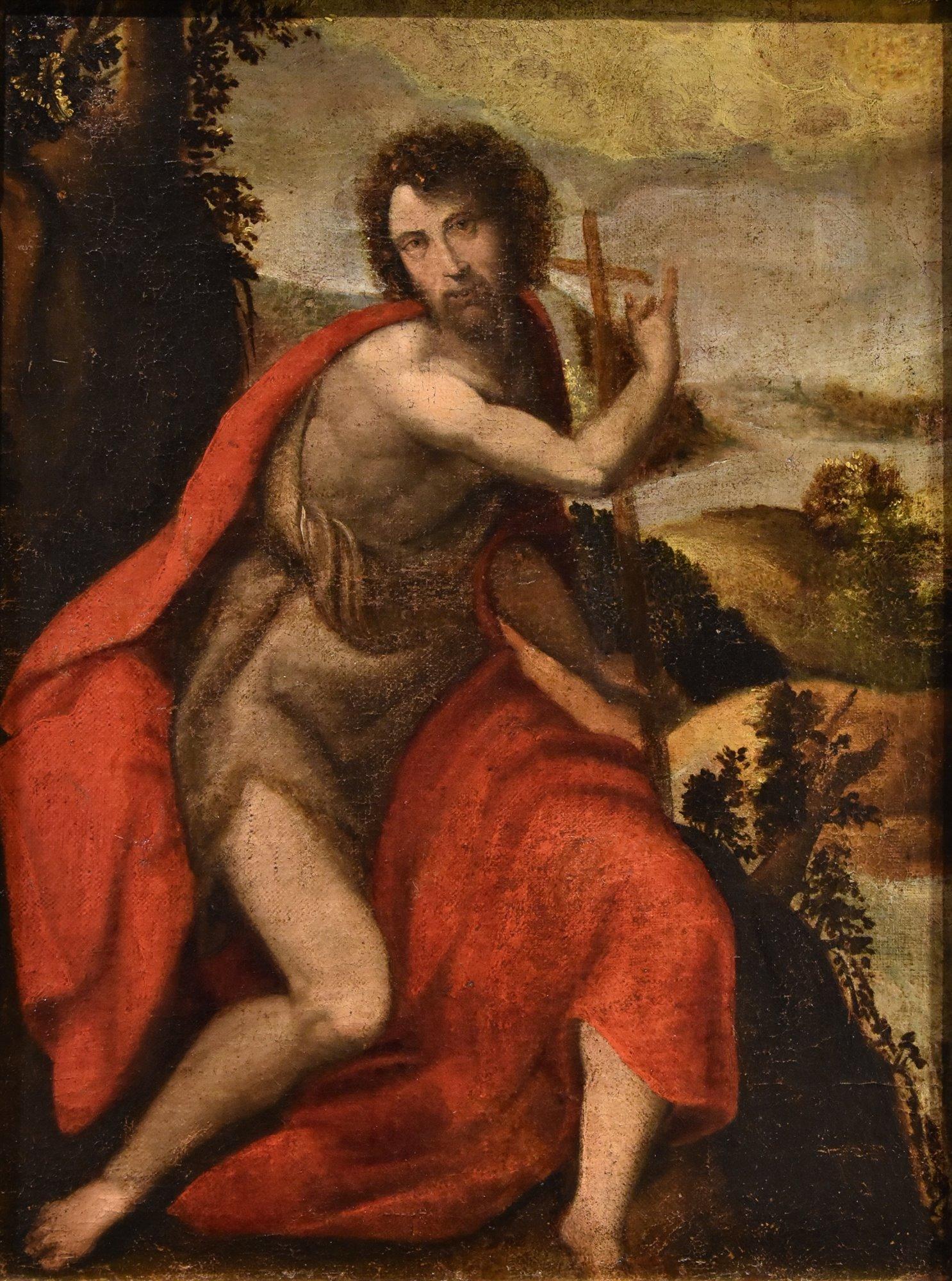
Saint John Baptist Venusti Paint 16th Century Oil on canvas Old master Italy Art

Saint John Baptist Venusti Paint 16th Century Oil on canvas Old master Italy Art

Located in Riva del Garda, IT

Marcello Venusti (Mazzo di Valtellina 1510 - Rome 1579) workshop/circle Saint John the Baptist Oil on canvas (65 x 50 cm. -  In frame 74 x 58 cm.) The work depicts Saint John...

Category

16th Century Old Masters Paintings

Materials

Oil

Fenzoni, Painting AND preparatorial Drawing, John the Baptist, Italy Renaissance

Fenzoni, Painting AND preparatorial Drawing, John the Baptist, Italy Renaissance

By Ferrau Fenzoni

Located in Greven, DE

The painting and the preparatory drawing are offered together. Provenance Private collection, Germany, Trier, c. 1980- 2013 Saint John the Baptist Brown ink and wash over red chalk on oatmeal paper 31 x 20.5 cm Inscribed: „Ferrau Fenzonio da Faenza invt. esque … imp. da Fran. Villamena …“. bears the collector's mark of Henry Scipio Reitlinger (1882-1950; Lugt 2274a) on a tiny label glued to the verso On the reverse is a partial drawing of a Pieta, pricked for transfer. Provenance New York, Doyle, 14. October 2015, No. 6 The painting and the preparatory drawing resemble the composition of an engraving after Ferraù Fenzoni by Francesco Villamena. Drawing, engraving and painting are almost identical, except for minor differences. Even the measurements nearly correspond: painting (32 x 25,5 cm), drawing (30 x 20,5 cm), engraving (31,1 x 23,5 cm). Dr. Guiseppe Scavizzi confirmed the attribution of the present panting to Fenzoni and he dates it to c. 1590. The inscription on the drawing reads “Ferrau Fenzonio da Faenza invt. esque. . . imp. da Fran: Villamena . . .”. The engraving’s inscription also lists place and date “Ferra Fensionius inventor/F. Villamoena sculpsit Rome/Aspectu fruitur… antra puer/cum Privilegio… 1613”. Interestingly, the engraving is not mirrored as it is in most printing processes. Painting, drawing and engraving are not reversed but the same. It is remarkable to note that there are further paintings by Fenzoni which were engraved in the same order and not reverted. They also show strong parallels regarding the compositions and the measurements (see for example “Deposition of Christ” ). Ferraù Fenzoni was an Italian painter mainly active in Todi. He is also called Il Faenzone after his birthplace (Faenza). He apprenticed in Rome during the papacy of Gregory XIII and contributed to numerous fresco cycles under pope Sixtus V, such as the Loggia della Benedizioni in the Lateran Palace, the frescoes on the walls and vaults of the Scala Santa of the adjacent Basilica of San Giovanni in Laterano, and the decoration in the Sistine library. His expressive canvases straddle the styles of Mannerism and Baroque. In 1594, he moved to Todi. A “Last Judgement” by him is housed in the cathedral of Todi. He returned to Faenza in 1599, where he decorated chapels in the cathedral from 1612 to 1616. In 1622, he completed a “Deposition”, now in the local Pinacoteca. In 1640, Fenzoni was named “cavaliere dello speron d’oro” by Cardinal Colonna and, on 25th April 1634, he was nominated vicar and “castellano of Granarolo”. Fenzoni‘s style is characterized by a mixture of the Mannerism of the Northern Netherlands and the Italian Baroque. Saint John the Baptist, Old Master, 17th Century, By Fenzoni, Religious Scene, Rome Art...

Category

16th Century Mannerist Figurative Paintings

Materials

Canvas, Oil, Handmade Paper

Saint Jerome Oil on copper 16th Century Paint Old master Italy Emilian school

Saint Jerome Oil on copper 16th Century Paint Old master Italy Emilian school

By Giuseppe Mazzuoli known as Bastarolo (Ferrara 1536 - 1589)

Located in Riva del Garda, IT

Ferrara school of the late sixteenth century - circle of Giuseppe Mazzuoli known as Bastarolo (Ferrara 1536 - 1589) St. Jerome penitent in the cave ...

Category

16th Century Old Masters Paintings

Materials

Oil

Italian School  "Apostle" 17th Century

Italian School "Apostle" 17th Century

Located in Madrid, ES

Italian School "Apostle" 17th Century Oil on oak wood Carved and gilded wooden frame. Small defects. Dim.: 44 x 58 cm good conditions

Category

Antique 17th Century Italian Baroque Paintings

Materials

Paint

16th Century by Venetian Maestro Deposition of Christ Oil on Panel

16th Century by Venetian Maestro Deposition of Christ Oil on Panel

Located in Milano, Lombardia

16th Century Venetian Maestro Title: Deposition of Christ Medium: Oil on panel Dimensions: without frame 40 x 25 cm Painting without frame Not signed Previously part of the Canesso Collection, Paris. Fairs: The International Biennial of Antiques in Florence 2022 (BIAF, Biennale Internazionale dell’Antiquariato di Firenze) Publications: Bozzetti, modelletti, sketches: dalla collezione di Giorgio Baratti (From the Giorgio Baratti Collection) curated by Anna Orlando, Agnese Marengo and Annalisa Scarpa, Genoa, 2022, pp. 22, 23. In this precious panel we can admire a lament over the body of Christ by a large group of bystanders among whom we can recognise the Virgin and, in the foreground, St Catherine of Alexandria...

Category

16th Century Old Masters Figurative Paintings

Materials

Oil, Wood Panel

Pseudo-Giampietrino B (Milan, 3rd and 5th/6th decades of the century) (16th century), Magdalene

Pseudo-Giampietrino B (Milan, 3rd and 5th/6th decades of the century) (16th century), Magdalene

Located in Milan, IT

Pseudo-Giampietrino B (active in Milan between the third and fifth or sixth decade of the century) XVI) Penitent magdalene Oil on canvas, 75.5 x 65 cm With frame, 100 x 90 cm The...

Category

Antique 16th Century Italian Other Paintings

Materials

Canvas