Bartolomeo Guidobono (Savona, Italy, 1654 - Turin, Italy, 1709)
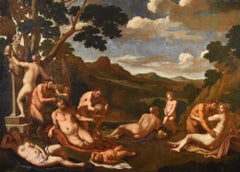
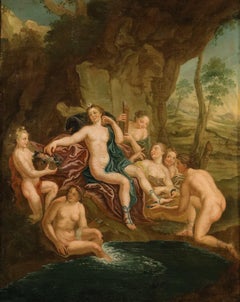
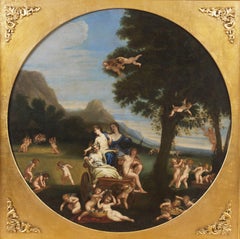
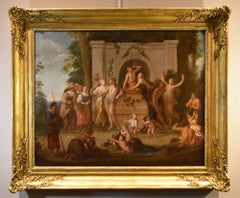
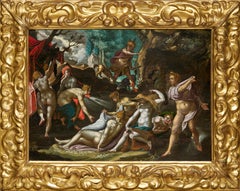
Title: Bacchanal with Maenads, Satyrs and Nymphs
Medium: Oil on canvas
Dimensions: without frame 120 x 110 cm - with frame 136 x 125 x 5 cm
With wooden frame
Not signed
Expertise by Anna Orlando, Professor and art historian
Publications: Uomini e Dei. Il '600 genovese dei collezionisti, curated by Anna Orlando, Sagep Editori, Genova, 2016, pp. 112, 113; Barocco spaziale - Dialoghi di luce, forma, colore fra pittura barocca e spazialismo, exhibition catalogue curated by Susanna Gualazzini, Fabio Obertelli, Carlo Scagnelli, (8 December 2021 - 6 February 2022), Galleria Biffi Arte, Piacenza, pp. 24-25, 40-41, 101.
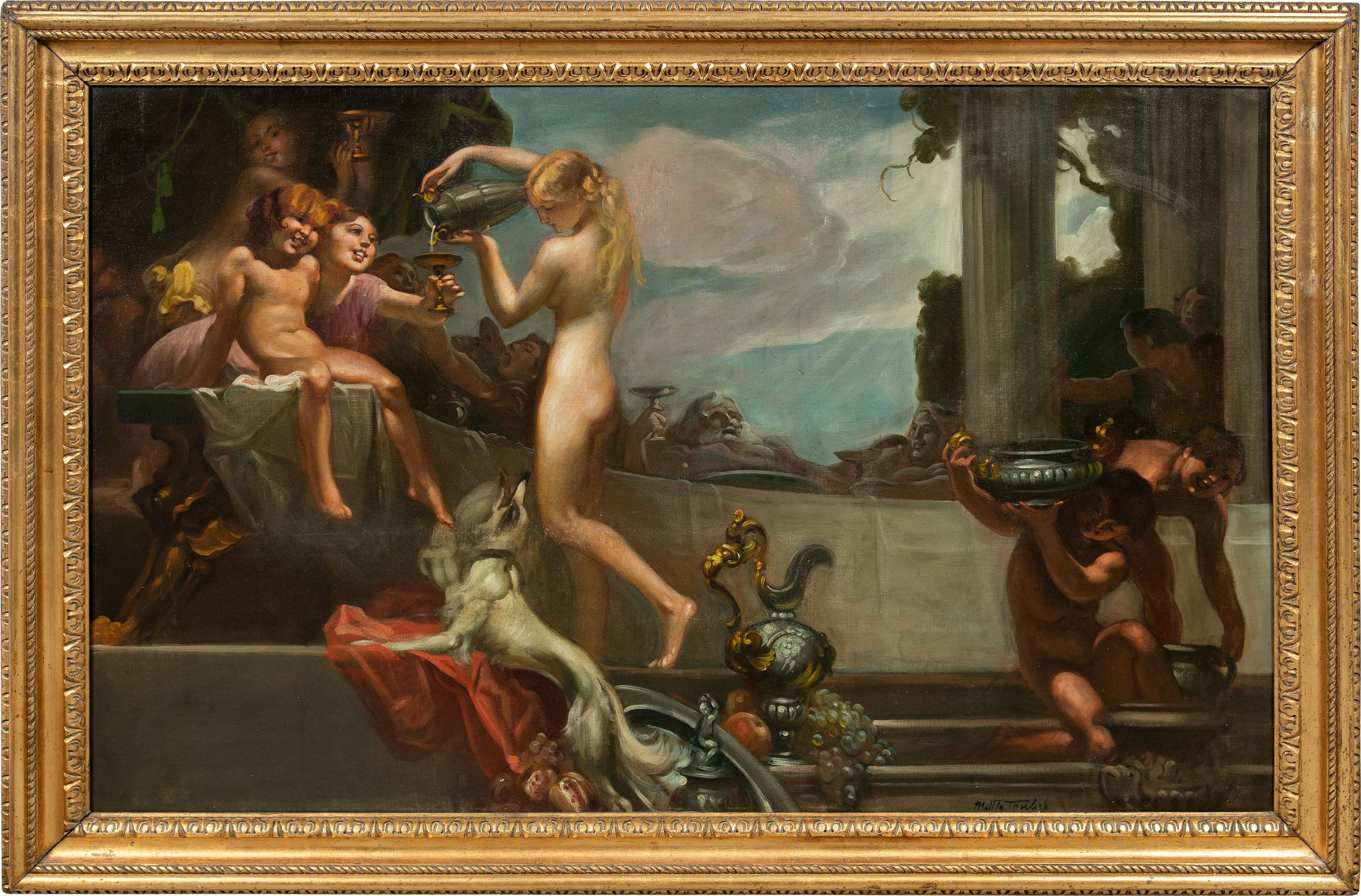
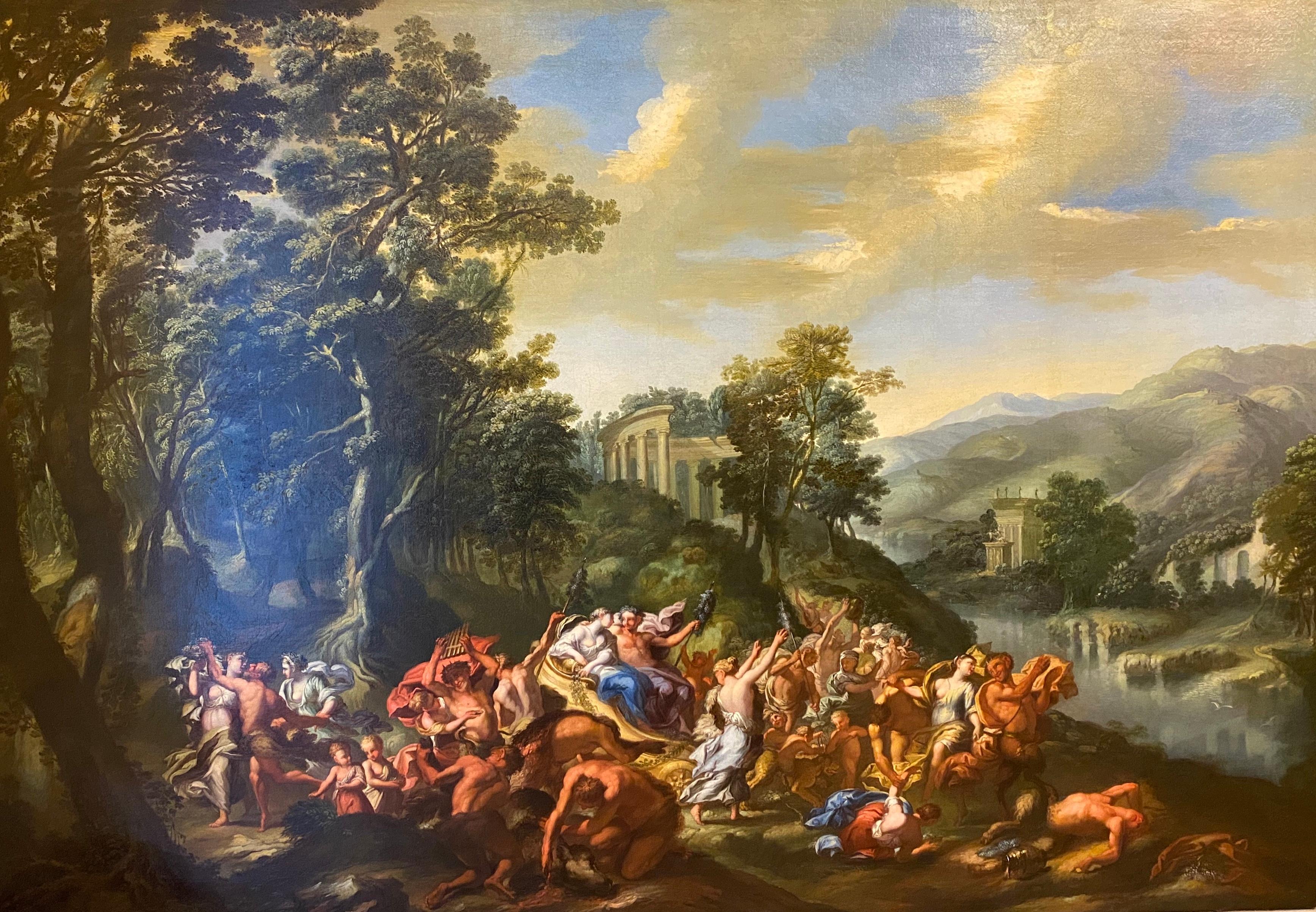
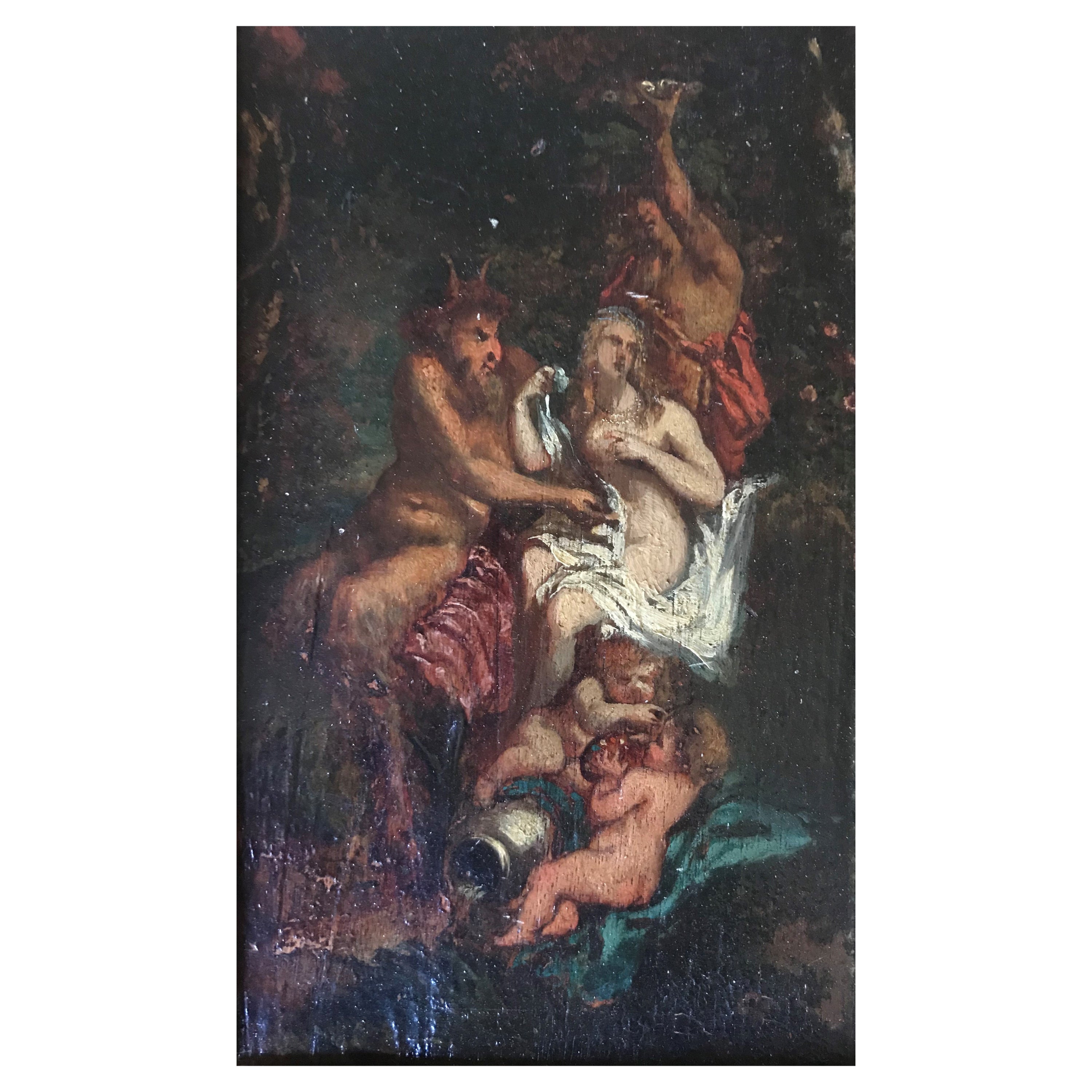
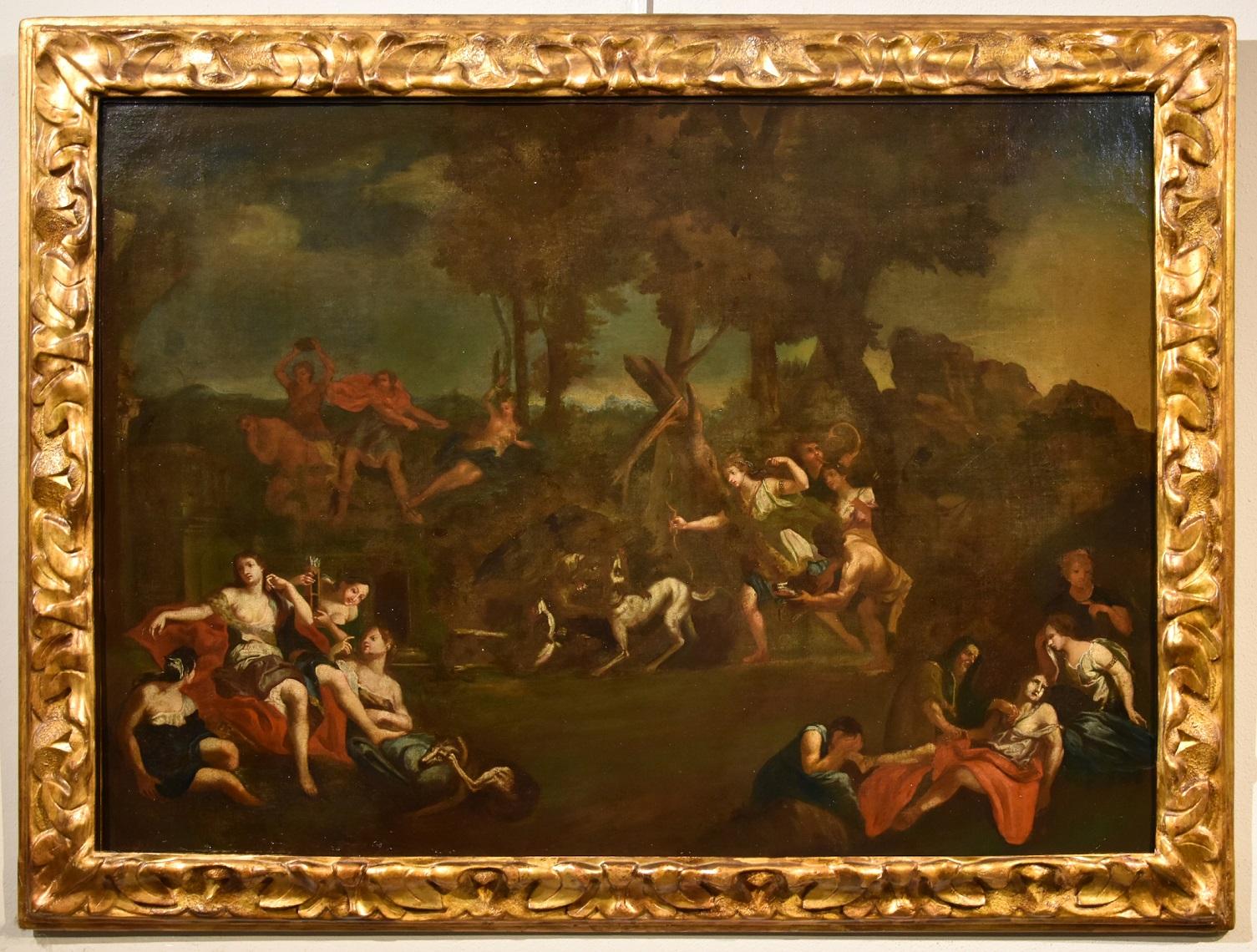
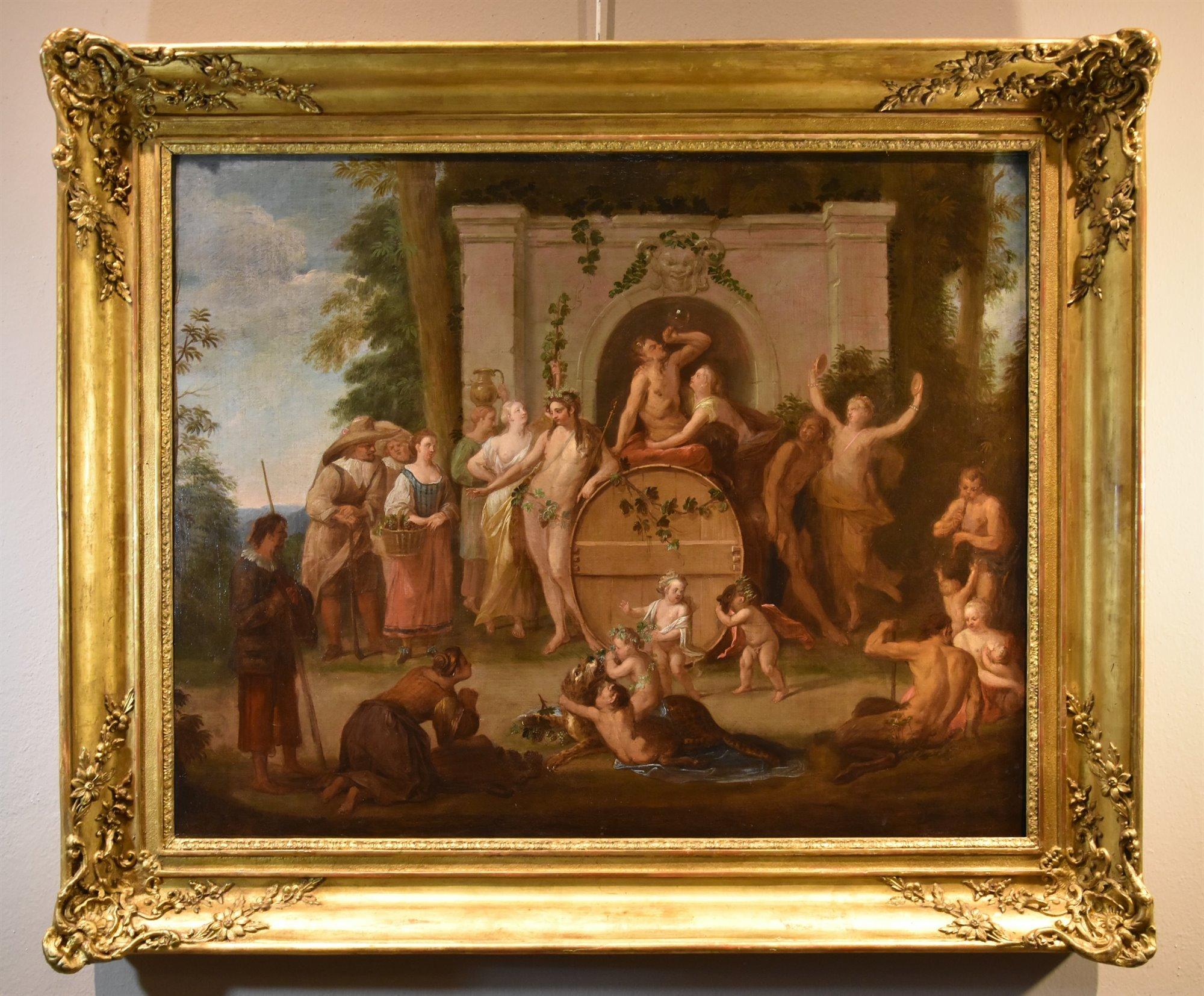
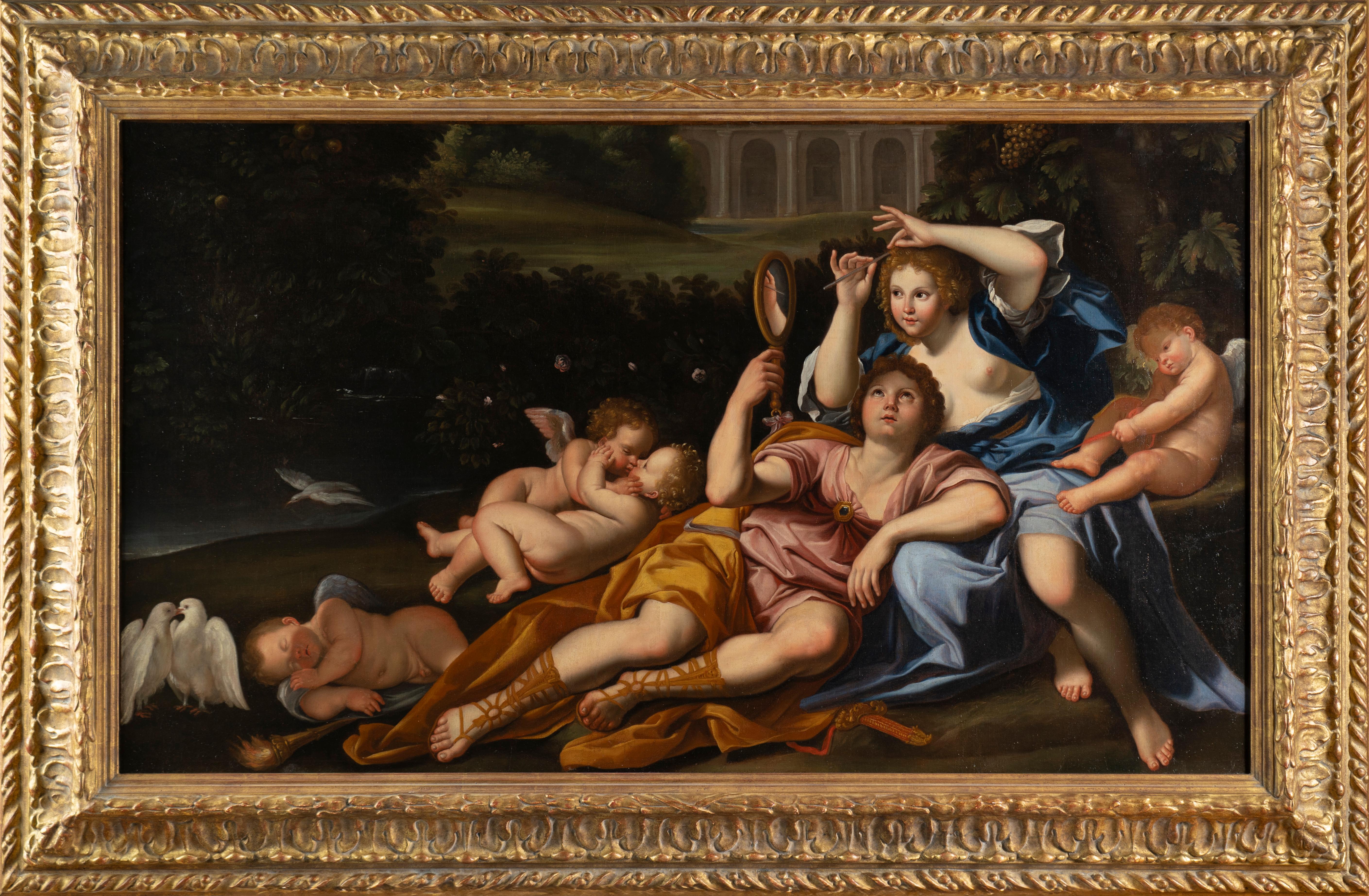
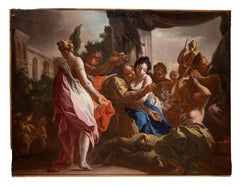
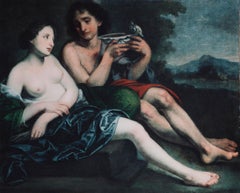
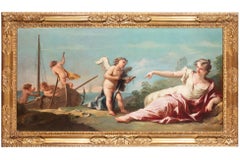
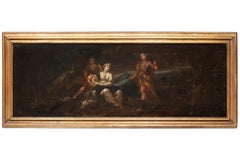
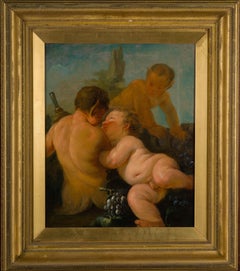
This exquisite canvas by Italian painter Bartolomeo Guidobono (Savona, Italy, 1654 - Turin, Italy, 1709) is an example of Baroque style but with hints of Rococo aesthetics. The painting is set in the half-light of a serene night, and it depicts a female figure at centre stage gently reclining, whose pale almost pearly skin and sensual body captivate the viewer. At the woman's feet is a pair of putti that seem to be lacing and entwining a sock of flowers. Flower buds are also found in the woman's hairstyles. The young woman is surrounded by various characters, including maenads, the female followers of Dionysus, satyrs and nymphs. The figure at the top, towering above the other characters in the scene is Bacchus, also known as Dionysus, the Greek god of wine inebriation, fertility and theatre. He is pointing his index finger towards the crown of stars in the sky, while his gaze is directed at Ariadne. In this work the artist plays on asymmetries and the apparent disorder of the scene depicted is recomposed by the overall vision of the painting.