Want more images or videos?
Request additional images or videos from the seller
1 of 7

David Rosen (b.1912)
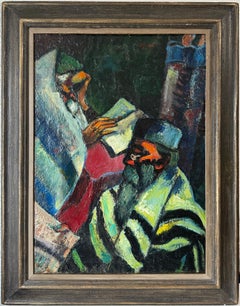
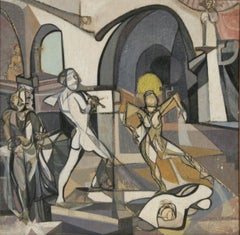
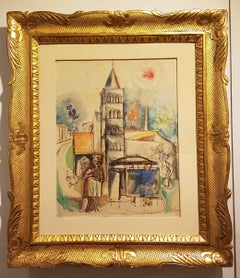
Synagogue Sanctuary Large Modernist Judaica Scene Oil Painting David Rosen

1963

$3,800
£2,843.94
€3,324.08
CA$5,369.69
A$5,420.26
CHF 3,114.50
MX$65,700.09
NOK 36,048.74
SEK 36,821.75
DKK 24,848.40

About the Item

Hand signed lower right Painter David Rosen emerged onto the art scene while the country was wrought with unimaginable economic turmoil. Like most other Americans, the Great Depression pummeled artists financially, leaving them destitute and unable to find even conventional labor work. However, in the midst of such devastation, the government implemented arts projects which strove to achieve employment for these artists. The program arose during a memorable era for art and funded the careers of several renowned artists, including Jackson Pollack, Arshile Gorky, and Lee Krasner before they found success. In 1936, Rosen himself joined the program and quickly accompanied his contemporaries in building the next movement of modern art, Abstract Expressionism. Born in 1912, Rosen grew up in Toronto, Canada before pursuing arts in the United States. Upon arriving, Rosen settled in New York City and attended the Cooper Union Art school in 1930. While participating in the Federal Arts Project, he worked for the program's mural department until 1941. As well, he worked with an artist collective, Siqueiros Art Workshop. There, Rosen met fellow FAP artist Jackson Pollack, and together, with artist Phillip Guston, they experimented with new painting techniques and mediums. Art movements are often reactions to the popular styles that precede them, and Abstract Expressionism applied a new and exciting method to Modern Art. Gradually, artists began to break away from an overly-studied, academic approach to painting and liberated their technique. During these workshops, Rosen was introduced to Pollack's groundbreaking "drip painting" before it changed the art world. As America became involved in World War II, the Federal Arts Project wound down, officially ending in 1942. Around this time, Rosen enlisted as a Merchant Seaman with the U.S Merchant Marines. During this time, he traveled to North Africa and Italy before concluding his service and moving to California where, in 1945, he devoted his full attention to building an art career. Within a couple of years, he landed a major exhibition at the Los Angeles County Museum of Art in 1947, and his first one-man show, which opened to rave reviews, was held at Hollywood's Contemporary Art Gallery. The exhibition’s success led to mural commissions from Palm Springs' Hotel del Tahquitz, and he scored more solo shows at West Hollywood's Chabot Gallery. The early 1950s brought a surge of recognition for Rosen's career, and while his work was certainly still influenced by Abstract Expression, his painting style included elements of Surrealism, Figurative Art, and Cubism. Like his colleague Jackson Pollack, Rosen produced work inspired by drip painting; however, rather than splattering, his drips were the natural flow marks from painting freely without regard for "mistakes." Throughout Rosen's long career, he would acquire techniques from vastly different art styles which made for a varied, eclectic catalog of work. Rosen continued to build his California art career and settled at a Laguna Beach art colony in 1958. There, he entered his work in the Laguna Beach Festival of Arts and was the first painter to contribute Abstract Art to the event. Rosen would participate in the festival for the next fifteen years. A year after his move, in 1959, Rosen opened his first studio gallery and began a 12-year collaboration with the Laguna Playhouse. For the next two decades, Rosen participated in 17 art exhibitions and 20 solo shows, and received considerable critical praise. Rosen's themes were as varied as his evolving painting style, and one of his themes focused on classic characters like Shakespeare's Hamlet. Rosen's close-up portraits of historical and literary figures, illustrated by the piece To Be or Not to Be: Soliloquy From Hamlet, capture the essence of the characters while remaining loose with the painting and even adding a slight cartoon feel. His ongoing Hamlet series, as a complete collection, makes an impact with the diversity of technique. Unlike the loose style of some of his works, the painting Madaam... that he is mad is true is influenced by the structure of Cubism, the flat dimensions of Byzantine Art, and his utilization of mixed media. After Rosen's death in 2004, the Laguna Beach Festival of Arts sponsored an exhibition of his Hamlet paintings at the Wells Fargo Building gallery. Throughout Rosen's career, he amassed a great deal of critical, industry, and public praise for his work. His beloved town of Laguna Beach bestowed numerous awards that include the Laguna Beach Annual Art Gallery Award and Orange County's Annual Exhibit Award. Rosen's work flourished in California, and he received recognition from the San Diego County Fair, Los Angeles' Miracle Mile Annual Show, and California's Museum of History and Art which, in 1993, presented a 50-year retrospective of his work.
  • Creator:
    David Rosen (b.1912) (1912 - 2004, Canadian)
  • Creation Year:
    1963
  • Dimensions:
    Height: 49 in (124.46 cm)Width: 41.25 in (104.78 cm)
  • Medium:
  • Movement & Style:
  • Period:
  • Condition:
    Measurements include frame.
  • Gallery Location:
    Surfside, FL
  • Reference Number:
    1stDibs: LU38217713192

More From This Seller

View All
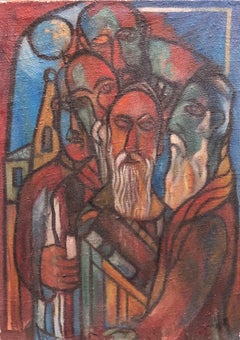
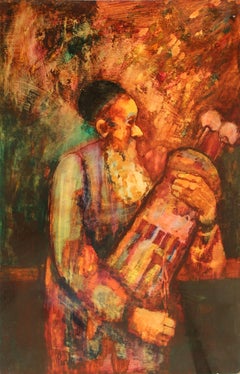
Synagogue Interior Jerusalem Modernist Israeli Judaica Oil Painting Rabbi Prayer

Synagogue Interior Jerusalem Modernist Israeli Judaica Oil Painting Rabbi Prayer

By Arieh Allweil

Located in Surfside, FL

ARIEH ALLWEIL (ARIE ALWEIL) 1901-1967 Galicia 1901-1967 Safed, Israel (Ukrainian/Polish/Israeli) Arieh Allweil, born 1901, Galicia. Immigrated to Palestine in 1920. Studies: 1921-25...

Category

20th Century Modern Figurative Paintings

Materials

Canvas, Oil, Board

Modernist Israeli Judaica Jewish Rabbi Mixed Media Collage Painting Moshe Katz

Modernist Israeli Judaica Jewish Rabbi Mixed Media Collage Painting Moshe Katz

By Moshe Katz

Located in Surfside, FL

Rabbis, Jewish Scholars over collaged Hebrew text Dimensions: framed 37.5 X 25.25 canvas 24 X 36 inches Moshe Katz ( Romanian, Israeli ) Moshe Katz was born March 2 1937 in Buchar...

Category

20th Century Modern Portrait Paintings

Materials

Canvas, Mixed Media, Acrylic

TOAST TO THE BAR MITZVA Modernist Judaica Oil Painting

TOAST TO THE BAR MITZVA Modernist Judaica Oil Painting

By Joseph Wolins

Located in Surfside, FL

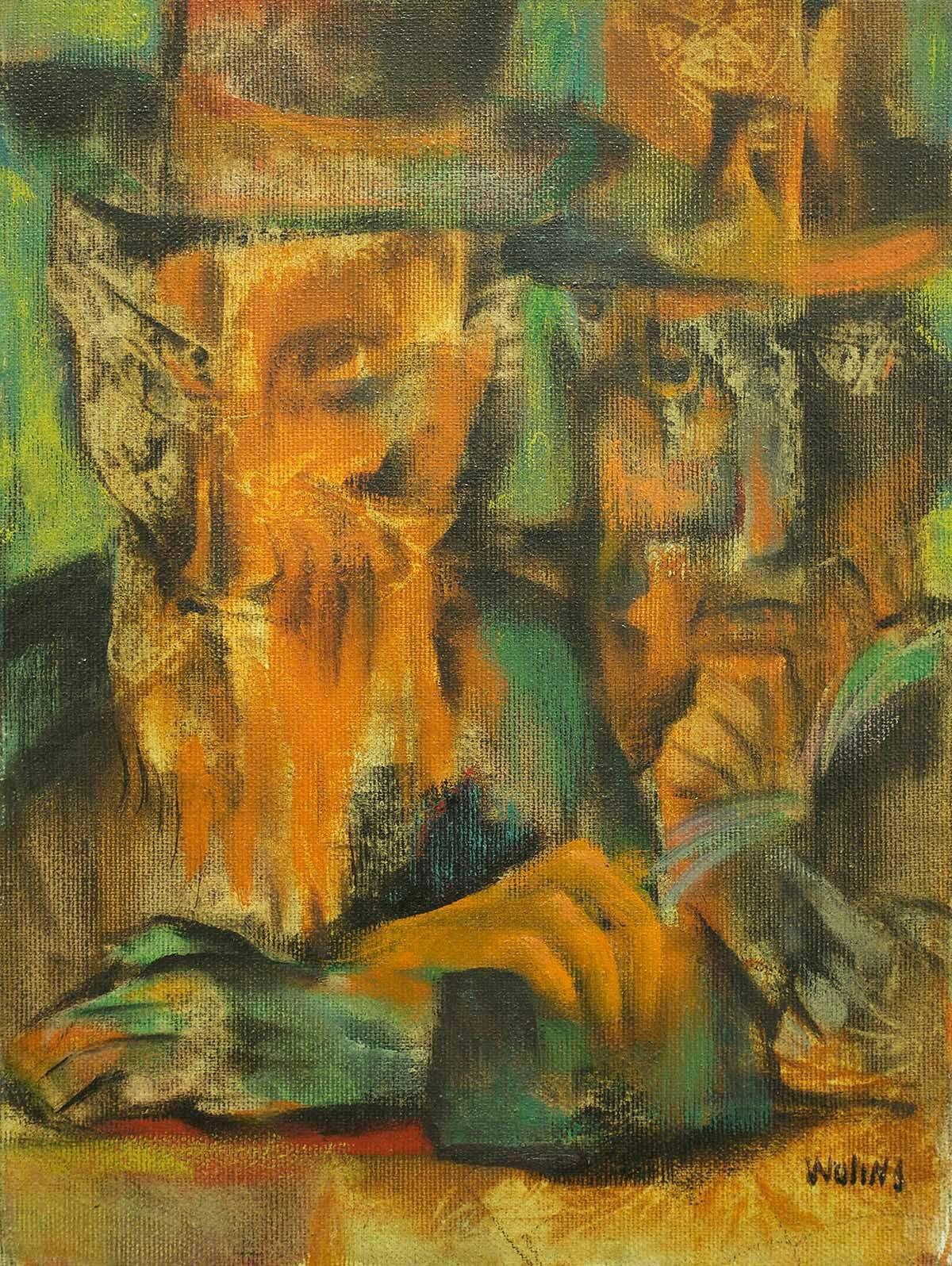
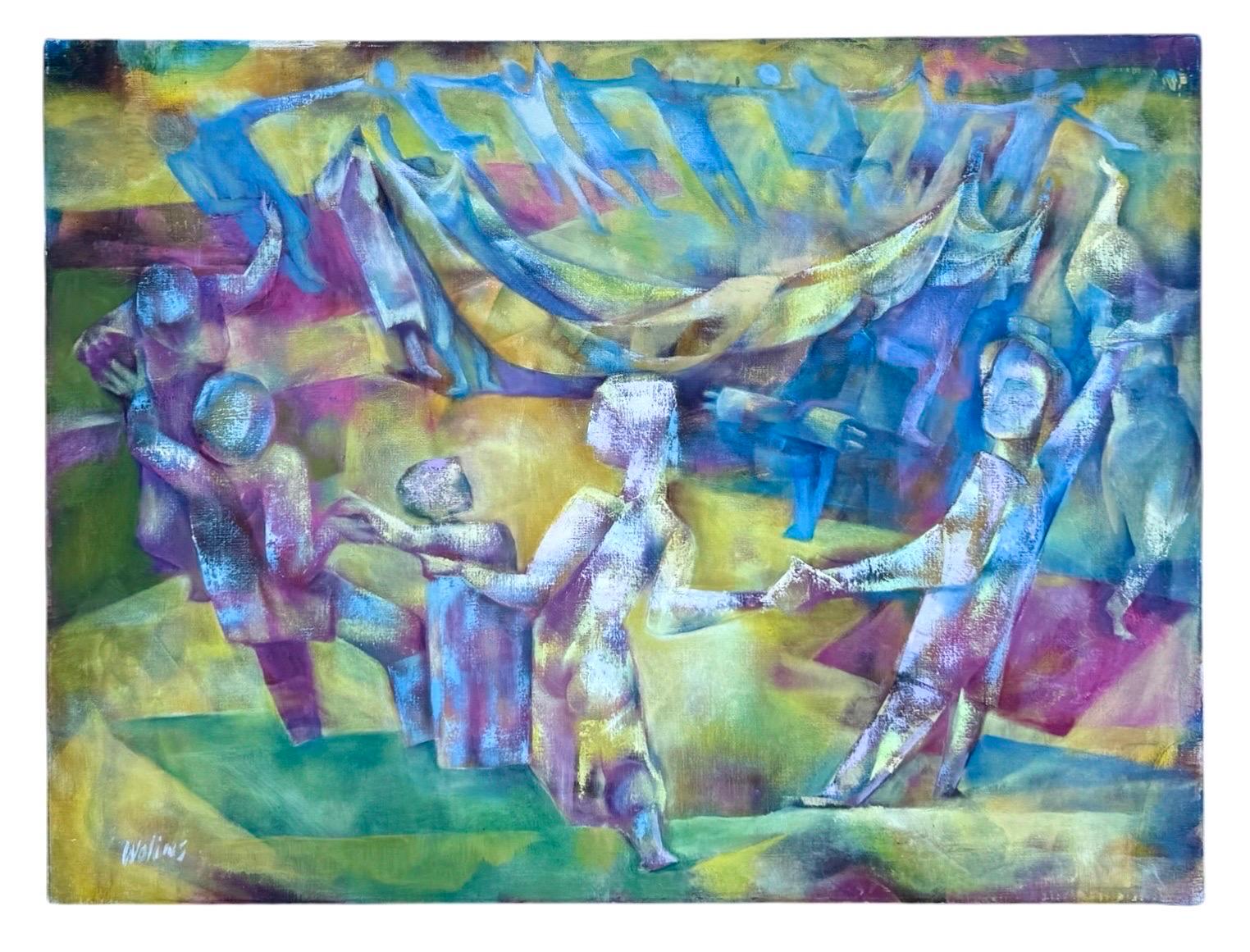
Subject: Jewish American Family Bar Mitzvah with Rabbi Medium: Oil Surface: Canvas Country: United States In this painting, Joseph Wolins uses vibrant and complimentary colors and...

Category

20th Century American Modern Figurative Paintings

Materials

Canvas, Oil

Rare Large Judaica Oil Painting Jewish 2 Rabbis Painting Abram Tromka WPA Artist

Rare Large Judaica Oil Painting Jewish 2 Rabbis Painting Abram Tromka WPA Artist

By Abram Tromka

Located in Surfside, FL

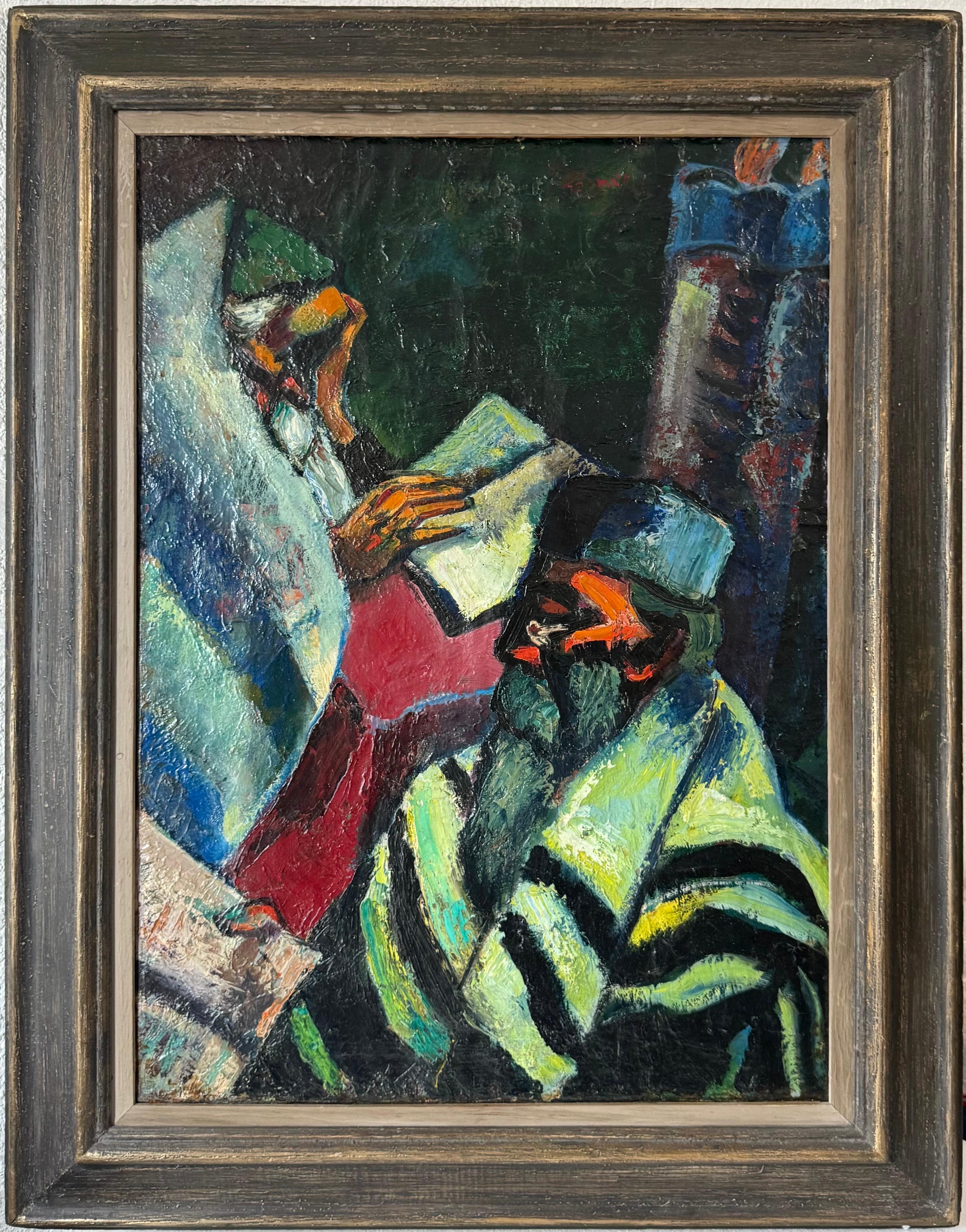
Abram Tromka ( Polish/ Russian American 1896-1954 ) Hand signed upper center right. Bears label from Marbella Gallery, New York verso "Two Men Praying" (Davening) Dimensions: Sight- ...

Category

1930s American Modern Figurative Paintings

Materials

Oil, Board, Canvas

Modernist Judaica Oil Painting Blessing the New Moon, Jewish Prayer

Modernist Judaica Oil Painting Blessing the New Moon, Jewish Prayer

Located in Surfside, FL

This is a modernist Judaic painting of a Jewish scene of the Kiddush Levanah prayer. The monthly hebrew blessing on the new moon. It is not dated but I am estimating it to the 1940s...

Category

1940s Modern Figurative Paintings

Materials

Burlap, Oil

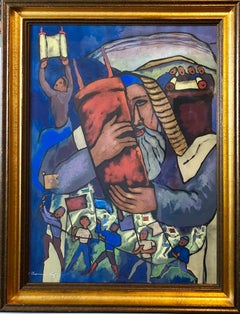
Chicago Jewish Modernist Judaica Painting Simchat Torah WPA Artist Israeli Flags

Chicago Jewish Modernist Judaica Painting Simchat Torah WPA Artist Israeli Flags

By Alexander Raymond Katz

Located in Surfside, FL

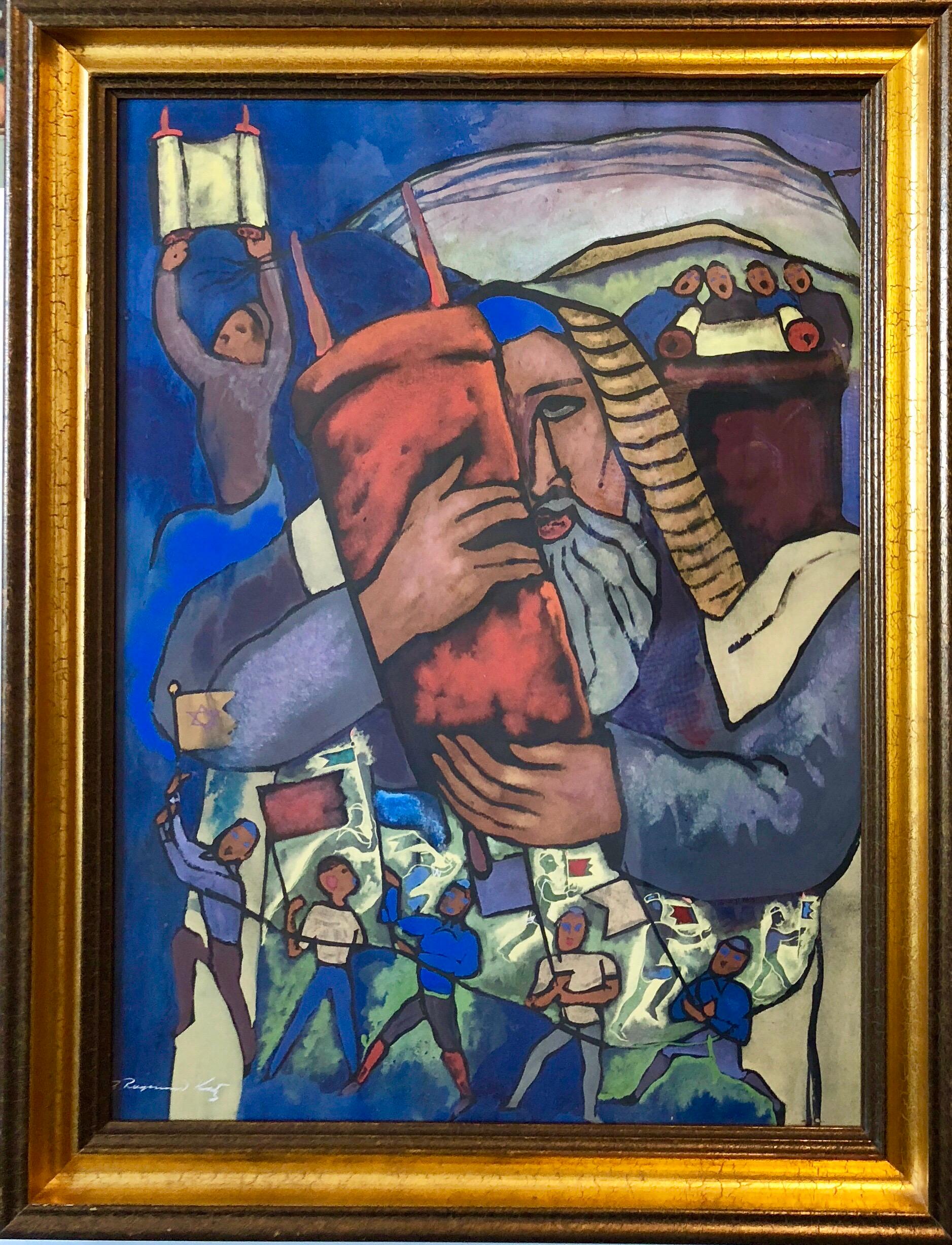
This has young ISraeli pioneers dancing with the flag as typical of works of the late British mandate Palestine era early state of Israel. Genre: Modern Subject: Figurative (stained glass style) Medium: Mixed media gouache on paper Hand signed lower left Alexander Raymond Katz, Hungarian / American (1895 – 1974) Alexander Raymond Katz was born in Kassa, Hungary, and came to the United States in 1909. He studied at the Art Institute of Chicago and the Chicago Academy of Fine Arts. In the late 1920s, he worked as a director of the Poster Department at Paramount Studios. He was appointed the Director of Posters for the Chicago Civic Opera in 1930. During the Great Depression, notable architect Frank Lloyd Wright urged Katz to become a muralist. In 1933, he was commissioned to paint a mural for the Century of Progress exposition in Chicago. In 1936, he painted the mural History of the Immigrant for the Madison, Ill., post office. Katz’s works were included in various exhibitions and now are part of several museum collections, including those of the Art Institute of Chicago; Corcoran Gallery of Art, Washington, D.C.; and the Jewish Museum, New York. His murals, bas-reliefs and stained glass designs adorn more than 200 Jewish synagogues in the United States. Katz and other Jewish artists in Chicago who expressed Jewish and Biblical themes were inspired by the artist Abel Pann (1883-1963). Pann, who is regarded as the leading painter of the Land of Israel, exhibited in the Art Institute of Chicago in 1920. Early in his career, Katz began to explore the artistic possibilities inherent in the characters of the Hebrew alphabet. He developed aesthetic and philosophical interpretations of each letter and became the leading innovator and pioneer in the field of Hebraic art. Katz applies this concept in the woodcut Moses and the Burning Bush. Hebrew letters appears in Moses’ head, his cane and inside the flame. The initial of Moses’ name crowns his head. The letter in the flame is the first letter of the name of God. A combination of images and Hebrew letters appeared commonly in illustrations of the scene Moses and the Burning Bush in the Haggadah, the book of Passover. The symbolism of the burning bush corresponds to the motifs of A Gift to Biro-Bidjan. Among the fourteen participating artists were notable Chicago modernists Todros Geller, Mitchell Siporin...

Category

Mid-20th Century Modern Figurative Paintings

Materials

Paper, Gouache

You May Also Like

Rabbi, Oil Painting by Donald Roy Purdy

Rabbi, Oil Painting by Donald Roy Purdy

By Donald Roy Purdy

Located in Long Island City, NY

Artist: Donald Roy Purdy, American (1924 - ) Title: Rabbi 2 Medium: Oil on Masonite, signed l.r. Size: 36 x 24 in. (91.44 x 60.96 cm)

Category

Late 20th Century Post-War Figurative Paintings

Materials

Masonite, Oil

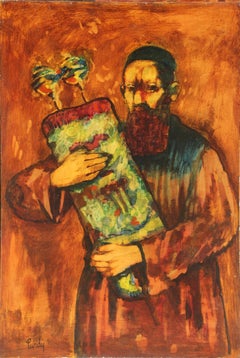
Rabbi, Oil Painting by Donald Roy Purdy

Rabbi, Oil Painting by Donald Roy Purdy

By Donald Roy Purdy

Located in Long Island City, NY

Artist: Donald Roy Purdy, American (1924 - ) Title: Rabbi Year: circa 1960 Medium: Oil on Masonite, signed l.r. Size: 36 x 24 in. (91.44 x 60.96 cm)

Category

1960s Post-War Figurative Paintings

Materials

Masonite, Oil

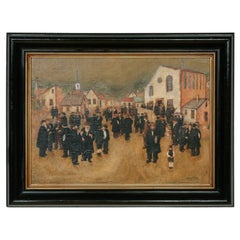
20th Century oil painting of the Jewish Chassidic community by the synagogue

20th Century oil painting of the Jewish Chassidic community by the synagogue

By Elek Gyori

Located in London, GB

Elek Gyori (Hungarian, 1905-1957) was an Eastern European painter, who was notable for his fine paintings of the everyday life in rural Hungary. This beautiful oil painting, portrayi...

Category

Mid-20th Century Impressionist Figurative Paintings

Materials

Canvas, Oil