Want more images or videos?
Request additional images or videos from the seller
1 of 10

Ev Grüger
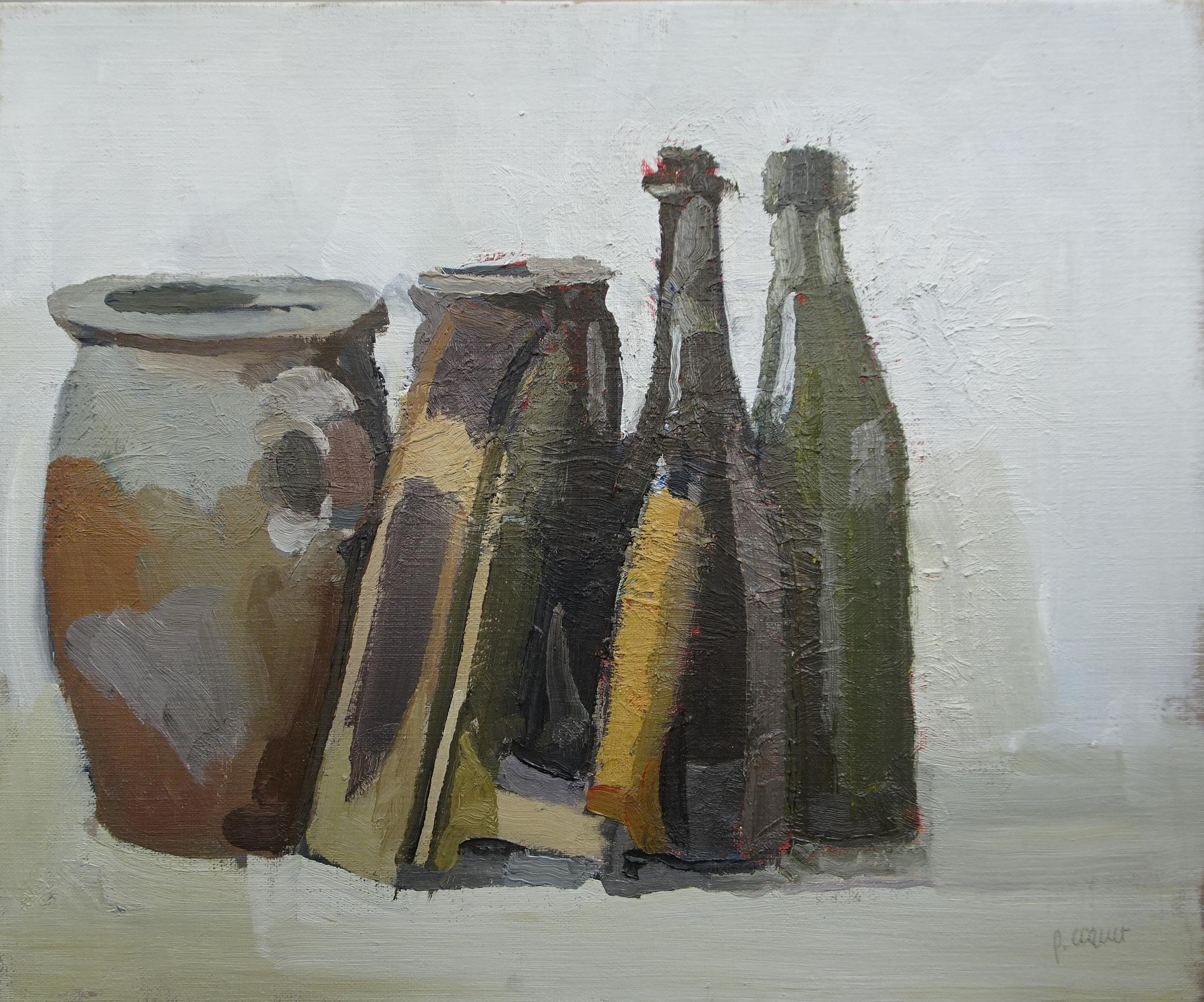
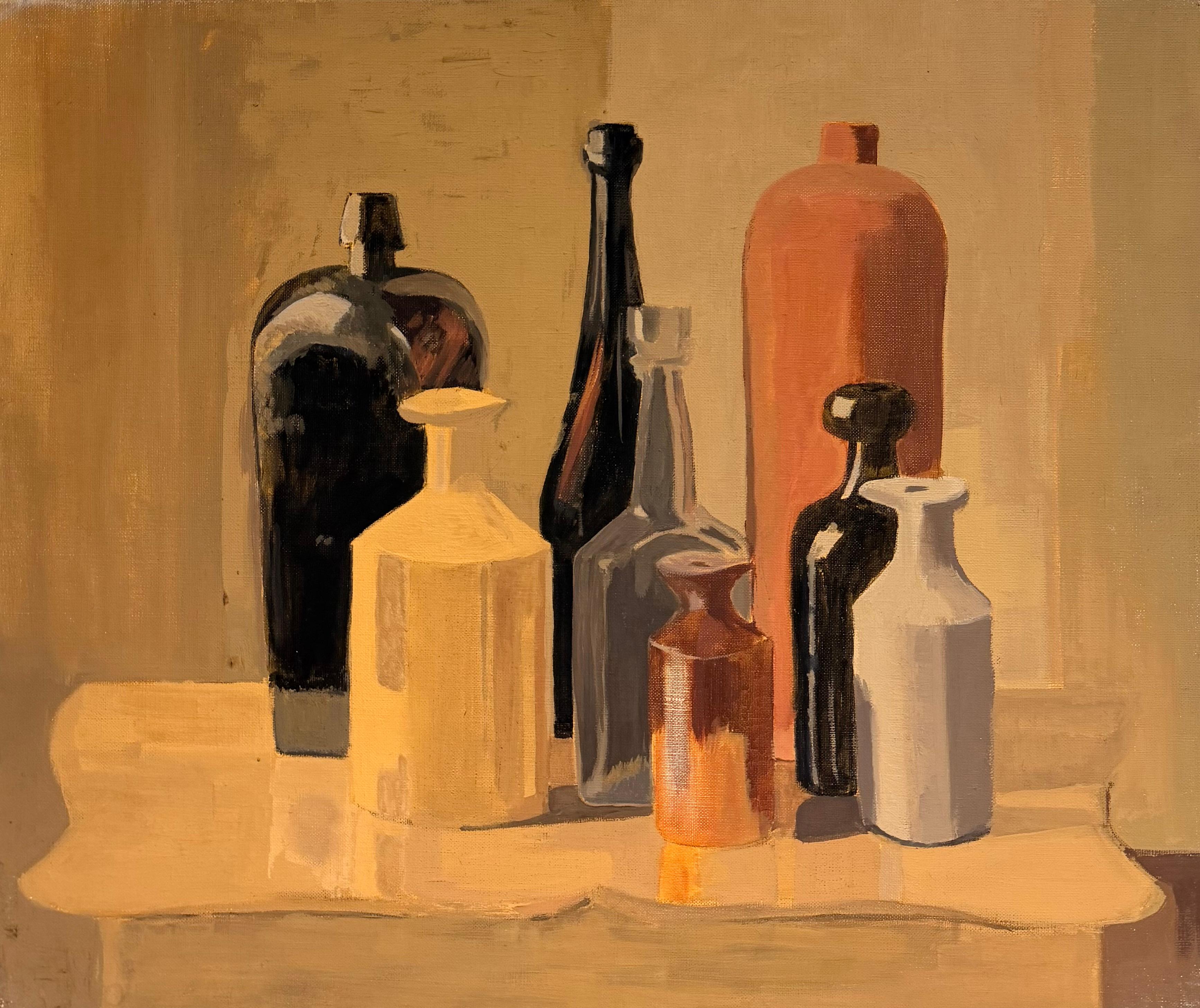
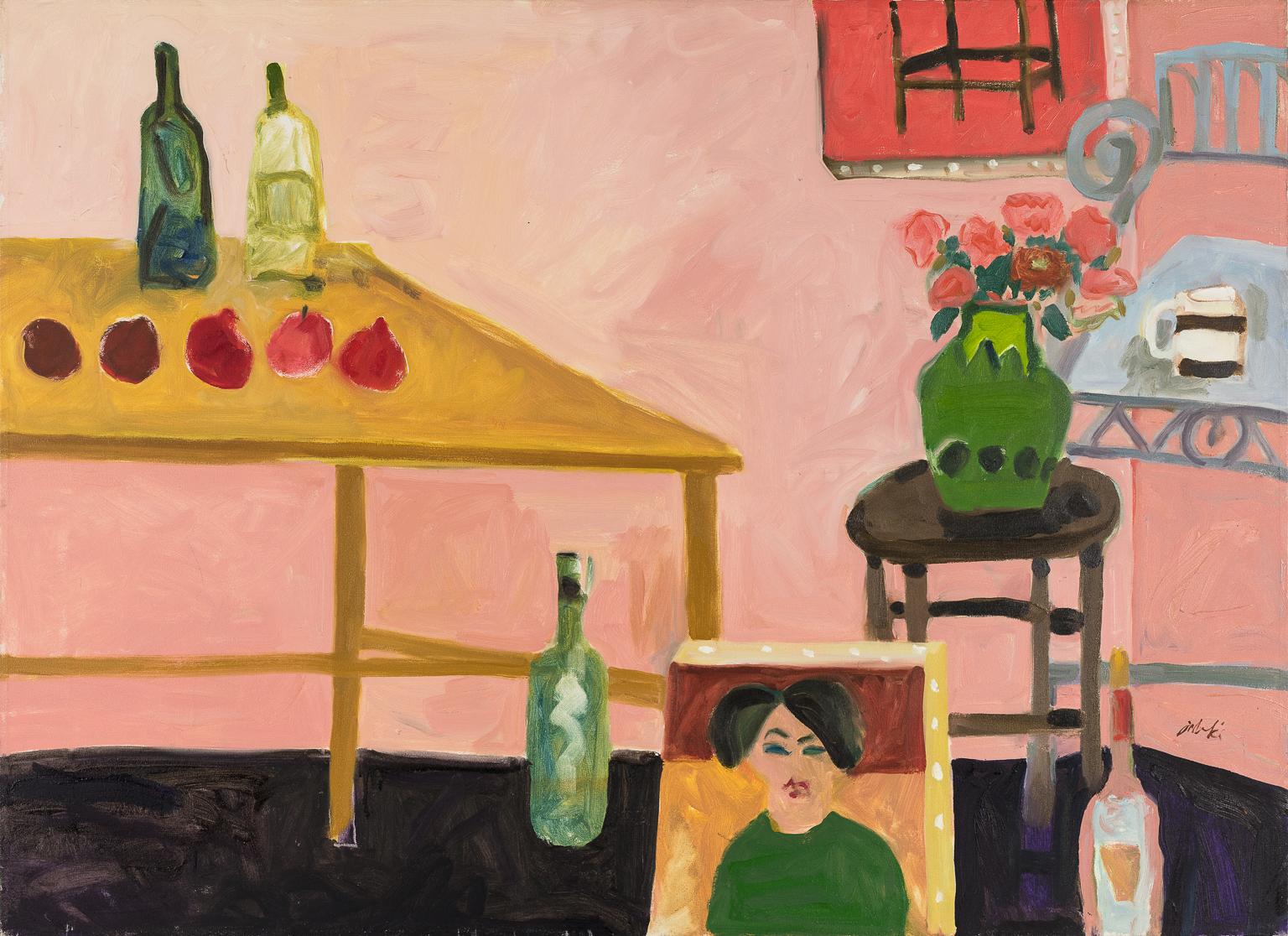
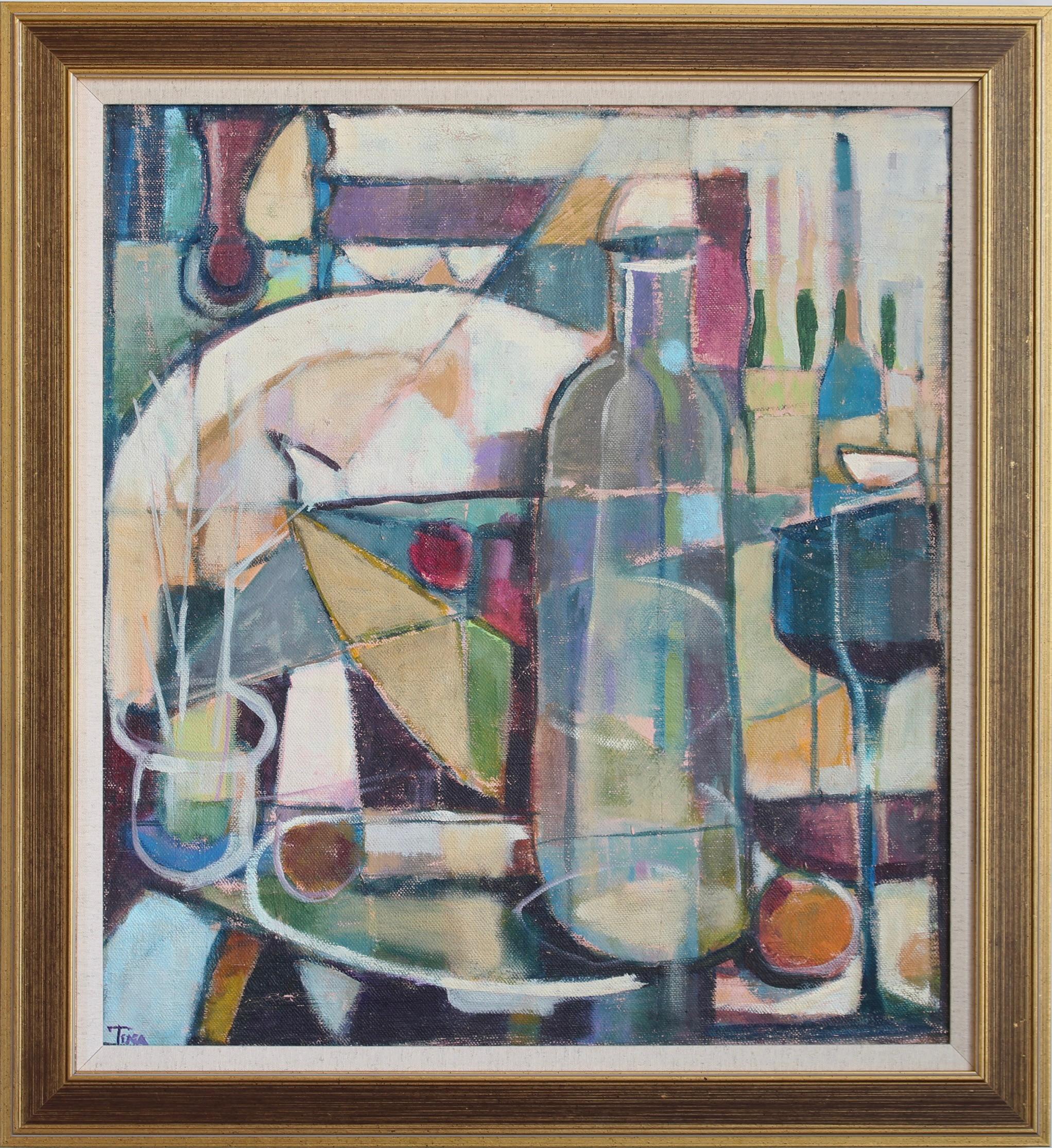
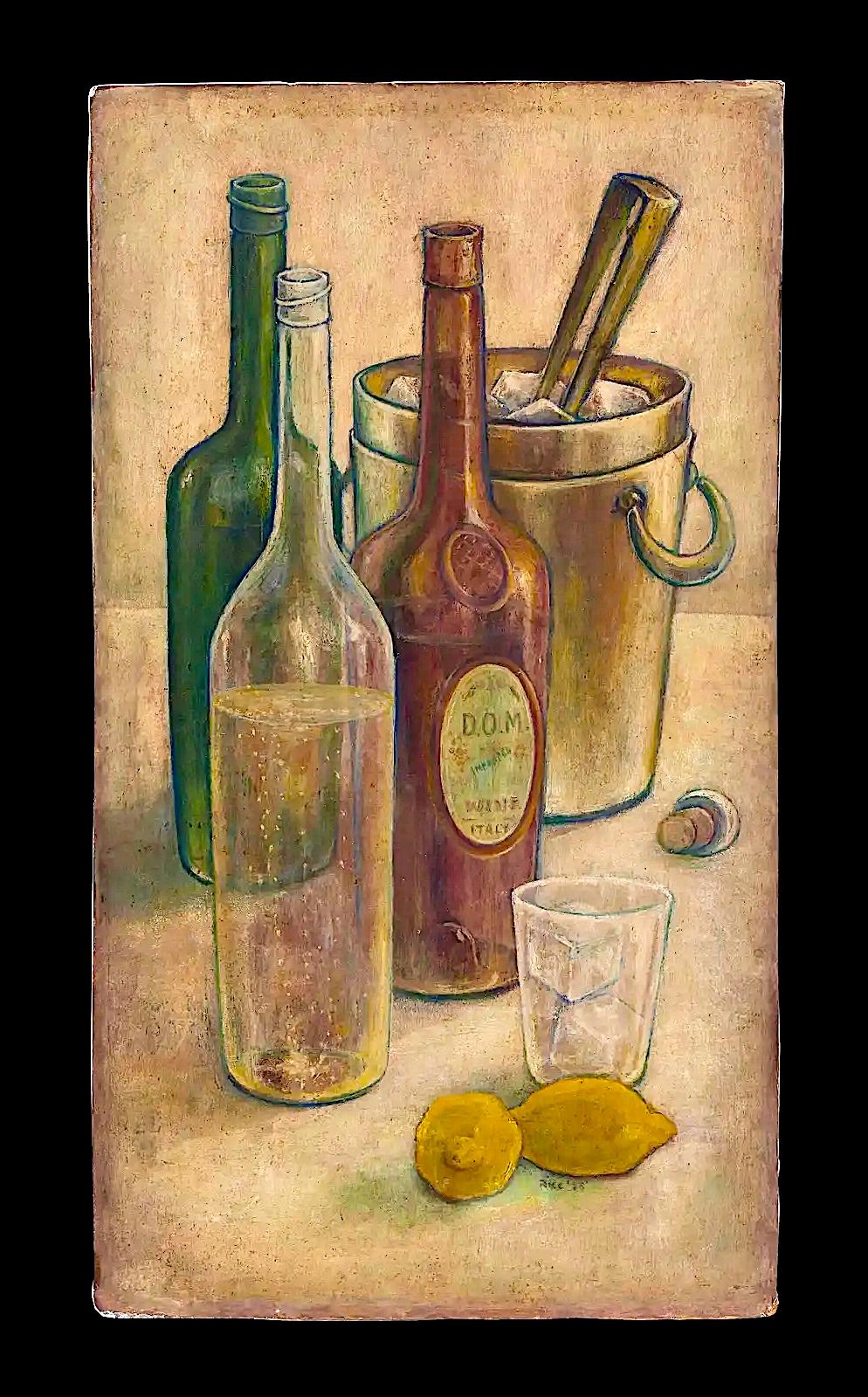
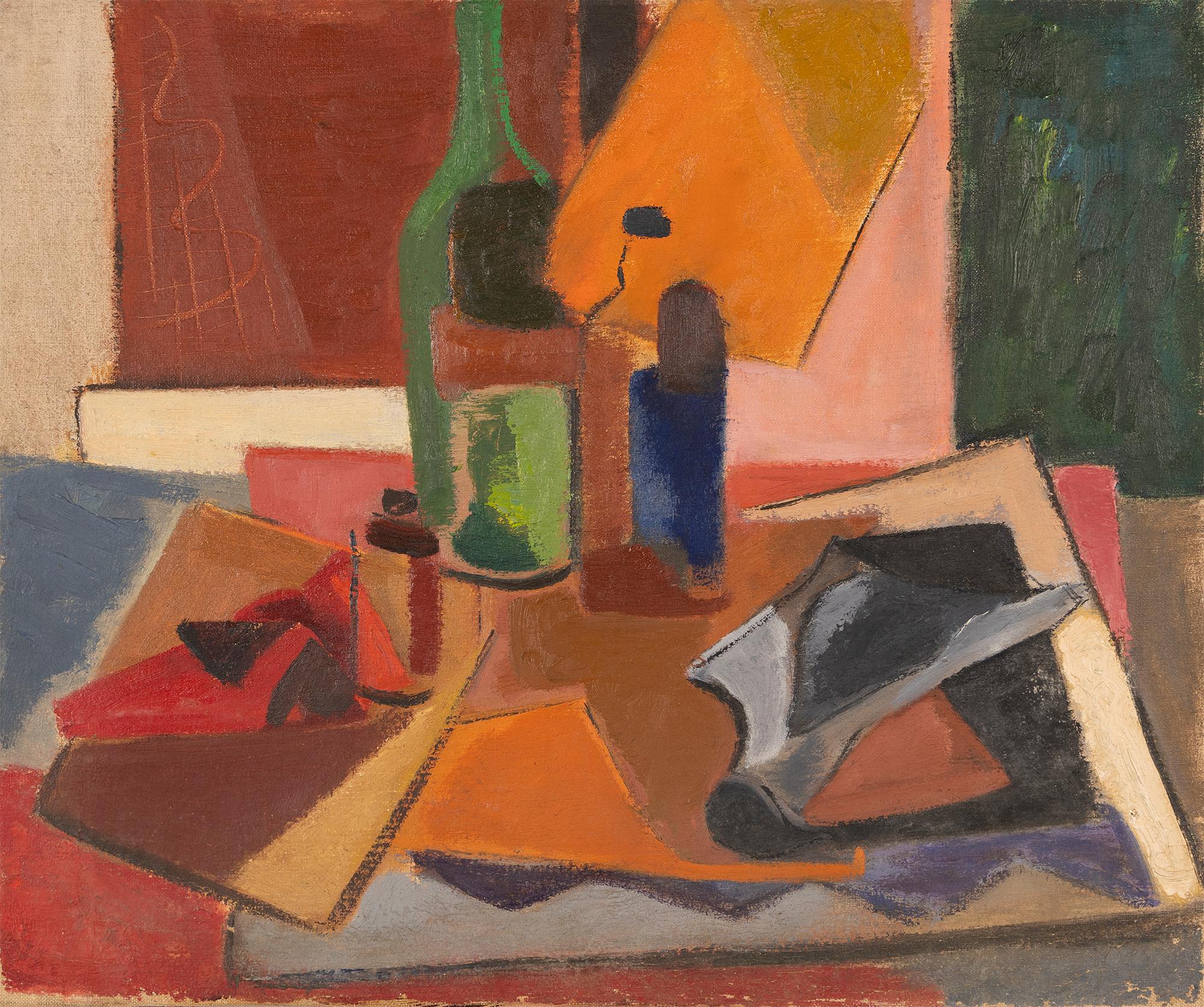
Still Life with Bottles / - The figuration of the objects -

$1,750.22
£1,299.77
€1,500VAT Included
CA$2,456.67
A$2,506.57
CHF 1,415.79
MX$30,517.34
NOK 16,950.46
SEK 16,909.04
DKK 11,438.05

About the Item

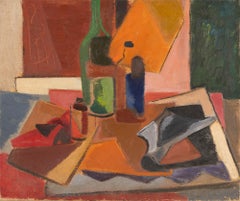
Ev Grüger (1928 Altenburg - 2017 Hofheim), Still Life with Bottles, 1956. Oil on canvas in gallery stretcher, 80 cm x 60 cm (image size), signed “Grü[ger]” lower left and dated “[19]56.” - Minimal paint flaking, otherwise in good condition - The figuration of the objects - After World War II brought progressive artistic creation to a standstill, the early 1950s were a period of new beginnings. As a master student of Karl Schmidt-Rottluff, Ev Grüger revitalized the ideas of Die Brücke and carried them into the post-war period. Only at first glance does it appear to be a collection of bottles. On closer inspection, the objects, painted with broad brushstrokes and expressive yet dignified colors, reveal themselves to be independent forms that transcend their concrete objectivity to form a figurative design, which is further emphasized by the vertical black and yellow surface. The red tabletop below exposes the figuration, which is simultaneously lifted into the window section representing the pictoriality, whose curtains have been pushed aside to present the picture. About the artist Ev Grüger attended the Master School for the Textile Industry in Plauen from 1942 to 1944, which closed in 1944. Until the end of World War II, she worked in an armaments factory. She then studied at the Academy of Fine Arts in Weimar under Otto Herbig and Hans van Breek until 1949. In 1951, she left the GDR and continued her studies until 1957 at the Academy of Fine Arts in Berlin, where her teachers included Hans Uhlmann, Kurt-Hermann Kühn, and Karl Schmidt-Rottluff, whose master student she became. In 1958, Grüger moved to Hofheim, where she worked as a freelance artist. Since then, her works have been shown in numerous solo exhibitions in Germany and abroad. GERMAN VERSION Ev Grüger (1928 Altenburg - 2017 Hofheim), Stillleben mit Flaschen, 1956. Öl auf Leinwand in Galerieleiste, 80 cm x 60 cm (Bildgröße), links unten mit „Grü[ger]“ signiert und auf „[19]56“ datiert. - minimale Farbabplatzungen, sonst in gutem Erhaltungszustand - Die Figuration der Gegenstände - Nachdem der Zweite Weltkrieg das progressive künstlerische Schaffen zum Erliegen gebracht hatte, waren die beginnenden 50er Jahre eine Phase des Neuaufbruchs. Als Meisterschülerin Karl Schmidt-Rottluffs revitalisiert Ev Grüger die Ideen der Brücke und trägt sie in die Nachkriegszeit hinein. Nur auf den ersten Blick handelt es sich um eine Ansammlung von Flaschen. Bei genauerem Hinsehen geben sich die mit breiter Pinselführung und expressiven aber dennoch gediegenen Farben gemalten Objekte als für sich stehende Formen zu erkennen, die eine ihre konkrete Gegenständlichkeit überteigende gestaltete Figuration bilden, was die vertikale schwarzgelbe Flächenform zusätzlich verdeutlicht. Die rote Tischplatte darunter exponiert die Figuration, die dabei zugleich in den für die Bildlichkeit einstehenden Fensterausschnitt hineingehoben wird, dessen Vorhänge zur Präsentation des Bildes beiseitegeschoben sind. zur Künstlerin Ev Grüger besuchte von 1942 bis 1944 die Meisterschule für Textilindustrie in Plauen, die 1944 geschlossen wurde. Bis zum Ende des Zweiten Weltkriegs arbeitete sie in einem Rüstungsbetrieb. Danach studierte sie bis 1949 an der Hochschule für Bildende Künste in Weimar bei Otto Herbig und Hans van Breek. 1951 verließ sie die DDR und setzte ihr Studium bis 1957 an der Hochschule für Bildende Künste in Berlin fort, unter anderem bei Hans Uhlmann, Kurt-Hermann Kühn und Karl Schmidt-Rottluff, dessen Meisterschülerin sie wurde. 1958 zog Grüger nach Hofheim und arbeitete dort fortan als freischaffende Künstlerin. Seitdem waren ihre Werke in zahlreichen Einzelausstellungen im In- und Ausland zu sehen.
  • Creator:
    Ev Grüger (1928 - 2017, German)
  • Dimensions:
    Height: 31.5 in (80 cm)Width: 23.63 in (60 cm)Depth: 1.58 in (4 cm)
  • Medium:
  • Movement & Style:
  • Period:
  • Condition:
  • Gallery Location:
    Berlin, DE
  • Reference Number:
    1stDibs: LU2438217679072

More From This Seller

View All
Still Life with Sculpture, Flute, and Painting Supplies / The foundation of art

Still Life with Sculpture, Flute, and Painting Supplies / The foundation of art

By Ev Grüger

Located in Berlin, DE

Ev Grüger (1928 Altenburg - 2017 Hofheim), Still Life with Sculpture, Flute, and Painting Supplies, 1956. Oil on canvas in gallery frame, 60 cm x 80 cm (image size), signed “Grü[ger]...

Category

1950s Abstract Figurative Paintings

Materials

Oil

Interior with Chair and Geometric Figures

Interior with Chair and Geometric Figures

By Ev Grüger

Located in Berlin, DE

Ev Grüger (1928 Altenburg - 2017 Hofheim), Interior with Chair and Geometric Figures, circa 1958. Oil on canvas, 70 cm x 67 cm, unframed, signed “Grü[ger]” lower right. - In good co...

Category

1950s Abstract Figurative Paintings

Materials

Oil

Clay jug on a bench - The essence of the clay jar revealed by the sunlight -

Clay jug on a bench - The essence of the clay jar revealed by the sunlight -

By Hans Richard von Volkmann

Located in Berlin, DE

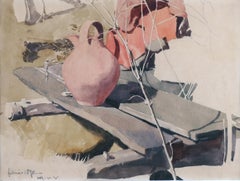
Hans Richard von Volkmann (1860 Halle (Saale) - 1927 ibid.), Clay jug on a bench. Pencil and Watercolour on paper. 20 x 26,7 cm (visible size), 37 x 45 cm (frame), dated and monogrammed lower left "Februar 1890 - HR. V. V." - Minimally tanned. Framed behind glass in a passepartout. About the artwork Using the technique of his early youth - pencil and watercolour - Hans Richard von Volkmann depicts a still life. However, this is not a conventional indoor still life, but an open-air depiction, painted outdoors and not in the studio. It is therefore an open-air painting, characteristic of von Volkmann's oeuvre, which could have been painted in the Willingshausen colony of painters, where open-air painting was programmatically practised there and the artist stayed there that year. And indeed, this painting is a manifesto of open-air painting. Von Volkmann demonstrates that leaving the studio for the light of nature leads to an entirely new quality of art. To prove this, he uses the genre of still life, which can be described as the studio subject par excellence. Moreover, light plays an essential role in the classical still life. It is the real protagonist of the still life. And it is precisely this moment, essential to the still life, that von Volkmann exploits to demonstrate the potential of plein-air painting: He presents the objects as they appear in the sunlight. The date of February and the bare branches in the foreground make it clear that this is a clear winter day in bright sunlight. The delicate plant in the foreground casts a clearly defined shadow, as does the jug. However, the shadow is most pronounced on the jug itself: The underside of the handle appears almost black, making the top, and therefore the jug itself, shine all the more brightly. The shining of the objects in the sunlight is also visible on the bench. As complementary phenomena to the shadow zones, light edges can be seen on the boards of the seats and the upper foot of the bench shines entirely in the light. To achieve this intensity of light, von Volkmann activated the bright white of the painting ground. By depicting the objects in glistening sunlight, von Volkmann demonstrates that this quality of light is only to be found outdoors. And this light leads to a new way of looking at the objects themselves. The jug on the bench seems like an accidental arrangement, as if the artist had stumbled upon this unintentional still life and captured it with fascination. And in this fascination there is a moment of realisation that refers to the objects themselves. It is only when they shine brightly in the sunlight that their true nature is revealed. In this way, sunlight allows the objects to come into their own, so to speak. Sunlight, which is not present in the studio, gives the still life an entirely new dimension of reality, which is also reflected in the colours interwoven by the sunlight: The bench and the jug stand in a harmonious grey-pink contrast to the green of the implied meadow. The emphasis on the jug as the central subject of the picture also implies that the watercolour has not been completed. This non finito inscribes a processuality into the picture, making it clear that something processual has been depicted, the temporality of which has been made artistically permanent. This is why von Volkmann signed the painting and dated it to the month. About the Artist Von Volkmann made his first artistic attempts at the age of 14. He painted many watercolours of his home town of Halle. This laid the foundation for his later outdoor painting. In 1880 his autodidactic beginnings were professionalised with his admission to the Düsseldorf Art Academy. There he studied under Hugo Crola, Heinrich Lauenstein, Johann Peter Theodor Janssen and Eduard von Gebhardt until 1888. Von Volkmann then moved to the Karlsruhe Academy, where he was Gustav Schönleber's master pupil until 1892. In 1883 he came for the first time to Willingshausen, Germany's oldest painters' colony, at the suggestion of his student friend Adolf Lins...

Category

1890s Naturalistic Still-life Drawings and Watercolors

Materials

Watercolor

Small Nude / - Abstract Figurativity -

Small Nude / - Abstract Figurativity -

Located in Berlin, DE

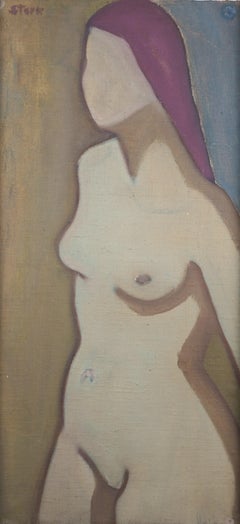
Gustl Stark (1917 Mainz - 2009 ibid.), Small Nude, 1946. Oil on canvas, marouflaged, 54 x 25 cm (picture), 30 x 60 cm (frame), signed "Stark" top left, verso twice signed "Gustav Stark", inscribed by hand as "Small Nude" and dated by hand "1946". With label of the exhibition of the Bundeshaus Bonn from 1956. - Rubbed area in the lower third of the body, at the same level a retouch in the ochre background. I provisional frame. - Abstract Figurativity - About the artwork During the war, Gustl Stark suffered a particularly severe blow for an artist: he lost his right arm. Nevertheless, he continued to devote himself to art, and the painting, created in 1946, immediately after the end of the Nazi reign of terror, testifies to the dawn of a new era. At the same time, the work is a rare example of the artist's early figurative work, as Stark turned entirely to abstract painting as early as 1950. And even this painting is by no means purely figurative; rather, it already illustrates Stark's turn toward abstraction. We see a female nude, but one that remains faceless. This can be read symbolically and in relation to the immediate past epoch, which, in the face of horrors, silences and blinds - literally renders faceless. In this sense, the figure is positioned to 'look back'. But she does not look. While this meaning may resonate and make the painting an important work of the immediate postwar period, Gustl Stark is primarily concerned with something else here, namely art itself. The absence of the face leads to the body becoming something flat. Due to the de-individualization, we do not see a concrete person with his individual features, but a body surface. And indeed, the body is constructed through an extremely planar design. Even the contour lines that form the corporeality have a planar rather than a linear character, especially where they merge into shadow zones of almost the same color. And the surfaces themselves are not modeled. The incarnate parts do not show any plastic gradations; the corporeality is completely withdrawn into the plane, which is also true for the hair. In addition, there is no uniform background against which the figure could appear; rather, the area next to the hair is kept bluish, creating a succession of earth-toned colored areas, which again binds the figure to the surface. Last but not least, the flatness is also forced by the painting technique. Gustl Stark paints directly, a la prima, onto the coarse canvas, whereby the structure of the painting support remains visible in the picture, and in places - around the hair, for example - the canvas itself can be seen. This structural all-over lends the picture a certain flatness. Gustl Stark thus uses the very motif that stands for the corporeality of art par excellence - the female nude - to transform the spatiality of the traditional picture into a flatness characteristic of modern art. And yet, a strong impression of corporeality is created, without being produced by a painterly modeling of the body. The oscillation between flatness and corporeality creates the intense tension of this groundbreaking painting. In Gustl Stark's oeuvre, as a consequence of the abstraction we see here, the figurative is completely stripped away in a further step, which is also a loss when looking at this early key work. About the artist Gustl Stark was the son of a woodcarver and, after an apprenticeship as a decorative painter, attended the State School of Arts and Crafts in Mainz from 1936 to 1937. Although he was severely wounded in the war and lost his right arm, he studied at the Würzburg School of Painting and Drawing from 1943-1944 and then at the Academy of Fine Arts in Nuremberg from 1944-1948. He won a state scholarship at the state art competition in Bad Ischl. Numerous study trips to Sylt, Paris, Switzerland, Austria, Italy, Holland and Belgium followed. Gustl Stark worked in Mainz and was the first artist there to focus on abstract painting. His work quickly gained international recognition, including the Salon Réaliés Nouvelles in Paris. From 1963-1970 he taught at the State University Institute for Art and Work Education in Mainz and from 1970-1975 at the Johannes Gutenberg University. Gustl Stark became particularly famous for his color embossed prints, for which he invented his own technique. Gustl Stark received numerous awards for his work. He received the Art Prize for Painting of the City of Mainz in 1962, the State Prize of Rhineland-Palatinate in 1984, and the Gutenberg Bust of the City of Mainz in 1987. Selected Bibliography Hans Vollmer (Hrsg.): Allgemeines Lexikon der bildenden Künstler des XX. Jahrhunderts, Vierter Band, Leipzig 1958, S. 344. Hans H...

Category

1940s Realist Nude Paintings
Materials

Canvas

Nude Girl in Front of a Mirror / - The Reflection of Art -

Nude Girl in Front of a Mirror / - The Reflection of Art -

By Otto Mueller

Located in Berlin, DE

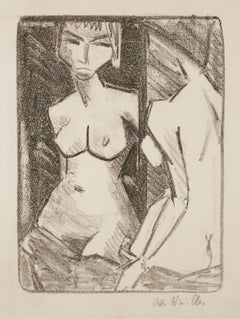
Otto Mueller (1874 Liebau - 1930 Obernigk), Nude Girl Before the Mirror, 1924. Lithograph on lightly hammered handmade paper, 38.9 cm x 28.9 cm (image), 57 cm x 44 cm (sheet size), s...

Category

1920s Expressionist Nude Prints

Materials

Paper

You May Also Like

French Modernist Abstract Still Life with Bottles Fruit and Yellow Shapes

French Modernist Abstract Still Life with Bottles Fruit and Yellow Shapes

By Guy Nicod

Located in Cirencester, Gloucestershire

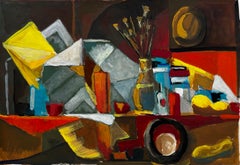
Title: French Modernist Abstract Still Life with Bottles Fruit and Yellow Shapes Guy Nicod (French 1923 - 2021) Gouache on artist paper, unframed Size: 15.5 x 22.25 inches (height x...

Category

Mid-20th Century Modern Still-life Paintings

Materials

Gouache

Mid Century French Cubist Still Life Bottles Glass Curtain Interior

Mid Century French Cubist Still Life Bottles Glass Curtain Interior

Located in Cirencester, Gloucestershire

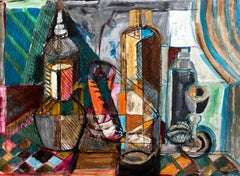
Title: Mid Century French Cubist Still Life Bottles Glass Curtain Interior Medium: Gouache and mixed media on artists paper unframed Size: 20 x 27.5 inches (height x width) Provenan...

Category

20th Century French School Still-life Paintings

Materials

Acrylic, Gouache, Mixed Media

Still-Life of Bottles, Oil on Board, Late 20th Century, Signed

Still-Life of Bottles, Oil on Board, Late 20th Century, Signed

Located in Cotignac, FR

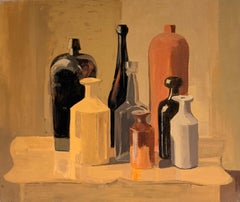
Bernard Buffet inspired still-life of a grouping of bottles in oil on board by Italian artist Giordanino. This artwork presents a compelling assemblage of bottles, depicted with min...

Category

Late 20th Century Still-life Paintings

Materials

Oil, Board

Antique  American School Abstract Cubist 1930s Wine Bottle Still Life Painting

Antique American School Abstract Cubist 1930s Wine Bottle Still Life Painting

Located in Buffalo, NY

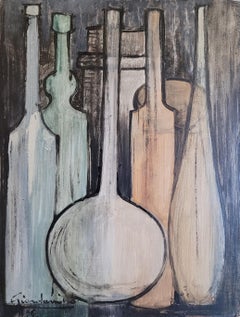
Antique American abstract cubist table top still life oil painting. Oil on canvas, circa 1930. No signature found. Image size, 20L x 16H. Framing available.

Category

1930s Cubist Abstract Paintings

Materials

Canvas, Oil

“Still Life with Bottles”

“Still Life with Bottles”

Located in San Francisco, CA

From the 1920s onwards, American modernist painter and illustrator Anne Estelle Rice (1877-1959) focused on painting warm, rich still lifes like this one, done in vibrant, Post-Impre...

Category

1950s American Modern Still-life Paintings

Materials

Oil, Masonite