1 of 11

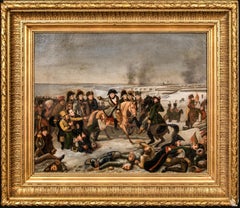
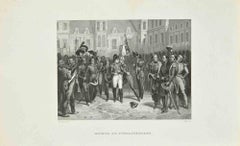
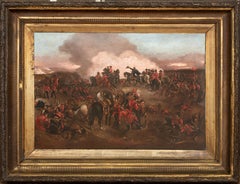
NAPOLEON AT ARCIS-SUR-AUBE, 1814

Circa 1840

Price:$41,188.77
$76,493.44List Price

You May Also Like

Napoleons Retreat From Russia, 19th Century  French School Large Napoleonic Wars

Napoleons Retreat From Russia, 19th Century French School Large Napoleonic Wars

Located in Liphook, GB

Napoleons Retreat From Russia, 19th Century French School Large Napoleonic Wars Scene Large 19th Century French School Napoleonic Wars Scene of Napoleon retreating following the in...

Category

19th Century Portrait Paintings

Materials

Canvas, Oil

Napoleon

Manufacture Nationale de SèvresNapoleon, c. 1900

Price Upon Request

H 15 in W 12 in D 1 in

Napoleon

By Manufacture Nationale de Sèvres

Located in Missouri, MO

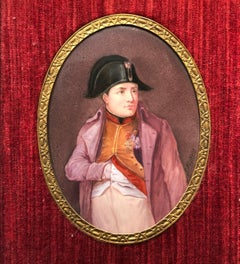
Sevres 19th C. Original Hand Painted Porcelain Signed "G Poitevin" approx 9 x 5 inches/15 x 12 framed The vast and diverse production of the Sèvres factory in the nineteenth century resists easy characterization, and its history during this period reflects many of the changes affecting French society in the years between 1800 and 1900. Among the remarkable accomplishments of the factory was the ability to stay continuously in the forefront of European ceramic production despite the myriad changes in technology, taste, and patronage that occurred during this tumultuous century. The factory, which had been founded in the town of Vincennes in 1740 and then reestablished in larger quarters at Sèvres in 1756, became the preeminent porcelain manufacturer in Europe in the second half of the eighteenth century. Louis XV had been an early investor in the fledgling ceramic enterprise and became its sole owner in 1759. However, due to the upheavals of the French Revolution, its financial position at the beginning of the nineteenth century was extremely precarious. No longer a royal enterprise, the factory also had lost much of its clientele, and its funding reflected the ruinous state of the French economy. However, the appointment in 1800 of Alexandre Brongniart (1770–1847) as the administrator of the factory marked a profound shift in its fortunes. Trained as both an engineer and a scientist, Brongniart was both brilliant and immensely capable, and he brought all of his prodigious talents to the running of the troubled porcelain factory. He directed the Sèvres factory as administrator until his death in 1847, and during those five decades influenced every aspect of its organization and production. Much of the factory’s old, undecorated stock was immediately sold off, and new forms—largely in the fashionable, more severe Neoclassical style—were designed to replace out-of-date models. The composition for hard-paste porcelain was improved, and the production of soft paste, for which the factory had been famous in the previous century, was abandoned in 1804. New enamels colors were devised, and Brongniart oversaw the development of a new type of kiln that was both more efficient and cost-effective. Much of the factory’s output during Brongniart’s first decade reflected the prevailing Empire taste, which favored extensive gilding, rich border designs, and elaborate figural scenes (56.29.1–.8). Backgrounds simulating marble or a variety of hardstones were employed with greater frequency (1987.224); the new range of enamel colors developed under Brongniart made it easier to achieve these imitation surfaces, and it is thought that his interest in mineralogy provided the impetus for this type of decoration. For objects produced in sets, such as dinner, tea, and coffee services, and even garnitures of vases, Brongniart preferred decorative schemes that linked the objects in terms of subject matter as well as stylistically. Dinner services were given coherence by the use of an overall theme, in addition to shared border patterns and ground colors. One of the best examples of this can be found in the “Service des Départements,” which was conceived by Brongniart in 1824 (2002.57). Each of the plates in the service was decorated with a famous topographical view of the département (administrative unit) of France that it represented, and its border was painted with small cameo portraits of figures from the region, as well as symbols of the major arts, industries, and products of the area. This same type of thematic unity is found on a coffee service produced in 1836 (1986.281.1ab–4). All of the pieces of the service are decorated with scenes depicting the cultivation of cacao, from which chocolate is made, or various stages in the preparation of chocolate as a beverage. The compositions were conceived and executed by Jean Charles Develly, a painter at Sèvres who was responsible for many of the most ambitious dinner services produced at the factory during Brongniart’s tenure. The range of objects produced in the first half of the nineteenth century was enormous, as were the types of decoration that they employed. A recent exhibition catalogue devoted to Brongniart’s years at Sèvres indicates that ninety-two new designs for vases were introduced, as were eighty-nine different cup models, and the types of objects produced by the factory included every sort of form required by a dinner or dessert service, coffee and tea wares, decorative objects such as vases, and functional objects such as water jugs, basins, and toiletry articles. A new form rarely replaced an older one; the range of production simply increased. The same was true with types of decoration, as the factory was working in a wide variety of styles at any given time. From the earliest years of the Sèvres factory, its painters had copied not only contemporary compositions but also prints and paintings from earlier periods. However, under Brongniart, the factory sought to copy famous paintings with the specific intention of recording the “true” appearance of works increasingly perceived to be fragile. Works by a wide variety of artists were copied, but those by Raphael were especially popular. Raphael’s stature is reflected in a vase of 1834 in which a cameo-style portrait of the artist decorates the primary reserve, while on the back an artist’s palette is encircled by the names Titian, Poussin, and Rubens (1978.373). Just as works by earlier artists were copied, so too were decorative techniques of previous centuries. The interlace patterns of so-called Saint-Porchaire ceramic ware of the sixteenth century served as the inspiration for the decoration on a cup of 1837 (2003.153). The form of the cup itself derives from Renaissance silver forms made in Italy and France. However, the palette of vibrant reds, greens, blues, and yellows contrasts markedly with the muted browns and off whites of Saint-Porchaire wares and reflects the reinterpretation of historical styles that was characteristic of so much of nineteenth-century decorative arts. Interest in the Gothic style emerged early in Brongniart’s tenure at Sèvres and remained popular for much of the nineteenth century. Strict adherence to Gothic motifs was rarely observed, however, and the Gothic style was more evoked than faithfully copied. This tendency is reflected in a pair of vases (1992.23.1) for which the model was designated vase gothique Fragonard (named after the vase’s designer, Alexandre Evariste Fragonard [1780–1850]. The Gothic elements lie more in the painted decoration than in the form itself, and the style of the painting reflects a Renaissance technique rather than a medieval one. The palette of grays and whites on a blue ground instantly recalls the enamel-on-copper wares produced in Limoges, France, in the sixteenth century, and its use on these vases indicates the willingness to freely mix artistic styles and techniques of different periods in order to achieve new aesthetic effects. The eclecticism and historicism that characterized so much of the production during Brongniart’s tenure continued after his death in 1847. The factory’s output reflected an ongoing desire for technical innovation as well as a wide embrace of diverse decorative styles that were employed simultaneously. A tea and coffee service of 1855–61 (69.193.1–.11) embodies the selective borrowing of forms and motifs that is found so frequently in Sèvres production of the middle decades of the nineteenth century. The shapes used for the different components of the service evoke both China and the Near East, an obvious allusion to the origins of the two beverages. The openwork decoration refers directly to Chinese ceramics made in this technique, and the decoration employs a variety of Chinese emblems. However, the palette of pink and gold, entirely European in character, serves to neutralize the Asian aspects of the service. Perhaps the only thread that can be said to run through much Sèvres production of the nineteenth century is the proclivity to borrow freely from various historical styles and then to either reinterpret these styles or combine them in unprecedented ways. A standing cup of 1879 (1990.238a,b) draws upon silver cups of the Renaissance for its form, but in this instance the size of the porcelain cup dwarfs any of its metal prototypes. Its style of decoration derives from Limoges painted enamels of the sixteenth century, but the prominent use of gilding throughout reflects its wholly nineteenth-century character. This cup was presented by the French government to one of the first-prize winners at the 1878 Exposition Universelle. It was with the advent of the Art Nouveau style at the very end of the nineteenth century that historicism lost its grip at Sèvres, and indeed throughout the decorative arts, and forms inspired by nature and often characterized by asymmetry become dominant. This reliance upon natural forms is fully evident in a coffee service of 1900–1904 (1988.287.1a,b). The designer, Léon Kann...

Category

Late 19th Century Figurative Paintings

Materials

Porcelain, Oil

Napoleon Standing

Napoleon Standing

Located in Fairlawn, OH

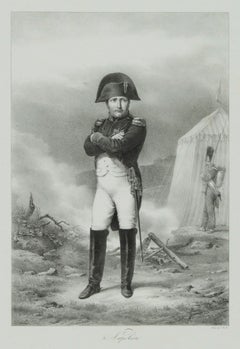
Napoleon Standing Lithograph, 1822 Signed in the stone lower left corner of image (see photo) From: Arnault, A. V. Vie Politique et Militaire de Napoleon (120 plates) Published, Paris, Librairie Historiquem 1822 Printed by C. Motte, Paris Considered to be the major pictorial treatise on Napoleon and his military conquests. Image size: 14 x 9 3/4 inches Sheet size: 23 5/8 x 17 3/4 inches Condition: Very good Horizontal prints...

Category

1820s Romantic Figurative Prints

Materials

Lithograph

Napoleon III Review Painting, Tempera on carton, Signed, 19th Century

Napoleon III Review Painting, Tempera on carton, Signed, 19th Century

By Jean Baptiste Édouard Detaille

Located in PARIS, FR

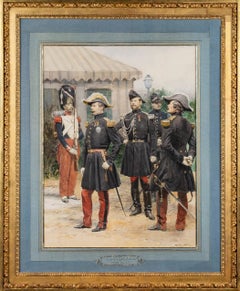
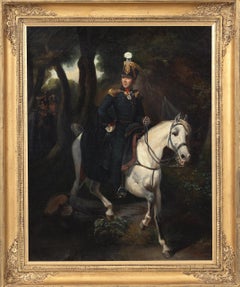
Conditions: Very good condition. In its original frame and glass. A similar composition, but less accomplished, is currently part of the collections of the Musée des Invalides. Signed at the bottom and dated. Complementary shipping worlwide by DHL, FEDEX. Description: This work of art, framed by a majestic golden frame, accurately depicts a group of soldiers in 19th-century uniforms. Every detail, from the golden buttons to the epaulettes, finely illustrates the military equipment of the time. Behind them stands a sober architectural structure, evoking a barracks or a guard post. The color palette, dominated by earthy tones and dark shades of blue, gives a solemn and dignified atmosphere to the scene. The disposition of the soldiers, turned towards the artist, with an attitude both alert and relaxed, captures a moment of daily military life. This painting, with its attention to detail and harmonious composition, transports the viewer into a bygone era, inviting reflection on history and military traditions. EDOUARD DETAILLE The emperor is accompanied by his aide-de-camp, Colonel Castelnau, and Marshal Canrobert. In a gilded wooden frame, under a Marie Louise blue background. Life and time Born in 1848 into a close-knit bourgeois family, Édouard Detaille, the eldest of eight children, displayed early talent in drawing. “He was a prodigy,” notes François Robichon. By the age of thirteen, he exhibited an astonishing surety of hand and a phenomenal sense of composition. His father, connected to Horace Vernet, encouraged him. At seventeen, after passing his baccalaureate, he entered Meissonier’s studio. This relationship, which developed into mutual affection, spared Detaille the academic detour through the École des Beaux-Arts. Rather than dictating an official art style, Meissonier, at the peak of his fame, traveled with his students, introducing them to the nuances of Titian, Rembrandt, and Rubens in Brussels and Lille. In 1867, the Paris of “free trade” dominated the world through the technological revolutions of the Universal Exhibition, and the amiable young man, striking in appearance, discovered the salon of Princess Mathilde and the theater of Dumas fils. He even approached the Empress, noting in his journals, “Not bad, the Empress.” This observation encapsulated Detaille: he had no doubts about his talent, cultivated panache, enjoyed the company of beautiful women, and aimed to conquer the circles of power without sacrificing his freedom. From childhood, he listened to his calling: “Before I could read, I could guess the subjects of battles, the names of famous generals, the weapons of officers and soldiers from the images I admired in the books of Norvins and Laurent de l'Ardèche.” He mingled with collectors and regularly attended military reviews on the Champs-Élysées. His first painting exhibited at the Salon in 1868, “La Halte de tambours,” was praised by critics who immediately recognized “a remarkable truth of observation and simplicity of effect.” The purchase of this work by Princess Mathilde, cousin of Emperor Louis-Napoleon, made Detaille, at twenty, an envied celebrity known to Sainte-Beuve, Théophile Gautier, the Goncourt brothers, and Flaubert. The young artist’s humanistic vision contrasted with the compositions of his predecessors, depicting soldiers in maneuvers, contemplative and resigned as war loomed. **The Combatant’s Vision** The Siege of Paris, where he nearly lost his life in 1870, and the deaths of two brothers in that defeat darkened his outlook. From 1871 onward, Detaille no longer concealed the cruelties of war: German riflemen mowed down by machine gun fire, cavalrymen and panicked horses caught in ambushes, fields plowed by shells strewn with dead animals. The unvarnished tragedy: “It is an absolute fact that no painter has ever rendered a battlefield covered with corpses as it is,” commented Jules Claretie. The fallen bodies still bear the appearance of life in their frozen rigidity. Detaille’s testimony of the devastating defeat and the catastrophic effects of the first total war in history was not a celebration of heroism but a lament, a “lesson in darkness.” “From war, once considered the supreme effort of human genius, we now see only melancholy and horrors,” judged one writer in response to his canvases. “Detaille experienced the reality of combat at a young age during a war that foreshadowed the two world conflicts of the 20th century,” explains François Robichon. With great realism, Detaille painted war from the perspective of the combatant. He introduced a humanity and a critical lucidity regarding the evolution of warfare. His works intensely captured the violence and firepower of new weapons like machine guns. Before he turned thirty, Detaille had become a chronicler of these painful years. He exhibited, as a critic noted, a “striking portrait of modern war” that both French civilians and soldiers had experienced firsthand. He embodied a youth humiliated and eager for revenge. Yet this scrupulous artist also remembered, in his expansive landscapes—from the chalky plateaus of Île-de-France to the Russian plains—the lessons of Corot and Courbet. Manet was not far off. “I wouldn’t want my art to be reduced to mere patriotic art,” he asserted. “A system I often employ and love is to first execute the landscape, very effective, very tight, based on nature…” Echoing Meissonier’s advice: “Always nature, always nature!” Detaille remained close to this father figure, constructing a grand townhouse next to his mentor’s studio at 129 boulevard Malesherbes at the age of 26, having purchased 425 m² of land from the Pereire brothers. He even chose the same architect as Meissonier: Paul Boesvilwald. A bachelor and incorrigible seducer, the painter welcomed his conquests, including Valtesse de la Bigne, amidst his collections, having built his studio in the courtyard. Diplomatic Actor As Detaille’s fame grew, his Malesherbes townhouse quickly became a gathering place for foreign princes, politicians, and heads of state, where Juliette Adam, Léon Gambetta’s muse, offered him valuable advice. The Prince of Wales, the future Edward VII, developed a genuine friendship with the painter. “This fervent patriot, friend of Déroulède, was extraordinarily open to the world,” recounts François Robichon. In just a few years, he gained considerable social, cultural, and international stature. Received at Windsor, at the English court, he was close to Tsar Alexander III and a great friend of Félix Faure. In this capacity, Detaille played a decisive role in the Entente Cordiale, signed in 1904 between England and France, and in the Franco-Russian alliance of 1894, thereby contributing to the Triple Entente among the three powers. An engaged witness of his time—associated with the birth of the “Ligue des Patriotes” alongside Alphonse de Neuville...

Category

Late 19th Century Academic Landscape Paintings
Materials

Gouache, Oil

Napoleon - Etching by Pierre François Tardieu - 1837

Napoleon - Etching by Pierre François Tardieu - 1837

By Pierre Francois Tardieu 1

Located in Roma, IT

Napoleon is an Etching realized by P.Bellange in 1837 by Pierre-François Tardieu. Good conditions. The artwork is realized in a well-balanced composition. the artwork and belongs t...

Category

1830s Modern Figurative Prints

Materials

Etching

Napoleonic Battle - Etching by Horace Vernet  - 1837

Napoleonic Battle - Etching by Horace Vernet - 1837

By Émile Jean-Horace Vernet

Located in Roma, IT

Napoleonic Battle is an Etching realized by Horace Vernet in 1837. Good conditions. The artwork is realized in a well-balanced composition. the artwork and belongs to the suite sui...

Category

1830s Modern Figurative Prints

Materials

Etching

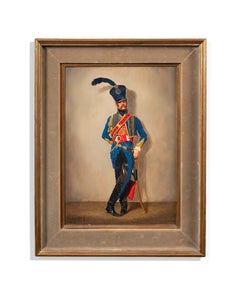
An Officer, Grande Armée, Hussars, Circa 1815

An Officer, Grande Armée, Hussars, Circa 1815

Located in Stoke, Hampshire

John Leslie Berry (1920–2009) An Officer, Grande Armée, Hussars, Circa 1815 Oil on canvas Signed lower left Canvas size - 14 x 10 in Framed size - 18 1/2 x 14 1/2 in ohn Leslie Ber...

Category

20th Century Modern Portrait Paintings

Materials

Oil

Portrait Of Emperor Nicholas I Of Russia (1796-1855) On Horseback, 19th Century

Portrait Of Emperor Nicholas I Of Russia (1796-1855) On Horseback, 19th Century

Located in Liphook, GB

Portrait Of Emperor Nicholas I Of Russia (1796-1855) On Horseback, 19th Century circle of Heinrich Muller (1781-1851) Large 19th Century portrait of Nicholas I, Emperor of Russia o...

Category

19th Century Portrait Paintings

Materials

Canvas, Oil

The Duke of Wellington At The Battle Of Waterloo, 19th Century English School

The Duke of Wellington At The Battle Of Waterloo, 19th Century English School

Located in Liphook, GB

The Duke of Wellington At The Battle Of Waterloo, 19th Century English School Large 19th Century English School scene of The Duke of Wellington at The Battle Of Waterloo, oil on ca...

Category

19th Century Landscape Paintings

Materials

Canvas, Oil