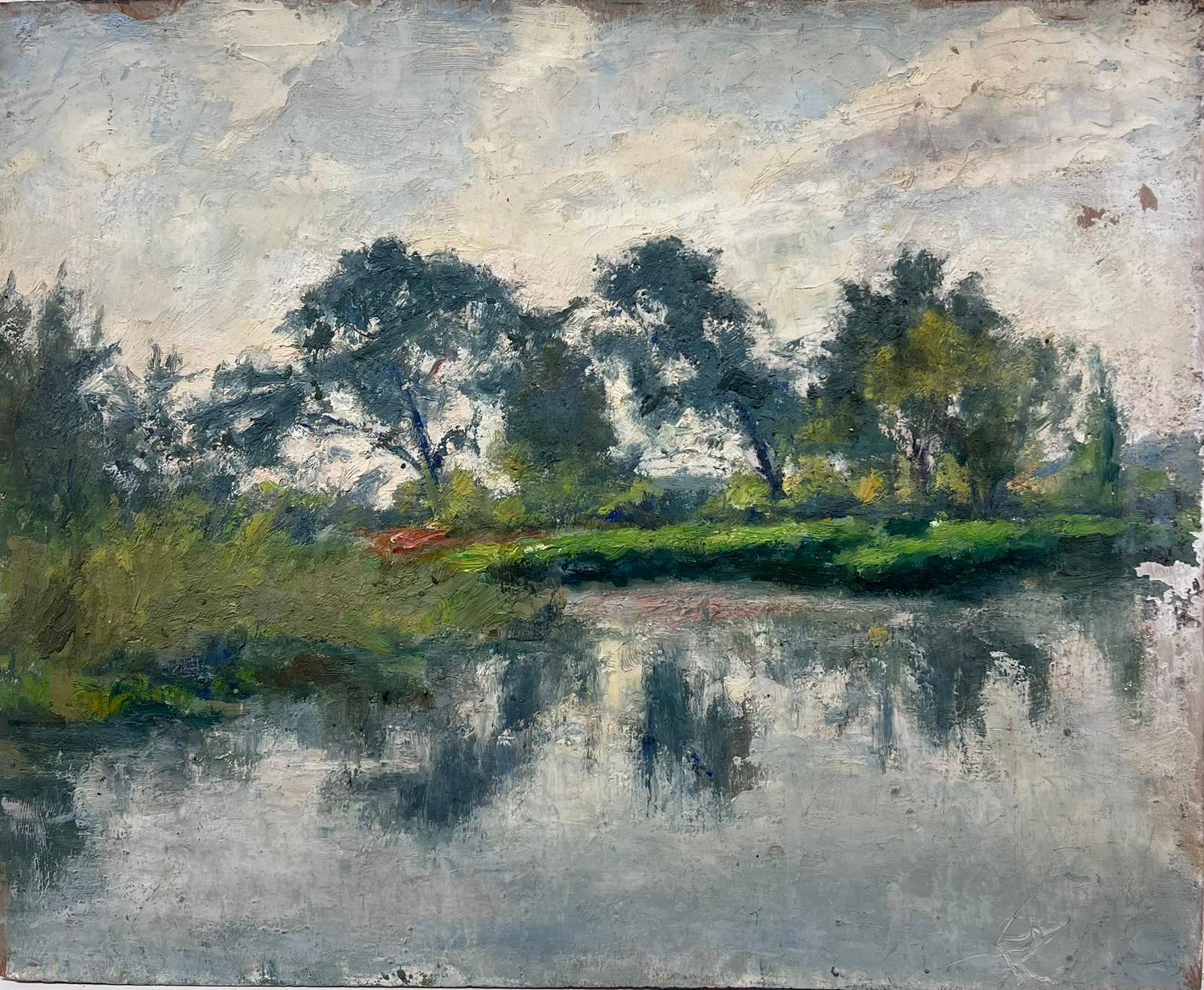
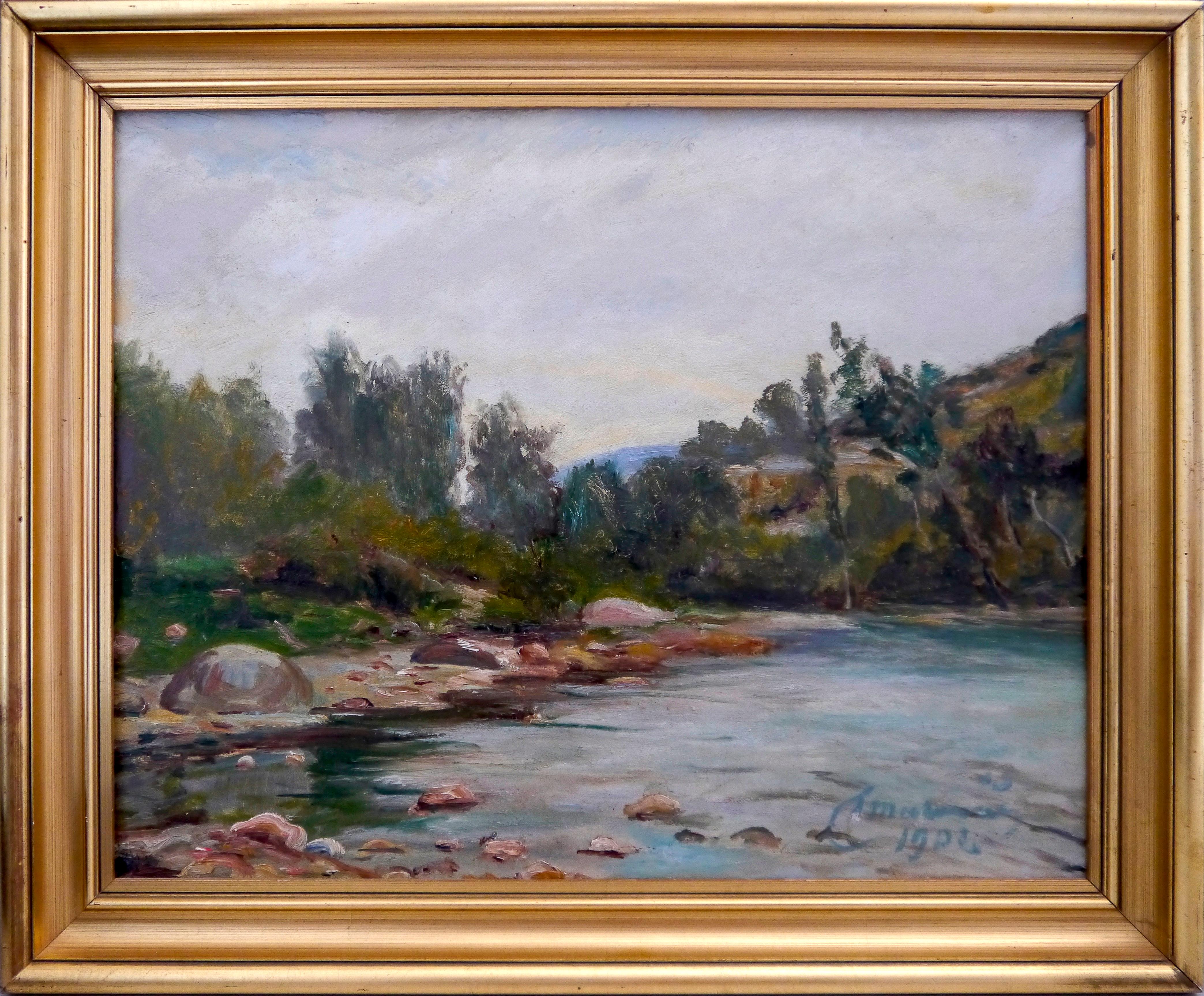
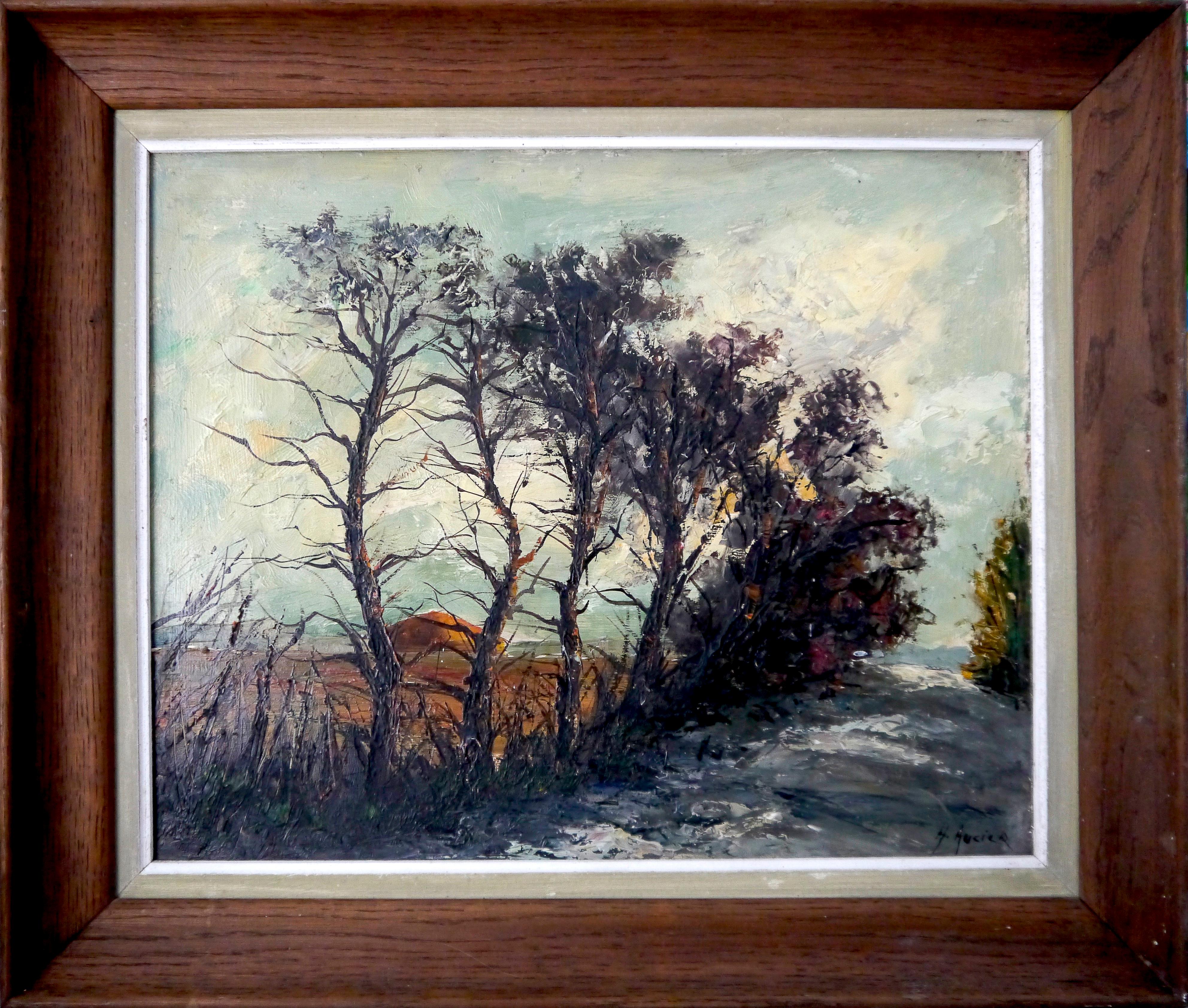
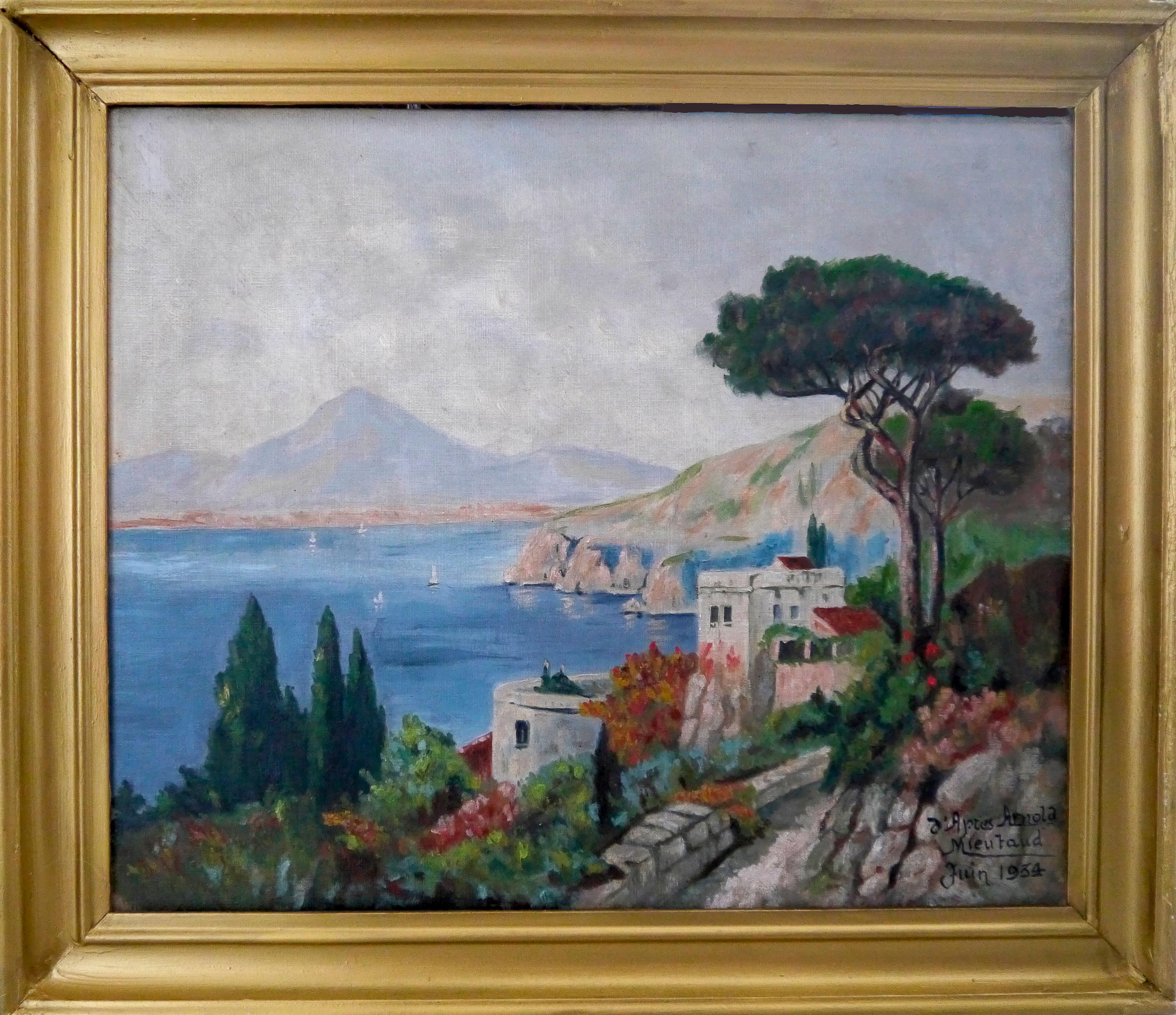
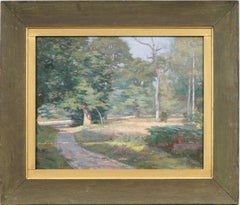
➡️Vivid Antique scene Landscape⬅️
⏩It is signed J Ch Millet.⏪
Jean Charles Millet (1892-1944)
How did Jean-Charles Millet, the grandson of the celebrated painter, become a master forger?
In the Millet family, the general public is familiar above all with Jean-François, the painter of The Gleaners and The Angelus, now housed in the Musée d’Orsay. Born to Norman peasants in 1814, he decided in his early twenties to become an artist, yet achieved only limited recognition during his lifetime. Nevertheless, this witness to rural life, whose draughtsmanship borders on the mystical, remains within the Barbizon School an exceptional representative of the realist movement of his time. His work would truly be acknowledged only after his death.
In the 1930s, one of his grandsons, Jean-Charles Millet, himself a relatively gifted painter and draughtsman, made a fortune by selling forged Millets: forgotten drawings, canvases supposedly rediscovered in attics, sometimes even accompanied by a certificate of authenticity. Bold and inventive, he devised, with the complicity of a carefully recruited forger, peasant scenes that could plausibly have inspired his illustrious grandfather. The scam prospered for nearly a decade, until justice finally caught up with him.
⭐Medium:⭐ Oil on canvas
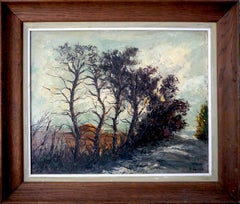
⭐Technique: ⭐Impasto painting with expressive brushwork.
⭐Size:⭐50,5x60.5cm / 19.9x 23.8inch
⭐Date: ⭐
⭐Condition : ⭐ Vivid color. Good condition, restored with wooden strecher (see back), NO CRACKS. The painting shows a few marks from an old frame. Ready to Hang
⭐Provenance:⭐ Private collection - France.
⭐Shipping:⭐ from France is fast 4-6 days with Fedex / DHL
🟢🟢🟢🟢🟢🟢🟢🟢🟢🟢🟢🟢🟢🟢🟢🟢🟢🟢
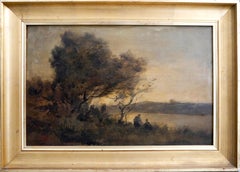
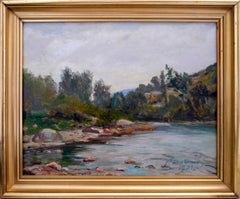
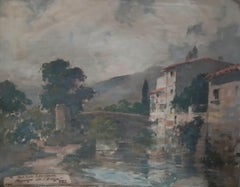
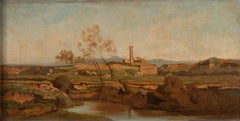
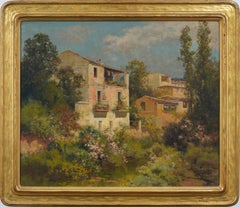
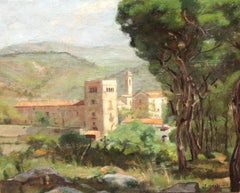
This painting presents a tranquil yet emotionally resonant landscape in which nature, antiquity, and human presence coexist in measured harmony. The composition unfolds as a poetic synthesis of classical ruin, pastoral scenery, and subdued narrative, reflecting an artistic sensibility deeply rooted in the 19th-century French landscape tradition associated with Jean-Charles Millet and his contemporaries.
The scene is organized around a gentle recession into space, guided by a winding path and a reflective body of water that draws the viewer’s gaze toward the distant hills. On the right, a fragment of classical architecture—columns supporting a partial entablature, stands as a solemn reminder of antiquity. These ruins are not depicted as monumental relics, but rather as integrated elements of the landscape, softened by vegetation and atmospheric light. Their presence introduces a contemplative dimension, evoking themes of time, decay, and the continuity between past and present.
On the left foreground, two seated figures appear absorbed in quiet reflection. Their small scale relative to the surrounding landscape emphasizes human humility before nature and history. This treatment aligns closely with Millet’s humanist approach, in which figures are never heroicized but instead rendered as integral parts of the land they inhabit. The figures serve not as narrative protagonists, but as emotional anchors, silent witnesses to the landscape’s enduring calm.
The painter’s handling of light is central to the work’s expressive power. A warm, golden tonality bathes the middle ground and path, suggesting either early morning or late afternoon. This diffused illumination avoids dramatic contrasts, favoring instead a gentle modulation of light that enhances the painting’s meditative atmosphere. The sky, rendered in soft blues and pale creams, is animated by subtle cloud formations that lend movement without disrupting the overall serenity.
Color is applied with restraint and sensitivity. Earthy ochres, muted greens, and softened blues dominate the palette, reinforcing the pastoral mood. The brushwork is visible yet controlled, particularly in the foliage, where layered strokes create texture and depth without excessive detail. Trees are rendered with a painterly softness, their forms slightly blurred, as if shaped as much by memory as by direct observation. This approach situates the work firmly within the poetic realism of late 19th-century French landscape painting.
The architectural elements, by contrast, are treated with firmer structure. Their vertical lines provide compositional balance against the organic curves of trees and hills. This juxtaposition between natural growth and human construction underscores a recurring theme in Millet’s broader artistic milieu: the tension and harmony between civilization and nature. Yet the ruin’s partial decay suggests that nature ultimately reclaims all human endeavors, reinforcing a quiet philosophical reflection rather than a moralizing statement.
The spatial depth is achieved through careful atmospheric perspective. Distant mountains dissolve into cooler hues, while foreground elements are enriched with warmer tones and stronger contrasts. This gradual transition enhances the illusion of space and imbues the landscape with a sense of calm continuity. The reflective surface of the water acts as a visual pause, mirroring the sky and reinforcing the painting’s contemplative rhythm.
Emotionally, the painting resists drama. There is no overt action, no narrative climax. Instead, its power lies in stillness. This deliberate restraint is characteristic of works influenced by Millet’s legacy, where the dignity of ordinary existence and the quiet presence of nature are elevated to subjects worthy of sustained contemplation. The figures’ introspective posture, combined with the timeless setting, invites the viewer into a shared moment of reflection.