Want more images or videos?
Request additional images or videos from the seller
1 of 13

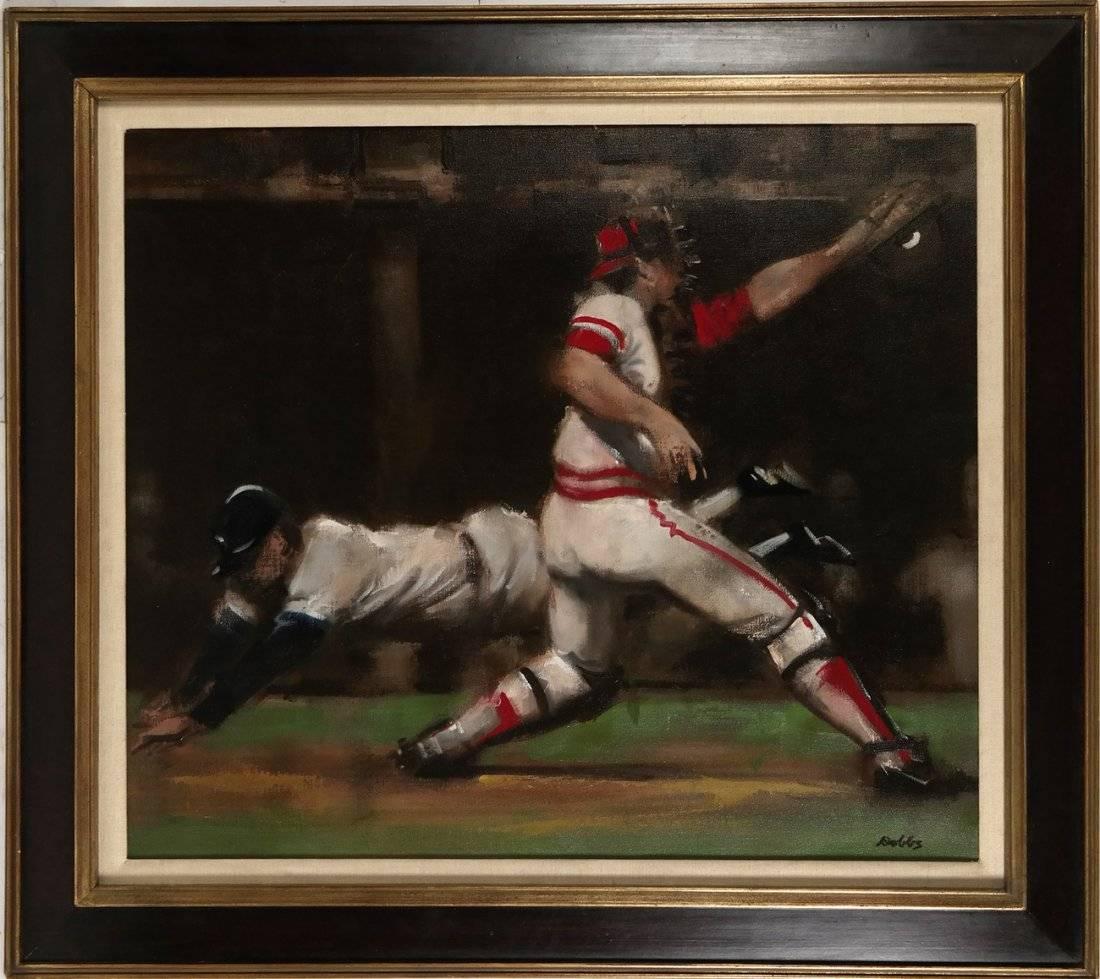
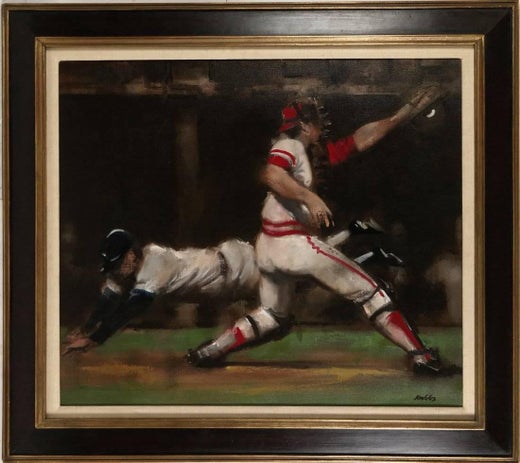
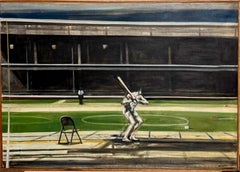
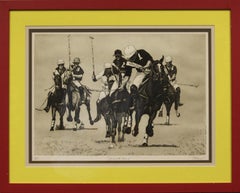
John Dobbs
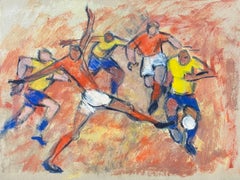
Shot on Goal, Sporting Scene

1981

$5,500
£4,165.55
€4,865.59
CA$7,873.15
A$7,981.03
CHF 4,539.38
MX$97,151.71
NOK 53,242.48
SEK 53,372.60
DKK 36,370.32

About the Item

John Barnes Dobbs, a determinedly figurative painter who launched his career in the 1950s against the prevailing winds of Abstract Expressionism, lived to see a time when Realism would coexist with Abstraction, Minimalism, Conceptual Art and a variety of other artistic movements. On August 9 Dobbs died at his home in New York’s Greenwich Village at the age of 80. In his final works, Dobbs’ figures appear against flat backgrounds, iconic as the images on tarot cards: acrobats, boxers and contortionists, struggling against the physics of their own bodies and that of the universe. Dobbs had many solo shows at galleries, universities and museums. His work was exhibited at the Museum of Modern Art, the Whitney Museum, the American Academy of Arts and Letters, the Butler Institute of American Art in Ohio, and the Salon Populiste in Paris. Dobbs’ paintings are part of the permanent collections of the Hirshhorn Museum, Washington, DC; the Montclair Art Museum, Montclair, NJ; the Neuberger Museum, Purchase, NY; the Canton Museum of Art, Canton, OH and the Springfield Museum of Art, Springfield, MA. From 1972 to 1996, he was a Professor of Art at John Jay College, City University of New York. He was a member of the National Academy, to which he was elected in 1976. Born in 1931 in a small house by the Lackawanna Railroad in Nutley, New Jersey, where his grandfather had once worked as a railway express clerk, Dobbs grew up in a politically engaged family of artists, musicians and poets. Yet he credited the shining rails that ran past their little house with giving him his first lesson in one-point perspective. Although he studied with several painters during his twenties, he always referred to himself as a “self-taught” artist. At 18, after graduating from high school, Dobbs hoisted a duffle bag onto his shoulder and hitchhiked cross-country. He worked at a variety of odd jobs before returning to the East Coast to study painting with Ben Shahn, Gregorio Prestopino and Jack Levine, who became his mentor and life-long friend. In 1952 Dobbs was drafted into the Army and stationed in Germany. He brought along a sketchbook, which he filled with drawings of soldiers and post-war German life, later published in a chapbook, “Drawings of a Draftee” (1955). After returning to the United States, Dobbs married French-Algerian literary scholar Anne Baudement and had his first one-man show at the Grippi Gallery in New York in 1959. Four years later, painter Raphael Soyer included Dobbs—along with Edward Hopper, Leonard Baskin, Jack Levine and eight other figurative artists—in his large group portrait, Homage to Thomas Eakins. Soyer’s canvas was a cri de coeur for 20th century American Realist painting. But, although he and Dobbs became close friends and artistic compatriots, their work developed along different directions. While Soyer devoted himself to painting from life, Dobbs worked from memory and imagination, employing both literal and symbolic imagery to invoke America’s collective preoccupations and dreams. Those dreams, as Dobbs conceived them, can sometimes be terrifying. In Deodand #2, (1969), painted by Dobbs during the height of the protests against the war in Vietnam, a large revolver points straight at the viewer. Staring down the barrel of the gun is the shadowy face of a helmeted policeman. With its oversized revolver, gripped in huge hands, the work confronts us more directly and aggressively than news footage ever could. The artist is willing to let us squirm before this hyper-realistic nightmare of the American history from which we are still trying to awake. “I’m not afraid to say I’ve made paintings that can be hard to live with,” Dobbs wrote near the end of his life, responding to often-heard comments that his work is both beautiful and disturbing. Certainly we can trace Dobbs’ artistic lineage from Goya through George Grosz, those break-and-enter artists who brought fury into the drawing room and have never been entirely forgiven. As with those earlier, socially conscious painters, one senses that the demons that pursued Dobbs were as much personal as political. That’s one reason the sloppy labels “Realist” and “Social Realist” that have dogged him and his circle for decades don’t shed much light on the paintings. In the unforgettable self-portrait White Mask (1999), Dobbs’ haunting gray eyes stare out of his long, bearded face. They are cool, appraising and unflinching. But instead of a cap on top of his balding head, the artist wears an African totem. It’s a large wooden mask, painted white, the color of death. And its coal-black eyes stare off into an otherworldly, steel-blue distance. “I am your doppelgänger,” the ghostly second head seems to say, “and I come from a world that’s truer, deeper and more real.”
  • Creator:
    John Dobbs (1931 - 1911, American)
  • Creation Year:
    1981
  • Dimensions:
    Height: 26 in (66.04 cm)Width: 30 in (76.2 cm)
  • Medium:
  • Period:
  • Condition:
    Normal wear and tear from usage.
  • Gallery Location:
    Surfside, FL
  • Reference Number:
    1stDibs: LU38217033362

More From This Seller

View All
Play at The Plate, Sporting Scene

Play at The Plate, Sporting Scene

By John Dobbs

Located in Surfside, FL

John Barnes Dobbs, a determinedly figurative painter who launched his career in the 1950s against the prevailing winds of Abstract Expressionism, lived to see a time when Realism wou...

Category

20th Century Figurative Paintings

Materials

Canvas, Oil

Latent Defect

Latent Defect

By Peter Gethin Thomas

Located in Surfside, FL

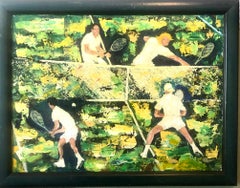
22X30 without frame, 29X36 with frame Peter (Gethin) Thomas is active/lives in District Of Columbia. Peter Thomas is known for abstract expressionist painting. He was Dean of the Corcoran School of Art in the 1970s and then became the head of the Graphics Department at the Federal Reserve, both in Washington, D.C. On that faculty were some outstanding artists and fine teachers. William Christenberry, Sam Gilliam, Ed McGowin, Robert Stackhouse, Brockie Stevenson...

Category

1960s Abstract Expressionist Mixed Media

Materials

Oil Pastel, Mixed Media, Watercolor

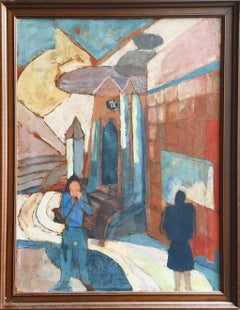
Untitled

Untitled

By Josef Presser

Located in Surfside, FL

Emigrating to Boston in 1913 from Poland with his Russian-Jewish parents, Presser was admitted in 1921 at age 12 to the Boston Museum School of Art with a full four-year scholarship,...

Category

20th Century Figurative Paintings

Materials

Oil, Board

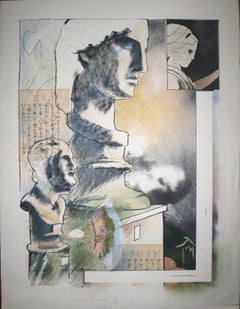
A Matter of Aesthetics

A Matter of Aesthetics

Located in Surfside, FL

Lithograph with Roman portrait bust. Will Petersen, a painter, master printer and a poet, was born in Chicago. (Amer. 1928-1994) created this limited edition LITHOGRAPH at the Lakeside Studio. The LITHOGRAPH PRINT is from a limited edition THE LITHOGRAPH IS SIGNED TITLED AND ANNOTATED BY THE ARTIST in pencil EXCELLENT condition. Will's formal art education began with classes at the Chicago Academy of Fine Arts. As a student at the city's Steinmetz High School, Petersen succeeded Hugh Hefner (of Playboy magazine fame) as the HS newspaper cartoonist, the Steinmetz Star. During this time, Petersen recovered from polio. In 1947 Petersen enrolled at Chicago's Wilbur Wright College. While there, he painted with oils for the first time. Two years later he enrolled at Michigan State University where he developed a strong interest in literature and writing and began printmaking. By 1951 he had begun to exhibit paintings and prints nationally. A year later he completed his master's degree. Petersen served in the United States Army from 1952-54, spending one year as an education specialist in Japan. This encounter with the Japanese culture affected his entire life. He became interested in calligraphy and Noh, classical Japanese Buddhist performance that combines elements of drama, music and poetry. Upon completion of his military service in Japan in 1955, Will Petersen settled in Oakland, California, where he met some of the most active poets of the Beat Generation: Gary Snyder, Allen Ginsberg, Jack Kerouac, Phil Whalen, Mike McClure and others. Petersen was attracted to the group by their intelligence and belief in Zen Buddhism. In 1956 in his small studio in Oakland, he printed the poems of Jack Kerouac. He attended for the first time, the reading of Ginsberg's Howl at Six Gallery. His relationship with Gary Snyder had begun when both were in Kyoto, Japan; later Snyder wrote for the Plucked Chicken. Petersen returned to Japan in 1957, pursuing painting, printmaking and writing for eight years while living in Kyoto. In 1965 he accepted a faculty appointment at Ohio State University, teaching drawing, painting and printmaking. Four years later Petersen took his teaching skills to West Virginia University in Morgantown, where he concentrated on printmaking. He taught there until 1977 when he began publishing Plucked Chicken, a journal of art and poetry. In 1978 in Morgantown, Petersen and his wife, Cynthia Archer, established Plucked Chicken Press, which they later moved to Chicago and then Evanston. Petersen operated the Press until his death on April 1, 1994. 1956 In storefront studio in Oakland, California, creates serigraphs and lithographs. Prints poems of Jack Kerouac. 1961 Back in Japan, acquires a lithography press and stones and resumes printing lithographs. Exhibits regularly with Kyoto Printmakers. 1969 Resident lithographer at the Lakeside Studio, Lakeside, Michigan. Prints for the first time Richard Hunt lithographs. 1978 Establishes Plucked Chicken Press in Morgantown, West Virginia. Resident lithographer at Lakeside Studio in Michigan. 1980 Plucked Chicken Press moves to Chicago. Publishes lithographs by Don Crouch and Art Kleinman. 1982 Publishes Blossom, a lithograph/collage by Tom Nakashima. 1983 Series I of Plucked Chicken Press is published with work by Archer, Duckworth, Godfrey, Heagstedt, Himmelfarb, Hoff, Hunt, Martyl, Miller, Nakashima and Petersen. 1984 Plucked Chicken Press moves to Evanston. Series II of Plucked Chicken Press is published with works by Croydon, Ho, Archer, Torn, Osver, Middaugh, Roseberry, Petersen, Spiess-Ferris and Hoppock. 1985 Series III of Plucked Chicken Press is published with works by Driesbach, Hunt, Trupp, Gregor, Pattison, Conger, Evans, Weygandt, Archer, Ho and Petersen. Prints Suite I, Northern Illinois University Collectors Series, with lithographs by Renie Adams, David Bower, David Driesbach, Carl Hayano and Ben Mahmoud...

Category

1980s Modern Figurative Prints
Materials

Lithograph

You May Also Like

"A Close Game"

"A Close Game"

Located in Bristol, CT

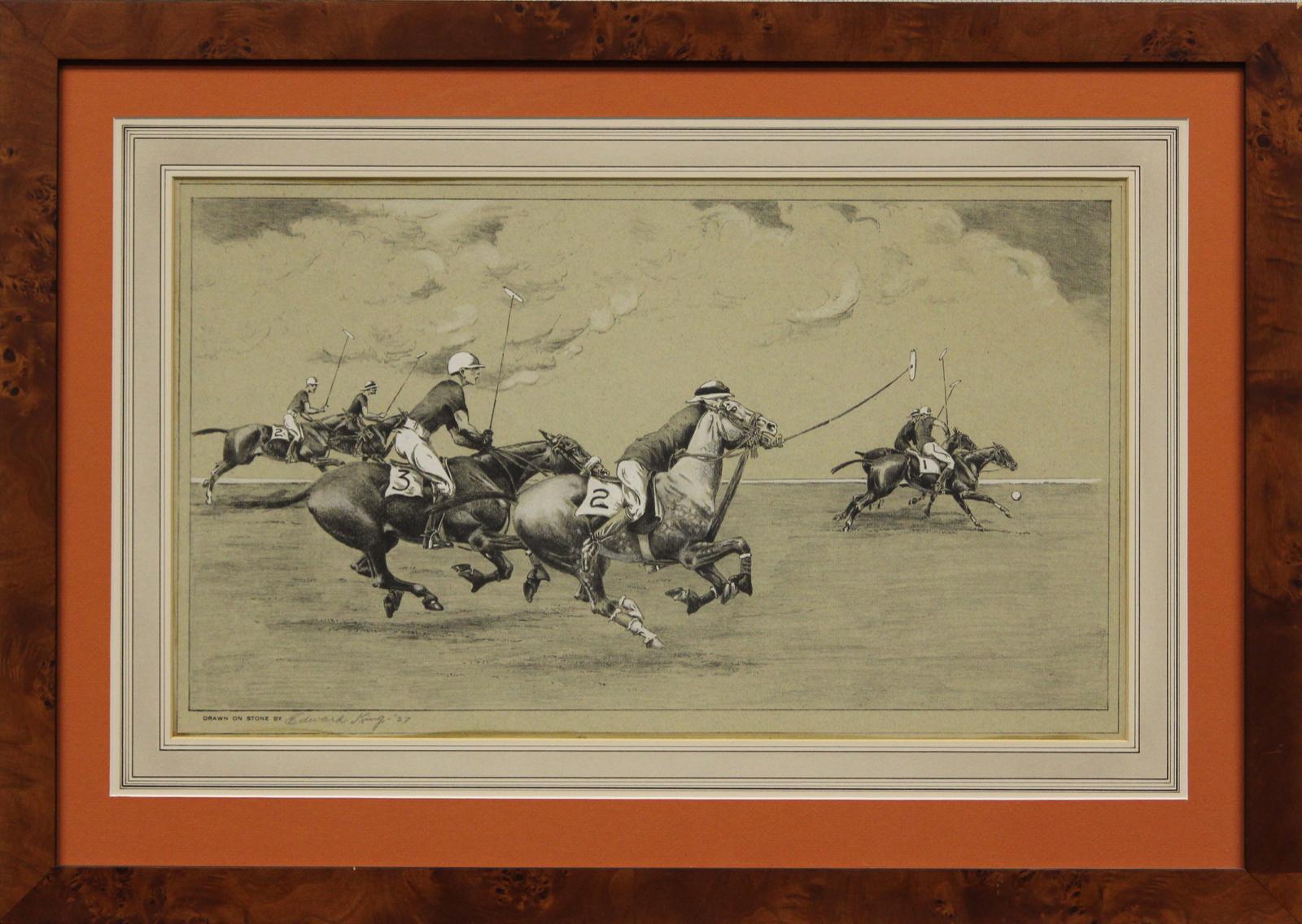
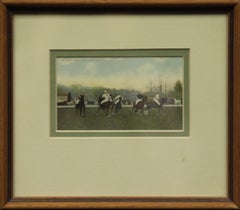
Rare color framed photo c1914 depicting a polo match in Lakewood, NJ Photo Sz: 3"H x 5"W Frame Sz: 8 1/4"H x 9 1/2"W

Category

1910s Photography

Materials

Photographic Paper

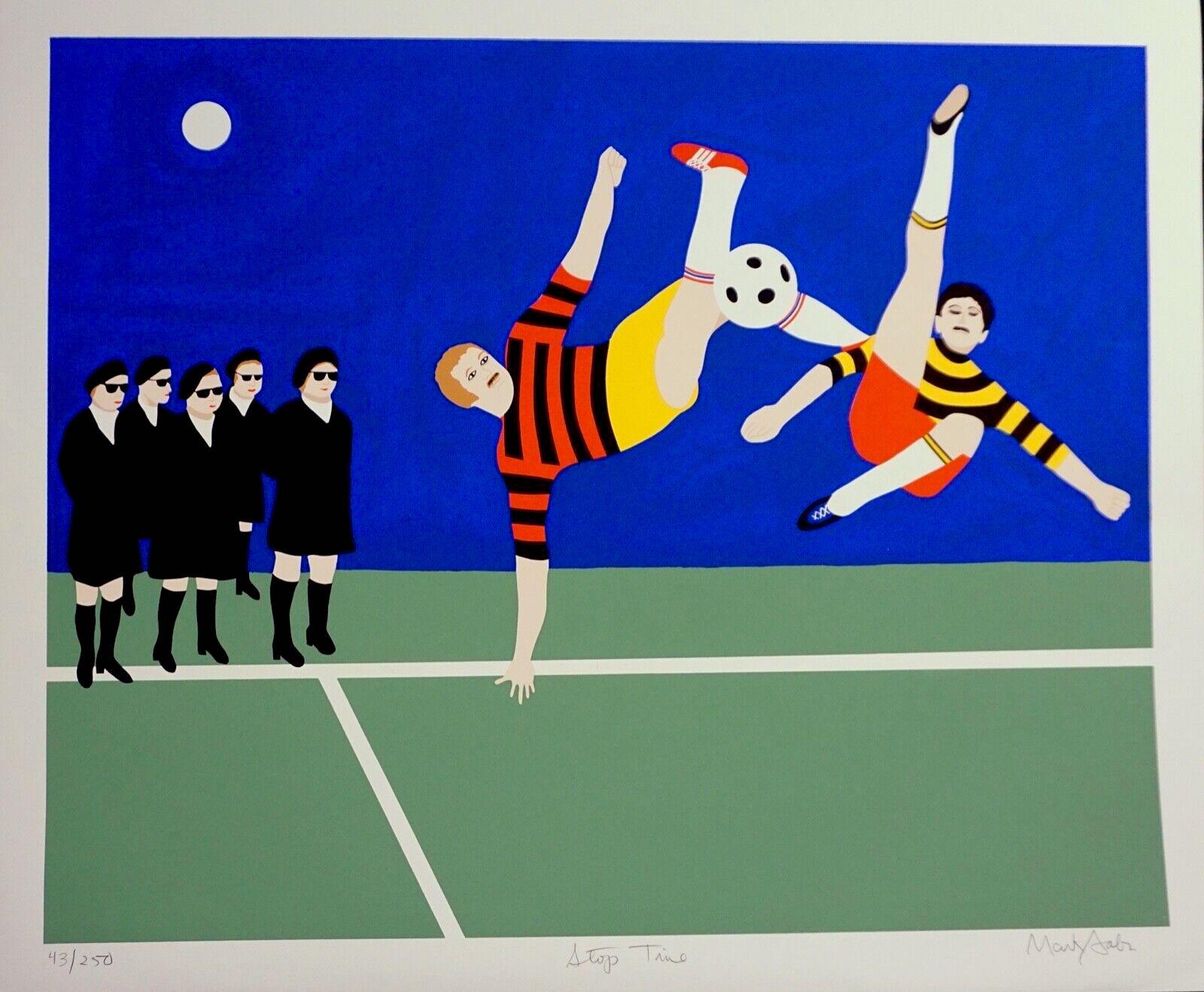
Stop Time

Stop Time

By Mark Sabin

Located in Hollywood, FL

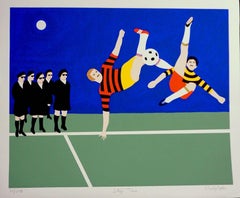
Artist: Mark Sabin Title: Stop Time Medium: Screenprint Signed: Hand Signed Edition: From the edition of 250 Measurements: 32" x 26" Condition: Excelle...

Category

Late 20th Century Contemporary More Prints

Materials

Screen

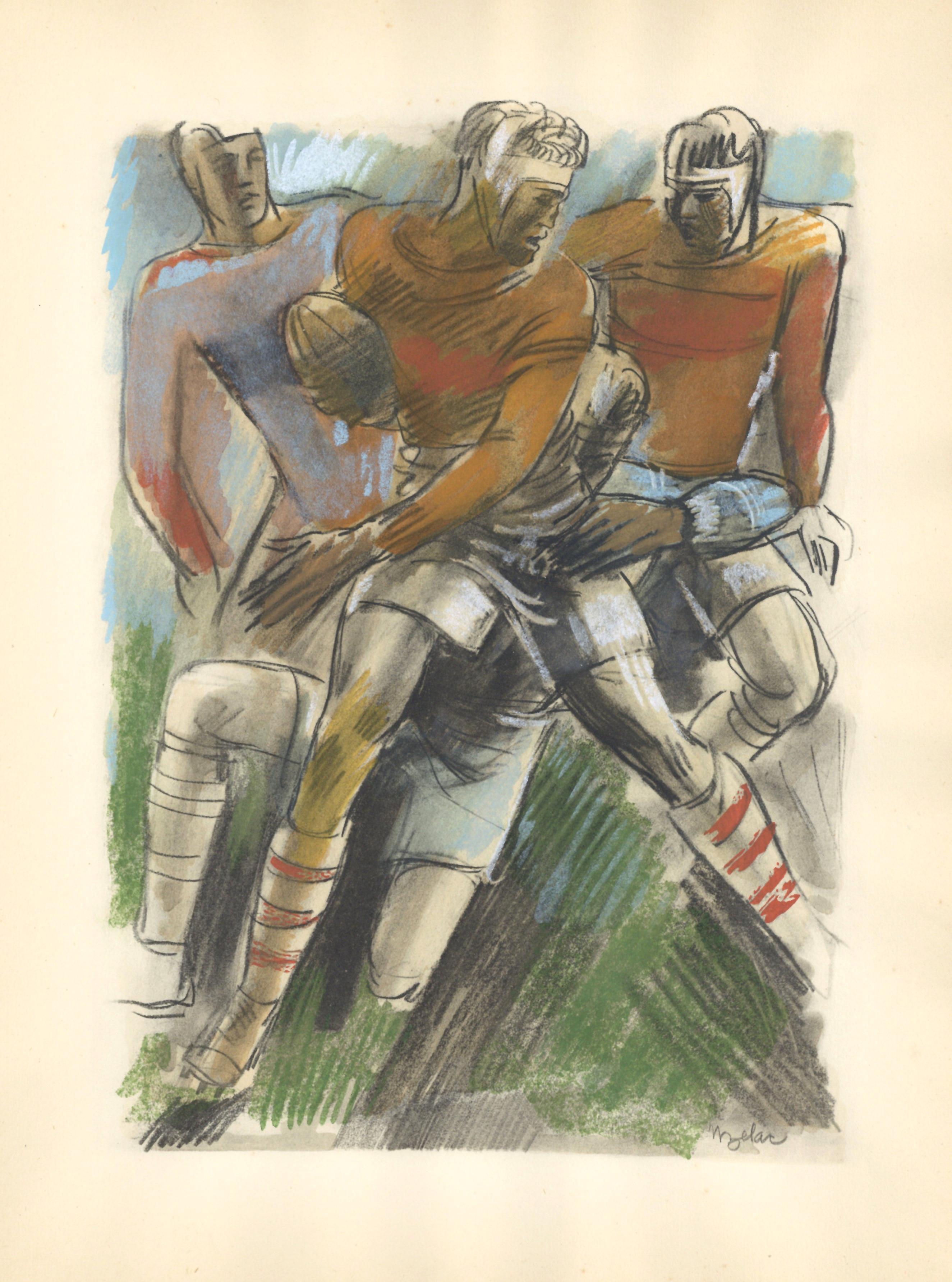
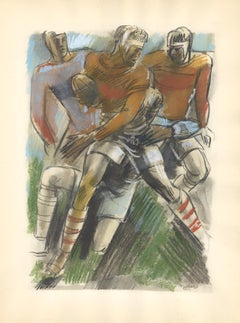
"Le Rugby" pochoir for Les Joies du Sport

"Le Rugby" pochoir for Les Joies du Sport

By Milivoy Uzelac

Located in Henderson, NV

Medium: pochoir. Printed in Paris in 1932 on Velin du Marais paper at the atelier of Daniel Jacomet for the Les Joies du Sport portfolio and issued in an edition of 750. This was pub...

Category

1930s Prints and Multiples

Materials

Lithograph, Stencil