Want more images or videos?
Request additional images or videos from the seller
1 of 8

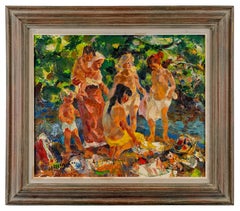
John Edward Costigan
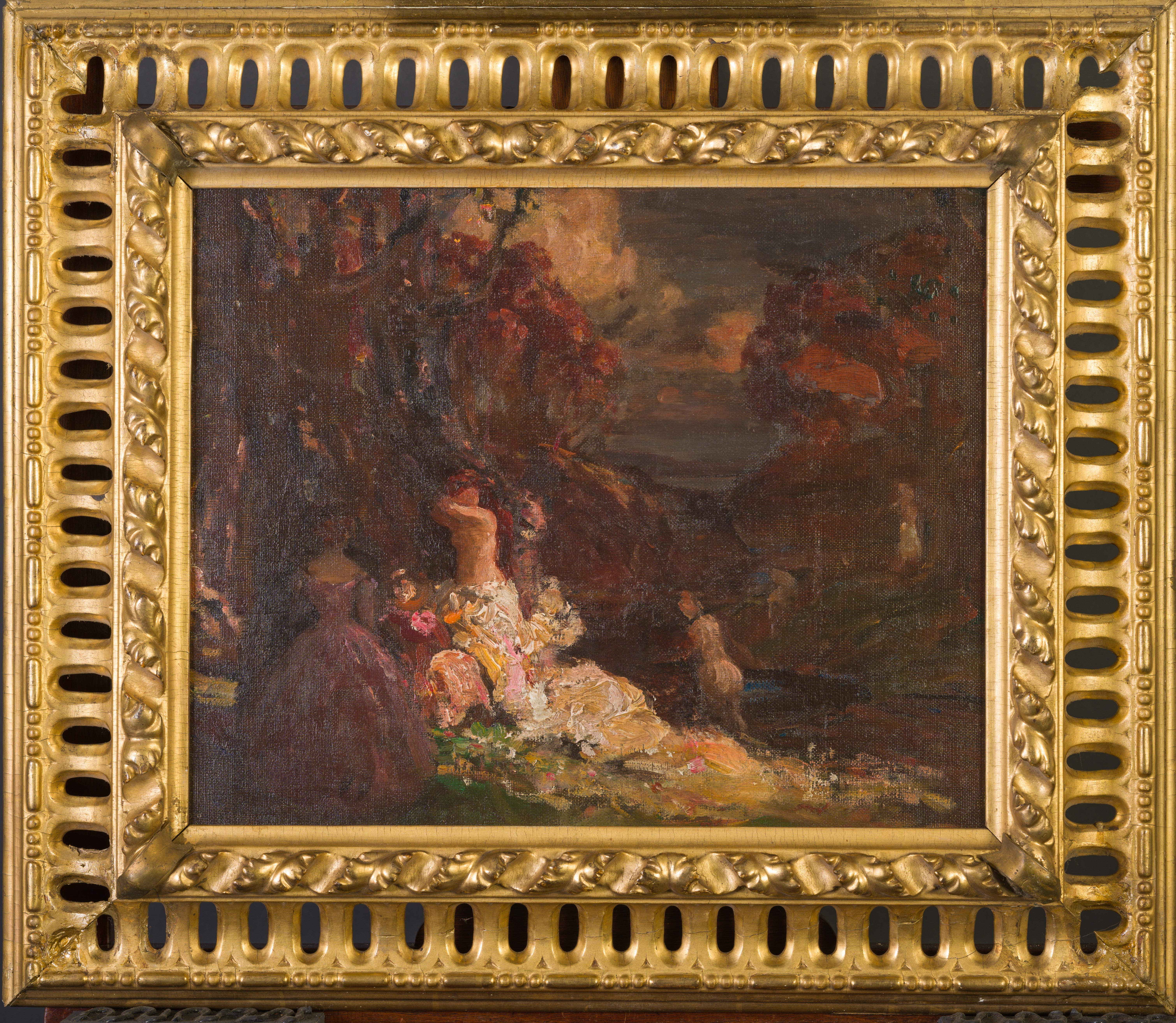
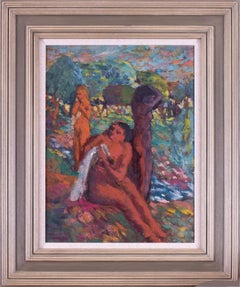
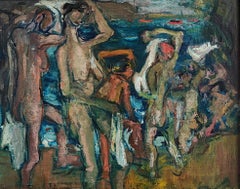
Bathers

1950's

$9,850
£7,451.88
€8,708.88
CA$14,097.45
A$14,324.21
CHF 8,115
MX$174,290.33
NOK 95,156.14
SEK 95,674.57
DKK 65,147.46

About the Item

John Edward Costigan, N.A. American, 1888-1972 Bathers Oil on canvas Signed ‘J.E. Costigan N.A.’ lower left 20 by 24 in. W/frame 26 by 30 in. John Costigan was born of Irish-American parents in Providence, Rhode Island, February 29, 1888. He was a cousin of the noted American showman, George M. Cohan, whose parents brought the young Costigan to New York City and was instrumental in starting him on a career in the visual arts. They were less successful in encouraging him to pursue formal studies at the Art Students League (where, however, he later taught) than in exposing him to the commercial art world through the job they had gotten him with the New York lithographing firm that made their theatrical posters. At the H. C. Miner Lithographing Company, Costigan worked his way up from his entry job as a pressroom helper, through various apprenticeships, to the position of sketch artist. In the latter capacity he was an uncredited designer of posters for the Ziegfeld Follies and for numerous silent films. Meanwhile, he had supplemented his very meager formal studies in the fine arts with a self-teaching discipline that led to his first professional recognition in 1920 with the receipt of prizes for an oil painting and watercolor in separate New York exhibitions. A year earlier, Costigan had wed professional model Ida Blessin, with whom he established residence and began raising a family in the sleepy little rural New York hamlet of Orangeburg, the setting for the many idyllic farm landscapes and wood interiors with which he was to become identified in a career that would span half a century. John Costigan’s first national recognition came in 1922 with his winning of the coveted Peterson Purchase prize of the Art Institute of Chicago for an oil on canvas, “Sheep at the Brook.” It marked the start of an unbroken winning streak that would gain him at least one important prize per year for the remainder of the decade. The nation’s art journalists and critics began to take notice, making him the recurring subject of newspaper features and magazine articles. The eminent author and critic Edgar Holger Cahill was just a fledgling reporter when he wrote his first feature, “John Costigan Carries the Flame,” for Shadowland Magazine in 1922. Costigan had his first one-man show of paintings at the Rehn Gallery on New York’s 5th Avenue in November, 1924, to be followed less than three years later by another at the Art Institute of Chicago. In addition, Costigan’s work has been—and continues to be included, side-by-side with that of some of America’s most high-profile artists, in museum and gallery exhibitions throughout the country. His renown had peaked in the early 1930s, by which time his work had been honored with nearly every major award then being bestowed in the fine arts and had been acquired for the permanent collections of several prestigious American museums, including New York’s Metropolitan (which only recently, in 1997, deaccessioned his “Wood Interior,” acquired in 1934). Although Costigan’s celebrity had ebbed by the late 1930s, the Smithsonian Institution saw fit in 1937 to host an exhibition exclusively of his etchings. And, in 1941, the Corcoran Gallery (also Washington, D.C.) similarly honored him for his watercolors. (Another Washington institution, the Library of Congress, today includes 22 Costigan etchings and lithographs in its permanent print collection.) During World War II, Costigan returned briefly to illustrating, mainly for Bluebook, a men’s pulp adventure magazine. A gradual revival of interest in his more serious work began at the end of the war, culminating in 1968 with the mounting of a 50-year Costigan retrospective at the Paine Art Center and Arboretum in Oshkosh, Wisconsin. Oils, watercolors and prints were borrowed from museums and private collections throughout the country, and the exhibition was subsequently toured nationally by the Smithsonian Institution. John Costigan died of pneumonia in Nyack, NY, August 5, 1972, just months after receiving his final prestigious award —the Benjamin West Clinedinst Medal of the Artist’s Fellowship, Inc., presented in general recognition of his “...achievement of exceptional artistic merit...” in the various media he had mastered in the course of his career. This painting depicts one of the artist's favorite themes --the farm family bathing in the wooded creek that bordered his property in Orangeburg NY. Most of these were titled simply "Bathers" or "Bathing Group." This painting is truly representative of the artist's work in oils, particularly his later work. Provenance: Private Collection, New York Alexander Avenard Collection Le Trianon Fine Art & Antiques, Sheffield, MA. Art C309
  • Creator:
    John Edward Costigan (1888 - 1972, American)
  • Creation Year:
    1950's
  • Dimensions:
    Height: 26 in (66.04 cm)Width: 30 in (76.2 cm)Depth: 2 in (5.08 cm)
  • Medium:
  • Movement & Style:
  • Period:
  • Condition:
  • Gallery Location:
    Sheffield, MA
  • Reference Number:
    Seller: Art C3091stDibs: LU70037859322

More From This Seller

View All
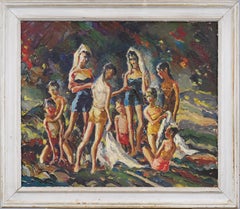
Bathing Group

Bathing Group

By John Edward Costigan

Located in Sheffield, MA

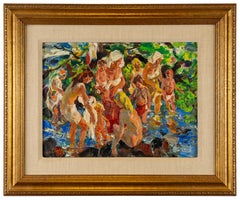
John Edward Costigan American, 1888-1972 Bathers Oil on canvas 20 by 24 in, w/ frame 26 by 30 in Signed "J.E. Costigan N.A." lower left John Costigan was born of Irish-American par...

Category

Mid-20th Century Impressionist Figurative Paintings

Materials

Canvas, Oil

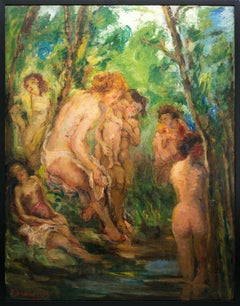
Bathing Group

Bathing Group

By John Edward Costigan

Located in Sheffield, MA

John Edward Costigan American, 1888-1972 Bathing Group Oil on canvas board 12 by 16 in, w/ frame 19 by 23 in Signed ‘J.E. Costigan N.A.’ lower left John Costigan was born of Irish-...

Category

Mid-20th Century Modern Paintings

Materials

Oil

Woman and Child

Woman and Child

By John Edward Costigan

Located in Sheffield, MA

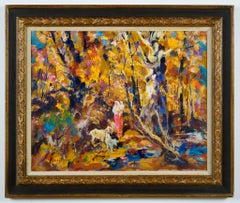
John Edward Costigan, N.A. American, 1888-1972 Woman and Child Oil on canvas Signed ‘J.E. Costigan N.A.’ lower left 24 by 30 in. W/frame 32 by 38 in. John Costigan was born of Irish-American parents in Providence, Rhode Island, February 29, 1888. He was a cousin of the noted American showman, George M. Cohan, whose parents brought the young Costigan to New York City and was instrumental in starting him on a career in the visual arts. They were less successful in encouraging him to pursue formal studies at the Art Students League (where, however, he later taught) than in exposing him to the commercial art world through the job they had gotten him with the New York lithographing firm that made their theatrical posters. At the H. C. Miner Lithographing Company, Costigan worked his way up from his entry job as a pressroom helper, through various apprenticeships, to the position of sketch artist. In the latter capacity he was an uncredited designer of posters for the Ziegfeld Follies and for numerous silent films. Meanwhile, he had supplemented his very meager formal studies in the fine arts with a self-teaching discipline that led to his first professional recognition in 1920 with the receipt of prizes for an oil painting and watercolor in separate New York exhibitions. A year earlier, Costigan had wed professional model Ida Blessin, with whom he established residence and began raising a family in the sleepy little rural New York hamlet of Orangeburg, the setting for the many idyllic farm landscapes and wood interiors with which he was to become identified in a career that would span half a century. John Costigan’s first national recognition came in 1922 with his winning of the coveted Peterson Purchase prize of the Art Institute of Chicago for an oil on canvas, “Sheep at the Brook.” It marked the start of an unbroken winning streak that would gain him at least one important prize per year for the remainder of the decade. The nation’s art journalists and critics began to take notice, making him the recurring subject of newspaper features and magazine articles. The eminent author and critic Edgar Holger Cahill was just a fledgling reporter when he wrote his first feature, “John Costigan Carries the Flame,” for Shadowland Magazine in 1922. Costigan had his first one-man show of paintings at the Rehn Gallery on New York’s 5th Avenue in November, 1924, to be followed less than three years later by another at the Art Institute of Chicago. In addition, Costigan’s work has been—and continues to be included, side-by-side with that of some of America’s most high-profile artists, in museum and gallery exhibitions throughout the country. His renown had peaked in the early 1930s, by which time his work had been honored with nearly every major award then being bestowed in the fine arts and had been acquired for the permanent collections of several prestigious American museums, including New York’s Metropolitan (which only recently, in 1997, deaccessioned his “Wood Interior,” acquired in 1934). Although Costigan’s celebrity had ebbed by the late 1930s, the Smithsonian Institution saw fit in 1937 to host an exhibition exclusively of his etchings. And, in 1941, the Corcoran Gallery (also Washington, D.C.) similarly honored him for his watercolors. (Another Washington institution, the Library of Congress, today includes 22 Costigan etchings and lithographs in its permanent print collection.) During World War II, Costigan returned briefly to illustrating, mainly for Bluebook, a men’s pulp adventure magazine. A gradual revival of interest in his more serious work began at the end of the war, culminating in 1968 with the mounting of a 50-year Costigan retrospective at the Paine Art Center and Arboretum in Oshkosh, Wisconsin. Oils, watercolors and prints were borrowed from museums and private collections throughout the country, and the exhibition was subsequently toured nationally by the Smithsonian Institution. John Costigan died of pneumonia in Nyack, NY, August 5, 1972, just months after receiving his final prestigious award —the Benjamin West Clinedinst Medal of the Artist’s Fellowship, Inc., presented in general recognition of his “...achievement of exceptional artistic merit...” in the various media he had mastered in the course of his career. This painting depicts one of the artist's favorite themes --the farm family bathing...

Category

1940s Post-Impressionist Landscape Paintings
Materials

Oil

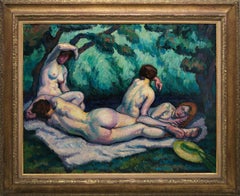
Sortie du Bain

Sortie du Bain

By Bernard Taurelle 1

Located in Sheffield, MA

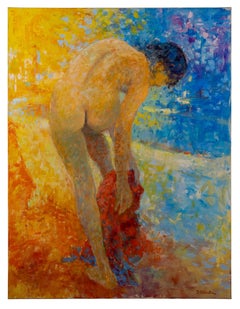
Bernard Taurelle French, born 1931 Sortie du Bain Oil on canvas 46" X 35" Signed lower left Inventory Number: 02059 Bernard Taurelle graduated college at 19 with a degree in philos...

Category

Mid-20th Century Impressionist Nude Paintings

Materials

Canvas, Oil

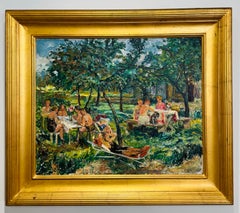
Personnages Dans un Parc

Personnages Dans un Parc

By Pierre Anfosso

Located in Sheffield, MA

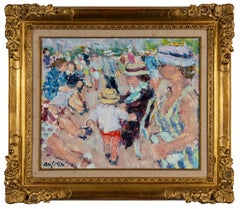
Pierre Anfosso French, 1928-2004 Personnages Dans un Parc Oil on Canvas 15 by 18 in, w/ frame 21 ½ by 24 ½ in Signed lower left Pierre Anfosso (1 Dece...

Category

Mid-20th Century Expressionist Figurative Paintings

Materials

Oil

Lounging by the Water

Lounging by the Water

Located in Sheffield, MA

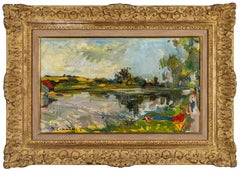
Jean-Yves Commere French, 1920-1986 Lounging by the Water Oil on canvas 13 by 21 ⅝ in, w/ frame 20 ⅜ by 29 ⅛ in Signed lower left In 1938 he enters the school of Beaux arts in Pari...

Category

Mid-20th Century Impressionist Figurative Paintings

Materials

Canvas, Oil

You May Also Like

American oil painting 'Bathers II' by Frederick Little Packer

American oil painting 'Bathers II' by Frederick Little Packer

Located in Petworth, West Sussex

Frederick Little Packer (American, 1886–1956) Bathers II Oil on board Signed and inscribed with title (on a label, on the reverse) 19 ¾ x 15 in. (50.2 x 38.3 cm) Radiant and rhythmic...

Category

20th Century Post-Impressionist Figurative Paintings

Materials

Oil, Board

Bathers, Oil on Canvas, 1914

Bathers, Oil on Canvas, 1914

By Roger Grillon

Located in Saint Amans des cots, FR

Oil on canvas by Roger GRILLON (1881-1938), France, 1914. "Bathers". With frame: 114x94 cm - 44.9x37 inches ; without frame: 92x73cm - 36.2x28.75 inches. 30F format. Signed lower lef...

Category

1910s Impressionist Figurative Paintings

Materials

Canvas, Oil

Vibrant Bathers Scene, Expressionist Oil on Canvas, Early 20th Century

Vibrant Bathers Scene, Expressionist Oil on Canvas, Early 20th Century

Located in Genève, GE

Work on canvas Dimension with frame : 46 x 54.5 x 3.3 cm Vibrant Bathers Scene This expressionist painting captures a lively scene of nude figures gathered near the water, portrayed ...

Category

Early 20th Century Expressionist Nude Paintings

Materials

Oil, Canvas