Want more images or videos?
Request additional images or videos from the seller
1 of 11

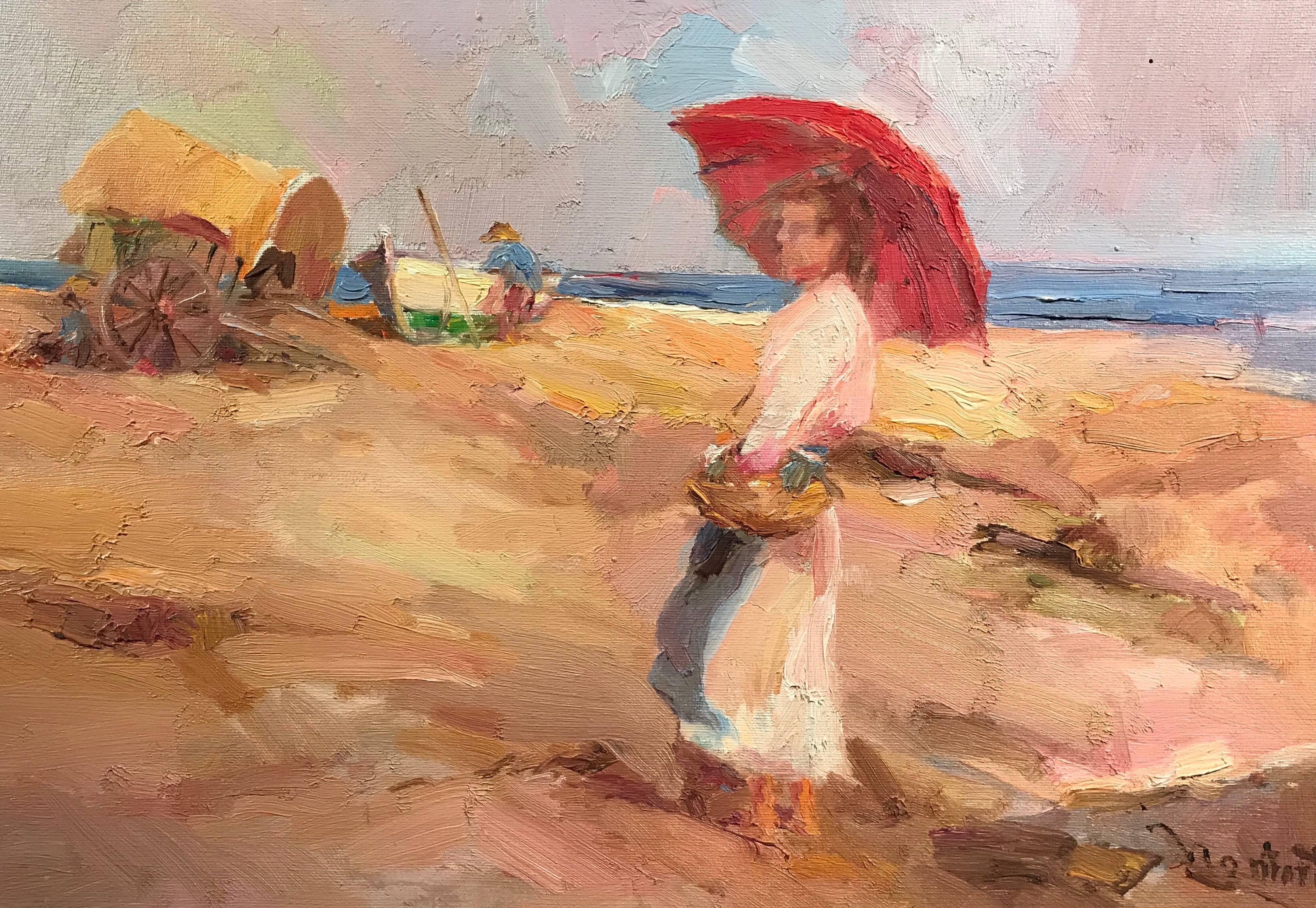
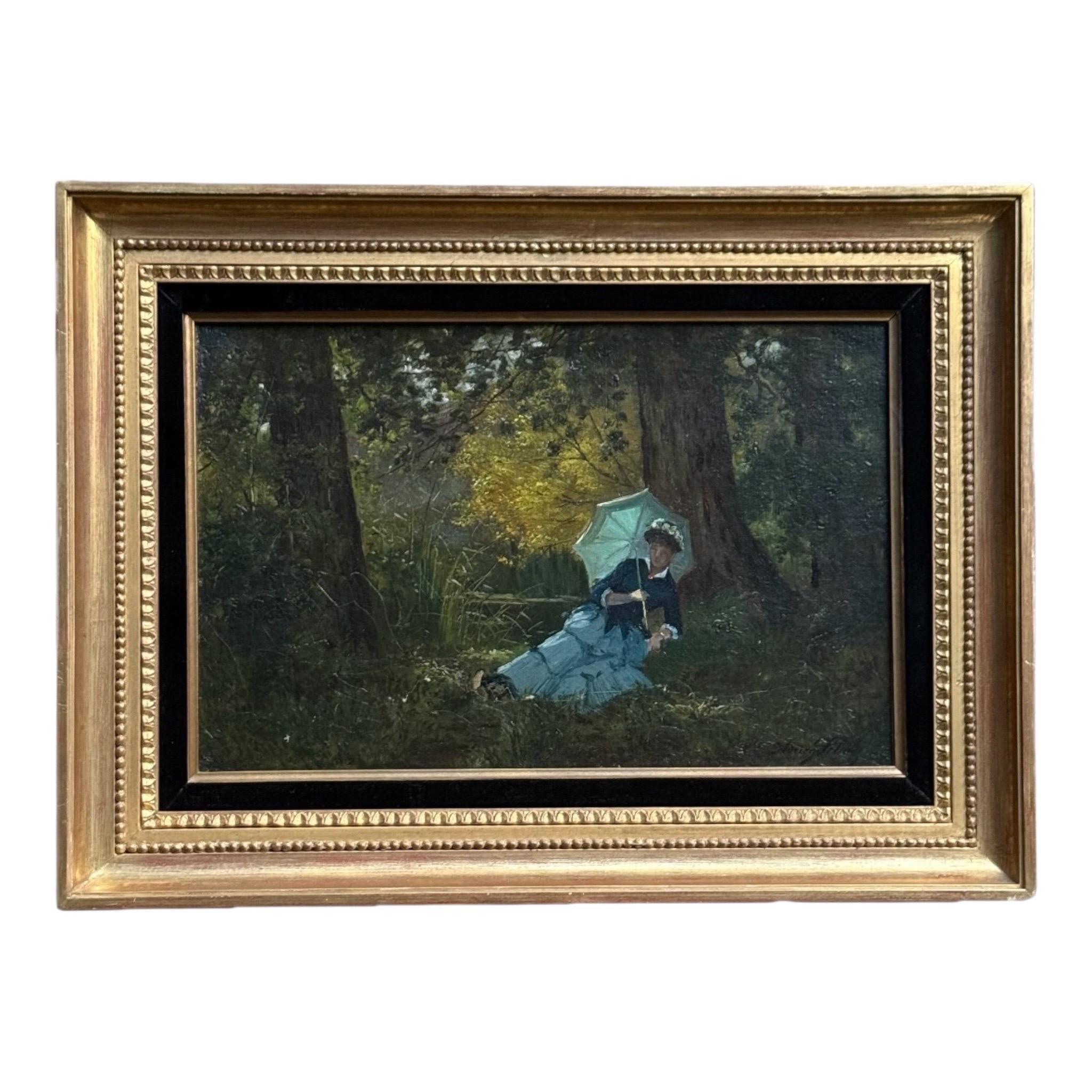
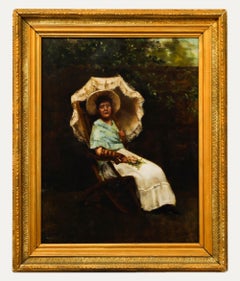
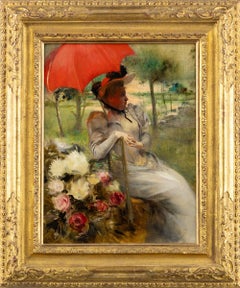
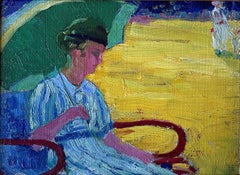
"Under the Parasol", 20th Century Oil on Canvas Attributed to Laureano Barrau

Circa 1925

$10,620.80
£7,848.65
€10,890VAT Included
CA$14,737.95
A$15,005.37
CHF 8,641.74
MX$180,803.12
NOK 100,287.93
SEK 101,184.32
DKK 68,616.71

About the Item

ATTRIBUTED TO LAUREANO BARRAU Spanish, 1863 - 1957 UNDER THE PARASOL unsigned oil on canvas 35-1/2 x 26 inches (90 x 66 cm.) framed: 44-1/4 x 35-1/2 inches (112 x 90 cm.) PROVENANCE Christie´s New York, 1982 Laureano Barrau (Barcelona, ​​1863 - Ibiza, October 21, 1957) was a Spanish painter. Laureà Manuel Innocenci Barrau i Buñol was born into a large bourgeois family. His father was an industrial engineer who had established commercial businesses in England and began his studies at the School of Fine Arts in Barcelona, ​​where he studied with the painter Antonio Caba. Later he moved to Madrid, where he studied the old Spanish masters at the Prado Museum. In August 1884 ―at the age of 20―, the Barcelona City Council granted him the Fortuny pension, a scholarship similar to the Prix de Rome (which was awarded in Paris), which gave him the opportunity to study for three years at the Eternal city to the great Italian masters. He attended several national and international exhibitions, obtaining several awards. With that money, Barrau traveled to Paris, where he entered the Academy of Fine Arts, making himself known as "Lauréane Barrau." His tutor was the painter Jean-León Gerome (1824-1904). In 1885, already in Rome, he began to send his works as a pensioner of the Barcelona City Council. Since 1887 he exhibited regularly in the Parés room in Barcelona, ​​one of the most important Spanish galleries of the moment, and the most prominent in Catalonia. That year 1887 "he surprised everyone with his great painting The Surrender of Gerona, in which the rigid formulas of the history painting are animated with a totally unusual palpitation." In 1888 he obtained a second medal at the International Exhibition of Barcelona and a second prize at the Universal Exhibition of Brussels. In 1891 - at the age of 28 - he received the title of partner of the Salon de la Sociedad Nacional de Bellas Artes de Paris. In 1892 he obtained a third medal at the National Exhibition of Madrid and a second prize at the National Exhibition of 1904). He held solo and group exhibitions in Paris, Barcelona, ​​Madrid, New York and Rome. He traveled through Andalusia, and in Seville he painted several pictures with matters of the tobacco factory, taking sketches that he later finished in Caldes d'Estrac (Caldetas), where he had his home. In 1909 he visited Buenos Aires; and in 1911 he moved his residence to the island of Ibiza.In 1929 he was appointed "society" of the Paris Salons. Around 1930, Barrau and his wife Berta Vallier settled in the Puig de Missa house in the town of Santa Eulalia del Río, where the painter lived until his death. In 1950 he presented his last exhibition at the Sala Busquets (in Barcelona). He died on October 21, 1957 at the age of 94. His work is preserved in the Prado Museum, the Getty Museum (in California), the Museum of Contemporary Art in Madrid, the Museum of Contemporary Art in Barcelona, ​​his house-museum in Santa Eulalia (Ibiza), and other art galleries in Buenos Aires. Aires, Montevideo, Paris and Rio de Janeiro, as well as various national and international private collections - such as at Casa Masó in Girona.
  • Attributed to:
    Laureano Barrau (1863 - 1957, Spanish)
  • Creation Year:
    Circa 1925
  • Dimensions:
    Height: 35.44 in (90 cm)Width: 25.99 in (66 cm)
  • More Editions & Sizes:
    90 x 66 cm.Price: $10,578
  • Medium:
  • Movement & Style:
  • Period:
  • Condition:
  • Gallery Location:
    Madrid, ES
  • Reference Number:
    1stDibs: LU128117956202

More From This Seller

View All
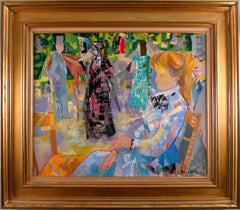
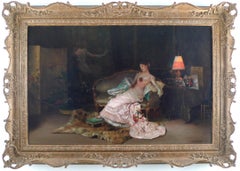
"Espagnoles, 1971", 20th Century Oil on Canvas by Artist Emilio Grau Sala

"Espagnoles, 1971", 20th Century Oil on Canvas by Artist Emilio Grau Sala

By Emilio Grau Sala

Located in Madrid, ES

EMILIO GRAU SALA Spanish, 1911 - 1975 ESPAGNOLES, 1971 signed "Grau Sala" (lower left) signed again, dated and titled "Grau Sala, 1971, espagnoles" (on the reverse) oil on canvas 1...

Category

1970s Post-Impressionist Figurative Paintings

Materials

Canvas, Oil

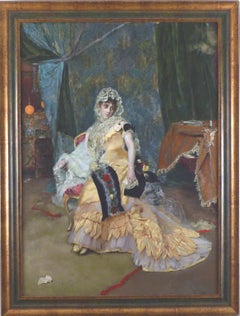
"Lady in yellow", 19th Century oil on panel by Rogelio de Egusquiza y Barrena

"Lady in yellow", 19th Century oil on panel by Rogelio de Egusquiza y Barrena

By Rogelio de Egusquiza y Barrena

Located in Madrid, ES

ROGELIO DE EGUSQUIZA Y BARRENA LADY IN YELLOW signed "R. Egusquiza" (lower right) oil on panel 28-5/8 X 20-3/4 inches (72.5 X 52.7 cm.) framed: 32-5/8 X 24-3/4 inches (82.5 X 62.5 cm.) Rogelio de Egusquiza y Barrena (1845 – 10 February 1915) was a Spanish painter, known for his friendship with the German composer Richard Wagner, whose works he helped make familiar in Spain He was born in El Astillero, into a well-to-do family. He studied in Madrid and with Léon Bonnat at the École des Beaux-Arts in Paris. In 1868, after travelling and participating several times in the National Exhibition of Fine Arts, he returned to Paris and settled there. At first, he painted historical scenes, but later turned to genre scenes and portraits in the Academic style. Following the death of Marià Fortuny, he moved to Rome at the invitation of the Madrazos, Raimundo and Ricardo, taking Fortuny's place at their studio through 1875 and attending classes at the Spanish Academy in Rome. He heard Wagner's music for the first time in 1876, after returning to Paris. Three years later, he travelled to Munich to hear a performance of The Ring of the Nibelungen. His enthusiasm for what he heard led him to go to Bayreuth, where he introduced himself to Wagner and became his friend. In the following years, he and Wagner got together again several times; in Venice (1880), Berlín (1881) and Bayreuth (1882); where he was a guest at the premiere of Parsifal. After his first meeting with Wagner, he decided to devote his career to doing works on Wagnerian themes; mostly portraits of the characters rather than specific scenes. During his visits to Germany, he also created portraits of Arthur Schopenhauer (posthumous) and King Ludwig II...

Category

1880s Realist Interior Paintings
Materials

Oil, Panel

You May Also Like

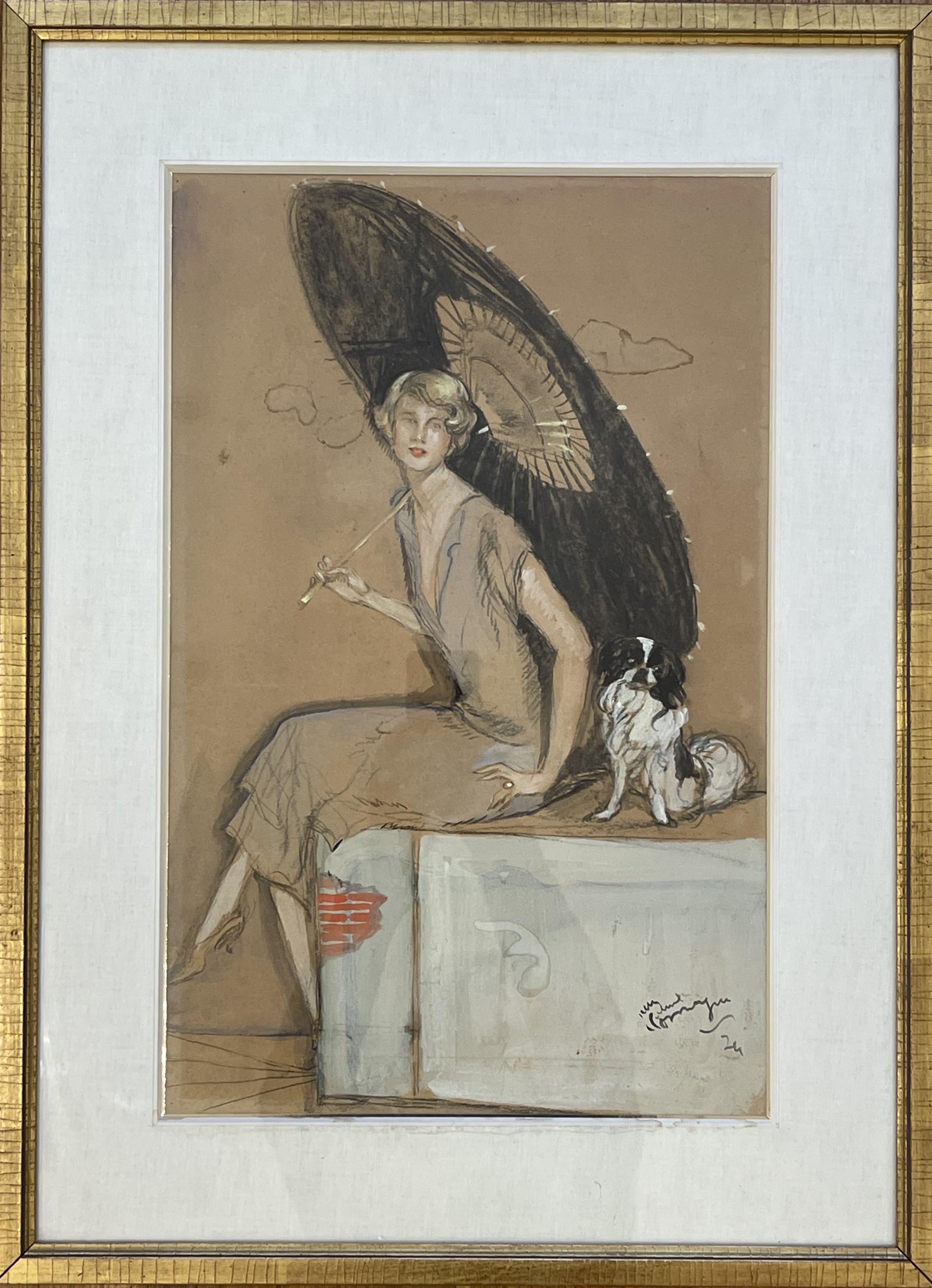
Framed Late 19th Century Oil - Lady Under the Parasol

Framed Late 19th Century Oil - Lady Under the Parasol

Located in Corsham, GB

Fine late 19th-century garden portrait in oil. Presented in a decorative gilt-effect frame. Unsigned. On canvas on stretchers.

Category

Late 19th Century Portrait Paintings

Materials

Oil

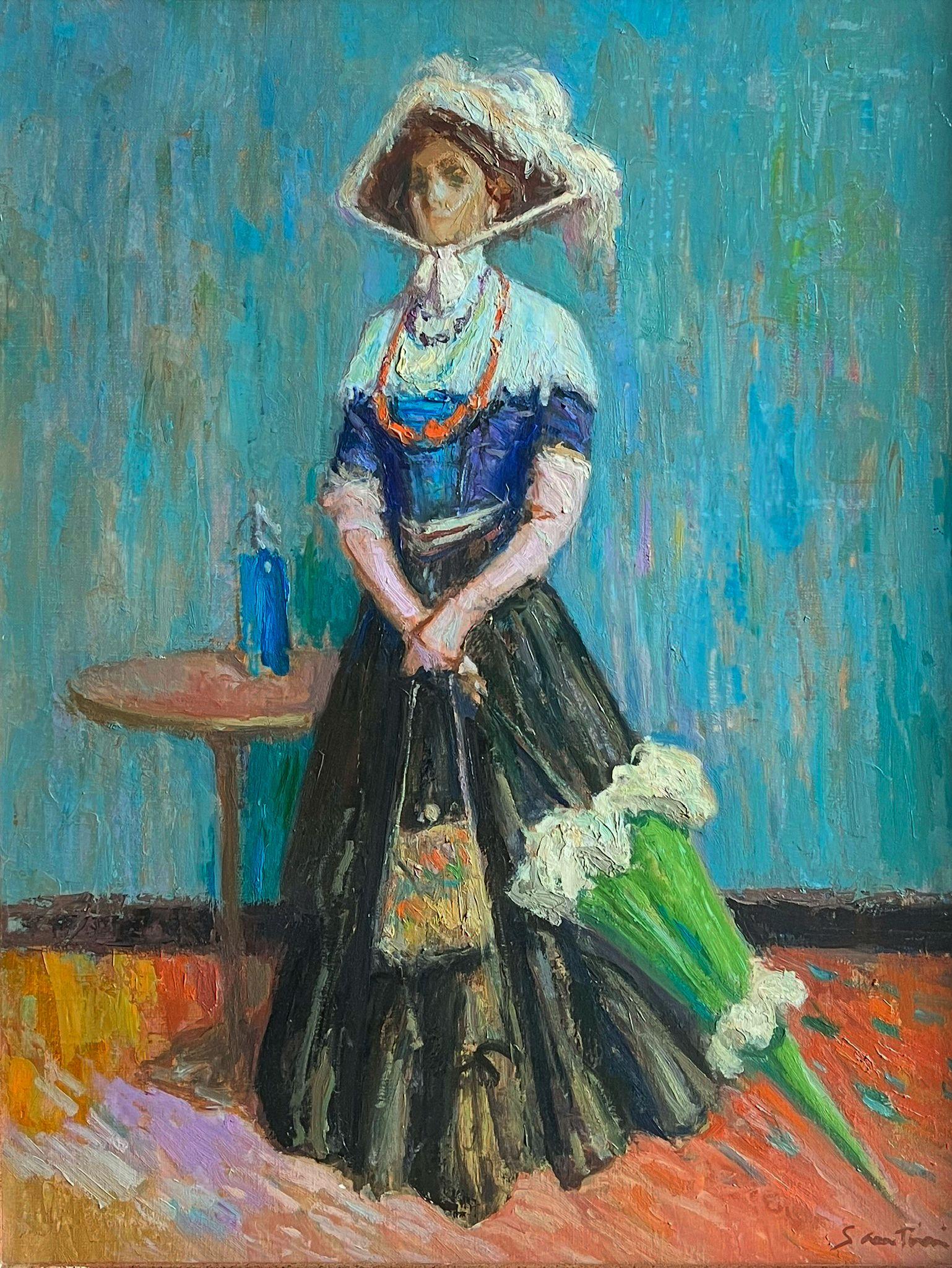
Girl with Parasol

Girl with Parasol

By Johannes van Leeuwen

Located in Southampton, NY

Circa 1990 Signed lower right Overall size with frame 24 x 20 in.

Category

1990s Post-Impressionist Figurative Paintings

Materials

Oil, Board

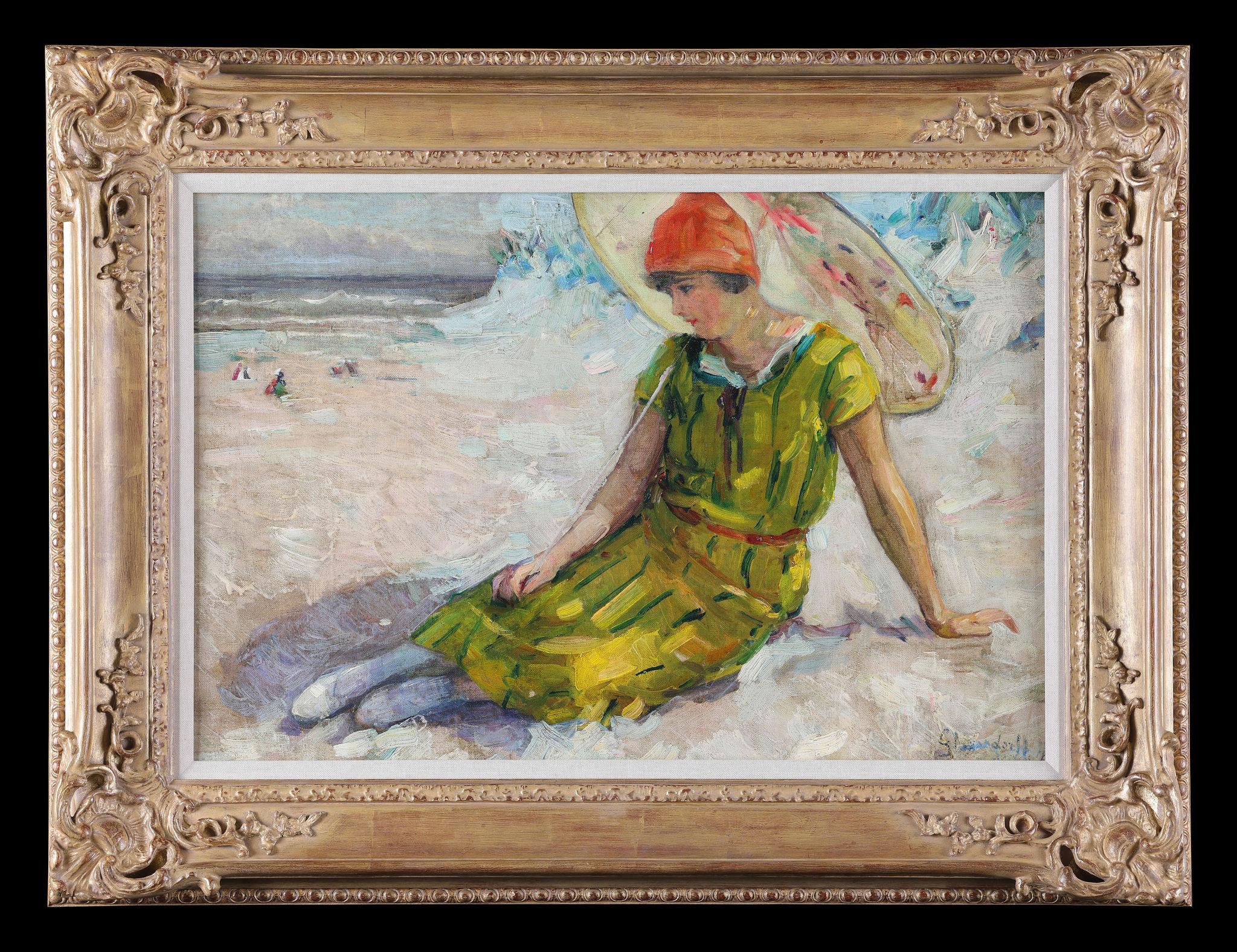
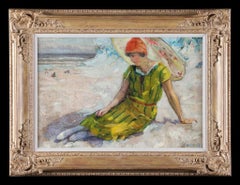
"The Green Parasol, " Henry Hannig, American Impressionist, Woman in Beach Scene

"The Green Parasol, " Henry Hannig, American Impressionist, Woman in Beach Scene

By Henry Hannig

Located in New York, NY

Henry Charles Hannig (1883 - 1948) The Green Parasol Oil on canvas mounted on board 6 x 7 3/4 inches Provenance: R.H. Love Galleries, Chicago, Illinois Private Collection, Lake Orion, Michigan Hannig, born in Hirschberg, Germany on 27 February 1883, came to America with his parents at the age of seven. He attended school in the southwest suburbs before the family settled in Chicago. Young Henry enrolled in the Chicago Academy of Fine Arts where Lawton Parker became his mentor. He made ends meet by working in industrial design and illustration. By 1908 he was a pupil in the School of the Art Institute of Chicago where students followed the traditional European drawing curriculum, beginning with the copying of master engravings and drawing after plaster casts, then concentrating on the nude figure. Students worked toward the goal of winning various academic prizes. One of Hannig's fellow students was Louis Ritman...

Category

1910s American Impressionist Figurative Paintings

Materials

Canvas, Oil, Board