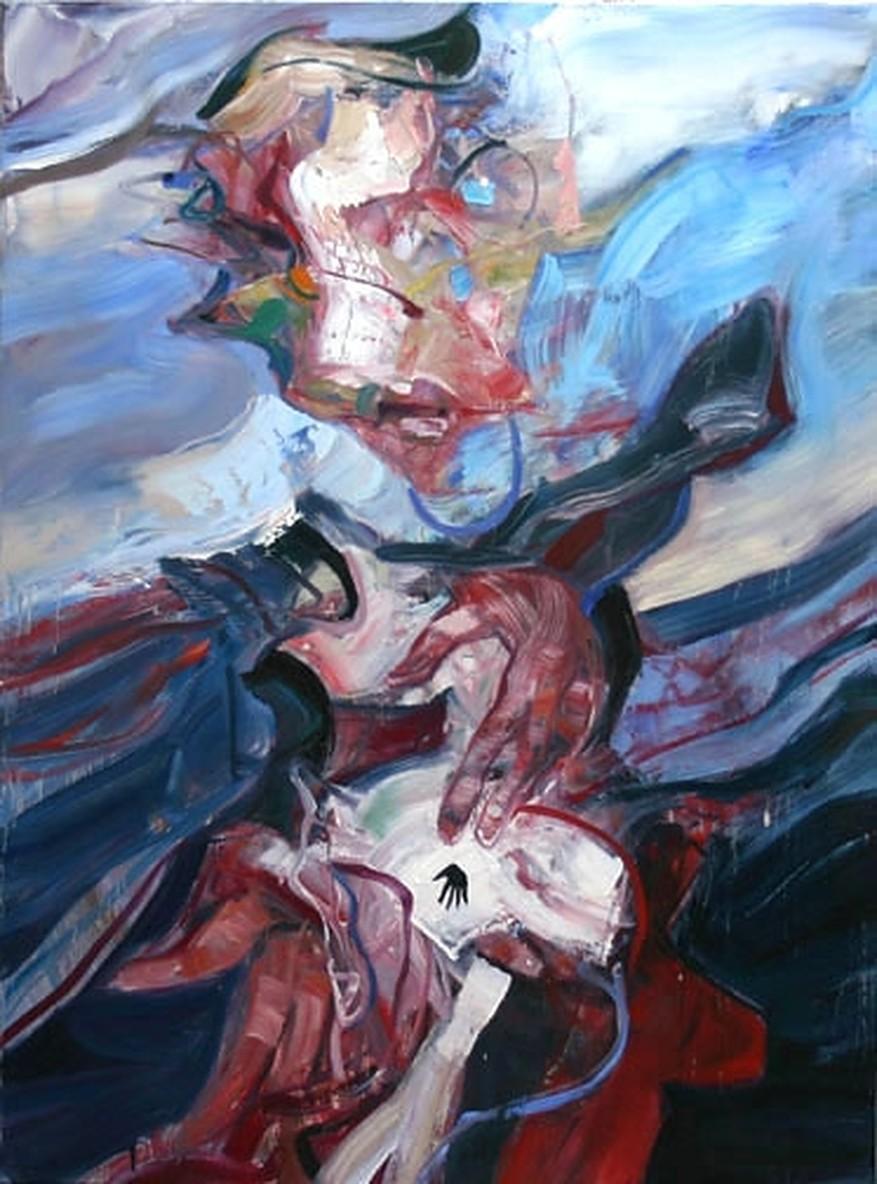
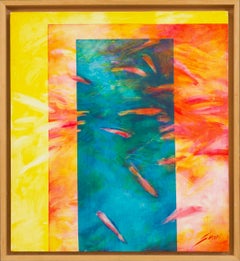
Fish Composition I
By Pep Suari
Located in Austin, TX
Title: "Fish Composition I" Artist: Pep Suari Medium: Acrylic on wood board Size: 15" x 13.5" Framed
Category
21st Century and Contemporary Abstract Paintings
Materials
Acrylic, Wood Panel
Fish Composition I
By Pep Suari
Located in Austin, TX
Title: "Fish Composition I" Artist: Pep Suari Medium: Acrylic on wood board Size: 15" x 13.5" Framed
Acrylic, Wood Panel
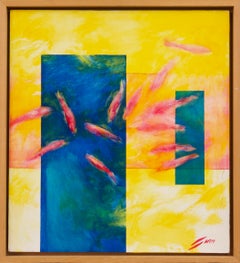
Fish Composition II
By Pep Suari
Located in Austin, TX
Title: "Fish Composition II" Artist: Pep Suari Medium: Acrylic on wood board Size: 15" x 13.5" Framed
Acrylic, Wood Panel
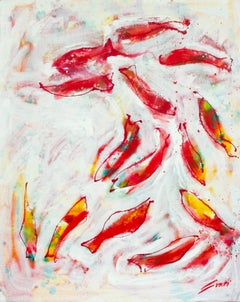
White Water Red Fish
By Pep Suari
Located in Austin, TX
Title: "White Water Red Fish" Artist: Pep Suari Medium: Acrylic paint on canvas Size: 32" x 25.5"
Canvas, Acrylic
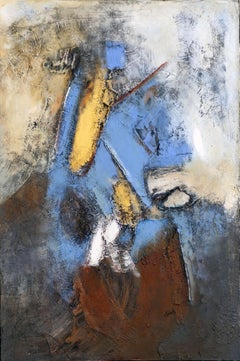
Medieval
By Estela Aguirre
Located in Austin, TX
By Estela Aguire 36" x 24" Mixed media on linen Unframed About the Artist: Estela Aguirre is an abstract artist from Saltillo, Mexico. She began painting while getting her masters ...
Linen, Mixed Media
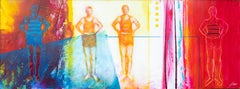
"Swimmers" Vibrant Expressionist Figurative Scene
By Pep Suari
Located in Austin, TX
Pep Suari 14.75" x 40" Acrylic on Board
Acrylic, Board
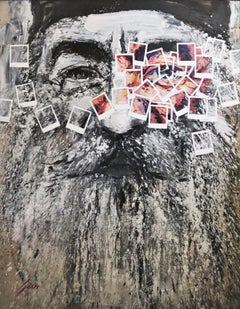
Greek Monk
By Pep Suari
Located in Austin, TX
Pep Suari (Spanish) Title: "Greek Monk" Medium: Mixed Media on Canvas Markings: Signed LL "Suari" Dimensions: 58 3/8 in. x 45 5/8 in. f Framed
Canvas, Oil, Acrylic
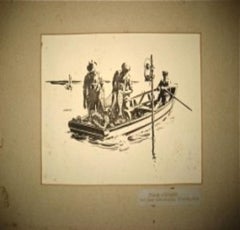
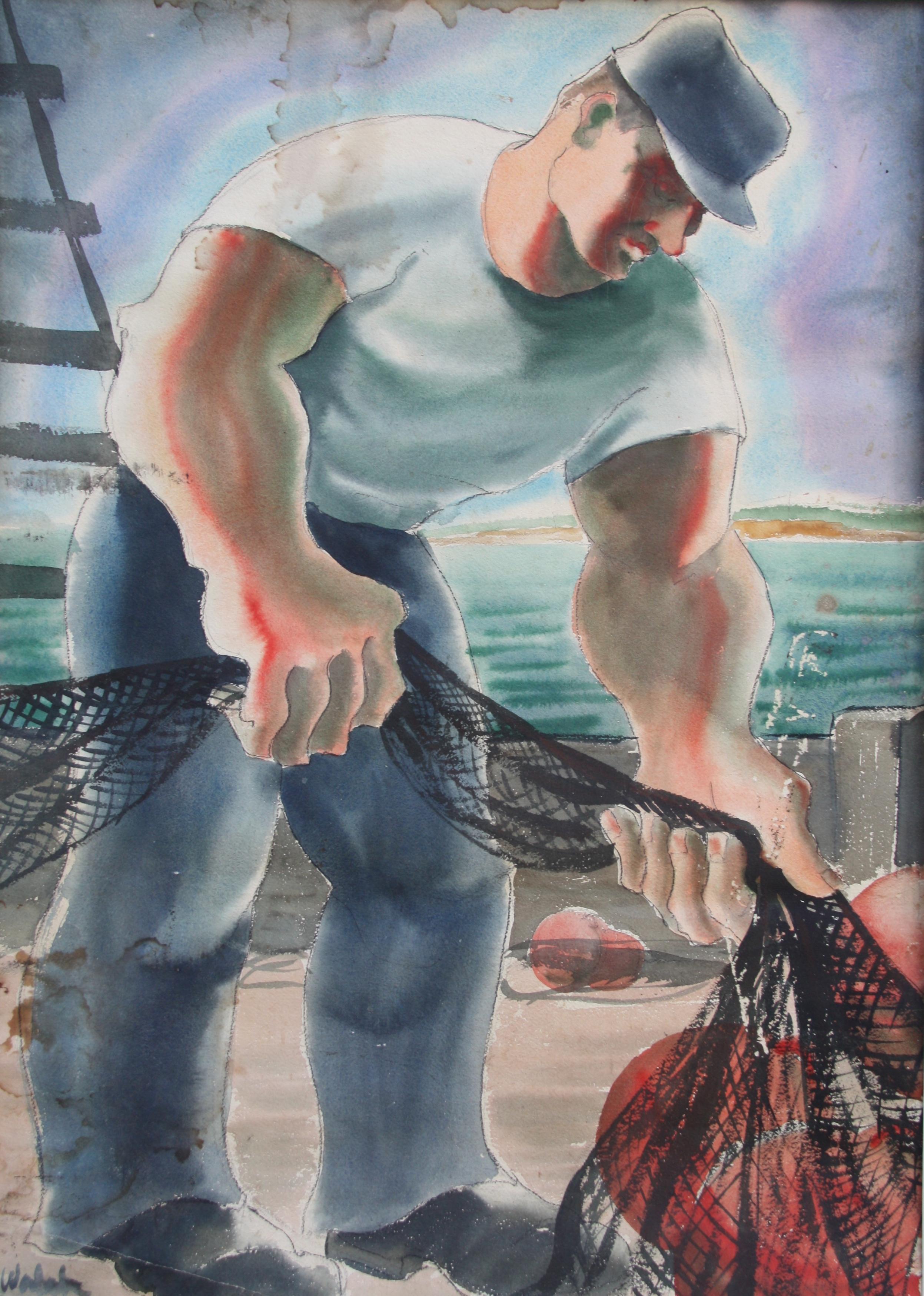
Fisherman
Located in Fort Washington, PA
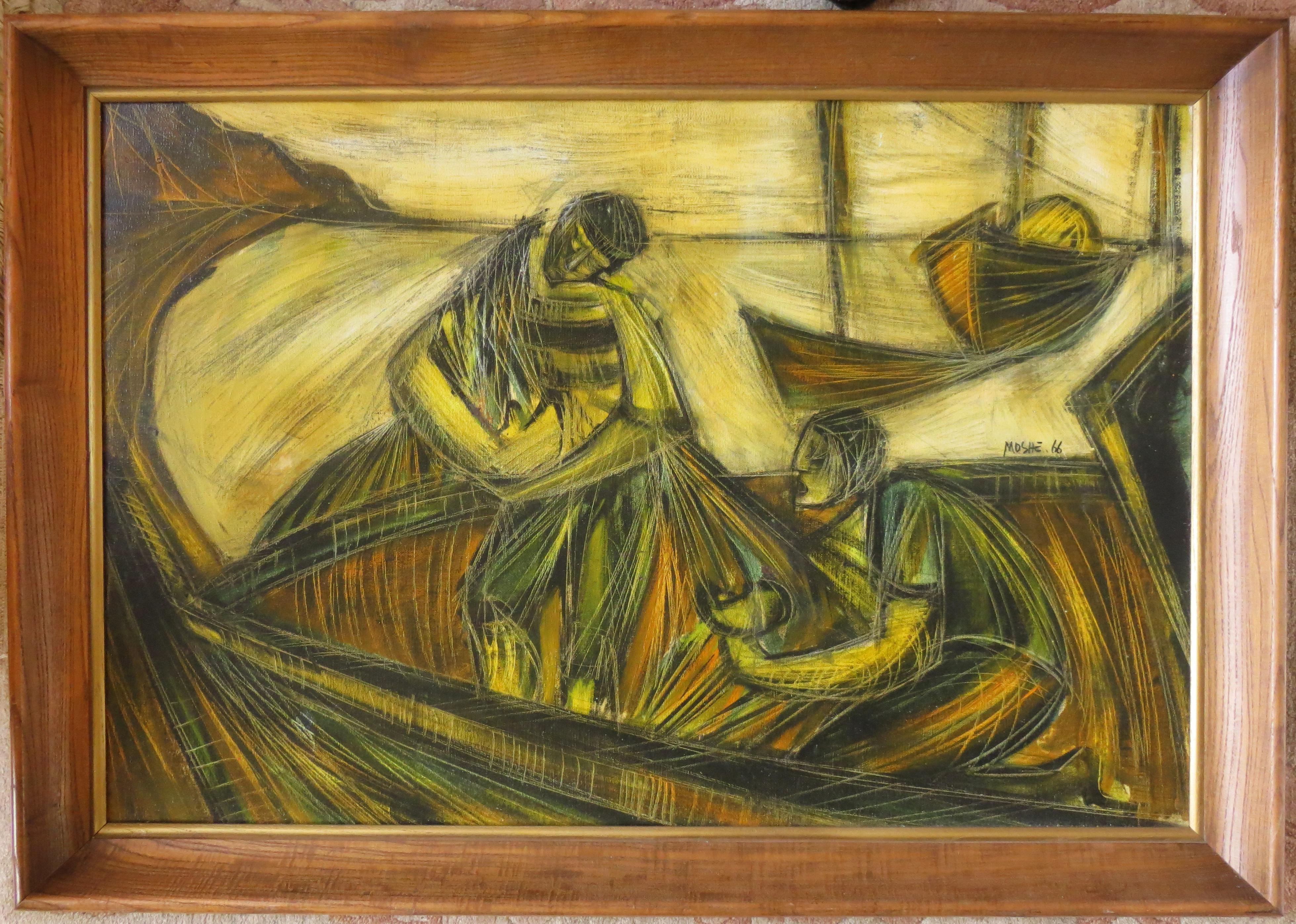
Fisherman on boat
Ink
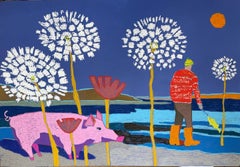
The Fisherman Beyond Time
Located in Zofingen, AG
Surreal Icelandic black beach oil pastel drawing with hybrid pig horse animal Oil pastel drawing on paper One of a kind artwork Size: 100 × 70 × 0,1 cm It is original hand drawing ...
Archival Paper, Oil Pastel
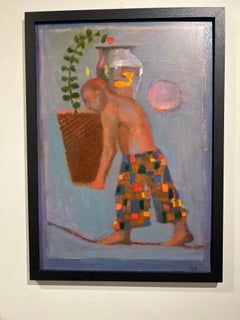
Man with a Fish
By Greg Decker
Located in Atlanta, GA
"Greg Decker is a visionary painter. His work epitomizes the passion that comes from a deep love of art, poetry, and music. His paintings show how art is both the consolation for, ...
Metal
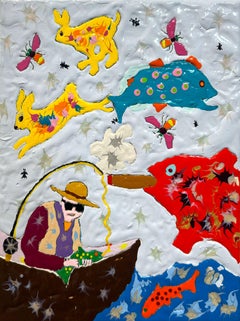
Catch and Release
By Joe Fay
Located in Bozeman, MT
In 1993, a window of opportunity opened as a result of several different situations that were occurring. I was participating in an Artist-in-Residence program in Yellowstone National Park. At the same time, I had recently been asked to show my artwork in nearby Livingston, Montana. All of these events resulted in a major lifestyle change. My love of the outdoors and of fly-fishing drew me to make the transition. So here I am. I live in a small town nestled in the Rocky Mountains where life is the opposite of what it was in Los Angeles. - Joe Fay
Acrylic
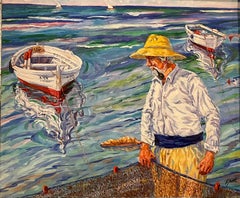
PESCADOR
By AVEL 2
Located in Barcelona, CT
The painting is being offered with a work and authenticity certificate
Canvas, Oil
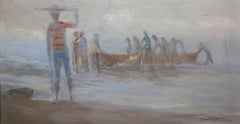
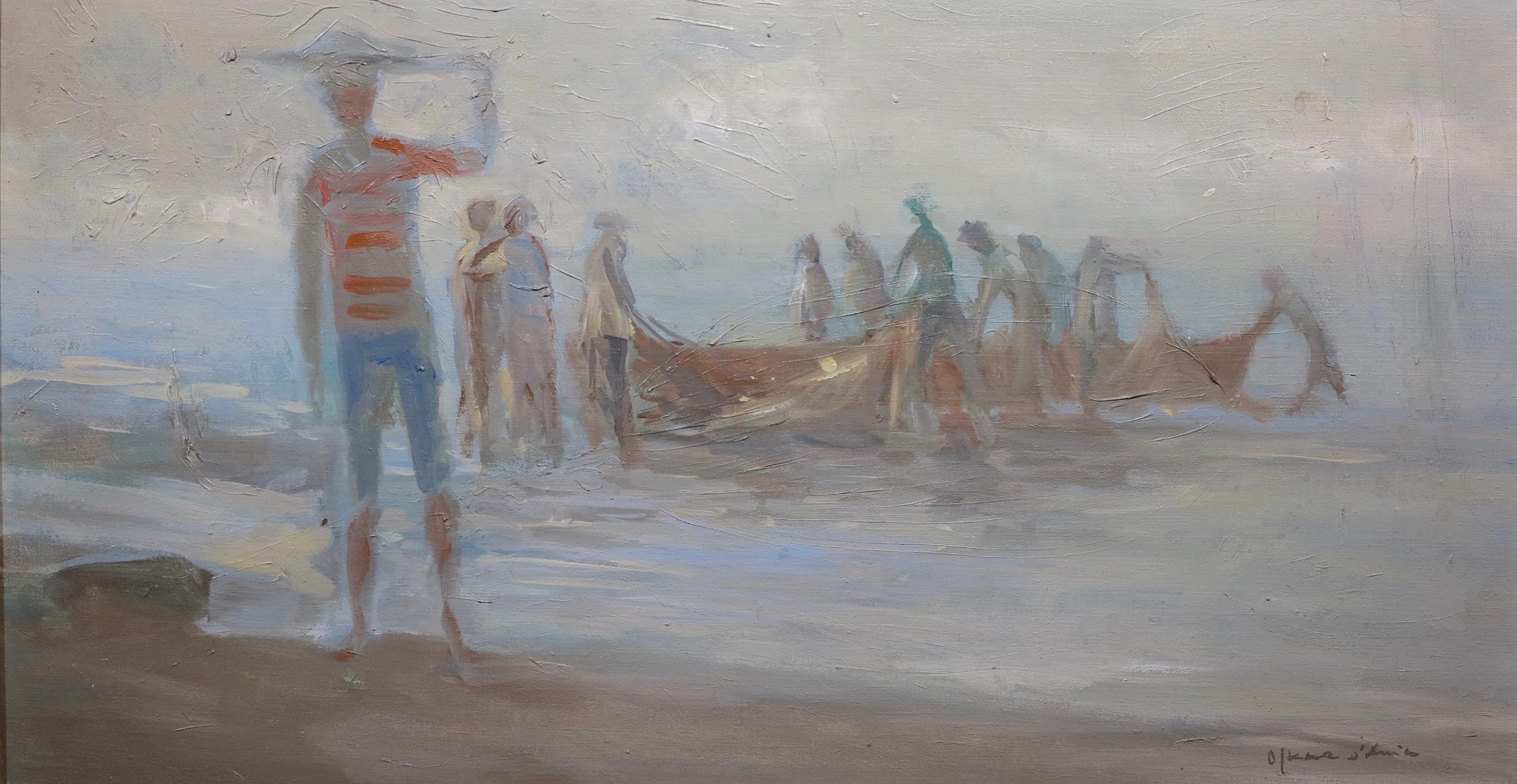
Fisherman at Dusk
By Oskar D'Amico
Located in Wilton Manors, FL
Oskar D'Amico (1923-2003). Fisherman at Dusk, c.1960. Oil on linen canvas, 16 x 30 inches; 18 x 32 inches (frame). Signed lower right. Excellent condition with no damage or conservation. Biography: Oskar Maria D'Amico (February 22, 1923 – May 3, 2003) was an active Italian artist in Rome, Naples, Lanciano, Cisterna, Milan, Gallarate, Torino, Zagabria, Paris, Toulouse, Melun, Carenac, Maubeuge, Madrid, Barcelona, Zaragoza, Budapest, Győr, Mexico City, Cuernavaca, Morelia, Toronto, New York City, Philadelphia, Los Angeles, San Francisco, Miami, Denver, Santa Fe, Albuquerque and Socorro, between 1943 and 2003. He is considered a Nomad artist because of his ability to work in various styles. He had three major periods in his artistic life: Figurative, Materic and Geometric. [1]He also was an outstanding art director for more than 75 epic movies. D'Amico had a very outgoing personality. He was a non-conformist, which was reflected in his work throughout his life. D'Amico was born in CastelFrentano, Italy, a small village in Abruzzo. At a young age, he felt he had to leave and dive into the big world. After being a seminarist with the Salesiani during World War II, he left Naples, where he studied architecture, and began a great adventure in Rome. He specialized at the time in decorating nightclubs and bars, and invented a special type of double ceiling to hide the lights. D'Amico, who was self-taught as a teenager in drawing and painting, burst onto the filmmaking scene in Rome when an art director asked him to do a perspective of a set design. Soon other moviemakers were calling him.[2] D'Amico was an art director on 75 films including two by Orson Welles. D’Amico was able to create a real marble floor in the set of the palace of the King Saul, in "David and Goliath" directed by Orson Welles. Art directors previously painted a simulated marble on top of concrete due to the cost of the real thing. D'Amico became an associate of Jadran Films in ex-Yugoslavia, which specialized in Roman and Egyptian constructions. While an art director, he never stopped painting. His faceless clowns, reflecting the people who had no identity after World War II, were a big success. In the early 1960s, D'Amico moved with his family to Toronto, Canada, another place he felt was too small. He left for Philadelphia and New York City, which affected his work. He turned his focus to abstract, and for more than a decade created abstract Expressionist paintings "on the plane of all matter" that he called "Materic". The Materic style, which he invented, was done in several media and could not be changed once on the canvas. The paintings were very well received. D’Amico sold more than 400 in Philadelphia and New York City. Unfortunately he had to stop doing the Materics because the colors he used were harmful to his liver. In the mid 1970s, he returned to his architectural roots and developed a new vision for Abstract Constructivism using just acrylic colors. Presented in Paris by his French Art dealer, Francoise Tournier, at the Grand Palais de Paris, and in Mexico City, D'Amico's interpretation of the "New Geometry" was widely admired. In 1983, when he presented the work at the Bodley Gallery, people whispered that he had the potential to be the new Picasso because of his eclecticism and the Nomad nature of his styles. In 1987, D'Amico abandoned the gypsy life and settled in New Mexico. Albuquerque was the perfect place to dedicate himself 100 percent to his work.[3] There were no distractions and a good climate that reminded him of his beloved Cuernavaca in Mexico. Staying in close contact with his French art dealer Tournier, D’Amico had several shows in Denver at the Helen Karsh Gallery and in Albuquerque at the Black Swan and Café Galleries. At least once a year, D’Amico went to Europe to immerse himself in the antique world and visit museums and galleries. In 1992, visiting Tournier at the Castle of Saint Cirq Lapopie, he met the man who founded the MADI movement in 1940, Carmelo Arden Quin...
Canvas, Oil