Want more images or videos?
Request additional images or videos from the seller
1 of 9

Unknown
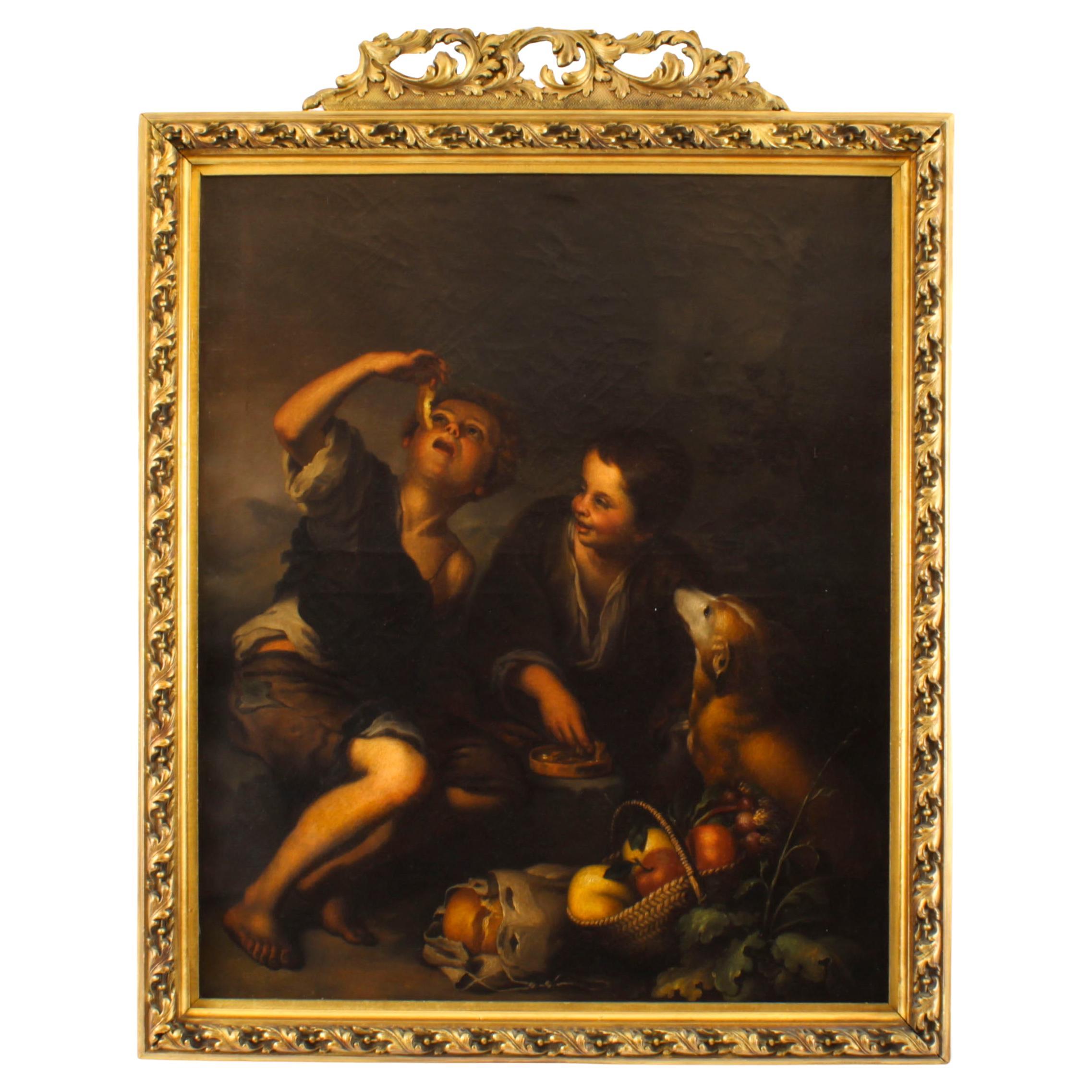
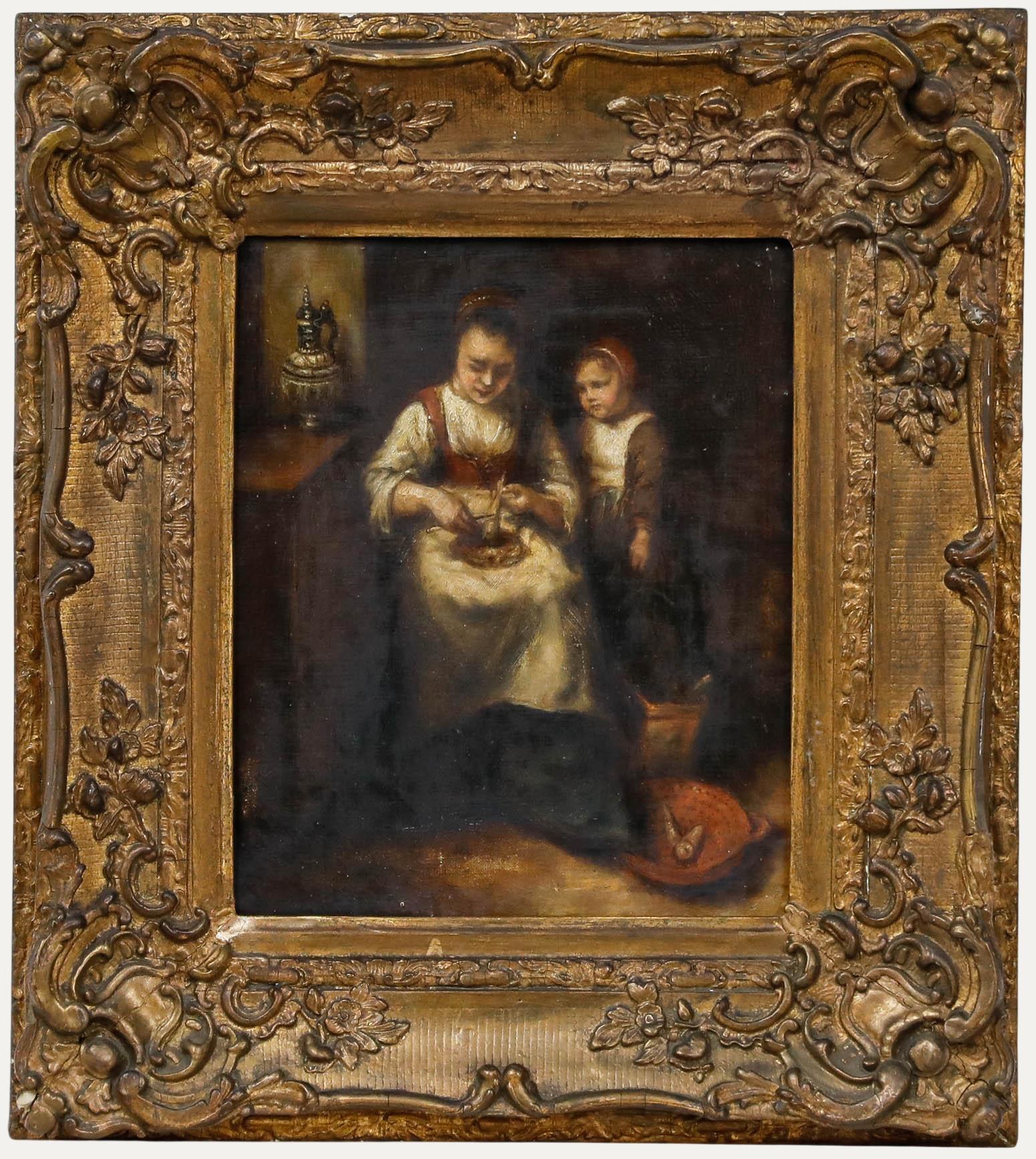
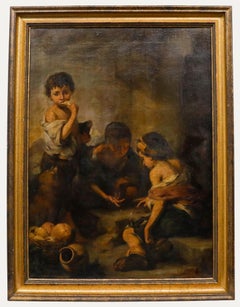
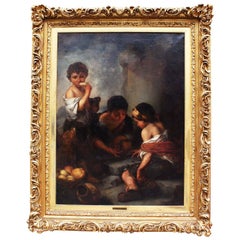
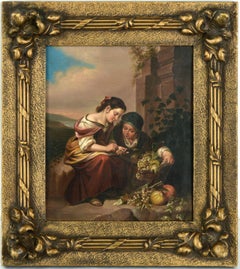
After Bartolome Esteban Murillo (1618-1682) - Oil, Urchin Mocking an Old Woman

Late 19th Century

$1,250
£941.38
€1,099.93
CA$1,771.04
A$1,778.90
CHF 1,031.46
MX$21,704.49
NOK 11,936.93
SEK 12,247.91
DKK 8,222.47

About the Item

A fine copy after a section of Bartolomé Esteban Murillo's *An Urchin Mocking an Old Woman Eating Migas*, which is held by Dyrham Park in Gloucestershire. In the original, a young boy points and laughs at the woman. Murillo frequently painted the poverty he saw in his native Seville. Here, he raises questions about the relationship between poverty and dignity. Well presented in an ornate gilt-effect frame. Unsigned. On canvas laid to board. Image size: 59.5 x 49.5cm.
  • Creation Year:
    Late 19th Century
  • Dimensions:
    Height: 30.71 in (78 cm)Width: 26.78 in (68 cm)
  • Medium:
  • Period:
  • Condition:
    The condition is typical for a picture of this age, including some discolouration and craquelure. Areas of overpainting.
  • Gallery Location:
    Corsham, GB
  • Reference Number:
    Seller: sp3191stDibs: LU881317248142

More From This Seller

View All
After Bartolome Esteban Murillo (1618-1682) - Oil, The Little Fruitseller

After Bartolome Esteban Murillo (1618-1682) - Oil, The Little Fruitseller

Located in Corsham, GB

A charming copy after Spanish artist Bartolome Esteban Murillo (1618-1682), the original of which is held by the Alte Pinakothek in Munich. Although Murillo is best known for his rel...

Category

19th Century Figurative Paintings

Materials

Oil

After Bartolome Esteban Murillo (1618-1682) - Oil, The Little Fruit Seller

After Bartolome Esteban Murillo (1618-1682) - Oil, The Little Fruit Seller

Located in Corsham, GB

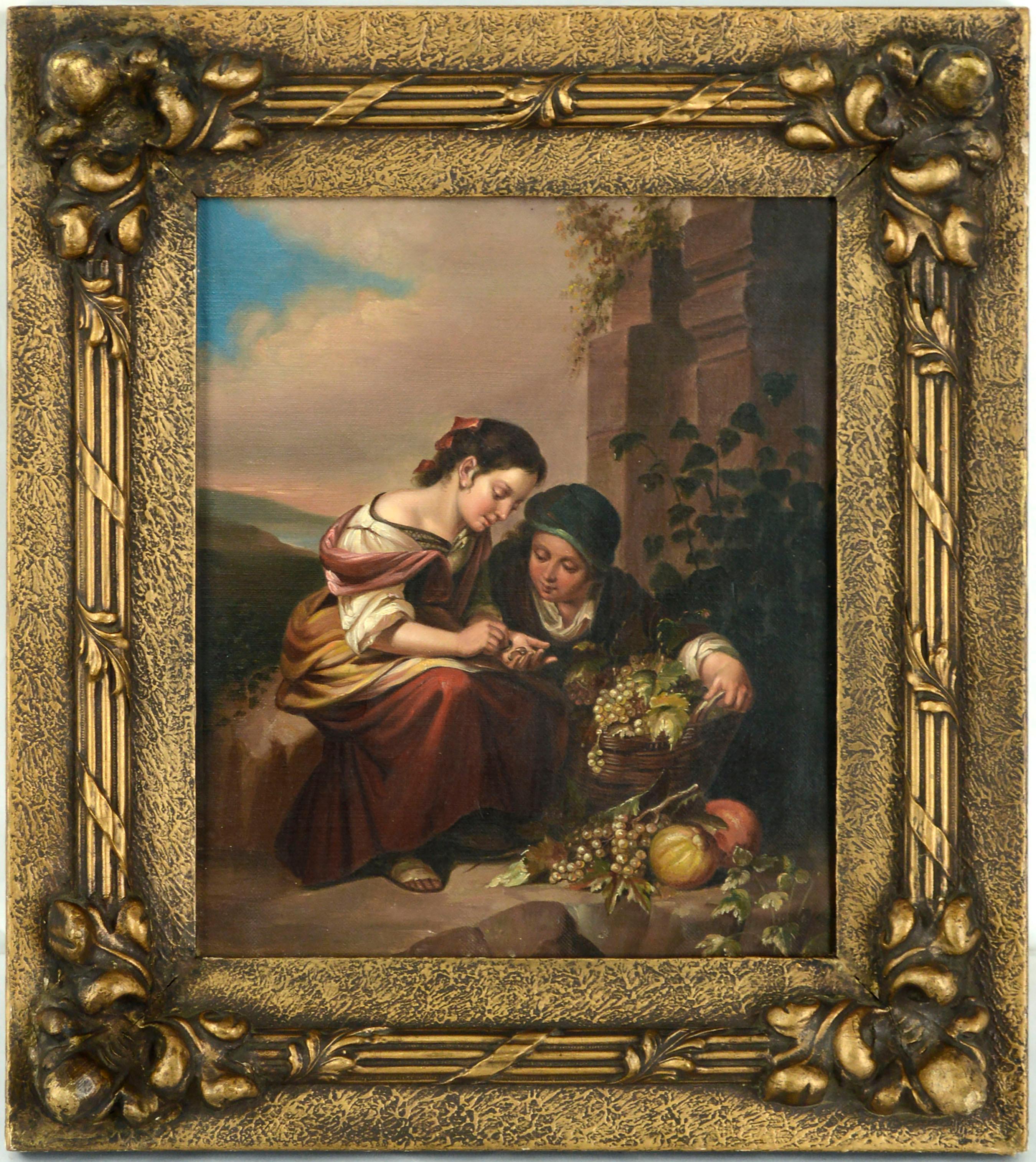
A fine copy after Bartolomé Esteban Murillo's (1618-1682) *The Little Fruit Seller*, which is held in the Alte Pinakothek in Munich. Murillo frequently painted the poverty he saw in ...

Category

19th Century Figurative Paintings

Materials

Oil

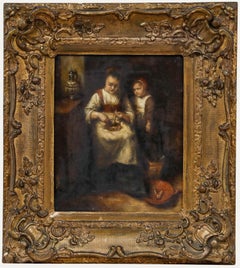
After L. Boilly (1761-1845) - 19th Century Oil, Old Woman Taking Snuff

After L. Boilly (1761-1845) - 19th Century Oil, Old Woman Taking Snuff

Located in Corsham, GB

A characterful portrait of an elderly woman taking snuff, after an engraving by the French painter and draughtsman Louis-Léopold Boilly (1761-1845) titled 'The Contrast'. In Boilly's...

Category

19th Century Portrait Paintings

Materials

Oil

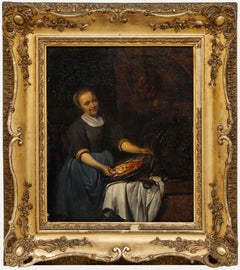
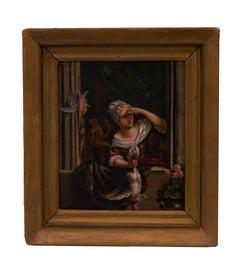
After Gabriel Metsu (1629-1667) - Framed 19th Century Oil, The Cook

After Gabriel Metsu (1629-1667) - Framed 19th Century Oil, The Cook

Located in Corsham, GB

A woman holds a plate of fish and turns to smile at the viewer in this genre scene after Dutch painter Gabriel Metsu (1629-1667). The original is held by the Thyssen-Bornemisza Museu...

Category

19th Century Figurative Paintings

Materials

Oil

You May Also Like

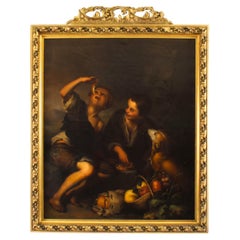
Antique Painting Grape and Melon Eaters After Bartolome' Murillo 18th Century

Antique Painting Grape and Melon Eaters After Bartolome' Murillo 18th Century

By Bartolomé Esteban Murillo

Located in London, GB

This is a delightful antique Spanish oil on canvas painting after Bartolome' Esteban Murillo, depicting two peasant boys eating grapes and melon, Circa 1780 in date.  It features a ...

Category

Antique Late 18th Century Spanish Baroque Paintings

Materials

Canvas

Large Oil on Canvas "Beggar Boys Playing Dice" After Bartolomé Esteban Murrillo

Large Oil on Canvas "Beggar Boys Playing Dice" After Bartolomé Esteban Murrillo

By Bartolomé Esteban Murillo

Located in Los Angeles, CA

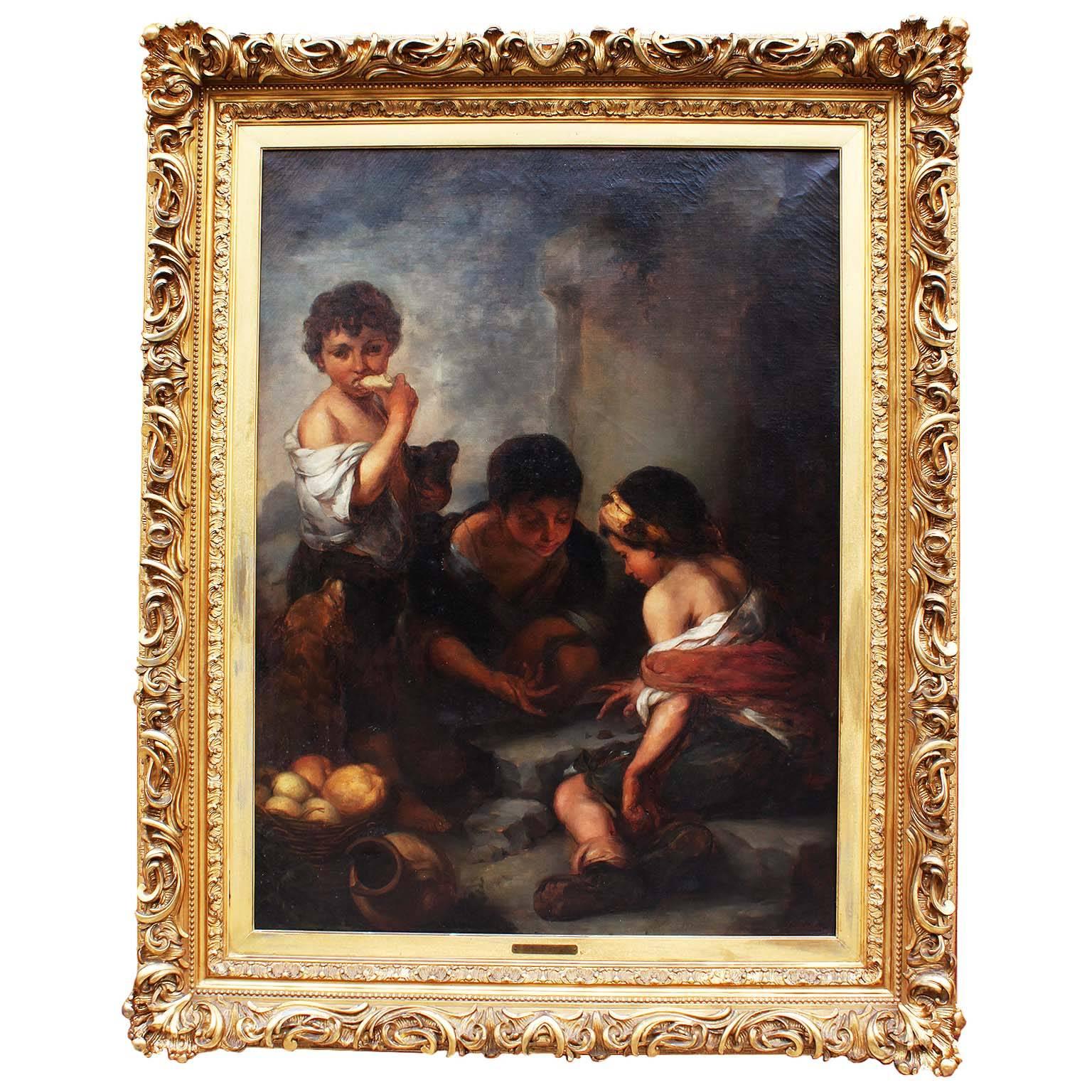
A fine and large 19th century oil on canvas after Bartolomé Esteban Murrillo's (Spanish, 1617-1682) Masterpiece "Beggar Boys Playing Dice" (The original work by Murillo was painted in 1675). The impressive artwork depicts two young boys playing dice while another eats a piece of fruit as his dog watches on., within an ornate gildwood and gesso frame bearing a label from the faming company Bigelow & Jordan. The original work by Murillo is currently at the Alte Pinakothek Museum in Munich, Germany. The present work is signed: L. Rüber. Circa: Munich, Late 19th Century. Bartolomé Esteban Murillo (born late December 1617, baptized January 1, 1618 – April 3, 1682) was a Spanish Baroque painter. Although he is best known for his religious works, Murillo also produced a considerable number of paintings of contemporary women and children. These lively, realist portraits of flower girls, street urchins, and beggars constitute an extensive and appealing record of the everyday life of his times. Murillo was born to Gaspar Esteban and María Pérez Murillo. He may have been born in Seville or in Pilas, a smaller Andalusian town. It is clear that he was baptized in Seville in 1618, the youngest son in a family of fourteen. His father was a barber and surgeon. His parents died when Murillo was still very young, and the artist was largely brought up by his aunt and uncle. Murillo began his art studies under Juan del Castillo in Seville. There he became familiar with Flemish painting and the "Treatise on Sacred Images" of Molanus (Ian van der Meulen or Molano). The great commercial importance of Seville at the time ensured that he was subject to influences from other regions. His first works were influenced by Zurbarán, Jusepe de Ribera and Alonzo Cano, and he shared their strongly realist approach. As his painting developed, his more important works evolved towards the polished style that suited the bourgeois and aristocratic tastes of the time, demonstrated especially in his Roman Catholic religious works. In 1642, at the age of 26, he moved to Madrid, where he most likely became familiar with the work of Velázquez, and would have seen the work of Venetian and Flemish masters in the royal collections; the rich colors and softly modeled forms of his subsequent work suggest these influences. In 1645 he returned to Seville and married Beatriz Cabrera y Villalobos, with whom he eventually had eleven children. In that year, he painted eleven canvases for the convent of St. Francisco el Grande in Seville. These works depicting the miracles of Franciscan saints vary between the Zurbaránesque tenebrism of the Ecstasy of St Francis and a softly luminous style (as in Death of St Clare...

Category

Antique Late 19th Century German Baroque Paintings

Materials

Gesso, Canvas, Wood

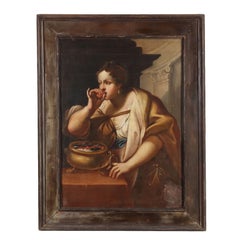
The Suicide of Portia, 18th-Century Oil Painting, Framed, Restored

The Suicide of Portia, 18th-Century Oil Painting, Framed, Restored

Located in Milan, IT

Oil on Canvas. The woman depicted in the scene can be traced back to Portia, the Roman noblewoman who was the wife of Brutus and thus lived in the first century BCE: according to le...

Category

18th Century Other Art Style Figurative Paintings

Materials

Oil

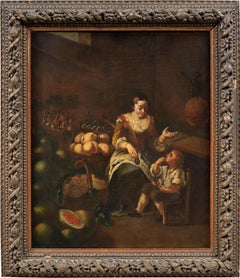
Antique Italian painter - 18th century figure painting - The fruit seller

Antique Italian painter - 18th century figure painting - The fruit seller

Located in Varmo, IT

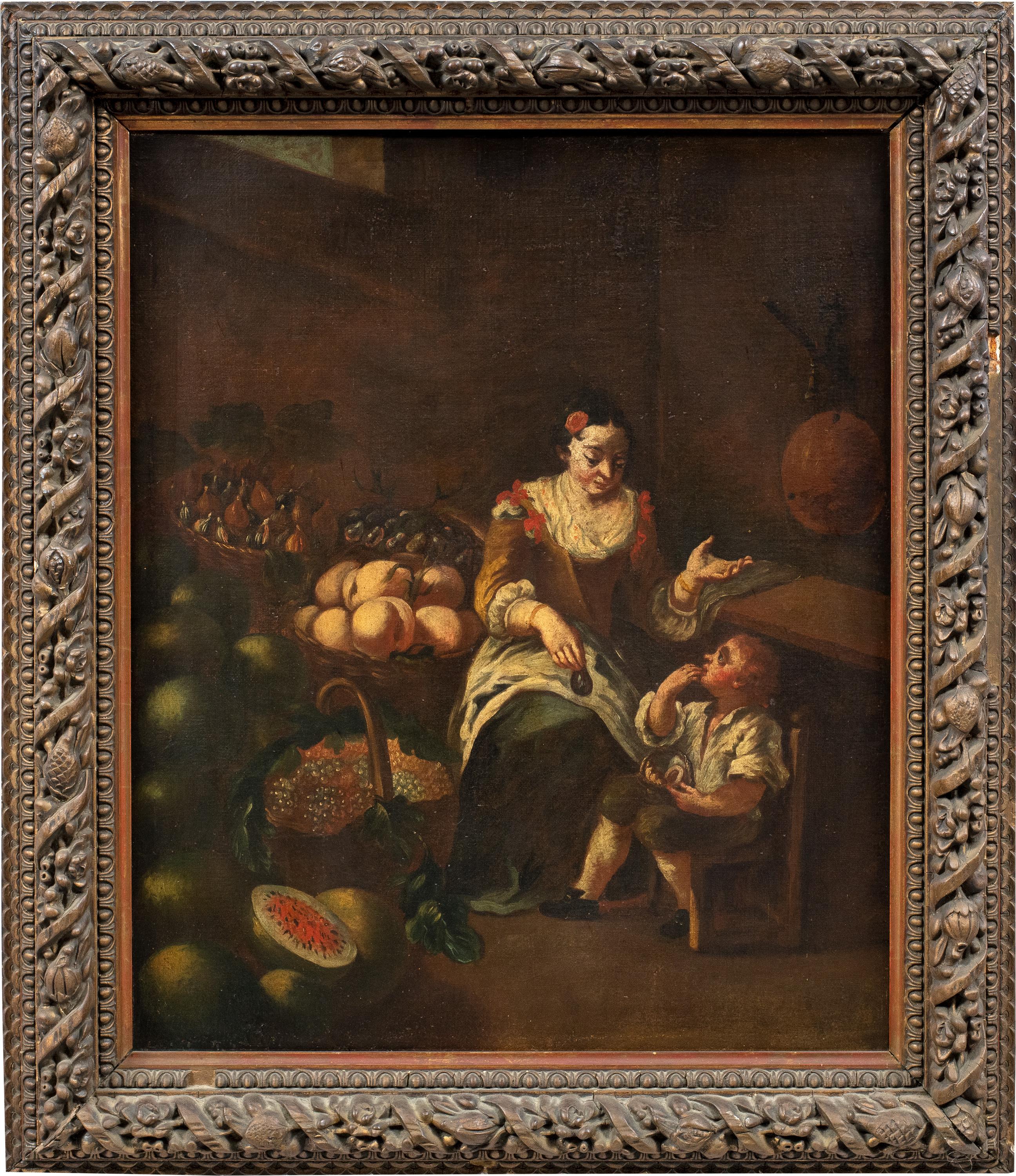
Italian painter (18th century) - The Fruit Seller. 70.5 x 58.5 cm (without frame) - 88.5 x 75.5 cm (with frame). Oil on canvas, in a carved wood frame (not signed). The painting d...

Category

Early 18th Century Rococo Figurative Paintings

Materials

Canvas, Oil