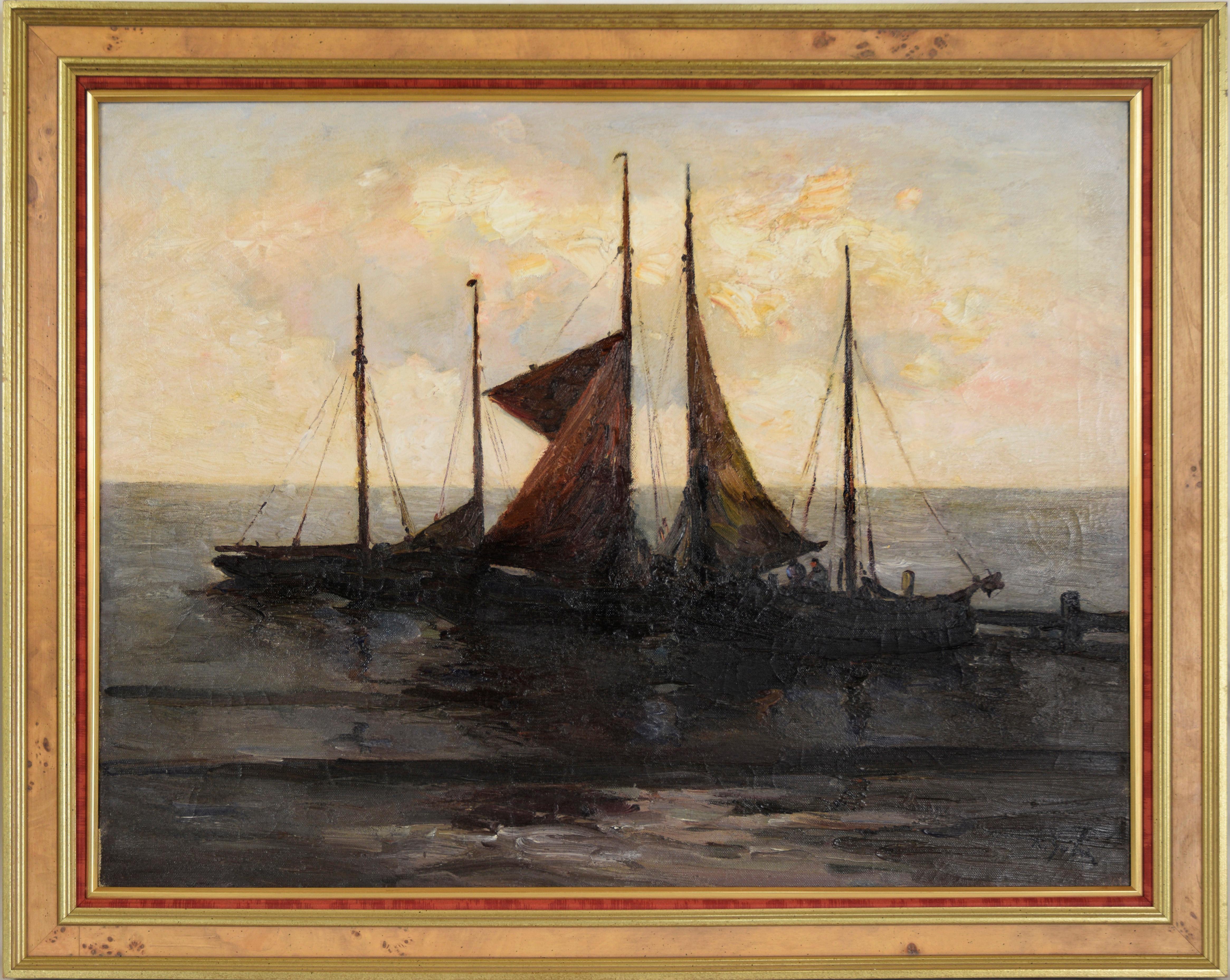
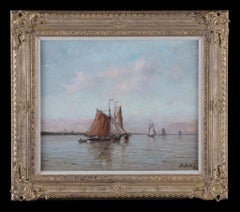
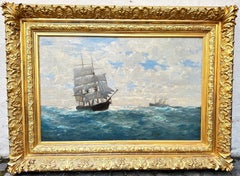
A beautiful oil on canvas by the Dutch painter, born in Amsterdam, Bernard Van Beek.
An artist who had not attended any academy. He belonged to the Kortenhoef School, which in turn was part of the Hague School and therefore part of the Barbizon School tradition.
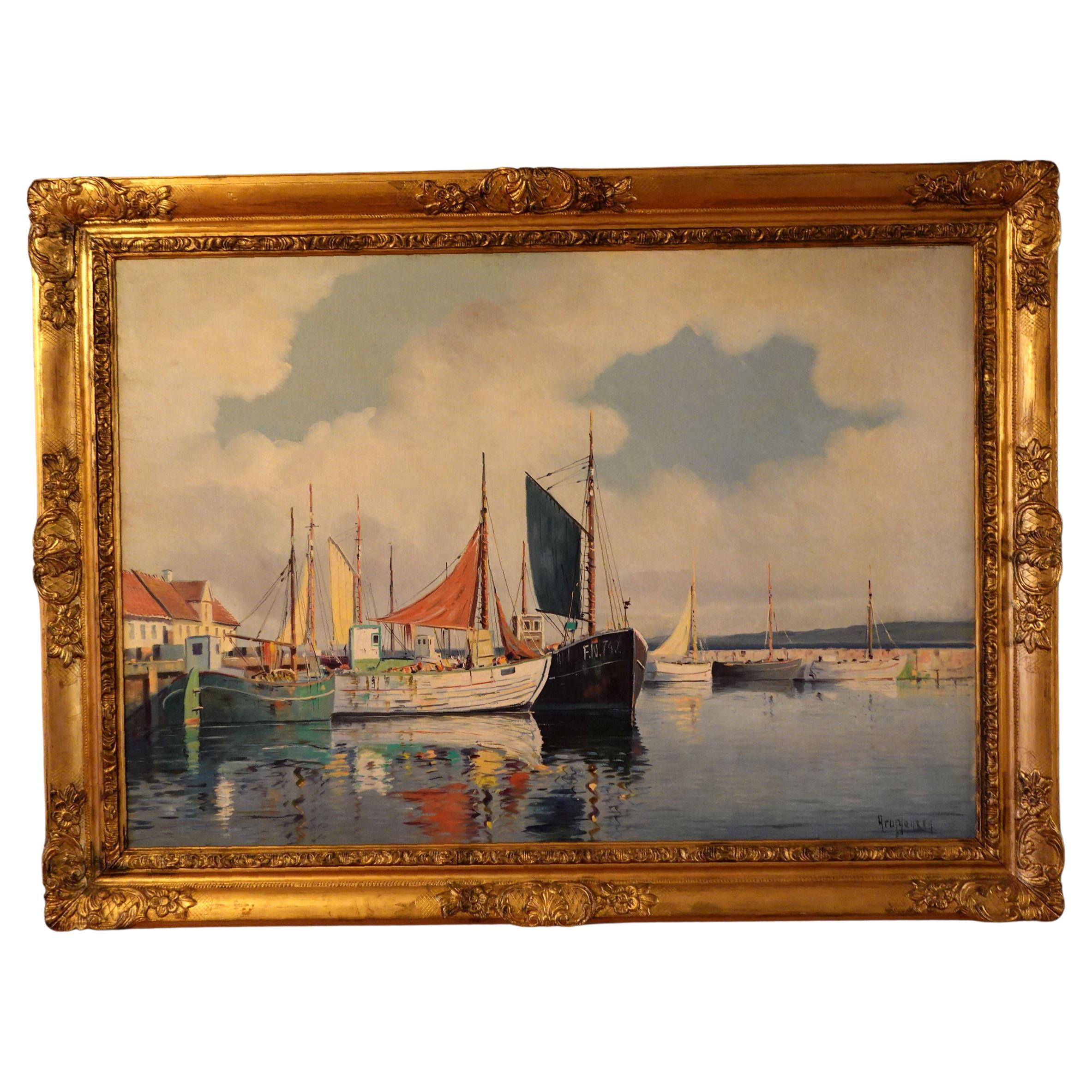
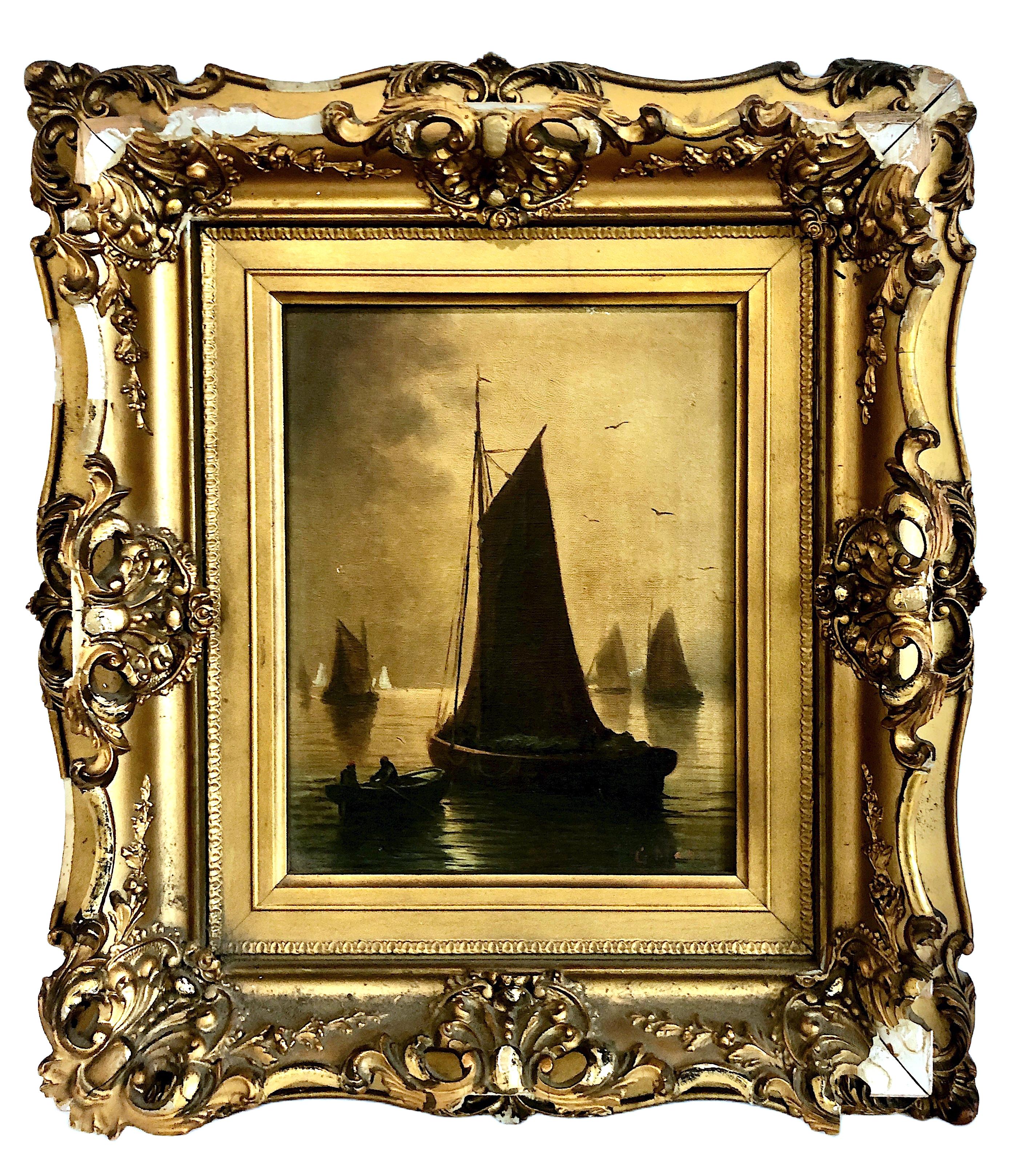
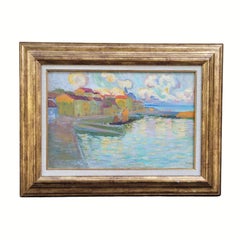
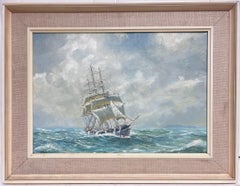
The work in question presents a maritime scene with several ships, including a three-masted steamship, hence its title, and smaller sailing boats resting on calm, luminous waters. A perfectionist by training, his palette chose mediums that produced a strong surface light, following the chromatic range of Vermeer. Loose and fluid brushstrokes with which he achieved great luminosity!
The work is signed on the lower right side. A refined work that will bring warmth and an exquisite and balanced aesthetic to any space. A work ready to be enjoyed
Technical Data
Piece: Oil on Canvas, The Three Masts
Artist: Bernard Van Beek
Dimensions: 50 x 58 x 6 cm with frame
36 x 45 x 2 cm without frame
Origin: Private collection, France
Condition: Good condition for its age and use
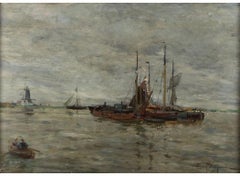
A delicate oil painting on canvas depicting a calm seascape, likely in Kortenhoef, a town the artist loved. The composition tends toward symmetry; the black boat in the foreground is shown in profile, drawing the viewer's attention to the center of the composition. Behind it, the other boats are arranged toward the horizon. A gray atmosphere envelops everything, revealing the artist's strong influence from the Hague School.
Bernardus Antonie van Beek (Amsterdam, 1875 – Kortenhoef, 1941)
Bernardus Antonie (‘Bernard’) van Beek was a Dutch painter, known for his atmospheric landscapes and associated with the Hague School. His work is characterized by a subtle use of color and a special attention to the mood of the landscape.
He began his career as a decorative painter with his father, later training at the School of Applied Arts. Although he received no formal academic training in painting, he became a skilled artist. Initially, Van Beek lived and worked in Amsterdam, but from 1901 onward, he regularly visited Kortenhoef, a town rich in water, where he found a great source of inspiration. In 1911, he settled permanently in this village, where he befriended Constant Gabriël.
In general, Van Beek's landscapes show a clear influence of the Hague School, with an emphasis on tonality and atmosphere. His palette is predominantly muted, with subtle nuances of color that capture the melancholy and tranquility of the Dutch landscape. In addition to the characteristic lakes and water lilies of Kortenhoef, he also painted neighborhoods of old towns and, especially in the 1920s, scenes of bright, luminous villages.
Bernard van Beek died on March 6, 1941, in Kortenhoef, at the age of 66. His work is included in the collections of several museums, including the Goois Museum in Hilversum. His paintings offer a timeless window into the Dutch landscape and rural life of the early 20th century, and continue to be appreciated for their serene beauty and technical craftsmanship.
The Hague School
The Hague School (1860-1890) was an influential group of Dutch painters associated with the Pulchri Studio—a Dutch art institution and studio based in The Hague—who revitalized Dutch landscape painting with a realistic approach, loose brushstrokes, and a somber palette focused on light and a grayish atmosphere. Influenced by the Barbizon School, they captured everyday life, especially that of fishermen and farmers, from the lucid and ancestral to the most wretched or sentimental aspects and themes.
United by a radical and shared desire to break with the Romanticism that dominated Dutch painting in the first half of the 19th century, they laid the foundations for Dutch Impressionism.
They painted outdoors, or en plein air, primarily landscapes with mills, canals, beaches, fishing scenes, and other subjects. Their works, which depict the daily lives of peasants, are generally characterized by gray and brown tones, an emphasis on atmosphere, cloudy skies, and a melancholic realism—sometimes referred to as "the reign of gray." They are often considered the last great phase of the Dutch painting tradition, reinterpreting 17th-century realism with a modern and atmospheric sensibility.