Want more images or videos?
Request additional images or videos from the seller
1 of 6

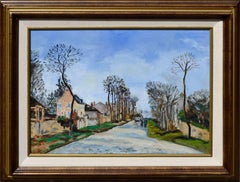
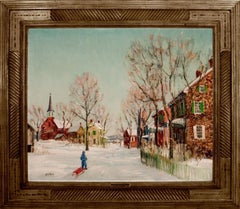
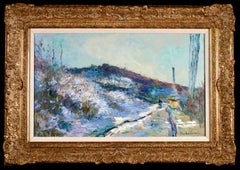
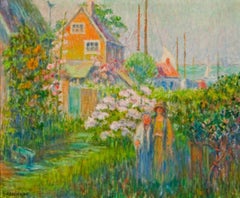
Edward Willis Redfield
Road to New Hope

c. 1920

$493,750List Price

You May Also Like

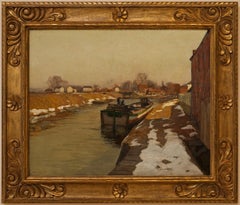
"The Canal"

Edward Willis Redfield"The Canal", c. 1906

$531,250

H 44 in W 51 in D 3 in

"The Canal"

By Edward Willis Redfield

Located in Lambertville, NJ

Jim’s of Lambertville is proud to offer this artwork. Signed lower left. Complemented by a hand carved and gilt frame. Illustrated in "Edward Redfield: Just Values and Fine Seeing" by Constance Kimmerle and the Pennsylvania Academy of the Fine Arts's Exhibition of Paintings by Edward Redfield (April 17 to May 16, 1909) brochure Edward Willis Redfield (1869 - 1965) Edward W. Redfield was born in Bridgeville, Delaware, moving to Philadelphia as a young child. Determined to be an artist from an early age, he studied at the Spring Garden Institute and the Franklin Institute before entering the Pennsylvania Academy from 1887 to 1889, where he studied under Thomas Anshutz, James Kelly, and Thomas Hovenden. Along with his friend and fellow artist, Robert Henri, he traveled abroad in 1889 and studied at the Academie Julian in Paris under William Bouguereau and Tony Robert-Fleury. While in France, Redfield met Elise Deligant, the daughter of an innkeeper, and married in London in 1893. Upon his return to the United States, Redfield and his wife settled in Glenside, Pennsylvania. He remained there until 1898, at which time he moved his family to Center Bridge, a town several miles north of New Hope along the Delaware River. Redfield painted prolifically in the 1890s but it was not until the beginning of the twentieth century that he would develop the bold impressionist style that defined his career. As Redfield’s international reputation spread, many young artists gravitated to New Hope as he was a great inspiration and an iconic role model. Edward Redfield remained in Center Bridge throughout his long life, fathering his six children there. Around 1905 and 1906, Redfield’s style was coming into its own, employing thick vigorous brush strokes tightly woven and layered with a multitude of colors. These large plein-air canvases define the essence of Pennsylvania Impressionism. By 1907, Redfield had perfected his craft and, from this point forward, was creating some of his finest work. Redfield would once again return to France where he painted a small but important body of work between 1907 and 1908. While there, he received an Honorable Mention from the Paris Salon for one of these canvases. In 1910 he was awarded a Gold Medal at the prestigious Buenos Aires Exposition and at the Panama-Pacific Exposition of 1915 in San Francisco, an entire gallery was dedicated for twenty-one of his paintings. Since Redfield painted for Exhibition with the intent to win medals, his best effort often went into his larger paintings. Although he also painted many fine smaller pictures, virtually all of his works were of major award-winning canvas sizes of 38x50 or 50x56 inches. If one were to assign a period of Redfield’s work that was representative of his “best period”, it would have to be from 1907 to 1925. Although he was capable of creating masterpieces though the late 1940s, his style fully matured by 1907 and most work from then through the early twenties was of consistently high quality. In the later 1920s and through the 1930s and 1940s, he was like most other great artists, creating some paintings that were superb examples and others that were of more ordinary quality. Redfield earned an international reputation at a young age, known for accurately recording nature with his canvases and painting virtually all of his work outdoors; Redfield was one of a rare breed. He was regarded as the pioneer of impressionist winter landscape painting in America, having few if any equals. Redfield spent summers in Maine, first at Boothbay Harbor and beginning in the 1920s, on Monhegan Island. There he painted colorful marine and coastal scenes as well as the island’s landscape and fishing shacks. He remained active painting and making Windsor style furniture...

Category

Early 1900s American Impressionist Landscape Paintings

Materials

Canvas, Oil

"In Port"

Edward Willis Redfield"In Port", 1908

$781,250

H 50 in W 63 in D 5 in

"In Port"

By Edward Willis Redfield

Located in Lambertville, NJ

Jim’s of Lambertville is proud to offer this artwork by: Edward Willis Redfield (1869 - 1965) Edward W. Redfield was born in Bridgeville, Delaware, moving to Philadelphia as a young child. Determined to be an artist from an early age, he studied at the Spring Garden Institute and the Franklin Institute before entering the Pennsylvania Academy from 1887 to 1889, where he studied under Thomas Anshutz, James Kelly, and Thomas Hovenden. Along with his friend and fellow artist, Robert Henri, he traveled abroad in 1889 and studied at the Academie Julian in Paris under William Bouguereau and Tony Robert-Fleury. While in France, Redfield met Elise Deligant, the daughter of an innkeeper, and married in London in 1893. Upon his return to the United States, Redfield and his wife settled in Glenside, Pennsylvania. He remained there until 1898, at which time he moved his family to Center Bridge, a town several miles north of New Hope along the Delaware River. Redfield painted prolifically in the 1890s but it was not until the beginning of the twentieth century that he would develop the bold impressionist style that defined his career. As Redfield’s international reputation spread, many young artists gravitated to New Hope as he was a great inspiration and an iconic role model. Edward Redfield remained in Center Bridge throughout his long life, fathering his six children there. Around 1905 and 1906, Redfield’s style was coming into its own, employing thick vigorous brush strokes tightly woven and layered with a multitude of colors. These large plein-air canvases define the essence of Pennsylvania Impressionism. By 1907, Redfield had perfected his craft and, from this point forward, was creating some of his finest work. Redfield would once again return to France where he painted a small but important body of work between 1907 and 1908. While there, he received an Honorable Mention from the Paris Salon for one of these canvases. In 1910 he was awarded a Gold Medal at the prestigious Buenos Aires Exposition and at the Panama-Pacific Exposition of 1915 in San Francisco, an entire gallery was dedicated for twenty-one of his paintings. Since Redfield painted for Exhibition with the intent to win medals, his best effort often went into his larger paintings. Although he also painted many fine smaller pictures, virtually all of his works were of major award-winning canvas sizes of 38x50 or 50x56 inches. If one were to assign a period of Redfield’s work that was representative of his “best period”, it would have to be from 1907 to 1925. Although he was capable of creating masterpieces though the late 1940s, his style fully matured by 1907 and most work from then through the early twenties was of consistently high quality. In the later 1920s and through the 1930s and 1940s, he was like most other great artists, creating some paintings that were superb examples and others that were of more ordinary quality. Redfield earned an international reputation at a young age, known for accurately recording nature with his canvases and painting virtually all of his work outdoors; Redfield was one of a rare breed. He was regarded as the pioneer of impressionist winter landscape painting in America, having few if any equals. Redfield spent summers in Maine, first at Boothbay Harbor and beginning in the 1920s, on Monhegan Island. There he painted colorful marine and coastal scenes as well as the island’s landscape and fishing shacks. He remained active painting and making Windsor style furniture...

Category

Early 1900s American Impressionist Landscape Paintings

Materials

Canvas, Oil

"Road to Argus"

"Road to Argus"

By Walter Emerson Baum

Located in Lambertville, NJ

Jim’s of Lambertville Fine Art Gallery is proud to offer this piece by Walter Emerson Baum (1884 - 1956). Born in Sellersville, Pennsylvania, Walter Baum was one of the only members...

Category

1930s American Impressionist Landscape Paintings

Materials

Canvas, Oil

Vintage Figurative Landscape Road Through the Village

Vintage Figurative Landscape Road Through the Village

Located in Soquel, CA

A small figure with a cart travels through a village down a tree lined road in this vintage figurative landscape done in the style of Utrillo, by Gu...

Category

1980s American Impressionist Landscape Paintings

Materials

Canvas, Oil

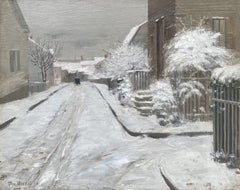
Street Scene in Winter, American Impressionist, Oil on Board, Framed

Street Scene in Winter, American Impressionist, Oil on Board, Framed

By Theodore Wendel

Located in Bryn Mawr, PA

Street Scene in Winter, 1884 Oil on board 16 5/8 x 20 1/2 inches (42.2 x 52.1 cm) Framed dimensions: 27 x 31 inches Signed and dated lower left: Theo. Wendel. 84 Wendel was born in ...

Category

Late 19th Century American Impressionist Landscape Paintings

Materials

Oil, Board

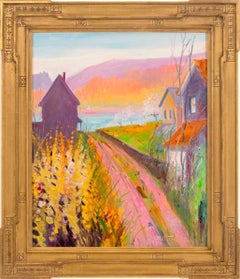
"Road to the River"

Joseph Barrett"Road to the River"

$9,950

H 28 in W 24 in D 2 in

"Road to the River"

By Joseph Barrett

Located in Lambertville, NJ

Illustrated in "Joseph Barrett, The Prime Years 1970s - 1990s", pg. 6 #006 Jim’s of Lambertville is proud to offer this artwork by: Joseph Barrett (1936 – ) Joseph Barrett wa...

Category

Late 20th Century American Impressionist Landscape Paintings

Materials

Canvas, Oil

"Lehigh County Village"

"Lehigh County Village"

By Walter Emerson Baum

Located in Lambertville, NJ

Jim’s of Lambertville is proud to offer this artwork by: Walter Emerson Baum (1884 - 1956) Born in Sellersville, Pennsylvania, Walter Baum was one of the only members of the New Ho...

Category

1930s American Impressionist Landscape Paintings

Materials

Canvas, Oil

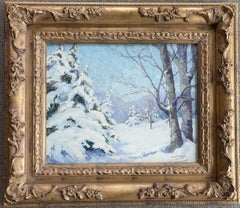
American Impressionist Hobart Nichols Snow Scene Oil Painting Salmagundi Club

American Impressionist Hobart Nichols Snow Scene Oil Painting Salmagundi Club

By Henry Hobart Nichols Jr.

Located in Chesterfield, NJ

Winter Landscape oil/board 16 x 20 unframed image, 26.3/8 x 30.25x3.5 framed signed LR Here is a beautiful winter snow scene oil painting on board by Hobart Nichols signed lower ri...

Category

21st Century and Contemporary Impressionist Landscape Paintings

Materials

Oil

Le Route d'Hondouville - Post Impressionist Landscape Oil by Albert Lebourg

Le Route d'Hondouville - Post Impressionist Landscape Oil by Albert Lebourg

Located in Marlow, Buckinghamshire

Signed oil on canvas landscape circa 1890 by French post impressionist painter Albert Charles Lebourg. The work depicts a view of a road to Hondouville, a commune in nothern France, ...

Category

1890s Post-Impressionist Landscape Paintings

Materials

Canvas, Oil

More From This Seller

View All
"Overhanging  Trees"

"Overhanging Trees"

By Julian Alden Weir

Located in Lambertville, NJ

Ashley John is proud to offer this artwork by: J Alden Weir (1852 - 1919) Born in West Point, New York Julian Alden Weir received his first art training from his father, Robert W. Weir, who was a professor of drawing at the United States Military Academy. The younger Weir continued his studies in New York at the National Academy of Design and in Paris at the Ecole des Beaux-Arts where he worked under the important academic teacher Jean-Léon Gérôme beginning in 1873. Traveling to Holland and Spain during his student years, Weir was inspired by the work of Hals and Velasquez. However, the major influence on his early career was the French painter Jules Bastien-Lepage, who was well known for his realistic depictions of Breton peasants in the outdoor landscape. On his return to New York in the fall of 1877, Weir supported himself by teaching at the Cooper Union Women's Art School and at the Art Students League. He was also active in avant-garde artist organizations that began in the late 1870s, helping to found the Society of American Artists and participating in Tile Club...

Category

Late 19th Century American Impressionist Landscape Paintings

Materials

Canvas, Oil

"Snow Squals, Parmelee Farm"

"Snow Squals, Parmelee Farm"

By Peter Poskas

Located in Lambertville, NJ

Signed Lower Left Poskas was born in Waterbury, Connecticut, a small industrial city set on the banks of the Naugatuck River. He was interested in art as a child, but on entering ...

Category

20th Century American Realist Landscape Paintings

Materials

Canvas, Oil

"Cityscape at Dusk"

"Cityscape at Dusk"

By John Bradley Storrs

Located in Lambertville, NJ

Signed Lower Right John Bradley Storrs (1885 - 1956) Born and raised in Chicago, John Storrs was a pioneer modernist sculptor known for his precisely executed, solid, non-objectiv...

Category

20th Century Modern Landscape Paintings

Materials

Canvas, Oil

"Exploring the Little Valley"

"Exploring the Little Valley"

By William Baxter Closson

Located in Lambertville, NJ

Signed Lower Right A student at the Lowell Institute in Lowell, Massachusetts, William Closson had an early career as an engraver and worked from 1881 to 1883 in Europe where he e...

Category

20th Century Abstract Impressionist Landscape Paintings

Materials

Board, Oil

"The End of the Village, Nantucket"

"The End of the Village, Nantucket"

By Anna W. Speakman

Located in Lambertville, NJ

Signed LL Anna Weatherby Parry Speakman was born in Springfield, Illinois, in the late part of the nineteenth century. Yet another artist of obvious talent, there is little known in...

Category

1920s Landscape Paintings

Materials

Oil, Canvas

"After the Rain"

"After the Rain"

By John Francis Murphy

Located in Lambertville, NJ

Signed Lower Right Known for his Tonalist-style landscape paintings, John Francis Murphy was referred to as the "American Corot" because of his similarity to the painting style of Camille Corot (1796-1875), one of the original Barbizon...

Category

Late 19th Century Tonalist Landscape Paintings

Materials

Canvas, Oil