Jespers Floris
1889 – Antwerpen – 1965
Belgian Painter
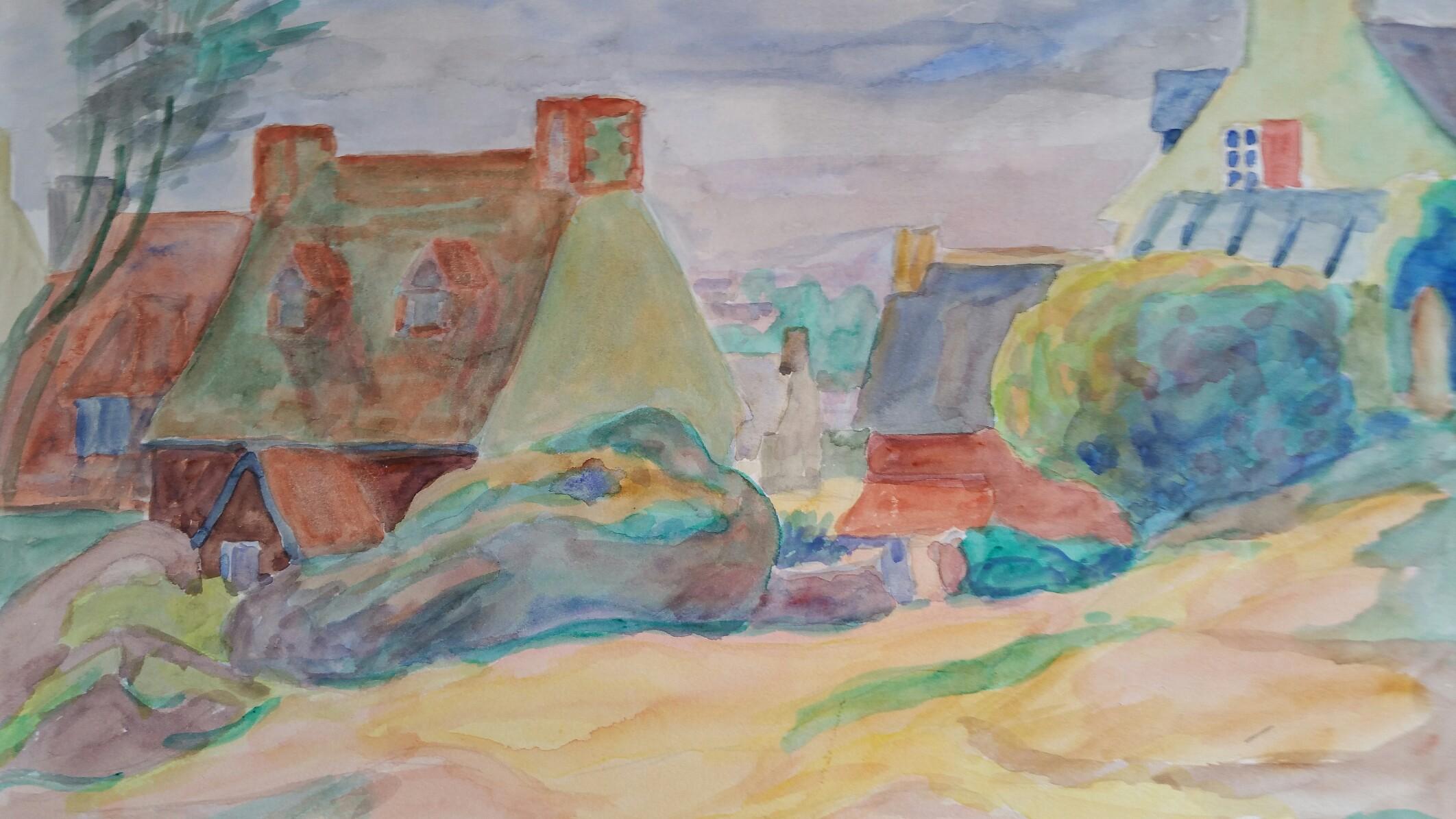
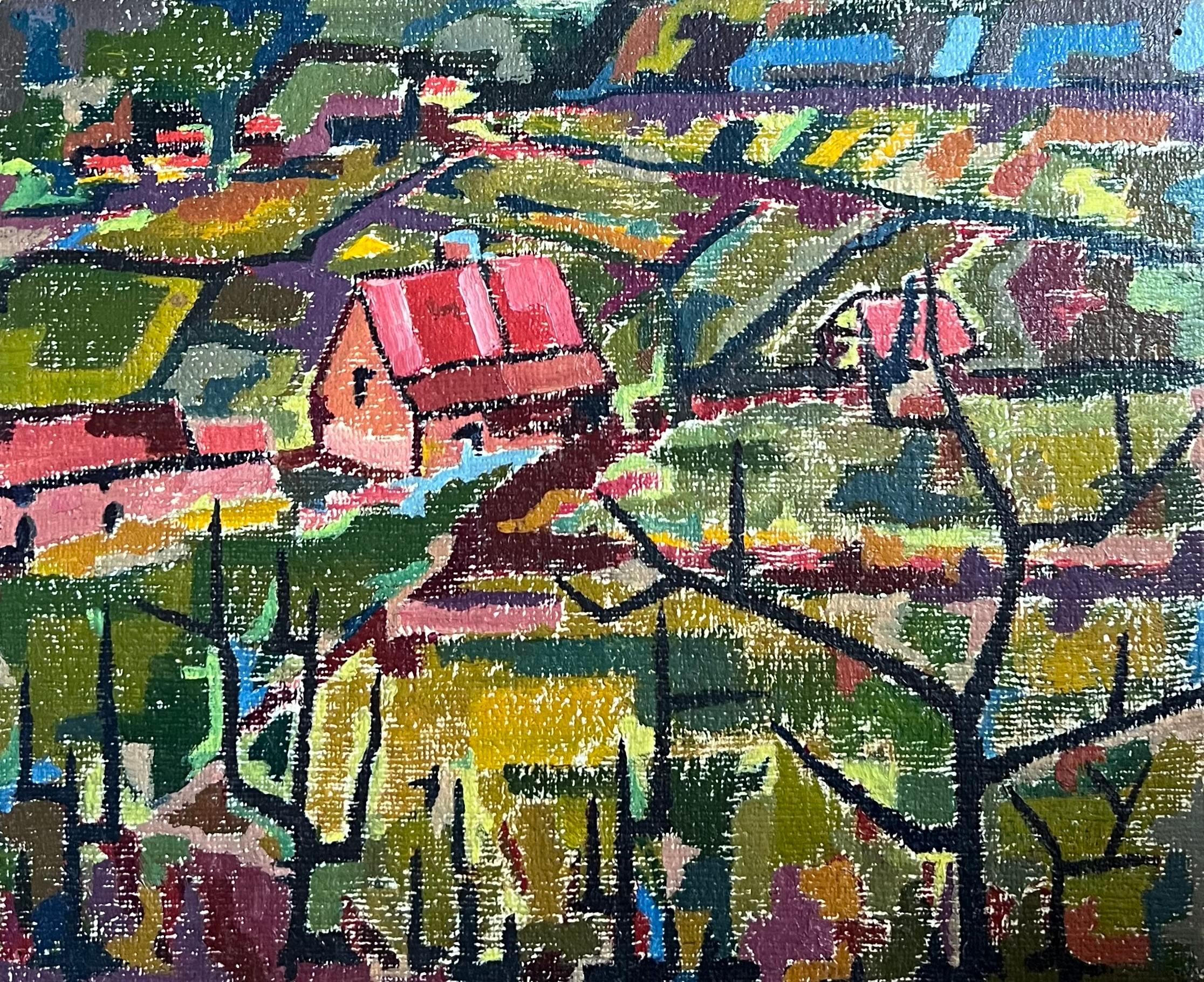
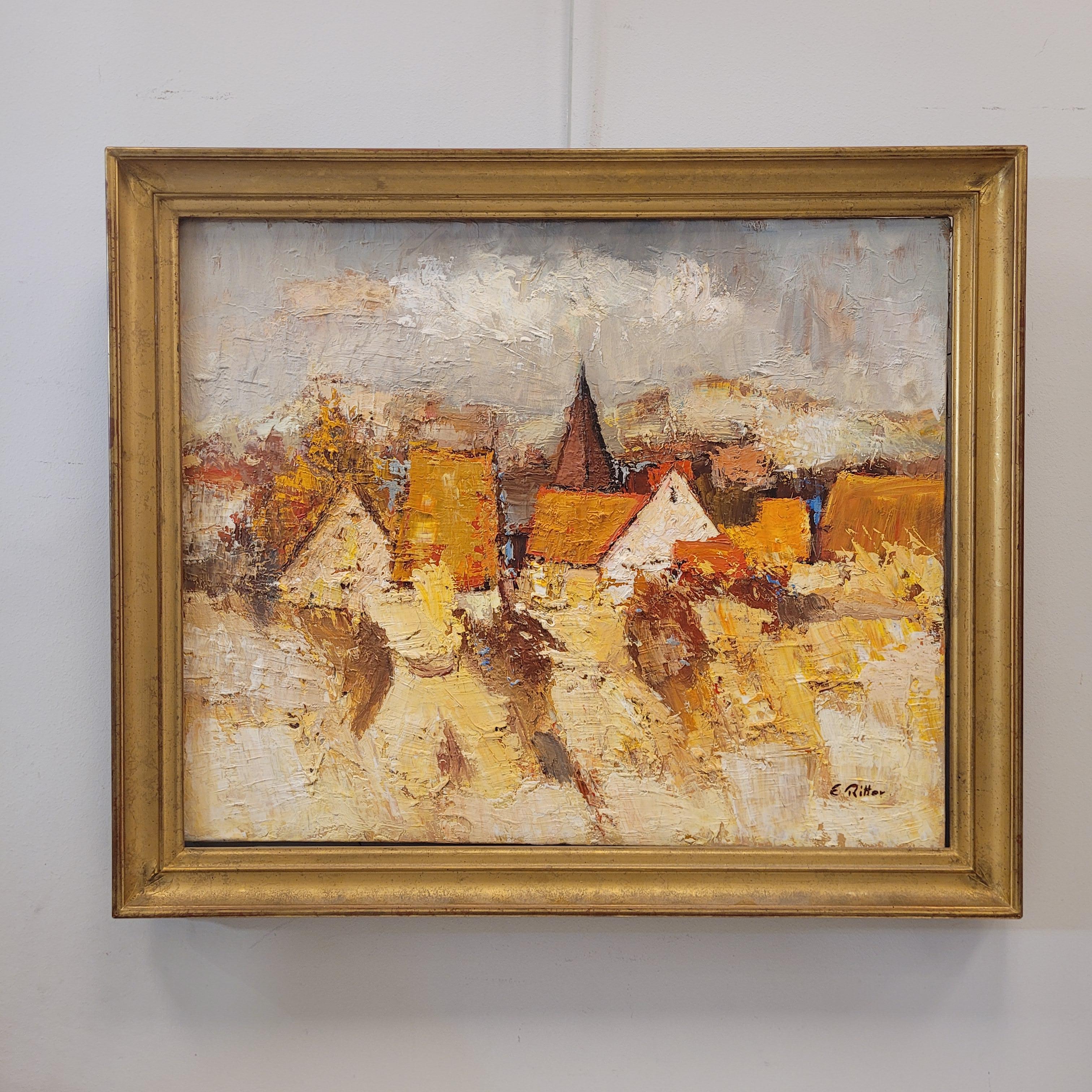
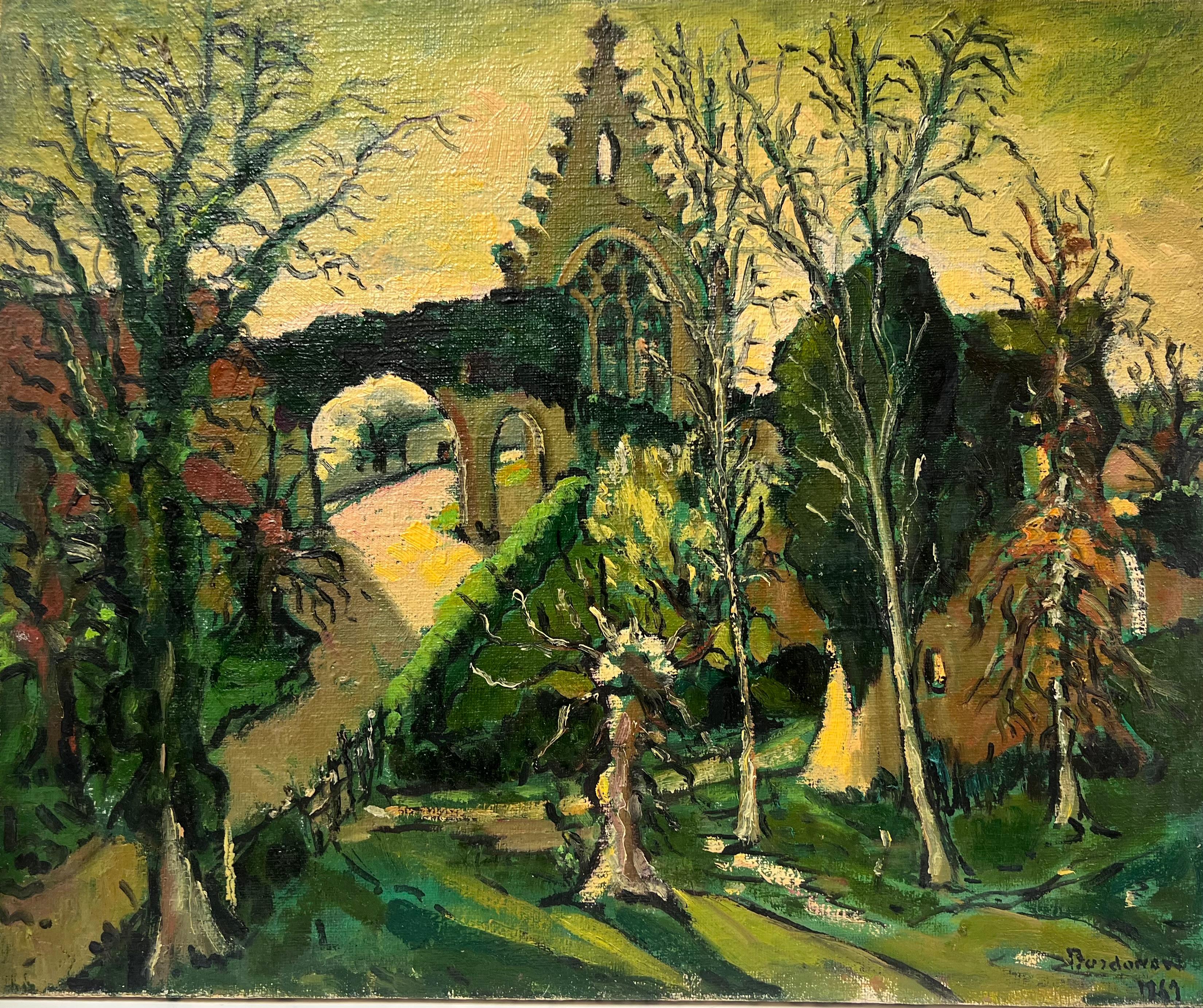
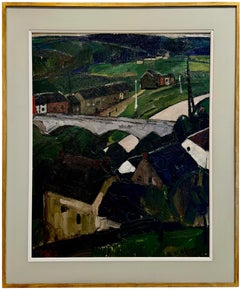
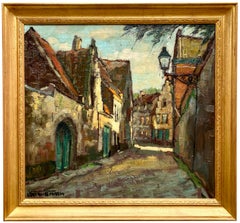
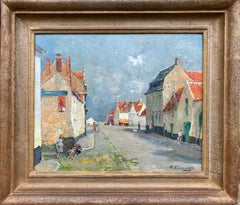
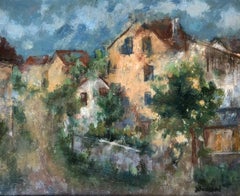
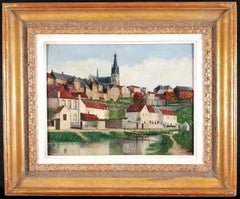
'Village Scene in Wallonia (Straimont), 1933'
Signature: signed lower right and dated 1933 'Jespers 33'
Medium: oil on panel
Dimensions: image size 107 x 120 cm, frame size 125 x 140 cm
Provenance: Referenced in: L.G. Burssens, Floris Jespers, 1943, ill. 61; Exhibited: Tentoonstelling 1936, Antwerp, cat. no. 9; Private Collection, Antwerp. The work was exhibited in Antwerp in 1936 and reproduced in the 1943 monograph by L.G. Burssens (ill. 61). Decades later, it was once again brought into focus during the 1989 retrospective exhibition organized by the Flemish Ministry of Culture at the Royal Museum of Fine Arts in Antwerp, where it was published in the accompanying catalogue on page 152 (illustration 78). Its inclusion in both early and later scholarly references underscores the painting’s lasting significance within the broader arc of Jespers’ artistic career.
Biography: Floris Jespers was born on March 18, 1889, in Antwerp, into an artistic family where creativity was a native language. He is painter of A Life in Color, Line, and Rhythm. His father, Émile, was a sculptor, and his younger brother Oscar would go on to become one of Belgium’s most prominent modernist sculptors. From an early age, Floris moved between music and the visual arts with remarkable ease—performing as a cellist to earn his living while pursuing studies at the Royal Academy of Fine Arts in Antwerp.
But it was during the First World War that Jespers truly found his voice as a visual artist. In 1915, his fateful meeting with avant-garde poet Paul van Ostaijen became a catalyst for artistic transformation. Together, they became part of a new generation of artists and thinkers seeking to break away from academic conventions. Jespers joined “De Bond zonder Gezegeld Papier”, a radical artistic collective in Antwerp, and began contributing to influential modernist journals like Ça Ira and Sélection. Through these circles, he discovered the revolutionary ideas of Cubism, Constructivism, and Expressionism, which would shape his evolving style.
Jespers’ early work reflects a restless experimentation. Inspired by Rik Wouters and the colorful dynamism of Fauvism, he later absorbed the structure and abstraction of Cubism, often blending figuration with bold geometry. His paintings from this period—ranging from intimate portraits to modern urban scenes—reveal a search for clarity, rhythm, and emotional intensity. Works like Bonjour Ostende and Adam en Eva stand as milestones of his expressive power and formal inventiveness.
The 1920s marked a time of expansion, as Jespers emerged as one of the key figures in the Flemish Expressionistmovement, alongside artists such as Gust De Smet, Frits Van den Berghe, and Constant Permeke. Unlike some of his contemporaries, however, Jespers never confined himself to one artistic ideology. His oeuvre remained defiantly diverse, both in theme and execution.
He also collaborated with Van Ostaijen on literary projects, contributing illustrations to works like Bezette Stad—a landmark of modernist poetry. Despite ideological differences that would eventually distance them, their creative alliance left a deep imprint on Belgian avant-garde art.
Beyond the canvas, Jespers explored a wide range of media: etchings, linocuts, stained glass, mural painting, and tapestry design. His monumental designs were featured at international expositions in Paris (1937) and New York (1939), and in 1958, he painted large-scale murals for the Palace of the Belgian Congo at Expo 58 in Brussels.
A new chapter in Jespers’ artistic life began in the 1950s, when he traveled to the Belgian Congo, drawn by the vibrancy of its culture and light. There, he developed a striking new visual language—one that paid homage to the elegance of Congolese women and market scenes, captured in luminous color and stylized form. These works, rather than being ethnographic, evoke a sense of timeless grace and beauty. They signal a mature artist in full command of his powers, unafraid to reinvent himself.
Until his death on April 16, 1965, in Antwerp, Jespers remained a seeker—a painter of bold visions, a draughtsman of intimate lines, and a modernist who moved freely between tradition and innovation. His authenticity, curiosity, and artistic courage ensured that he remained relevant across decades of dramatic change.
Today, his work is held in major public and private collections, including Mu.ZEE in Ostend, the Royal Museum of Fine Arts Antwerp, and M Leuven, which houses a vast selection of his prints. In 2005, a major retrospective at Mu.ZEE paid tribute to his rich legacy, reaffirming his place as a central figure in Belgian modern art.
Village Scene in Wallonia (Straimont), 1933
In the early 1930s, Floris Jespers turned away from the vibrant, urban modernity that had defined much of his earlier work. The café scenes, theatrical portraits, and bold avant-garde experimentation gave way to a new, quieter phase: one rooted in the rhythm of rural life. Dividing his time between Antwerp, the Flemish coast, and occasional stays in the Ardennes, Jespers began to explore the serenity and structure of the regional landscape.
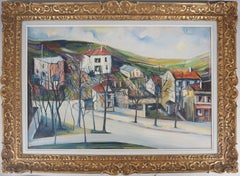
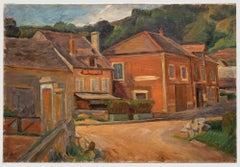
Village Scene in Wallonia (Straimont), painted in 1933, is a remarkable example of this shift. Created during one of his stays in the southern Ardennes, in villages such as Straimont or Jamoigne, Jespers focused here on the built environment of the countryside—simple houses, winding roads, and village squares rendered with quiet monumentality. The composition is executed in somber, earthy browns, with bold black contours that reinforce form and shadow, creating a visual language at once solid and introspective.
These village scenes from Wallonia carry a markedly different atmosphere from his Flemish landscapes: more muted in palette, more restrained in gesture, and charged with a reflective stillness. In their stylization and tonal harmony, such works recall the picturesque realism of Maurice Utrillo, whose popularity during this interwar period echoed a broader artistic desire for a “retour à la nature.”
Rather than sentimentalizing rural life, Jespers paints with architectural clarity and psychological depth. His view of the village is neither naïve nor nostalgic—it is structured, silent, and dignified. As such, this painting represents a key chapter in Jespers’ artistic evolution: a moment of inward focus, where form, memory, and place merge.
The work was exhibited in Antwerp in 1936 and reproduced in the 1943 monograph by L.G. Burssens (ill. 61). Decades later, it was once again brought into focus during the 1989 retrospective exhibition organized by the Flemish Ministry of Culture at the Royal Museum of Fine Arts in Antwerp, where it was published in the accompanying catalogue on page 152 (illustration 78). Its inclusion in both early and later scholarly references underscores the painting’s lasting significance within the broader arc of Jespers’ artistic career.