Video Loading
Want more images or videos?
Request additional images or videos from the seller
1 of 12

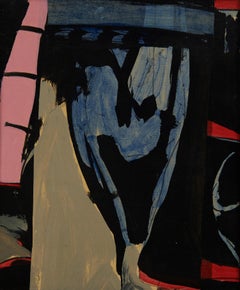
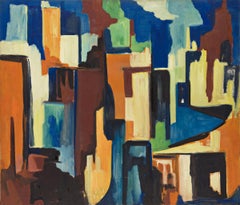
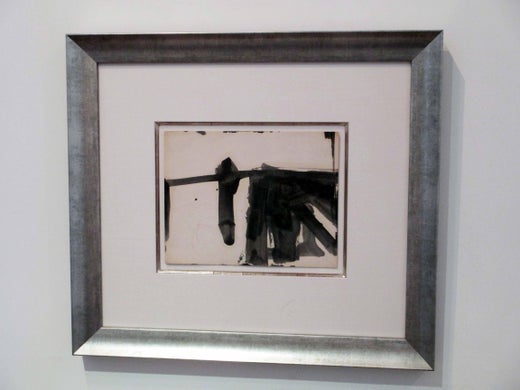
Franz Kline
Chatham Square

1948

You May Also Like

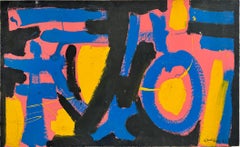
Early Abstract Expressionist -  Black Mountain College Teacher, Franz Kline

Early Abstract Expressionist - Black Mountain College Teacher, Franz Kline

By Emerson Woelffer

Located in Miami, FL

With Abstract Expressionist painting, one could argue that the earlier, the more historically important. This stunning non-objective action painting is characterized by vast swaths o...

Category

1950s Abstract Expressionist Abstract Paintings

Materials

Oil, Fiberboard

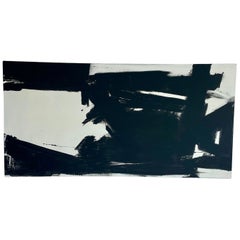
Mid Century Modern Abstract Expressionist Painting In The Style Of Franz Kline

Mid Century Modern Abstract Expressionist Painting In The Style Of Franz Kline

By Franz Kline

Located in Bedford Hills, NY

This striking panoramic canvas serves as a powerful tribute to the action painting of the mid-20th-century New York School. Following the tenets of Franz Kline, the composition rejec...

Category

Mid-20th Century American Mid-Century Modern Paintings

Materials

Canvas, Acrylic

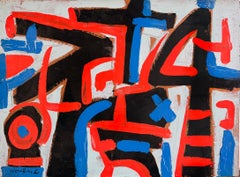
Abstract Expressionist "Forms Divide"  Like Franz Kline

Abstract Expressionist "Forms Divide" Like Franz Kline

By Emerson Woelffer

Located in Miami, FL

It's 1951. Who was doing painting like this? Franz Kline, Arshile Gorky, Jackson Pollock, Mark Rothko, Willem de Kooning, Adolph Gottlieb, Clyfford Still, Robert Motherwell, Lee Kra...

Category

1950s Abstract Expressionist Abstract Paintings

Materials

Masonite, Acrylic

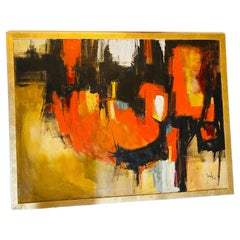
Mid-Century Modern Abstract Painting, Signed and Dated 1963

Mid-Century Modern Abstract Painting, Signed and Dated 1963

By Franz Kline, Emilio Vedova

Located in San Diego, CA

Striking original Mid-Century Modern abstract painting featuring a bold, expressive composition in saturated hues of burnt red orange, ochre, black, and warm ivory. The dynamic inter...

Category

Vintage 1960s Mid-Century Modern Paintings and Screens

Materials

Acrylic

20th century abstract expressionist oil painting by Cleveland School artist

20th century abstract expressionist oil painting by Cleveland School artist

By Richard Andres

Located in Beachwood, OH

Richard Andres American, 1927-2013 acrylic and ink on paper mounted on canvas 12 x 10 inches Note: Small dent in canvas. See pictures for details. Richard Andres was born in Buffal...

Category

1980s Abstract Expressionist Abstract Paintings

Materials

Ink, Acrylic

Homage to Franz Kline - Oil Painting 2010 by Giorgio Lo Fermo

Homage to Franz Kline - Oil Painting 2010 by Giorgio Lo Fermo

By Giorgio Lo Fermo

Located in Roma, IT

Homage To Franz Kline is an original artwork realized by Giorgio Lo Fermo in 2010. Oil on canvas. This contemporary artwork represents a colored abstract composition: the apparentl...

Category

2010s Abstract Abstract Paintings

Materials

Oil

Large Mid-Century Modern Abstract Urban Painting by Henriette Stolz, Cityscape

Large Mid-Century Modern Abstract Urban Painting by Henriette Stolz, Cityscape

Located in Denver, CO

This dramatic mid-century abstract cityscape by American modernist Henriette “Yetti” Stolz (20th century) showcases her bold interpretation of urban energy and architectural form. Pa...

Category

Mid-20th Century Expressionist Abstract Paintings

Materials

Oil, Putty, Panel

Skyline (New York)

Skyline (New York)

Located in New York, NY

Oil on canvas. Signed, titled on stretcher on recto. Bartolomucci was an Italian painter who became one of the founders of Astralism. He moved to New York in 1960 where he remain...

Category

1960s Abstract Expressionist Landscape Paintings

Materials

Canvas, Oil

City Street, Modern Oil Painting by Stanley Sobossek

City Street, Modern Oil Painting by Stanley Sobossek

By Stanley Sobossek

Located in Long Island City, NY

Artist: Stanley Sobossek, American (1918 - 1996) Title: City Street Year: circa 1965 Medium: Oil on Canvas, Signed Size: 43 x 34 inches [109 x 86 cm]

Category

1960s Abstract Impressionist Landscape Paintings

Materials

Oil

More From This Seller

View All
Below South Ferry

Below South Ferry

By Franz Kline

Located in New York, NY

Signed (at lower right): KLINE EXHIBITED: Pratt Institute, Brooklyn, New York, November 1–30, 1960, The November Show, as “Moonlight in Lower Manhattan” // Pratt Institute, Brooklyn...

Category

Mid-20th Century Abstract Expressionist Landscape Paintings

Materials

Oil, Board

Seated Woman (Elizabeth)

Seated Woman (Elizabeth)

By Franz Kline

Located in New York, NY

EX COLL.: the artist; to I. David Orr (1904–1997), Long Island, New York; to his estate, 1997 until the present Originally trained as a figurative painter, Kline was an exceptional ...

Category

Mid-20th Century Abstract Expressionist Portrait Drawings and Watercolors

Materials

Paper, Pastel, Ink

Untitled

Untitled

By Charles Houghton Howard

Located in New York, NY

Charles Houghton Howard was born in Montclair, New Jersey, the third of five children in a cultured and educated family with roots going back to the Massachusetts Bay colony. His father, John Galen Howard, was an architect who had trained at M.I.T. and the École des Beaux-Arts in Paris and apprenticed in Boston with Henry Hobson Richardson. In New York, the elder Howard worked for McKim, Mead and White before establishing a successful private practice. Mary Robertson Bradbury Howard, Charles’s mother, had studied art before her marriage. John Galen Howard moved his household to California in 1902 to assume the position of supervising architect of the new University of California campus at Berkeley and to serve as Professor of Architecture and the first Dean of the School of Architecture (established in 1903). The four Howard boys grew up to be artists and all married artists, leaving a combined family legacy of art making in the San Francisco Bay area that endures to this day, most notably in design, murals, and reliefs at the Coit Tower and in buildings on the Berkeley campus. Charles Howard graduated from the University of California at Berkeley in 1921 as a journalism major and pursued graduate studies in English at Harvard and Columbia Universities before embarking on a two-year trip to Europe. Howard went to Europe as a would-be writer. But a near-religious experience, seeing a picture by Giorgione in a remote town outside of Venice, proved a life-altering epiphany. In his own words, “I cut the tour at once and hurried immediately back to Paris, to begin painting. I have been painting whenever I could ever since” (Charles Howard, “What Concerns Me,” Magazine of Art 39 [February 1946], p. 63). Giorgione’s achievement, in utilizing a structured and rational visual language of art to convey high emotion on canvas, instantly convinced Howard that painting, and not literature, offered the best vehicle to express what he wanted to say. Howard returned to the United States in 1925, confirmed in his intent to become an artist. Howard settled in New York and supported himself as a painter in the decorating workshop of Louis Bouché and Rudolph Guertler, where he specialized in mural painting. Devoting spare time to his own work, he lived in Greenwich Village and immersed himself in the downtown avant-garde cultural milieu. The late 1920s and early 1930s were the years of Howard’s art apprenticeship. He never pursued formal art instruction, but his keen eye, depth of feeling, and intense commitment to the process of art making, allowed him to assimilate elements of painting intuitively from the wide variety of art that interested him. He found inspiration in the modernist movements of the day, both for their adherence to abstract formal qualities and for the cosmopolitan, international nature of the movements themselves. Influenced deeply by Surrealism, Howard was part of a group of American and European Surrealists clustered around Julien Levy. Levy opened his eponymously-named gallery in 1931, and rose to fame in January 1932, when he organized and hosted Surrealisme, the first ever exhibition of Surrealism in America, which included one work by Howard. Levy remained the preeminent force in advocating for Surrealism in America until he closed his gallery in 1949. Howard’s association with Levy in the early 1930s confirms the artist’s place among the avant-garde community in New York at that time. In 1933, Howard left New York for London. It is likely that among the factors that led to the move were Howard’s desire to be a part of an international art community, as well as his marriage to English artist, Madge Knight...

Category

20th Century American Modern Abstract Drawings and Watercolors

Materials

Paper, Gouache, Graphite

Excavation

Excavation

By Charles Houghton Howard

Located in New York, NY

Charles Houghton Howard was born in Montclair, New Jersey, the third of five children in a cultured and educated family with roots going back to the Massachusetts Bay colony. His father, John Galen Howard, was an architect who had trained at M.I.T. and the École des Beaux Arts in Paris, and apprenticed in Boston with H. H. Richardson. In New York, the elder Howard worked for McKim, Mead and White before establishing a successful private practice. Mary Robertson Bradbury, Charles’s mother, had studied art before her marriage. John Galen Howard moved his household to California in 1902 to assume the position of supervising architect of the new University of California campus at Berkeley and to serve as Professor of Architecture and the first Dean of the School of Architecture (established in 1903). The four Howard boys grew up to be artists and all married artists, leaving a combined family legacy of art making in the San Francisco Bay area that endures to this day, most notably in design, murals and reliefs at the Coit Tower and in buildings on the Berkeley campus. Charles Howard graduated from the University of California at Berkeley in 1921 as a journalism major, and pursued graduate studies in English at Harvard and Columbia Universities before embarking on a two-year trip to Europe. Howard went to Europe as a would-be writer. But a near-religious experience, seeing a picture by Giorgione in a remote town outside of Venice, proved a life-altering epiphany. In his own words, “I cut the tour at once and hurried immediately back to Paris, to begin painting. I have been painting whenever I could ever since” (Charles Howard, “What Concerns Me,” Magazine of Art 39, no. 2 [February 1946], p. 63). Giorgione’s achievement, in utilizing a structured and rational visual language of art to convey high emotion on canvas, instantly convinced Howard that painting, and not literature, offered the best vehicle to express what he wanted to say. Howard returned to the United States in 1925, confirmed in his intent to become an artist. Howard settled in New York and supported himself as a painter in the decorating workshop of Louis Bouché and Rudolph Guertler, where he specialized in mural painting. Devoting spare time to his own work, he lived in Greenwich Village and immersed himself in the downtown avant-garde cultural milieu. The late 1920s and early 1930s were the years of Howard’s art apprenticeship. He never pursued formal art instruction, but his keen eye, depth of feeling, and intense commitment to the process of art making, allowed him to assimilate elements of painting intuitively from the wide variety of art that interested him. He found inspiration in the modernist movements of the day, both for their adherence to abstract formal qualities and for the cosmopolitan, international nature of the movements themselves. Influenced deeply by Surrealism, Howard was part of a group of American and European Surrealists clustered around Julien Levy. Levy opened his eponymously-named gallery in 1931, and rose to fame in January 1932, when he organized and hosted Surrealisme, the first ever exhibition of Surrealism in America, which included one work by Howard. Levy remained the preeminent force in advocating for Surrealism in America until he closed his gallery in 1949. Howard’s association with Levy in the early 1930s confirms the artist’s place among the avant-garde community in New York at that time. In 1933, Howard left New York for London. It is likely that among the factors that led to the move were Howard’s desire to be a part of an international art community, as well as his marriage to English artist, Madge Knight...

Category

20th Century American Modern Abstract Paintings
Materials

Canvas, Oil

Bar Harbor

Bar Harbor

By Judith Rothschild

Located in New York, NY

Edition: 5 or less. One of possibly 3 variants

Category

20th Century American Modern Abstract Prints

Materials

Monotype

Untitled (ZIG 1)

Untitled (ZIG 1)

By Ray Spillenger

Located in New York, NY

Oil on paperboard, 20 x 30 in.

Category

Mid-20th Century Abstract Expressionist Abstract Paintings

Materials

Oil