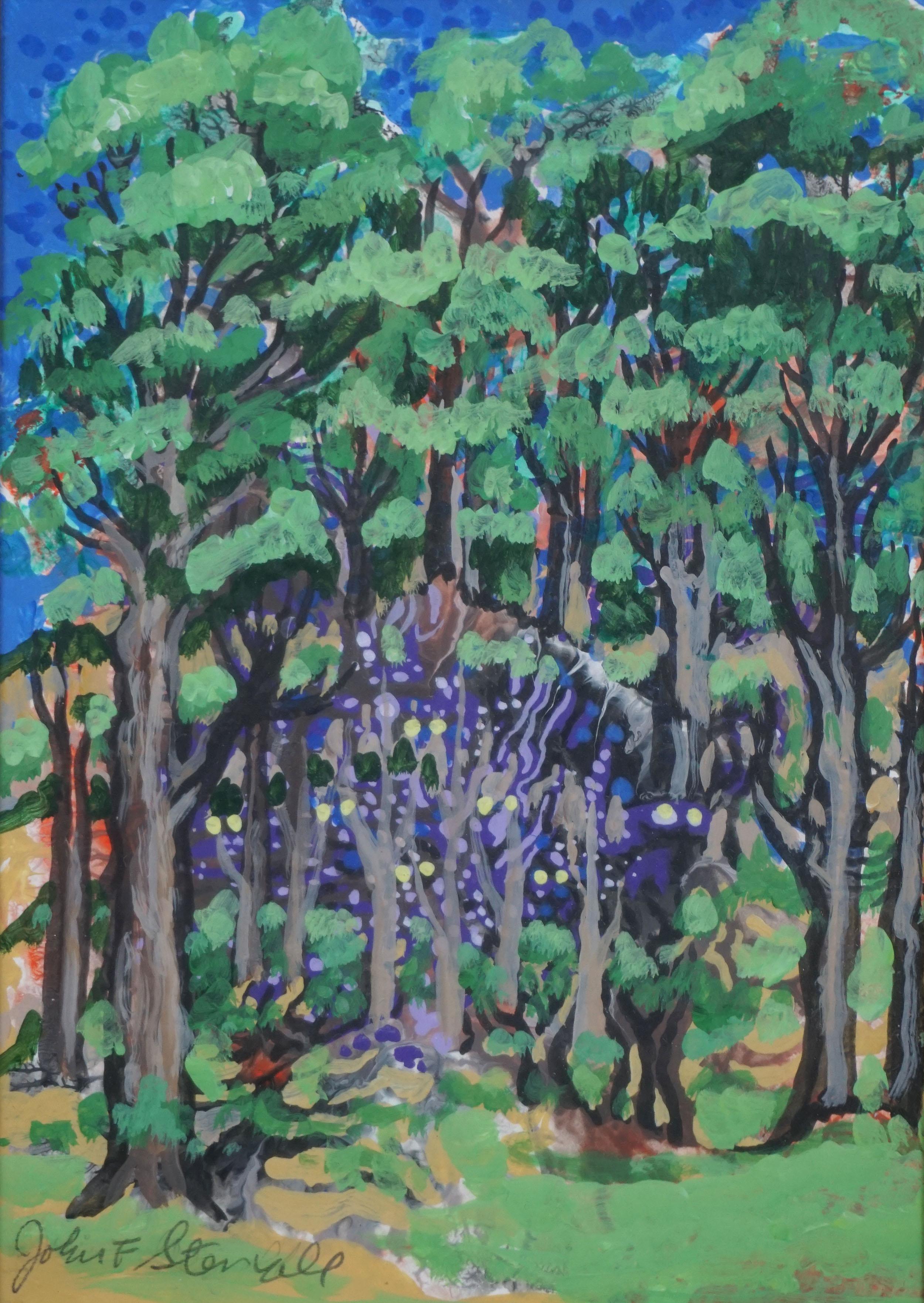
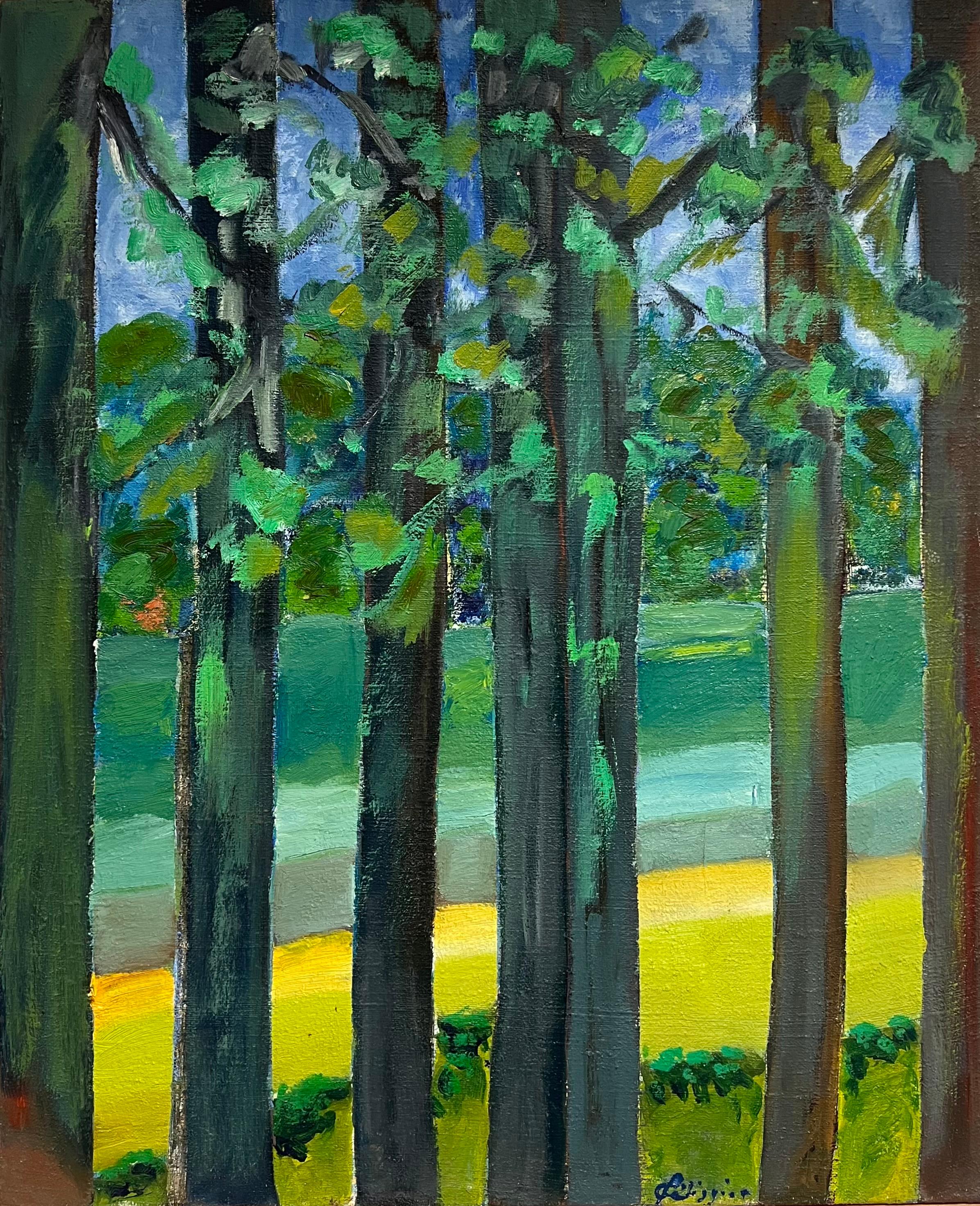
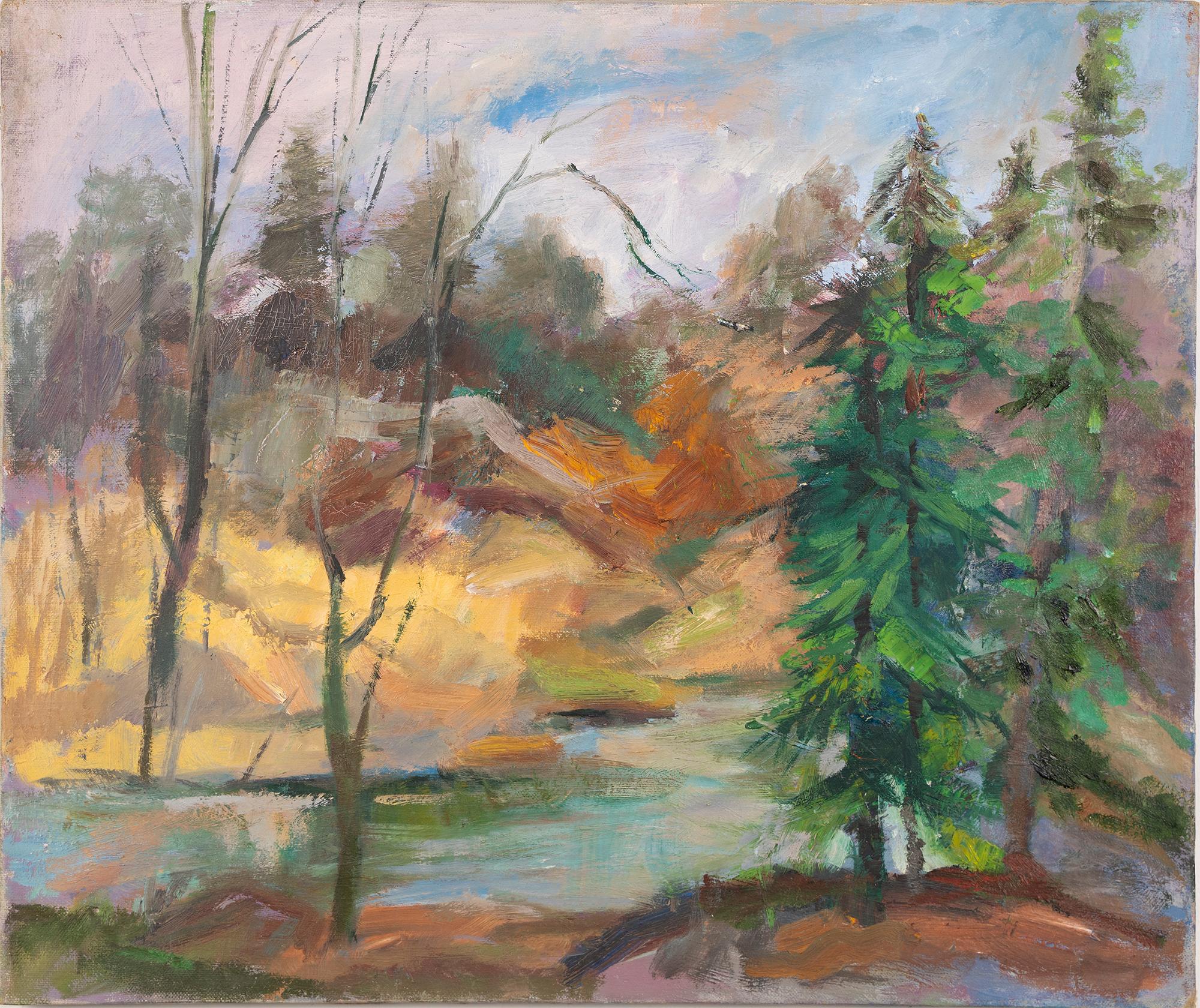
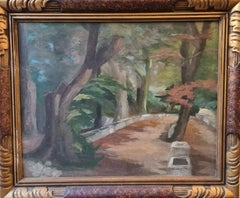
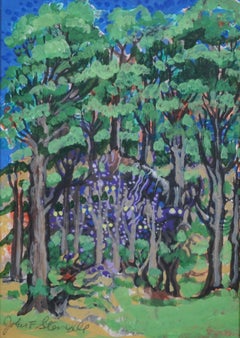
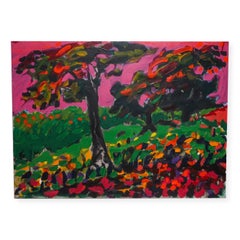
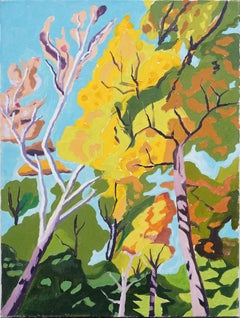
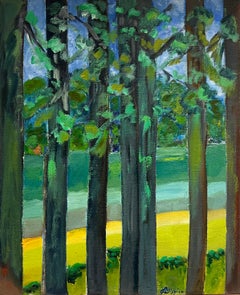
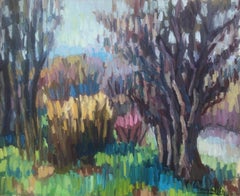
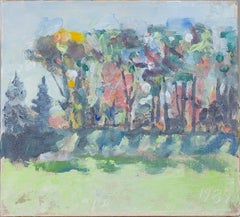
Expressionist Fauvist French oil on board view into a forest attributed to Jean-Jacques Philippon. The painting was acquired at the same time as a signed work by the artist also available in our storefront. The painting is presented in a fine custom gilt frame.
Philippon has clearly been influenced by the works of his contemporary Raoul Dufy in composition and style, especially in his use of Fauvist colour.
This charming painting presents a dynamic and abstract depiction of a forest scene. Dominated by bold, swirling strokes of green, the trees sway with an almost palpable motion, set against a vibrant blue sky. The artist’s use of vivid colours captures the essence of movement and energy in nature. Tall, slender trunks, painted in vertical black and green lines, punctuate the scene, while the earthy red-brown ground creates a striking contrast, anchoring the composition. The brushwork is expressive and rhythmic, sweeping across the canvas in a manner that suggests a lively breeze rustling through the foliage. This piece uniquely blends abstraction with hints of realism, emphasizing the interplay between the natural elements and untamed energy, inviting viewers to immerse themselves in its vibrant atmosphere. The overall effect is both captivating and invigorating, drawing the observer into its vivid portrayal of nature.
Raoul Dufy, a luminary of 20th-century art, remains celebrated for his radiant and joyous depictions of the world around him. Born in Le Havre, France, Dufy’s career spanned painting, textile design, ceramics, and more, cementing his legacy as a versatile and innovative artist. Known for his vibrant palette and playful compositions, Dufy’s work captures the vitality of life and the essence of modernity.
Raoul Dufy began his artistic journey at the École des Beaux-Arts in Paris, where the Impressionists and Post-Impressionists influenced him. Initially, his work reflected the muted tones of Impressionism, but the dynamic energy of Fauvism, led by Henri Matisse, soon inspired him. This pivotal stylistic shift drove Dufy towards a more experimental use of colour and form.
Dufy’s embrace of Fauvism in the early 1900s marked his departure from conventional representation. Works like Regatta at Cowes highlight his bold, expressive brushwork and vivid hues. He used colour to describe and evoke emotion, turning landscapes, cityscapes, and leisure scenes into symphonies of colour.