Max Rabe
1868 Samter – 1944 Vienna
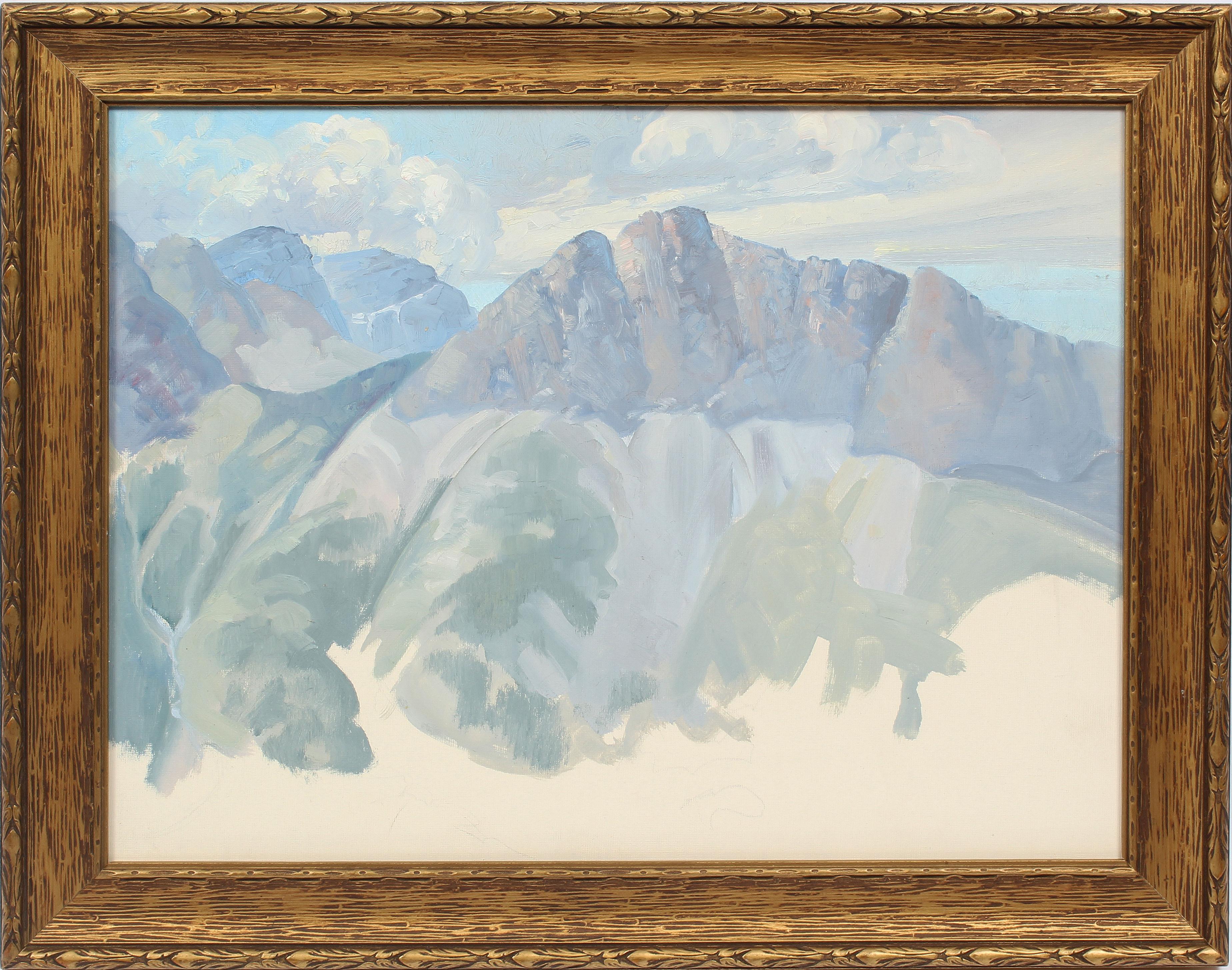
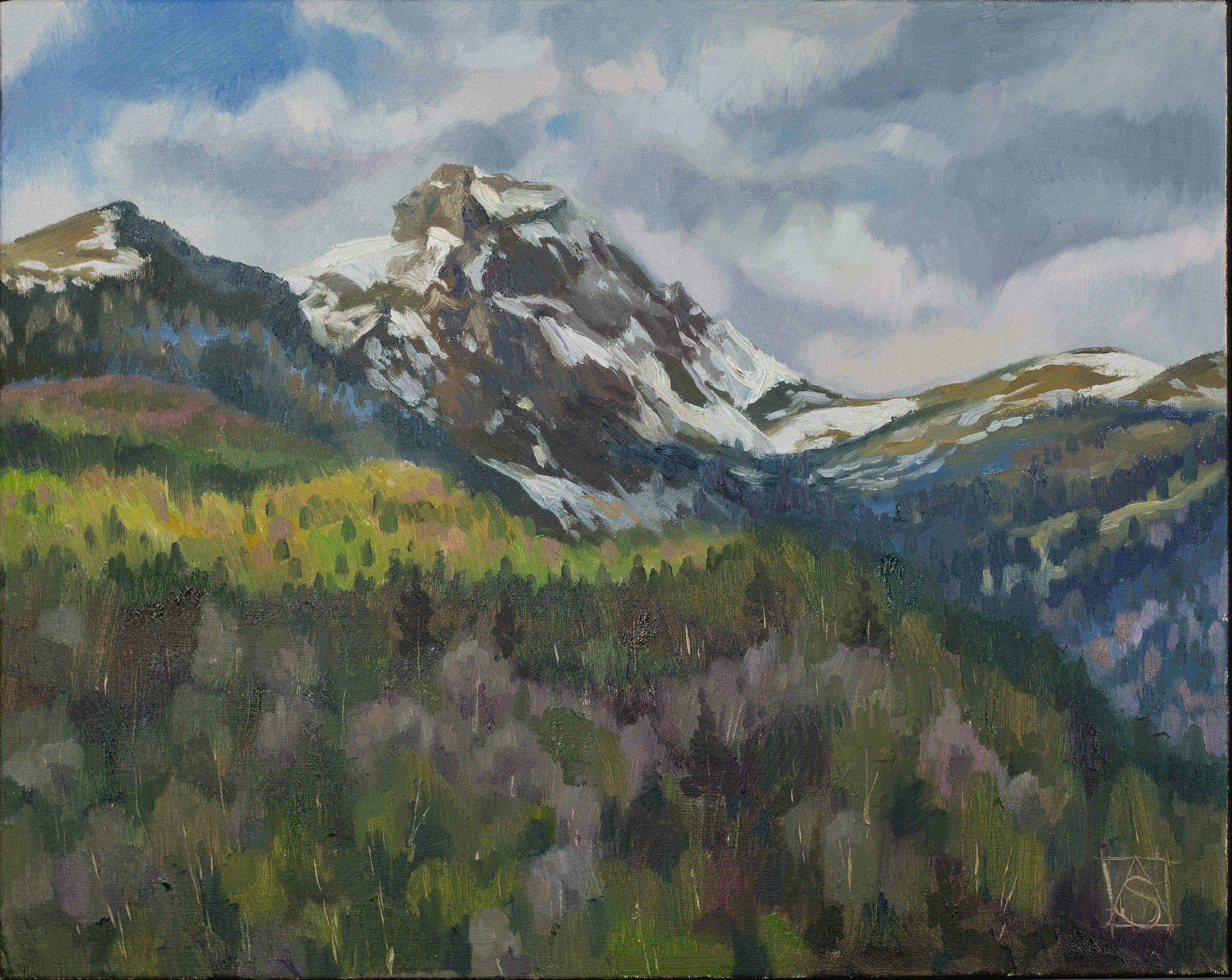
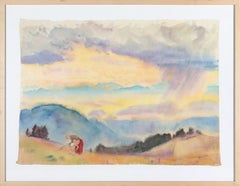
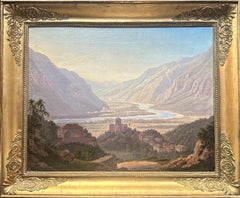
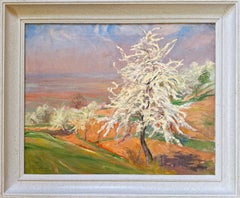
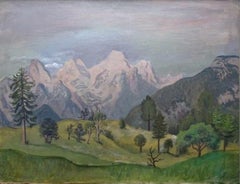
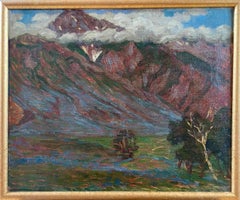
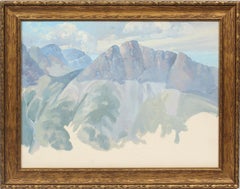
View from the Obersalzberg toward the Hochkalter and Reiter Alpe, 1930/1940
Oil on canvas
Signed lower right
Dimensions: 50 x 70 cm
Frame: 61 x 81 cm
Good condition (see photos)
Viewing and pickup are available by prior appointment
Authenticity will be confirmed in writing.
The painter Max Friedrich Ferdinand Rabes is one of the well-known German artists of the period between the German Empire and World War II. Today, his name is primarily associated with vividly colored depictions of the Orient. However, this categorization does not do him justice, as Rabes saw himself as a versatile landscape, architectural, and travel painter. It is precisely against this backdrop that his depictions of the Berchtesgadener Land are of particular interest. Max Rabes was born on April 17, 1868, in Samter in what was then the Province of Posen and later grew up in Berlin. His artistic training was not exclusively academic. Initially, he worked largely as a self-taught artist from life; later, he was taught by the architectural and landscape painter Paul Graeb. His training as a decorative painter also gave him confidence in handling large picture surfaces and architectural motifs. Rabes became famous above all for his extensive travels. He visited the Mediterranean region, North Africa, and the Middle East. A highlight of his career was his participation in Emperor Wilhelm II’s 1898 tour of the Orient to Constantinople and Palestine. As a result, Rabes was already considered one of the socially recognized and internationally experienced German painters during the German Empire. A loose, Impressionist-influenced conception of light and atmosphere became characteristic of his painting. Rabes was less interested in a meticulous topographical rendering than in the visual impression of a landscape: sunlight, clouds, colored shadows, vegetation, and the effect of architecture within its surroundings. This aspect of his work is important when considering his connection to the Obersalzberg. Rabes expressly did not want to be understood exclusively as an “Oriental painter.” Landscapes from Germany and the Alpine region were also part of his repertoire. The mountainous landscape of the Berchtesgadener Land offered a painter of his orientation nearly ideal subjects. The monumental mountain ranges, the dramatic shifts in light, low-lying clouds, forested slopes, and traditional farmhouses provided precisely the combination of landscape, architecture, and atmosphere that particularly interested Rabes.
Obersalzberg is a district or “Gnotschaft” of the market town of Berchtesgaden in the Upper Bavarian district of Berchtesgadener Land. Obersalzberg was part of the municipality of Salzberg until it was incorporated into Berchtesgaden on January 1, 1972. With the Pension Moritz, founded in 1877 by Mauritia Mayer and which hosted numerous prominent guests, Obersalzberg became one of the cradles of tourism in the Berchtesgadener Land region. Around the turn of the century, many well-known figures, such as Carl von Linde, also settled in the town with a second home. Adolf Hitler first visited Obersalzberg in 1923 and regularly used it as his vacation home. Later, he rented a house on a permanent basis and, after purchasing it, converted it into the Berghof, a stately second residence. Beginning in 1933, nearly the entire district, including the Kehlstein, was designated a “Führer’s restricted area.” Both the local population and the owners of second homes were, in some cases, forcibly resettled; their houses were purchased or expropriated and subsequently demolished for the most part. During a bombing raid in April 1945, the buildings were largely destroyed. The return to Obersalzberg sought by the former residents after the end of the war, along with the reconstruction of the original town, did not materialize. In the postwar period, the area was largely part of a recreational center for the U.S. Armed Forces. After it was transferred to the Free State of Bavaria in 1996, the area was developed into the The painter Max Friedrich Ferdinand Rabes is among the well-known German artists of the period between the German Empire and World War II. Today, his name is primarily associated with vividly colored depictions of the Orient. However, this classification does not do him justice, as Rabes saw himself as a versatile landscape, architectural, and travel painter. It is precisely against this backdrop that his depictions of the Berchtesgadener Land are of particular interest. Max Rabes was born on April 17, 1868, in Samter in what was then the Province of Posen and later grew up in Berlin. His artistic training was not exclusively academic. At first, he worked largely as a self-taught artist, painting from nature; he was subsequently taught by the architectural and landscape painter Paul Graeb. His training as a decorative painter also gave him confidence in handling large picture surfaces and architectural motifs. Rabes became famous above all for his extensive travels. He visited the Mediterranean region, North Africa, and the Middle East. A highlight of his career was his participation in Emperor Wilhelm II’s 1898 tour of the Orient to Constantinople and Palestine. As a result, Rabes was already considered one of the socially recognized and internationally experienced German painters during the German Empire. A loose, Impressionist-influenced conception of light and atmosphere became characteristic of his painting. Rabes was less interested in a meticulous topographical rendering than in the visual impression of a landscape: sunlight, clouds, colored shadows, vegetation, and the effect of architecture within its surroundings. This aspect of his work is important when considering his connection to the Obersalzberg. Rabes expressly did not want to be understood exclusively as an “Oriental painter.” Landscapes from Germany and the Alpine region were also part of his repertoire. The mountainous landscape of the Berchtesgadener Land offered a painter of his orientation nearly ideal subjects. The monumental mountain ranges, the dramatic shifts in light, low-hanging clouds, forested slopes, and traditional farmhouses provided precisely the combination of landscape, architecture, and atmosphere that particularly interested Rabes.