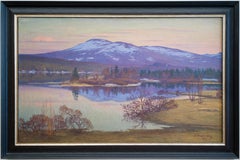
Swedish Mountain Landscape with Lake
oil on canvas laid on masonite
18 x 27 cm (7 1/8 x 10 5/8 in)
28 x 37 cm (11 x 14 5/8 in)
Provenance:
Acquired directly from Katarina Gunnarsson, who inherited the painting from her mother, Barbro, the daughter of the artist.
Essay:
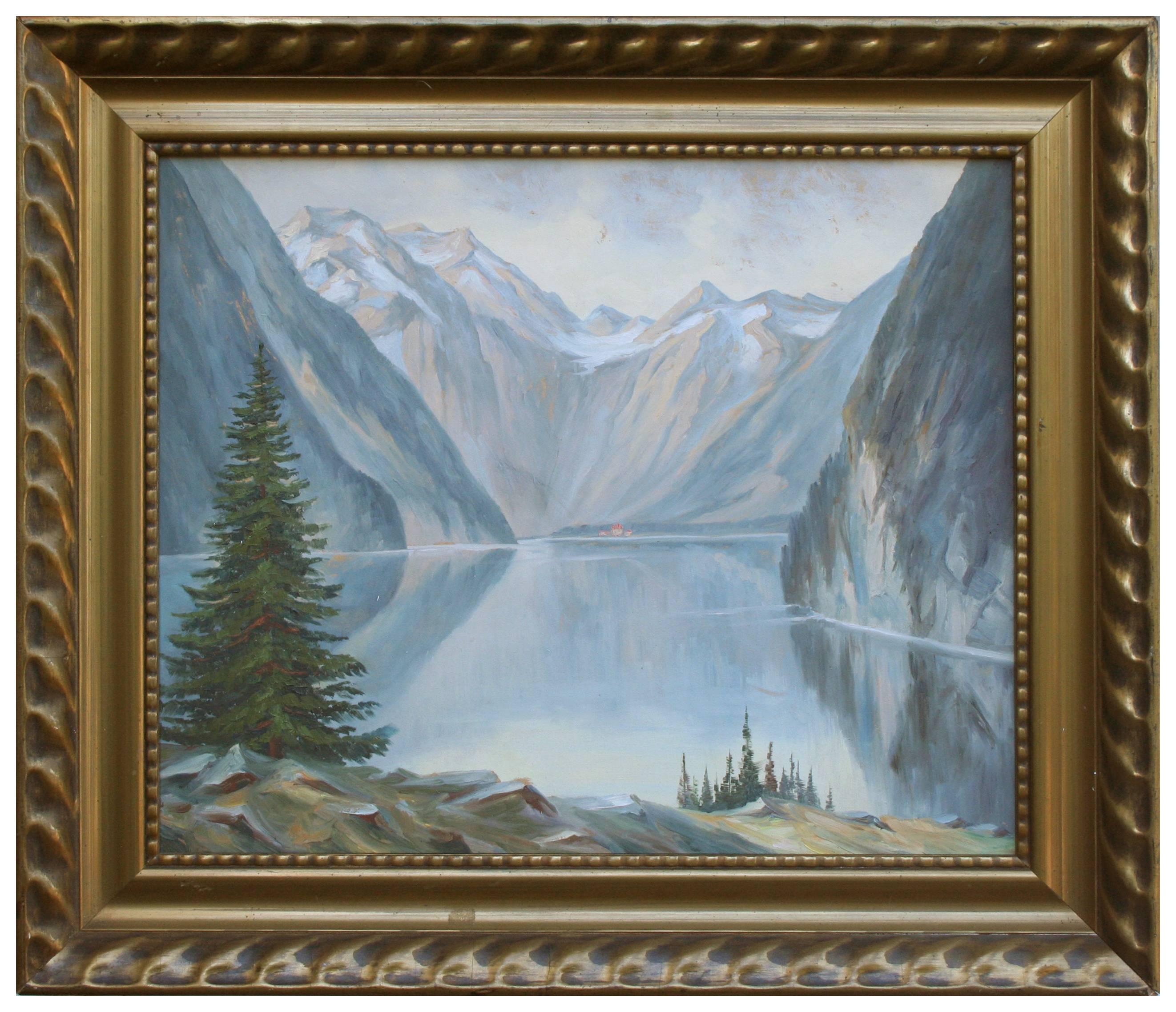
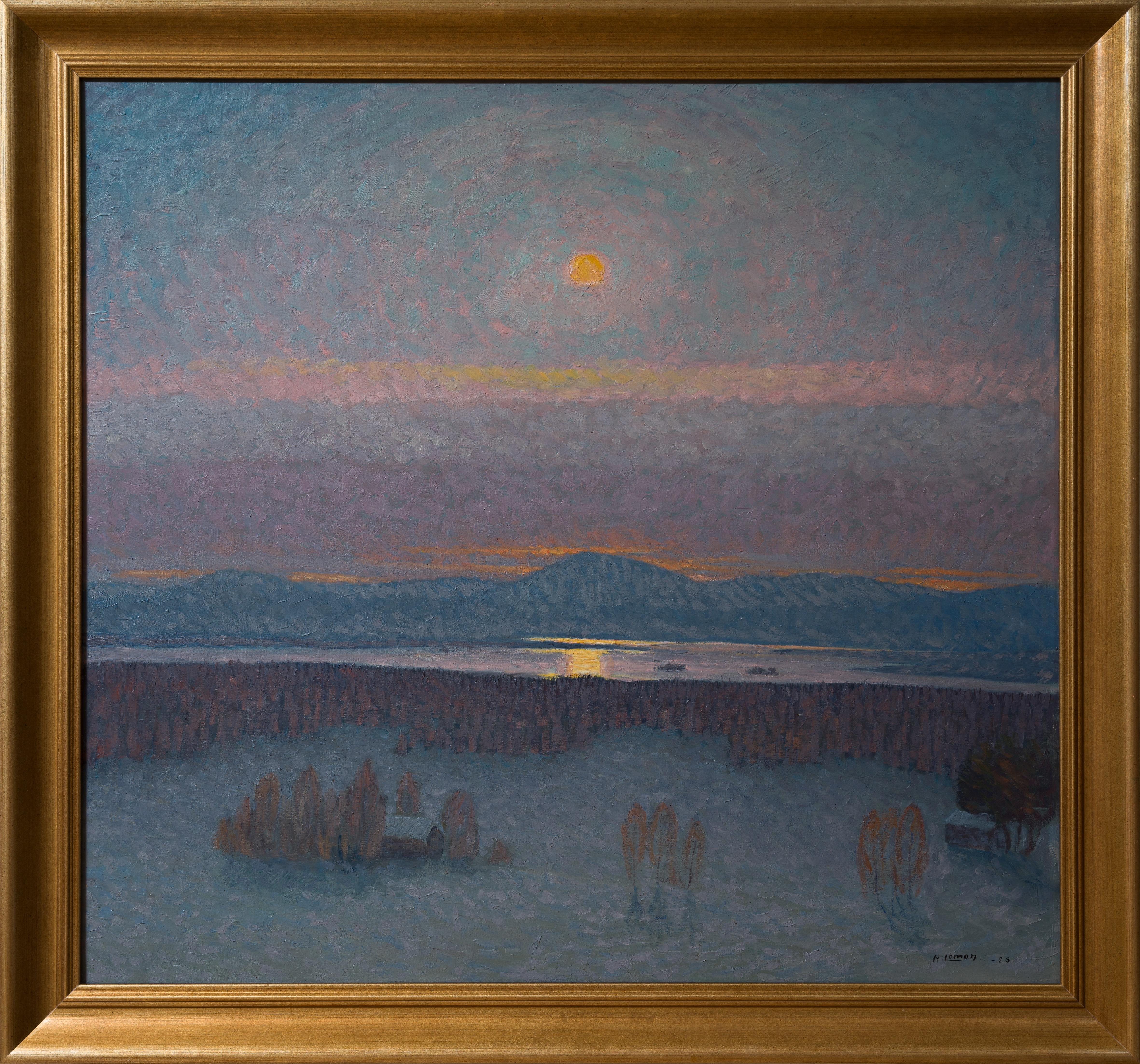
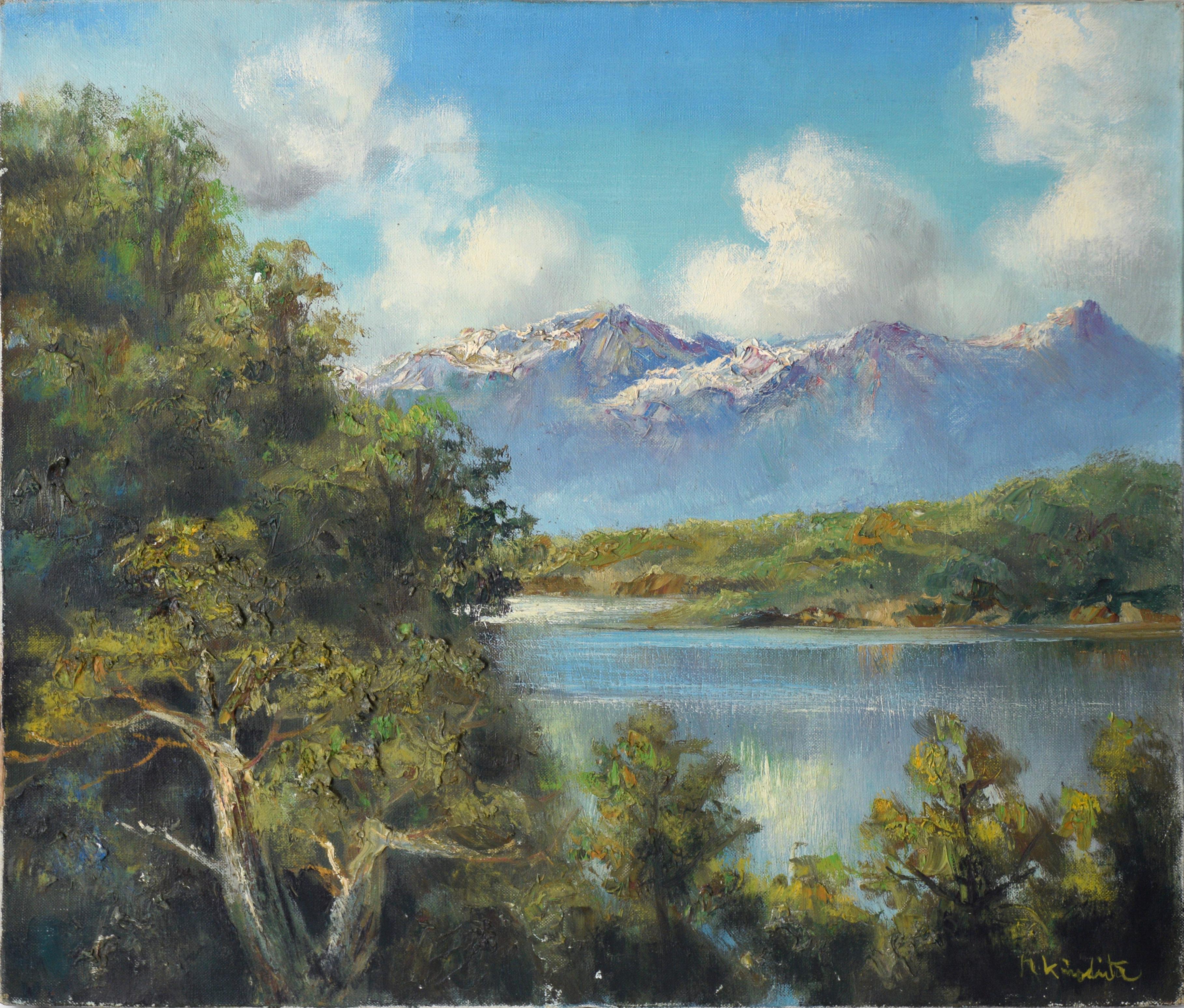
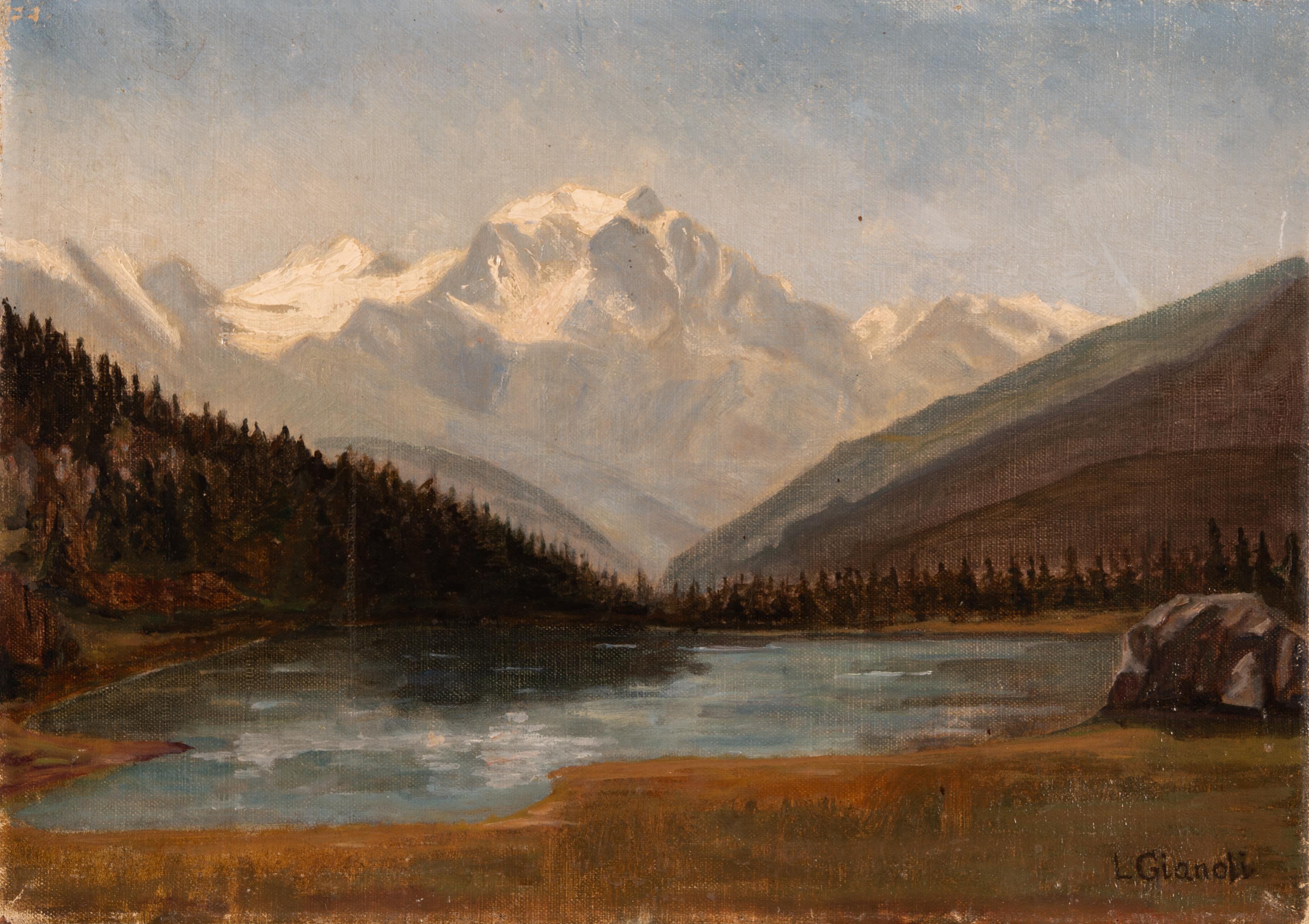
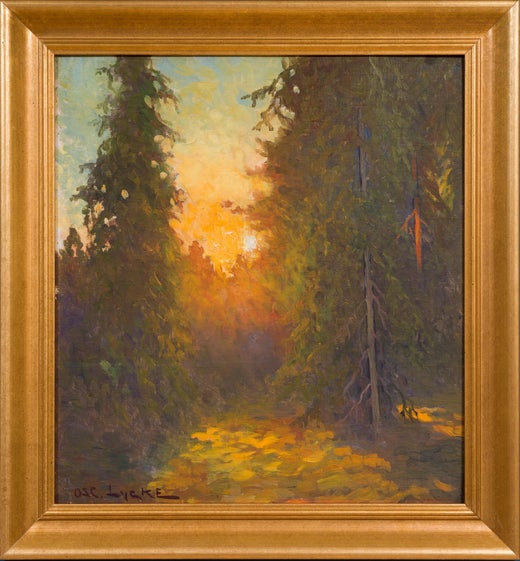
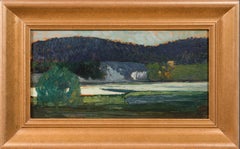
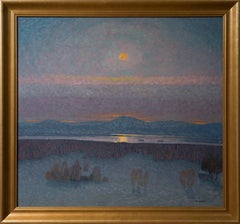
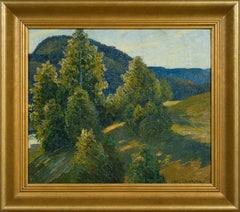
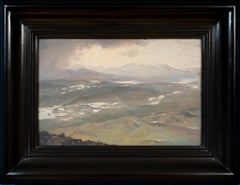
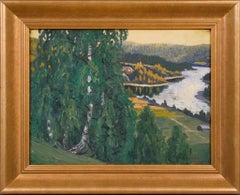
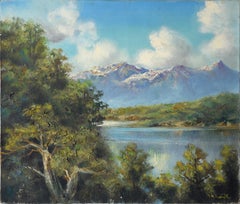
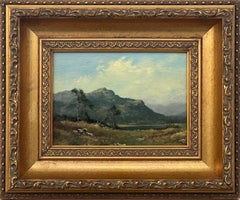
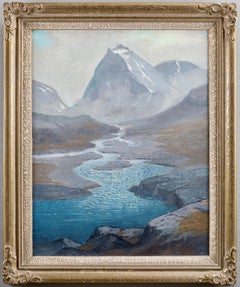
This small yet evocative painting captures the serene beauty of northern Sweden’s wilderness. The foreground features a tranquil mountain lake, its surface reflecting the cool hues of the surrounding landscape. In the distance, the deep blue silhouettes of mountains rise beneath a luminous sky, creating a striking contrast. The expressive brushwork and rich color palette lend the piece a vibrant, almost tactile quality, characteristic of Lycke’s approach to landscape painting.
Oscar Lycke (1877–1927) was not among the most widely recognized artists of his time, but from an early age, he was determined to make a living as a painter—and he succeeded. Born and raised in Sundsvall, he first received encouragement from a drawing teacher at the local school, only to be discouraged by another. Despite lacking formal artistic training, he moved to Stockholm at the age of twenty, attempting to support himself through painting and illustration. His early years were difficult, but over time, he was able to exhibit his works in several Swedish cities, from Norrköping to Malmö, as well as in Copenhagen and even New York, which he once traveled to.
Lycke was a restless traveler, always in search of new motifs. He lived in various places throughout his life, including Delsbo, where he settled for a time after marrying a woman from Hudiksvall. During the war years of 1915–1918, he resided in Stockholm, spending summers with his family in Räfsnäs in the Stockholm archipelago. Eventually, he returned to his hometown of Sundsvall, where he and his family often spent summers in Bodacke in Liden, a region that provided him with endless inspiration.
By 1918, Lycke had gained recognition, notably with an exhibition at Knaust in Sundsvall. His work reflects the artistic currents of the early 20th century, blending national romanticism with realism. Like many of his contemporaries in Sweden and across Europe—especially in France—he was drawn to both landscape painting and depictions of everyday life.
Despite his success, Lycke’s life was cut short when he passed away in 1927 at the age of 50, after years of declining health and near blindness. His legacy endured, particularly in his native Norrland. In 1977–78, Sundsvall Museum held a retrospective exhibition, revealing how deeply his art had resonated with people. Even decades after his passing, many expatriate Norrländers still kept one of his paintings as a cherished reminder of home.