
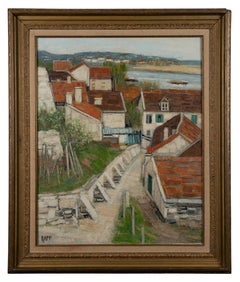
Village on the Shore
By Ginette Rapp
Located in Sheffield, MA
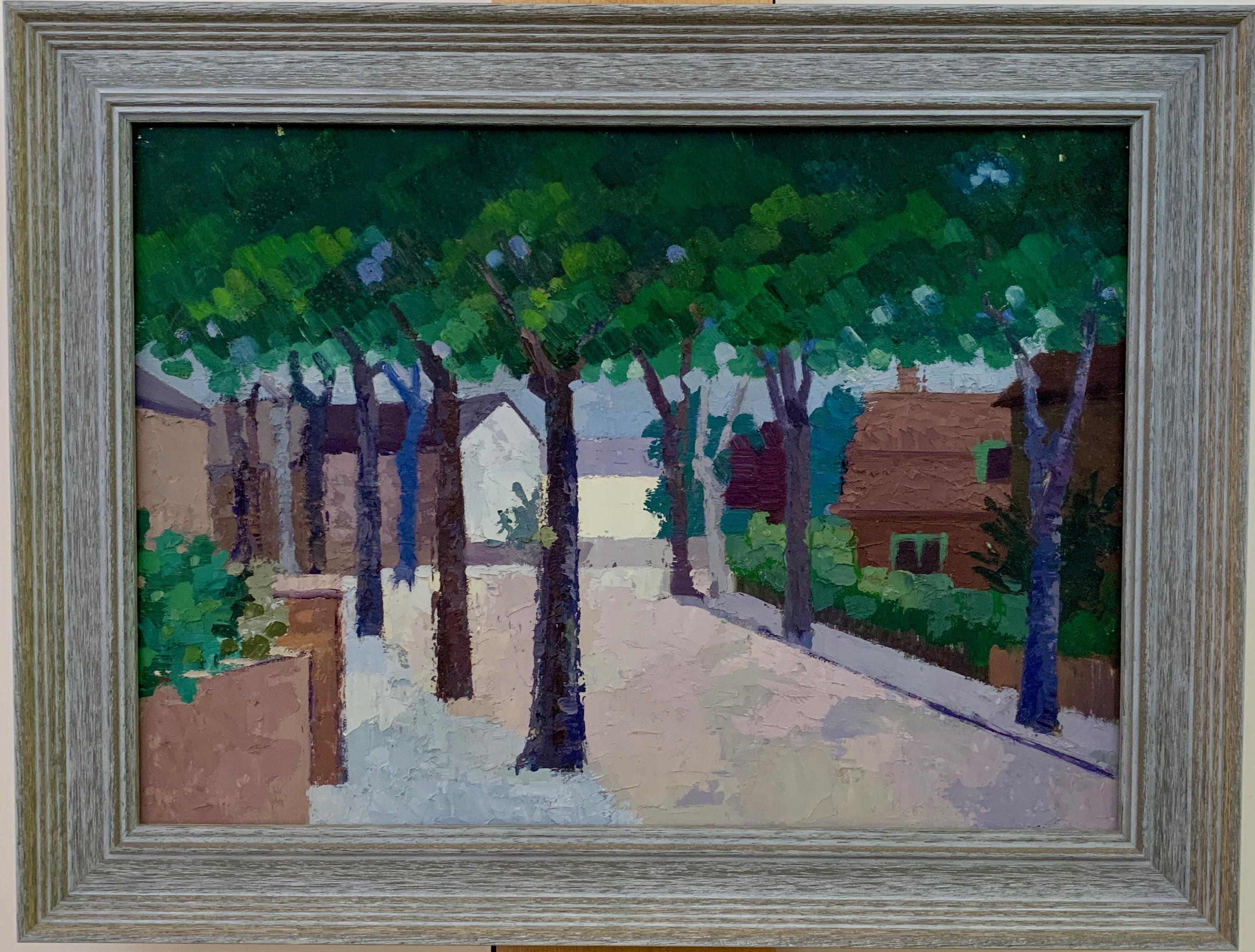
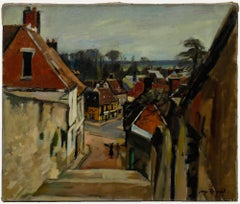
Ginette Rapp French, 1928-1998 Village on the Shore Oil on canvas 25 ½ by 32 in, w/ frame 33 by 40 in Signed lower left
Category
Late 20th Century Modern Landscape Paintings
Materials
Oil
Village on the Shore
By Ginette Rapp
Located in Sheffield, MA
Ginette Rapp French, 1928-1998 Village on the Shore Oil on canvas 25 ½ by 32 in, w/ frame 33 by 40 in Signed lower left
Oil
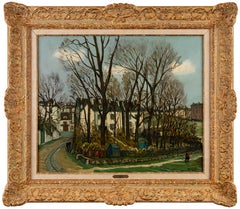
Path Outside the Village
By Alphonse Leon Quizet
Located in Sheffield, MA
Alphonse Léon Quizet French, 1885-1955 Path Outside the Village Oil on canvas 21 ¼ by 25 ½ in, w/ frame 29 ½ by 33 ½ in Signed lower right Inventory Number: 01644 Alphonse Quizet ...
Canvas, Oil
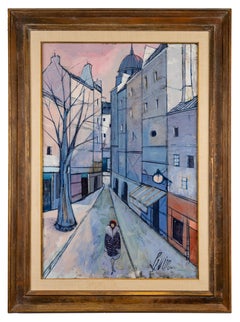
La Rue Solitaire
By Charles Levier
Located in Sheffield, MA
Charles Levier French, 1920-2004 La Rue Solitaire Oil on canvas 36 X 24 in. w/ frame 45 ½ X 33 ½ in. Signed lower right Inventory Number: 01747 Charles Levier was born in 1920 fro...
Canvas, Oil
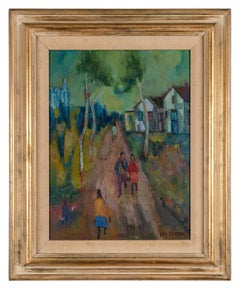
Country Road
Located in Sheffield, MA
Samuel David Landau American, 1895-1979 Country Road Oil on board 12 by 15 ¾ in, w/ frame 18 by 22 in Signed lower right Samuel David Landau was born in Warsaw, Poland, and emigrat...
Oil, Board
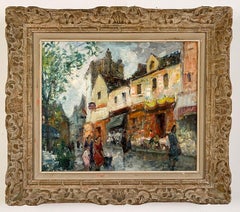
Parisian Street Scene
Located in Sheffield, MA
Merio Ameglio Italian, 1897-1970 Parisian Street Scene Oil on Canvas 18 by 21 ½ in. W/frame 26 by 29 ½ in. Signed lower left Merio noted impr...
Oil
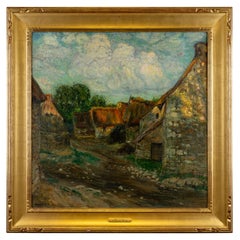
Brittany
Located in Sheffield, MA
Edward Francis Rook American, 1870-1960 Brittany Oil on Canvas 30 by 30 in. W/frame 38 by 38 in. Signed lower left Circa, 1898-1900 Item number: 01879 Rook, born in New York City on September 21, 1870, became one of the most original impressionists at Old Lyme. First he was a student of Benjamin Constant and Jean-Paul Laurens at the Académie Julian. Life started out to be rather promising for Rook, around the turn of the century. He exhibited at the Cincinnati Art Museum and at the Pennsylvania Academy of the Fine Arts, both in 1898, when his harbor scene, entitled Pearl Clouds — Moonlight was reproduced in International Studio, in April. In addition, the PAFA presented him with the Temple Gold Medal for Deserted Street, Moonlight, which the Academy purchased. Three years later, Rook was awarded a bronze medal at the Pan-American Exposition in Buffalo, where he exhibited three landscapes. Caffin (1902, p. xxxvi) praised the artist's "translucent quality of color," which suggests a study of color theory. Also in 1901, Rook married Edith Sone. For most of 1902, the Rooks were in Mexico. Rook came to Old Lyme in October of 1903. The date is significant because Childe Hassam was also there that month. Hassam would more or less re-orient the artists' colony from Tonalism to impressionism. Rook would move there permanently two years later. He took two medals at the St. Louis Universal Exposition (1904) where his landscapes from the Mexican trip were displayed. More awards followed: a silver medal at the International Fine Arts Exposition in Buenos Aires, 1910, a gold medal at San Francisco's Panama-Pacific International Exposition in 1915, a Corcoran Bronze Medal, and a William A. Clark Award in 1919 for Peonies. By 1924, the artist was made a National Academician. Despite all these awards and recognition, Rook did little in the way of selling his art and reportedly, his prices were too high. His paintings were handled by Macbeth and Grand Central Art Galleries. Rook was active in Old Lyme's art community. As stated above, he would have met Hassam that October in 1903 but Willard Metcalf had departed at the end of the summer. As several writers have explained (Connecticut and American Impressionism, 1980, p. 123), Hassam "was the catalyst around whom [impressionism] coalesced." Rook's niece, Virginia Rook Garver, who happened to be the grand-niece of Hassam, confirmed that Rook and Hassam knew each other in Europe — before they went to Old Lyme (Fischer, 1987, p. 19). Rook was one of the relatively young painters to come to Old Lyme, along with Gifford Beal, William Chadwick, and Robert Nisbet, on the wave of impressionism, initiated there by Hassam and Metcalf. Old Lyme became a center of American impressionism, and as Donelson F. Hoopes remarked, "under Hassam, the shoreline of Connecticut became a kind of Giverny of America." Among Ranger's group, palettes started to become lighter, except those of the most determined tonalists. Ranger himself, perhaps admitting defeat, moved to Noank in 1904. Rook is best known for his views of Bradbury's Mill, which was soon called Rook's Mill, owing to the painter's many versions of the scene. One, called Swirling Waters, dated ca. 1917, is in the Lyme Historical Society. Even more famous is Rook's Laurel, dated between 1905 and 1910 (Florence Griswold Museum), in which a profuse laurel bush (the state flower), is set off by a spectacular Constable-like background. But Swirling Waters could never be confused with Constable, with its violent brushwork, impasto-layered water, and bright, almost chalky, plein-air palette. Gerdts (1984, p. 226) compares the paintings of Walter...
Oil
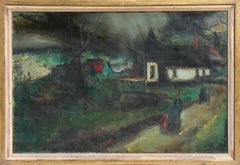
French Village, Modern Oil on Canvas Painting by Jean Louis Liberte
Located in Long Island City, NY
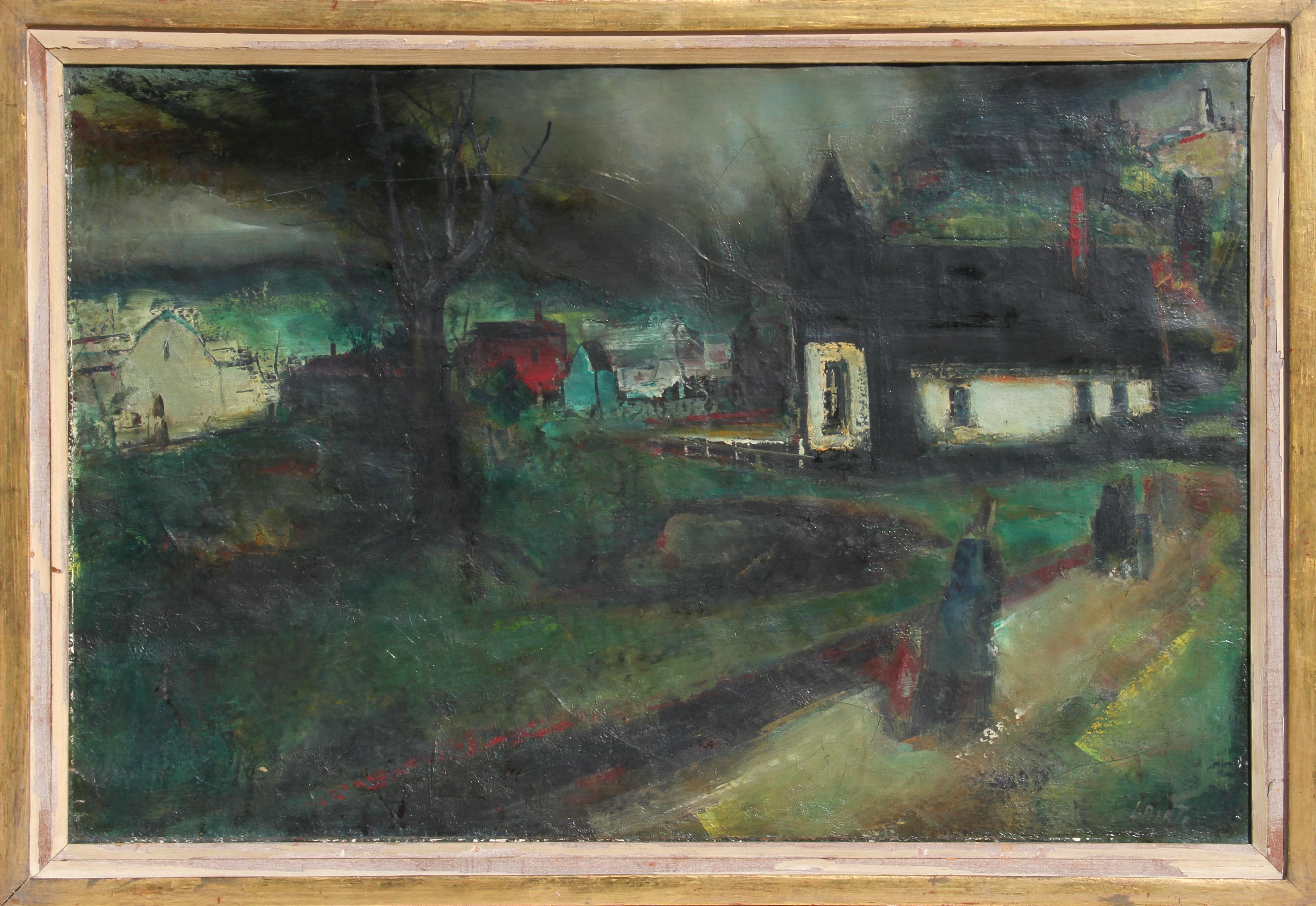
Jean Louis Liberte, French/American (1896 - 1965) - French Village, Year: circa 1940, Medium: Oil on Canvas, Size: 23 in. x 33 in. (58.42 cm x 83.82 cm)
Oil
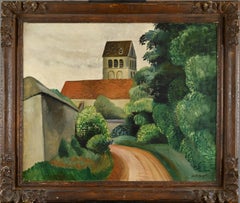
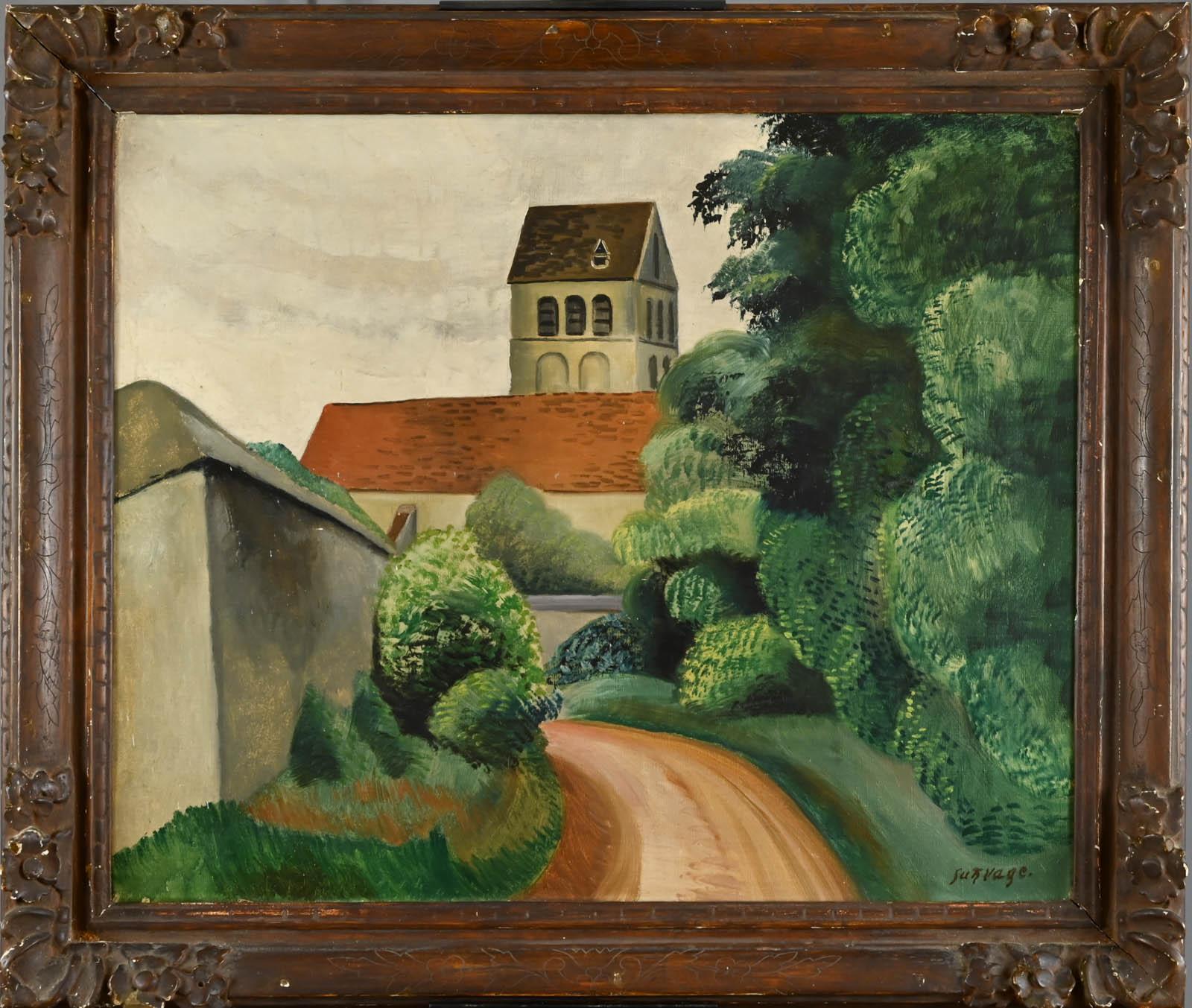
La rue du village
By Léopold Survage
Located in LE HAVRE, FR
Léopold SURVAGE (1879-1968) La rue du village Oil on canvas Size: 50 x 61 cm Signed lower right Provenance: Private collection in Normandy. Oil on canvas in good condition. Small...
Canvas, Oil
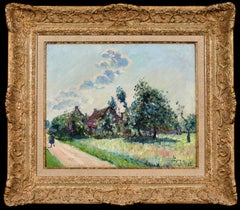
L'entree du village - Post Impressionist Landscape Oil by Bernardus Klene
By Bernhard Klène
Located in Marlow, Buckinghamshire
Signed and dated oil on canvas landscape by Flemish post impressionist painter Bernardus Henricus Klene. The work depicts a view of a path leading to a village on a summer's day. The...
Canvas, Oil
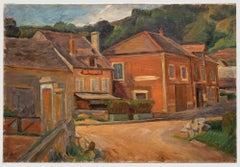
Bertrand Py (1895-1973) - Mid 20th Century Oil, Rural Village, France
Located in Corsham, GB
Unsigned. Inscribed indistinctly to the lower right. On canvas on stretchers.
Oil
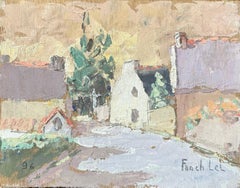
French Village Landscape in Impressionist Style
By Fanch Lel
Located in Cirencester, Gloucestershire
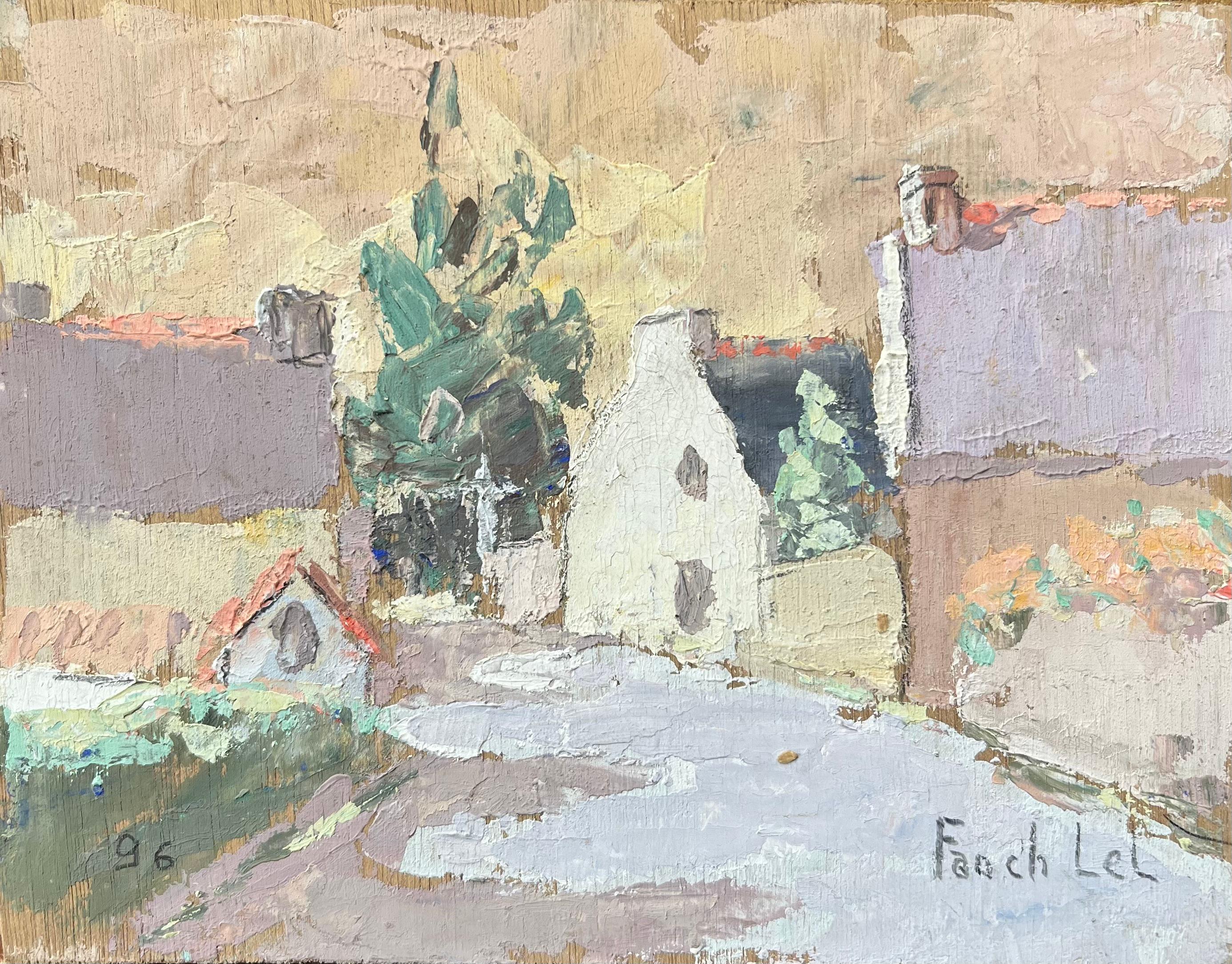
Title: French Village Landscape in Impressionist Style By Fanch Lel (French b. 1930) Size: 5.25 x 6.75 inches (height x width) Signed: Bottom right Oil painting on board, unframed Co...
Oil
Georges Pacouil (1903-1996) - Mid 20th Century Oil, Chaumont-en-Vexin
Located in Corsham, GB
Oil on canvas. Signed lower right.
Oil