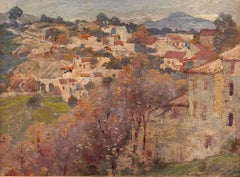
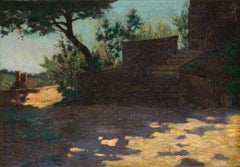
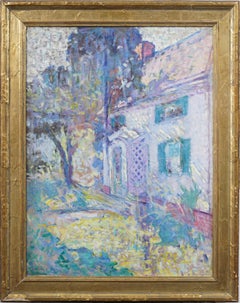
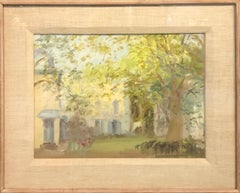
Walter Griffin (1861 - 1935)
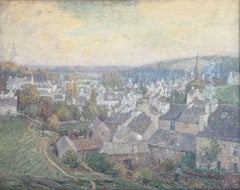
Eleventh Century Romance
Oil on canvas
34 x 36 inches
Signed lower right; signed on the reverse and titled on the stretcher
Born in Portland, Maine on 14 January 1861, the son of Lydia Libby and Edward Souther Griffin, a successful woodcarver, Walter began studying art under his father. First, he learned the techniques of sculpture, carving pictorial bas-reliefs, decorative works and small figures. Even as a youth, Walter attempted to capture the likenesses of local mariners who visited his father's studio and he was allowed to accompany his father on sketching trips with the group. At the age of seventeen, Walter left home to attend the recently established School of the Museum of Fine Arts, Boston, where he won a scholarship. Here in 1878, his first teacher was Emil Otto Grundmann, and some of his fellow students include Edmund Tarbell, Frank W. Benson and Dennis Miller Bunker. Walter excelled as a draftsman, following Grundmann's strictly academic training of sketching plaster casts of Antique sculpture and working out problems in compositional design. By 1882, Griffin had reached a certain technical plateau and he decided to move on to study at the National Academy of Design.
In New York, Griffin was guided by Lemuel Wilmarth, director of the Academy school. After only one year, Griffin received a medal for the best figure drawing. He decided to continue his training in Paris; in August 1887 he sailed for England, then hastened to France to enroll at the Académie Julian, along with the multitude of other young aspiring Americans. At first, Griffin continued with his typical genre subjects, exhibiting such works at the 1889 Salon (L'intérieur), then moved to the country, near the former residence of Jean-François Millet. Here he was inspired by the Barbizon School style but he also discovered the vibrant techniques of impressionism, and by the early 1890s, we are able to discern a loosening of Griffin's brushwork. During travels throughout France, Griffin filled numerous sketchbooks then sailed home in 1897 to take the position of director of the School of the Society of Art in Hartford, Connecticut. Concurrently, he was appointed director of the Hartford Museum and Art School.
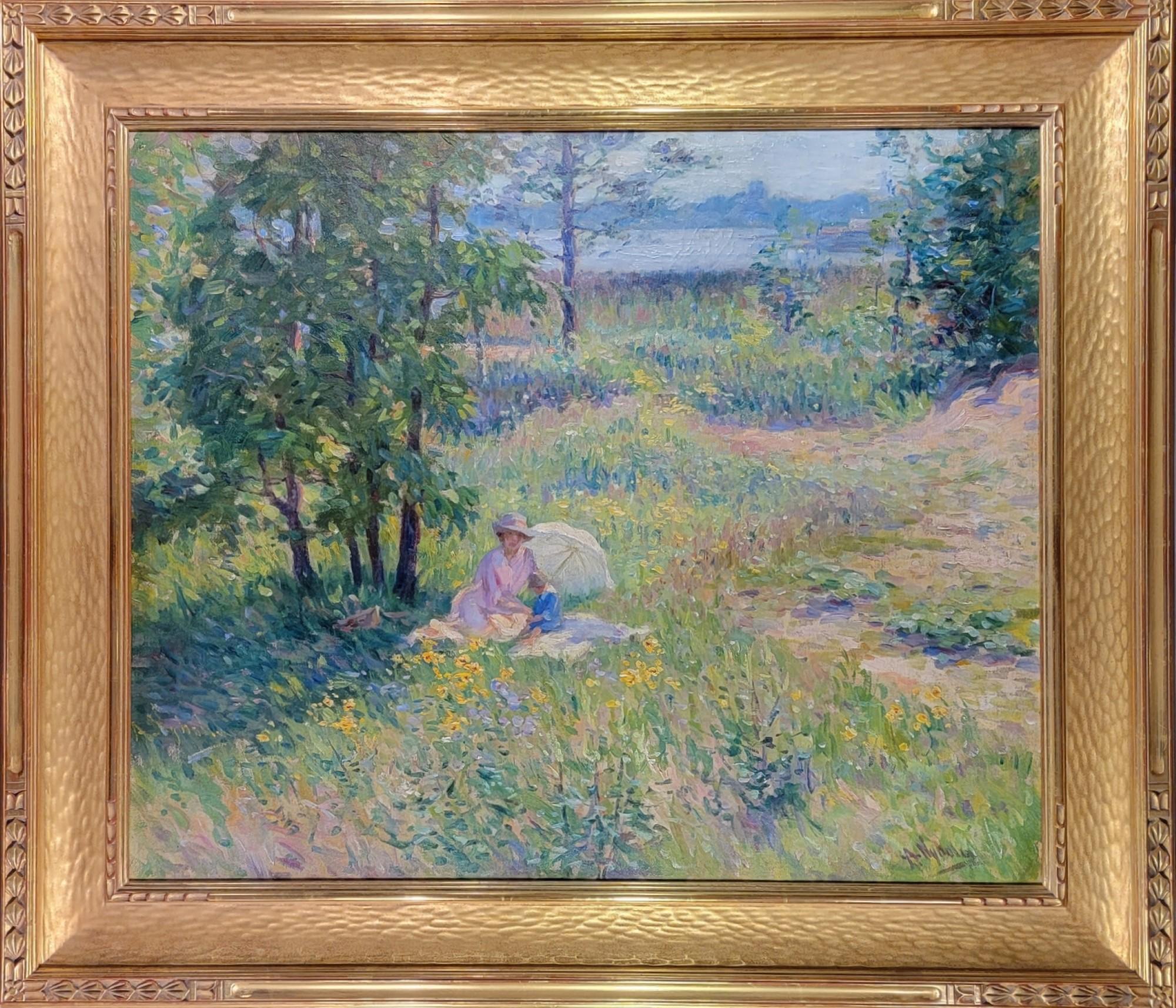
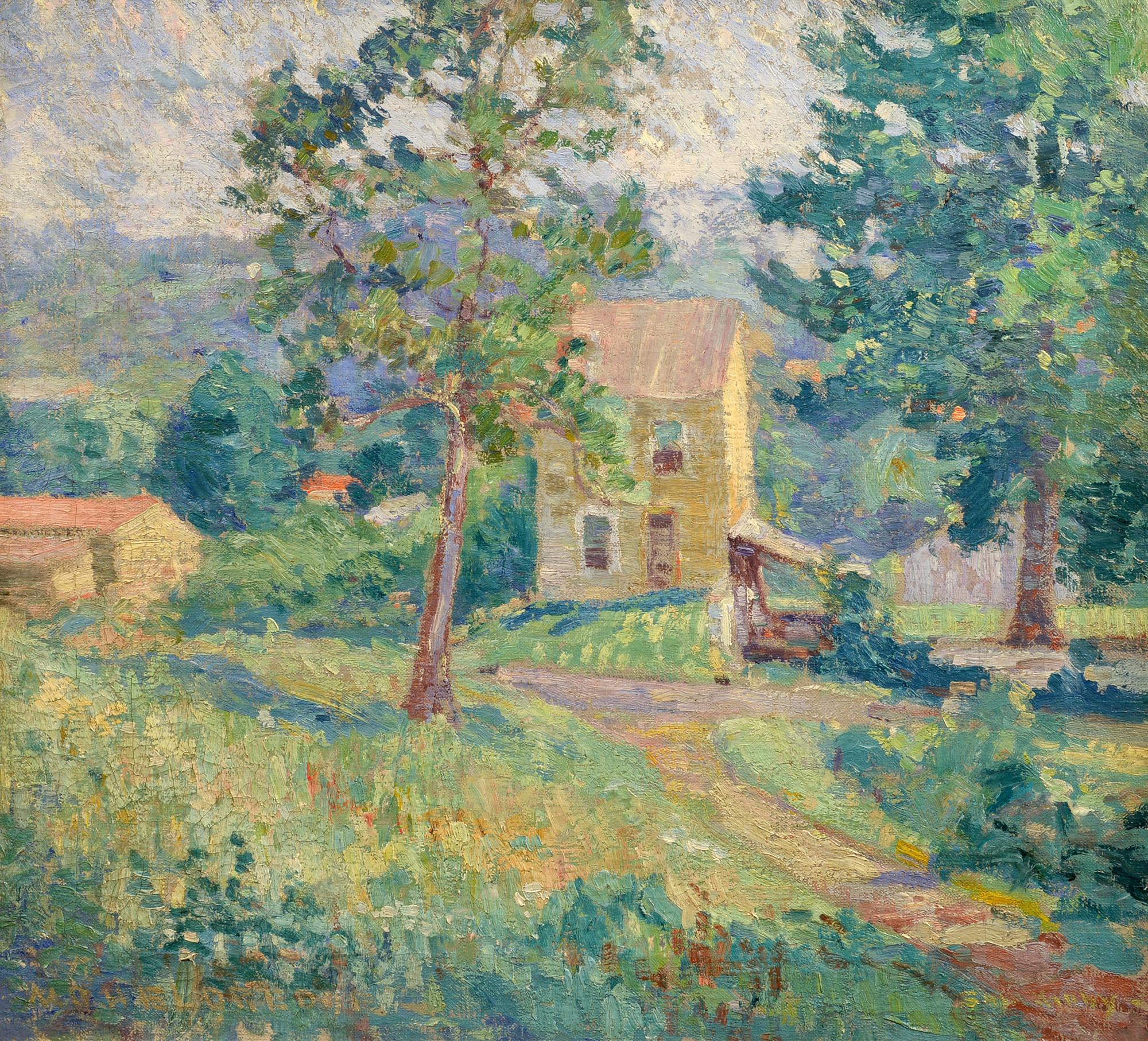
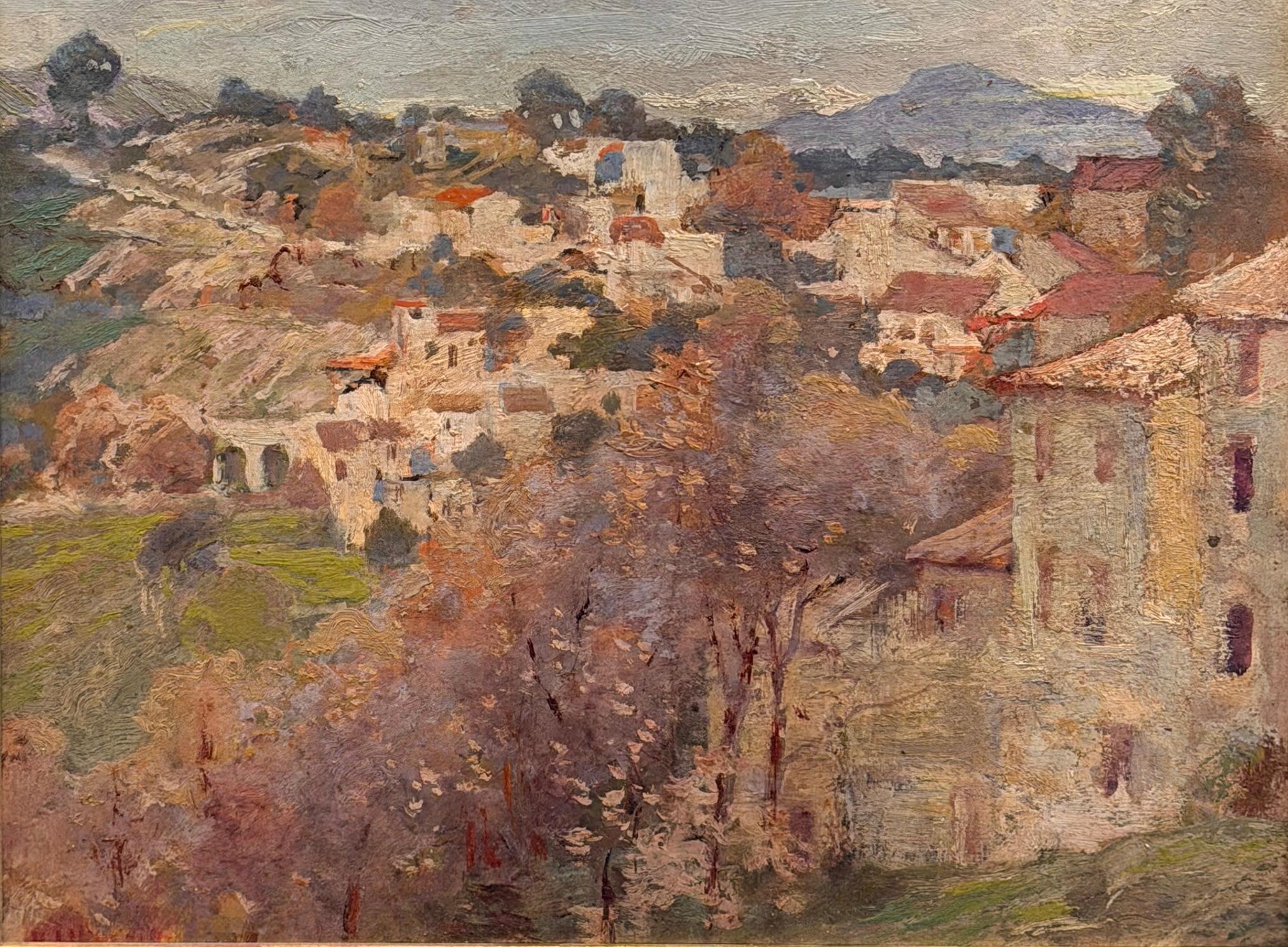
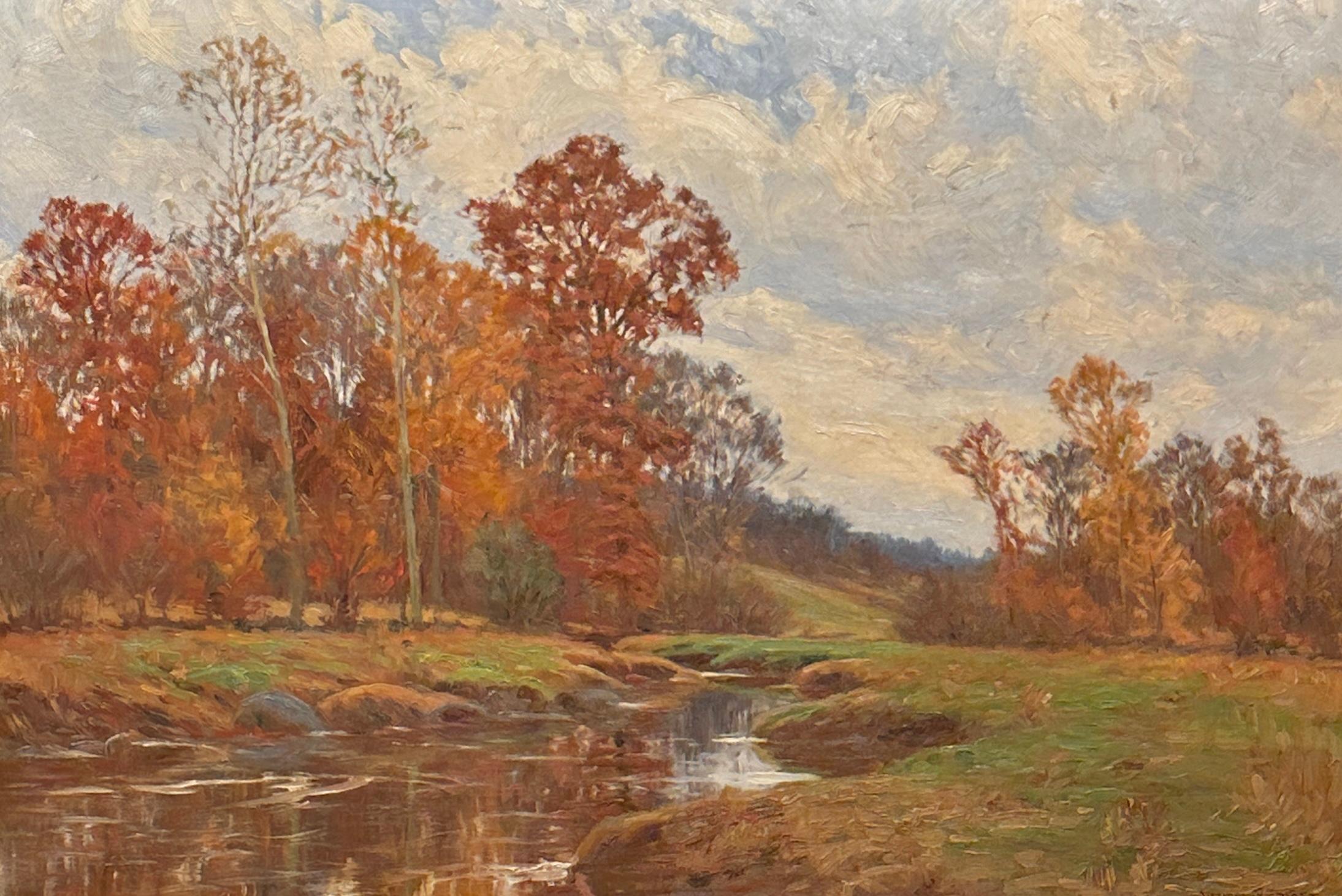
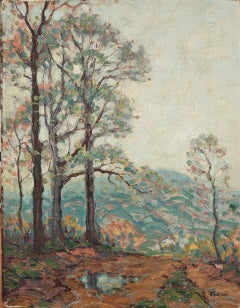
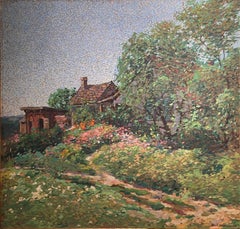
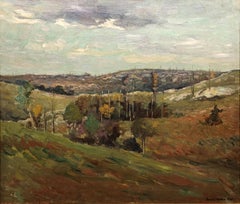
The beginning of Griffin's impressionist period coincides with his discovery of Old Lyme and in 1905 he became a resident member of the artists' colony. Childe Hassam became one of Griffin's closest friends. Griffin developed his technique further, which might best be described as a sketchy application of small mosaic-like brushstrokes, at times quite contrasting in tonality — a combination of small opaque strokes and corresponding areas of open translucent underglaze. He also began the execution of some of his finest works, the well known hard-point pastels. For the most part, these usually small and delicately luminous works are daringly expressionistic as compared to oils of the same period. They frequently display a unique and personal style, characterized by an extremely busy albeit pleasing combination of clustered patterns and a swirling linear spontaneity. Griffin also traveled to Monhegan Island with the independently wealthy artist William Singer, Jr., who became his life-long friend. He experimented further the following year in Brittany, by applying dashes of rich impasto pigment with a palette knife to the canvas. The outlines of forms are diffused in an ambiguous spatial complex. Griffin's election as an Associate in the Academy in 1912 helped to further his fame in his own country.
In 1913 Griffin went to Venice where he painted with indefatigable energy. At that time, he established a new secure technique, a brilliance of color vibration, and a sureness of handling. After years of experimentation and development, Griffin had achieved a definitive, unique style. 1915 was an eventful year for Griffin. Besides exhibiting at the National Academy, he was given a one-man show at the Portland Museum, and he won a Medal of Honor at the Panama-Pacific International Exposition in San Francisco, where eight of his paintings were on view. In almost each instance, his new style was well received. Yet conservative critics such as Eugen Neuhaus described Griffin's technique as "careless" and his pictures "so openly disregard technical rules in their careless superimposition of unnecessary paint. . . ." Numerous exhibitions followed, and in 1922, at age 61, Griffin was elected to full membership in the National Academy of Design.
In the spring of 1926 Griffin visited Matisse, then he discovered the picturesque village of Contes. His style changed slightly, as he became even more influenced by the light of the Riviera. After around three years at Contes, Griffin, now in his seventies, decided to retire to his native Portland. He was a "fixture" at the Portland Museum until his declining health forced him to stay away. Griffin died at the age of seventy-four; his passing was followed by the death of Hassam three months later.