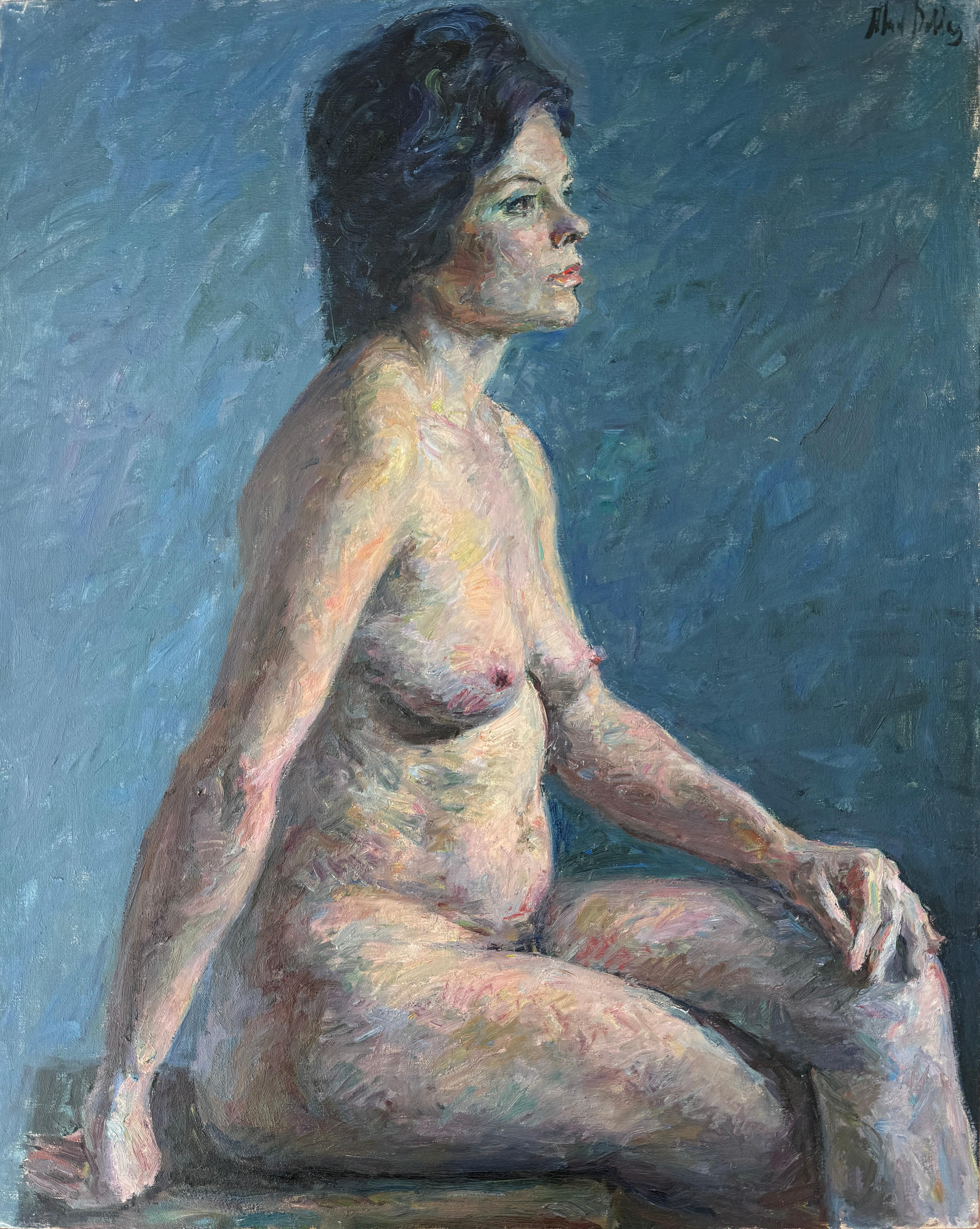
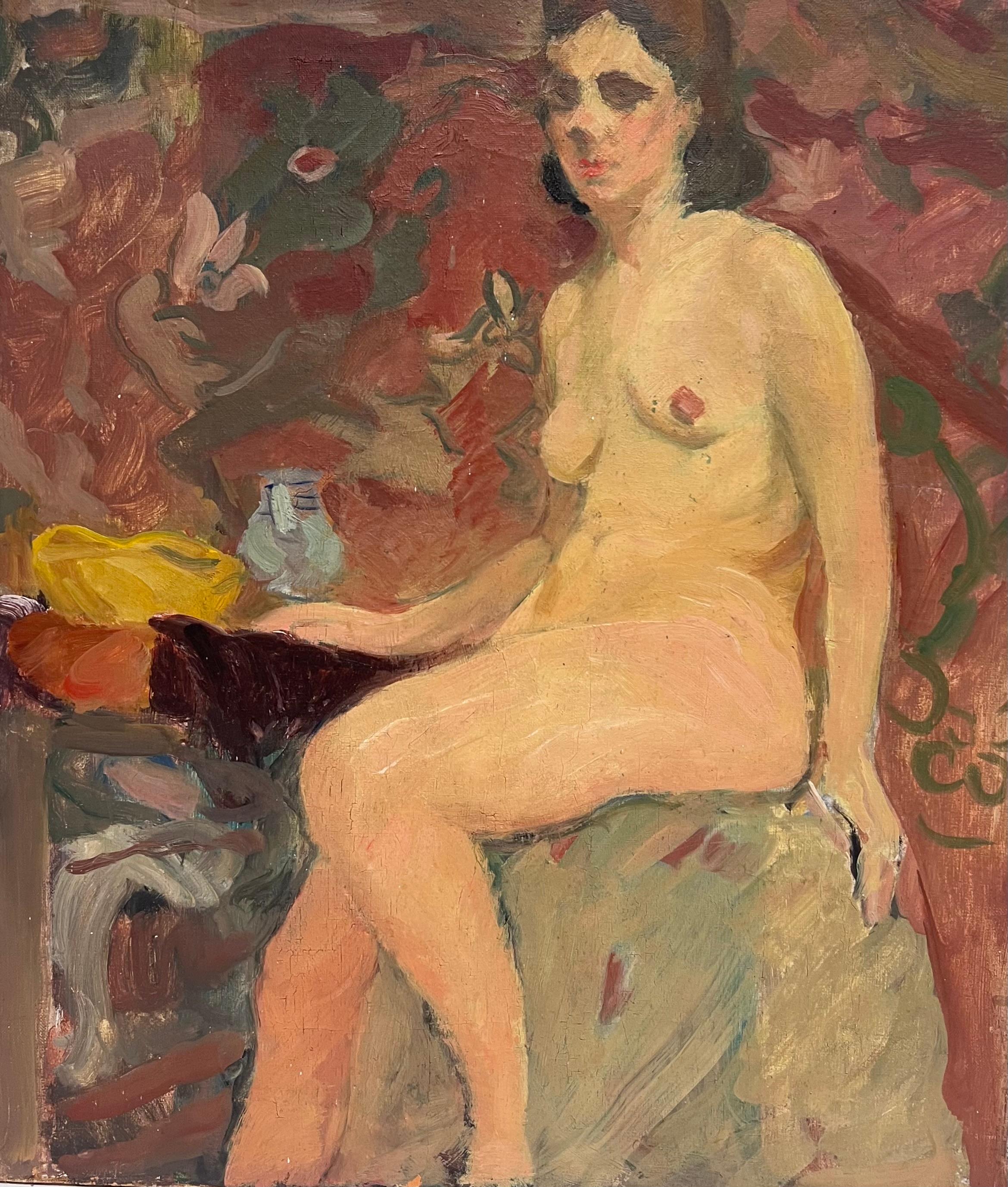
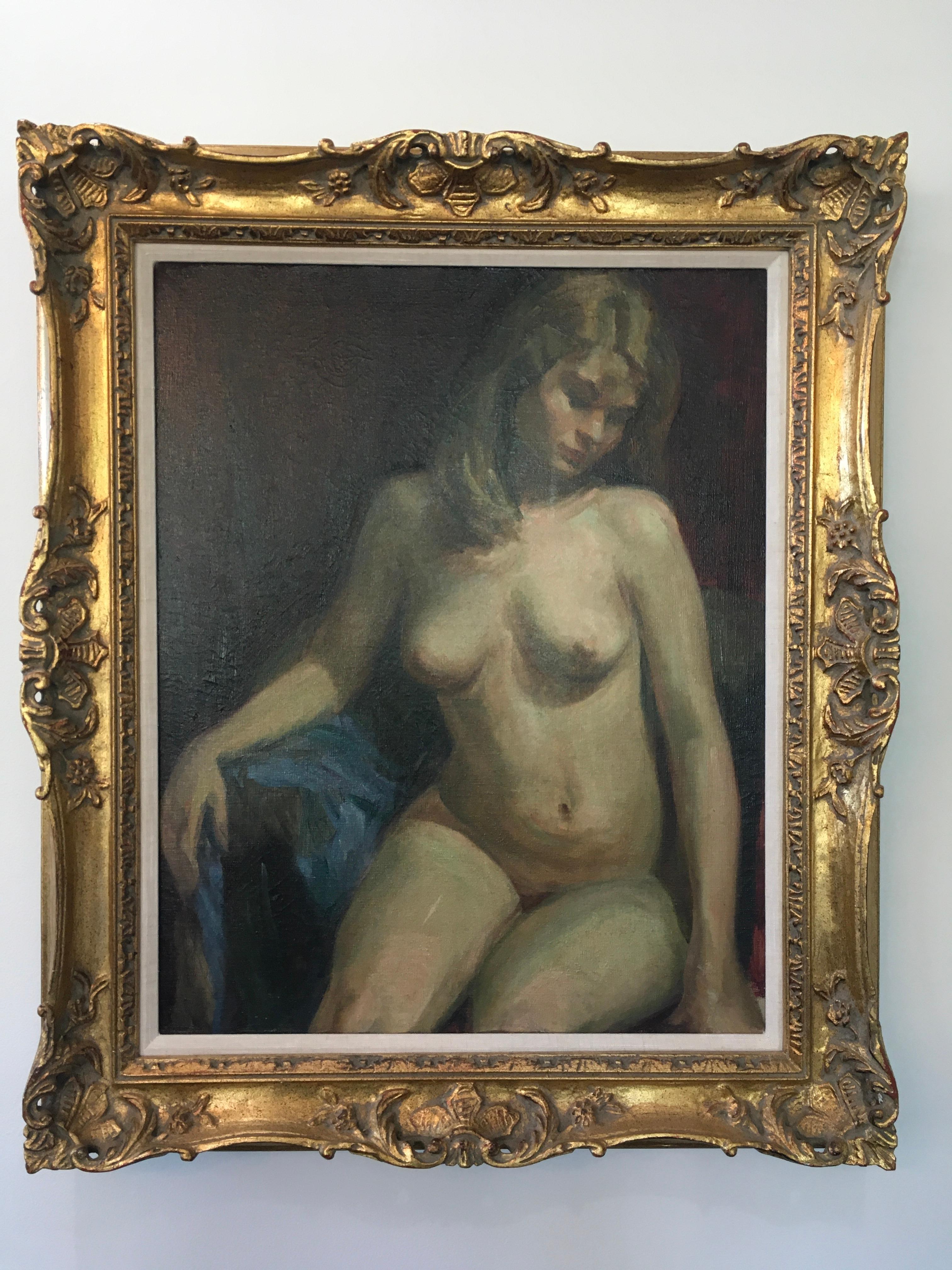
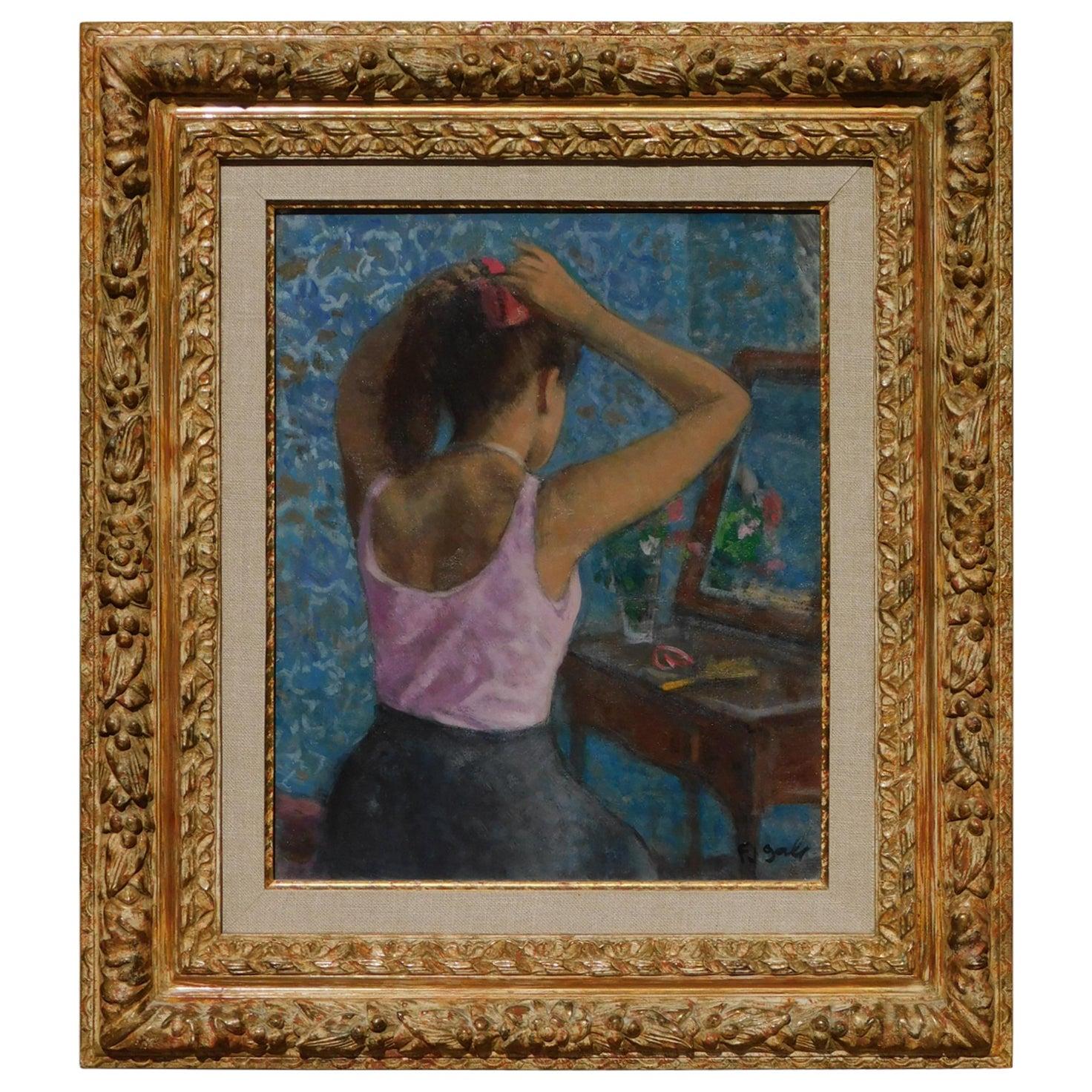
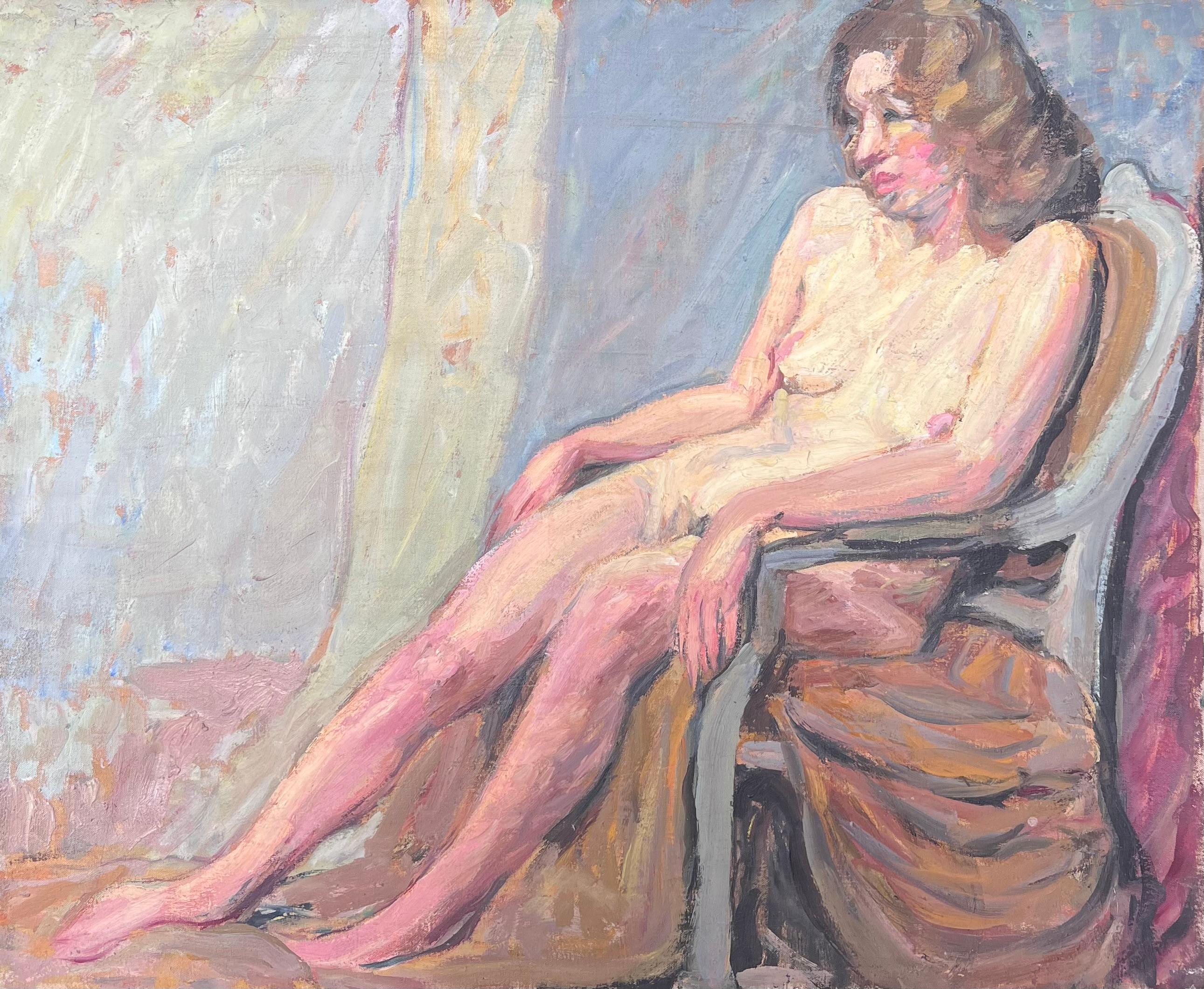
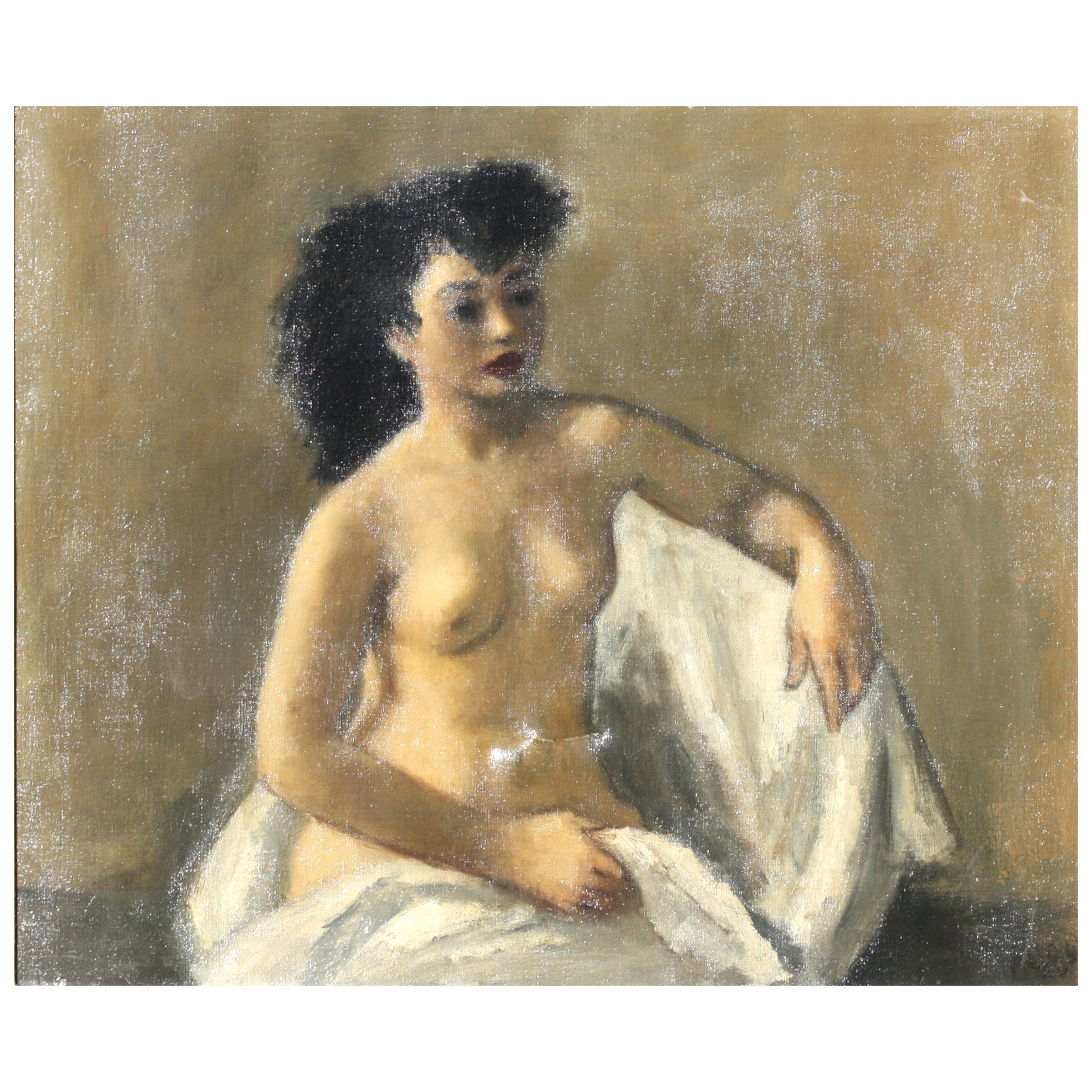
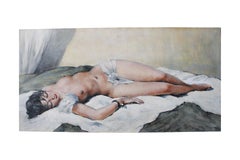
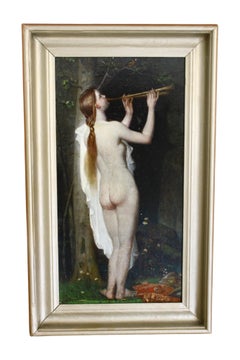
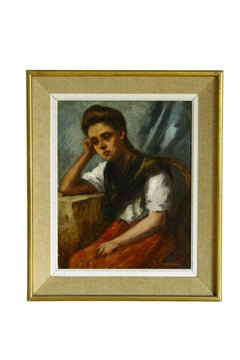
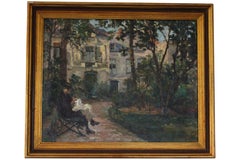
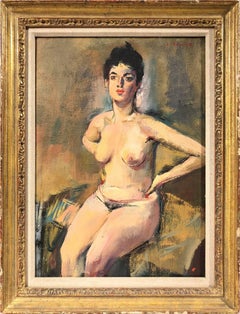
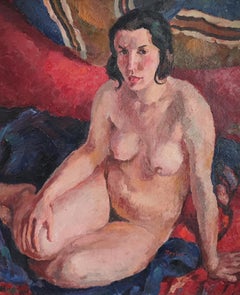
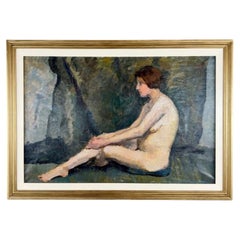
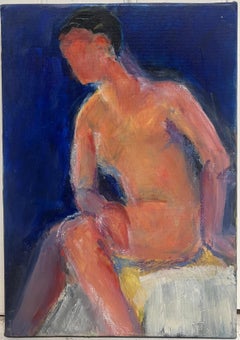
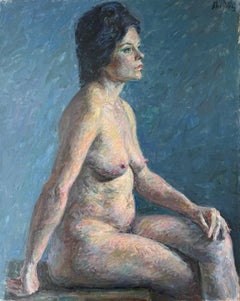
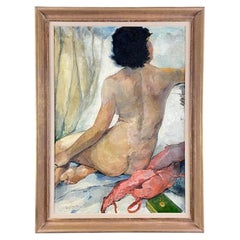
An exceptional mid-century French modernist oil painting depicting a seated female nude (nu assis de dos), painted by the listed French artist Jean Désiré Bascoulès (1919–2006).
This captivating work showcases Bascoulès’ masterful use of expressive brushwork and a sophisticated, muted color palette. The artist deftly balances warm flesh tones with cool undertones of soft green, cream, and deep charcoal, creating a powerful sense of form, volume, and intimacy. The fluid, confident strokes and thick impasto elements reflect the enduring influence of the School of Paris and post-impressionist figurative traditions.
The painting is signed by the artist in the lower left corner (Jean Désiré Bascoulès). It comes An exceptional mid-century French modernist oil painting depicting a seated female nude (nu assis de dos), painted by the listed French artist Jean Désiré Bascoulès (1919–2006).
This captivating work showcases Bascoulès’ masterful use of expressive brushwork and a sophisticated, muted color palette. The artist deftly balances warm flesh tones with cool undertones of soft green, cream, and deep charcoal, creating a powerful sense of form, volume, and intimacy. The fluid, confident strokes and thick impasto elements reflect the enduring influence of the School of Paris and post-impressionist figurative traditions.
The painting is signed by the artist in the lower left corner (Jean Désiré Bascoulès). It comes beautifully presented in a vintage ornamental gilt frame featuring an integrated dark matte slip that provides excellent visual depth, making it ready to anchor any modern or eclectic fine art collection.
MORE ABOUT THIS PAINTING:
Medium: Oil on canvas
Overall size: 27.5 ins x 19ins or 70cms x 48cm (Approx)
Date: 1950's
Condition: The painting is in good vintage condition. The frame is also vintage and you should expect minor missing moulding and wear and tear throughout, especially at the corners.
Signed: Jean Désiré Bascoulès (1886–1976) An acclaimed French modernist and post-Orientalist painter celebrated for his lyrical style, technical mastery, and vibrant treatment of light. Born in Perpignan into a Catalan family, Bascoulès began his formal artistic journey at the age of twenty at the École des Beaux-Arts de Bordeaux before moving to Paris to study under the renowned academic master Fernand Cormon.
His rising career was temporarily interrupted by service on the front lines during World War I. Returning to the Paris art scene after the war, he achieved immediate critical success at the 1921 Salon with a poignant portrait of his grandmother, winning both high press praise and a distinction medal.
The defining trajectory of Bascoulès’ career was established in 1925 when he won the prestigious Prix Abd-el-Tif. This coveted prize granted him a residency at the Villa Abd-el-Tif in Algiers, an artistic haven often regarded as the French equivalent to Rome’s Villa Medici. Captivated by the atmospheric qualities and brilliant luminosity of North Africa, he made Algeria his adopted home for nearly four decades. Jean Cocteau famously celebrated his artistic migration, calling Bascoulès a "gift from Occitan France to French Berberia." During this highly productive period, he received immense official backing, becoming a preferred painter and protégé of Sultan Mohammed V, and won the Grand Prix Artistique of Algeria in 1930. In 1931, he was awarded the Cross of the Chevalier de la Légion d’Honneur for his contributions to the Arts.
Stylistically, Bascoulès bridged two distinct artistic worlds. While highly regarded for his architectural views, landscapes, and daily life scenes, his work underwent a striking evolution. His early, deeply disciplined figurative approach gradually dissolved into a freer, more fluid expressionism. In his mid-century figurative and nude studies, he frequently retained precise structural anatomy while building out the surrounding space with broad, visible brushstrokes and abstract, gestural geometries. This dynamic tension between rigorous form and modern abstraction highlights his connection to post-war European modernism.
Following Algerian independence in 1962, Bascoulès returned to the south of France, spending his remaining years painting in Perpignan and Montpellier. Today, his works are held in numerous public institutions and prestigious French and North African museums, including the Musée National des Beaux-Arts d'Alger, the Musée National Zabana d'Oran, and the Musée d'Art et d'Histoire de Narbonne.