Want more images or videos?
Request additional images or videos from the seller
1 of 7

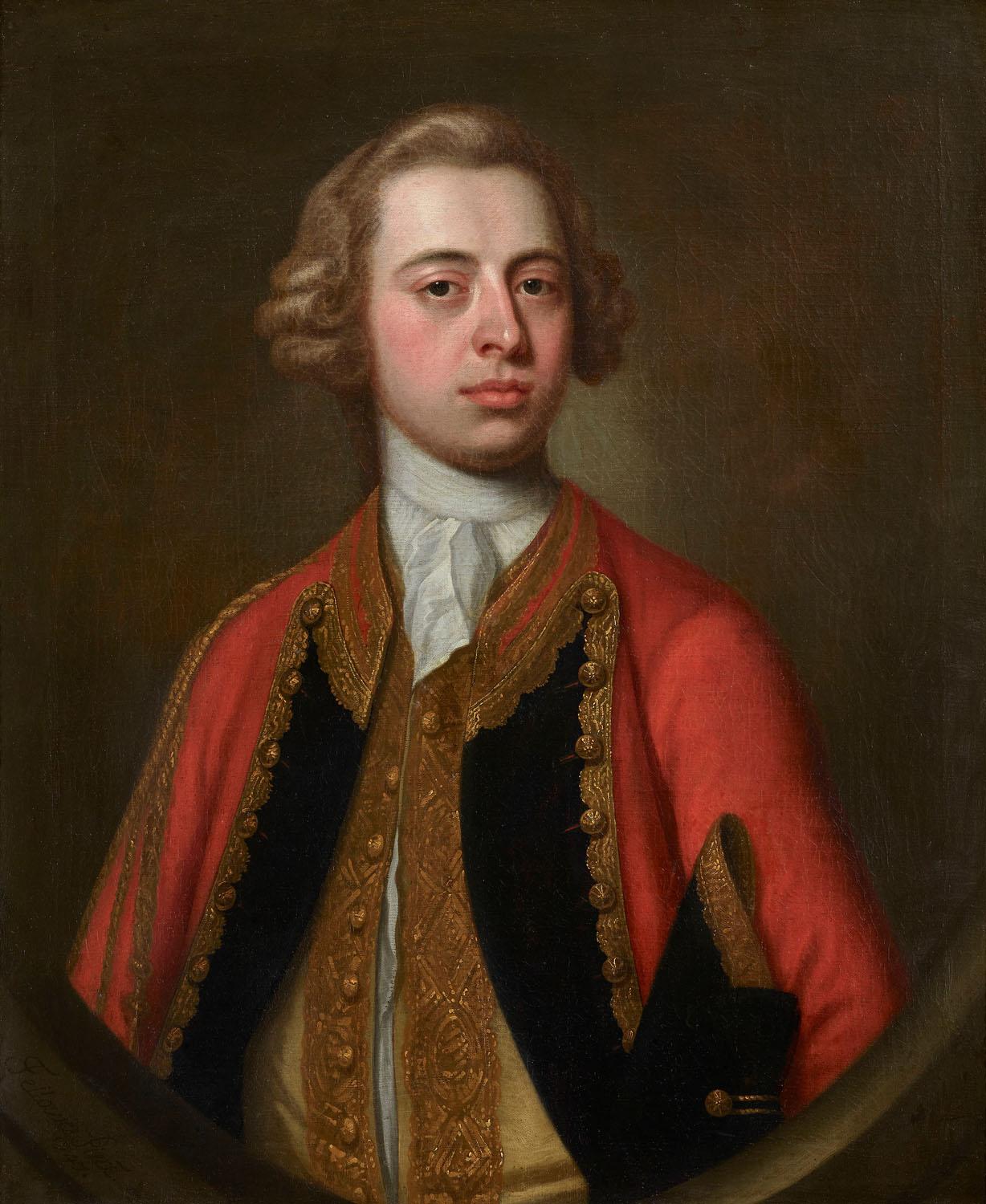
Attributed to Gainsborough Dupont
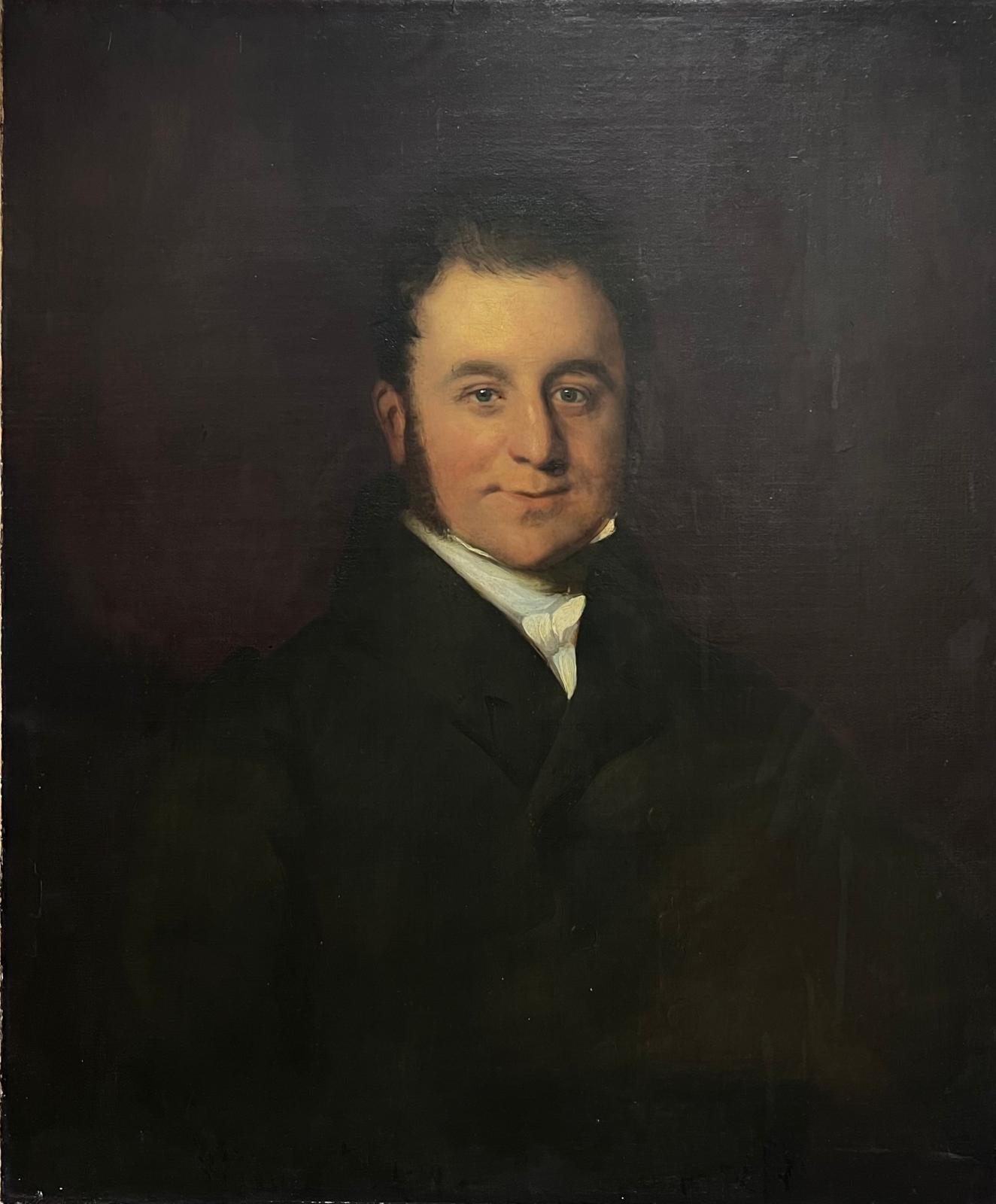
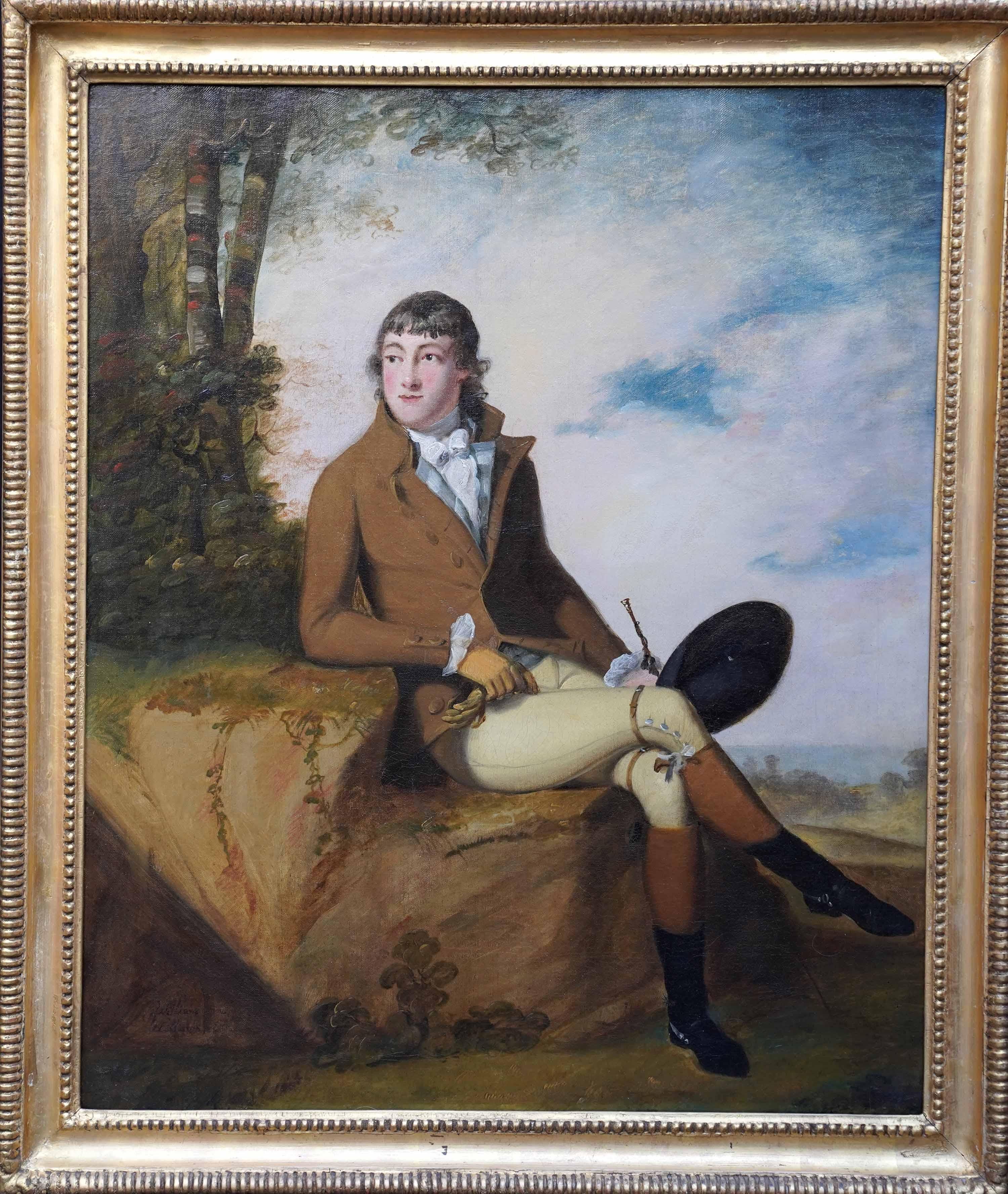
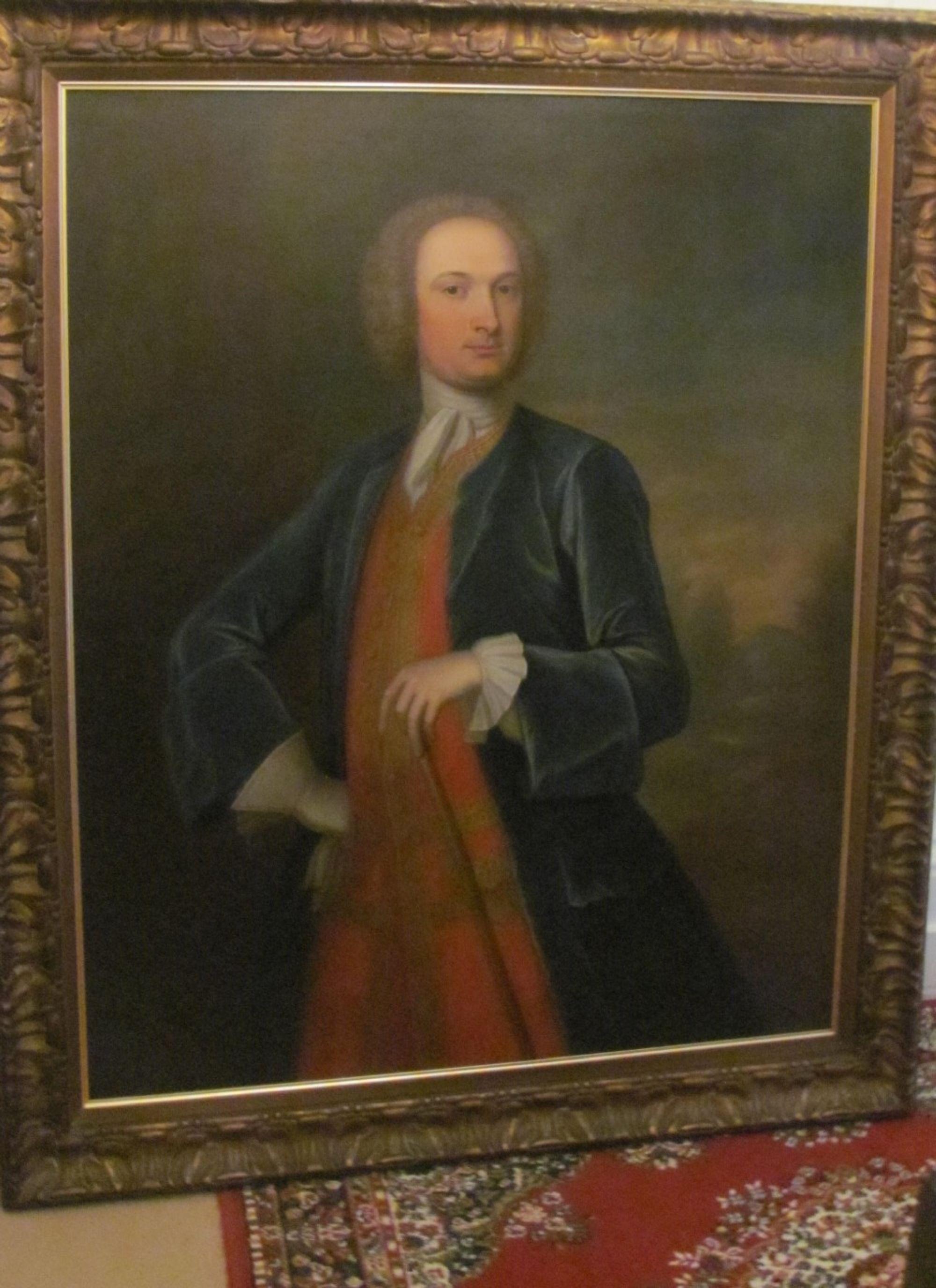
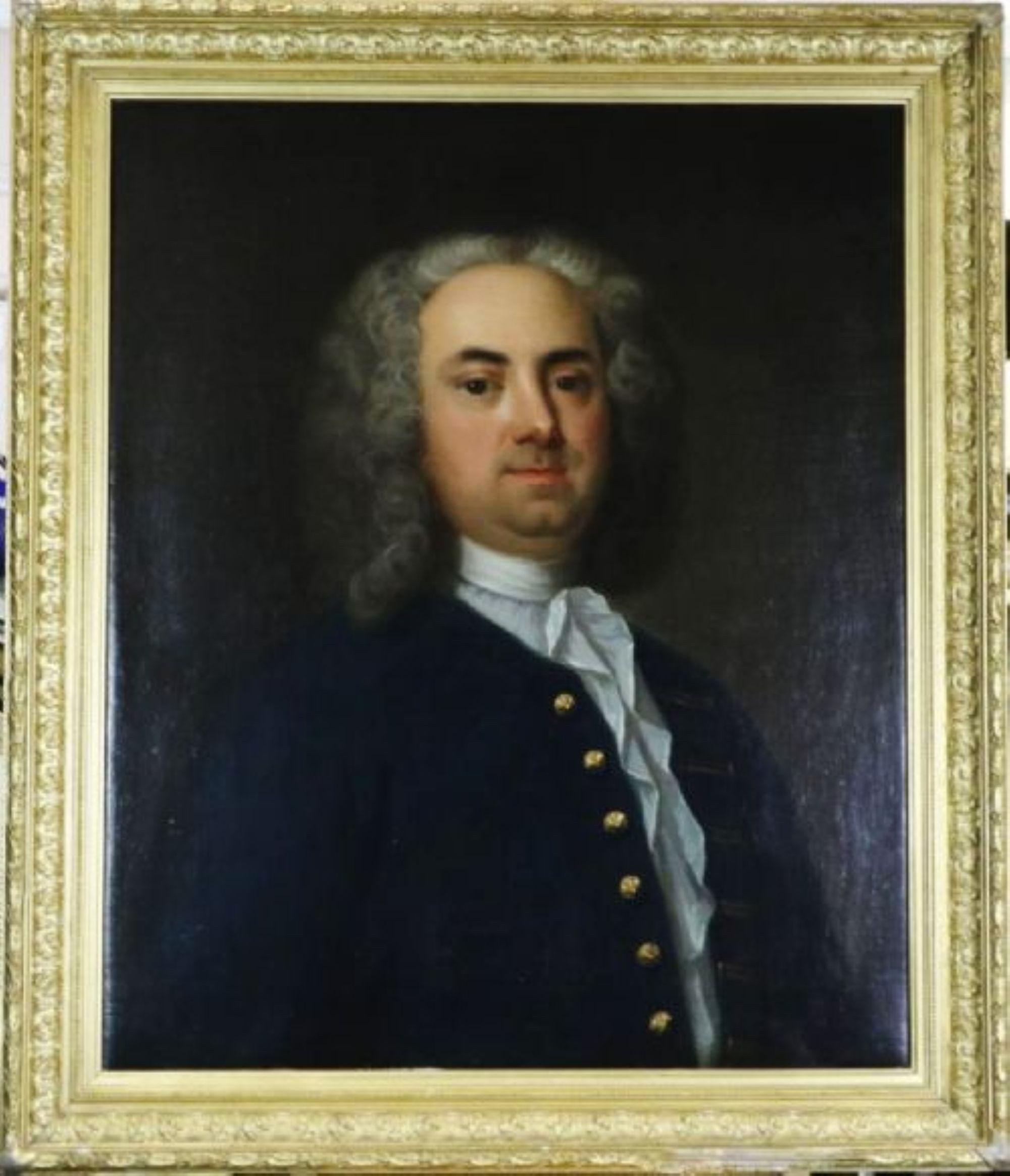
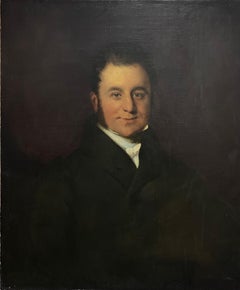
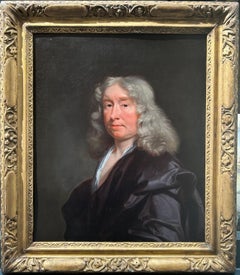
Portrait of Owen Ormsby, bust-length, in a brown coat

Late 18th century

$10,351.98
£7,500
€8,947.65
CA$14,364.93
A$14,625.58
CHF 8,423.01
MX$176,226.95
NOK 97,749.61
SEK 98,623.32
DKK 66,880.01

About the Item

Attributed to Gainsborough Dupont (1754 - 1797, British) Portrait of Owen Ormsby, bust-length, in a brown coat, with slightly later inscription identifying the sitter oil on canvas 20 x 18 inches PROVENANCE. The Harlech Family since origin. Thence by decent to Lord Harlech, his sale 2019. Dupont was born in Sudbury, Suffolk, on 20 December 1754 the eldest son of Thomas Gainsborough's sister Sarah, and her husband Philip Dupont. In 1772 he was apprenticed to Gainsborough, for whom he continued to work until the latter's death in 1788. He was the only assistant Gainsborough is ever known to have employed. He also trained at the Royal Academy Schools, where he became a student in March 1775. Dupont took over Gainsborough's studio in Schomberg House in 1788, and moved to Bloomsbury in 1793, following the death of Gainsborough's widow. He painted portraits and landscapes in a style of similar to that of his uncle, and also landscapes with architectural ruins, in which he imitated Nicolas Poussin. His principal work is a large picture containing the portraits of the elder brethren of Trinity House, which is in their court-room on Tower Hill. The inscription including the date 1804 is of later date and has no bearings on the date of the work, it is only the date of death of the sitter.
  • Creator:
    Attributed to Gainsborough Dupont (1754 - 1797)
  • Creation Year:
    Late 18th century
  • Dimensions:
    Height: 18 in (45.72 cm)Width: 20 in (50.8 cm)
  • Medium:
  • Period:
  • Condition:
  • Gallery Location:
    London, GB
  • Reference Number:
    1stDibs: LU67337313152

More From This Seller

View All
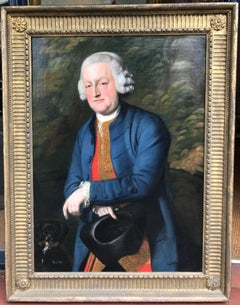
18th Century Oil Painting Portrait of Phillip, 6th Viscount Wenman.

18th Century Oil Painting Portrait of Phillip, 6th Viscount Wenman.

By Nathaniel Dance-Holland

Located in London, GB

Sir Nathaniel Dance-Holland (1750-1811) was an English portrait painter and one of the founding members of the Royal Academy in 1768. Justly celebrated in his lifetime he won several...

Category

Late 18th Century Old Masters Portrait Paintings

Materials

Oil

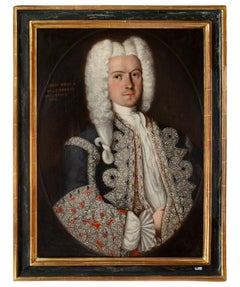
A Portrait of a Gentleman, thought to be Moses Diego Lopez Pereira

A Portrait of a Gentleman, thought to be Moses Diego Lopez Pereira

Located in London, GB

Austrian School, 18th Century A Portrait of a Gentleman, thought to be Moses Diego Lopez Pereira, 1st Baron d’Aguilar, in an elaborate coat and a powdered wig Oil on canvas Provena...

Category

18th Century Paintings

Materials

Canvas, Oil

17th Century Oil Painting Portrait of a Young English Boy

17th Century Oil Painting Portrait of a Young English Boy

By Gerard Soest

Located in London, GB

Gerard SOEST (1600 - 1681) Portrait of a Young Boy oil on canvas 35.5 x 30.5 inches inc. frame Gerard Soest (circa 1600 – 11 February 1681), also known as Gerald Soest, was a portra...

Category

17th Century Old Masters Portrait Paintings

Materials

Oil

Striking 18th Century Portrait of the 12th Earl of Caithness

Striking 18th Century Portrait of the 12th Earl of Caithness

By Sir Henry Raeburn

Located in London, GB

Sir Henry Raeburn (1756-1823) James Sinclair, 12th Earl of Caithness (1766-1823) Oil on Canvas 30 X 25 inches Unframed 37 X 32 inches framed Sir Henry Raeburn FRSE RA RSA (4 March 1756 – 8 July 1823) was a Scottish portrait painter and Scotland's first significant portrait painter since the Union to remain based in Scotland. He served as Portrait Painter to King George IV in Scotland. Raeburn was born the son of a manufacturer in Stockbridge, on the Water of Leith: a former village now within the city of Edinburgh. He had an older brother, born in 1744, called William Raeburn. His ancestors were believed to have been soldiers, and may have taken the name "Raeburn" from a hill farm in Annandale, held by Sir Walter Scott's family. Orphaned, he was supported by William and placed in Heriot's Hospital, where he received an education. At the age of fifteen he was apprenticed to the goldsmith James Gilliland of Edinburgh, and various pieces of jewellery, mourning rings and the like, adorned with minute drawings on ivory by his hand, still exist. Soon he took to the production of carefully finished portrait miniatures; meeting with success and patronage, he extended his practice to oil painting, at which he was self-taught. Gilliland watched the progress of his pupil with interest, and introduced him to David Martin, who had been the favourite assistant of Allan Ramsay the Latter, and was now the leading portrait painter in Edinburgh. Raeburn was especially aided by the loan of portraits to copy. Soon he had gained sufficient skill to make him decide to devote himself exclusively to painting. George Chalmers (1776; Dunfermline Town Hall) is his earliest known portrait. In his early twenties, Raeburn was asked to paint the portrait of a young lady he had noticed when he was sketching from nature in the fields. Ann was the daughter of Peter Edgar of Bridgelands, and widow of Count James Leslie of Deanhaugh. Fascinated by the handsome and intellectual young artist, she became his wife within a month, bringing him an ample fortune. The acquisition of wealth did not affect his enthusiasm or his industry, but spurred him on to acquire a thorough knowledge of his craft. It was usual for artists to visit Italy, and Raeburn set off with his wife. In London he was kindly received by Sir Joshua Reynolds, the president of the Royal Academy, who advised him on what to study in Rome, especially recommending the works of Michelangelo, and gave Raeburn letters of introduction for Italy. In Rome he met his fellow Scot Gavin Hamilton, Pompeo Girolamo Batoni and Byers, an antique dealer whose advice proved particularly useful, especially the recommendation that "he should never copy an object from memory, but, from the principal figure to the minutest accessory, have it placed before him." After two years of study in Italy he returned to Edinburgh in 1787, and began a successful career as a portrait painter. In that year he executed a seated portrait of the second Lord President Dundas. Examples of his earlier portraiture include a bust of Mrs Johnstone of Baldovie and a three-quarter-length of Dr James Hutton: works which, if somewhat timid and tentative in handling and not as confident as his later work, nevertheless have delicacy and character. The portraits of John Clerk, Lord Eldin, and of Principal Hill of St Andrews belong to a later period. Raeburn was fortunate in the time in which he practised portraiture. Sir Walter Scott, Hugh Blair, Henry Mackenzie, Lord Woodhouselee, William Robertson, John Home, Robert Fergusson, and Dugald Stewart were resident in Edinburgh, and were all painted by Raeburn. Mature works include his own portrait and that of the Rev. Sir Henry Moncrieff Wellwood, a bust of Dr Wardrop of Torbane Hill, two full-lengths of Adam Rolland of Gask, the remarkable paintings of Lord Newton and Dr Alexander Adam in the National Gallery of Scotland, and that of William Macdonald of St Martin's. Apart from himself, Raeburn painted only two artists, one of whom was Sir Francis Leggatt Chantrey, the most important and famous British sculptor of the first half of the 19th century. It has recently been revealed that Raeburn and Chantrey were close friends and that Raeburn took exceptional care over the execution of his portrait of the sculptor, one of the painter's mature bust-length masterpieces. It was commonly believed that Raeburn was less successful in painting female portraits, but the exquisite full-length of his wife, the smaller likeness of Mrs R. Scott Moncrieff in the National Gallery of Scotland, and that of Mrs Robert Bell, and others, argue against this. Raeburn spent his life in Edinburgh, rarely visiting London, and then only for brief periods, thus preserving his individuality. Although he, personally, may have lost advantages resulting from closer association with the leaders of English art, and from contact with a wider public, Scottish art gained much from his disinclination to leave his native land. He became the acknowledged chief of the school which was growing up in Scotland during the early 19th century, and his example and influence at a critical period were of major importance. So varied were his other interests that sitters used to say of him, "You would never take him for a painter till he seizes the brush and palette." In 1812 he was elected president of the Society of Artists in Edinburgh; and in 1814 associate, and in the following year full member, of the Royal Scottish Academy. On 29 August 1822 he was knighted by George IV and appointed His Majesty's limner for Scotland at the Earl of Hopetoun house. He died in Edinburgh. Raeburn had all the essential qualities of a popular and successful portrait painter. He was able to produce a telling and forcible likeness; his work is distinguished by powerful characterisation, stark realism, dramatic and unusual lighting effects, and swift and broad handling of the most resolute sort. David Wilkie recorded that, while travelling in Spain and studying the works of Diego Velázquez, the brushwork reminded him constantly of the "square touch" of Raeburn. Scottish physician and writer John Brown wrote that Raeburn "never fails in giving a likeness at once vivid, unmistakable and pleasing. He paints the truth, and he paints it with love". Raeburn has been described as a "famously intuitive"portrait painter. He was unusual amongst many of his contemporaries, such as Reynolds, in the extent of his philosophy of painting directly from life; he made no preliminary sketches. This attitude partly explains the often coarse modelling and clashing colour combinations he employed, in contrast to the more refined style of Thomas Gainsborough and Reynolds. However these qualities and those mentioned above anticipate many of the later developments in painting of the 19th century from romanticism to Impressionism. Sir Henry Raeburn died in St Bernard's House (17 St Bernards Crescent), Stockbridge, Edinburgh. He is buried in St. Cuthbert's churchyard against the east wall (the monument erected by Raeburn in advance) but also has a secondary memorial in the Church of St John the Evangelist, Edinburgh. James Sinclair, 12th Earl of Caithness was born at Barrogill Castle (Castle of Mey) on 31 May 1766. He was the son of Sir John Sinclair of Mey, Baronet who he succeeded in the baronetcy in 1774. He succeeded as 12th earl of Caithness in 1789. He was lord-lieutenant of the county of Caithness and lieutenant-colonel of the Ross-shire militia. He married at Thurso Castle on 2 January 1784 Jane, second daughter of Alexander Campbell...

Category

18th Century Portrait Paintings
Materials

Oil

19th Century Oil Painting Portrait of a Muse

19th Century Oil Painting Portrait of a Muse

Located in London, GB

John Opie RA (1761-1807, English) c. 1802 Oil on canvas Canvas dimensions 36 x 32 inches Framed dimensions 46.5 x 43.25 inches Original gilded period frame. John Opie was a Corni...

Category

Early 19th Century Portrait Paintings

Materials

Oil

You May Also Like

Portrait of Ralph William Grey

Portrait of Ralph William Grey

By Bartholomew Dandridge

Located in London, GB

Provenance By descent through the sitter's family to The Collection of R. W. Vivian-Neal of Poundisford Park, Somerset, from whom acquired by With Lane Fine Art, UK, where purchased ...

Category

Mid-18th Century English School Portrait Paintings

Materials

Oil, Canvas

Portrait of William Chiffinch

Portrait of William Chiffinch

By John Riley

Located in London, GB

John Riley 1646 – 1691 Portrait of William Chiffinch (c.1602-88) Oil on canvas Image size: 30 x 25 inches Original frame Another version of this can be found in the Dulwich Pictur...

Category

1680s Old Masters Portrait Paintings

Materials

Canvas, Oil

18th Century portrait oil painting of a gentleman

18th Century portrait oil painting of a gentleman

Located in Nr Broadway, Worcestershire

Follower of Enoch Seeman the Younger German, (1694-1744) Portrait of Gilbert Sympkin Oil on canvas Image size: 29.25 inches x 24.5 inches Size including frame: 38 inches x 33.25 inches A fine three quarter length portrait of a gentleman traditionally identified as Gilbert Simpkin (Sympkin), follower of Enoch Seeman the younger, C1720. The portrait is set in a feigned sculptured oval cartouche, a device used to give a sense of depth. The sitter is depicted wearing a fashionable blue jacket and matching waistcoat with a white chemise and lace jabot. He wears a powdered wig in the fashionable style of the day and is posed holding his hat under his left arm with the fingers of his right hand stretched out. At court, long fingers signified wealth, culture and intelligence. The painting has clearly been executed by an artist of great ability who has been influenced by Enoch Seeman the younger. Gilbert Simpkin (Sympkin) was born in London on 24 August 1683, the son of John Simpkin and Susannah Butler. His grandfather was also called Gilbert Simpkin. He entered Oxford University in 1700 where he studied at St John’s College. In 1702, he became a student of Middle Temple, which at the time was one of the world’s most important centres of legal education. He later settled in Plymouth and then Bristol. He died in Bristol on 15 May, 1744 and was buried at Bristol Cathedral. He remained unmarried and the portrait may well have been commissioned to commemorate when he was first Called to the Bar or perhaps had established his own practice. Enoch Seeman or Seemann the younger was born in Danzig, Germany now Gdansk, Poland in 1694. His father was Enoch Seeman Senior, an artist of Flemish origin and his brothers Isaac, Noah and Abraham also became artists. He came to London with his father and brothers around 1704 and established himself as a portrait artist. From 1717 he became painter to the Royal court painting...

Category

18th Century Old Masters Portrait Paintings

Materials

Canvas, Oil

Portrait of a Venetian Nobleman

Portrait of a Venetian Nobleman

Located in Douglas, Isle of Man

Attributed to, Alessandro Longhi 1733-1813, Longhi was a prominent Venetian portrait painter, printmaker, and biographer. The son of the famous genre painter Pietro Longhi, he is known for his detailed oil portraits of the Venetian aristocracy and his valuable book on contemporary Venetian painters. Longhi early life and training : Born: Alessandro Longhi was born on June 12, 1733, in Venice. He received his initial training from his father, Pietro Longhi. He later studied under Giuseppe Nogari, a respected portraitist in Venice during the 18th century, and was elected to the Venetian Academy in 1759. Longhi specialized in portraiture, primarily depicting the nobles and officials of the Republic of Venice. His paintings are a valuable record of the social and political structure of 18th-century Venice. Rococo aesthetic: Working in the Rococo style, he was adept at capturing the elegance and social status of his subjects. He paid meticulous attention to the elaborate robes, wigs, and emblems of office that signified his subjects' power. While his official state portraits could be stiff and formal, his portraits of less noble patrons demonstrated a greater sense of realism and psychological insight. Longhi was also an accomplished printmaker, particularly in etching. His etching technique showed an awareness of Rembrandt's work, and he used this skill to reproduce his and his father's paintings. In 1762, he published Compendio delle vite de' pittori veneziani istorici più rinomati del presente secolo, a biographical dictionary of contemporary Venetian painters that is still an important resource for art historians. Longhi illustrated the book with etched portraits of the artists. The portrait of Carlo Goldoni: One of his most celebrated paintings is his portrait of the Venetian playwright and librettist Carlo Goldoni. For his election to the Venetian Academy, he painted this allegory, which features a personified figure of Painting. His known portraits include Portrait of a Lady (Uffizi Gallery, Florence), Portrait of a Musician, and various portraits of Venetian nobles and officials. I have included further albeit identical biographies of Alessandro Longhi. Alessandro Longhi (born June 12, 1733, Venice—died 1813, Venice) was a painter, etcher, and biographer of Venetian artists, and was the most important Venetian portrait painter of his day. The son of the painter Pietro Longhi, he was given his first training by his father, who quite soon put him to study under the portrait painter Giuseppe Nogari. In 1759 he was elected a member of the Venetian academy, for which he painted one of his rare allegorical pictures, “Painting and Merit.” In 1762 Longhi issued his book Compendio delle Vite de’ Pittori Veneziani Istorici piu rinomati del presente secolo con sui ritratti dal naturale delineati ed indisi, one of the most important source books for the history of Venetian 18th-century painting. Both portraits and text were printed from plates he etched. Longhi’s facilely rendered portraits are largely generalized likenesses lacking any acuity of character observation. He mainly portrayed the leading Venetian luminaries and dignitaries of his day in a style that drew upon his father’s Rococo manner and 16th-century traditions of Venetian Renaissance portraiture. The personal details available for the painter Alessandro Longhi are limited, but his biography is intertwined with that of his family and the city of Venice. He was the son of a successful painter, which set his artistic path, and is known for creating sensitive and realistic portraits that captured the social atmosphere of 18th-century Venice. Alessandro was born in Venice in 1733 to the celebrated genre painter Pietro Longhi. He received his early training from his father before studying under another prominent portraitist, Giuseppe Nogari. A contrast to his father: While his father was known for painting scenes of everyday Venetian life, Alessandro focused almost exclusively on portraiture. His skill enabled him to capture the intimate psychology and character of his subjects, a quality especially evident in his portraits of less noble patrons. Election to the academy: In 1759, Alessandro was elected to the Accademia dei Pittori, the Venetian Academy of Painting. His election solidified his reputation as a master of the Rococo style. Beyond painting, Longhi was an accomplished printmaker, primarily producing etchings that reproduced his own works and those of his father. In 1762, he published the Compendio delle vite de' pittori veneziani, a collection of biographies of contemporary Venetian painters, which is an important historical resource. He became a prominent portraitist for Venice's upper class, including nobles and state officials. His official state portraits featured grand, full-length depictions of his subjects in their elaborate robes and emblems of office. Emphasis on realism: In contrast to the stylized nature of official portraits, Alessandro was praised for the "reality" he captured in works featuring common people. For example, his 1760 portrait of an innkeeper was celebrated for its realistic subject matter and "nuova maniera" (new manner). The art historian Olimpia Theodoli noted that Longhi's etching technique showed he had a firsthand knowledge of Rembrandt's work. Among his more famous works are a sensitive portrait of playwright Carlo Goldoni and the painting Portrait of a Wine Butler. He also produced religious and allegorical works, including paintings of the "Apostles" for the church of San Pantalon in Venice. This painting has been carefully conserved and the frame also, the frame looks to be original to the picture but we have no way of confirming this but we believe it to be so. 18th Century Italian portraits...

Category

Mid-18th Century Portrait Paintings
Materials

Canvas, Oil