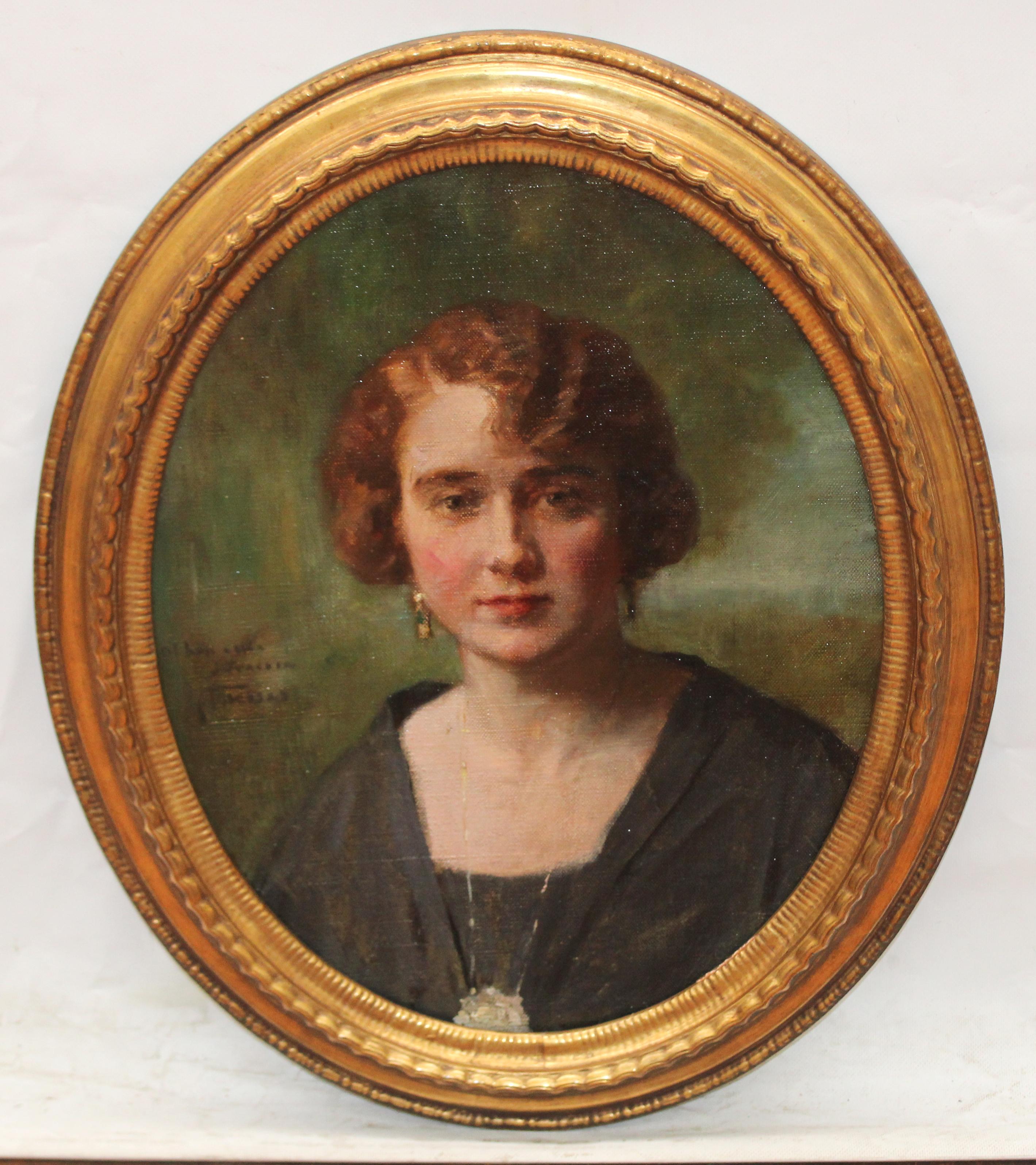
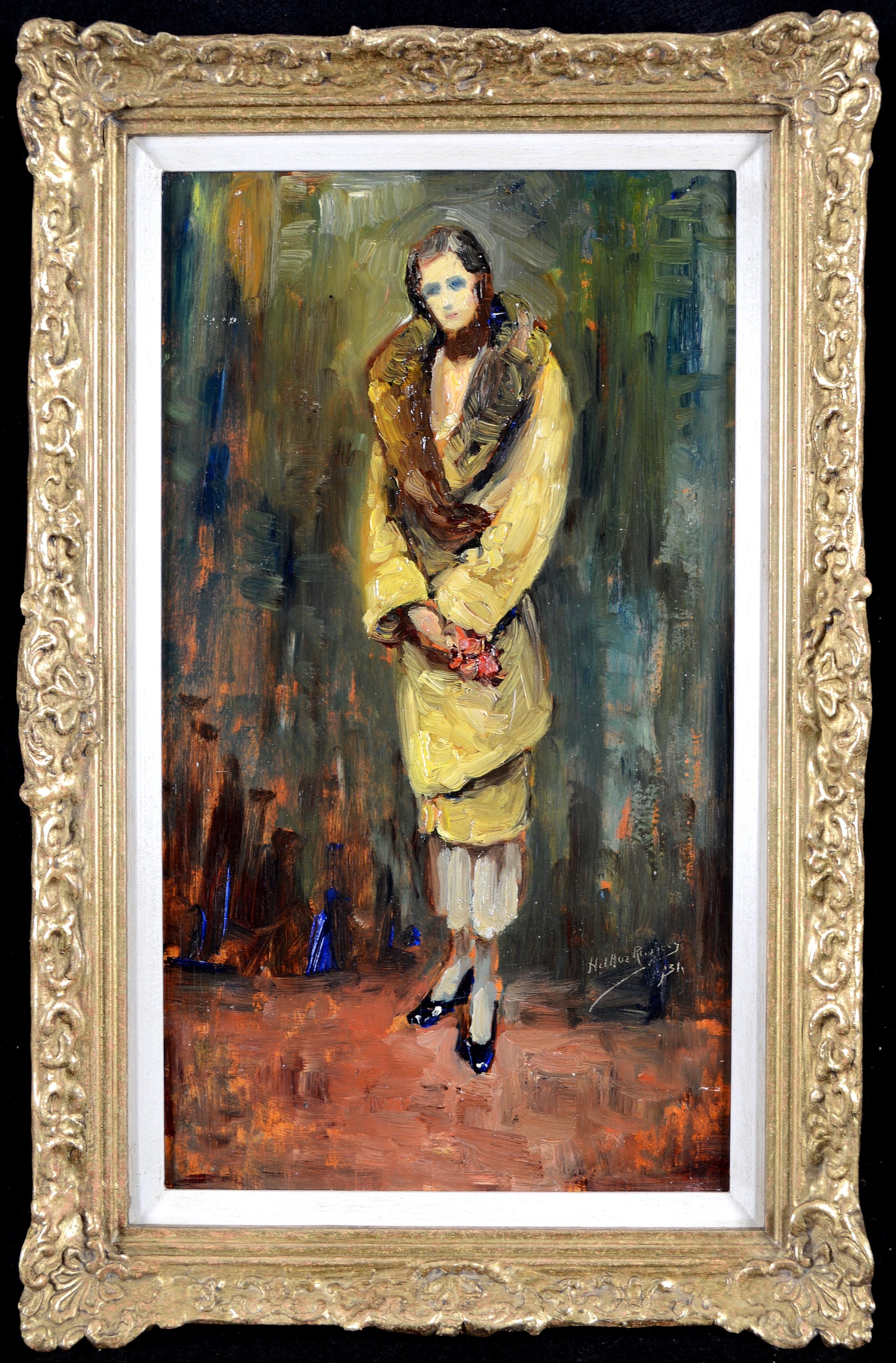
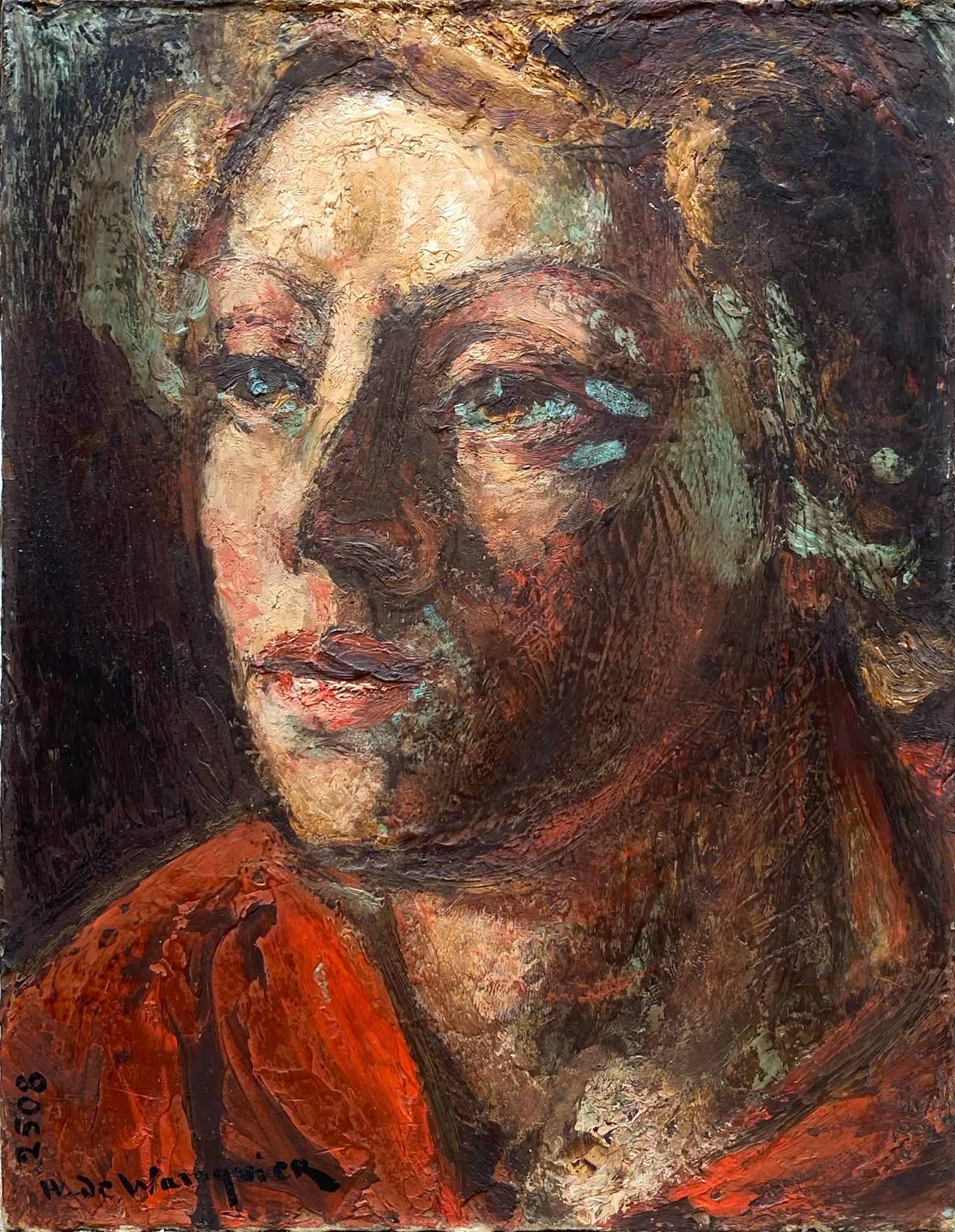
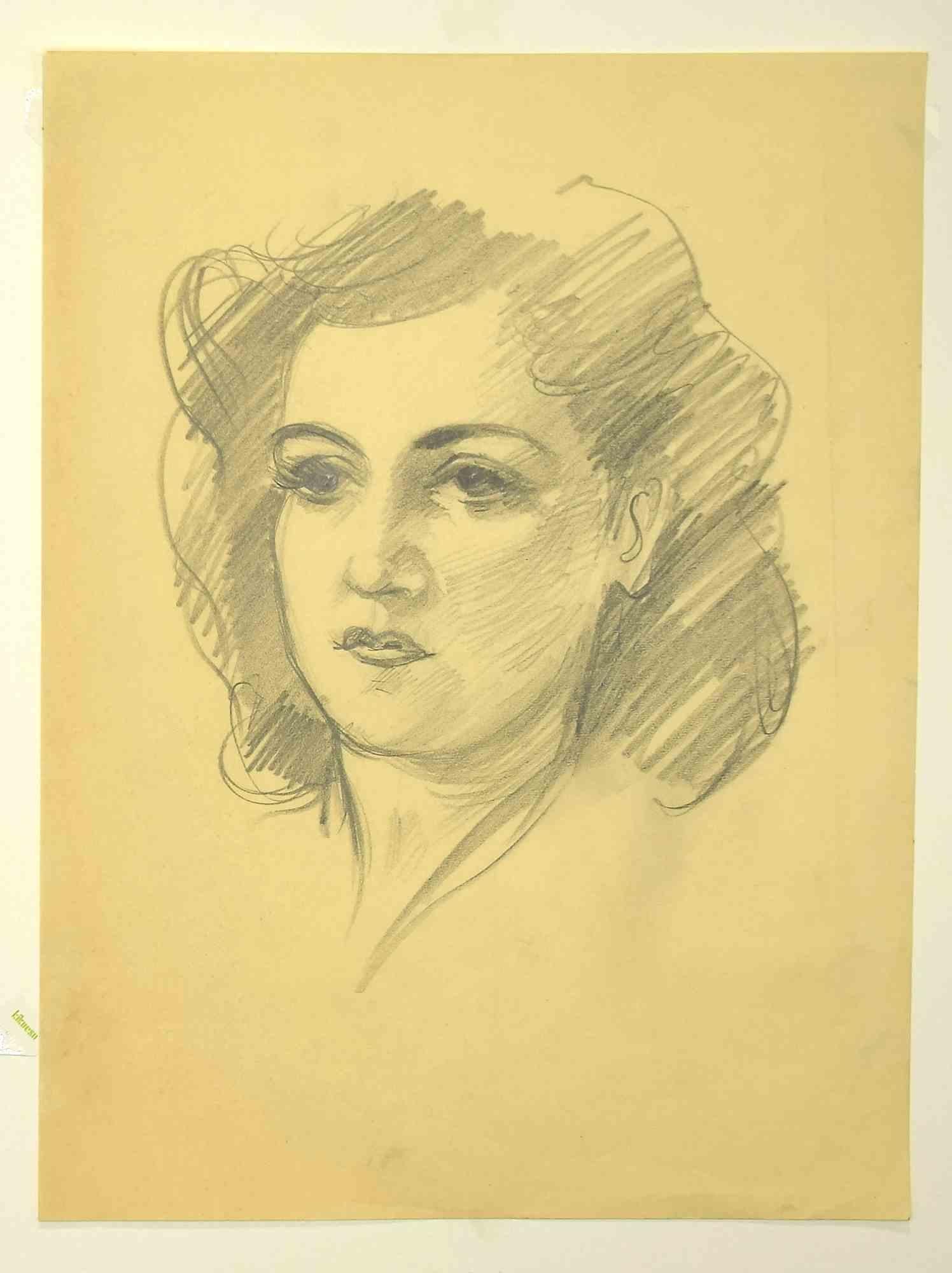
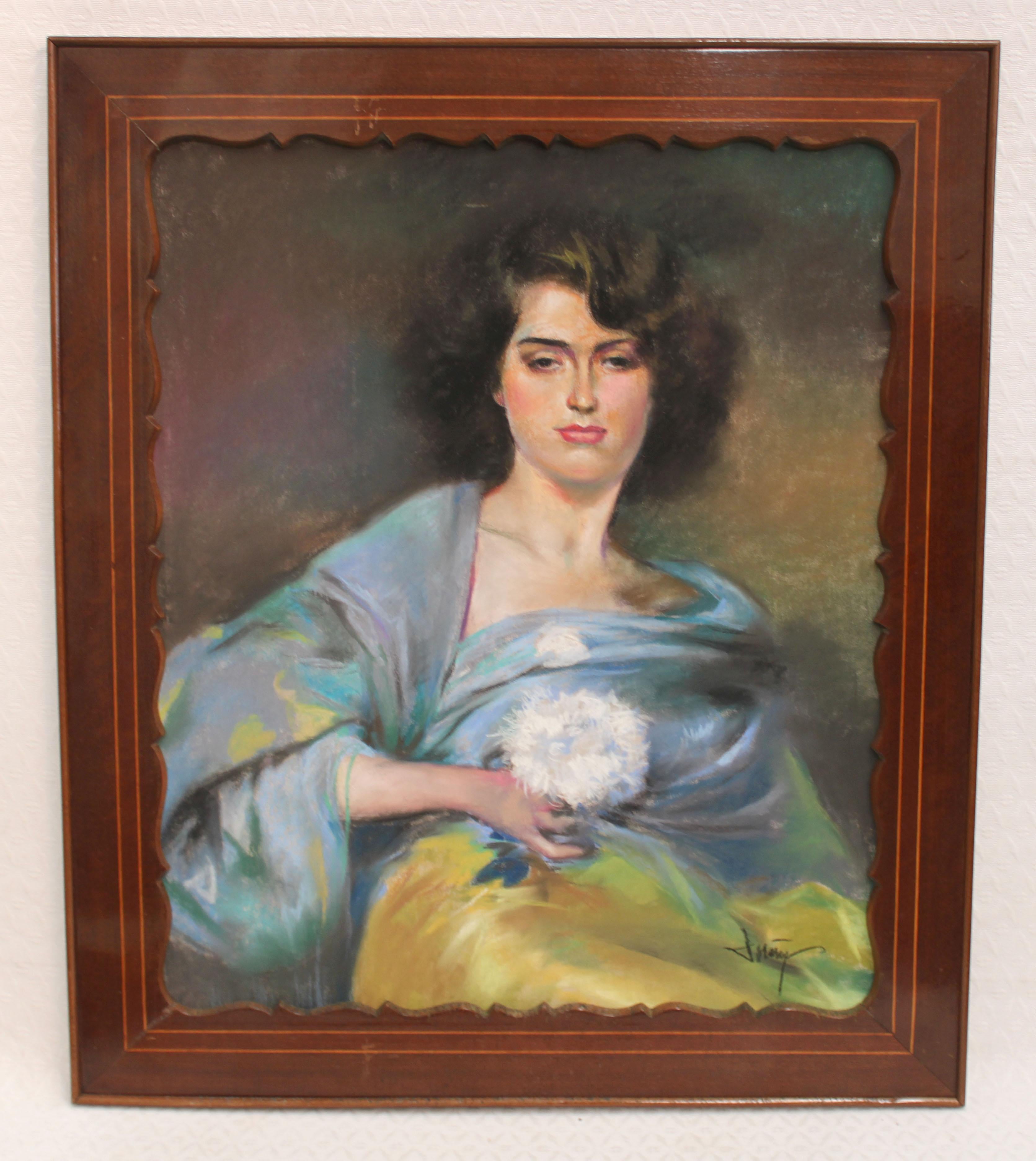
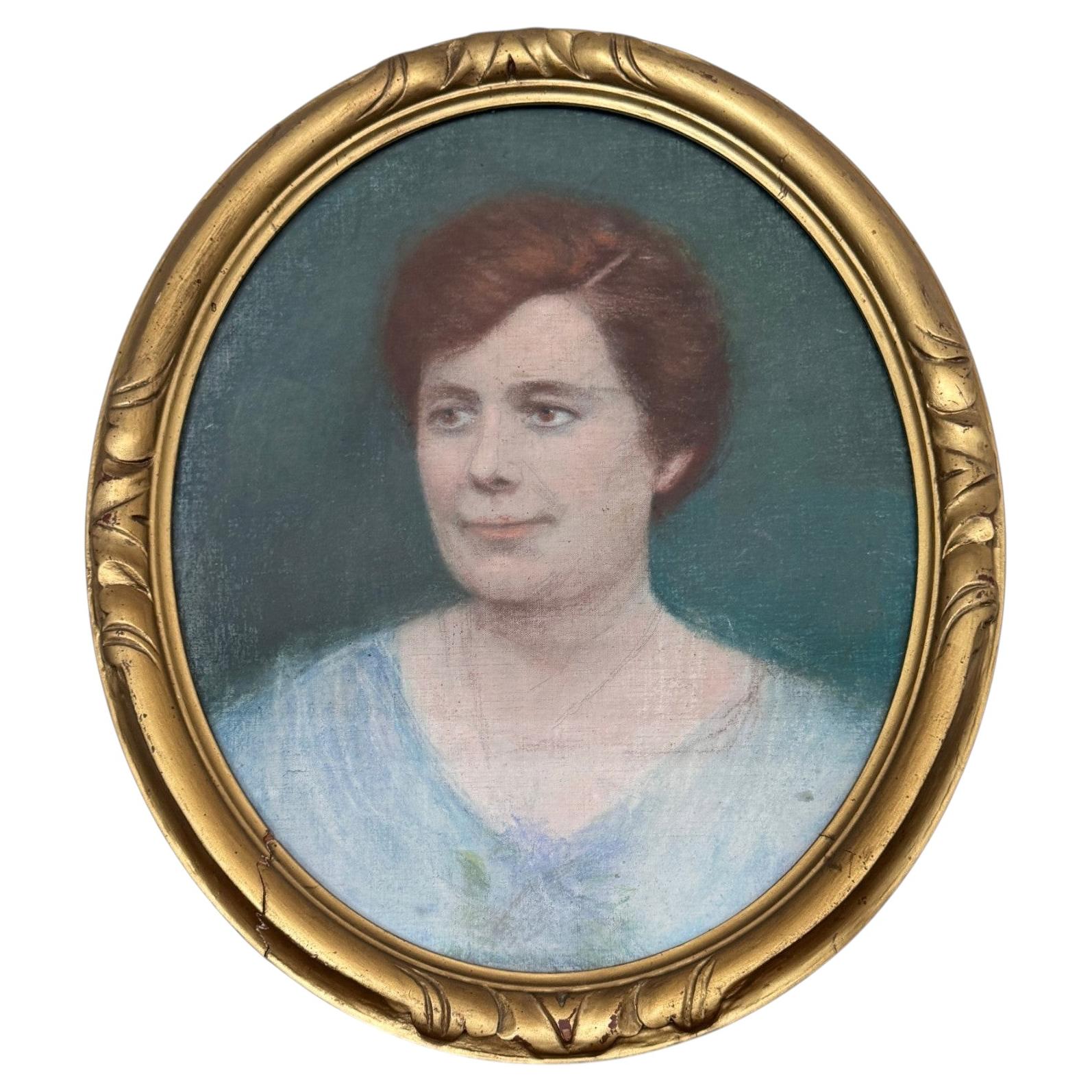
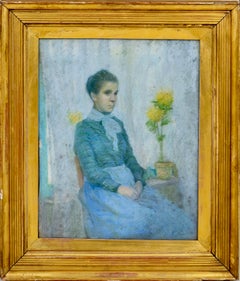
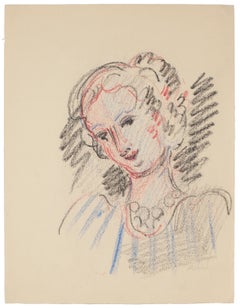
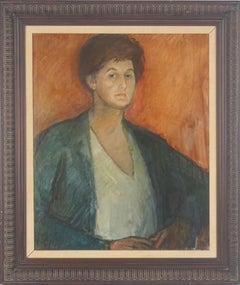
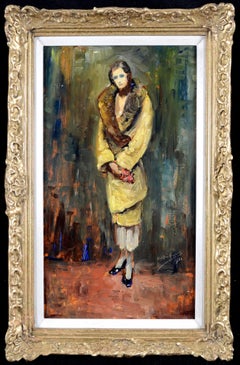
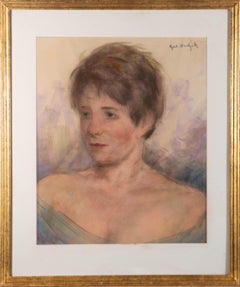
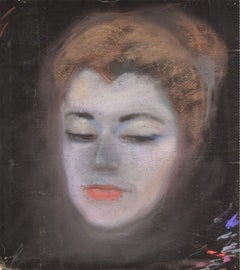
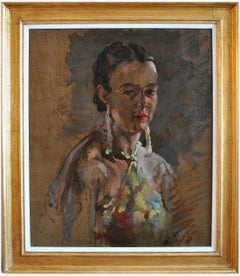
A delicate pastel portrait of Elsa Adlercreutz by Mina Carlson-Bredberg capturing not merely a likeness, but an atmosphere of quiet introspection and luminous sensitivity. The woman’s face emerges softly from a shimmering field of green, blue, rose, and pale ochre tones, where contours dissolve into flickering strokes of color. Her gaze is direct yet inward-looking, conveying both vulnerability and composure. Carlson-Bredberg’s pastel technique is remarkably free and modern. The surface vibrates with translucent layers and spontaneous lines, while the facial features are modeled through subtle tonal harmonies rather than strict drawing. The portrait possesses an almost dreamlike immediacy, revealing the artist’s lifelong fascination with psychological presence and the expressive power of color. Painted in 1923, the work belongs to the late period of Carlson-Bredberg’s career, when her style had become increasingly liberated, emotional, and visionary.
Wilhelmina “Mina” Carlson-Bredberg was one of the most distinctive and forward-looking Swedish artists of the late nineteenth and early twentieth centuries. Although long overshadowed by many of her male contemporaries, she is today increasingly recognized as a pioneering modernist whose painterly language anticipated later developments in Scandinavian art by several decades. Her work combined Nordic sensitivity with French Impressionism, British tonalism, and the expressive freedom that would later characterize early modernism.
Born in Stockholm 1857 into a cultivated and socially prominent family, Mina Bredberg grew up in an intellectually stimulating environment. Her father served as a senior government official and later president of the Court of Appeal, while her mother belonged to a family closely connected to the publisher and cultural reformer Lars Johan Hierta. The family circle included writers, architects, and artists, among them the architect Fredrik Wilhelm Scholander, who encouraged the young Mina to pursue artistic training.
She first studied painting in Stockholm under the artists Kerstin Cardon and Amanda Sidwall, the latter becoming an important early mentor. Like many women artists of her generation, Carlson-Bredberg faced social expectations that interrupted her artistic ambitions. In 1877 she married the historian Vilhelm Swalin, but the marriage proved unhappy and eventually ended in divorce. Determined to continue her artistic career, she left for Paris in 1883, joining the growing circle of Scandinavian women artists seeking professional training abroad.
In Paris she enrolled at the celebrated Académie Julian, where she studied between 1883 and 1887 under Jules Lefebvre and Gustave Boulanger, later continuing with Carolus-Duran and Benjamin-Constant. The Académie Julian was one of the few institutions open to female students, and it became an important center for Nordic women painters. Carlson-Bredberg formed close friendships with artists such as Elisabeth Keyser and Louise Catherine Breslau, participating actively in the cosmopolitan artistic milieu of the French capital.
Her years in Paris proved decisive. She exhibited at the Paris Salon in 1887 and gained international attention when her self-portrait received an honorable mention at the Exposition Universelle in Paris in 1889. Critics praised the originality of her painterly handling, particularly her use of atmospheric color and softened contours. Her celebrated work At the Piano, shown at the 1889 exhibition, demonstrated a refined synthesis of French Impressionism and tonal harmony, leading several critics to compare her with Pierre-Auguste Renoir.
Yet Carlson-Bredberg’s artistic vision extended beyond French Impressionism alone. After leaving Paris in 1890, she undertook extensive study journeys through England, Italy, Holland, Belgium, Germany, and Austria. In England she encountered the influential designer and critic Lewis Foreman Day, through whom she became acquainted with the Arts and Crafts movement and figures such as William Morris and Walter Crane. She also absorbed the atmospheric tonalism of James McNeill Whistler and the poetic handling of light associated with British painting. These encounters profoundly shaped her mature style, which increasingly dissolved form into shimmering color and emotional atmosphere.
Carlson-Bredberg’s oeuvre reveals extraordinary range. She painted portraits, interiors, cityscapes, flowers, genre scenes, and landscapes, often moving freely between oil, pastel, watercolor, and drawing. Her portraiture remained especially important throughout her life. Unlike the more rigid academic portrait tradition, her works sought to convey the inner life of the sitter through expressive color, luminous surfaces, and psychologically charged eyes. In works such as Portrait of Elisabeth Keyser, Sunrise in Södertälje (1892, Nationalmuseum), and her later pastel portraits, one sees a remarkable sensitivity to mood and light that anticipated later Scandinavian modernism.
Her painting Sunrise in Södertälje from 1892 is often regarded as astonishingly modern for its time. With its dissolved forms and radiant handling of dawn light, the work foreshadows aspects of Swedish painting from the 1920s and 1930s. Carlson-Bredberg thus occupies a singular position within Swedish art history: rooted in the nineteenth century, yet visually anticipating the expressive freedoms of twentieth-century modernism.
From 1893 to 1895 she taught at Elisabeth Keyser’s painting school in Stockholm, contributing to the education of younger women artists at a time when professional opportunities for women remained limited. In 1895 she married the civil servant Georg Carlson, and although family life reduced her artistic production for a period, she continued to work steadily whenever circumstances allowed.
After the death of her husband in 1920, Carlson-Bredberg entered a remarkably productive late phase. Freed from many domestic obligations, she returned to painting with renewed intensity and emotional force. Her late works became increasingly expressive, with vibrant colors, fluid contours, and an almost visionary atmosphere. The brushwork loosened dramatically, while her fascination with luminous color reached new heights. It is within this mature period that the portrait of Elsa Adlercreutz was created.
Carlson-Bredberg also played an important role in advancing the position of women artists in Sweden. She was among the initiators of the association Föreningen Svenska Konstnärinnor (The Association of Swedish Women Artists), founded in 1910 to improve exhibition opportunities and professional recognition for women painters.
Throughout her career she exhibited widely both in Sweden and internationally. Her works appeared in exhibitions in Paris, London, Vienna, Copenhagen, and at the World’s Columbian Exposition in Chicago in 1893. Major Swedish exhibitions included Liljevalchs Konsthall (1917), Björck’s Art Gallery in Stockholm (1920 and 1921), and Galerie Moderne in 1931, where no fewer than 152 works were displayed across two floors. A significant retrospective exhibition was later held at the Stockholm City Museum in 1971, contributing to the renewed appreciation of her art.
Today her works are represented in important collections including the Nationalmuseum in Stockholm, Prins Eugens Waldemarsudde, and the Gothenburg Museum of Art. Her artistic legacy continues to grow in significance as scholars increasingly acknowledge her role as one of Sweden’s earliest female modernists and one of the most individual artistic voices of her generation.
Elsa Adlercreutz, née Cederborgh (1875–1960), portrayed in this painting by Mina Carlson-Bredberg was a Swedish artist and decorative designer, known for her painted wall hangings executed in tempera.
She studied at the Technical School in Stockholm between 1891 and 1897. In 1908, she married the chamberlain Axel Johan Patrick Adlercreutz.
Elsa Adlercreutz belonged to a generation of Swedish women artists who contributed to the development of decorative and applied arts in Sweden around the turn of the twentieth century.